PART 3: The First Step Wasn’t What Anyone Expected 047
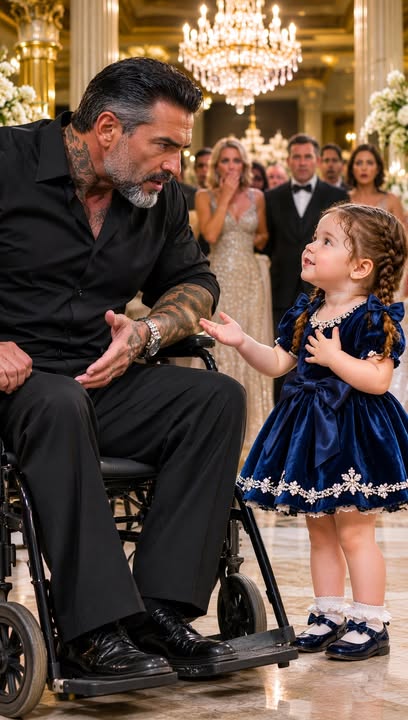
Part 3 – The Photograph in the Hall
“Mr. Harrison,” Elena said, her voice suddenly uncertain, “is that you beside Daniel?”
I followed her gaze to the framed photograph on the hallway wall.
The picture had hung there for years, one among dozens of company events and charity galas that formed the polished history of my life.
In it, I stood beneath a white canvas awning, younger by several decades, my tie loosened and my sleeves rolled to the elbows.
Beside me was a broad-shouldered man in a company driver’s uniform, one hand resting on the back of a folding chair.
The photograph had faded at the edges, but the man’s steady eyes were unmistakable.
“Daniel,” Elena repeated.
“Your husband?” I asked.
She nodded, still staring at the image.
“My late husband.”
The word settled over the hallway with a quiet weight.
Lily looked from her mother to the photograph, her fingers curled around Elena’s hand.
“Is that Daddy?” she asked.
“Yes,” Elena said softly. “That’s him.”
I turned my attention back to the picture.
The man in the uniform seemed familiar in the way an old melody might be familiar: not fully remembered, but carrying the shape of something once important.
“I’m sorry,” I said. “I don’t remember his name.”
Elena looked at me.
“I didn’t expect you to.”
That answer was kind, but it did not ease the unease that had begun to rise in me.
“Do you remember the event?” she asked.
“I remember a community center. There was a food drive, I think, or a school fundraiser.”
“It was a winter coat collection,” she said. “Daniel told me about it years ago. Your company had brought the staff and their families.”
My eyes returned to the photograph.
A paper banner stretched behind us, though its lettering was blurred by time.
I could make out the name of the company I had founded, printed above a row of children in bright coats.
“I must have met him that day,” I said.
“You did.”
Elena’s voice remained composed, but her gaze had moved past me, toward the ballroom.
“Daniel said you were different from what he expected.”
I looked back at her.
“What did he expect?”
“A man who wouldn’t notice the drivers.”
Claire had come to stand beside us, listening now with her arms folded loosely across her chest.
Elena gave a faint, almost embarrassed smile.
“He said you asked him about his daughter and wanted to know whether she had a warm coat for the winter.”
“Lily?”
“No,” Elena said. “Our older daughter. Sofia.”
I had never heard the name.
“I’m sorry,” I said again.
“You couldn’t have known.”
The same gentleness in her voice made the words harder to accept.
I had made a career of knowing names, dates, contracts, and every detail that could change the terms of a deal.
But here was a man who had stood beside me in a photograph, whose family had mattered to him, and I could remember none of it.
Maya stepped nearer, careful not to crowd us.
“Would you like to sit down somewhere quieter?” she asked. “The ballroom is getting busy again.”
I glanced at Elena.
“Would you mind telling me more?”
She hesitated.
“I’m not sure there’s much to tell.”
“Even a little would help.”
Her gaze returned to the photograph.
“Daniel drove for Harrison Group for many years,” she said. “He used to talk about the people he worked with, though he didn’t bring the job home with him very often.”
“What kind of driver was he?” Claire asked.
“A careful one,” Elena answered. “Patient. He believed a person could tell a lot about someone by how they treated the person behind the wheel.”
Claire looked at the picture again.
“Did he like my father?”
Elena considered the question.
“I think he respected him.”
“That isn’t the same thing,” Claire said.
“No,” Elena agreed. “It isn’t.”
Her answer seemed to soften something in Claire’s face.
I studied Daniel’s expression in the photograph.
He was not smiling broadly, but there was ease in his posture, a confidence I recognized from the drivers who had worked for me over the years.
“I wish I remembered meeting him,” I said.
“Perhaps you will,” Elena replied. “Sometimes one thing comes back before another.”
A staff member approached from the ballroom and spoke quietly to Elena, reminding her that the catering team needed help clearing a table.
Elena looked apologetic.
“I should go.”
“I understand.”
She touched Lily’s shoulder.
“Come with me, sweetheart.”
Lily glanced at me.
“Are you going to practice standing?”
“Not tonight,” Maya answered before I could. “Mr. Harrison needs to rest and make a proper plan first.”
Lily nodded solemnly.
“Another day, then.”
“Another day,” I promised.
She seemed content with that and went with her mother toward the ballroom.
I watched Elena pass beneath the archway, her hand resting protectively on Lily’s shoulder.
Then I looked back at the photograph.
“Do you want me to find out who Daniel was?” Claire asked.
“I want to know what I’ve forgotten.”
“That may not be the same thing.”
“No,” I said. “It may not.”
Maya reminded me that my legs had taken a strain and that I should let her check for pain or dizziness before I returned to my room.
I answered her questions and insisted I felt steady, though my body was growing tired now that the astonishment had begun to fade.
Claire stayed beside my chair while the party slowly resumed around us.
She did not ask me to explain why I had tried to stand.
I did not tell her that I could still feel the moment my feet had held my weight.
Instead, I asked whether she wanted to walk with me toward the library, where the house was quieter.
She glanced at the ballroom.
“I came in thinking I might stay for an hour.”
“Is that all?”
“I hadn’t decided.”
The carefulness in her answer stirred a familiar fear.
I could have asked if she planned to leave early.
I could have asked whether she was still angry.
Instead, I said, “I’m glad you came at all.”
Claire looked down at me, her expression briefly unguarded.
“Me too.”
Maya walked with us as far as the library doors, then left after making sure my attendant was nearby.
Claire and I spent the next hour in the quiet room, with the distant music softened by thick walls and the old clock on the mantel measuring each pause between our sentences.
We spoke about the birthday, the house, and the way the orchestra kept changing its arrangements whenever someone important requested a song.
We did not speak about Daniel.
We did not speak about the seven years between us.
But when Claire finally stood to leave, she rested a hand on my shoulder rather than offering a quick, formal goodbye.
“I’ll call you tomorrow,” she said.
“I’d like that.”
“I’ll ask about the assessment too.”
“Thank you.”
She hesitated.
“Dad, I was scared when I saw you standing.”
“I know.”
“I’m glad you tried,” she added, as if the admission cost her something. “I just need you to be careful.”
“I will.”
She leaned down and kissed my forehead, a gesture she had not made since she was a teenager.
Then she was gone.
That night, I did not sleep much.
My legs ached with the dull fatigue of muscles that had been asked to do something unfamiliar.
The sensation was not proof of recovery, Maya had cautioned me, and I tried to hold on to her words.
Still, each time I closed my eyes, I saw my knees trembling and felt the floor beneath my shoes.
By morning, that memory had become tangled with the photograph of Daniel.
I called my executive assistant before breakfast.
“Can you find the event in the photograph?” I asked.
“What event, sir?”
“The coat drive, likely sometime in the late nineties. I’m standing with a driver named Daniel.”
There was a pause as she opened her calendar or her notes.
“Do you know his last name?”
“No.”
“Do you have a date?”
“Not yet.”
“I’ll look through the archive.”
I spent the morning with Maya and a member of my medical team, who reviewed my history and asked careful questions about the movement I had experienced at the party.
There was no dramatic declaration and no promise of what might come next.
Maya explained that the goal was to understand what I could do safely, to measure my strength and balance, and to build from there.
We practiced shifting my weight while seated, then tightening my thigh muscles on her cue.
The exercises were small, deliberate, and frustrating.
They were also the first steps of a plan I had chosen, rather than another treatment I had agreed to because someone else had told me to hope.
When my legs began to shake, Maya asked me to stop.
I obeyed, though part of me wanted to push through.
“That’s enough for today,” she said.
“I can do more.”
“I believe you can want to do more,” she replied. “That’s not the same as knowing what’s safe.”
I sighed.
She smiled without teasing me.
“We’ll continue tomorrow.”
Claire arrived near the end of the session, holding a paper cup of coffee.
“Am I interrupting?”
“No,” I said. “We were finished.”
Maya gave Claire a brief update, explaining that the assessment would continue over several days and that progress would be measured carefully.
Claire listened with the focused expression she had always used when she was trying to understand something without letting her feelings take over.
When Maya left, Claire sat beside me.
“I spoke to the travel office,” she said.
“About what?”
“Nothing urgent.”
She wrapped both hands around her coffee cup.
“I’ve been thinking about whether I should tell you something.”
My chest tightened.
“What is it?”
“Not here,” she said. “I’d rather talk when we have time.”
“I have time.”
She glanced toward the window, where the city’s gray morning light lay across the glass.
“I know.”
But she did not continue.
For a moment, I wondered if she was about to tell me she had accepted a job somewhere far away, or that she intended to leave New York, or that she had finally decided it was easier to keep her life separate from mine.
Instead, she asked whether I remembered the old coat drive.
“I remember fragments,” I said. “Mostly the photograph.”
“Maybe the archive will help.”
“I hope so.”
Her mouth tightened at one corner.
“You want the answer to be good.”
“I want the answer to be true.”
Claire looked at me for a long moment.
“Those aren’t always the same thing.”
Before I could ask what she meant, my assistant called.
She had found a box of photographs from the event, along with a scanned copy of an old company newsletter.
I asked her to bring everything to the house.
The box arrived that afternoon.
I opened it in my study with Claire beside me, the photographs spread across a broad desk that had once held acquisition contracts and financial reports.
The images showed rows of winter coats, smiling children, and company volunteers stacking boxes near the entrance of a community center.
In one photograph, Daniel stood with a little girl on his shoulders.
He was looking at her, not the camera, and his smile was so broad that I felt a sudden, unearned ache at the sight of it.
“Is that Sofia?” I asked.
Claire leaned closer.
“It might be.”
We turned the photograph over.
The back bore a handwritten note in blue ink.
“Daniel Ruiz with daughter Sofia, coat drive, December 1998.”
The name did not awaken a memory, but it made him feel less like a stranger.
I opened the newsletter.
There was a short paragraph about the event and a caption beneath the group photograph.
The employees had raised money for coats, and the company had matched their donations.
The article named several managers and thanked the drivers who had transported the supplies.
Daniel Ruiz was mentioned near the end.
No details suggested why Elena had grown uneasy when she recognized him.
No details explained why she had asked whether I was the man beside him.
Still, the discovery made me want to speak with her again.
I called the catering agency and asked whether Elena might be available for a brief conversation.
The supervisor said Elena had already finished her temporary shift, but she could pass along my request.
I did not want her to think I was summoning her.
I told the supervisor that I hoped to ask about Daniel and would understand if Elena preferred not to discuss him.
The reply came the following morning.
Elena agreed to meet at a small café not far from the mansion, after Lily’s preschool.
Claire came with me.
We arrived before Elena and chose a table near the window.
Claire looked nervous, though she tried to hide it by studying the menu.
“I don’t want her to feel pressured,” she said.
“Neither do I.”
“You’ve spent your life being able to get people into a room when you want answers.”
“That isn’t what I’m doing.”
“I know,” she said. “I’m just reminding you that she may not hear the difference.”
The observation was fair enough that I had no defense for it.
When Elena arrived, Lily was with her, carrying a small backpack shaped like a purple cat.
Elena thanked us for meeting somewhere neutral.
She seemed more at ease than she had in the ballroom, though her attention still sharpened when I mentioned the photograph.
“I found the newsletter,” I said. “And another picture of Daniel with Sofia.”
Elena’s eyes softened.
“She was eight then.”
“He looks happy.”
“He was,” Elena said. “He loved being a father.”
Lily had already begun coloring on a sheet of paper the café owner had given her.
“Dad liked to make up stories on long drives,” she said without looking up. “He said every truck had a secret destination.”
Elena smiled at her.
“He used to tell Sofia the same thing.”
There was a silence, but it was not uncomfortable.
I placed a copy of the photograph on the table.
“Do you know why Daniel was standing beside me?”
“He said he had driven you to the event.”
“That would explain it.”
“He also said you stayed late to help load the coats into the van.”
I studied the photograph.
“I don’t remember staying.”
“Daniel told me you did.”
I looked at the man in the picture again.
“You said earlier that he thought I was different from what he expected.”
“That was before he met you.”
“What did he expect?”
Elena’s gaze settled on the photograph.
“He had worked for people who treated him as if he were part of the vehicle. They spoke to the assistant beside him, or made plans around him, but rarely spoke to him. He thought you might be the same.”
“And I wasn’t?”
“He said you asked him what he thought before taking a route through the city. He said you thanked him when he got you there.”
I had thanked hundreds of drivers.
I could not have named most of them afterward.
Daniel had remembered.
“I wish I had done more than that,” I said.
“You did what you did,” Elena replied. “He didn’t speak of you as a bad man.”
Claire watched her closely.
“Did he ever say something happened between them?” she asked.
Elena’s eyes moved to Claire.
“Not something I know about.”
She sounded sincere.
Still, there was a hesitation in her voice, a small break in the smoothness of the answer.
I noticed it.
Claire noticed it too.
“Elena,” I said gently, “if there is something you think I should know, I’d rather hear it.”
She looked down at the photograph.
“I don’t know that it’s something you should know.”
“Then what is it?”
She folded her hands on the table.
“Daniel once told me that Mr. Harrison helped our family during a difficult time.”
I leaned forward.
“When was this?”
“I don’t remember the exact year. We were living in Queens then. Sofia was still young.”
“What kind of help?”
“He didn’t say clearly. He told me not to worry about the bills, that someone at the company had taken care of a medical expense.”
A coldness moved through me.
“Was Daniel ill?”
“No. It was me. I’d had surgery, and we were frightened about what we would owe.”
I looked at Claire.
She had stopped moving.
“Elena, I don’t remember that,” I said.
“I know.”
“Did Daniel tell you I personally paid?”
“He said the company handled it because you had approved it.”
I searched my memory for the surgery, the year, the circumstances.
Nothing came.
The company had paid medical costs for employees in cases of injury or hardship, but the process had changed many times.
A gesture could have been recorded under a department name, a fund, or an insurance account.
“Do you remember how much?” I asked.
“No.”
“Do you know who spoke to Daniel?”
“I don’t. He only said the help came through you.”
She lifted her eyes to mine.
“I never asked him to explain. We were relieved, and he seemed grateful.”
The word grateful landed heavily.
“I’m sorry,” I said. “I should have remembered.”
“You don’t have to apologize to me for forgetting a conversation from decades ago.”
“But if I did something for your family—”
“You may have. Or he may have been thanking the company. I can’t tell you more than what he said.”
Lily looked up from her drawing.
“Mom, is that the man from the picture?”
“Yes,” Elena said.
“Did he help Daddy?”
Elena paused before answering.
“Your father thought he did.”
Lily considered that, then returned to her drawing.
I did not want to press Elena, but the story had opened a question that would not settle.
“I’d like to look through the company records,” I said. “Only if you’re comfortable with that.”
“I don’t know what records there would be.”
“Neither do I.”
She seemed to weigh my offer, then nodded.
“If it helps you remember, look.”
It was not permission to investigate her life.
It was simply a willingness to help me understand what Daniel had told her.
I promised to ask my assistant to search the archives and to share anything relevant with her.
As we stood to leave, Lily came around the table and held up her drawing.
It showed a tall figure in a chair, a little girl beside him, and two other people with sticklike arms reaching toward them.
“You drew me,” I said.
“You and Mom and Maya,” she replied. “And your daughter.”
Claire crouched to look.
“Where am I?”
Lily pointed to the figure at the far edge.
“You’re holding his hand.”
Claire glanced up at me.
The picture was lopsided, and the people were little more than circles and lines.
Still, I felt something in my chest loosen when I saw how naturally Lily had placed Claire beside me.
Elena folded the drawing carefully and put it in her daughter’s backpack.
We said goodbye outside the café.
Before Elena left, I told her I would contact her if I found anything in the records.
She nodded, then took Lily’s hand.
Claire and I returned to the mansion in silence.
By the time we arrived, my assistant had sent another message.
The company archive contained no clear record of Daniel Ruiz’s emergency or medical assistance.
There were employment records, payroll summaries, and photographs from the coat drive.
But the older files were incomplete, especially those from the period when the company had reorganized after my accident.
“Maybe it was handled outside the usual system,” Claire said.
“Maybe.”
“Or perhaps the record was never kept.”
“That would be worse.”
She sat across from me in the study.
“You can’t know what happened until you find more.”
“I know.”
The photograph of Daniel with Sofia lay between us.
I picked it up again and studied his smile.
Then I noticed a small mark near the lower edge of the image, a pale rectangle where something had once been attached.
I turned the photograph over.
There was a faint impression in the paper, as if a label had been peeled away.
“What is it?” Claire asked.
“I don’t know.”
I tilted the photograph toward the desk lamp.
A few words appeared in the shallow indentation, too faint to read.
Claire leaned closer.
“It looks like someone wrote something there.”
The writing had been pressed into the paper, perhaps by the corner of another note.
I could make out only a date and the beginning of a surname.
Then the rest vanished beneath the photograph’s old crease.
I called my assistant and asked her to search the remaining boxes, especially anything from the year of the coat drive.
While I waited, Claire sat quietly by the desk.
“Dad,” she said at last, “if you find out you promised Daniel something, what will you do?”
The question caught me off guard.
“I’d want to know what I promised.”
“And if the company failed to follow through?”
“I’d want to know why.”
“And after that?”
I set the photograph down.
“Then I’d have to decide what responsibility looks like.”
Claire’s eyes held mine.
“Would you still choose it if people blamed you?”
The answer should have come easily.
For years, I had made decisions knowing they might cost money, reputation, or control.
But this was different.
I had been absent from whatever had happened to Daniel’s family, and I could not yet tell whether that absence had been an accident or a failure of attention.
“I don’t know,” I said honestly.
Claire nodded, as if she had expected no better answer.
“That’s at least true.”
Her words brought me back to the party, to Maya’s careful refusal to promise what she could not know.
I wondered when I had begun to prefer honesty to reassurance.
My assistant called again before the evening ended.
She had found an index card tucked inside another photograph envelope.
It bore Daniel’s full name, the date of the coat drive, and a note that an additional folder might have been transferred to the old corporate archive during the restructuring.
There was no mention of Elena’s surgery.
There was no mention of a payment.
But beneath the note, in handwriting I recognized as my own, were three words that made my heart beat harder.
“Call Daniel personally.”
“I wrote that?” I asked.
“I can’t be certain,” my assistant said. “The card is unsigned.”
Claire stood beside me, reading the words over my shoulder.
“Do you remember writing it?”
“No.”
The old photograph lay on the desk, Daniel smiling beside a man who might once have understood something I could no longer recall.
I looked at the note again.
If I had written it, I had intended to call him.
The question was whether I ever did.
**–END OF PART 3–CLICK “NEXT” AT THE BOTTOM OF THE PAGE TO CONTINUE READING**
* * *
[PREVIOUS: PART 2](https://echoesofstories.idolsgift.com/blog/part-2-the-first-step-wasn-t-what-anyone-expected-047) | [NEXT: PART 4](https://echoesofstories.idolsgift.com/blog/part-4-the-first-step-wasn-t-what-anyone-expected-047)
✓ Lynn R. Adams
Part 3 – The Photograph in the Hall “Mr. Harrison,” Elena said, her voice suddenly uncertain, “is that you beside Daniel?” I followed her gaze to the framed photograph on the hallway wall. The pict…