PART 3: The Date on the Policy5 025
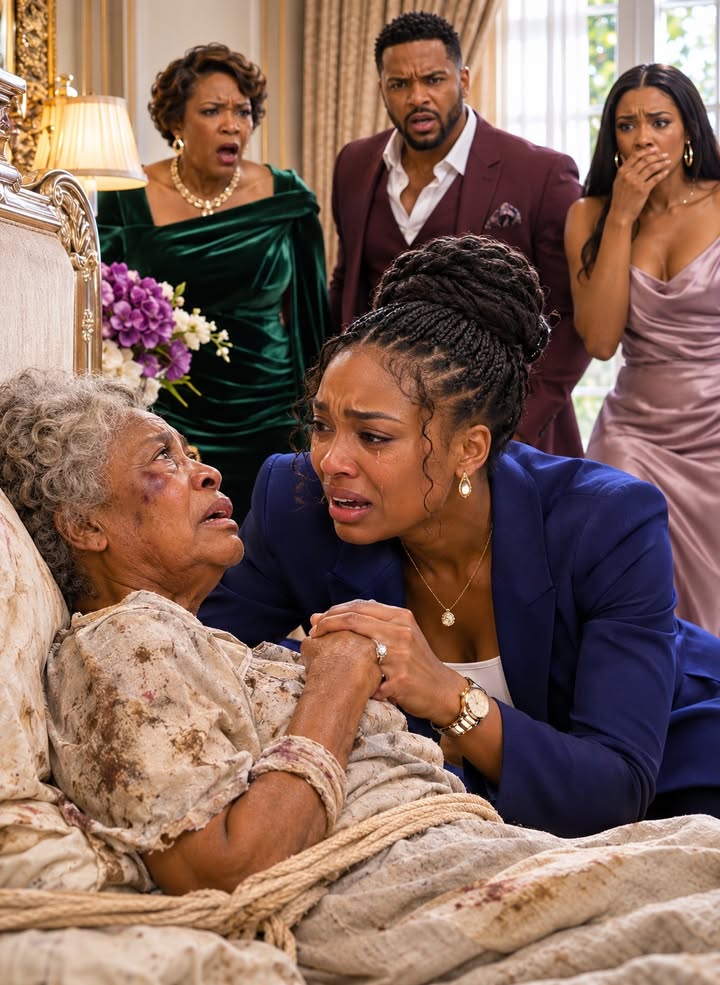
Part 3 – What the Receipts Remembered
The envelope with my father’s name on it waited on the chair beside Mom’s hospital bed.
I had read Clara’s message so many times that the words seemed to have worn a path through my mind, yet I still couldn’t bring myself to open it.
Mom slept with her fingers curled around mine, her breathing uneven but calmer than it had been the night before.
When she woke, the morning light had reached the foot of the bed.
“You look as if you’ve been arguing with a piece of paper,” she said.
I glanced at the envelope.
“Clara found this among your things.”
Mom’s face changed before I finished speaking.
Not fear, exactly, but the careful stillness of someone recognizing a door she had hoped to keep closed.
“Is it Dad’s?”
“That’s what Clara said.”
Mom eased herself against the pillows.
“Don’t open it until she comes.”
“Do you know what’s inside?”
“I have an idea.”
“Is it about the policy?”
She looked toward the window, where a thin cloud was passing over the sun.
“Not the one you found in the house.”
I waited for her to say more, but she closed her eyes again.
The silence was not an answer, yet it was the first time since I came home that I understood she might be choosing her words rather than searching for them.
Clara arrived a little before noon with a paper cup of coffee and a folder tucked beneath her arm.
She greeted Mom, checked how she was feeling, then took the envelope from the chair.
“Before we look at this,” she said, “I need to tell you what the investigators found in the financial records.”
My hands tightened around the edge of my seat.
“The receipts?”
“They compared the receipts Rosa saved with the transfers you sent and the records from the accounts Mark provided.”
“What did they find?”
“Most of the money reached the household account, but a significant amount was used for expenses that had nothing to do with Rosa’s care.”
I felt the words land one by one.
“What kind of expenses?”
“Kitchen cabinets, flooring, a new television, and some furniture purchases.”
My gaze went to the enormous television I had noticed when I first walked into the house.
I had thought it was simply a sign that Mark’s family liked having nice things.
I had not imagined that I might have paid for it while my mother waited upstairs.
“Brenda’s renovations?” I asked.
“Some were ordered through her account,” Clara said. “The investigators are still tracing each payment.”
Mom’s mouth had drawn into a small, straight line.
“Did Mark know?”
Clara did not pretend to have an answer she couldn’t support.
“He says he thought the money was being used for household expenses and care.”
“Was it?” I asked.
“Some of it was. That doesn’t explain the rest.”
I looked at Mom.
“Did you ever see the new cabinets?”
“No,” she said. “I wasn’t allowed downstairs much.”
Her voice stayed even, but something inside me began to give way.
I had spent months congratulating myself for finding work that would let me support her from far away.
I had pictured the money paying for appointments, a careful hand to help her dress, perhaps the comfort of a room made easier to navigate.
Instead, it had become tile and wood and a screen large enough to fill the living room.
Clara placed the folder on the table.
“There’s another development,” she said. “Heather asked to speak with the investigators again.”
I remembered her voice in the house, saying the money wasn’t in Mom’s bag.
“Is she cooperating?”
“She wants to clarify what she knew.”
“What does that mean?”
“It means we shouldn’t decide her role before we hear her account.”
I looked toward Mom, but she had turned her face toward the window.
Clara’s caution was sensible.
It was also difficult to accept when the people who had been in the house had all shared a life with Mom while I had been sending money across an ocean.
A nurse came in to check Mom’s temperature and adjust her medication schedule.
While she worked, I stepped into the corridor and called the investigator whose card I had been given.
He confirmed that the records were under review and said the insurance company had placed the policy on hold while it examined the application.
He also told me that Mark had been released after questioning.
“He’s not free of the investigation,” the investigator added. “But at this stage, we’re still gathering evidence.”
“Can I speak to him?”
“You can, but I recommend keeping any conversation brief and not discussing evidence.”
“I don’t know what I’d say.”
“That may be a reason to wait.”
When I returned to the room, Mom had eaten a little breakfast and had a glass of water beside her.
The nurse had written the name of each medication on a card and explained what it was for.
Mom touched the card with one finger.
“I like knowing,” she said.
“I do too,” I replied.
Clara stood by the window, reading the note she had taken during her call.
“The investigators also found a copy of the missing voice message on an old phone backup,” she said.
My head turned sharply.
“What did Mom say?”
“They’re verifying the file, but the recording appears to be intact.”
“Can I hear it?”
“Not yet. They want to preserve the original and document where it came from.”
Mom’s eyes were on the water glass.
“I remember leaving it,” she said. “I don’t remember what I said after the crash.”
“Do you remember who was there?” I asked.
She shook her head.
“I remember a knock at the door, then someone saying I should sign a paper so you wouldn’t have to worry about me.”
“Who?”
“I don’t know. I was tired.”
Clara pulled the chair closer.
“Did the person tell you what the paper would do?”
“They said it was temporary.”
Mom’s voice grew quieter.
“I asked whether Elena knew.”
“What did they say?” I asked.
“That she would be grateful.”
The sentence seemed to pull the room inward around us.
I thought of the forged power of attorney beneath the mattress, the policy with Mark’s name, and my own signature copied onto a document I had never seen.
“Was it Mark?” I asked.
Mom looked at me for a long time.
“I can’t say.”
I wanted her to give me a name, a certainty, something I could hold without having to weigh every possibility.
But she could not offer what she did not know.
Clara reminded us that the investigators were working through the evidence and that Mom’s recovery mattered more than answering every question that morning.
She left to meet with them, promising to return after she had learned whether the audio could be shared.
Before she went, I asked her about the envelope.
Clara glanced from the paper to Mom.
“It may be personal,” she said. “Rosa should decide whether you open it together.”
Mom reached toward the envelope, then stopped before touching it.
“Not yet,” she said.
I nodded, though disappointment pressed against my ribs.
That afternoon, the hospital arranged a private room for Mom so she could rest without the noise from the corridor.
I sat beside her and answered emails from work, telling my supervisor I would be away longer than expected.
The words looked strange on the screen, as if the version of me who had booked a return flight had disappeared somewhere between the airport and the hospital.
Mom watched me put the phone down.
“You don’t have to sit here every minute.”
“I know.”
“You could go home and sleep.”
“I don’t want to go back to that house.”
“Then sleep somewhere else.”
“I’m not leaving you.”
She studied my face.
“You used to say that when you were little.”
“I meant it then, too.”
“I know you did.”
Her hand moved over the blanket, searching until I placed mine in it.
For a while, neither of us spoke.
The quiet between us had changed since the night before.
It was no longer only fear or exhaustion.
It held questions we had avoided for years, and the fragile understanding that neither of us could answer all of them at once.
Near evening, Clara returned with a small recorder and a printout.
“The investigators have authenticated the backup,” she said. “They’ve approved us listening to it, as long as we don’t alter the file.”
Mom sat straighter.
“Do we have to?”
“No,” Clara answered. “You can wait.”
Mom looked at me.
“I want to hear it,” she said. “I want to know what I was trying to tell you.”
Clara set the recorder on the table and pressed play.
A brief scrape sounded through the speaker, followed by a crash and the faint rattle of something being moved.
Then Mom’s voice emerged, thin with strain.
“Don’t sign anything. They said Elena agreed, but she didn’t. Somebody keeps asking me to make it easier for her. I don’t know what they want me to sign.”
There was a pause.
Then the recording ended with a soft click.
I felt my breath catch.
The words were not a complete explanation, but they confirmed what Mom had said: someone had been pressuring her to sign.
“Do you recognize the voice in the background?” Clara asked.
Mom closed her eyes and listened to the recording again.
“I can hear someone moving around,” she said. “I can’t tell who.”
The investigator had told Clara there was no clear speech after Mom’s warning, only the crash and the scrape.
I listened to the recording a third time, hoping some hidden word might rise from the noise.
Nothing did.
Mom turned toward me.
“I tried to reach you.”
“I know.”
“I’m sorry the message disappeared.”
“You don’t have to apologize for that.”
“I thought if I could make you come home, I could tell you in person.”
“You did make me come home.”
“Not because I asked you to.”
“You shouldn’t have had to ask.”
Her eyes softened, but she did not look relieved.
“I didn’t want you to think badly of Mark before you knew what was happening.”
“I already thought something was wrong.”
“I knew you were afraid of making a mistake.”
I lowered my gaze to our hands.
She had understood my hesitation more clearly than I had.
I had wanted proof before I accused the man I loved, and Mark had used my need for proof as a way to make every warning sound like confusion.
“He told me you were tired,” I said. “That you didn’t want calls.”
“I didn’t want to be seen like that.”
“You could have told me.”
“I couldn’t make myself.”
I leaned toward her.
“Mom, I don’t need you to be strong for me.”
A small, uncertain smile touched her mouth.
“I know that now.”
Clara left the room to take a call from the investigators.
When she returned, she brought a paper cup of coffee for herself and a list of the next steps.
The policy remained frozen, and the investigators were arranging a formal interview with Mark.
They also wanted to speak again with Heather.
“She asked to come here,” Clara said. “Only if Rosa is comfortable.”
Mom’s fingers tightened around mine.
“Why does she want to see me?”
“Her statement may help explain what happened,” Clara said. “You can say no.”
Mom considered it.
“I want to hear what she has to say.”
Heather arrived just after seven, accompanied by an officer who waited outside the room.
Without the bright living-room lights and the tension of the house, she looked younger than she had the night before.
Her hair was tied back carelessly, and the skin beneath her eyes was shadowed from lack of sleep.
She stopped just inside the doorway.
“Rosa,” she said.
Mom did not invite her closer.
“Hello, Heather.”
Heather looked at me.
“Elena, I’m sorry.”
I waited.
She seemed to understand that I was not going to help her find a place to begin.
“I know you may not believe me,” she said, “but I didn’t understand how bad it was.”
“What did you understand?” I asked.
Heather’s eyes dropped to the floor.
“I knew you were sending money for care. I thought Mark was handling the bills.”
“Did you ever see a caregiver?”
“Not often.”
“Did that seem strange?”
“Yes.”
“Then why didn’t you ask?”
“Mark said the woman had stopped coming because Rosa was difficult with strangers.”
Mom turned her face away.
Heather noticed.
“I’m not saying that was true,” she added quickly. “I’m saying that’s what he told us.”
“What about the dresser?” I asked.
Heather swallowed.
“I helped move it.”
The admission was so quiet that I almost thought I had misunderstood.
“You helped block the bedroom door?”
“I thought it was temporary.”
“How can blocking someone in a room be temporary?”
“He said Rosa was getting confused and leaving the room when no one was there to help her. He said she might fall.”
“Did you see her tied to the bed?”
“No.”
“Did you see the food?”
“I didn’t go into the room.”
“Why not?”
Heather’s cheeks flushed.
“Because Mark told me not to disturb her. Because I believed him. Because it was easier not to ask.”
Her voice cracked on the last words.
“I’m not asking you to forgive me,” she said. “I just want you to know I didn’t understand what he was doing.”
Mom looked at her.
“Did you know about the money?”
“I knew some bills were being paid from the account. I didn’t know the renovations were coming from the money Elena sent for you.”
“Who paid for the kitchen?”
Heather looked toward the door, then back at Mom.
“Brenda arranged it.”
“And the television?” I asked.
“Brenda said Mark had bought it.”
I had no reason to believe Heather simply because she was crying.
But her answers did not sound rehearsed, and she had come to the hospital knowing that speaking honestly might make the family’s situation worse.
“What did you mean when you shouted that the money wasn’t in my bag?” I asked.
Her face went pale.
“I thought you had taken the cash envelope.”
“What cash envelope?”
“Mark had been looking for it. He said Rosa had hidden money somewhere, and he thought you might have found it.”
I looked at Mom.
She said nothing.
“Did you see him take money from her?” I asked.
“No.”
“Did you see him bring papers for her to sign?”
Heather pressed her palms together.
“Brenda had a folder once. I didn’t see what was in it.”
“Was it the power of attorney?”
“I don’t know.”
“You helped move the dresser, and you didn’t look inside the room,” I said. “You knew there was a problem, but you let someone else explain it away.”
“I did.”
Her answer had no defense in it.
That made it harder to stay angry in the simple way I wanted.
Heather looked at Mom.
“I should have asked you if you were all right.”
Mom’s expression remained tired and guarded.
“Yes,” she said. “You should have.”
Heather nodded, as if she had expected no comfort and would not ask for any.
“I’m going to tell the investigators what I know,” she said. “Even if it causes problems for my mother.”
The officer outside the room shifted, and Heather glanced toward him.
“Would you like to say anything else to me?” Mom asked.
Heather’s eyes filled.
“I’m sorry I believed a story because it was easier than looking.”
Mom did not reach for her hand, and Heather did not ask her to.
She stood quietly for a moment, then left with the officer.
After the door closed, I turned to Mom.
“Do you believe her?”
“I believe she is sorry.”
“That’s not the same thing.”
“No.”
“Can you forgive her?”
Mom’s gaze lingered on the doorway.
“I don’t know yet.”
The answer was honest, and for once I was grateful not to receive an easier one.
The next morning, I went to the house with Clara to collect a few things for Mom’s rehabilitation stay.
The police had finished their initial examination and allowed us inside with an officer present.
The living room felt less like a showplace and more like a room someone had hurried to make impressive.
The new television reflected a pale rectangle of daylight.
One corner of the carpet was still creased from where a delivery box had been set down.
I saw details I had missed when I first arrived: receipts tucked under a bowl, a cabinet door that did not quite line up, a framed photograph of the family from years earlier.
In the picture, Mark stood beside me at a beach, one arm around my shoulders.
I remembered the day as ordinary and warm.
It seemed impossible that the same man could have stood there and then watched me send money that did not reach my mother.
Clara went upstairs with the officer while I gathered Mom’s clothing from a dresser.
A drawer stuck halfway open.
Inside were folded sweaters, old photographs, and a neat stack of bank statements with dates circled in blue ink.
I recognized Mom’s handwriting on the top sheet.
“This is another copy of what she saved,” I said.
Clara came to the doorway.
“Don’t remove anything without the officer’s permission.”
The officer examined the stack and noted its location.
As he did, something slipped from between two statements and landed face down on the floor.
It was a receipt for a cabinet deposit, dated several months earlier.
At the bottom, beneath the purchase information, someone had written a note in hurried handwriting:
“Paid from care account—B knows.”
Clara read it without picking it up.
“Do you recognize the handwriting?” she asked.
I did.
The letters were narrow and slightly slanted, the same way Mark wrote grocery lists on the whiteboard in our kitchen.
For a moment, I could not make myself say his name.
Then the officer asked whether I knew who had written it.
“It looks like Mark’s,” I said.
Clara’s face stayed composed, but her eyes changed.
Back at the hospital, I told Mom about the note.
She listened without interrupting.
“Did you write it?” I asked.
“No.”
“Did you know the cabinets were paid for from the care account?”
“I guessed. I didn’t know for certain.”
“Why did you keep the statement?”
“Because it was easier to save things than to accuse someone without proof.”
“Did you recognize the note?”
“I’ve seen Mark’s handwriting for years.”
She looked exhausted, but her gaze did not waver.
“I don’t want you to make yourself believe anything before the investigators do their work,” she added.
“I’m trying not to.”
“I know.”
Clara called later that afternoon.
She said the investigators had confirmed the note appeared to be in Mark’s handwriting, though they would need to verify it properly.
They had also found payments for several household purchases that matched the dates of my transfers.
“Does this change the case?” I asked.
“It gives the investigators more to examine,” Clara said. “It doesn’t tell us everything Mark knew or intended.”
The distinction was careful and fair.
It also left me with no easy way to set aside the image of my husband writing that note.
The following day, an officer came to speak with Mom, and she gave her statement slowly, stopping when she became tired.
I sat beside her but did not answer for her.
When the officer asked about the pressure to sign documents, Mom described the folder, the promise that the paperwork was temporary, and the repeated assurance that I had already agreed.
She could not identify who had brought it.
She could not remember whether Mark had been present.
The officer thanked her and said the information would be added to the investigation.
Afterward, Mom stared at the window.
“I wanted it to be someone else,” she said.
“I understand.”
“I still want it to be someone else.”
I leaned my shoulder against the bed.
“So do I.”
She turned to me.
“You can be angry and still wish you were wrong.”
The sentence stayed with me after the officer left.
That evening, Mark called.
I let the phone ring twice before I answered.
“Elena,” he said.
His voice sounded worn and unfamiliar.
“Are you alone?”
“I’m with Mom.”
“Can I speak to her?”
“Not right now.”
A pause followed.
“I’m sorry,” he said. “I know you don’t want to hear that from me.”
“I don’t know what I want to hear from you.”
“I was overwhelmed. My mother and Heather were supposed to help, and things got out of hand.”
“What got out of hand?”
“Everything.”
“Did you block the bedroom door?”
“I thought it was for her safety.”
“Did you know she was tied to the bed?”
“No.”
“Did you know I had sent money for care and that it was used for renovations?”
“I knew there were household expenses. Brenda was handling the accounts.”
“I found a note in your handwriting saying she knew the money came from the care account.”
Mark fell silent.
“Did you write it?”
“I don’t remember writing that.”
“You don’t remember?”
“I was trying to keep track of everything.”
“Was it true?”
“Elena, I didn’t take the money for myself.”
“That isn’t what I asked.”
He exhaled slowly.
“I thought the money was going toward the house and Rosa’s care. I thought we were managing it together.”
“I was overseas. I sent money for Mom.”
“I know.”
“You knew why I sent it.”
“Yes.”
The two letters in that answer carried more weight than any apology could.
“Why did you put your name on an insurance policy for my life?” I asked.
“I didn’t.”
“The document says otherwise.”
“I didn’t fill out that application.”
“Did you know about it?”
“Not until you sent the photograph.”
“You were in the house when I found it.”
“I know.”
“Then why didn’t you tell me?”
“Because I didn’t know what it was.”
I closed my eyes.
His answers could be true.
They could also be crafted to leave every door open.
“I need you to stop calling me,” I said.
“Can I see Rosa?”
“Not until she decides she wants to see you.”
“I’m sorry, Elena.”
I ended the call.
Mom had heard only my side of the conversation, but she watched my face closely.
“Did he say he was sorry?”
“Yes.”
“Did you believe him?”
“I don’t know.”
“That’s all right.”
“I thought I knew him.”
“You did know parts of him.”
I looked down at the phone in my hand.
“What if the parts I trusted were real, and the rest was real too?”
Mom took my hand.
“Then you’ll have to learn what to do with both.”
That night, Clara brought the envelope to the hospital again.
She placed it on the bedside table and explained that it had been found in a box of old family papers, separate from the documents connected to the current policy.
The paper was aged but intact.
My father’s full name was written across the front in his familiar block letters.
Mom studied it for a long time.
“Would you like me to open it?” I asked.
She shook her head.
“You should.”
I broke the seal carefully.
Inside was a letter folded around a smaller document.
The letter was addressed to Mom, dated several months before my father died.
I read the first lines quietly, then stopped.
“What is it?” Mom asked.
I looked again at the document beneath the letter.
It was an old insurance record, with my father’s name listed as the policyholder and Mom named as beneficiary.
The coverage was modest.
The date was more than a decade earlier than the policy we had found in the bedroom.
“Dad took out a policy,” I said.
Mom’s eyes closed.
“Not on you,” Clara said, looking over my shoulder. “It appears to be a policy on your father’s life.”
I unfolded the letter.
My father had written that he wanted Mom to have enough money to keep me safe if anything happened to him.
He had named her beneficiary because I was still young, and he wanted the funds to be managed for my future.
At the bottom, in a line cramped close to the margin, he had added that he hoped I would never need to know how much he worried about leaving us.
I could not read the sentence aloud.
Mom reached for the paper.
“I thought this had been lost,” she said.
“You knew about it?”
“I knew he had taken out a small policy for me. Clara helped me with the papers after he died.”
“Why didn’t you tell me?”
“I didn’t think it mattered once the money had been used for your education and our bills.”
I looked at the old document, then at the new policy in Clara’s folder.
The two records sat side by side on the table, one worn and handwritten, the other sharp-edged and recent.
“Mark knew about this?” I asked.
Mom’s gaze shifted to Clara.
Clara answered carefully.
“Years later, he helped sort through some family documents when Rosa was moving. I remember seeing him at the house with several boxes.”
I looked again at my father’s letter.
The paper smelled faintly of dust and the drawer where it had been kept.
“Could he have seen this?”
“I don’t know,” Clara said.
Mom’s hand trembled against the blanket.
“He asked me about your father’s papers once,” she said. “He wanted to know whether there were any old policies.”
“When?”
“After you married.”
I looked up.
“Why didn’t you tell me?”
“I didn’t know it was important. He said he was trying to organize the household records.”
“Did you show him this letter?”
“No.”
“Did he know what Dad’s policy was for?”
“I told him your father wanted me to have something for you.”
The room seemed to grow very quiet.
Clara’s expression had turned thoughtful.
“That could explain how Mark learned the policy existed,” she said. “It doesn’t yet explain the new application, the beneficiary designation, or the date.”
I stared at my father’s letter, at the old policy, and at the words my mother had saved for years.
The new policy’s effective date had been chosen for my father’s anniversary.
Until that moment, I had thought the date was a painful coincidence, or perhaps a careless attempt to make a suspicious arrangement look ordinary.
Now I wondered whether Mark had known about the promise my father made before he ever signed—or helped someone sign—anything in my name.
Mom reached for my wrist.
“Your father wanted to protect you,” she whispered.
I looked at the policy bearing Mark’s name
**–END OF PART 3–CLICK “NEXT” AT THE BOTTOM OF THE PAGE TO CONTINUE READING**
* * *
[PREVIOUS: PART 2](https://puretales.idolsgift.com/blog/part-2-the-date-on-the-policy5-025) | [NEXT: PART 4](https://puretales.idolsgift.com/blog/part-4-the-date-on-the-policy5-025)
✓ Lynn R. Adams
Part 3 – What the Receipts Remembered The envelope with my father’s name on it waited on the chair beside Mom’s hospital bed. I had read Clara’s message so many times that the words seemed to have w…