PART 3: The Date Inside the Locket 046
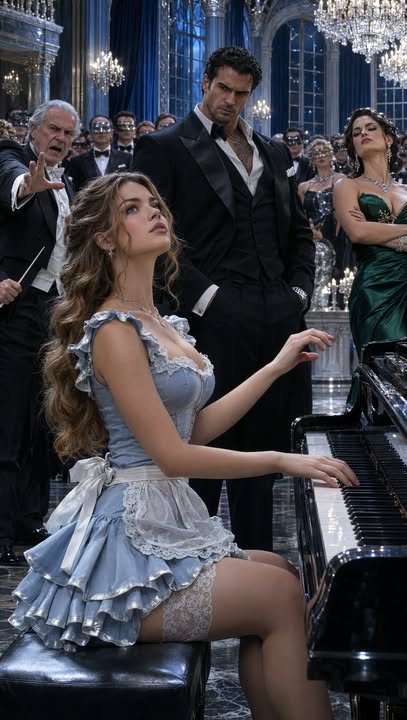
Part 3 – The Receipt in the Piano
“What does it say?” I asked again, though Vincent had already read the words twice.
He was quiet for a moment.
“Ask Falk what happened beneath the opera house.”
I looked down at the open notebook on my kitchen table.
The last movement is a map.
My father’s handwriting seemed suddenly less like a memory and more like a message he had been waiting for me to understand.
“Did Falk know about the inscription?” I asked.
“I don’t think so.”
“You sounded certain.”
“I’m certain he didn’t know I found it.”
That was not quite the same thing, and we both knew it.
I touched the words in the notebook, careful not to smudge the ink.
“Could you bring the locket here?”
“I’d rather not move it until I know what else is hidden inside.”
“Then we should meet at the opera house.”
“Not tonight.”
His answer came gently, but it was still a refusal.
“I’m going back there in the morning,” he said.
“Falk is supposed to be there for a rehearsal.”
“Then I’ll come.”
“You don’t have to.”
“I know.”
I heard the steadiness in my own voice and felt a small, unfamiliar satisfaction.
My father’s secret had drawn me into Vincent’s world, but it would not make me a passenger in it.
“Meet me at the side entrance at ten,” I said.
“All right.”
Neither of us offered another promise.
When we hung up, I remained at the kitchen table with the notebook open before me.
I turned its pages until the clock above the stove showed past midnight.
Near the back, behind a page of penciled piano measurements, I found a drawing of three marks.
They were short, angled lines, each slightly different from the one before.
Beneath them, my father had written a string of numbers, then crossed them out so thoroughly that the paper had nearly torn.
I could not tell whether the numbers were a date, a measure, or a combination lock.
I had never seen the marks before, but I knew their shape.
They matched the tiny scratches beneath the piano’s music rack.
The next morning, I arrived at the opera house early.
The building looked less grand in daylight, though no less beautiful.
Its faded stone façade bore the salt marks of years beside the waterfront, and the tall windows reflected the pale autumn sky.
Vincent was waiting just inside the side entrance.
He had left his jacket unbuttoned, and he looked as though he had slept little.
“You came,” he said.
“You asked.”
“I thought you might change your mind.”
“I nearly did.”
“Why?”
“Because I don’t know you well enough to understand what you expect of me.”
He accepted that without taking offense.
“I don’t know what to expect either.”
The answer made me trust him a little more than a polished reassurance would have.
We walked together toward the stage.
The piano remained where it had been the night before, its lid closed and its music rack empty.
The silver locket was not on the stage.
“Where is it?” I asked.
“Locked away.”
“By whom?”
“Me.”
I studied him.
“Does your family know you have it?”
“My sister knows.”
“Anyone else?”
He hesitated.
“Vivian.”
I had not expected him to say her name.
“Why tell her?”
“Because she was there when I found it.”
“That’s all?”
“No.”
He looked toward the curtained balconies.
“Vivian deserves the truth about what’s happening to her life.”
I remembered her beside him on the stage, composed and attentive, as if she had learned to make room for the feelings of everyone around her except herself.
“What does that mean?”
“It means I should have spoken to her before the gala.”
He did not elaborate.
We had reached the piano, and I could feel the unasked question following us.
Before I could decide whether to voice it, a door opened at the far side of the hall.
Vivian entered with two cups of coffee.
“I thought you’d both be here,” she said.
She held one cup out to Vincent and the other to me.
“I’m grateful,” I said.
“I wasn’t sure how you took it, so I chose something strong enough to qualify as either coffee or a warning.”
A laugh escaped me.
Vivian smiled, then turned to Vincent.
“Falk is in the rehearsal room.”
“Alone?”
“With his assistant.”
“Did he ask about the locket?”
“No.”
“Did he ask about Elena?”
“He asked whether the piano had been removed.”
Vincent’s expression sharpened.
“What did you tell him?”
“That I didn’t know.”
“You do know.”
“Yes, but he didn’t need to know that I knew.”
She said it without defensiveness, and I saw that she had made the choice deliberately.
Vincent glanced at her.
“You shouldn’t have to keep secrets for me.”
“I’m not keeping them for you.”
Her tone remained gentle.
“I’m keeping them because I want to understand what they are before I decide what to do with them.”
The words carried more weight than their quiet delivery.
Vincent lowered his coffee.
“Vivian—”
“Not here,” she said.
“Not with Elena standing between us, and not before you’ve told me what you actually want.”
For a moment, I wished I could disappear into the shadows behind the stage curtains.
Vivian noticed my discomfort.
“You aren’t the problem,” she said.
“That doesn’t make this a conversation I should hear.”
“No,” Vincent agreed.
He looked toward the empty hall.
“Would you give us a few minutes?”
Vivian set her coffee on the piano.
“I’d rather stay.”
She met his eyes.
“If you intend to speak honestly, there shouldn’t be anything I’m not allowed to hear.”
Vincent drew a slow breath.
“The marriage was never only about us.”
Vivian’s face did not change, though her fingers tightened around the cup.
“I know what our families hoped it would accomplish.”
“I should have said that clearly before the gala.”
“You told me your family wanted stability.”
“I didn’t tell you they wanted to present us as the solution to it.”
“Did you think I didn’t understand?”
“I thought I could keep the family’s motives separate from my own.”
“Can you?”
He had no quick answer.
Vivian looked down at the coffee in her hands.
“I have affection for you, Vincent.”
The admission was quiet, neither dramatic nor fragile.
“I wouldn’t have agreed to marry you if I didn’t.”
“I know.”
“But I don’t want to be displayed as proof that your family is gentle, or that you’ve become someone you haven’t chosen to be.”
“I don’t want that either.”
“Then you’ll have to decide what you want, apart from what they want.”
She looked at him, not unkindly.
“And so will I.”
Vincent’s gaze fell.
“I’m sorry I let you believe I had already decided.”
“I believed you because you told me you had.”
“I was wrong to do that.”
Vivian studied his face for a long moment.
Then she picked up her coffee.
“I’m not asking you to choose anything today.”
“I know.”
“I’m asking you not to pretend the choice has already been made.”
“I won’t.”
The conversation ended without anger, but it left something altered in the room.
I understood then that Vivian’s composure was not indifference.
It was the care of someone who had spent too long being treated as a solution to problems she had never created.
She turned to me.
“Have you found anything in your father’s papers?”
I explained the notebook, the melody, and the line about the last movement being a map.
I did not tell her about the numbers I could not decipher.
That small omission felt uncomfortable.
“So Falk may have known Daniel’s music wasn’t his,” she said.
“He denies my father had anything to do with it.”
“Of course he does.”
Vincent glanced toward the corridor.
“We should speak with him before he leaves.”
Maestro Falk was seated alone in the rehearsal room when we entered.
A score lay open on the stand before him, and his glasses rested on the page.
He removed them as we approached.
“I wondered how long it would take you to return.”
Vincent stopped beside the doorway.
“We have a question about the opera house.”
“Then ask the caretaker.”
“We’re asking you.”
Falk looked at me.
“Your father’s daughter has come to believe that music is an inheritance.”
“No,” I said.
“I’ve come to believe it may be evidence.”
A shadow crossed his expression.
Vincent placed the locket on the table between them.
He had brought it after all.
Falk did not reach for it.
“What happened beneath the opera house?” Vincent asked.
The conductor’s eyes went to the locket and then back to Vincent.
“Nothing that concerns you.”
“It concerns my mother.”
“You don’t know what you’re asking.”
“Then tell me.”
Falk stood, but he did not raise his voice.
“Lucia was a private woman.”
“You said that last night,” I replied.
“And you’ve told us nothing else.”
“Because there is nothing else to tell.”
“What happened to her?”
“She disappeared.”
“Did she die?”
The question seemed to unsettle him more than any accusation could have.
“I was told she did.”
“By whom?”
“I don’t remember.”
“You don’t remember who told you my mother was dead?”
Falk’s face tightened.
“Vincent, I understand your need for answers.”
“Do you?”
The room fell silent.
Falk looked down at the locket.
“You think the past can be arranged into a clean sequence of events, with one guilty person and one innocent one.”
“I think someone hid a photograph of my mother in a piano.”
“Perhaps someone wanted you to think that.”
“Who?”
“I don’t know.”
“Then we are both lacking information.”
Vincent’s answer was calm.
It seemed to disarm Falk more than anger would have.
I took the notebook from my bag and opened it to the page with the music staff.
“My father wrote this,” I said.
Falk’s eyes moved over the notes.
“Daniel copied music.”
“He taught it to me.”
“Then he copied it well.”
“You recognize it.”
“I recognize the concerto.”
“Do you recognize the three notes he added?”
Falk leaned over the page.
His gaze paused on the melody, then moved to the crossed-out figures below it.
For the first time, his face showed more than irritation or guarded concern.
It showed recognition.
He straightened.
“Where did you find this?”
“In one of his notebooks.”
“Does anyone else know you have it?”
“My father’s handwriting?”
“The notation beneath it.”
“I don’t know what it means.”
Falk took off his glasses and wiped them with a cloth.
“Your father’s notes are incomplete.”
“Are they?”
He looked at me over the frames.
“Music can resemble a map without being one.”
“The locket opened when I played the melody.”
“That proves only that someone built the mechanism to respond to it.”
“Whoever built it knew the melody.”
Falk said nothing.
Vincent watched him carefully.
“Did you know Daniel?”
“I knew of him.”
“You were both working in the same opera house.”
“Many people worked here.”
“That isn’t an answer,” I said.
“It is the only one I have.”
Falk closed the score on the stand.
“Daniel came to repair the piano shortly before his death.”
I stared at him.
“You knew that?”
“It was an old instrument. It needed regular attention.”
“Who requested the repair?”
“The opera house.”
“Do you remember the date?”
“No.”
The speed of his answer suggested he remembered more than he wanted to share.
Vincent opened the locket again.
On its inner edge, near the hidden inscription, the three tiny marks were visible.
I brought the notebook closer to it.
The scratches, the drawn lines, and the pattern inside the piano all matched.
“Did my father make those marks?” I asked.
Falk leaned toward the page.
“Those are not musical notation.”
“No,” I said.
“They’re something else.”
He moved back from the table.
“Then ask whoever made them.”
“You’re the one who taught the concerto to the world.”
“I didn’t teach it to the world.”
The reply came out too quickly.
His expression shifted as soon as the words left his mouth.
Vivian spoke carefully.
“What do you mean?”
Falk pressed his lips together.
The quiet between us seemed to deepen.
Then he looked at Vincent.
“Your family asked me to perform the work because your mother admired it.”
“My mother?”
“Lucia liked the concerto.”
“Did she write it?”
“No.”
“Did Daniel?”
“No.”
“Then who did?”
Falk turned away.
“The question is not useful.”
“Why?”
“Because the answer has been buried for decades.”
Vincent’s voice remained even.
“Buried where?”
Falk did not answer.
Vivian stood beside the table, watching him with a steadiness I had not seen the night before.
“You don’t have to tell us everything,” she said.
“But you should stop pretending nothing happened.”
For a moment, Falk seemed almost tired.
Then he gathered his score and put it under his arm.
“I have a rehearsal.”
He passed us on his way to the door.
Vincent did not block him.
“Maestro,” I called.
He paused.
“Did my father steal the concerto from you?”
Falk turned back.
His eyes met mine.
“I never said he stole it.”
Then he left.
I looked at Vincent.
“He claimed Daniel had stolen it last night.”
“He said Daniel stole the concerto from him,” Vivian replied.
“Those aren’t the same thing,” I said.
“No,” Vincent said.
“They aren’t.”
The distinction stayed with me as we walked out of the rehearsal room.
By midday, Vincent had asked one of his staff to search the family’s older records for anything connected to Lucia’s disappearance.
He did not tell the person to question anyone, and he did not ask them to confront the Morettis.
He asked for dates, documents, and names.
It was a small difference, perhaps, but I noticed it.
So did Vivian.
“You’re choosing to do this carefully,” she said as we crossed the lobby.
“I’m trying to.”
“Trying is not the same as promising.”
“I know.”
She gave him a searching look.
“I hope you keep remembering that.”
She left soon afterward, saying she had an appointment she could not postpone.
Vincent watched her go.
“You care about her,” I said.
“Yes.”
“Is that why you agreed to the marriage?”
“Partly.”
“And the rest?”
He considered the question.
“Because I thought doing what my family expected would prevent more damage than refusing.”
“That sounds like a reason not to marry someone.”
“It may be.”
He did not defend himself.
That mattered.
I had spent much of my life around people who mistook an explanation for an excuse.
Vincent seemed to be learning the difference.
We returned to the stage to examine the piano.
The three scratches beneath the music rack were still visible, but neither of us could find another hidden fitting.
I played the melody again, softly.
The final notes echoed through the empty hall.
Nothing moved.
“Maybe it opens only once,” I said.
“Or someone reset it.”
“Falk?”
“Possibly.”
The stage technician appeared at the side entrance carrying a folder.
He had been asked to check the piano’s service records.
“Most of the paperwork is missing,” he said.
“But I found a receipt tucked into the old maintenance binder.”
He handed it to me.
The paper was thin and yellowed, with a stamped date and a handwritten description.
I recognized my father’s signature at once.
It read: Daniel Marlow, piano service, opera house, evening call.
The date was two weeks before the fire that had killed him.
My fingers went cold around the paper.
“I didn’t know he’d been here so close to the end,” I said.
Vincent read over my shoulder.
“Was this the piano he repaired?”
“The receipt doesn’t say.”
“It gives the room number.”
He pointed to a small line at the bottom.
The room number matched the old opera-house stage.
I looked at the piano.
For years, my father’s last weeks had been described to me as ordinary.
He had worked, come home, and promised to take me to hear an orchestra the following month.
Then the fire had happened, and every ordinary detail had been turned into a before and an after.
“What if he came here to leave the locket?” I asked.
“Then he may have expected someone to find it,” Vincent said.
“Or he was trying to protect it.”
“From whom?”
I did not answer.
We spent the next hour searching the piano and its bench, but found nothing else.
The receipt remained in my hand.
There was something small written on the back, faint enough that it could have been overlooked as a paper crease.
I held it near the window.
A sentence emerged beneath the stamp, written in my father’s compact script.
Not the first fire.
I read it again, unable to make the words fit.
“What does it mean?” Vincent asked.
“I don’t know.”
The opera house had been damaged by fires over its long history, but I had never heard of one connected to my father.
The building’s caretaker confirmed there had been an incident at the waterfront property where Daniel worked.
It had been officially described as an electrical fire.
The records were incomplete, but the date matched the night of his death.
The same night written in the locket.
Vincent’s expression had gone very still.
“My mother disappeared around that time,” he said.
“Do you know exactly when?”
“Not yet.”
He looked at the receipt.
“But I know there was a fire at a building where she sometimes worked.”
My pulse quickened.
“Where?”
“A storage office near the waterfront.”
“Was that where my father worked?”
“It may have been.”
The possibility opened between us, but neither of us tried to fill it with certainty.
That evening, Vivian came to the small office where Vincent and I were reviewing the documents.
She had changed out of her gala clothes, and without them she looked less like a portrait of someone’s future wife and more like a woman who had simply arrived after a long day.
“Falk has left the opera house,” she said.
“Did he say where he was going?” Vincent asked.
“No.”
“Did you speak to him?”
“I did.”
She sat down across from us.
“He told me he was leaving because the rehearsal had ended.”
“That’s all?”
“That’s all he chose to tell me.”
Vivian looked at the receipt in my hand.
“Is that Daniel’s signature?”
“Yes.”
“What does the back say?”
I passed it to her.
She read the words, then looked up.
“Not the first fire.”
“I’ve never heard about another one,” I said.
“Neither have I.”
Vincent reached for the receipt.
“Could there have been a previous fire at the building?”
“Possibly,” Vivian said.
“But why would Daniel write that unless it mattered?”
The three of us sat with the question.
There were records to search and people to ask, but the evening had left me too tired to pretend that information came without a cost.
“I should go home,” I said.
Vincent nodded.
“I’ll have the driver take you.”
“I can manage.”
“I know.”
He did not argue.
Vivian rose too.
“I’ll come with you to the entrance.”
As we crossed the hallway, she said, “You don’t have to make yourself smaller just because Vincent’s life is complicated.”
“I’m not.”
“I know.”
She glanced toward the room behind us, where Vincent had stayed to speak with his staff.
“I wasn’t saying you were.”
I slowed my steps.
“Are you angry with him?”
“I’m disappointed.”
She seemed to consider the word.
“But disappointment doesn’t erase affection.”
“Do you still want to marry him?”
“I want to know whether the person I care about is willing to choose his own life.”
Her gaze rested on the old framed photographs lining the corridor.
“If he chooses it, I’ll have my answer.”
The thought of the marriage had seemed like a fixed point when I first entered the opera house.
Now it felt more like a question neither of them had asked aloud soon enough.
Vivian stopped near the entrance.
“One more thing,” she said.
“What?”
“I don’t want you to think I laughed at you because I believed you were foolish.”
“You didn’t know who I was.”
“No.”
She smiled faintly.
“But I did know the way people in that room looked at you.”
“Why did you laugh, then?”
“Because I thought it would keep the moment from becoming dangerous for you.”
The answer surprised me.
“I don’t think it worked.”
“No,” she said.
“It didn’t.”
Her expression held no plea for forgiveness, only an honest acknowledgment.
“I’m sorry.”
“Thank you for telling me.”
A car was waiting outside.
Before I got in, Vincent emerged from the office with the locket in his hand.
“Elena.”
I turned.
“I found the date Lucia disappeared.”
He held up a page from the records his staff had located.
The date was two days after the fire at the waterfront building.
“And the opera house?” I asked.
“Her name appears in a staff log.”
“Why?”
“That’s what I’m trying to find out.”
He studied my face.
“I’ll call when I know more.”
I wanted to tell him that I would rather be there when he did.
Instead, I said, “Call when you have something we can verify.”
“I will.”
I left the opera house with my father’s receipt folded in my pocket.
At home, I spread the notebooks across the kitchen table again and began comparing the dates with the numbers he had crossed out.
The first figure appeared to match the month of the fire.
The second looked like a measure number from the concerto.
The third remained impossible to decipher.
I was still bent over the page when my phone rang.
Vincent’s name appeared on the screen.
“I found the reason Lucia was at the opera house,” he said.
“What was it?”
“She wasn’t there for the performance.”
He paused.
“She was there to meet Daniel.”
The room seemed to grow very quiet.
“Are you sure?”
“The staff log says she arrived less than an hour before the fire.”
“And the entry after that?”
“There isn’t one.”
I looked down at my father’s handwriting.
The last movement is a map.
“Vincent,” I said, “there’s something else in his notebook.”
“What?”
“Numbers. I think they might be tied to the concerto.”
Before I could explain, he spoke again.
“The records also show that Falk was in the building that night.”
My hand tightened around the phone.
“Where?”
“Beneath the opera house.”
**–END OF PART 3–CLICK “NEXT” AT THE BOTTOM OF THE PAGE TO CONTINUE READING**
* * *
[PREVIOUS: PART 2](https://echoesofstories.idolsgift.com/blog/part-2-the-date-inside-the-locket-046) | [NEXT: PART 4](https://echoesofstories.idolsgift.com/blog/part-4-the-date-inside-the-locket-046)
✓ Lynn R. Adams
Part 3 – The Receipt in the Piano “What does it say?” I asked again, though Vincent had already read the words twice. He was quiet for a moment. “Ask Falk what happened beneath the opera house.” I…