Part 3: The Broke Widow They Never Knew 039
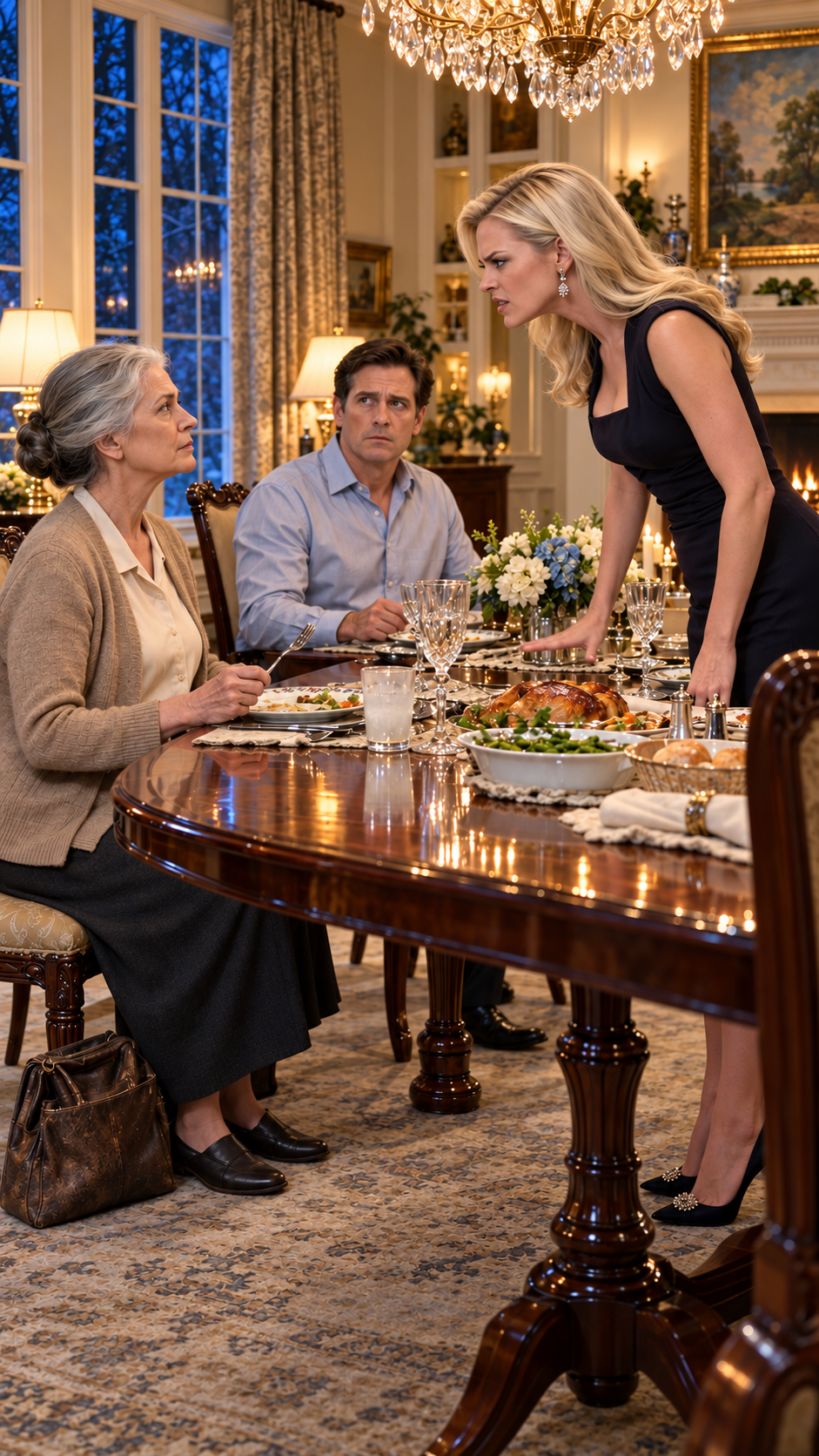
For a long moment after Darren admitted where the money had gone, nobody moved.
The chandelier above us cast soft light over crystal glasses, polished silver, and fourteen months of bank statements that suddenly meant something entirely different.
Thalia stared at her husband.
“You used me.”
Darren flinched.
“I didn’t mean to.”
“That isn’t an answer.”
“I was trying to fix it before you ever had to know.”
She laughed once, but there was no amusement in it.
“You blamed your mother.”
“I never blamed her.”
“You let me blame her.”
That silenced him.
I looked at the two of them and felt the strange urge to leave.
This was their marriage.
Their private damage.
Yet I was already part of it because my imaginary poverty had been used as the curtain behind which Darren concealed his failure.
“Tell us everything,” I said.
Darren looked at me.
“Everything.”
He exhaled slowly.
“Peterson Group was forty percent of our annual revenue.”
I knew the name because Darren had talked about them proudly when he first won their business.
His company handled renovation planning, small commercial design projects, and construction coordination.
He had spent twelve years building it.
At its peak, Mercer Design employed nine people.
Now, according to my son, only four remained.
“When Peterson left, I thought I could replace the revenue within a few months.”
“Why did they leave?” Thalia asked.
“Their board changed.”
“You told me they renewed.”
“I know.”
“Did you lose them because of something you did?”
“No.”
His answer was immediate.
“They consolidated vendors after a merger.”
Thalia pressed her fingertips to her forehead.
“And you thought hiding it was easier than telling me?”
“I thought telling you would scare you.”
“I am scared.”
“I know.”
“No, Darren.”
She looked directly at him.
“I’m scared because I don’t know what else you’ve lied about.”
The sentence seemed to settle over him.
He bowed his head.
I recognized that posture.
Harold used to sit exactly that way when he believed he had disappointed someone.
The resemblance made my chest ache.
“How bad is the company?” I asked.
Darren looked toward the doorway.
“Bad.”
“Numbers.”
“Mom.”
“You’re talking to someone who spent thirty-eight years married to a man who kept business ledgers on our kitchen table.”
He gave me a tired look.
“Payroll is covered through the end of this month.”
“And after that?”
“I don’t know.”
“Debt?”
“About ninety-six thousand.”
Thalia went pale.
“Ninety-six thousand?”
“Most of it is business debt.”
“Most?”
“Eleven thousand is on the personal credit line.”
She stood so quickly that her chair nearly tipped.
Darren reached toward it.
She steadied it herself.
“I need a minute.”
Then she walked out.
We heard her cross the hall.
A door closed quietly upstairs.
Darren remained motionless.
“Go after her,” I said.
“She won’t want me there.”
“Go anyway.”
He looked at me.
“What am I supposed to say?”
“The truth would be an excellent place to start.”
His mouth tightened.
“That’s rich coming from you.”
I felt the remark exactly where he intended it to land.
“You’re right.”
He blinked.
I folded my hands.
“I came here carrying documents because I wanted to prove that Thalia had misjudged me.”
Darren said nothing.
“I wanted the satisfaction of watching her realize I wasn’t helpless.”
His eyes remained on mine.
“What I didn’t expect was to discover that I had misjudged things too.”
He sat down again.
“Mom, she shouldn’t have spoken to you like that.”
“No.”
“She had no right.”
“No.”
“But?”
“But people rarely behave badly for only one reason.”
Darren looked toward the stairs.
“She thought I was giving you money.”
“Because you told her that.”
He rubbed his palms together.
“Yes.”
“And you believed failure would make her respect you less.”
His expression changed.
I had found it.
“That’s what this is about, isn’t it?”
He stared at the table.
“Dad never failed.”
The words surprised me so much that I nearly laughed.
Instead, I felt sad.
“Your father failed constantly.”
Darren looked up.
“No, he didn’t.”
“He lost money on his first warehouse.”
“He never told me that.”
“He invested in a printing company that lasted eight months.”
Darren blinked.
“He bought land outside Madison that turned out to have drainage problems.”
“I’ve never heard this.”
“Of course not.”
“Why?”
“Because parents edit themselves for their children.”
Something shifted behind his eyes.
I thought of all the stories Harold had told our son.
The promotions.
The clever investments.
The contracts.
The successful years.
We had apparently left out the mistakes.
Perhaps every family created myths by accident.
“I thought Dad always knew what he was doing.”
“Your father once bought twelve hundred custom cabinet hinges in the wrong size.”
A reluctant smile appeared.
“What happened?”
“We spent two years finding creative uses for them.”
Darren lowered his head and laughed softly.
The sound made the room feel human again.
Then I remembered something.
“Wait.”
He looked at me.
“Seven years ago.”
His smile disappeared.
“What?”
“When Harold had surgery.”
Darren became very still.
“There was a problem with one of the business accounts.”
He said nothing.
“Your father told me it was resolved.”
Still nothing.
“Darren.”
He looked away.
“How much?”
“Mom.”
“How much did you give him?”
He closed his eyes.
There was my answer.
“How much?”
“Forty-two thousand.”
The number stunned me.
I stared at my son.
“You gave your father forty-two thousand dollars?”
“It was temporary.”
“From where?”
“My investments.”
“And you never told me?”
“Dad asked me not to.”
Anger rose, then dissolved almost immediately beneath something more complicated.
“Why?”
“Because he was embarrassed.”
Of course he was.
I nearly smiled at the terrible symmetry.
My husband had hidden failure from me.
My son had hidden failure from his wife.
I had hidden wealth from both of them.
The Mercer family, apparently, had spent generations confusing secrecy with protection.
“Did he repay you?”
“Yes.”
“How?”
Darren hesitated.
“I assumed the house was part of it.”
My eyes moved to the trust documents.
Suddenly I remembered the exact year Harold had created the arrangement.
Seven years ago.
Three months after his surgery.
“Oh, Harold.”
Darren looked at me.
“What?”
I picked up the closing statement.
My fingers trembled slightly.
At the bottom of the final page was a notation I had never paid attention to before because Harold had handled the transaction.
Gift designation approved pursuant to settlor instruction.
Attached memorandum retained by counsel.
I frowned.
“What memorandum?”
Darren leaned closer.
“I’ve never seen that.”
Neither had I.
I pulled out my phone.
Our estate attorney, Leonard Shaw, had retired two years earlier, but his firm still managed part of the trust.
It was late enough that I did not expect an answer.
Instead, I sent a short email asking for a copy of the memorandum.
Then I looked at Darren.
“You helped us when your father was frightened.”
He shrugged.
“He was my dad.”
“And I spent three years wondering whether you would care about me if I didn’t have money.”
Darren looked at me.
The shame that moved through me was quieter than humiliation.
It was recognition.
“I’m sorry.”
He nodded.
“I know.”
“No.”
I reached across the table.
“I am sorry.”
His eyes glistened.
Neither of us moved for several seconds.
Then footsteps sounded behind us.
Thalia had returned.
She had removed her earrings and tied her hair back.
The polished woman who had opened the door earlier seemed to have disappeared.
She sat down.
“I’m still angry.”
Darren nodded.
“You should be.”
“I don’t know what happens next.”
“I understand.”
“But I want to know everything.”
“You will.”
“No more protecting me from numbers.”
“No more.”
“No more telling me what you think I want to hear.”
“No more.”
She looked at me.
“And I owe you a better apology.”
“You already apologized.”
“Not enough.”
I waited.
“I decided what kind of woman you were based on what I thought you had.”
Her voice was steady.
“I saw your clothes and your apartment and assumed you were irresponsible.”
I said nothing.
“I let money turn you into a burden in my head.”
Her eyes dropped.
“That was cruel, even if I thought the situation was different.”
“Thank you.”
She nodded.
“I don’t expect you to forgive it tonight.”
“That’s probably wise.”
A faint smile touched her face.
Then she looked at Darren.
“Show us the business.”
He blinked.
“What?”
“The books.”
“Tonight?”
“Yes.”
Darren looked at me.
I shrugged.
“Your wife appears to be more sensible than either of us.”
He almost smiled.
Twenty minutes later, we were sitting in Darren’s home office.
The room contained architectural samples, rolled plans, old project photographs, and the enormous computer monitor I had given him for his thirty-fifth birthday.
Darren opened his accounting software.
Numbers filled the screen.
I had not worked professionally with business accounts in years, but numbers remained numbers.
Revenue was down.
Receivables were slow.
Expenses had not fallen quickly enough after the client loss.
The situation was serious.
It was not hopeless.
“That vehicle lease needs to go,” I said.
Darren nodded.
“I know.”
“You’re paying for software licenses for eight people.”
“I forgot those auto-renewed.”
Thalia leaned toward the monitor.
“What is this?”
She pointed to a line near the middle of the balance sheet.
Darren frowned.
I leaned closer.
CAPITAL CONTRIBUTION.
Seventy-five thousand dollars.
The date was two years after Harold died.
The contributor name read H. MERCER FAMILY TRUST.
I sat back.
“That isn’t possible.”
Darren looked at me.
“What?”
“The trust never invested in your company.”
“You’re sure?”
“I’m the trustee.”
Thalia studied the entry.
“It says seventy-five thousand dollars.”
“I can see that.”
Darren clicked it.
A scanned bank record appeared.
The transfer had been real.
The funds had entered Mercer Design almost a year after Harold’s death.
I stared at the date.
Then I stared at the source.
The routing information belonged to an account I recognized.
It had once been managed by Harold’s estate attorney.
“What is it?” Darren asked.
I picked up my phone again.
Before I could call anyone, a new email appeared.
Leonard Shaw’s old firm had answered my earlier question.
Attached was the memorandum from seven years ago.
There was also a note from a junior partner.
Mrs. Mercer, while retrieving the requested file, we discovered an additional sealed instruction from your late husband that should have been delivered to you after his death.
My pulse changed.
Darren leaned over my shoulder.
Thalia moved closer.
Below the message was a scanned envelope.
Across the front, in Harold’s handwriting, were six words.
FOR EILEENE, WHEN SHE STARTS HIDING.
I stopped breathing for a second.
Because suddenly the question was no longer what Harold had secretly done with seventy-five thousand dollars.
The question was how, years before his death, my husband had known exactly what grief might turn me into.
**–END OF PART 3–CLICK “NEXT” AT THE BOTTOM OF THE PAGE TO CONTINUE READING**
✓ Lynn R. Adams
For a long moment after Darren admitted where the money had gone, nobody moved. The chandelier above us cast soft light over crystal glasses, polished silver, and fourteen months of bank statements t…