PART 3: The Bracelet He Remembered 008
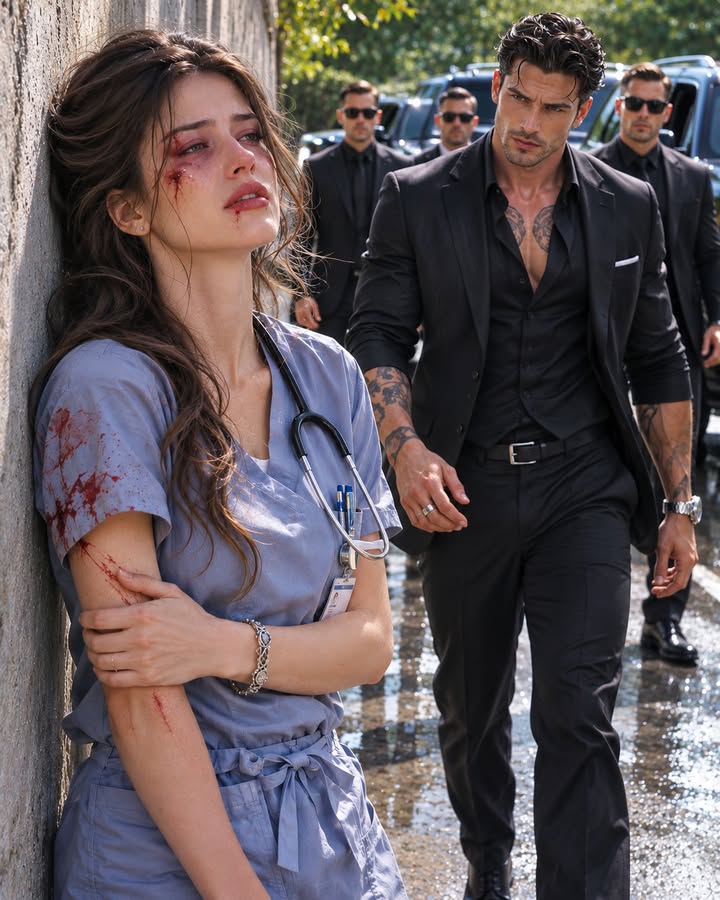
Part 3 – The Name in the Margin
“I think your father’s name was in the hospital records because he was there the night Sofia disappeared.”
For several seconds, I could hear nothing except the faint hum of my friend’s refrigerator.
Then I looked at the bracelet on the table, silver links bright against the wood.
“My father died when I was a child,” I said.
“I know.”
“You know his name?”
“Yes.”
The answer was quiet, but it landed with the weight of a fact he had carried for years.
I stood too quickly, and pain tugged at my ribs.
My friend, Mara, glanced up from the kitchen.
“Evelyn?”
I raised one hand to tell her I was all right, though I wasn’t certain.
“Why didn’t you say this at the hospital?” I asked Vincent.
“Because I didn’t know until I saw the name in the records you described.”
“You haven’t seen those records.”
“No. But I remember the name from a report I read after the fire.”
“What was it?”
“Daniel Whitmore.”
My father’s name seemed to change in the room, as if I had never truly heard it before.
“What did the report say he did?”
“I don’t remember the exact wording.”
“That’s convenient.”
“I know how it sounds.”
“It sounds like you’re trying to make my father part of a mystery you don’t understand.”
“I’m trying to tell you what I remember, not decide what it means.”
His restraint did not make me feel better.
It made the question harder to dismiss.
I sat down carefully, the phone still pressed to my ear.
“What was he doing at St. Agnes that night?”
“I don’t know.”
“Was he a doctor?”
“No.”
“A nurse?”
“I don’t know that either.”
“You said you saw his name in a report.”
“I said I remembered it. The report named several hospital employees who were interviewed after the fire.”
“Interviewed about what?”
“About the evacuation and the records that went missing afterward.”
The words made my stomach tighten.
“My father altered records?”
“I didn’t say that.”
“But you’re thinking it.”
“I’m thinking the report was incomplete, and that I may have misunderstood what it meant.”
“You’re a man who’s spent decades trying to understand what happened to your sister.”
“Yes.”
“And now you think my father was involved.”
“I think he was there.”
The distinction sounded careful, but it did not feel harmless.
Mara had come closer and was watching my face.
I covered the phone’s microphone.
“He says my father was at the hospital the night Sofia disappeared.”
Her expression changed.
“Do you want me to stay?”
“Yes,” I whispered.
She took the chair beside me.
I returned to the call.
“I need you to tell me everything you remember about the report,” I said.
“I can meet you with my notes.”
“I’m not meeting you alone.”
“Then bring someone you trust.”
“You don’t get to decide what happens next.”
“I know.”
The silence between us held no warmth, but it held something close to respect.
“I’ll ask the hospital for access to my father’s employment file,” I said.
“They may not give it to you without a formal request.”
“I know how to make one.”
“I can ask someone to—”
“No.”
He stopped.
“I’m sorry,” he said. “You’re right. I won’t make calls on your behalf.”
The promise mattered, though I did not yet trust him enough to believe it would always hold.
“I’ll contact you when I know more,” I said.
“All right.”
“And Vincent?”
“Yes?”
“If my father was innocent, I won’t let anyone turn him into a convenient explanation.”
“I wouldn’t want you to.”
I ended the call before he could say anything more.
Mara reached for the glass of water and set it within my good hand’s reach.
“Do you believe him?”
“I believe he remembers my father’s name.”
“That isn’t the same thing.”
“No.”
I took a drink and tried to slow my breathing.
For fourteen months, I had studied discrepancies in St. Agnes records, looking for patterns that might explain why several deaths had been documented in ways that did not match the available timelines.
I had never expected the hospital’s past to reach into my family.
I had never expected my father’s name to appear at the center of it.
The next morning, I called the hospital’s human resources office.
I explained that I was Daniel Whitmore’s daughter and asked whether I could see any personnel documents that remained on file.
The administrator who answered was polite, careful, and unable to promise anything.
She told me that records from that period had been archived, and that I would need to submit a written request with proof of identity and a copy of my birth certificate.
I sent the request before lunch.
Then I called the police officer who had taken my statement and asked whether there had been any progress on the attack.
She said they were reviewing traffic cameras near the route and had begun looking into the stolen bag.
She also warned me that some footage had already been overwritten.
“I thought the hospital records might be the reason they took everything,” I said.
“Do you have evidence that connects the assault to your research?”
“No.”
“Then we’ll keep both possibilities open.”
It was a measured answer, and I appreciated it.
When I hung up, I opened a folder on my laptop that contained the few notes I had kept separate from the stolen documents.
I had made the copies for safety, but the file was incomplete.
Several pages were fragments of incident summaries.
One was a photograph of a handwritten notation from an old administrative ledger, taken months earlier when I had still been permitted to review the archive.
I enlarged the image.
The writing was faint, the ink blurred at the edges, but I could make out a date and a series of initials.
D.W.
Beneath them was a short phrase: “transfer completed before report.”
I had noticed the phrase at the time, but it had seemed unrelated to the cases I was investigating.
Now I could not look away.
I called Vincent again.
He answered after the second ring.
“I found a fragment,” I said.
“What kind?”
“A photograph of a handwritten note from an old ledger. It has my father’s initials beside a line about a transfer being completed before a report.”
“What date?”
I read it to him.
He went quiet.
“Does it match the night of the fire?” I asked.
“I believe it does.”
“You believe it, or you know?”
“I can check against my own records.”
“You have records from the fire?”
“Copies of the public reports and some notes I kept afterward.”
“Those aren’t hospital records.”
“No.”
“Can you send them to me?”
“Yes, but I won’t ask you to trust them without verification.”
That answer caught me off guard.
“Good,” I said. “Send only what you have. Don’t contact the hospital.”
“I won’t.”
“And don’t speak to anyone about my father without telling me first.”
“I won’t.”
I gave him an email address and ended the call.
Mara listened while I described the exchange.
“You sound as if you’re negotiating with him.”
“I am.”
“Do you think that’s wise?”
“I think he may know something. I also think his grief could make him see a pattern that isn’t there.”
“And your grief?”
I looked at the photograph on my screen.
“My father has been gone for twenty years. I don’t know enough about him to grieve what I don’t know.”
Mara’s hand settled briefly on my shoulder.
“Maybe this is a chance to know him.”
“Or to discover something I wish I hadn’t.”
“Those can both be true.”
By late afternoon, I had arranged to return to St. Agnes for my scheduled shift the next day.
My supervisor had urged me to take more time off, but I could not stand the thought of being alone with my thoughts while the questions gathered.
I told myself I was returning because patients needed me.
That was true.
It was not the only reason.
The old archive occupied a cramped room in the hospital’s administrative wing, where shelves held ledgers, payroll boxes, and folders that smelled faintly of dust and damp paper.
I had spent enough evenings there to know which records were accessible and which required permission.
The first day back, I did not go near the archive.
I worked a reduced shift, checked on patients, and tried not to react when every man in a dark coat made me think of the attack.
At the end of the afternoon, I found a folded note in my staff mailbox.
It contained one line in unfamiliar handwriting.
“Ask for the east-wing transfer log before it’s discarded.”
There was no signature.
I read it twice, then checked the corridor.
No one was looking at me.
I showed the note to Mara when she came by the nurses’ station.
“Someone knows about the records,” she said.
“Or they know about the old fire.”
“Do you recognize the handwriting?”
“No.”
“Are you going to tell the police?”
“I’ll give it to them.”
I photographed the note first, then sealed it in an envelope and called the officer.
She promised to add it to the case file and asked me not to investigate alone.
I agreed.
The next morning, a hospital archivist named Mr. Heller called me into his office.
He had worked at St. Agnes longer than I had been alive, and he wore the same tired patience whenever someone asked him to search the past.
“I received your request about Daniel Whitmore,” he said. “I’m afraid the personnel file is incomplete.”
“Can I see what remains?”
“Some of it, with approval.”
“What about the east-wing transfer log?”
His eyes lifted from the papers on his desk.
“Why do you ask?”
“Someone left me a note saying it might be discarded.”
He leaned back.
“That log is not on the current disposal list.”
“Can you check?”
“I can.”
“Could I come with you?”
He hesitated before nodding.
“After your shift.”
Mara offered to accompany me, but staffing was short, and she had patients who needed her.
I told her I would call as soon as I left the archive.
Mr. Heller met me there at six.
He unlocked a cabinet and pulled out a narrow gray box marked with an old department code.
Inside were folders, ledger sheets, and several envelopes whose labels had nearly faded away.
He moved carefully, reading each mark before setting a document aside.
The room was quiet except for the soft scrape of paper against paper.
“Did you know my father?” I asked.
“I knew of him,” he said. “He worked in records administration.”
“What did that involve?”
“Maintaining patient files, tracking transfers, and correcting errors in the system.”
“Would he have had access to the east wing?”
“Records staff had access to patient movement logs, not patient care areas.”
“But he could have seen who was transferred.”
“Yes.”
I watched him lift a ledger sheet from the box.
“Do you remember the fire?”
“I do.”
“Do you remember Sofia?”
His hand paused.
“I remember a girl named Sofia Romano.”
My breath caught.
“You knew her?”
“I worked nights then. I was a junior clerk, barely out of training.”
“What happened to her?”
“I don’t know all of it. There were conflicting reports, and I was told not to speculate.”
“Who told you?”
He met my gaze.
“My supervisor.”
“Do you still have the records?”
“Some of them.”
He turned back to the box.
After several minutes, he found a bound ledger with a cracked spine.
The transfer entries were written in narrow, slanted handwriting.
He ran a finger down the page until he reached the date I had given him.
“There,” he said.
The entry was brief.
A patient had been moved from the east wing to another location before the official fire report was completed.
The name field had been crossed out.
Beside it was a notation in different ink: “At request of R.W.”
My mouth went dry.
“Rose Whitmore?”
Mr. Heller stared at the initials.
“It could be.”
“Would my father have written this?”
“I can’t tell.”
“Can we compare the handwriting?”
“Not without finding another sample.”
He turned the page.
“Here’s a staff note.”
It was a thin sheet folded into the ledger, its edges brittle with age.
The handwriting differed from the entry, but the name at the bottom was unmistakable.
Daniel Whitmore.
I recognized it from the few letters my mother had kept.
The note stated that a transfer had been completed before the official report was filed.
It also said that the original patient identifier had been removed from the copy sent to the hospital administrator.
I read the sentence again.
“Why would my father remove the identifier?”
Mr. Heller did not answer at once.
“He may have been protecting a patient’s privacy,” he said. “Or following instructions. Or correcting a record after a clerical error. We can’t know from one page.”
“But someone else wrote ‘at request of R.W.’”
“Yes.”
“Does the note say who authorized it?”
“No.”
I looked at the ledger, at the crossed-out name, at my father’s handwriting.
The evidence did not tell me whether he had helped someone or hidden something.
It only proved that he had changed the record.
My father, whom I remembered as a man who hummed while fixing a loose cupboard hinge, had become a question with no answer.
Mr. Heller copied the relevant pages according to hospital procedure and sealed the originals back in the box.
Before he closed the cabinet, he examined the disposal label.
“This box isn’t scheduled to be discarded,” he said. “It was marked for review, not destruction.”
“Then why did someone tell me it might be?”
“I don’t know.”
He locked the cabinet.
I took the copies and called Mara in the corridor.
“I found a ledger entry,” I said. “My father’s name is on a note about a transfer.”
“What does it mean?”
“I don’t know.”
“Are you safe?”
“I’m inside the hospital.”
“That wasn’t what I asked.”
I looked down the empty corridor.
“I think so.”
She asked me to come straight to her apartment after my shift.
I promised I would.
Before leaving the administrative wing, I called Vincent.
He answered on the first ring.
“I found a record,” I said. “My father wrote that a patient was transferred before the report was filed. The name was removed.”
“Was the patient Sofia?”
“I don’t know. The entry has been crossed out.”
“Does the note mention Rose?”
“Another notation says the transfer happened at the request of someone with the initials R.W.”
He exhaled, a small sound that might have been relief or pain.
“Rose,” he said.
“Maybe. We don’t know that.”
“No,” he agreed. “We don’t.”
“My father may have changed the record.”
“Or recorded a transfer someone else ordered.”
“Either way, the record was altered.”
“Yes.”
“You once told me you thought he was there the night Sofia disappeared.”
“I did.”
“Why?”
“Because I read his name in a report that described the staff who were questioned about missing records.”
“Did the report accuse him?”
“No.”
“Did you ever look for him?”
“I tried, years ago. I found his name, but not enough to know where he had gone or whether he was still alive.”
“He died when I was young.”
“I’m sorry.”
I closed my eyes.
“Don’t be sorry for my father before we know what happened.”
“You’re right.”
His willingness to step back did not erase the hurt, but it kept it from growing sharper.
“Send me the notes you have,” I said. “I’ll compare them to what I found.”
“I’ll send them tonight.”
“And Vincent?”
“Yes?”
“If you discover something that changes what you think about my father, you tell me before you decide what it means.”
“I will.”
After the call, I tucked the copies into my bag and went toward the main entrance.
A woman stood near the visitor desk, holding a small parcel wrapped in brown paper.
She looked to be in her sixties, with silver hair pinned back and a raincoat folded over one arm.
When I passed, she said my name.
“Evelyn Whitmore?”
I stopped.
“Yes?”
“I’m Clara Bell. I used to work in the hospital’s records department.”
I searched my memory, but I had never met her.
“I’m sorry, I don’t think—”
“You wouldn’t. I left before you started.”
She looked down at the parcel in her hands.
“I heard you’d been asking about the east-wing transfer log.”
The corridor seemed to grow quieter around us.
“Who told you?”
“Someone who thought you deserved to know there was more than one copy.”
My pulse quickened.
“What does that mean?”
Clara glanced toward the hospital doors, then back at me.
“Your father was not the only person who changed those records.”
“Who else did?”
“I can’t explain it here.”
“Then where?”
She hesitated, as if weighing how much danger a truth could carry even after all these years.
“Tomorrow,” she said. “Bring someone you trust, and bring the pages you found.”
She held out the parcel.
I did not take it.
“What’s inside?”
“A copy of the transfer notation.”
“I already have a copy.”
“Not the page that came before it.”
The words struck with quiet force.
“What page came before it?”
Clara lowered her voice.
“The one that shows who ordered my father to remove Sofia’s name.”
**–END OF PART 3–CLICK “NEXT” AT THE BOTTOM OF THE PAGE TO CONTINUE READING**
* * *
[PREVIOUS: PART 2](https://puretales.idolsgift.com/blog/part-2-the-bracelet-he-remembered-008) | [NEXT: PART 4](https://puretales.idolsgift.com/blog/part-4-the-bracelet-he-remembered-008)
✓ Lynn R. Adams
Part 3 – The Name in the Margin “I think your father’s name was in the hospital records because he was there the night Sofia disappeared.” For several seconds, I could hear nothing except the faint …