PART 3: The Accounts I Had Never Counted 029
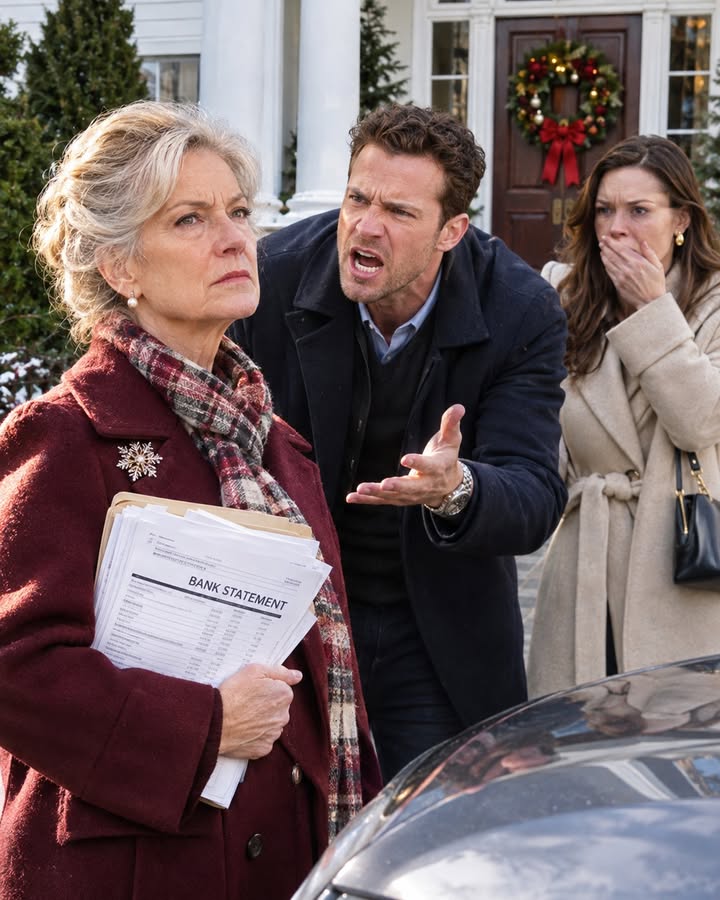
Part 3 – What the Records Remembered
The word gift stared back at me from the statement, written in my own hand.
I sat at the kitchen table and tried to remember the afternoon I had made the transfer.
Daniel had called from his car, speaking quickly over the sound of the road.
He had said the closing on a property had been delayed and he needed money to cover a gap until another payment came through.
He had called it a loan, I was almost certain.
I remembered asking when he would pay me back, and I remembered him saying, “As soon as the deal closes.”
But the note beside the transfer did not say loan.
I searched my memory for the moment I had written it, but all I found was the image of myself at the computer, entering the amount in my ledger.
Perhaps I had written gift to keep the account simple.
Perhaps I had meant that I was giving it to him without expecting repayment.
Or perhaps I had misunderstood him then, just as I had misunderstood so many things since.
I carried the statement to the bedroom and placed it inside the folder the lawyer had given me.
Then I called the bank and asked for copies of the statements from the previous two years.
The clerk told me they could mail them or make them available online.
I asked for both.
If I was going to understand what had happened, I wanted the records in front of me, not scattered across old emails and half-remembered conversations.
After I hung up, I looked at the gifts beneath the tree.
Daniel’s present was a wool scarf in the deep green he wore most often.
Claire’s was a cookbook she had once admired while we were browsing a shop together.
I had chosen both carefully.
Now they seemed to belong to a different version of the holiday, one where the three of us still knew how to speak plainly.
I put the gifts in a cupboard, not because I had stopped wanting to give them, but because I could not bear to look at them yet.
The next morning, Claire called.
I was in the kitchen, rinsing my coffee cup, when her name appeared on the screen.
For a second I considered letting it ring.
Then I remembered that she had not sent the message about Christmas.
She might not even know how much it had hurt.
“Hello, Claire.”
“Hi, Margaret.” Her voice was careful, as if she had rehearsed the call and was no longer sure how to begin.
“I hope I’m not catching you at a bad time.”
“You’re not.”
There was a small pause.
“I wanted to ask about Daniel,” she said.
“Is everything all right?”
I dried my hands on a towel and sat down.
“What makes you ask?”
“He came home yesterday in a strange mood, and he told me you had changed the card and phone arrangements.”
“I did.”
“Was there a problem?”
I looked toward the notebook on the table.
“I realized I had been paying for things without being clear about what they were,” I said.
“Daniel seemed to think we had an arrangement, but I don’t think we ever put it into words.”
Claire was quiet for a moment.
“I’m sorry,” she said.
“You don’t need to apologize for the accounts.”
“I know, but I’m sorry you were left feeling uncertain about it.”
The kindness in her voice made my throat tighten.
I had expected her to defend Daniel or ask me to reverse the changes.
Instead, she sounded as though she were trying to understand the same tangled story I was.
“Did Daniel tell you that I’d sent him money?” I asked.
“Yes, some of it.”
“Some of it?”
“He told me you had helped us when we bought the house.”
I opened the notebook and turned to the page with the transfer written down.
“What did he say about the money?”
“That it was a gift toward the deposit.”
The room seemed to become very still around me.
I glanced at the statement in the folder, where my own handwriting had labeled the transfer HOUSE DEPOSIT—DANIEL.
“He told me it was a short-term loan,” I said.
Claire breathed in, and I heard the faint rustle of something on her end of the call.
“Are you sure?”
“I’m sure that was how I understood it.”
“I didn’t know that.”
Her voice had changed.
It was no longer only careful.
Now it carried an anxious edge, like a person finding a loose floorboard beneath a step.
“I’m not asking you to take sides,” I said.
“I’m trying to work out what I agreed to.”
“I understand.”
“Did Daniel tell you there was a repayment plan?”
“No.”
“Did he say the money was for anything beyond the house?”
“No.” She paused again.
“He said you wanted to help us get settled, and that you were happy to do it.”
I pressed my fingers against the edge of the table.
“I did want to help.”
“I know.”
“But wanting to help and agreeing to a gift are not always the same thing.”
“No,” she said softly.
“They aren’t.”
I could hear a clock ticking somewhere near her.
For the first time, I wondered whether Claire was sitting alone or whether Daniel was in the room with her, listening.
“Would you be comfortable looking through any paperwork you have?” I asked.
“I don’t want to make you uncomfortable.”
“I can look,” she said.
“There may be an email from when we bought the house.”
“Only if you feel all right about it.”
“I do.”
There was another brief silence, and then she said, “Margaret, did Daniel tell you we had asked for money?”
I thought of his voice on the phone, the urgency, the postponed closing, the deal that would soon go through.
“He told me he needed a temporary loan.”
“I never heard that.”
“I’m not saying he meant to hide it from you.”
“But he did hide it,” she replied, then seemed to regret the sharpness of her own words.
“I’m sorry. I don’t know what he meant.”
“Neither do I.”
I looked down at the notebook, where the entries seemed more uncertain than they had the day before.
“Could you speak with him when you’re ready?” I asked.
“I think I need to.”
“I hope you can talk without it becoming a fight.”
“So do I.”
After we ended the call, I sat with my hands folded on the table.
I had spent years assuming Daniel and Claire understood one another better than I understood them.
They had built a life together, bought a house, made plans.
I had imagined that if Daniel needed help, Claire knew why.
But now I wondered whether I had mistaken a shared address for a shared understanding.
The phone rang again before I could stand.
It was Daniel.
“Did you call Claire?” he asked.
His tone was controlled, but there was a strain beneath it.
“She called me.”
“What did you tell her?”
“The truth as I remember it.”
A pause followed.
“And what truth is that?”
“That you told me the money was a loan.”
He exhaled.
“Mom, I don’t want this to turn into something bigger than it is.”
“It is already bigger than I understood.”
“You gave me the money.”
“I did.”
“You knew we were trying to buy the house.”
“I knew you were waiting on a deal to close.”
“That’s the same thing.”
“Is it?”
I heard him shift the phone against his cheek.
“I told you I’d pay it back when I could.”
“That isn’t quite the same as telling me it was a loan.”
“It was a loan.”
“Then why did Claire believe it was a gift?”
“I don’t know.”
“Did you tell her it was a gift?”
“I told her you wanted to help.”
“That isn’t what I asked.”
He went quiet.
A part of me wanted to fill the silence, to soften the question until it was easier for him to answer.
I let the silence remain.
“I didn’t say the word gift,” he said finally.
“Not exactly.”
The answer unsettled me more than a denial would have.
“What did you say?”
“I said you were helping us with the deposit.”
“Did you say you would repay me?”
“No.”
“Why not?”
“Because I didn’t want her to worry.”
“About what?”
“About how tight everything was.”
I looked at the statement again.
“Were you in trouble then?”
“No.”
The quickness of his answer made me hold the phone more tightly.
“Daniel, I’m not asking to accuse you.”
“I said no.”
“Then we can keep going through the records and understand it together.”
“I don’t need you investigating me.”
“I’m not investigating you.”
“You’re calling Claire and looking at statements.”
“She called me.”
“And the statements?”
“I’m entitled to know what happened to my money.”
He breathed out slowly.
“I’m trying to pay you back.”
“Then I want us to be clear about what you owe.”
“I told you, I intend to pay you back.”
“That is not the same as telling me what you borrowed.”
His voice went quiet.
For a moment, I heard only the faint sound of traffic through his car window.
“Can we talk about this after Christmas?” he asked.
“We can talk about it when we’re ready to speak honestly.”
“I am being honest.”
“Then it should be possible to write down what you remember.”
He gave a short, tired laugh.
“You never used to need everything written down.”
“I didn’t used to know I needed it.”
That silenced him.
I could almost picture him in the driver’s seat, staring past the windshield, one hand on the wheel.
“Is this really about the money?” he asked.
“No.”
“Then what is it about?”
I thought of the message telling me not to expect them home.
I thought of the card that had been declined, and of the way he had come to my door without asking how I was.
“It’s about knowing whether I can trust what I’ve been told,” I said.
He said nothing.
“I’ll talk to you later,” he replied at last.
“I hope so.”
After the call, I put the kettle on and forgot to drink the tea.
I kept thinking about Claire’s careful voice and Daniel’s answer that he had not said the word gift, not exactly.
It sounded like the kind of answer a person gave when the exact wording mattered more than the truth.
That afternoon, I found the old Christmas card in the cupboard where I kept photographs and birthday notes.
I had been searching for a small envelope to send Claire’s cookbook in, but the card slipped from between two albums and landed open on the carpet.
The paper had yellowed at the folds.
Daniel had made it when he was eight, cutting a crooked tree from green construction paper and gluing small squares of colored foil onto its branches.
Across the front, in uneven blue letters, he had written: TO MOM AND DAD, FROM DANIEL.
Inside, he had drawn the three of us beneath a lopsided star.
My husband was taller than both of us, with a wide smile that took up half his face.
Daniel had drawn himself holding my hand.
Beneath the picture were the words, “I love being with you even when we don’t do anything.”
I sat down on the floor with the card in my lap.
The sentence took me back to a winter afternoon when Daniel was young.
We had been snowed in, and my husband had gone outside to clear the steps while Daniel and I sat at the table making paper chains.
Daniel had not asked for anything.
He had only wanted to be close enough to pass me the scissors.
I pressed the card against my chest and closed my eyes.
It did not make the present easier.
It only reminded me that the distance between us had not always been measured in visits and money.
That evening, I called the lawyer’s office and asked whether he could help me sort the transfer.
His receptionist said he could review the statements with me at our appointment the following week.
I thanked her and hung up.
I did not want to turn my son into a problem for a lawyer to solve.
I wanted help understanding the papers before I let fear decide what they meant.
The next day, Claire called again.
“I found the email,” she said.
I sat at the kitchen table, where the Christmas card lay beside the notebook.
“What does it say?”
“It’s from Daniel, written the week we made the offer on the house.”
“Does it mention the money?”
“Yes.”
She paused.
“I’m not sure how to read it.”
“Would you like to read it to me?”
A soft breath came through the phone.
“He wrote, ‘Mom said she can help with the deposit. She told me not to worry about paying her back until the investment closes.’”
My fingers tightened around the edge of the table.
“What investment?”
“I don’t know. I thought he meant the house, or maybe something he was working on.”
“Did you ask him?”
“I did. He said it was a property deal that would close soon.”
The room seemed to tilt, though nothing had moved.
I remembered Daniel saying the same thing to me, months earlier.
A deal was delayed.
A payment would come through.
He would repay me as soon as it closed.
“Claire,” I said, trying to keep my voice level, “did you understand the money was a loan?”
“I thought it was a gift at first.”
“Why?”
“Because he said you wanted to help us with the house.”
“And then?”
“Then I saw that email.”
The silence between us felt larger now.
“I asked him about the line saying he didn’t have to pay you back until the investment closed,” she continued.
“What did he say?”
“He said you had told him not to worry about it right away.”
“That may be true.”
“I know.” She sounded troubled.
“But I thought that meant he could repay you whenever he was ready, after things settled down.”
I looked toward the statement on the table.
The word gift was still there, a small mark in my handwriting beside a number too large to ignore.
“Did you know about the investment before he sent that email?”
“No.”
“Did you know what he meant by it?”
“No.”
“Did he explain it later?”
“He said the deal was taking longer than expected, and that the house deposit had come from your savings.”
I closed my eyes.
“He told me the money was for a temporary gap.”
“Maybe it was.”
“Maybe.”
But the word no longer felt like comfort.
It felt like a door left open to something I could not yet see.
“I’m sorry to put you in the middle,” I said.
“You’re not.”
“I don’t want to make you choose between us.”
“I don’t think this is about choosing.”
“I hope you’re right.”
She was quiet.
Then she said, “I asked Daniel about the email this morning.”
“What did he tell you?”
“He said he’d explain it after he talked to you.”
My stomach tightened.
“Did he say why?”
“No. He just asked me not to worry until then.”
The request sounded familiar, though I could not tell whether that made me feel safer or more afraid.
“I’m not sure I know what to say to you,” I told her.
“You don’t have to say anything.”
“I’m glad you called.”
“Me too.”
We ended the call gently, but I stayed at the table long after the screen went dark.
That evening, Daniel sent a message.
I saw Claire spoke to you. Please don’t make up your mind before I can explain.
I read it twice.
Then I placed the phone face down.
I did not want to make up my mind.
I wanted to know what the words meant, what the money had been used for, and why the people closest to Daniel had each been given a different version of the same story.
I opened my notebook and turned to the page where I had listed the transfer.
Under the amount, I wrote the date Claire had read from her email.
Then I added the words: Ask what investment he meant.
The next morning, I brought the statement, the notebook, and the old Christmas card to the lawyer’s office.
He greeted me kindly and led me into a small room with a broad wooden desk and a window looking out onto the street.
He listened while I explained the transfer, the conflicting accounts, and the question of what I had intended.
He did not rush to tell me which version was correct.
Instead, he asked if I had any written note from Daniel, or an email, or a message that might clarify what he had said.
I told him about Claire’s email.
He nodded and made a note.
Then he asked whether I had given Daniel money on other occasions that I understood to be loans.
I looked at my list.
“I think so,” I said.
“But now I’m not sure which ones he understood that way.”
The lawyer rested his pen on the desk.
“Then the first step is to separate what you know from what you remember,” he said.
“What you meant, what was said, and what can be documented may not all be the same.”
I felt a small, uncomfortable relief at hearing someone say that aloud.
Before I left, he reminded me that I could decide what support I wanted to offer in the future, regardless of what the old records showed.
I thanked him and drove home through a light snowfall.
The Christmas card sat on the passenger seat, its crooked paper tree turned toward me.
I kept thinking of the words Daniel had written as a child: I love being with you even when we don’t do anything.
At the house, I found a new envelope on the porch.
It was from Daniel, addressed in his familiar handwriting.
Inside was a printed email, its date several months earlier than the one Claire had found.
There was no note, only a single line highlighted in yellow.
I unfolded the page and read the message Daniel had written to me.
“Mom, I can repay you as soon as the deal closes. I just need you to help me keep the business afloat until then.”
**–END OF PART 3–CLICK “NEXT” AT THE BOTTOM OF THE PAGE TO CONTINUE READING**
* * *
[PREVIOUS: PART 2](https://puretales.idolsgift.com/blog/part-2-the-accounts-i-had-never-counted-029) | [NEXT: PART 4](https://puretales.idolsgift.com/blog/part-4-the-accounts-i-had-never-counted-029)
✓ Lynn R. Adams
Part 3 – What the Records Remembered The word gift stared back at me from the statement, written in my own hand. I sat at the kitchen table and tried to remember the afternoon I had made the transfe…