PART 3: She Beat the Prince’s Impossible Dance, Then Discovered Why He Chose Her-060.12
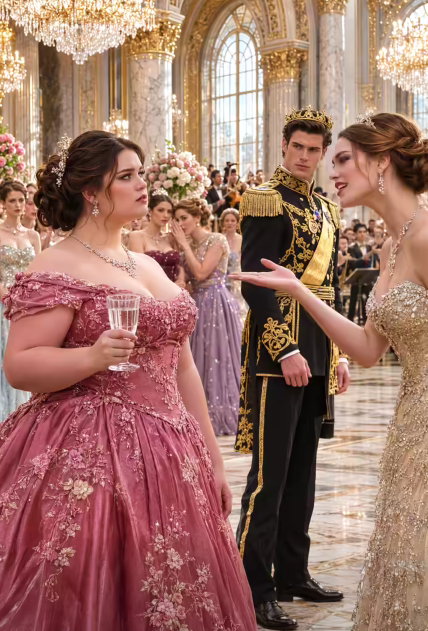
PART 3 – THE QUEEN’S UNFINISHED LIST
Emily slept very little.
The guest apartment assigned to her overlooked the eastern gardens, where moonlight rested on clipped hedges and pale stone paths with a serenity that felt almost insulting.
Nothing inside her was serene.
She sat beside the window long after midnight, wrapped in a silk robe provided by the palace, replaying the five handwritten words in her mind.
Keep this name for Alexander.
She had searched her memory until it hurt.
She had never met Queen Margaret.
She had never attended a royal reception as a child.
Her parents had never mentioned any connection to the royal family.
Yet somewhere, nine years earlier, a queen had written Emily Carter’s name inside a confidential palace file.
At breakfast the following morning, Vivian Hartwell found her pushing berries around a porcelain plate.
“You look terrible,” Vivian said.
Emily glanced up.
“Thank you.”
“I mean tired.”
“That’s much kinder.”
Vivian sat across from her.
Most of the eliminated contestants had departed before dawn, but Vivian’s family was attending a diplomatic luncheon later that day.
She poured herself coffee.
“I heard you were summoned to the east drawing room.”
“Palaces apparently have no secrets.”
“They have thousands of secrets.”
Vivian stirred cream into her cup.
“They just don’t have privacy.”
Emily considered that sentence.
It felt more important than Vivian probably intended.
“What happens now?” Vivian asked.
“I don’t know.”
“You won.”
“I won a dance.”
Vivian gave her a knowing look.
“You danced with the prince without spilling water after nineteen of us failed.”
“I walked part of it.”
“That somehow makes it worse.”
Emily laughed.
Vivian leaned closer.
“Do you like him?”
Emily nearly dropped her spoon.
“I met him yesterday.”
“That wasn’t my question.”
Emily looked toward the dining room doors.
Alexander was nowhere in sight.
“He’s interesting.”
Vivian smiled.
“That is the answer people give when they absolutely do not want to answer.”
“What about you?”
“I thought he was handsome before he spun me into disaster in front of four hundred people.”
“You still think he’s handsome.”
“Obviously.”
Emily shook her head.
Vivian became serious.
“Whatever happens, be careful.”
Emily studied her.
“Of what?”
“Not him.”
Vivian gestured subtly toward the room.
“This.”
Footmen moved silently between tables.
Portraits of generations of rulers stared down from paneled walls.
Every place setting carried the royal crest.
Vivian lowered her voice.
“Places like this make everything feel important.”
She looked at Emily.
“Sometimes they make you forget to ask whether it’s important to you.”
The words stayed with Emily.
An hour later, Alexander arrived with the royal archivist, Dr. Helena Moore, a composed woman in her sixties with silver glasses and an expression suggesting that she trusted documents more than people.
“The notation beside your name is genuine,” Dr. Moore said as they walked through a restricted corridor beneath the north wing.
“That does not explain how my name got there,” Emily replied.
“No.”
The archivist unlocked an iron door.
“But we may know where to look.”
The royal archive was nothing like Emily expected.
There were no cobwebs or mysterious underground tunnels.
Instead, the room was bright, climate-controlled, and meticulously organized.
Rows of archival boxes filled sliding shelves.
Alexander glanced at Emily.
“Disappointingly modern, isn’t it?”
“I was expecting candles and one suspicious old man guarding a key.”
“Dr. Moore is much more frightening.”
Without looking up, the archivist said, “Correct.”
Emily smiled.
Dr. Moore led them to a table.
“Queen Margaret maintained a private charitable correspondence file separate from her official papers.”
She placed a gray archival box before them.
“Most of it concerns scholarship programs, community organizations, hospitals, and educational foundations.”
Emily’s brow furrowed.
“My family wasn’t involved in anything royal.”
“Not directly,” Dr. Moore said.
She opened the box.
“Do you recognize the name Ruth Bennett?”
Emily froze.
“Yes.”
Alexander noticed.
“Who is she?”
“She ran the community arts center where I grew up.”
Emily could suddenly see the building in her mind.
A converted brick library with crooked windows, battered music stands, and classrooms where children painted, danced, rehearsed plays, and learned instruments their families could never have afforded.
Emily had spent almost every afternoon there between the ages of twelve and eighteen.
“She gave me my first job.”
Dr. Moore removed a letter.
“Mrs. Bennett corresponded with Queen Margaret for nearly fifteen years.”
Emily stared at her.
“Why?”
“The queen anonymously funded arts programs in several American communities.”
Alexander looked equally surprised.
“She never told me that.”
“Your mother did not consider charity useful when it became publicity.”
Dr. Moore slid the letter across the table.
Emily recognized Ruth Bennett’s handwriting immediately.
The letter was dated nine years earlier.
She read slowly.
Most of it described the arts center’s scholarship recipients.
Then one paragraph caught her attention.
Emily read it twice.
Alexander waited.
“What does it say?”
Emily swallowed.
“She wrote about me.”
The paragraph described a sixteen-year-old volunteer who had quietly withdrawn from a regional dance competition so another student could use the center’s only travel scholarship.
Alexander looked at her.
“You never told anyone?”
“It wasn’t dramatic.”
Emily placed the page down.
“The other girl’s family couldn’t afford the trip.”
“You could?”
“My parents had already saved enough.”
Alexander continued reading.
Ruth had described Emily as someone who noticed when rules produced unfair outcomes and searched for practical solutions without demanding recognition.
The final sentence was simple.
Some young people enter a room asking how to be noticed.
Emily enters asking what needs to be done.
Emily felt unexpectedly embarrassed.
“She made me sound much better than I was.”
Dr. Moore removed another document.
“Queen Margaret answered.”
The queen’s letter thanked Ruth for the story and asked that Emily’s name be retained among several young people she wished the foundation to follow over time.
Alexander stared at the page.
“Several?”
Dr. Moore nodded.
She opened another folder.
Inside was a list.
Seventeen names.
Beside each appeared a letter and a number.
M-1.
M-2.
M-3.
All the way to M-17.
Emily looked at her own code.
“M-17.”
Alexander leaned back slowly.
“So she wasn’t choosing a bride.”
Dr. Moore’s mouth twitched.
“Her Majesty was thoughtful, not clairvoyant.”
Emily released a breath she had not realized she was holding.
The mystery suddenly seemed less impossible.
But another question remained.
“Why were these names preserved for Alexander?”
Dr. Moore turned several pages.
“Because the queen was worried about the people who would surround him after her death.”
The room grew quiet.
Alexander’s expression changed.
Dr. Moore looked toward him.
“Your mother knew that your adult life would be highly managed.”
Alexander said nothing.
“She believed that one danger of monarchy was that a future sovereign could become surrounded entirely by people trained to impress him.”
The archivist handed him a memorandum.
Alexander read silently.
Emily watched his face.
His jaw tightened.
“What does it say?” she asked.
He passed it to her.
The document was written in Queen Margaret’s hand.
She had created what she called an independence list.
Not potential wives.
Not advisers.
Not political allies.
People whose character had been observed long before they had anything to gain from knowing a prince.
The queen instructed that, when Alexander reached adulthood, some of those names might be considered for scholarships, public-service appointments, charitable boards, or social invitations.
She wanted him to meet people outside the carefully polished circles of court.
Emily looked up.
“So someone found this list and used it for the selection.”
Dr. Moore nodded.
“That appears to be what happened.”
“Who?”
The archivist exchanged a glance with Alexander.
“The Royal Household Committee.”
Alexander stood.
“They weren’t authorized to do that.”
“No,” Dr. Moore said.
“They were not.”
The prince walked toward the shelves, anger visible in the rigid line of his shoulders.
Emily remembered his description of himself as a boy.
Too quick to anger.
Too quick to react.
She watched him stop.
He drew one controlled breath.
Then another.
When he turned around, his voice was measured.
“Why would they use my mother’s list without telling me?”
Dr. Moore closed the box.
“You will need to ask them.”
The answer came that afternoon.
The Royal Household Committee assembled in a council chamber with high windows, dark wood, and a round table designed centuries earlier to prevent any adviser from appearing physically closer to the sovereign than another.
Emily was not initially invited.
Alexander insisted.
“She is the person whose name was used,” he said.
“She deserves to hear the explanation.”
Nobody objected openly.
Lord Stephen Pembroke, chairman of the committee, folded his hands.
“We did not act maliciously.”
“That is not the same as acting properly,” Alexander replied.
Pembroke accepted the criticism without protest.
“The marriage selection was receiving applications almost entirely from the same narrow social circles.”
Emily noticed Vivian’s family name on one of the papers before him.
“We wanted greater diversity of experience.”
“So you opened my mother’s private files.”
“The files had been transferred to the institutional archive.”
Dr. Moore spoke from the end of the table.
“Transfer does not equal permission.”
Pembroke nodded.
“That was an error.”
Alexander looked almost surprised by how quickly the man admitted it.
The committee chairman continued.
“We found seventeen names.”
“Why Emily?” Alexander asked.
“Because fourteen were no longer eligible.”
“Married, unavailable, uninterested, or outside the stated age range.”
“And the others?”
“Two declined invitations.”
Emily felt every person in the room turn toward her.
“So I was the only one who accepted.”
“Yes.”
The revelation was strangely ordinary.
No prophecy.
No secret royal arrangement.
No queen planning a marriage from beyond the grave.
Just a forgotten list, an overreaching committee, and a chain of decisions that had brought Emily into a ballroom.
She should have felt relieved.
Instead, she felt something more complicated.
“Did the prince know anything about this?” she asked.
Pembroke looked at her directly.
“No.”
Emily glanced toward Alexander.
His frustration was genuine.
For reasons she did not entirely understand, that mattered.
The meeting ended with a formal review of the committee’s actions.
Alexander and Emily walked together into the palace gardens afterward.
For several minutes neither spoke.
Autumn roses climbed a stone wall beside them.
Emily finally broke the silence.
“You look disappointed.”
“I am.”
“Because your mother didn’t secretly select me?”
Alexander glanced at her.
“I’m disappointed that people used her private judgment as a shortcut.”
Emily nodded.
“That makes more sense.”
He pushed his hands into his coat pockets.
“But I admit the mysterious version was more interesting.”
She smiled.
“Definitely.”
They reached a fountain.
Alexander stopped beside it.
“Do you regret coming?”
Emily considered the question.
“Ask me again when fewer people are deciding my future in rooms I didn’t know existed.”
He looked down.
“That is fair.”
She studied him.
“You really didn’t know.”
“No.”
“And you really intended the dance to test adaptability.”
“Yes.”
“And you really thought spilling water was a sensible way to choose someone who might become queen.”
Alexander sighed.
“When you arrange those sentences together, I become increasingly difficult to defend.”
Emily laughed.
He looked at her then.
Not as a contestant.
Not as an unexpected name on a list.
Simply as Emily.
“I would like to know you,” he said.
The words were quiet.
No orchestra.
No audience.
No crown.
Emily felt something shift inside her.
“Without a glass of water?”
“Preferably.”
“And without nineteen people watching?”
“Absolutely.”
She smiled.
“Then I would like to know you too.”
For the first time since arriving, the palace no longer felt like a stage.
They walked for nearly an hour.
Alexander told her about being educated partly in the United States, where his mother had wanted him to experience ordinary classrooms and friendships.
Emily told him about the arts center, Ruth Bennett, and how terrified she had been the first time she performed in a school play.
He confessed that he hated ceremonial speeches.
She confessed that she loved terrible detective novels.
He asked why she had entered the royal selection at all.
Emily hesitated.
“Curiosity.”
“Only curiosity?”
“And my mother.”
Alexander smiled.
“She wanted you to marry a prince?”
“She wanted me to stop assuming extraordinary things were meant for other people.”
That answer quieted him.
By the time they returned to the palace, late-afternoon sunlight had turned the windows amber.
Dr. Moore was waiting.
Her expression told Emily immediately that something had changed.
“We found another document.”
Alexander stopped.
“What kind?”
“One that was filed separately from the independence list.”
Dr. Moore handed him a thin folder.
“It concerns marriage.”
Alexander opened it.
Emily watched his expression darken.
The document was a legal memorandum prepared for Queen Margaret nine years earlier.
Its subject was the constitutional authority governing the marriage of the heir.
Alexander read the first page.
Then the second.
His face became still.
Emily felt unease gather in her chest.
“What?”
Alexander looked at Dr. Moore.
“Is this still valid?”
“Yes.”
“What is?” Emily asked.
He handed her the document.
Most of the language was technical, but one paragraph had been marked in pencil.
Emily read it slowly.
The heir could propose marriage.
The sovereign could approve it.
But a separate body called the Royal Council retained the authority to reject a future consort it considered constitutionally unsuitable.
Emily looked at Alexander.
“So the committee runs the competition, but another council can reject the winner?”
“Yes.”
“That seems inefficient.”
“It is much worse than inefficient.”
Dr. Moore removed one final page from the folder.
“This arrived while you were in the garden.”
Alexander read it.
His eyes lifted toward Emily.
“What?”
He did not answer immediately.
Then he placed the page on the table between them.
It was a notice from the Royal Council.
They had reviewed the previous evening’s result.
They had reviewed Emily Carter’s background.
And although no formal engagement existed, they had already scheduled a meeting to consider whether she met the traditional standard required of a future queen.
At the bottom of the page was a preliminary recommendation.
Emily read the final sentence twice.
The words were polite.
Their meaning was not.
The council intended to declare her unsuitable before Alexander was ever given the chance to choose her.
**–END OF PART 3–CLICK “”NEXT”” AT THE BOTTOM OF THE PAGE TO CONTINUE READING**
✓ Lynn R. Adams
PART 3 – THE QUEEN’S UNFINISHED LIST Emily slept very little. The guest apartment assigned to her overlooked the eastern gardens, where moonlight rested on clipped hedges and pale stone paths with a…