PART 2: The Woman Wearing the Buried Necklace 041
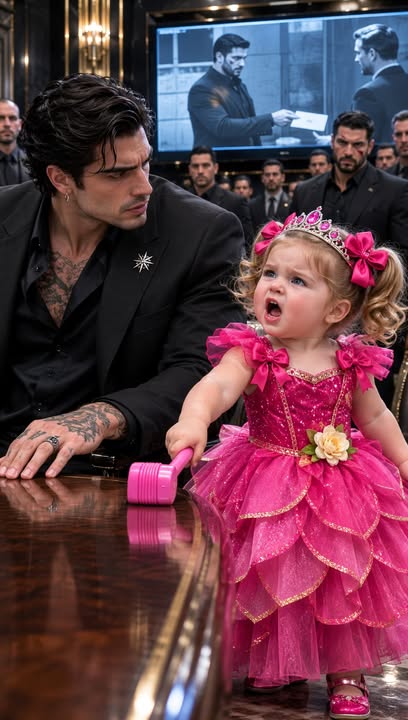
The figure in the doorway stepped into the thin wash of emergency light, and Alessandro’s arms tightened around Mimi before he could stop himself.
The woman wore a dark coat, and at her throat gleamed the silver necklace he had seen lowered into his mother’s grave.
For one impossible second, he saw Isabella.
Then the woman lifted her face, and the illusion broke.
She was younger than his mother had been, with a narrow, thoughtful face and dark hair threaded with gray, but the resemblance was unmistakable: the same graceful profile, the same steady eyes, the same quiet way of holding herself as if the room had already told her everything she needed to know.
Mimi wriggled in Alessandro’s arms.
“Nana,” she whispered.
The woman’s expression softened.
“Hello, Mimi.”
Alessandro’s shock hardened into anger, though his voice stayed low.
“Who are you?”
“Dr. Elena Voss.”
The name struck him with a force he had not expected.
Elena had been Isabella’s physician for years, and then, after illness had narrowed the older woman’s world, her confidante.
She had sat beside the hospital bed through the final weeks, speaking with Isabella when Alessandro had been trapped in meetings, negotiations, and the daily machinery of a life he had mistaken for duty.
He had not seen her since the funeral.
“You were there when they buried my mother,” he said.
“I was.”
“And you wore her necklace.”
“I did.”
Marco stood between Alessandro and the doorway, but he did not reach for the weapon at his side.
His gaze stayed on Elena, guarded and searching.
“You could have warned us you were coming,” he said.
“I did not know whether I could trust the room you were standing in,” Elena replied.
Alessandro’s jaw tightened.
“You locked every security door in this building.”
“I arranged for the doors to lock when the alarm system was triggered.”
“By whom?”
“By me.”
“Why?”
“Because I needed to know whether someone could alter your security archive without being noticed.”
Her answer was calm, almost clinical, but Alessandro heard the strain beneath it.
The emergency lights flickered once, then steadied.
Behind them, the technician was already working at the control panel while two guards checked the corridor.
Alessandro shifted Mimi higher against his chest.
“You used my daughter to test me?”
Elena’s face changed.
“No,” she said softly. “Mimi was never the test.”
Mimi reached toward her, one hand opening and closing.
“Up.”
Alessandro did not move.
Elena did not step closer.
For a moment, the three of them remained divided by the few feet of polished floor between them, with Marco watching as if one wrong word might send the whole room tumbling into something worse.
Then Mimi tucked her face against Alessandro’s shoulder.
He felt the small, warm weight of her, and the remembered voice from the speakers—his mother’s voice—pressed against his mind.
“Tell me how you did it,” he said.
Elena glanced toward the ceiling.
“I used an old recording from Isabella’s voice messages, then altered the playback enough to make it sound as if it were coming through the building’s speaker system.”
“Altered it how?”
“A sound technician cleaned the recording and matched it to the room’s acoustics.”
“You had an accomplice inside my security team.”
“I hired someone outside your organization to access the system remotely.”
“That is not an answer that makes me feel better.”
“It is not meant to.”
Marco’s attention sharpened.
“Someone must have opened a way into the archive for the footage to be planted.”
“That is what I wanted to confirm,” Elena said.
Alessandro glanced at the monitor, where the false image of Marco still waited in a frozen frame.
“And now?”
“Now I know your archive can be accessed from inside the building.”
The technician looked up from the console.
“Boss, the lock sequence is cleared.”
“Keep the doors open,” Alessandro ordered. “No one touches the archive until Marco and I have seen the original files.”
The guards moved to obey.
Alessandro looked back at Elena.
“You’re going to explain everything.”
“Yes.”
“Here.”
“If you prefer.”
“I do.”
Elena’s eyes settled briefly on Mimi.
“Perhaps somewhere she will not have to listen to this.”
Mimi lifted her head and stared at Elena with sudden certainty.
“Nana.”
The word was small, but it changed the room more completely than the locked doors had.
Alessandro looked down at his daughter.
“Have you seen her before?”
Mimi’s fingers curled around the lapel of his jacket.
She looked from him to Elena, then tapped the silver starburst pin on his chest.
“Dada.”
Her gaze returned to Elena.
“Nana.”
Alessandro felt an old unease stir behind his ribs.
He had heard Mimi call Isabella “Nana” in photographs and at her grave, where he had carried her once, months ago, before the child could form many words.
But this was different.
Mimi seemed to recognize Elena’s voice, not merely the resemblance.
Elena saw the question in his face.
“Not here,” she said.
“Why not?”
“Because there are too many people listening, and because I owe you a proper answer.”
Alessandro’s first instinct was to refuse.
His second was to demand that she speak at once.
His third, which he barely recognized, was to look at Mimi and wonder whether his anger might frighten her.
He turned to Marco.
“Stay with us.”
Marco nodded.
The three of them moved to Isabella’s old private sitting room on the second floor, a quiet place Alessandro had kept closed since the funeral.
He had not planned to bring Mimi there, but she rested her cheek against his shoulder as if the room were familiar.
Elena paused when she crossed the threshold.
The room had been arranged almost exactly as Isabella had left it: pale curtains, a book of pressed flowers on the side table, and a small ceramic bowl filled with the smooth stones she collected along the shore.
Alessandro had told himself he preserved it because he had not yet found time to decide what to do with it.
He had never admitted that changing it felt too much like losing her a second time.
“You kept everything,” Elena said.
“I didn’t see a reason to move it.”
“Isabella used to say you kept rooms the way you kept promises.”
Alessandro’s eyes narrowed.
“She said that?”
“She said you were very good at keeping the promises you understood.”
Marco lowered his gaze, perhaps to hide the flicker of recognition in his expression.
Alessandro did not appreciate being analyzed in his mother’s sitting room.
“Start with the footage.”
Elena placed her coat over the back of a chair but left the necklace in plain view.
“It was created to make you question what you thought you knew.”
“I know what I saw.”
“You saw a convincing imitation of Marco.”
“I also saw the altered timestamp.”
“After Mimi pointed out the scar.”
Alessandro looked toward his daughter.
She had become interested in the ceramic bowl, gently tapping its rim with her toy hammer.
He crouched beside her and took the hammer before she could strike it too hard.
“Easy, princess.”
She gave him a solemn look and patted his cheek.
“Shhh.”
Marco’s mouth softened.
Alessandro felt the sting of the moment because he knew Mimi had learned that gesture from him.
He had used it whenever he carried her past a sleeping guard or tried to settle her after a nightmare, but too often someone else had been there to do the settling.
Elena waited until he rose before continuing.
“Isabella suspected that someone inside the Moretti organization was passing information to a rival family.”
“Who?”
“She did not know.”
“Why didn’t she tell me?”
“She thought the person might be close to you.”
The answer settled heavily in the room.
Alessandro looked at Marco.
Marco did not flinch, but his face tightened.
“Your mother thought I was involved?” he asked.
“I don’t know,” Elena said. “She never gave me a name.”
“Then why show footage of Marco?”
“Because the test was designed to expose the person watching you.”
Alessandro’s expression turned cold.
“Explain.”
“Isabella believed the leak would continue as long as the person felt secure. She arranged for a controlled piece of information to be circulated through a small number of channels, then planned to watch who reacted to it.”
“And the footage?”
“A second layer of the test. She wanted to see how easily someone could make a familiar face appear guilty, and whether you would question it before acting.”
Marco’s gaze dropped to the frozen image on the monitor.
“Did she know the footage would implicate me?”
“No,” Elena said. “That part was added after she died.”
The room seemed to shrink around them.
Alessandro’s eyes fixed on her.
“Someone took your test and turned it into a trap.”
“Yes.”
“Why didn’t you come to me when she died?”
“I tried.”
“Not hard enough.”
Elena absorbed the accusation without looking away.
“I sent two messages through people I believed were neutral. Both were intercepted.”
“By whom?”
“I don’t know. I only know the replies came from a number associated with your office, and one of the messengers stopped answering me afterward.”
Marco stepped closer to the table.
“Did you report that to anyone?”
“To the police?” Elena asked. “And tell them that the head of the Moretti family might have a traitor inside his organization and that I had evidence I could not safely explain?”
She did not sound mocking.
She sounded tired.
Alessandro had spent much of his life teaching people to fear the consequences of crossing him.
It had never occurred to him that fear might also keep someone from telling him the truth.
“What did you have?” he asked.
“Not enough to accuse anyone. A list of dates, a few access records, and the knowledge that Isabella was worried.”
“So you staged this.”
“Yes.”
“With my mother’s voice.”
“I am sorry.”
“With her necklace.”
“I am sorry for that too.”
“With the security system.”
“I needed to know whether anyone could interfere with the archive and trigger the locks without alerting the people responsible for them.”
“And Mimi?”
Elena looked at the little girl, who had set the toy hammer on her knees and was now studying the flower decorations on her dress.
“I did not know she would enter the room.”
The nanny had followed them upstairs and stood quietly near the door.
Alessandro had not noticed when she arrived.
That small failure unsettled him more than he wanted to admit.
“You could have started with the truth,” he said.
“Would you have listened?”
He had an answer ready, but it would have been a lie.
Elena read it on his face.
“I thought you would see the evidence and decide what it meant before anyone could influence you.”
“Instead I almost killed the wrong man.”
Marco’s voice was quiet.
“You didn’t.”
“I gave the order.”
“And Mimi stopped it.”
Alessandro looked at him.
He wanted Marco to say that the order had not mattered, that twelve years of loyalty outweighed the few minutes in which Alessandro had doubted him.
Marco did not make it easy.
“I should never have let a screen decide what you meant to me,” Alessandro said.
Marco’s eyes lifted.
For a long moment, neither man said anything.
Then Marco gave a small nod.
“It’s a start.”
Mimi began to fuss, rubbing one eye with a plump fist.
Alessandro offered her the toy hammer.
She ignored it and reached for him.
He lifted her carefully and held her against his shoulder.
Her curls brushed his jaw, soft as silk.
“Do you want me to take her upstairs?” the nanny asked.
Alessandro’s first thought was yes.
He had grown used to letting other people carry Mimi out of difficult rooms, manage her meals, and soothe her when the hours stretched late.
But Mimi had already heard Elena’s voice and watched the fear on his face.
“No,” he said. “She stays with me.”
The nanny smiled faintly and stepped aside.
Elena’s expression held something he could not quite read.
“Isabella wanted you to have more time with her,” she said.
Alessandro’s arms tightened around Mimi.
“More time?”
“She wanted you to be her father, not only the person who made sure she was protected.”
The sentence found its mark.
He lowered his face to Mimi’s curls.
“I am her father.”
“Yes,” Elena said. “But for the first year, I don’t think she knew what that meant.”
Marco shifted, uncomfortable with the intimacy of the subject but unwilling to leave.
Alessandro looked up.
“What does that mean?”
Elena paused.
“I think it is a conversation for another time.”
“No.”
“Alessandro—”
“You came into my building, used my mother’s voice, locked my doors, and made my closest friend look like a traitor. You do not get to decide which answers I can hear.”
A thin line appeared between Elena’s brows.
“I am not trying to protect myself.”
“Then answer.”
She looked at Mimi, then at him.
“I used to visit the nursery.”
The words came so quietly that Alessandro almost thought he had misunderstood.
“When?”
“During Mimi’s first year.”
His hands went still around his daughter.
“What?”
“Isabella asked me to visit when she could no longer come herself.”
“Why?”
“Because she wanted someone she trusted to check on Mimi, and because she worried about how alone you were becoming.”
The anger that rose in him felt strangely hollow.
He turned toward the window, where the city’s night lights shimmered against the glass.
“I was there.”
“You were in the house,” Elena said gently. “Sometimes you were in the nursery.”
“Then what are you saying?”
“I am saying that you were trying to keep the world away from her, and there were days when you could barely bear to look at her without seeing what you had lost.”
His throat tightened.
He remembered the first months after Isabella died as a blur of hospital corridors, funeral arrangements, closed meetings, and an infant’s cries heard from somewhere down the hall.
He remembered standing at Mimi’s crib and feeling an ache so large he had called it fear.
He had told himself he was giving her the safest life he could.
He had not asked who had been there when he left.
“Isabella told you to visit my daughter behind my back?”
“She asked me not to tell you at the time.”
“Why?”
“She thought you would hear it as a judgment.”
“Was it?”
“No.”
Elena’s voice remained kind, but it did not become soft enough to excuse him.
“She thought you loved Mimi fiercely. She also knew grief had made you retreat into the only kind of control you understood.”
Alessandro could not look at her.
Mimi pressed one small palm against his collar, then patted the side of his face.
“Dada.”
He closed his eyes for a moment.
“I’m here,” he whispered.
She rested her head against his chest.
The room seemed to hold its breath around them.
When Alessandro finally turned back, Marco was watching him with the quiet loyalty that had survived the worst thing Alessandro had ever asked of him.
“I should have known,” Alessandro said.
Marco shook his head.
“You were hurting.”
“That doesn’t excuse it.”
“No,” Marco said. “But it explains why someone thought they could use it.”
Elena nodded.
“That is what Isabella was afraid of.”
Alessandro studied her.
“You said she arranged a test before she died. What happened to the rest of it?”
“I kept the records she gave me.”
“Where are they?”
“Not here.”
“Why?”
“Because I believed whoever altered your archive might also be monitoring the people who had access to it.”
“And you came anyway.”
“I came because the false footage had moved beyond a test. Someone was willing to let you believe Marco had betrayed you.”
Marco’s expression hardened.
“Do you know who?”
“No.”
“Do you suspect someone?”
Elena reached for her coat.
“I have a suspicion, but it is not proof.”
“Then tell us.”
“Not yet.”
Alessandro’s eyes sharpened.
“Why not?”
“Because the person I suspect has been close to Isabella, close to you, and close to the records I kept.”
The words left a silence behind them.
Marco glanced once at the door.
Alessandro felt every old instinct rise, each one telling him to demand a name, summon his people, and close every exit.
He looked down at Mimi instead.
Her eyes had grown heavy, but she was still watching Elena.
“Did you know my mother?” he asked.
Elena’s hand touched the necklace at her throat.
“Not at first.”
“And later?”
“Later, she trusted me with things she could not tell anyone else.”
Alessandro wondered whether he had been among the things she could not tell.
That thought hurt more than he expected.
Elena followed his gaze to the necklace.
“It was not the necklace buried with her.”
“What?”
“The original is still in her jewelry box.”
“I saw this one at the funeral.”
“You saw a copy.”
His face tightened.
“Why would she have a copy made?”
“She wore the original almost every day. She had the duplicate made years ago, for me.”
The revelation was small, ordinary, and still somehow unsettling.
Alessandro had mistaken an object for a miracle because he had not known his mother’s life as well as he believed he did.
“You were close enough to her for that,” he said.
“Yes.”
“But not close enough to tell me.”
“I was close enough to know that she wanted me to wait.”
“Wait for what?”
“For you to be ready to ask the right question.”
Alessandro let out a humorless breath.
“That sounds like something she would say.”
“It does.”
Mimi’s eyelids drooped.
Elena stepped away from the table and gave her space.
“I should go before anyone sees me leaving this room,” she said.
“You think someone is watching you?”
“I think someone has been watching all of us.”
“Then you are not leaving alone.”
“I can take care of myself.”
“I’m sure you can.”
His tone remained controlled, but there was no mistaking the decision in it.
Marco moved toward the door.
“I’ll make sure the corridor is clear.”
Elena looked at him.
“You still trust him?”
Alessandro glanced at Marco, then back at her.
“I trust what I know about him.”
“And the footage?”
“I know what I saw,” he said. “I also know that seeing is not the same as understanding.”
Marco gave him a brief, grateful look.
The words sounded simple.
They were not.
Before they could leave, the security technician appeared at the open doorway with a tablet in his hands.
“Boss, we recovered the original archive files.”
Alessandro shifted Mimi into one arm and took the tablet with the other.
“Show me.”
The technician opened the recording timeline.
The false footage appeared first, then the altered timestamp, then a blank interval that the system claimed had lasted less than a second.
Marco leaned over Alessandro’s shoulder.
“Can you restore the missing frames?”
“I’m trying.”
The technician enlarged a narrow strip at the edge of the image.
A reflection shimmered in the glass behind the figure dressed like Marco.
At first it looked like a shadow.
Then the reflection sharpened enough to reveal a hand resting on the doorframe.
A ring gleamed on one finger.
Alessandro knew that ring.
It belonged to Raffaele, his trusted underboss, the man who had stood beside him at the funeral and helped carry the weight of the family ever since.
No one spoke.
Mimi lifted her head from Alessandro’s shoulder, noticed the stillness, and tapped his chest with her toy hammer.
“Dada?”
He looked from the reflection to Marco, then to Elena.
Elena had gone pale.
“I’ve seen that ring before,” she said.
“Where?” Marco asked.
She looked at Alessandro, and for the first time since entering the room, she seemed genuinely afraid of what her answer might mean.
“On the man Isabella warned me not to trust.”
**–END OF PART 2–CLICK “NEXT” AT THE BOTTOM OF THE PAGE TO CONTINUE READING**
* * *
[NEXT: PART 3](https://echoesofstories.idolsgift.com/blog/part-3-the-woman-wearing-the-buried-necklace-041)
✓ Lynn R. Adams
The figure in the doorway stepped into the thin wash of emergency light, and Alessandro’s arms tightened around Mimi before he could stop himself. The woman wore a dark coat, and at her throat gleame…