PART 2: The Warning No One Could Verify 027
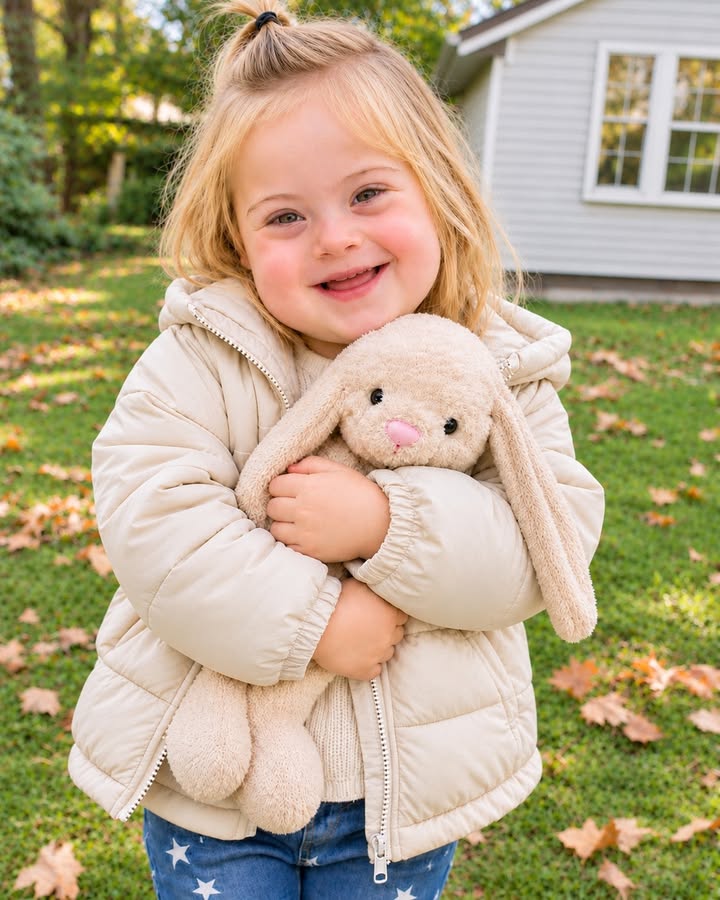
Part 2 – The Warning No One Could Verify
“Mrs. Wilson, before you read any further, there’s something else you need to know about Lily,” my lawyer said.
I stared at him, my fingers still gripping the folder.
For one terrible moment, I thought he was going to tell me the adoption had been arranged under false pretenses, or that someone had discovered a legal reason to take Lily away.
“What is it?” I managed.
He leaned forward, his voice careful and quiet.
“The pages you’re looking at are not medical records, and they are not evidence that Lily is dangerous or ill.”
My breath caught, and I realized I had been holding it.
“Then what are they?”
“Confidential case notes,” he said. “Notes about why the prospective families withdrew.”
I looked down at the papers again.
The third page had several names blacked out, a date, and a sentence typed near the center.
“Each family received the same anonymous warning,” I read aloud, my voice thin. “Lily’s biological mother left instructions that no one should raise her.”
The words seemed to shift on the page.
I read them once more, hoping I had misunderstood.
“Her mother said that?” I asked.
“That is what the warning claimed,” my lawyer replied. “But the case notes show that no one ever verified it.”
I pressed the folder flat against the desk, trying to steady my hands.
“Five families were told this?”
“Yes.”
“And they all backed out?”
“According to the notes, each withdrew shortly after receiving the warning.”
I looked up at him.
“Who sent it?”
“The file doesn’t identify the person with certainty,” he said. “It only says the message came through a relative of Lily’s biological mother.”
The room felt smaller than it had when I walked in.
I thought of the little girl in the group home, her worn rabbit tucked beneath her chin, and the way she had placed her hand in mine without saying a word.
“How could anyone repeat something like that without checking?” I asked.
My lawyer folded his hands.
“I can’t give you a satisfying answer, Mrs. Wilson. The notes say a caseworker tried to confirm the claim, but no supporting document was found. The warning was never established as genuine.”
“Then why was it allowed to frighten away five families?”
He lowered his eyes.
“That is one of the questions I’m asking.”
The anger came slowly, not as a blaze but as a deep, steady heat beneath my ribs.
I had spent months completing interviews and home visits, answering questions about my health, my finances, my plans for Lily’s care.
I had welcomed officials into my home and explained how I would manage the stairs, the school schedule, and the ordinary worries of raising a young child at sixty-eight.
And yet no one had told me that five families had been given a rumor that might have changed everything.
“Did the agency know this warning was unverified?” I asked.
“The file suggests that at least one person did.”
“Then why wasn’t I told?”
“I don’t know,” he said. “I’m sorry.”
His answer was honest, but it did not make the hurt smaller.
I turned another page, searching for a name or a clear explanation that might give the warning shape.
Instead, I found short entries written in different hands.
“Applicant withdrew after receiving family information.”
“Claim not corroborated.”
“Further inquiry recommended.”
The last phrase had been underlined.
My lawyer saw me reading it.
“That note is part of why I wanted you here,” he said. “It suggests the matter was left unresolved.”
“Unresolved for whom?” I asked. “For the agency, or for Lily?”
He did not answer right away.
I closed the folder, then opened it again.
I could not stop looking at the sentence about Lily’s mother.
“She was only a baby when all this began,” I whispered.
“Yes.”
“She couldn’t have understood any of it.”
“No.”
I pictured Lily’s round cheeks pressed against the rabbit’s worn ear, her small shoes tapping along my hallway, her soft voice calling me from the kitchen.
The warning had turned her into a question mark in the minds of strangers before she was old enough to know what a question mark was.
My eyes began to sting.
“Is there anything in these notes that could affect the adoption?” I asked.
“No,” he said firmly. “Your adoption is legally secure. The warning does not undo it, and there is nothing here that puts Lily’s placement at risk.”
I searched his face for a hesitation.
He held my gaze.
“I would never tell you that lightly.”
The tightness in my chest eased by one small degree.
“So she’s staying with me.”
“She is your daughter,” he said. “That is not in question.”
The words brought tears to my eyes, though I tried to blink them away.
I had lost a husband and a daughter in one terrible accident, and there were days when grief still returned as unexpectedly as rain.
But Lily was not a replacement for the child I had lost.
She was herself: curious, watchful, tender, and slowly beginning to trust me.
I could not imagine a life without her now.
“May I take copies of these pages?” I asked.
“Of course,” he said. “I’ve already prepared them for you, along with a written explanation of what the file does and does not establish.”
He slid a smaller envelope across the desk.
I tucked it into my handbag, then stood.
My knees felt weak, and I had to rest one hand on the chair before I could take a step.
At the doorway, I turned back.
“Do you think Lily’s mother really said that?”
“I think the notes give us reason to doubt the warning,” he replied. “But I don’t yet know what her mother said, or what she wanted.”
That answer followed me all the way home.
The afternoon light lay in golden strips across the kitchen floor when I stepped inside.
Lily was at the table with a picture book open in front of her, though she seemed more interested in arranging three wooden blocks beside the page.
She looked up at the sound of my keys.
“Grandma?” she asked.
She had begun calling me that sometimes, because the children at church did, and she had not yet settled on another name.
I set my handbag down and went to her.
“Hello, sweetheart.”
She held out a blue block.
“Look.”
“It’s beautiful,” I said, sitting beside her. “What are you building?”
“A house.”
“What kind of house?”
She considered the question with the solemnity of a tiny architect.
“My house.”
I felt something soften inside me.
“Then it must have a very good roof.”
She placed another block on top, and it slid sideways.
We both watched it fall.
Lily looked at me, uncertain whether she was allowed to laugh.
I smiled first.
A small giggle escaped her, and soon we were laughing together over the lopsided pile.
The sound filled the kitchen in a way I had once thought impossible.
For a little while, I forgot the folder in my handbag.
We made soup together, with Lily standing on a step stool while I let her stir the pot after it had cooled enough.
She told me the rabbit needed a bowl, too, and I placed an empty saucer beside hers.
At dinner, she dipped her bread into the soup, then looked across the table at me.
“Are you sad?” she asked.
I set my spoon down.
Children notice more than adults hope they will.
“I’m thinking about something important,” I said gently. “But you don’t need to worry.”
“Is it bad?”
“Not for you, sweetheart.”
She studied my face, then reached across the table and touched the back of my hand.
It was such a small gesture, but it carried the same quiet trust as the day we met.
I covered her fingers with mine.
“I’m right here,” I told her.
After dinner, we read the picture book twice.
Lily chose the story about a bear who lost his way and found the light of home.
She curled against my side as I read, her rabbit nestled between us.
When the story ended, she did not climb down.
“Can you stay?” she asked.
“Of course.”
“Stay when I sleep?”
The question was so soft that I nearly missed it.
I looked at her, and she looked back with wide, careful eyes.
She had never asked me that before.
“I can stay beside you until you fall asleep,” I said. “And when you wake, I’ll still be here.”
She leaned against my arm.
“Promise?”
“I promise.”
I carried her to bed and tucked the blanket around her, leaving the door open as she liked it.
Her room had once been a guest room, plain and quiet, but now it held a small bed, a basket of books, and a night-light shaped like a moon.
Lily placed her rabbit beneath her chin.
I sat in the chair beside her bed, and she reached out from under the blanket.
I took her hand.
For several minutes, she said nothing.
Then she asked, “Did you come back?”
The question stopped me.
“I’m here now,” I said.
“But before,” she murmured. “Did you come back before?”
I thought of her time in foster care, of all the grown-ups who had entered and left her life.
“I wasn’t there before,” I said carefully. “But I’m here now, and I’ll be here tomorrow.”
She watched me for a moment, as though she were weighing the promise.
Then her fingers relaxed around mine.
I stayed until her breathing settled into the slow rhythm of sleep.
In the doorway, I looked back at her small face and felt the old grief rise—not because Lily reminded me of what I had lost, but because love always made room for the possibility of loss.
I stood there until I could breathe again.
Then I went downstairs, took the envelope from my handbag, and placed it on the kitchen table.
The papers were still there, patient and accusing.
I read the notes again, this time more slowly.
The same warning appeared in each account, though the wording shifted slightly.
“Biological mother did not want child raised by others.”
“Mother’s family states no placement should be pursued.”
“Applicant advised that child’s mother left specific instructions.”
Beside one entry, a caseworker had written: “Source unconfirmed; no written directive located.”
The note had been dated years earlier.
I read it several times.
Someone had known the claim could not be verified.
Someone had written it down.
And somehow, the warning had traveled from one family to the next as if repetition made it true.
I found another page clipped behind the notes.
It contained a list of questions for a future review, most of them unanswered.
Who first made the statement?
Was the mother’s intent recorded elsewhere?
Did any former caregiver receive additional information?
The last question had a faint pencil mark beside it, but no response.
I leaned back in my chair.
My lawyer had told me the adoption was safe, and I believed him.
But Lily’s story was not finished simply because the court papers were signed.
I could not undo the years she had spent waiting for a family.
I could, however, refuse to let an unverified rumor decide what she deserved to know—or how deeply she was loved.
The next morning, I called my lawyer.
“I want to understand everything in that file,” I said. “Not because I doubt Lily belongs with me, but because she deserves the truth when she’s old enough to ask.”
He said he would request the remaining records and speak with the agency.
“Some of the material may be confidential,” he cautioned.
“I understand. I’m not asking for anything that isn’t mine to see. I’m asking that someone take this seriously.”
“I will,” he promised.
After we hung up, I made breakfast and helped Lily choose a sweater for the day.
She held up the yellow one, the color bright against her small hands.
“This one,” she decided.
“It’s a sunny choice.”
She grinned and tugged at the sleeves.
I watched her eat her toast, her rabbit sitting beside her plate, and thought of the five families who had walked away after hearing a story no one had checked.
Perhaps some had been frightened.
Perhaps others had believed they were honoring a mother’s wishes.
I could not know.
But I knew Lily had never been the warning.
She was a child who needed steadiness, a hand to hold, and a home where she could ask a question without being made to feel that the answer was her fault.
That evening, after Lily was asleep, I called my lawyer again.
He had received an additional note from the agency, he said, and wanted me to hear it before he sent a formal request for the rest of the file.
“Is it about the anonymous warning?” I asked.
“In a way,” he said. “The note mentions a former foster caregiver who may have known where the warning came from.”
I sat down slowly.
“Do you know her name?”
There was a brief pause.
“Elena,” he said. “She was the caregiver who had been with Lily shortly before the adoption process began.”
I looked toward the staircase, where Lily slept with her rabbit beneath her chin.
“Did she adopt Lily?”
“No,” my lawyer replied. “But the file suggests she had hoped to.”
The words opened another door in the story, one I had not known was there.
I lowered my voice.
“Why did she let Lily go?”
“I don’t know,” he said. “But the note says she withdrew after receiving the same warning.”
I sat very still.
Then my lawyer added, “There’s something else, Mrs. Wilson. The file says Lily may have kept a drawing from that home.”
My hand tightened around the phone.
“A drawing of what?”
“The note doesn’t say.”
I glanced toward Lily’s room again, imagining her small fingers curled around the rabbit’s worn ear.
For the first time, I wondered whether the child’s past held not only unanswered questions, but someone she might still remember.
**–END OF PART 2–CLICK “NEXT” AT THE BOTTOM OF THE PAGE TO CONTINUE READING**
* * *
[NEXT: PART 3](https://puretales.idolsgift.com/blog/part-3-the-warning-no-one-could-verify-027)
✓ Lynn R. Adams
Part 2 – The Warning No One Could Verify “Mrs. Wilson, before you read any further, there’s something else you need to know about Lily,” my lawyer said. I stared at him, my fingers still gripping th…