PART 2: The Truth I Could No Longer Hide 028
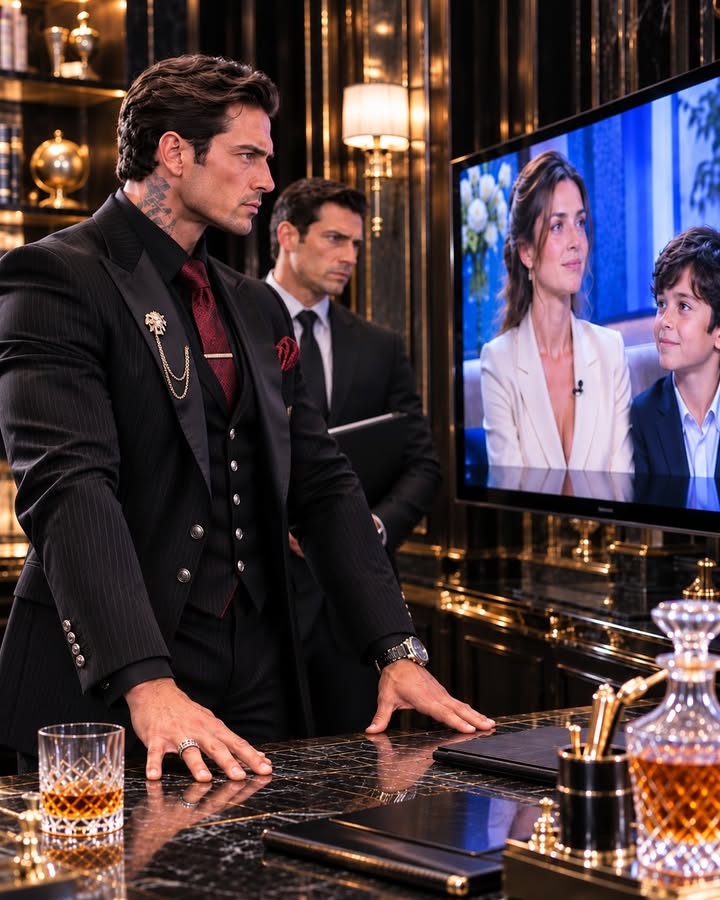
The studio fell quiet, and the host waited without pressing me.
My son, Leo, looked up at me, his hand resting lightly against my sleeve.
I had rehearsed what to say, but the words I’d prepared suddenly seemed too small for the truth.
“His father wasn’t just someone I loved,” I said at last.
I kept my voice steady, though my heart beat hard beneath my ribs.
“Alexander was my husband.”
The host’s expression shifted, not toward shock exactly, but toward the careful attention of someone realizing the story had begun long before the cameras turned on.
Leo’s fingers curled into the fabric of my sleeve.
I looked down at him, wanting him to hear the truth from me rather than from a stranger’s headline.
“We were married for seven years,” I continued. “Quietly. Almost no one knew.”
“Why did you keep it secret?” the host asked.
“Alexander said it was safer that way.”
I had spent years telling myself that secrecy was the price of loving him, and that a price willingly paid could not become a wound.
But the words sounded different aloud, stripped of all the tender excuses I had wrapped around them.
The host let the silence breathe before asking, “And what happened?”
I could have told the whole story.
I could have described the sudden divorce papers, the post that appeared three days later, and the comments from people who had once sat at our table.
I could have said that I had been carrying his child when the papers arrived.
Instead, I chose the truth without turning it into a weapon.
“Three days after our divorce was finalized, Alexander publicly celebrated five years with another woman,” I said.
The host’s eyes softened.
“I was already pregnant,” I added, “but I didn’t tell him.”
Beside me, Leo had gone completely still.
The audience, which had been murmuring moments earlier, offered no sound at all.
I placed my hand over his.
“I’m sorry,” I whispered, though I was not sure whether I was apologizing for the story, for the years he had missed, or for letting him hear it in front of strangers.
Leo looked at me, searching my face.
“You were married to my dad?” he asked.
“Yes.”
“And he didn’t know about me?”
“No,” I said. “Not when you were born.”
His brows drew together, but he didn’t look angry.
He looked like a boy trying to fit a new piece into a picture he had thought was complete.
The host asked whether I wanted to say anything more.
“No,” I replied gently. “That’s enough for today.”
When the segment ended, the audience applauded, but the sound felt distant, like rain falling on a roof in another room.
A producer led us behind the set, where Leo sat on a chair with his feet not quite touching the floor.
I crouched in front of him.
“You can ask me anything,” I told him.
“Was he mean to you?”
The question caught me off guard.
“No,” I said after a moment. “Not in the way you mean.”
“Did you stop loving him?”
I looked down at my hands.
“I don’t think love disappears all at once,” I said. “Sometimes it gets buried under things people do.”
Leo considered that with the serious patience he brought to every difficult question.
“Did he know you were going to have me?”
“No.”
“Would he have wanted me?”
I reached for his hand.
“I can’t answer for him,” I said honestly. “But you were wanted from the moment I knew you existed. You have never been a mistake, Leo. And none of what happened between your father and me was your fault.”
His shoulders eased, though the question remained in his eyes.
On the drive back to the hotel, he watched the city slide past the windows.
I let him have the quiet.
At a red light, he finally asked, “Do you hate him?”
“No,” I said.
The answer came more quickly than I expected.
“Do you want me to?”
“Never.”
He turned toward me then, studying my face as if he hoped to find a simpler answer there.
“I don’t know what you’ll feel about him,” I continued. “You’re allowed to be curious. You’re allowed to be angry. You’re allowed to feel nothing at all. What I feel is mine to carry, not yours.”
Leo rested his cheek against the window.
“Okay,” he said.
That evening, after he had fallen asleep, I sat alone beside the hotel window with the lights of the city scattered below me.
I had known the interview might reach Chicago.
I had not expected my own words to make the past feel so near.
When my phone rang, the number was unfamiliar.
I let it go to voicemail.
It rang again less than a minute later.
This time, the caller ID showed the production company.
I answered.
“Claire, I’m sorry to call so late,” said Marianne, the segment producer. “There’s someone who wants to speak with you.”
I closed my eyes.
“Who?”
There was a pause, followed by a quieter voice.
“Alexander Moretti.”
For a moment, I could not hear anything except the hum of the hotel air conditioner.
Then his voice came through, low and unmistakable.
“Claire.”
Ten years had passed, but I remembered the sound of him saying my name in the dark, when there had been no one else to hear it.
“Why are you calling?” I asked.
“I saw the interview.”
“That isn’t an answer.”
“No,” he said. “It isn’t.”
His restraint unsettled me more than anger would have.
I gripped the edge of the desk.
“What do you want, Alexander?”
“To meet my son.”
The words struck with the force of something I had been carrying alone for so long that I had forgotten it could be shared.
“He isn’t a way for you to repair what happened,” I said.
“I know.”
“You don’t know him.”
“I know that.”
“You can’t appear after ten years and decide you’re ready to be his father.”
“I’m not asking you to make that decision for me,” he replied. “I’m asking for the chance to speak with him.”
I glanced toward the adjoining room, where Leo slept beneath a blanket tucked up to his chin.
“He has a right to know where he came from,” Alexander said.
“He does,” I answered. “And I’ll tell him everything. But I will not let you rush into his life because you saw him on television.”
“I’m not trying to rush you.”
“You’re doing exactly that.”
A silence opened between us.
For a moment, I thought the call had dropped.
Then he said, “I don’t know how to ask for this without sounding like I’m asking for more than I deserve.”
“Then don’t ask me to comfort you.”
“I wouldn’t.”
“Good.”
I could hear him breathe, slow and measured, as if every word had to pass through a door he did not trust.
“Is he all right?” he asked.
The question was so simple that it nearly undid me.
“He’s healthy,” I said. “He’s kind. He likes astronomy, cinnamon rolls, and asking questions I can’t always answer.”
“I’m glad.”
I did not respond.
“Claire, I’m sorry,” he said.
The apology arrived too late to change anything, and still it found the place where I had hidden the hurt.
“Sorry for what?” I asked.
“For the way I left you.”
“You sent divorce papers.”
“Yes.”
“You let me believe seven years meant less than nothing.”
“I know.”
“Do you?”
Another pause.
“I don’t know how to prove that I do,” he said.
“Then don’t try tonight.”
I ended the call before my voice could betray me.
For several minutes, I sat without moving.
Then I went into Leo’s room and watched his chest rise and fall beneath the blanket.
His face in sleep was still his own, but the resemblance to Alexander was impossible to deny.
I had promised myself I would never let the past reach him without my permission.
Now the past had spoken through a telephone line, and Leo had already heard the first truth.
In the morning, I told him that his father had called.
He was at the hotel breakfast table, spreading jam over a piece of toast with great concentration.
“Did he want to talk to me?” he asked.
“Yes.”
“Did you let him?”
“Not yet.”
He placed the knife down carefully.
“Because you don’t trust him?”
“Because I want you to understand what’s happening before anyone asks you to meet him.”
Leo nodded, but his disappointment was visible.
“I’m not telling you no forever,” I said. “I’m telling you we need to take this slowly.”
“How slowly?”
“That depends on how you feel.”
He looked at his toast.
“I want to know what he’s like.”
The words were quiet, but they changed the room.
I reached across the table and covered his hand with mine.
“Then we’ll talk about it,” I said. “And we’ll decide together what comes next.”
Back home, the interview followed us through the ordinary days.
It appeared in online clips, in articles I avoided reading, and in messages from people I had not heard from in years.
Some were kind.
Some asked questions as if my private life had become a public puzzle for them to solve.
I answered none of them.
Leo went back to school, to soccer practice, and to the stack of library books on his bedside table.
But he asked about Alexander more than once.
I told him what I could: that Alexander had been ambitious, that he could be funny when he forgot to be guarded, and that he had once known exactly how I took my coffee.
I did not tell him that Alexander had been a powerful man in a dangerous world.
Not because I wanted to hide the truth, but because I needed to explain it carefully, in a way that did not make fear the first thing Leo knew about his father.
A week after the interview, a padded envelope arrived at my coffee shop.
There was no return address.
My name was written across the front in handwriting I recognized immediately.
I took it upstairs to the small office above the shop and shut the door.
Inside were a few photographs, several folded letters, and the final divorce papers I had once thought I had thrown away.
I had not opened that envelope in years.
For a long time, I simply sat with it on my desk.
Then I unfolded the papers.
The filing date was there, as I remembered.
So was Alexander’s signature, firm and unmistakable.
But I had never noticed the smaller details beneath it: the papers had been filed in a rush, with no explanation attached beyond the required signatures and the barest legal language.
No accusation.
No reason.
No mention of betrayal, incompatibility, or the life we had built in secret.
Just his name, and mine, separated by a line.
I took the letters from the envelope and began sorting them by date.
Most were old notes I had kept because I could not bring myself to let them go.
Then I found one with a date I did not recognize.
It had been written shortly before the divorce was finalized.
My name was on the front, but the seal was unbroken.
I turned it over in my hands, suddenly unable to breathe normally.
Alexander had written to me while we were still married.
And somehow, I had never received it.
I did not open it immediately.
For ten years, I had imagined what Alexander might have said if he had been given the chance.
Now the chance lay in my hands, and I was afraid it would be nothing more than another version of the same silence.
I broke the seal.
The letter was brief.
“Claire,
I know you think I’m shutting you out. I need you to trust me a little longer. There are things I can’t explain safely, not yet. I will come to you as soon as I can, and I will tell you everything.
Please don’t mistake my silence for a lack of love.
Alexander”
I read it once, then again.
The date was two days before the divorce papers had been filed.
My knees weakened, and I sat down.
It wasn’t an explanation.
It didn’t change what he had done, or how he had left me to discover the end of our marriage through legal papers and a public photograph.
But it was proof that, at least two days before he divorced me, he had been asking me to trust him.
I turned the letter over, searching for a postmark.
There was none.
The envelope had never been sent.
My phone rang, startling me so badly that the letter slipped from my hand.
It was Emily.
For a moment, I considered letting it go unanswered.
Then I remembered the handwriting on the envelope, and the years Emily had been the one person besides Alexander who knew our secret.
I picked up.
“Claire,” she said, her voice unsteady. “I saw the interview. I should have called sooner.”
“You called before,” I said. “You told me to delete a comment.”
“I know.”
“Why are you calling now?”
“I wanted to ask if you’d let me explain what I knew.”
I glanced at the letter on the desk.
“What did you know?”
“I knew about Sophia,” Emily said. “I thought your marriage was already over in every way that mattered. Alexander told me you’d been living apart.”
“That wasn’t true.”
“I understand that now.”
“Did you know he had filed for divorce?”
“No. I swear, Claire, I didn’t know about the papers until afterward.”
“And when you congratulated them?”
Her breath caught.
“I thought it was what he wanted. I thought you’d both agreed to end things quietly.”
“You never asked me.”
“I was afraid of what the answer would be.”
I closed my eyes.
Fear had explained a great deal in my life.
It had never made the harm disappear.
“I’m not ready to forgive you,” I said.
“I’m not asking you to.”
“Good.”
“I’m sorry,” Emily whispered. “I should have stood beside you.”
I ended the call gently, without saying I forgave her or that I never would.
The unmailed letter remained on my desk.
I carried it home that evening, tucked inside my bag where Leo wouldn’t find it by accident.
After dinner, he helped me clear the table, then lingered beside the sink.
“Mom?”
“Yeah?”
“If Dad wanted to see me, would you let him?”
I dried my hands and turned toward him.
“I would listen to what you wanted,” I said. “And I would make sure you were safe.”
“Would you come too?”
“Every time.”
He nodded, absorbing that.
“I want to meet him,” he said. “Not right away, maybe. But I want to know what he’s like.”
“Then we can think about a first meeting together.”
“Can I ask him why he didn’t come?”
The question hurt, but it belonged to Leo.
“Yes,” I said. “You can ask him anything.”
“And if he doesn’t answer?”
“Then we’ll deal with that together too.”
He leaned into me, and I wrapped my arms around him.
Later, I placed Alexander’s letter beside the divorce papers in a drawer I had kept locked for years.
I had thought the papers were the final word.
Now I knew there had been another one, written before the end and never delivered.
The next morning, Marianne from the show called.
“Alexander contacted us again,” she said. “He’s asking whether you’d consider a supervised meeting.”
I looked through the café window at the quiet street beyond it.
“Tell him I’ll discuss it with Leo,” I said. “Nothing happens until my son is ready.”
“Of course.”
Before hanging up, Marianne hesitated.
“There’s one more thing. Alexander asked whether you still had the letter.”
My fingers tightened around the phone.
“What letter?”
A pause.
“The one he wrote you before the divorce.”
I looked toward the locked drawer upstairs.
Alexander had known it was never delivered.
And somehow, he knew I still had it.
**–END OF PART 2–CLICK “NEXT” AT THE BOTTOM OF THE PAGE TO CONTINUE READING**
* * *
[NEXT: PART 3](https://puretales.idolsgift.com/blog/part-3-the-truth-i-could-no-longer-hide-028)
✓ Lynn R. Adams
The studio fell quiet, and the host waited without pressing me. My son, Leo, looked up at me, his hand resting lightly against my sleeve. I had rehearsed what to say, but the words I’d prepared sudd…