PART 2: The Song Elena Couldn’t Finish 008
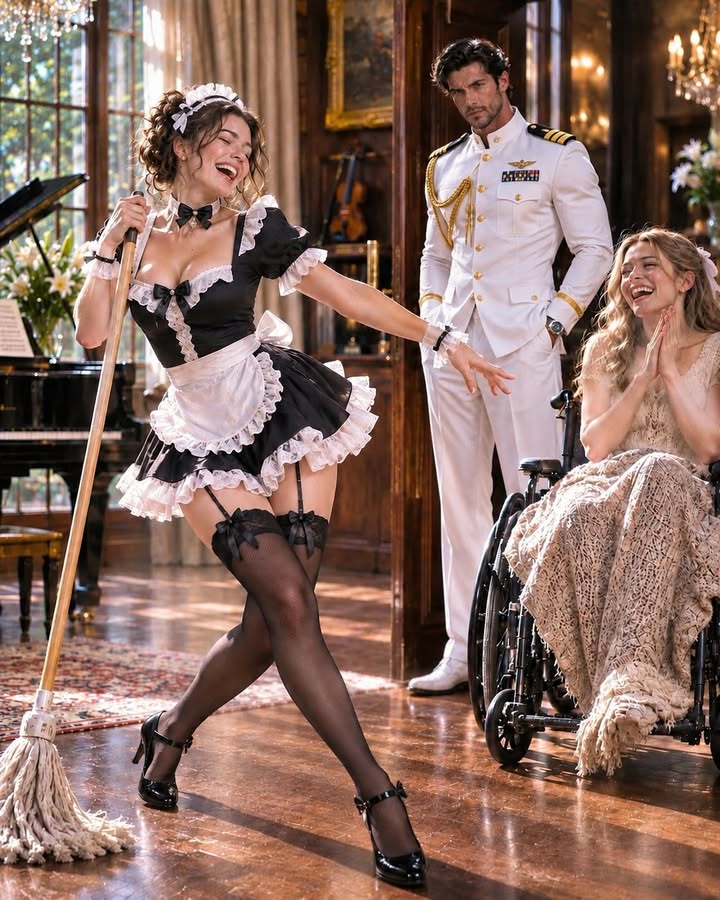
Roman stood in the doorway with the envelope in his hand, and for one suspended moment, all I could hear was the piano’s quiet ticking as it cooled in the afternoon light.
Elena’s gaze moved from the envelope to her brother’s face.
“Why do you have that?” I asked.
“I found it in your room,” he said.
“You went into my room?”
“I was looking for the source of the money.”
The matter-of-factness of his answer made heat rise beneath my collar.
“You could have asked me.”
“I did.”
“You asked where the envelope came from while holding it like evidence.”
Roman’s eyes shifted briefly to Elena, as if he had hoped she might explain the situation more gently.
She gave him no help.
“Put it down,” I said.
He studied me for a moment, then laid the envelope on the piano bench.
The sight of it there made my stomach tighten.
It looked out of place beside the ivory keys, like something from a life I had worked hard to keep out of this room.
“I didn’t take the money,” I said.
“I know.”
“Do you?”
“I checked the bills.”
“That isn’t the same thing.”
“No,” he admitted. “It isn’t.”
Elena watched us with her hands resting in her lap.
“Roman, why are you asking about it?”
“Because someone has been sending money to a member of my staff.”
“I’m not a member of your staff when I’m in here,” I said before I could stop myself.
Roman’s gaze returned to me.
“I didn’t say you were.”
“You didn’t have to.”
The words had come out sharper than I meant them to, but I was tired of being measured against rules I hadn’t written.
My knee throbbed beneath my skirt.
The envelope sat between us, holding eight hundred dollars I couldn’t bring myself to spend and couldn’t explain away.
Roman rested one hand on the piano’s closed lid.
“Where did it come from, Maya?”
“I don’t know.”
“Has anyone contacted you about it?”
“No.”
“Has anyone asked you to do anything in return?”
“No.”
He seemed to believe me, which somehow made the questions harder rather than easier.
“Then what’s the problem?” Elena asked.
“The problem is that money doesn’t appear at someone’s door four times without a reason.”
“That doesn’t make it your reason to discover,” I said.
Roman’s expression changed slightly.
Not anger, exactly.
More like he had reached the edge of an answer he thought he understood and found a wall there instead.
“If someone is using you to get to me, I need to know.”
“I’m not a way to get to you.”
“I didn’t say you were.”
“You keep speaking as if every part of my life is connected to you.”
Elena leaned forward.
“Roman.”
He stopped.
The quiet warning in her voice held more power than the armed men waiting outside the door.
“I’m not accusing Maya,” he said.
“You’re treating her like a problem that can be solved if you ask enough questions.”
“I’m trying to make sure she’s safe.”
“Then try listening to her.”
Roman glanced at his sister.
For the first time since he entered the room, the line of his shoulders softened.
“I am listening.”
“Not yet,” Elena said.
I looked down at my hands.
There was a faint streak of dust across one knuckle from the mop handle.
It seemed absurd to be standing in this elegant room, discussing money I had never asked for, while the debt I had actually earned no part in still waited at the edge of my life.
“I can’t tell you where the envelopes came from,” I said. “I can tell you they aren’t yours.”
Roman’s eyes narrowed, not with suspicion, but with concentration.
“What makes you think they aren’t mine?”
“Because if you wanted me to have money, you’d hand it to me and explain what you expected in return.”
Elena gave a small, surprised laugh.
Roman looked at her.
“That wasn’t a compliment,” she said.
“I know.”
“And you shouldn’t be proud of it.”
“I’m not.”
He said it quietly enough that I almost missed the sincerity in his voice.
Almost.
I drew a breath.
“Whatever those envelopes are, I won’t take money from you.”
“I didn’t offer you any.”
“You would have.”
“I might have offered to find out who sent them.”
“That still sounds like something I didn’t ask you to do.”
He turned the envelope over in his hand, though he had already set it down.
“I understand.”
“I’m not sure you do.”
“Then explain it.”
The request was so simple that it took me a moment to answer.
I had spent years trying to explain things to people who wanted only the parts that made their own lives easier.
“My ex-husband used my name to borrow money,” I said. “I never signed for any of it. By the time I found out, he was gone, and the people looking for him had found me instead.”
Elena’s face changed.
Roman stayed very still.
“How much?” he asked.
“That’s not your concern.”
“Has anyone come to the house?”
“No.”
“Have they contacted your employer?”
“Not yet.”
The lie left my mouth before I could catch it.
I saw Roman notice.
I saw Elena notice, too.
Neither of them said anything.
I hated them both, for one brief second, for being perceptive.
“I don’t want help,” I said.
“I didn’t ask if you did,” Roman replied.
“You were about to.”
“I was going to ask what you need.”
“That is still a way of offering help.”
“Sometimes those things are the same.”
“They aren’t to me.”
The room settled into silence.
Elena turned her wheelchair a little, facing me more fully.
“You don’t owe him an explanation,” she said.
“I know.”
“Do you?”
I looked at her.
There was no softness in her question, but there was understanding.
She knew what it was like to have people decide that because they worried about her, they could make choices on her behalf.
“I’m trying to,” I said.
Her expression eased.
Roman stepped away from the piano.
“I’ll leave the envelope where it is,” he said. “And I won’t investigate it unless you ask me to.”
“You’re sure?”
“I’m sure.”
It sounded like an unfamiliar promise, one he had to make deliberately.
Elena looked between us.
“Good,” she said. “Now can everyone stop staring at the money like it might start talking?”
I let out a breath that almost became a laugh.
Roman’s mouth moved at one corner, though he never quite smiled.
Then he turned toward the door.
“Maya.”
I looked up.
“If anyone contacts you at the house or at work, tell me.”
The moment he said it, his expression tightened.
He knew it was an order dressed as concern.
He corrected himself.
“Or tell Elena,” he added. “Or don’t. But you shouldn’t have to carry it by yourself.”
I wanted to believe him.
I wasn’t ready.
“I’ll think about it,” I said.
He accepted that without pushing.
When he left, the door closed with a soft click.
Elena watched the empty doorway for a while.
“He’s trying,” she said.
“He has an unusual way of showing it.”
“He’s had practice being obeyed, not understood.”
“That sounds lonely.”
“It is.”
The words surprised me.
Elena folded her hands in her lap and looked toward the windows.
“People see the house, the security, the cars,” she said. “They think it means no one can get close to you.”
“Does it?”
“Sometimes it means no one knows how.”
I sat down on the edge of the piano bench, leaving the envelope between us.
The afternoon light had thinned to a pale gold that reached across the floorboards.
“You don’t have to talk about him,” I said.
“I know.”
She was quiet for several breaths.
Then she said, “I used to think if I stopped speaking to him, he’d understand why I was angry.”
“Did it work?”
“No.”
“Did you want it to?”
“I wanted him to notice I was angry without making me explain it.”
I understood that more than I wanted to.
“People aren’t very good at reading silence,” I said.
“Roman thinks silence means he should do something.”
“That sounds like him.”
“It does.”
She gave a faint smile, but it faded as quickly as it came.
I glanced toward the piano.
“Do you play?”
Her fingers curled against the fabric over her knees.
“I used to.”
The answer made me look at her.
“Before the accident?”
“Before and after.” She paused. “I stopped later.”
I didn’t ask why.
The room seemed to hold the question for me.
When I was sure she wanted the quiet, I stood.
“I should finish cleaning up the tea.”
“I already told you that you can come in here.”
“Only if you want me to.”
She looked at the floor where the last damp marks had dried.
“I do.”
I wiped the remaining dust from the piano’s side and gathered the cloths from the corner.
Elena did not speak again until I had finished.
Before I left, she said, “Maya?”
“Yes?”
“Could you stay a little longer?”
I set the cleaning supplies down.
“Of course.”
She looked toward the piano keys.
“I don’t want to talk about the money.”
“Then we won’t.”
“And I don’t want you to ask why I stopped playing.”
“I won’t.”
“Good.”
She glanced at me, testing whether I meant it.
I pulled the chair close to her and sat.
For a long time, we listened to the house around us: the distant murmur of voices in the hall, the soft movement of someone opening a door downstairs, the old radiator ticking beneath the window.
The music room was not as silent as I had first thought.
It was only waiting.
That evening, I tried to keep my distance from Roman.
I failed when I came downstairs carrying a laundry basket and found him in the kitchen, standing over a plate he hadn’t touched.
The cook had gone home, and one of the housekeepers was speaking quietly to a guard in the hall.
Roman looked up when I entered.
“I’m not looking for you,” I said.
“I wasn’t worried you were.”
“I came for a glass of water.”
He moved aside from the sink.
I filled a glass and drank half of it before the quiet between us grew uncomfortable.
“You’re limping,” he said.
I set the glass down.
“I’ve been limping since before I started working here.”
“I know.”
“Then you know it isn’t new.”
“New problems aren’t the only ones worth noticing.”
I looked at him over the rim of the glass.
“Did Elena put you up to saying something kind?”
“No.”
“Did you practice it first?”
“I don’t practice being kind.”
“That explains a lot.”
His eyes lifted to mine, and this time a small smile did appear.
It made him look younger, though not less guarded.
“I’m sorry I went into your room,” he said.
I hadn’t expected an apology.
It was so plain, without excuses or a request for forgiveness, that I had nowhere to set my anger.
“You shouldn’t have.”
“I know.”
“I keep my life small on purpose.”
“Why?”
“Because it’s easier to protect.”
“From what?”
“From people deciding they can fix it.”
He didn’t answer at once.
I thought of the envelope.
“Have you ever wondered why I can’t accept help?” I asked.
“I assumed someone had taught you not to trust it.”
“My mother used to say free money is rarely free.”
“That seems wise.”
“It was. She also taught me to make soup from nearly nothing, keep emergency cash inside a book, and never trust a man who says ‘I have a plan’ without telling you what the plan is.”
“That last one sounds specific.”
“It was.”
His expression softened at the mention of my mother.
“I’m sorry she isn’t here.”
“Me too.”
I reached for my water.
“My debt isn’t yours to pay, Roman.”
“I know.”
“Do you?”
“I’m beginning to.”
That answer unsettled me more than the others had.
I took the glass and left before either of us could make the conversation harder.
The following afternoon, Elena asked me to bring a cup of tea to the music room.
She had turned away from the window and was watching me as I set the cup on the small table.
“Would you like the mop to dance again?” I asked.
“Only if he’s improved.”
“He’s been practicing.”
“Has he?”
“His confidence is better.”
“And his rhythm?”
“Still a private matter.”
She smiled, then looked toward the piano.
The smile slipped.
I could have pretended not to see.
Instead, I asked, “Would you like me to move it away from the window?”
“No.”
“Would you like me to open the curtains?”
“No.”
“All right.”
I sat down on the floor, the same way I had the day before.
Elena’s gaze dropped to me.
“You’re becoming comfortable in here.”
“I’m comfortable on the floor in most rooms.”
“Why?”
“Chairs have expectations.”
That earned a quiet laugh.
Then she rolled closer to the piano.
Her hand reached toward the keys but stopped before touching them.
“I’ve avoided this room because of our mother,” she said.
I waited.
“But that isn’t the whole reason.”
Her voice sounded smaller than before, though she kept her chin raised.
“The last time we played together, we were working on a song she had started,” she continued. “She had written the melody, and she wanted me to help with the rest.”
“What happened?”
“The accident.”
The words settled between us.
Elena lowered her hand to her lap.
“We never finished it. Afterward, I kept thinking that if I could play it again, I’d be able to find the ending she wanted.”
“You thought the song might remember for you.”
“I thought maybe she had left the answer in it somewhere.”
“That makes sense.”
“For a while, I tried. I would come in here and play what I remembered, but I couldn’t get past the same place.” She looked toward the keys. “Then I started worrying I’d forgotten the part that mattered.”
“You haven’t forgotten it,” I said.
“How do you know?”
“Because you remember exactly where it stops.”
“That isn’t the same as knowing how to continue.”
“No,” I said. “But it means the song is still there.”
Elena watched the light on the piano.
“I used to think if I waited long enough, the ending would come back on its own.”
“Did it?”
“No.”
“Maybe it needs someone to listen with you.”
Her eyes lifted to mine.
For a moment, I wondered if I had said too much.
Then she gave a small nod.
“I don’t know if I can play it again.”
“You don’t have to know today.”
“What if I can’t?”
“Then we’ll sit here and not play it.”
The tension in her face loosened by a fraction.
She turned her wheelchair toward the piano.
“Would you stay?”
“Yes.”
Elena placed her fingers on the keys.
She didn’t play.
Her hands remained there, trembling slightly, as if the first note were a door she hadn’t decided to open.
I sat beside her and kept still.
After a while, she lifted her hands away.
“Not today,” she said.
“Not today.”
She looked relieved that I hadn’t tried to persuade her.
We talked instead about the mop’s prospects as a ballroom dancer, and by the time I left the room, she was smiling again.
That night, the envelope was still on the piano bench.
Roman had not moved it.
I found him alone in the library, reading a report that he set aside when I knocked.
“I came to tell you I’m leaving the envelope in my room,” I said.
“All right.”
“I’m not spending it.”
“All right.”
“You don’t need to keep looking into it.”
“I won’t.”
I studied his face.
“Why does this matter to you?”
He closed the report.
“Because you work here.”
“That’s the simple answer.”
“It’s still true.”
“And the other answer?”
He looked past me to the darkened window.
“My mother used to help people without telling them.”
The words caught me off guard.
“Is that why you thought the money might be yours?”
“I thought it might be connected to someone who knew my family.”
“Do you recognize the handwriting?”
He looked down at the envelope.
“I haven’t seen it clearly.”
“You had it in your hand.”
“I looked at the address.”
He turned the envelope over, as if the paper might answer him now.
There was a faint indentation across the front, left by a pen pressed too hard on another sheet.
“I don’t know who sent it,” he said. “But I know it isn’t a threat.”
“That’s reassuring.”
“It wasn’t meant to reassure you.”
“Then what was it meant to do?”
He was quiet for a moment.
“Tell you what I believe.”
I looked at him, trying to decide whether I believed him.
He didn’t reach for the envelope.
He didn’t tell me to let him handle it.
He let the silence remain mine.
When I left, he was still sitting beside the report, the lamplight falling across his hands.
The next morning, I went to the music room earlier than usual.
Elena was already there.
She had the piano open, the pages of old music laid across the stand.
Her eyes were fixed on a sheet crowded with faded notes and pencil marks.
“I found it in the bottom drawer,” she said.
“Is that the song?”
“I think so.”
She didn’t touch the page.
I moved closer, stopping at her side.
The paper had yellowed along the edges, and a faint line of handwriting ran across the bottom in a looping script.
Elena traced it without making contact.
“That was our mother’s writing,” she whispered.
I couldn’t read the words from where I stood.
“What does it say?”
“I don’t know.”
Her voice thinned.
“It’s too faded.”
I leaned forward, careful not to disturb the page.
Only a few words were clear.
The melody is not—
The rest disappeared beneath a pale crease.
Elena sat very still.
“Maybe it was just a note to herself,” I said.
“Maybe.”
But she didn’t sound convinced.
She touched the edge of the page, then drew her hand back.
“I don’t think I can play it.”
“You don’t have to.”
“I know.”
The answer came more steadily this time.
She closed the piano gently.
Then she looked at me.
“Would you come back tomorrow?”
“Yes.”
“Even if I don’t play?”
“Especially then.”
For the first time, she reached for my hand.
Her fingers were cool, but her grip was certain.
“Thank you,” she said.
I squeezed her hand once.
When I left the room, Roman was waiting in the hall.
He held a folded sheet of paper in one hand.
“I found something,” he said.
My heart quickened.
“What?”
He opened the paper and showed me a careful copy of the faded note at the bottom of the music.
“I had one of the archivists look at it,” he said. “She thinks there may be more writing beneath the crease.”
“Why didn’t you ask Elena first?”
“I didn’t want to make her look at it before she was ready.”
The answer surprised me.
“What does it say?”
“I don’t know yet.”
He looked from the copied words to my face.
“But there’s something about the handwriting.”
“What?”
“I’ve seen it before.”
“Where?”
His gaze shifted to the end of the hallway, toward the music room door.
“I can’t remember,” he said.
And then he looked down at the paper again, as if he were afraid of what remembering might uncover.
**–END OF PART 2–CLICK “NEXT” AT THE BOTTOM OF THE PAGE TO CONTINUE READING**
* * *
[NEXT: PART 3](https://puretales.idolsgift.com/blog/part-3-the-song-elena-couldn-t-finish-008)
✓ Lynn R. Adams
Roman stood in the doorway with the envelope in his hand, and for one suspended moment, all I could hear was the piano’s quiet ticking as it cooled in the afternoon light. Elena’s gaze moved from the…