PART 2: The Signature That Couldn’t Be Mine 008
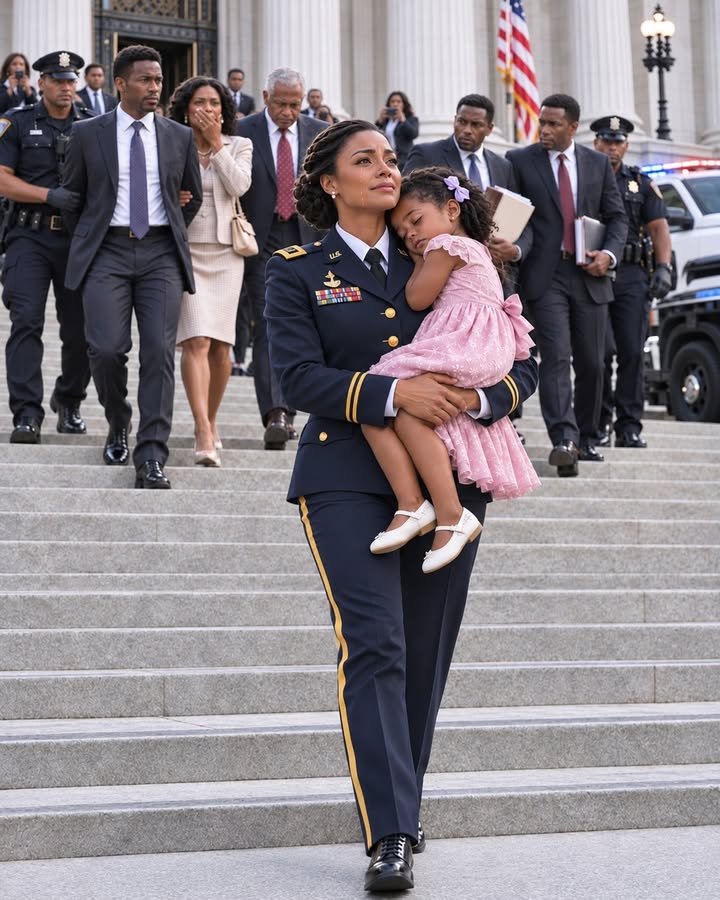
Part 2 – The Signature That Couldn’t Be Mine
I opened the folder and slid its contents across the table toward Judge Porter.
The top page was a preliminary report from a certified document examiner, someone I had consulted only after finding the settlement among the papers Andrew had left for me.
Beneath it lay a copy of the agreement and a record that placed the signature it carried in a different month, on a different document.
Calder reached for the report, but the judge raised a hand.
“Let me see it first,” she said.
I kept my palms flat on the table, though my heartbeat had begun to thud against my ribs.
The courtroom seemed to shrink around the quiet scrape of paper as Judge Porter read the examiner’s letter.
Andrew leaned forward, his expression no longer confident.
“Your Honor,” Calder said, “we have not had an opportunity to review this material.”
“I understand,” the judge replied. “You’ll have that opportunity.”
She turned the report over, then studied the copy of the settlement.
“Mrs. Ellison, explain what you believe this evidence shows.”
I had rehearsed the answer in my kitchen, alone, with no one watching.
It sounded different in the courtroom.
“The examiner’s preliminary opinion is that the signature on the settlement does not appear to have been written naturally,” I said. “The line quality and the pressure patterns suggest it may have been reproduced from another source.”
“May have been,” Calder repeated, rising slightly from his chair. “This is not a final finding.”
“No,” I agreed. “It isn’t.”
I reached for the third page.
“This is a scan of a document I signed on May 14, more than six weeks before the date shown on the settlement.”
The page was an old authorization for a bank transfer, one I had signed at Andrew’s request when the company was arranging a payment to a supplier.
My signature was clear at the bottom, with a small upward turn at the end of my surname that I had never thought about until the examiner pointed it out.
The signature on the settlement carried that same turn.
The same slight pause before the final stroke.
And a faint, blunt mark where my pen should have lifted.
Judge Porter looked from one signature to the other.
“Where did you obtain this copy?”
“I kept it with the records from that transaction.”
“Why?”
The question was simple, but I felt Andrew’s attention settle on me.
I could have said I kept everything.
I could have said it had seemed useful.
Instead, I told the truth.
“I learned in my former work that memory is less dependable than a dated record.”
Calder’s eyes narrowed with the first sign of real interest.
“Former work?” he asked.
“That does not affect whether this signature is genuine,” the judge said before I could answer. “We will stay focused on the issue before the court.”
She lifted the examiner’s report again.
“Mr. Calder, does your client dispute that this is a copy of the settlement submitted with the proposed agreement?”
“I don’t dispute that the document was submitted,” he said. “But I have no basis to confirm the provenance of this additional material.”
“Then we will address provenance when the original is available.”
Andrew finally spoke.
“Your Honor, I thought she agreed to it.”
His voice was quiet, and for a moment the familiar sound of it took me back to the first years of our marriage, when he would come home tired and loosen his tie while I asked how the day had gone.
He had said those same words then, in a different context, when we argued about a decision he had made without consulting me.
I thought she agreed.
The phrase had once seemed like an explanation.
Now it sounded like a door he had closed without checking who was on the other side.
Judge Porter glanced toward him.
“Mr. Ellison, you’ll have the opportunity to respond through counsel.”
Andrew looked at me instead.
“I did think you agreed,” he said.
Calder touched his sleeve, a quiet reminder to stop.
I held Andrew’s gaze.
“I never saw this version of the agreement until after you filed it.”
His jaw tightened, but he didn’t answer.
Ruth’s hands were clasped together on the table in front of her.
The diamonds at her wrist caught the light whenever she moved, though she had stopped trying to hide her smile.
Judge Porter set the papers down.
“Because the authenticity of the signature has been challenged with supporting material, I will not accept the proposed settlement today.”
A soft stir moved through the courtroom.
“An independent examination of the original document is necessary,” she continued. “Counsel will arrange for the original to be preserved and submitted to an agreed examiner, or return to me for further direction if they cannot agree.”
Calder nodded, his professional composure returning by degrees.
“Understood, Your Honor.”
“The parties will not represent this settlement as approved or final while that process is pending.”
The judge looked at the file before her, then at Andrew.
“We are adjourned on the settlement question.”
The gavel did not fall dramatically.
It made a small, ordinary sound, but it seemed to divide the morning into two distinct halves.
Before it, the Ellisons had arrived believing the matter was settled.
After it, none of us could pretend certainty.
I gathered my copies slowly, careful not to let my fingers show how badly they wanted to shake.
The courtroom began to empty around me.
Calder bent close to Andrew and spoke in a low voice, while the other attorneys gathered their folders.
Ruth stood and adjusted the sleeve of her coat.
For a moment, she looked at me as if she might say something.
Then she turned away.
Andrew remained seated.
I closed my briefcase and rose.
“Mara,” he said.
I stopped beside the table.
He had used my name so often over the years that it should have sounded ordinary.
Today it carried the distance of something newly recovered.
“Can we talk?”
“Not here.”
He glanced toward his attorneys.
“I meant privately.”
I watched him search my face for the answer he expected, the one that would make the conversation easier for him.
I didn’t give it.
“I’m going into the hallway,” I said. “If you want to talk, you can come there.”
The corridor outside the courtroom was bright with late-morning sun.
A row of tall windows looked down on the street, where people crossed between office buildings with coffee cups in their hands, unaware that my marriage had just been paused over a single disputed signature.
I stood beside one window and set my briefcase on the bench.
I needed a moment to breathe without anyone mistaking stillness for surrender.
The door opened behind me.
Andrew came out alone.
His attorneys had held him back for a few seconds, and he had left them without waiting.
He stopped several feet away.
“I’m sorry,” he said.
The words sounded sincere, but sincerity was no longer enough to answer the question between us.
“Are you sorry you filed a settlement I didn’t sign,” I asked, “or sorry that I noticed?”
He flinched.
“That isn’t fair.”
“I know.”
“You think I did this.”
“I think my name is on a document I never signed.”
“I didn’t put it there.”
He said it quickly, then seemed to hear how little it proved.
I studied him.
His anger had not disappeared, but something else had moved beneath it, unsettled and almost frightened.
“Did you read the agreement before you gave it to your attorneys?” I asked.
“I thought it was the version we’d discussed.”
“We never discussed those terms.”
“We talked about the house and the company.”
“We talked about figuring things out. You handed me papers and told me to sign them.”
“I thought we were in agreement in principle.”
“About what?”
He rubbed the back of his neck, the way he did when he had been awake too long or had made a decision he regretted.
“The broad outline,” he said. “That we’d separate the personal things, and I’d keep the company.”
“And what would I receive?”
He hesitated.
“I thought there was an arrangement.”
“What arrangement?”
“I don’t know the exact numbers.”
“You asked me to sign without knowing the numbers?”
“I believed you had already seen the draft.”
I looked down at the briefcase between us.
For seven years, I had kept the family calendar, arranged the holidays, made sure his parents’ appointments were scheduled, and built a home around the demands of his work.
I had also been the person who read the fine print.
When Andrew signed a new lease for his first office, I noticed the renewal clause.
When the company hired its first accountant, I organized the receipts the accountant said had been missing for months.
When his father asked me to prepare a folder for a meeting, I made a copy before I handed it over because I had learned that paperwork could vanish without anyone intending harm.
It had never occurred to me that the habit would one day protect me from the people I loved.
“I never saw the final draft,” I said.
“I didn’t know that.”
“You didn’t ask.”
He lowered his eyes.
For a few seconds, neither of us spoke.
The quiet between us was not peaceful.
It was full of questions that had accumulated over years and never found a place to land.
“I thought you’d have a lawyer,” he said at last.
“I’m allowed to represent myself.”
“I know that.”
“Do you?”
His gaze lifted.
“I didn’t know you were a lawyer.”
“You never asked what I did before we met?”
“I knew you were in the Army.”
“That isn’t the same thing.”
“No,” he said softly. “I suppose it isn’t.”
A clerk passed at the far end of the corridor, carrying a stack of files.
Andrew waited until she had gone.
“I always thought you wanted to leave that part of your life behind,” he said.
“I did.”
“Then why bring it into this?”
“Because the signature on that agreement isn’t mine.”
He looked as if he wanted to reach for an explanation, but none came easily.
“I never asked anyone to sign your name,” he said.
The sentence was not a confession.
It was not proof of innocence, either.
I believed that he believed what he was saying.
That was what made it harder.
Andrew had always trusted his father with business details.
He had trusted his attorneys to handle contracts.
He had trusted me to take care of everything he did not want to think about.
Perhaps he had trusted all of us so completely that he had stopped asking what our trust cost.
“Who prepared the settlement?” I asked.
“My father coordinated with the lawyers.”
The answer arrived too fast.
“Frank coordinated with your attorneys?”
“He’s been helping with the company sale. He told me he had the paperwork handled.”
“What paperwork?”
“The divorce documents. The company documents. All of it.”
“And you signed something authorizing him?”
Andrew went still.
“I signed a general authorization months ago.”
“For what?”
“I don’t remember the wording.”
The corridor seemed colder, though sunlight lay across the polished floor.
“Did you read it?”
“I must have.”
“That wasn’t my question.”
He pressed his lips together.
“I trusted him.”
I had wanted to hear Andrew say he had not forged the signature.
I had not expected him to admit that he had entrusted the details of our marriage to someone else.
The distinction mattered.
It did not make the hurt smaller.
“I’m going to need you to remember exactly what you signed,” I said.
“I will.”
“And not just what you think it said.”
“I understand.”
“Do you?”
He drew a breath and looked toward the courtroom door.
“I didn’t think this would happen.”
“Neither did I.”
“I know you think I’ve been careless with you.”
I held his gaze.
“I think you’ve been careless with the things you didn’t feel like handling.”
He looked down.
That landed more deeply than accusation would have.
For a moment, I saw the man I had married, not the one who had sat beneath the courtroom lights with three lawyers and a settlement bearing my name.
He had been warm once, and funny, and attentive in the small ways that mattered.
He used to bring me coffee before early meetings because he remembered how I took it.
He used to ask about my work, though over time his questions became less frequent, and mine became mostly about his.
I had mistaken the gradual quieting of my own life for the peace I thought I wanted.
“I’m not asking you to believe me today,” he said.
“That’s good, because I can’t.”
He nodded, accepting the answer without arguing.
His phone buzzed.
He glanced at it, then turned the screen facedown.
“Your father?” I asked.
“I don’t know.”
“Is he in the courthouse?”
“He came with us.”
“Where is he now?”
“Probably with my mother.”
There was no accusation in his voice, only strain.
“I need to speak to him,” he said.
“Then speak to him.”
“I don’t know what I’ll find out.”
Neither did I.
That was the first thing we had agreed on in weeks.
A moment later, the courtroom door opened and one of Andrew’s attorneys stepped into the hallway.
“Andrew, we need to discuss preservation of the original,” he said. “The judge’s clerk has asked that we arrange a neutral transfer procedure.”
Andrew turned to me.
“I’ll cooperate.”
“You should.”
“I mean it.”
“I hope so.”
The attorney gave us a restrained nod and waited.
Andrew started back toward the courtroom, then paused.
“Mara, before we go in—what did you mean when you said you kept records?”
I hadn’t planned to explain.
But the answer had been waiting inside me for years, as if it had never truly belonged to the past.
“I kept a dated archive,” I said. “Family and business paperwork. Receipts, calendars, emails, copies of documents people asked me to organize.”
His brow furrowed.
“All of it?”
“Not all of it. Enough to know what was signed, when it was signed, and who had a copy.”
“Why would you do that?”
“Because in my Army legal work, I learned that people remember events differently, especially when the record becomes inconvenient.”
His expression changed.
For the first time, he seemed to understand that the briefcase was not a prop and my calm was not confusion.
“I didn’t know you still kept those things,” he said.
“You never asked.”
The sentence fell between us with no raised voice, no sharp gesture, and no easy way around it.
He went back inside.
I waited until the door closed, then opened my briefcase again.
The archive had been built quietly, one folder at a time, over years when I had believed careful organization was simply another way to care for a family.
There were documents in it that I had not looked at since the day I filed them.
There were also absences I had noticed only after the settlement arrived.
I had searched for the original agreement among my own papers and found nothing.
But as I reviewed the copies I had brought to court, I remembered a receipt from a courier service attached to an old email printout.
The receipt was dated three days before the settlement claimed I had signed.
I had not understood why it mattered when I first found it.
Now I could not stop thinking about it.
The original settlement had not yet been examined.
The judge’s order would make sure of that.
Still, the copy bore a signature that looked like mine because it had been taken from somewhere.
A month before the date Andrew said I had agreed to the terms.
I closed the folder and pressed my palm against its cover.
The courthouse hallway was beginning to fill with voices and footsteps.
Then Andrew emerged again, without his attorney this time.
His face had gone pale.
“Mara,” he said. “My father wants to talk to you.”
I looked past him toward the courtroom door, where Frank stood just inside, one hand resting on the frame.
Andrew’s voice dropped.
“He says he delivered the settlement to the lawyers.”
My fingers tightened around the folder.
“Did he say who signed it?”
Andrew looked toward his father.
“No,” he said. “But he says he did it because I authorized him.”
**–END OF PART 2–CLICK “NEXT” AT THE BOTTOM OF THE PAGE TO CONTINUE READING**
* * *
[NEXT: PART 3](https://puretales.idolsgift.com/blog/part-3-the-signature-that-couldn-t-be-mine-008)
✓ Lynn R. Adams
Part 2 – The Signature That Couldn’t Be Mine I opened the folder and slid its contents across the table toward Judge Porter. The top page was a preliminary report from a certified document examiner,…