PART 2: The Report He Never Saw 035
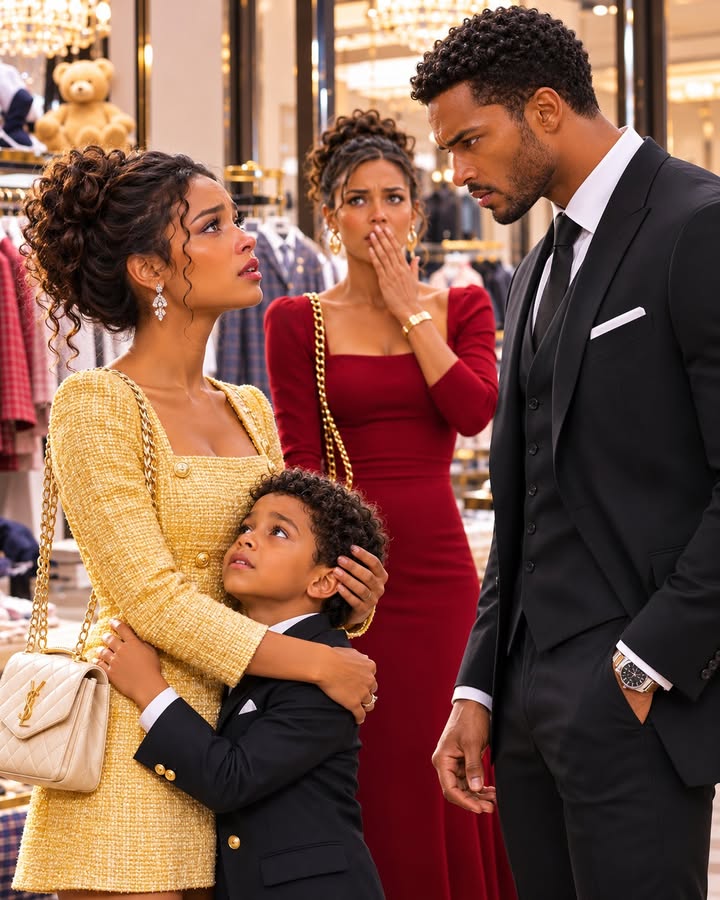
Olivia’s heels stopped clicking, but the silence she left behind seemed to travel farther down the hallway than the sound had.
Alexander stood between her and me, his shoulders rigid, his gaze fixed on the woman who had once been the person he trusted most.
“What happened to Claire’s second DNA report?” he repeated.
Olivia’s expression changed only slightly, yet I saw it: the quick tightening around her mouth, the glance she cast toward the nurses’ station, the pause before she answered.
“I don’t know what you’re talking about.”
“You heard Claire,” Alexander said. “She sent me the report.”
“I never saw it.”
“Then why did you stop walking?”
Olivia looked at me instead of him. “You’re still doing this, Claire? Your son is in intensive care, and you’re turning a frightening day into an accusation.”
“My son is in intensive care because he nearly died,” I said, keeping my voice low. “And you’re the one who came here with him when Alexander first questioned whether he was his.”
Her eyes flashed, but she quickly softened her face into an expression of concern. “I was worried about Alexander. I thought he deserved the truth.”
“You meant you thought I deserved to be blamed,” I replied.
Alexander’s hand curled at his side, then slowly opened again.
He looked as though he wanted to demand an answer from Olivia, but something in my face made him stop.
Perhaps he understood that the hallway was not his to command, and neither was I.
“Claire,” he said, turning toward me, “I need to know what happened to that report.”
“You needed to know six years ago.”
“I know.”
“No, you don’t.” My voice shook despite my effort to keep it steady. “You know that a paper may have gone missing. You don’t know what it felt like to be lying in a hospital bed after surgery, holding our newborn, while you looked at me as if I were a stranger who had tricked you.”
Alexander lowered his eyes.
Olivia folded her arms. “She’s upset. We all are.”
“Don’t speak for me,” I said.
For one brief moment, the careful mask slipped from her face.
Then she turned toward Alexander. “You’re exhausted. You gave blood, and the doctors said the boy is stable. This can wait until morning.”
“It can’t,” he answered.
A nurse appeared at the far end of the corridor, carrying a clipboard.
“Mr. Moretti?” she asked. “The doctor would like to speak with you and Leo’s mother about his condition.”
“His mother,” I corrected before Alexander could answer.
The nurse nodded, not taking offense. “Of course. Just his mother, then.”
Alexander stepped back at once, giving me room to pass.
That small gesture was so unlike the man who had once filled every room with his certainty that I almost wondered if I had imagined it.
I walked toward the nurse.
Behind me, Olivia said, “Alexander, come on.”
He did not move.
I did not turn around, but I heard him say, “Stay here.”
When I reached the doctor’s office, I could still feel the unanswered question following me.
The doctor, a tired-looking woman with silver threads at her temples, closed the door and invited me to sit.
Alexander remained outside.
“Your son is stable,” she said. “The transfusion worked as we hoped. We’ll continue monitoring him closely, but the immediate danger has passed.”
My knees weakened with relief.
“Can I see him?”
“Soon. He’s awake, but he’s tired. We’re keeping the room quiet.”
I pressed my fingers to my lips, trying to hold back the sob that rose in my throat.
The doctor waited until I could breathe again.
“His blood type is extraordinarily rare,” she continued. “Rh-null is sometimes called golden blood, though that name can make it sound less complicated than it is. There are very few known donors, and finding one quickly is unusual.”
“Alexander has it too,” I said.
“Yes. The lab confirmed his compatibility. That was fortunate.”
The doctor checked the notes on her clipboard.
“Has anyone told you that the father and son may share the same rare blood type?”
“No.”
“It doesn’t establish paternity by itself,” she added carefully. “But it is a remarkable coincidence, and it’s another reason we’ll document everything thoroughly.”
I nodded, unable to find anything useful to say.
A rare blood type had brought Alexander into the hospital room where his son lay in danger.
It had also given him a chance to do what he had failed to do six years ago: show up.
But one donation could not make him a father.
The doctor must have read something in my expression, because she softened her voice.
“You don’t have to make any decisions tonight. Your focus can be on your son.”
“That’s what it has always been.”
“I know.”
When I returned to the hallway, Alexander was standing alone.
Olivia was gone.
He looked up as I approached. “Is Leo all right?”
“He’s stable.”
His shoulders lowered, though the relief in his face seemed painful rather than joyful.
“Can I see him?”
I held his gaze.
“You may ask him when he wakes enough to understand who you are.”
“He’s six. He knows who I am.”
“He knows your name from the papers and the few times he’s seen you from across a room. That isn’t the same as knowing you.”
“I understand.”
“Do you?” I asked. “Because when Leo asks why you left, I won’t lie to make this easier for you.”
“You shouldn’t.”
“And I won’t let you come and go according to what feels comfortable.”
“I don’t expect you to.”
“Then what do you expect?”
Alexander looked toward the closed doors of the ward.
“I don’t know,” he said. “I came here because I heard he needed blood. I thought that was the only thing I could offer.”
“And now?”
“Now I know I’ve been wrong about the most important thing in my life.”
I had heard apologies before.
I had heard regret dressed in beautiful words, promises made with the expectation that the other person would immediately forgive.
Alexander’s voice held no grand flourish, but I could not yet tell whether its quietness was sincerity or shock.
“Your regret doesn’t change what happened,” I said.
“No.”
“And donating blood doesn’t make you safe for him.”
“I know.”
“Then if you want to see him, you follow my rules. You don’t arrive without warning. You don’t bring Olivia. You don’t tell him things you can’t keep doing. And you don’t use him to get close to me.”
He accepted each sentence without interrupting.
“I agree.”
“You don’t even know what my rules are yet.”
“Then tell me.”
The answer unsettled me more than an argument would have.
For six years, Alexander had believed that being powerful meant being right, and that people who loved him should accept his judgment even when it hurt them.
I had prepared myself to fight that man again.
I did not know what to do with the one standing before me now, pale from the blood donation, his expensive suit rumpled, his certainty stripped away.
“I’ll speak to Leo first,” I said. “If he wants to see you, I’ll let you sit with him for a few minutes. I’ll stay in the room.”
“I understand.”
“And after that, we decide nothing tonight.”
“All right.”
I watched him for a moment, searching for the impatience that used to arrive whenever he was denied an answer.
It did not come.
A nurse approached from the ward. “Leo’s awake. He’s asking for his mother.”
I went in alone.
Leo’s face looked too small against the white pillow, and a bandage covered one of his arms where the doctors had placed the line.
His eyes were heavy with exhaustion, but he smiled when he saw me.
“Mama.”
I sat beside him and took his hand carefully.
“I’m right here.”
“Did I get sick?”
“You were hurt, sweetheart, but the doctors helped you. You’re going to be all right.”
He stared at the ceiling for a while, gathering his thoughts.
“Did the man with the dark hair give me blood?”
“Yes.”
“Was it Alexander?”
I swallowed. “Yes.”
He turned his head toward me.
“Is he my father?”
The question struck so gently that it hurt more than any accusation could have.
I had rehearsed answers over the years, but never one for this moment.
“Your father is Alexander,” I said. “The test I had done when you were a baby showed that. He didn’t know about that test.”
“Why not?”
I brushed a strand of hair from his forehead.
“That’s something the grown-ups need to understand. It wasn’t your fault.”
Leo’s fingers tightened around mine.
“Did he leave because he didn’t like me?”
“No,” I said, though the truth had never been simple enough to fit into a child’s question. “He left because he believed something that wasn’t true, and he made a very bad choice.”
“Can I see him?”
I glanced toward the window, where the night reflected the room back at us.
“If you want to.”
“Just for a little while.”
I kissed his knuckles. “Just for a little while.”
Alexander entered only after I opened the door and nodded.
He stopped at the foot of the bed, keeping the distance I had asked him to keep.
“Hello, Leo,” he said.
Leo watched him with the solemn curiosity children save for things they sense are important.
“You gave me blood.”
“I did.”
“Did it hurt?”
“Not much.”
“Did you have to be brave?”
Alexander seemed to consider the question.
“I was nervous,” he admitted. “The nurse helped me.”
Leo’s mouth turned up a little. “I get nervous at the dentist too.”
“So do I,” Alexander said.
The small exchange loosened something in the room, though not enough to make the past disappear.
Leo looked at his arm, then back at Alexander.
“Why did you give me blood?”
“Because you needed it, and I could help.”
“Because you’re my dad?”
Alexander’s face changed.
For a moment, he could not answer.
Then he pulled a chair a little closer but did not sit until Leo looked at me, asking permission without words.
I nodded.
Alexander sat down.
“Because you’re my son,” he said. “And because you needed help.”
Leo studied him, apparently deciding whether that answer was good enough.
“Are you coming back tomorrow?”
Alexander looked at me.
The question was a small one, but his answer could become a promise that a child might carry for years.
“If your mother says it’s all right,” he said, “and if you still want me to, I’ll come back tomorrow.”
Leo nodded. “I want you to.”
“I’ll be here.”
I watched Alexander carefully, but I did not interrupt.
Leo’s eyelids began to droop.
When he finally fell asleep, Alexander stood without making a sound.
“I’ll come tomorrow,” he whispered.
“You’ll call first,” I said.
“I will.”
“And you’ll come alone.”
“Yes.”
He looked at Leo once more, then at me.
“I’m sorry,” he said.
“Not tonight.”
He accepted that too.
Outside the room, a nurse reminded Alexander to rest after donating. He looked as if he might refuse, but I gave him a warning glance.
“I’ll sit down,” he said.
For a while, the three of us occupied different corners of the ward: Leo asleep between us, Alexander in a chair near the nurses’ station, and I beside my son’s bed.
When I woke from a brief, uneasy doze, Olivia was standing at the end of the corridor.
She had returned without her coat, and her face looked paler than it had before.
Alexander rose to meet her.
“What are you doing here?” he asked.
“I wanted to make sure you were all right.”
“You could have called.”
“I did.”
He pulled his phone from his pocket and checked the screen.
“Three missed calls,” he said. “I didn’t hear it.”
“You’re exhausted. You need to come home.”
“I’m staying.”
Olivia’s eyes moved past him to Leo’s room.
“Claire has always been good at making people feel guilty.”
I stood up.
“Don’t talk about me as if I’m not standing here.”
Alexander’s gaze shifted to Olivia.
“Did you see the second test report?”
“I already answered you.”
“No, you said you didn’t know what I was talking about. I’m asking whether you saw a report from Claire proving Leo was mine.”
Olivia’s chin lifted.
“Why would I have seen something she sent to you?”
“Because you handled my mail.”
The hallway seemed to narrow around us.
I had not known that Alexander remembered.
Olivia’s face went still.
“You asked me to help when you were buried in work,” she said.
“I did.”
“You said I could sort what came to the office. I never hid anything.”
“You also knew Claire was calling.”
“I never stopped you from speaking to her.”
The answer came too quickly.
Alexander glanced at me, then back at Olivia. “You said she never called.”
“I said she stopped calling.”
“That isn’t what I asked.”
Olivia’s eyes hardened. “You were grieving the end of your marriage. You didn’t want to hear from her.”
“You decided that for me?”
“I was trying to protect you.”
“From what?”
“From being pulled back into a life you had already left.”
I felt my hands go cold.
The hospital smelled of antiseptic and coffee, but suddenly I was back in the apartment after the divorce, sitting beside a phone that never rang, wondering whether Alexander had even read the letters I sent.
I had left messages with his office.
I had mailed the genuine DNA report to the address he used for business.
I had believed that he had seen them and chosen silence.
“You intercepted my calls?” I asked.
Olivia turned to me. “I did not say that.”
“You said you knew I was calling.”
“I knew you tried to contact him. You were upset, and he was trying to move forward.”
“You told him I stopped calling.”
“I was trying to keep both of you from making things worse.”
Alexander’s face had gone colorless.
“How many calls?” he asked.
“I don’t remember.”
“How many letters?”
“I don’t know.”
“What about the report?”
“I told you, I never saw it.”
He looked at her as if he were seeing the shape of the answer in everything she refused to say.
“Why would you do that?” he asked.
Olivia’s composure cracked, and beneath it I saw something more complicated than guilt.
“You were falling apart,” she said. “You weren’t sleeping. You were angry, ashamed, and convinced everyone was laughing at you. Claire wanted another test, and you said you didn’t want to hear from her again.”
“I said that after the first result.”
“You said it more than once.”
“Not to you.”
“You didn’t need to. I knew you.”
The old intimacy in her voice made the words feel like a door shutting.
“You knew what I wanted,” Alexander said. “Or you decided what I ought to want.”
Olivia looked at me again, her eyes shining now, though I could not tell whether the moisture came from shame or resentment.
“Claire had a test that said the baby wasn’t yours. What was I supposed to think?”
“That she asked for another test,” Alexander replied.
“After you had already been humiliated.”
“I was wrong.”
“You’re saying that now because you’re tired and frightened.”
“No. I’m saying it because I struck the wrong person with my anger, then left my son without knowing his name.”
The words fell into the corridor with a weight none of us could lift.
Olivia’s mouth opened, but she said nothing.
I looked away first.
Not because I doubted Alexander’s words, but because I could not bear to watch him finally recognize what I had begged him to see while there was still time to repair it.
A nurse stepped into the corridor and gently asked us to keep our voices down.
Alexander lowered his head. “You’re right. I’m sorry.”
Olivia took a small step backward.
“I’m going home,” she said.
“Do you have the mail?” Alexander asked.
“What?”
“Anything that came from Claire. Letters, envelopes, reports. Do you have them?”
“No.”
“Then I’ll have my office find the records.”
“You’re going to accuse me of stealing your mail now?”
“I’m going to find out what happened.”
Olivia held his gaze for a long moment.
Then she turned and walked toward the elevators.
Alexander did not follow her.
When the elevator doors closed, he remained where he was, his hands hanging at his sides.
“I didn’t know,” he said.
I looked at him, tired beyond anger.
“You didn’t ask.”
“I thought she told me everything I needed to know.”
“That was your choice.”
“Yes.”
I returned to Leo’s room.
Alexander stayed in the hallway until the nurse brought him water and instructed him to rest. He did not come in without permission, and when he left later that night, he paused at the doorway.
“I’ll call tomorrow,” he said.
I nodded but offered nothing more.
The next morning, I found him waiting in the public seating area with two cups of coffee.
He stood as soon as he saw me.
“I didn’t know what you take,” he said. “So I didn’t guess.”
“I don’t need coffee.”
“Of course.”
He set both cups on the table and stepped aside as I continued toward Leo’s room.
That afternoon, the doctor confirmed Leo’s blood counts were improving.
Alexander listened closely, asking questions only when the doctor invited them.
When Leo woke, he asked for his father.
The word seemed to catch Alexander by surprise, but he did not rush toward the bed.
“Would it be all right if I came in?” he asked me.
I considered Leo’s tired face, then nodded.
Alexander sat beside him for ten minutes, talking about the drawing of a blue dragon taped to the wall.
When the visit was over, he left without promising anything except that he would call the next day.
Three days later, Leo was discharged.
Alexander asked whether he could help with the ride home, and I told him we had already arranged one.
He accepted my answer without protest.
Before we left the hospital, the doctor came to check the discharge papers and mentioned that the blood bank had completed its follow-up documentation.
“Finding a donor who shares Leo’s rare Rh-null type was fortunate,” she said. “It’s uncommon enough that I hope the family keeps the information in a safe place.”
“Is it inherited?” Alexander asked.
“It can be,” the doctor replied. “But blood type alone can’t confirm the relationship between two people. It’s one piece of medical history, not a paternity test.”
Alexander nodded, but I saw his fingers tighten around the edge of the chair.
In the days that followed, he called when he said he would.
He did not ask to see Leo every time, and he never treated a missed visit as an insult.
When he did come, he brought no expensive gifts, only the small sketchbook Leo had mentioned and a set of colored pencils.
He sat at the kitchen table while Leo drew and listened as if every explanation of a dragon’s wings mattered.
I stayed close enough to hear, never far enough to mistake politeness for trust.
The following week, Alexander asked to speak with me alone.
We met in the small lobby of my apartment building while Leo was upstairs with my neighbor.
“Have you been able to find the report?” I asked.
“Not yet. My office has started looking through the old mail records.”
“What about your assistant?”
“He remembers receiving sealed envelopes from you, but he doesn’t know what happened after they reached the office.”
“Olivia sorted your mail.”
“Yes.”
“Did you never wonder why I stopped trying?”
“I thought you had accepted that I was done.”
“I kept trying for months.”
His eyes lowered. “I know that now.”
I folded my arms, not to shut him out but to keep my hands from trembling.
“I paid for the second test myself. The clinic let me watch them seal the sample. I took the report to an independent medical adviser before I sent it to you.”
“You made sure the chain of custody was documented?”
“Yes. I had already learned how quickly one result could destroy a life.”
“Do you still have the paperwork?”
“All of it.”
“Would you let me see it?”
“Why?”
“Because I want to know what happened. Not so I can challenge you, and not because I doubt you. I need to understand how I could have been so certain of something that was false.”
For the first time, his question did not feel like a demand.
I studied his face, looking for an attempt to take control of the story again.
“What you do with that knowledge is your responsibility,” I said.
“I understand.”
“I’ll show you the documents after Leo is settled at home. He doesn’t need to hear us revisiting his birth while he’s still recovering.”
“Agreed.”
When I went upstairs, I found a message from Alexander’s office waiting on my phone.
They had located a reference number for the original test.
The first sample had been processed by a laboratory Olivia had recommended to Alexander before the divorce.
That alone did not prove anything.
But there was another note attached: the sample log listed a collection time that did not match the hospital’s delivery records.
I read the line twice, then a third time.
The discrepancy was small enough to have been overlooked for years, yet important enough to make the first test suddenly feel less certain.
I looked through the open doorway at Leo, who was drawing beside the window.
For six years, I had believed the truth had reached Alexander and that he had simply refused to believe it.
Now I was beginning to wonder whether the first lie had been planted long before my letter disappeared—and whether Olivia had been the only person who knew where to look.
**–END OF PART 2–CLICK “NEXT” AT THE BOTTOM OF THE PAGE TO CONTINUE READING**
* * *
[NEXT: PART 3](https://puretales.idolsgift.com/blog/part-3-the-report-he-never-saw-035)
✓ Lynn R. Adams
Olivia’s heels stopped clicking, but the silence she left behind seemed to travel farther down the hallway than the sound had. Alexander stood between her and me, his shoulders rigid, his gaze fixed …