PART 2: The Record That Changed Everything 029
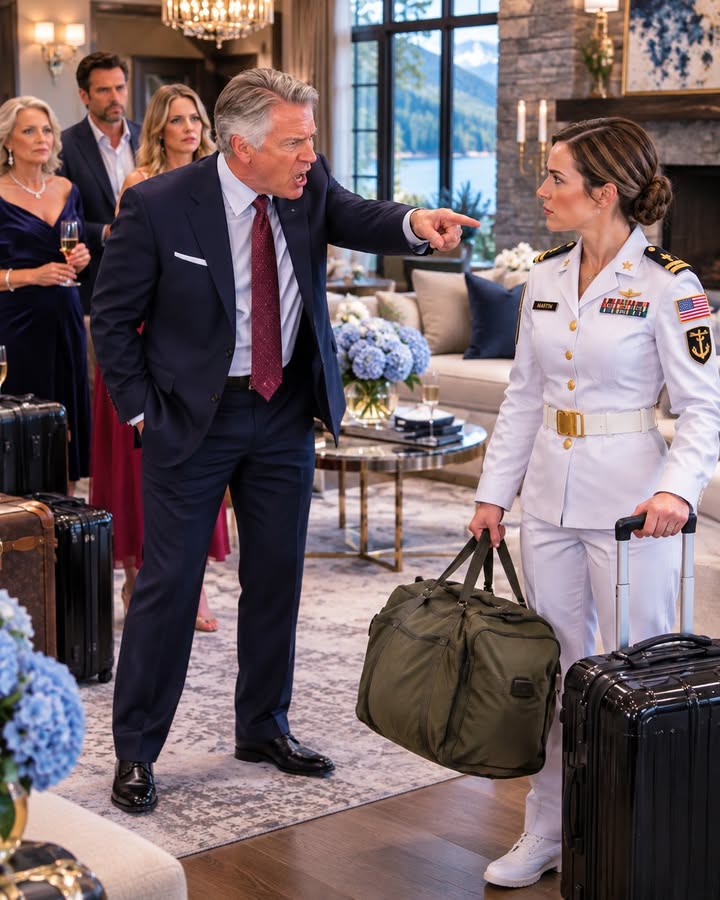
Part 2 – The Record That Changed Everything
The security company’s alert appeared on my screen while the last of the boxes disappeared through the villa’s front door.
I read it twice, though the words did not change.
Unauthorized entry detected.
I called Michael.
He answered before the second ring.
“I’m watching the footage,” I said.
“Then don’t go there,” he replied. “And don’t call your father while you’re angry.”
“I’m not angry.”
“You may be. You’re also exhausted, and those are different things.”
I looked at the screen again.
Dad was carrying a box across the threshold as if he had every right to be there.
“I need to make them leave.”
“You need to protect your position,” Michael said. “Those are not necessarily the same thing.”
He spoke calmly, the way he had during the investigation years ago, when every rushed decision seemed to create another problem.
“Have you reviewed the notices?” he asked.
“I sent you the copies.”
“I have them. We’ll check the delivery records and the exact wording. The security logs matter, too. So do the camera timestamps. Don’t alter anything, and don’t send messages you might regret.”
I watched Susan pause beside the posted notice before she tore it down.
“I have no intention of doing anything reckless.”
“Good. Then let the records speak before the family arguments drown them out.”
After we hung up, I downloaded the security company’s entry report and saved the original footage in two places.
The process was familiar in one sense.
I had spent years learning how to preserve facts when people disagreed about what had happened.
But this was not a training exercise or a work dispute.
The people appearing in the footage had once sat around my mother’s kitchen table.
They had held James’s hand in the hospital.
They had called me when they needed help and trusted that I would answer.
I opened the folder where I kept the villa records and added a new document labeled **Occupancy and Access Log**.
The name looked cold beside the photographs of the house.
Still, I typed the date, the time, the names I could identify, and the fact that they had entered after written notice had been posted.
Then I closed the folder.
For the rest of the afternoon, I tried to work.
My attention kept drifting back to the image of Dad carrying that box.
He looked older than he had when I saw him the previous week, though perhaps the security footage had only caught him from a different angle.
His shoulders were hunched.
The box seemed heavy.
For a moment, I imagined calling him and asking whether he was all right.
Then I remembered the words he had used on the terrace.
This house belongs to your sister’s family now.
The small human concern inside me did not disappear.
It simply had to share space with the truth.
The next morning, Michael came to my apartment with a slim briefcase and a notebook.
He did not begin by discussing court or police or consequences.
He began by asking whether I had slept.
“Some,” I said.
“That isn’t an answer.”
“I slept enough to be useful.”
“Then we’ll settle for useful.”
He laid the paperwork across my dining table and reviewed each notice carefully.
The first confirmed that I had revoked the family’s prior permission to visit the property.
The second addressed their unauthorized occupancy and directed them to contact me or my counsel.
He checked the delivery confirmation, then matched it against the security company’s records.
“Keep these together,” he said. “The date and method of delivery matter. So does what happened afterward.”
I nodded, though the weight of his words sat uneasily in my chest.
“I don’t want this to become a war.”
“Then don’t make it one,” Michael said. “A clear boundary isn’t a war. You’re not required to enter the villa, argue with them, or prove your ownership by standing in the doorway.”
“I thought about going there.”
“I know. That’s why I told you not to.”
He placed the camera report beside the delivery receipts.
“Let the proper process work. Don’t interfere with the property, and don’t have anyone change the locks while they’re inside. If there’s a question about access or occupancy, we handle it carefully and lawfully.”
“I don’t want the children frightened.”
“Then keep the adults’ dispute between adults. No messages to the children, no surprises at the house, and no dramatic confrontation.”
I looked at the footage frozen on my laptop.
“They’re acting as if I have no choice.”
“They may believe that,” he replied. “Belief doesn’t replace records.”
His steady voice gave me something I had not realized I needed.
Not permission to punish them.
Permission to stop performing the role they expected of me.
After he left, I went into the small spare room where I kept James’s things.
I had not called it a memorial room.
It was simply the room where his books, old photographs, and the few possessions I could not bring myself to sort still remained.
A wooden box sat beneath the window.
James’s brother had brought it to me after the funeral, saying he had found it among the belongings James had kept at home.
I had opened it once, then closed it when grief turned every ordinary object into an accusation.
Now I lifted the lid.
His watch lay on top of a folded navy sweater.
Underneath were a pair of reading glasses, a small notebook, and the envelope he had written to me during the final months of his illness.
My name was on the front in his familiar hand.
I sat on the floor beside the box.
I could still picture the hospital room: the pale afternoon light, the soft beeping of the monitor, the way James’s fingers had tightened around mine when he was trying to say something important.
“Look after the family,” he had whispered.
Those words had followed me home.
They had followed me overseas and through the weeks after his death.
They had sounded like a duty I could never put down.
I opened the envelope.
The letter was short enough to fit on one page, but I read it slowly, as if each line had to be granted permission to exist.
He wrote about a rainy evening when we had eaten takeout on the floor because our kitchen table was still in a moving truck.
He wrote that I had always been the one who noticed who was struggling, even when I was tired myself.
Then, near the bottom, his handwriting grew less steady.
*You will hear me ask you to look after the family, and I hope you do, because love matters.*
I stopped there.
The words caught in my throat.
I kept reading.
*But looking after them cannot mean giving away your safety, your peace, or the future you worked so hard to build.*
My hand tightened around the paper.
James had written that I was allowed to be generous because I chose to be, not because anyone had made my kindness a debt.
He told me that love should leave room for honesty.
He said he hoped I would remember that I was part of the family, too.
For a long time, I could not move.
I had spent three years believing that his last request had placed the whole family on my shoulders.
Yet here, in his own words, he had told me not to confuse love with surrender.
I folded the letter carefully and held it against my chest.
“I’m trying,” I whispered.
No answer came, of course.
The house remained quiet around me, the way I had once hoped the villa would be.
For the first time since my father’s announcement, the quiet did not feel like something I had lost.
It felt like something I still had the right to protect.
That evening, Olivia called.
I watched her name appear on my phone until it nearly went to voicemail.
Then I answered.
“Are the children settled?” I asked.
A pause followed.
“They’re tired,” she said. “The youngest keeps asking why everything is in boxes.”
“I’m sorry they’re caught in the middle.”
“So am I.”
Her voice sounded quieter than it had during our last call.
In the background, I heard a door close and then David speaking to one of the children.
“Dad says you’re making this bigger than it needs to be,” she continued.
“Did he tell you he gave you the villa?”
“He said you’d agreed we could use it.”
“I never agreed to let your family live there.”
“He said you knew we needed a place.”
“I knew you were having a hard time. That isn’t the same as permission to move into my home.”
She exhaled sharply.
“Maybe he thought you’d change your mind once we were there.”
The possibility landed between us, more painful than a direct accusation.
“Did you know the notice was posted?”
“I saw it,” she said.
“Did you understand what it meant?”
“Dad said it was just paperwork.”
“Olivia, the security company recorded you entering after you saw it.”
She went quiet.
I could hear the faint sound of a child moving around in the room with her.
“Dad said he had permission from you,” she finally replied.
“Did he show you anything that said that?”
“No.”
“Did you ask him?”
“I trusted him.”
I looked toward James’s letter on the table.
“I understand trusting him,” I said. “I trusted him, too.”
“Are you saying he lied to us?”
“I’m saying I never gave him permission to give anyone my home.”
She did not answer.
For a moment, I thought she might apologize.
Instead, she said, “The children need somewhere stable.”
“I know.”
“Then you know why we came.”
“I know why you needed help. I don’t agree that the way to get it was to move into my villa without asking me.”
The line remained silent.
I could have said more.
I could have listed the money, the years, the calls that always came when something was wrong.
But I did not want to use old generosity as a weapon.
I wanted her to understand the difference between helping and being claimed.
“I’m not going to argue with you over the phone,” I said. “Michael has the records. Please talk to Dad and David. I won’t come to the house.”
“Are you really willing to do this to us?”
The question was soft, almost frightened.
For an instant, it carried me back to a hundred moments when Olivia had needed me and I had said yes.
“I’m trying not to do anything to you,” I said. “I’m trying to protect what’s mine without turning you into an enemy.”
She ended the call without saying goodbye.
I sat with the phone in my hand until the screen went dark.
The next morning, Michael asked me to forward every message and email related to the villa.
“I’ve sent the obvious ones,” I said.
“Send the older correspondence too. Anything about the property, the family’s finances, or your father asking you to help.”
“I’ve helped him for years. There’s a lot.”
“I’m not asking you to assemble a case against your family,” Michael said. “I’m asking for a complete timeline. Facts first. Conclusions later.”
I searched my email, then my message archive.
Most of what I found was ordinary.
Questions about repairs.
Photographs of the lake.
A note from Olivia asking whether the spare room still had the blue quilt she liked.
Then I found an email from Dad, sent nearly a month before the villa dispute.
The subject line read: **A quick question about the property manager.**
I had not opened it in years.
At the time, I had been preparing for an extended assignment and sorting out insurance paperwork.
The message was brief.
*I spoke to the property manager about the house. I told him you were considering letting Olivia and David use it for a while. He needs confirmation from you before he changes anything in the file, so please reply when you get a chance.*
I stared at the screen.
I remembered reading the message.
I remembered being busy and thinking I would answer later.
Then James’s anniversary had come.
Then work.
Then my father had called about the family home.
I searched for a reply.
There was none.
The silence on my end had seemed like nothing at the time.
Now I read the message again, listening to the words in my head.
*I told him you were considering letting Olivia and David use it.*
Dad had not said he was going to ask whether I might consider it.
He had already told the property manager that I was considering it.
I forwarded the email to Michael.
He called less than ten minutes later.
“Did you ever give your father authority to speak for you to the property manager?”
“No.”
“Did you ever tell him Olivia could stay at the villa?”
“No.”
“Not even temporarily?”
“I told Olivia years ago that if things got bad, she could always stay with me. But that wasn’t about this house. And it wasn’t permission to move in with David and the children.”
Michael paused.
“That distinction may matter. For now, send me the full email chain and the property manager’s contact details.”
I forwarded everything I could find.
Then I sat back from the computer.
It was one thing for Dad to decide that family need outweighed my ownership.
It was another thing for him to speak as if I had already given permission.
I called the property manager, Mr. Bell, and explained that Michael would be contacting him.
There was a pause when I mentioned the email.
“I remember your father contacting me,” he said. “He said you were considering a family arrangement, but that he didn’t want to proceed without confirmation from you.”
“Did he tell you I had approved it?”
“He implied you were open to it. But I asked for written approval, and I never received it.”
“Did he ever say I had already agreed?”
Mr. Bell took a breath.
“Not in those words. He told me you had authorized him to discuss the arrangement on your behalf.”
My fingers went cold around the phone.
“Did you make a note of that?”
“Yes. I entered it in the property file, along with my request for your direct confirmation.”
“Can you send me a copy?”
“I can provide the relevant records to you or your attorney. I’ll speak to Michael directly.”
When we ended the call, I kept my eyes on the dark screen.
The first secret was not that Dad had misunderstood a casual offer.
He had spoken to the property manager in my name, without my permission, and had failed to tell me what he had represented.
The records would show whether he had gone further.
I sent a short message to Michael.
**Mr. Bell says he has a file note. He’ll send it to you.**
Michael replied almost immediately.
**Good. Don’t contact your father about it yet. Let’s see the original record first.**
I looked back at Dad’s email.
His words sat in the middle of the screen, plain and unremarkable.
I had read them once and moved on.
Now they seemed to open a door onto an earlier version of the same decision, one that had begun before the suitcases and the champagne.
The next morning, Michael forwarded me the property manager’s note.
It was only a few lines long.
My father had said that I had approved Olivia’s move-in and that he was handling the arrangements on my behalf.
The note also recorded that Mr. Bell had asked for written confirmation from me.
No confirmation had ever arrived.
I read the final line again.
**Owner has not responded; no change to authorized occupancy.**
Michael called as I was still staring at it.
“The records support what you told me,” he said. “You did not approve the move-in.”
I held the page at its edges, careful not to crease it.
“Then why did he tell them I had?”
Michael was quiet for a beat.
“That’s the question we ask next.”
**–END OF PART 2–CLICK “NEXT” AT THE BOTTOM OF THE PAGE TO CONTINUE READING**
* * *
[NEXT: PART 3](https://puretales.idolsgift.com/blog/part-3-the-record-that-changed-everything-029)
✓ Lynn R. Adams
Part 2 – The Record That Changed Everything The security company’s alert appeared on my screen while the last of the boxes disappeared through the villa’s front door. I read it twice, though the wor…