PART 2: The Receipts in the Box 034
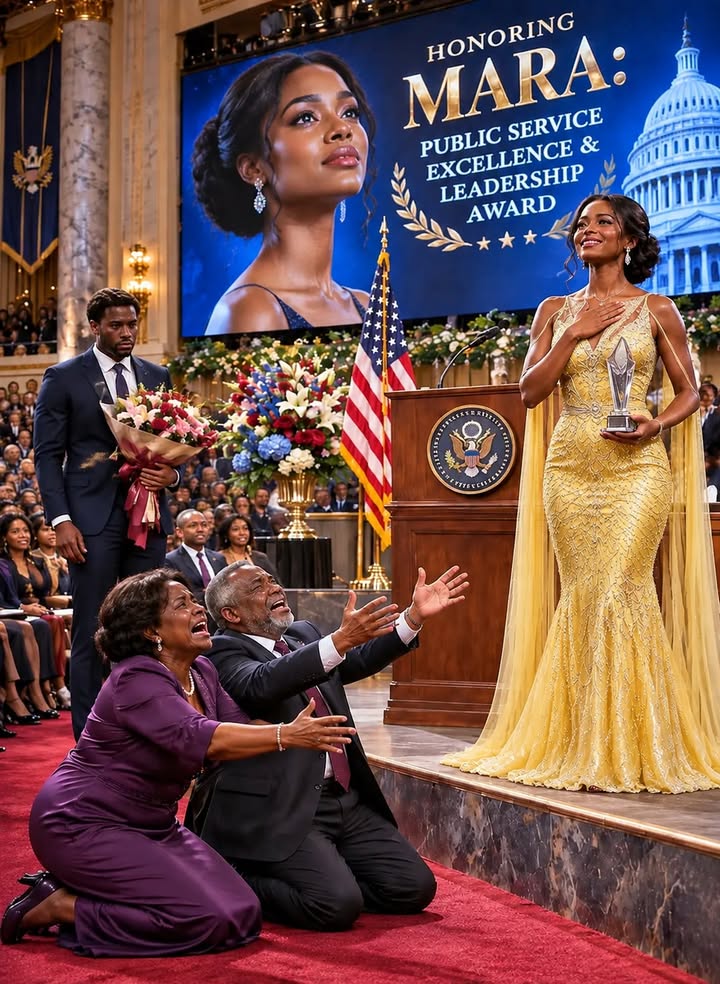
Part 2 – The Receipts in the Box
I called Evan before I could talk myself out of it.
He answered on the first ring, and for a moment neither of us said anything.
I could hear airport noise behind him, the muted announcements and rolling suitcases, but his voice was close and strained.
“Mara,” he said at last.
“Tell me what you found.”
A breath shuddered through the speaker.
“I’m sorry,” he said. “I don’t even know where to start.”
“Start with the receipts.”
“I found them in Dad’s old filing boxes in the garage,” he replied. “They were mixed in with tax papers and insurance forms. I wasn’t looking for anything about you. I was just trying to clear out some of the boxes.”
The words landed strangely.
For years, I had imagined my name disappearing from their lives so completely that no one would ever look for it.
Now it seemed I had been there all along, tucked between paperwork and old envelopes.
“What do the receipts say?” I asked.
“I should send you pictures. It’s easier than trying to explain over the phone.”
“Send them.”
I heard him tap at his screen, then pause.
“Mara, I swear I didn’t know about any of this.”
“You’ve said that.”
“I know. I just need you to believe I’m not calling because Mom and Dad told me to.”
“Then why are you calling?”
His reply came softly.
“Because I found out you were left alone, and I finally understood that what I believed about that night was wrong.”
I stood in the middle of my kitchen, one hand resting on the counter.
Outside, the November sky hung low over Toledo, turning the windows silver.
“What did you believe?” I asked.
“That you chose to stay in Ohio.”
I closed my eyes.
“I was seventeen.”
“I know.”
“No, Evan. You were two. You don’t know.”
The silence that followed was not defensive.
It was the silence of someone trying to make room for a truth he had never been asked to imagine.
“You’re right,” he said. “I don’t.”
My phone chimed.
A new message appeared from him, containing three photographs.
The first showed a narrow strip of paper, its edges browned with age.
The ink had faded, but the date was clear enough.
It was from the week my family moved to Florida.
The second was a receipt from a grocery store in our old town, listing a collection of ordinary things: bread, milk, canned soup, cereal, apples.
The third was a handwritten note on a small business receipt, with my father’s name at the top and the Carters’ address below it.
I enlarged the image.
The words sharpened slowly.
Payment received for room and groceries, Mara.
The date was from three weeks after my parents left.
I read it again, then held the phone away as if the page might change shape.
“They paid the Carters?” I asked.
“That’s what it looks like.”
“For how long?”
“I found several.”
“How many?”
“Six, so far. One for each month, starting in September.”
I sat down.
The room seemed to tilt, not dramatically, but enough that I had to put both feet flat on the floor.
For years, I had held on to the simple, brutal version of what happened.
My parents left me with two hundred dollars and a note.
They had not planned for me.
They had not cared what happened next.
But these receipts suggested that some part of the story had been hidden beneath the one I knew.
Not erased.
Not repaired.
Just complicated.
“Did you talk to Dad?” I asked.
“Not yet.”
“Mom?”
“I called them both after I found the receipts.”
I could hear the carefulness in his voice.
“What did they say?”
“They said they tried to make arrangements for you.”
“That’s not what I asked.”
Another silence.
“They said they thought you’d be all right with the Carters.”
I looked at the first photograph again, then at the grocery receipt.
A room.
Food.
A promise that had apparently existed somewhere beyond the empty house and the two bills on the counter.
“Did they tell you this when we were growing up?” I asked.
“No.”
“Did they ever mention that they paid the Carters?”
“No.”
“Did you know I stayed with them?”
“I knew you stayed there for a little while.”
“How long is a little while?”
“I was two, Mara. I remember almost nothing from that time.”
His voice cracked on the last words.
I could not make myself soothe him.
He was not the one who had been left standing in the empty kitchen, but he was also not the child who had made the decision.
“I believed you moved to Florida because you wanted to finish school here,” he continued. “Mom said you didn’t want to leave your friends. Dad said the Carters could help until you graduated.”
“Did they say I chose it?”
“Yes.”
The word fell between us.
I looked down at my hand, curled around the edge of the counter.
“I didn’t choose it.”
“I know.”
“You were two.”
“I know.”
“You couldn’t have known what they were telling you.”
“I still feel like I should have known.”
“That isn’t the same thing.”
“I know that too,” he said, though his voice suggested he was still learning how to believe it.
I glanced again at the handwritten note.
The date was smudged, but the amount was clear.
One hundred and fifty dollars.
The next month, the amount was the same.
The figures did not add up to a childhood, but they did add up to a plan.
“What happened to the payments?” I asked.
“I don’t know yet. There are six receipts, and the last one is dated in February.”
I counted the months on my fingers.
September.
October.
November.
December.
January.
February.
Six months.
“Did you find anything after that?”
“Not yet.”
“Any letters?”
“Not in the box I opened.”
“Then don’t call our parents again until you send me everything.”
“I won’t.”
“And don’t tell them I’m talking to you.”
“They already know I called.”
My jaw tightened.
“Of course they do.”
“I’m sorry,” he said quickly. “They called me while I was looking at the papers. I told them I needed to call you first.”
“Why are they so worried now?”
“I think they’re afraid you’ll think they never tried to help.”
I let out a quiet breath.
“Did they ever ask what happened to me after the Carters?”
“I don’t know.”
“Did you?”
He did not answer right away.
“I didn’t know there was anything to ask,” he said finally. “I thought you were a few miles away, finishing school. I thought you visited because you wanted to, and then you just stopped.”
I pressed the heel of my hand against my forehead.
“I didn’t stop.”
“I know.”
“They stopped calling. The first year, I called every Sunday. Mom would talk for a few minutes and then say she had to go. Dad was always busy. After a while, I stopped being the person who kept trying.”
“I remember you called once when I was little,” he said. “I remember Mom telling me you were doing fine.”
“Were you in the room?”
“I think so. I was in the kitchen. She put the phone down and told me you were working and going to school.”
“I was.”
“I’m sorry.”
I was tired of hearing those words before they had earned their weight.
Still, his apology did not sound like an attempt to close the conversation.
It sounded like something he was willing to leave unfinished.
“Don’t apologize for being two,” I said.
“I’m not. I’m apologizing for what I did after I learned enough to ask questions.”
“You’re only learning it now.”
“That doesn’t make it better.”
“No,” I said. “It doesn’t.”
He took a breath, and I heard the airport noise swell around him.
“Mom says you haven’t answered any of her calls.”
“I don’t want to talk to her yet.”
“She says they want you to come down for Thanksgiving.”
I glanced at the calendar pinned to the refrigerator.
Thanksgiving was less than two weeks away.
“They can wait.”
“They’re saying this is all a misunderstanding.”
The word sounded as hollow in his mouth as it had on the screen.
“Do you believe that?” I asked.
“No.”
The answer came so quickly I almost missed the relief in it.
“I don’t know what all the receipts mean,” he added, “but I don’t think leaving you alone was a misunderstanding.”
For the first time since he called, I felt the tightness in my chest ease by a fraction.
Not forgiveness.
Not trust.
Something smaller and more fragile: the knowledge that we were not both standing on opposite sides of the same lie anymore.
“Send me every receipt you find,” I said.
“I will.”
“And if you find something that changes the story, you tell me before you tell them.”
“I promise.”
“Evan.”
“Yes?”
“I can’t promise we’ll be close just because you called.”
“I’m not asking you to.”
“I can’t make you my brother again in one conversation.”
“I know.”
“You’re going to have to let me decide what this becomes.”
“I will.”
I looked at the photographs on my phone.
The receipts were thin and unremarkable, each one carrying the practical language of money paid and services received.
But the sight of them had altered something inside me.
For fifteen years I had been the only person holding the memory of that empty house.
Now Evan had a piece of the truth in his hands, too.
“I’m glad you called,” I said, and the words surprised me.
He made a small sound that might have been a laugh or a sob.
“I’m glad you answered.”
We ended the call without promising anything else.
I remained at the kitchen table, turning the phone over in my hands.
The house around me was quiet, but no longer felt as sealed off from the past.
I zoomed in on each receipt, tracing the dates with my thumb.
One was for groceries from a store near the Carters’ home.
Another recorded a payment for a room.
A third had my name written in my father’s careful block letters.
The receipts did not make the past kinder.
They did not give me back the nights I had spent on Denise Carter’s spare mattress, trying to convince myself that the situation was temporary.
They did not erase the envelope on the counter or my father’s impatience on the phone.
But they offered a question I had not known to ask.
What had my parents intended for me, and why had that intention ended?
The next morning, I called my supervisor and asked if I could work from home.
Then I took the receipts to the dining table, set my laptop beside them, and waited for Evan to send whatever he found next.
He did not message until nearly noon.
I’m back at the house.
Dad is acting like the boxes are junk, but I found another folder.
A moment later, three more photographs arrived.
The first showed a receipt dated in early October, with the Carters’ address written beneath the amount.
The second was for groceries.
The third listed a payment from the following month.
I compared the dates, checking each one against the calendar.
The amounts were steady, though the handwriting changed slightly on two of the receipts.
There was no explanation, no note to the Carters, no hint of what they were expected to do beyond provide me with a place to sleep and something to eat.
At the bottom of the last picture, just beyond the edge of the receipt, I could see part of another paper.
I enlarged the image.
“Evan,” I typed. “What’s underneath that one?”
He did not answer for several minutes.
Then my phone rang.
“I found a paper folded behind the folder,” he said.
“What kind of paper?”
“I’m not sure. It looks like a receipt, but it’s from a storage place.”
My fingers went cold.
“Storage?”
“Yeah. It’s dated the week they moved.”
I stared at the edge of the photograph, where a few letters showed beneath the folder.
“What did they store?”
“I don’t know.”
“Can you take a picture?”
“I’m trying to get it out without tearing it.”
His voice had grown distant, distracted, as if he were standing over the open box.
“Is Dad there?”
“He was. He went inside a minute ago.”
“Did he see it?”
“I don’t think so.”
“Evan, take a picture before you do anything else.”
“I will.”
I heard paper rustle and then a pause.
“Wait,” he said.
“What?”
“There are two payments on this.”
“What does that mean?”
“The receipt lists a deposit and another payment. The second one is under Mom’s name.”
I stared at the ceiling, unable to make the words fit together.
“Why would they rent a storage unit the day they left?”
“I don’t know.”
“Are you sure it was the same week?”
“Yes.”
He lowered his voice.
“Mara, there’s another line here.”
“What does it say?”
“I can’t read all of it. The ink is faded.”
“Read what you can.”
He went quiet as he studied the paper.
Then he said, “It says household items, records, and—”
The call dropped.
I looked at my phone, waiting for the screen to change.
A message appeared almost at once.
The receipt has a unit number written on the back.
And beneath it, a second line in my mother’s handwriting:
Hold until we decide what to tell Mara.
**–END OF PART 2–CLICK “NEXT” AT THE BOTTOM OF THE PAGE TO CONTINUE READING**
* * *
[NEXT: PART 3](https://puretales.idolsgift.com/blog/part-3-the-receipts-in-the-box-034)
✓ Lynn R. Adams
Part 2 – The Receipts in the Box I called Evan before I could talk myself out of it. He answered on the first ring, and for a moment neither of us said anything. I could hear airport noise behind h…