PART 2: The Promise He Never Forgot 047
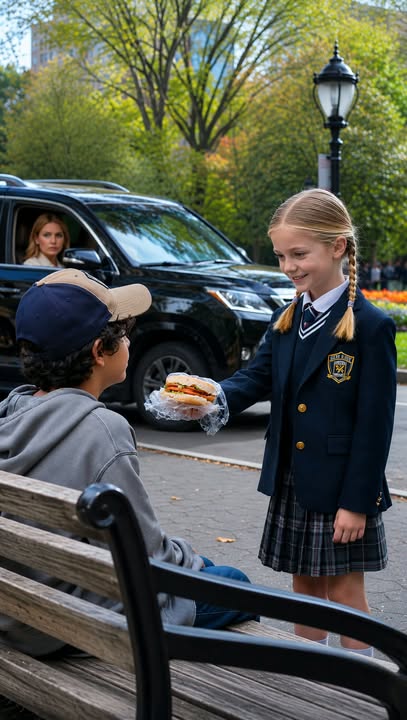
Part 2 – The Promise He Never Forgot
“Please… don’t let Kate see what’s inside.”
The envelope trembled in my mother’s hand, but I couldn’t stop looking at the name written across its front.
Milo.
Not “Baby Boy,” not “deceased,” not any of the words my mind had been scrambling to find.
Just Milo, written in the careful block letters of a hospital clerk, beneath a faded date stamp.
I reached for it.
My mother drew it against her chest.
“No,” she said, her voice so small it hardly sounded like hers.
“You’ve had years to tell me the truth,” I answered.
The driver stood beside the open car door, uncertain whether he should intervene or pretend he wasn’t listening.
Milo had gone quiet.
He was still holding the edge of my sleeve, but his fingers had loosened, as if he were afraid I might pull away now that I knew who he was.
“Kate, this isn’t the place,” my mother said.
“You were fine making it the place when you told the driver to take me away from him.”
Her eyes flicked to Milo.
For a second, I saw something underneath her fear, something that looked almost like grief.
Then she looked toward the street again, where a few people had slowed their steps to glance at the black sedan.
“Please,” she whispered. “Not here.”
Milo took one step back.
My hand moved toward him before I could think, but he lowered his eyes and let the space open between us.
That hurt more than I expected.
“Are you going to leave again?” he asked.
My mother’s face crumpled, then tightened.
“I’m not leaving,” she said.
“You said that before.”
She looked as if the words had struck her, though Milo had spoken them quietly.
I turned to the driver.
“Take us somewhere private,” I said.
My mother stared at me.
“Kate, get in the car.”
“You can come with us,” I said. “Milo can come too.”
“I don’t think—”
“Then we can stay right here.”
I didn’t raise my voice.
I didn’t need to.
For a long moment, my mother looked at the envelope, then at Milo, then at me.
Finally, she nodded once.
The driver held the rear door open.
Milo hesitated.
He glanced at the seat’s pale leather, then at the holes in his shoes.
“You don’t have to sit by me,” I told him. “But you’re not being left behind.”
He studied my face, searching for the part of me that might change its mind.
Then he climbed into the car and settled beside me, keeping his shoulders tucked inward.
My mother sat across from us with the envelope on her lap.
The driver closed the door, and the street sounds disappeared behind the tinted glass.
For a few seconds, none of us spoke.
The car smelled faintly of leather and the lemon polish my mother liked.
Milo’s damp sleeve brushed mine.
He drew away at once.
“You can stay there,” I said softly.
He looked at me.
“I don’t want to get anything dirty.”
“It’s a seat, Milo.”
He gave a small, uncertain nod, but didn’t move closer.
My mother held the envelope with both hands.
“Where are we going?” I asked.
“Home,” she said.
“No.”
She looked up sharply.
“We can’t do this in the car, and I’m not going to pretend everything is fine by walking into the house.”
“Your father isn’t home,” she said.
“This isn’t about Dad.”
“It’s about all of us.”
“It’s about you and Milo. And me.”
My mother looked away.
The driver kept his eyes on the road.
Milo stared out the window as familiar shops slipped past, places he had probably seen from the pavement but never from inside a car like this.
When we turned onto the tree-lined street leading to our neighborhood, he stiffened.
“Where are we going?” he asked.
“My house,” I said.
He glanced toward my mother.
She seemed to be waiting for him to object.
“I can go somewhere else,” Milo said.
“No,” I answered.
The word came out too quickly, carrying more force than I intended.
I softened my voice.
“You can decide what you want after we talk. But right now, you’re not going back to that bench alone.”
He watched me carefully.
“You don’t have to do that because she’s your mom,” he said.
I had no answer ready.
The car turned through the gates of our driveway.
Our house stood ahead, pale stone in the afternoon light, its windows catching the sun.
I had spent my whole life thinking it looked warm and welcoming.
That day, it seemed like a beautiful place built to keep certain truths outside.
The driver stopped near the front steps.
My mother got out first and hurried toward the door.
I followed with Milo beside me.
He paused at the threshold.
“You can come in,” I said.
“I know.”
He looked down at his shoes.
“I just don’t know if I’m supposed to.”
“You are.”
His eyes met mine.
He stepped inside.
The foyer was quiet except for the faint ticking of the grandfather clock.
A bowl of white roses sat on the entry table, and a framed photograph of my parents stood beside it.
Milo looked at the picture.
Then he looked at the real mother standing a few feet away.
My mother set the envelope on the table but kept her palm over it.
“Sit down,” she said.
Her voice had recovered its familiar authority, but her face had not.
We moved into the smaller sitting room, the one with the bookshelves and the blue chairs.
Milo chose the chair nearest the door.
I sat beside him, leaving enough space that he wouldn’t feel crowded.
My mother remained standing.
“First,” I said, “I want to see the records.”
She shook her head.
“You don’t know what they say.”
“Then show me.”
“Kate—”
“You said there were things I didn’t understand. I’m trying to understand them.”
Milo looked down at his hands.
My mother’s gaze went to him, and her fingers curled over the envelope.
“I never wanted this to happen this way,” she said.
“Did you want it to happen any way?”
The question hung between us.
She lowered herself into the chair across from us.
For a moment, she seemed to be looking past me, toward a room only she could see.
“Milo was born first,” she said.
My breath caught.
“Were we twins?” I asked.
“Yes.”
The word was barely audible.
Milo lifted his head.
My mother pressed her hands together in her lap.
“You were both born on September fourteenth, twelve years ago. You were healthy. Small, but healthy.”
“Then why did you tell everyone he died?” I asked.
She closed her eyes.
“I was young.”
“You were twenty-nine,” I said.
“I know.”
“You were married. You had a home. You had me.”
“I know that too.”
Her voice shook, but she did not look away.
“I was overwhelmed, Kate. Your father traveled often then, and I was struggling with two babies and a life I didn’t know how to manage. I told myself I couldn’t give Milo what he needed.”
“So you gave him away and told me he was dead?”
“I told the family he had died because I thought that was the only way to keep the adoption private.”
Milo’s expression remained still, though his fingers had clasped tightly together.
“Private from whom?” I asked.
“From everyone.”
“From me?”
“You were a newborn.”
“And afterward?”
My mother swallowed.
“I thought it was best to leave the past alone.”
“That’s not an answer.”
“No,” she said. “It isn’t.”
She looked at Milo, and her composure began to fray.
“I believed a couple could give him a safer, more stable life than I could. They had been approved to adopt. They had a good home. I was told they wanted a child very much.”
“And you never checked?” I asked.
“I was told the agency would keep the records. I was told that once the adoption was final, he would be cared for.”
“By someone else.”
“Yes.”
“Did you look for him?”
Her lips parted, but no words came.
I turned toward Milo.
He was watching her now, and there was something almost childlike in the hope he was trying not to show.
“You came to see me once,” he said.
My mother went completely still.
He reached into his hoodie and touched the photograph through the fabric, as if checking that it was still there.
“You came to the group home when I was little. I think I was six, maybe seven.”
“I remember,” she whispered.
Milo’s eyes shone.
“You told me you were my mother.”
My mother nodded, tears gathering in her eyes.
“You said you had to go for a while,” he continued. “You said you’d come back when things were settled.”
“I’m sorry.”
“You said you’d find me.”
“I know.”
“I waited.”
The words were so quiet that I almost missed them.
My mother covered her mouth.
Milo looked away, toward the bookshelf.
“I thought maybe you’d forgotten the promise,” he said. “Then I thought maybe you’d changed your mind. But I kept the picture because you told me it would help me remember you.”
My throat tightened.
I pictured him as a little boy in a group home, holding on to a promise that had no date attached to it and no way to know whether it was true.
“Why didn’t you come back?” I asked.
My mother shook her head, tears slipping down her cheeks.
“I don’t know how to explain it without making it sound worse.”
“Try.”
She drew in a shaky breath.
“I was afraid. I had just built a life that looked steady from the outside. Your father’s family knew you were an only child. My own family believed Milo had died. I told myself that showing up again would confuse him, or hurt the people raising him.”
“So you decided for everyone,” I said.
“I thought I was protecting him.”
“From what?”
She had no answer.
“From knowing you?” Milo asked.
My mother looked at him.
“I thought he had a good family,” she said. “I thought he was safe.”
“But you don’t know,” I said.
“No,” she replied. “I don’t.”
The honesty in her voice made the room feel even colder.
Milo studied her face, searching for something I couldn’t name.
“Did you ever miss me?” he asked.
My mother reached toward him, then stopped before her hand crossed the space between them.
“Every year,” she said.
Milo lowered his eyes.
“That’s not the same as coming back.”
“No,” she whispered. “It isn’t.”
I wanted to be angry enough to make the answer simple.
Instead, I felt a dozen things pulling in different directions: disbelief, hurt, and a fierce tenderness for the boy beside me.
My mother had spent years giving money to shelters and children’s charities.
She had asked me to help pack holiday baskets, and she remembered the names of the families at our community center.
I had believed that kindness was proof of who she was.
Now I understood that a person could be generous in public and still leave a promise unattended in the quiet.
“Why was Milo homeless?” I asked.
My mother blinked.
“What?”
“He’s been living outside. He has holes in his shoes. He said his mother didn’t want anyone to know he existed. Why did that happen?”
“I don’t know.”
“You gave him up because you thought he’d be safe.”
“I believed he would be.”
“But he wasn’t.”
“No,” she said, voice breaking. “I don’t know what happened after the adoption.”
Milo’s shoulders tightened.
“I had a family,” he said. “For a while.”
My mother leaned forward.
“Tell me.”
He glanced at me, then back at her.
“They were nice. They had a little house with a garden. My dad built a bird feeder with me, and my mom used to read stories at night.”
His voice grew softer.
“When I was eight, they died in a car accident.”
My mother took in a sharp breath.
“I’m so sorry.”
“They put me in foster care after that,” he continued. “I moved around a few times. I didn’t always know where I was going next.”
He rubbed one thumb across the other.
“Sometimes people said they were trying to find my relatives. Sometimes they said there wasn’t anyone.”
“There must have been records,” I said.
“I didn’t know what to ask for.”
“Did you ever tell anyone your birth mother might be looking for you?”
“No.”
“Why not?”
He looked down.
“Because I thought she didn’t want me.”
My mother’s face crumpled.
I reached over and placed my hand lightly beside his.
I didn’t grab him.
After a moment, his smallest finger touched mine.
It was enough.
My mother glanced at the envelope.
“Those records may explain some of it,” she said.
“Then let us read them,” I replied.
She kept her hand over the seal.
“The letter came from the hospital. I haven’t opened it.”
“Why not?”
“I couldn’t.”
“Because you were afraid it would say you made the wrong choice?”
“Because I was afraid it would say something I couldn’t undo.”
“That already happened.”
She flinched.
Milo looked between us.
“I don’t need her to be perfect,” he said.
His voice was calm, but it carried the weight of someone who had spent too long learning not to ask for much.
“I just want to know what happened.”
My mother lifted her hand from the envelope.
She held it out to me.
The paper felt heavier than it should have.
My name and Milo’s were nowhere on the front now, only a hospital department and the date the message had been delivered to my mother’s office.
I ran my thumb beneath the flap.
My mother watched me, her breathing uneven.
I opened it carefully and removed the folded sheet inside.
The first page was a notice stating that original birth records had been located and could be reviewed with the proper family representative.
There was also a short note from a hospital social worker asking my mother to contact them as soon as possible.
No explanation.
No answer to the question that mattered most.
At the bottom, a name and number had been written in blue ink.
“Ms. Reyes,” I read aloud.
My mother nodded.
“She’s the social worker who called. She said the records were old and there might be additional files connected to the adoption.”
“Then we call her,” I said.
“I will.”
“Together,” Milo said.
My mother looked at him.
“If you want,” she replied.
He seemed surprised that she had asked.
He studied the envelope, then the photograph still peeking from his hoodie.
“I want to know what’s in the records,” he said. “I don’t know what else I want yet.”
“That’s fair,” I told him.
My mother lowered her eyes.
“Yes,” she said. “It is.”
I called the number before she could lose her nerve.
The hospital’s main line transferred us to a quiet office, where a woman named Ms. Reyes answered.
She listened while I explained that we had received a notice about original records concerning my mother, my twin brother, and the day we were born.
“I can’t discuss confidential details over the phone,” she said gently. “But I can arrange for you to come in and review what the hospital is able to release.”
“Can you tell us anything now?” I asked.
There was a brief pause.
“Only that the records are more complicated than the first notice suggests,” she said. “I think it would be best if your mother and Milo came in together.”
My mother’s fingers tightened around the armrest.
Milo leaned closer to me.
“What does that mean?” I asked.
“I don’t want to guess before I’ve checked the file,” Ms. Reyes replied. “But there are documents that may answer questions about what happened after the surrender.”
The call ended with an appointment for the following morning.
My mother sat motionless after I hung up.
Milo looked at her.
“Were you really going to come back?” he asked.
She took a long breath.
“Yes.”
“When?”
“I don’t know.”
“Did you have a plan?”
“No.”
He nodded slowly, as though the answer had confirmed something he already suspected.
My mother leaned forward, but kept her hands in her lap.
“I understand if you don’t believe me.”
“I don’t know what I believe.”
“That’s fair.”
“And I don’t know if I want to call you Mom.”
“I understand.”
He looked at her for another moment, then turned toward the window.
I stayed beside him.
I didn’t know what tomorrow’s records would say, or whether the truth would bring them closer or leave the space between them even wider.
But I knew I would be there when they read them.
As our driver prepared to take Milo to a nearby youth residence for the night, Ms. Reyes called again.
My mother answered on speakerphone.
“I found one more item in the file,” the social worker said. “It appears a placement agency sent a follow-up report to your mother not long after the adoption.”
My mother’s face went pale.
“What did it say?” I asked.
“I can’t read it to you over the phone,” Ms. Reyes replied. “But it may explain why Milo’s old records list an address where no one could be reached.”
My mother stared at the floor.
Milo turned toward her.
“What address?” he asked.
She didn’t answer.
And in the silence that followed, I wondered whether the truth we were about to uncover would be harder than the one we already knew.
**–END OF PART 2–CLICK “NEXT” AT THE BOTTOM OF THE PAGE TO CONTINUE READING**
* * *
[NEXT: PART 3](https://echoesofstories.idolsgift.com/blog/part-3-the-promise-he-never-forgot-047)
✓ Lynn R. Adams
Part 2 – The Promise He Never Forgot “Please… don’t let Kate see what’s inside.” The envelope trembled in my mother’s hand, but I couldn’t stop looking at the name written across its front. Milo….