PART 2: The Promise Ava Believed 035
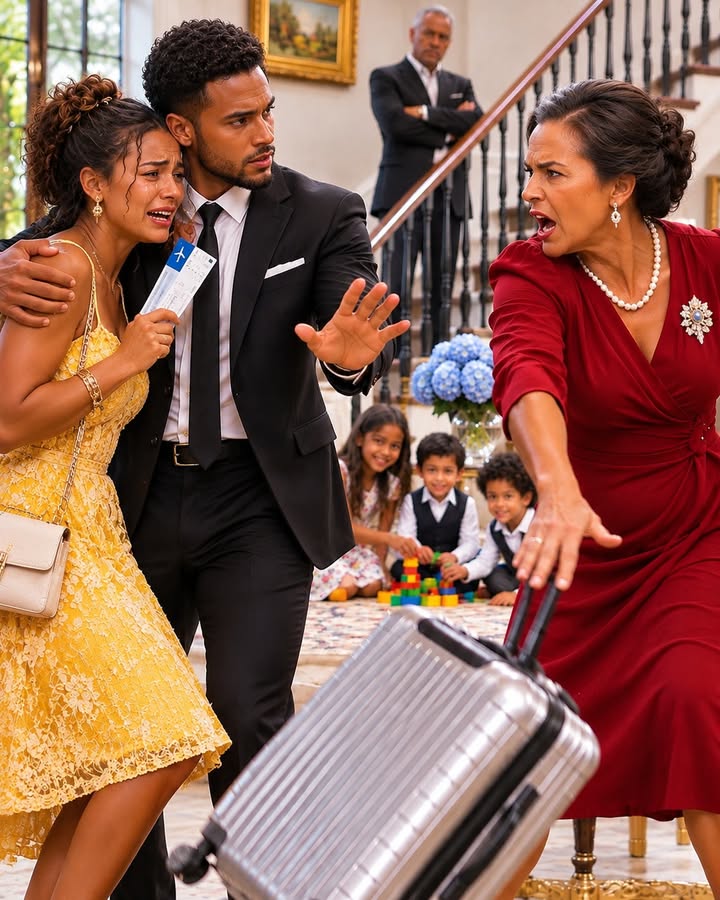
The document trembled between my fingers as Natalie reached for it, her expression shifting from disbelief to a quiet, protective anger.
“Let me see,” she said.
I handed it over, though part of me wanted to snatch it back and tear every page into pieces.
The signature at the bottom looked like mine at first glance, which was what made it so unsettling.
It had the same slant, the same long final stroke in Pierce, and the same small hesitation before the last letter.
But I knew the shape of my own handwriting, and I knew I had never put my name on that page.
Natalie read the affidavit again, her eyes moving slowly over the paragraphs that described me as a dependable caregiver who had “committed to providing regular and emergency support.”
When she reached her own name, she stopped.
“I never agreed to this either,” she said.
“No,” I answered, my voice sounding distant even to me.
“You didn’t.”
Our attorney, Maya Chen, had joined us at the hotel a few minutes earlier by video call.
She had arranged it as soon as we sent her the document, and she listened without interrupting while we described the children on our porch, the caseworker’s questions, and my father’s strange voicemail.
Now she leaned closer to her camera, the soft office light falling across her face.
“First, I want you both to take a breath,” she said.
“The affidavit is serious, but we don’t yet know exactly how it was used or who submitted it.”
I looked down at the page again.
“It was used to make me look like I’d agreed to take care of Brooke’s kids.”
“Possibly,” Maya said carefully.
“It may have been submitted in a custody matter, or it may have been provided to a caseworker as part of a broader family-support plan.”
“Either way, the statement is false.”
“Yes,” Maya said.
“And we’ll address that.”
Her measured tone helped, but it didn’t erase the feeling that the floor beneath my life had shifted.
Natalie sat beside me on the edge of the hotel bed, her shoulder pressed to mine.
She had held my hand through the first frantic calls after we saw the children on our porch.
She had stayed close while I tried to explain to the police, the neighbors, and the caseworker that we were in Portugal and had never agreed to be responsible for the children.
Yet I could see the strain in her face now, too.
Our anniversary trip had become a room filled with legal documents and unanswered questions.
Maya asked us to forward every page, including the email headers and the envelope the caseworker had sent.
She told us not to contact Brooke’s former partner, Mark, until she understood where the affidavit had appeared and how it might affect the custody dispute.
“I know you want answers,” she said.
“But an emotional conversation could complicate things before we know what the court has actually received.”
“I’m not trying to complicate anything,” I said.
“I just want to know why my family would do this.”
Maya’s expression softened.
“That’s a question we may not be able to answer today.”
After the call ended, Natalie closed the laptop and sat beside me in silence.
Outside the window, Lisbon carried on in its own steady rhythm.
A tram rattled along the street below, and someone laughed in the courtyard of the hotel.
The ordinary sounds made the room feel strangely unreal.
Natalie rested her hand on my arm.
“Do you want to go home?” she asked.
The question was gentle, not a test.
I stared at the pages on the bed.
Part of me wanted to book the first flight back, march into my parents’ house, and demand that someone explain the signature.
Another part knew that rushing home would not make the children safer.
“Not yet,” I said.
“The kids need us to make sure they’re okay.”
“They’re with the neighbors for now,” Natalie reminded me.
“And the police know where they are.”
“I know.”
I rubbed my palms against my jeans, trying to settle my hands.
“But they were left alone because everyone assumed I’d come running, even from another country.”
Natalie’s eyes grew damp, though she kept her voice steady.
“I know, Owen.”
She leaned her forehead against my shoulder.
“We’ll figure out what we can do without letting them make every decision for us.”
That was why I loved her.
She could understand my instinct to help without letting that instinct turn into a reason for others to take advantage of it.
Maya called the caseworker while we listened on speaker.
Her name was Elena Ruiz, and she had been the one who contacted me about the supposed pickups and overnight care.
Maya explained that she represented me and wanted to clarify my role in the family-support information Elena had received.
“I can confirm that Owen has never been a regular caregiver for the children,” Maya said.
“He and his wife are currently in Portugal, and they did not authorize the document we’ve provided.”
There was a pause.
Then Elena answered in a calm, professional voice.
“The affidavit was included in materials submitted to us by the family.”
“Can you tell us what it was intended to establish?” Maya asked.
“It described Owen and Natalie as part of the children’s dependable support network.”
“That’s different from the information I received about school pickups and overnight supervision.”
“I understand the discrepancy.”
Elena explained that she had been trying to confirm details that appeared in several records, some of which had been provided by Brooke and others by the children’s father.
The family-services office was assessing the children’s temporary circumstances after the incident at our house.
No one had concluded that I was responsible for them, she stressed, but the information needed to be corrected.
Maya asked whether the affidavit had been filed with a court.
Elena could not answer that from her department’s records.
She did, however, offer to send Maya the source information she was permitted to share and to make a note that I disputed the document.
After the call, Maya said she would contact the clerk handling the family matter and request a copy of the relevant filing.
“Until we know more, don’t send messages to anyone about the affidavit,” she advised.
“Preserve what you have, and let me communicate with the caseworker.”
I nodded, though I was already thinking about my sister.
Brooke’s name sat at the top of the affidavit, above mine.
She had signed her own statement on the first page.
Had she known?
The question felt like a pebble lodged beneath my skin, small enough to ignore for a few seconds and impossible to forget after that.
Natalie noticed me staring at the phone.
“Do you want to call her?” she asked.
“I want to ask how she could leave the kids there.”
“That’s a different question from whether she knew about the document.”
“I know.”
“Then maybe we should keep those questions separate for now.”
I turned toward her.
“You’re right.”
It was easier to agree than to follow the advice.
We had not planned to spend our first days in Lisbon monitoring a police call, a caseworker, and a legal dispute.
Still, the children had been in our care in every way that mattered the moment they were abandoned outside our home.
The next morning, Elena called with an update.
The children had spent the night with our neighbors, the Millers, who had known Brooke’s children for years.
The police had contacted Brooke, and she had come to collect them after the officers arrived.
Elena said the children were safe, but the family-services office needed to speak with them and confirm arrangements for the coming days.
I felt relief first, then anger at how easily those feelings had become tangled.
“What did Brooke say?” I asked.
“She told the officer she believed you would arrange for someone to take them in.”
“That’s what my mother said.”
“I can’t speak to the family’s conversations,” Elena replied.
“But that was Brooke’s explanation.”
Natalie stood close enough to hear.
She took my free hand and pressed her thumb against my knuckles.
It was a small gesture, but it kept me from slipping into the old habit of answering every family problem by accepting the blame.
Maya called soon after and told us she had confirmed the affidavit was included as supporting material in Brooke’s custody dispute with Mark.
She would request the exact filing and notify the appropriate people that my signature was disputed.
“Did Mark submit it?” I asked.
“I don’t know yet.”
“Does he believe I agreed to take the kids?”
“Not according to the limited information I have.”
Maya paused.
“I’m going to speak with him through his attorney before I say more.”
I remembered her warning not to contact him.
The fact that Mark might know something about the affidavit made my questions multiply.
But I agreed to wait.
While Maya worked, Natalie and I walked down to the water.
We had chosen Portugal because it was a place we had talked about visiting since our first year of marriage, when every trip seemed too expensive and every spare dollar had another purpose.
The first time we had mentioned Lisbon, we were sitting at a kitchen table covered in bills.
We had promised ourselves we would go when we could afford to be away without guilt.
Now we stood beside the Tagus, watching the light spread over the water, and I wondered whether a vacation could still feel like a vacation when part of me was listening for the next call.
Natalie slipped her hand into mine.
“Do you remember the first time we planned this?” she asked.
“You had that old travel book with the bent cover.”
“You said the buildings looked like they were painted by someone who couldn’t choose one color.”
“They still do.”
She smiled faintly.
“I wanted us to have one thing that belonged to us.”
Her words settled more heavily than the wind.
“I’m sorry this is happening on our anniversary.”
“You didn’t cause it.”
“I know.”
I looked toward the river.
“But I’m sorry you have to carry it with me.”
“I married you,” she said.
“I didn’t marry the emergencies your family keeps handing you.”
The distinction was clear, and it gave me room to breathe.
That afternoon, Maya called again.
She had spoken with the court clerk and learned that the affidavit had been filed several weeks earlier as an attachment to Brooke’s custody papers.
It appeared to support Brooke’s claim that she had dependable family assistance if she needed help with the children.
The court had not yet ruled on the larger custody questions.
Maya was careful to explain that the affidavit alone would not decide the case, but it mattered because it had been presented as evidence.
“Mark’s attorney questioned the reliability of the support arrangement,” Maya said.
“That’s part of why the document surfaced.”
“So he saw it,” I said.
“Yes.”
“Did he believe it?”
“I’ll speak with him directly before we draw conclusions.”
The information made the affidavit feel both more serious and more absurd.
My name had been used to make a promise in a legal dispute, yet the first person who questioned it might have been the man my family wanted me to distrust.
“Could this affect the children?” Natalie asked.
“It could become part of the court’s assessment of what support is actually available,” Maya answered.
“That’s why we need to correct it promptly, while being precise about what Owen did and did not agree to.”
I leaned back against the hotel chair.
“They’re going to think I don’t want to help.”
“No,” Maya said.
“Your willingness to help and your consent to become a permanent backup caregiver are separate things.”
The distinction was obvious when she said it, but I had spent years allowing my family to blur it.
That evening, Elena arranged a short video call between us and the children.
She explained that the call could help them understand where we were and reassure them that we were not angry with them.
I was grateful she had asked first.
The screen filled with Ava’s face, then Theo’s, then little Miles, who leaned so close to the camera that all we could see was one eye and part of his nose.
“Uncle Owen,” Theo said.
“Are you still in the airplane?”
“No, buddy,” I said, trying to smile naturally.
“We’re in Lisbon now.”
“Is it nice?”
“It’s beautiful.”
Natalie leaned into view.
“We wish you could see the river.”
Miles shouted something that sounded like “big boats,” then ducked away.
Ava remained quiet.
She was sitting at the edge of a couch, her hands folded together in her lap.
I knew that look.
Even as a child, Ava had been watchful, as if she were always trying to figure out what the adults wanted before deciding what she was allowed to say.
“How are you doing?” I asked her.
She gave a small nod.
“Okay.”
“You can tell us if you’re confused or upset,” Natalie said.
“You don’t have to protect anyone’s feelings.”
Ava glanced toward someone outside the frame.
Her lips parted, but she didn’t speak.
Elena, who was sitting nearby, gently told the children that they could talk to us privately if they wanted.
Ava’s eyes returned to the screen.
“Did Mom tell you we were coming?” she asked.
The question landed with a weight I could not hide from my face.
I chose my words slowly.
“No, sweetheart.”
“Mom sent us a message after you were already at our house.”
Ava looked down at her hands.
“She said you knew.”
Natalie and I exchanged a glance.
“Who said that?” I asked.
Ava swallowed.
“Mom said Uncle Owen already agreed that he would take care of us if anything happened.”
My chest tightened.
“What did she mean by ‘anything happened’?”
Ava shrugged, but her eyes had begun to shine.
“She said you had promised you’d help if she ever needed it.”
“I didn’t make that promise, Ava,” I said gently.
“But you didn’t do anything wrong.”
She looked toward the side of the room again, as if checking whether it was safe to continue.
“Mom showed me a picture of you and Dad when you were little.”
I felt a strange, cold stillness settle over me.
“Why did she show you that?”
“She said we were all going to be together soon.”
Ava’s voice dropped to a whisper.
“She said there was a paper that made it official.”
I stopped breathing for a moment.
Natalie’s hand found mine beneath the edge of the table.
“What paper?” she asked softly.
Ava’s gaze shifted between us.
“I don’t know.”
She paused.
“But Mom said you already said yes.”
Ava was not trying to accuse me.
She sounded as though she were repeating something she had accepted because her mother had said it, because she had seen a family photograph, because adults had told her that the future was settled.
The secret was not only the false promise.
It was that Brooke had carried it into the children’s lives and made Ava believe it.
“I’m sorry,” I told her.
“I should have been clearer with you, but I didn’t know anyone had told you that.”
Ava’s shoulders relaxed a little.
“Are you mad at Mom?”
It was a question no ten-year-old should have had to ask.
“I’m upset about what happened,” I said.
“But you and your brothers are not the reason.”
Natalie nodded.
“We love you, Ava.”
“That doesn’t change because of grown-up problems.”
The call ended a few minutes later, after Theo asked when we were coming back and Miles insisted on showing us a toy truck.
When the screen went dark, the room seemed too quiet.
I stood and crossed to the window, unable to settle.
“She showed Ava the paper,” I said.
“Or told her there was one.”
Natalie came to stand beside me.
“She wanted the children to believe you were part of the plan.”
“I never agreed to be part of any plan.”
“I know.”
I turned toward her.
“They were waiting for me.”
“They were waiting because they trusted what their mother told them.”
That distinction mattered, though it hurt.
I thought of Ava standing on our porch beside her little brothers, believing that the place they had been left was the beginning of something she had been promised.
The anger in me softened at the edges, leaving grief behind.
“She thinks I let them down,” I said.
“She asked if I was mad at her.”
“She thinks the adults’ choices are something she has to manage,” Natalie said.
“That’s what I’m angry about.”
Maya called again the next morning.
She had received preliminary information from the court file and was preparing a formal statement disputing my supposed commitment.
She would also contact Brooke’s attorney to make sure the court understood that the affidavit did not represent my consent.
Before we ended the call, I told Maya what Ava had said.
Maya’s face tightened with concern.
“That makes it even more important that we establish what the children were told,” she said.
“Not to put Ava in the middle, but to understand how this promise was presented.”
“I don’t want her questioned like she did something wrong.”
“Neither do I,” Maya assured me.
“We’ll be careful.”
After the call, Natalie asked whether I wanted to tell Brooke that we had spoken with Ava.
I considered it, then shook my head.
“Not before Maya advises us.”
I did not want Ava caught between adults trying to defend their versions of events.
That afternoon, Elena sent us a written update confirming the children had been placed in a safe temporary arrangement with a vetted relative while the adults worked out a longer-term plan.
She did not share details, and I didn’t ask her to.
I was relieved to know they were not alone, but the word temporary lingered.
It reminded me how quickly my family had turned a wish into an assumption, then an assumption into a document.
At dinner, Natalie and I sat beneath a window overlooking the narrow street.
Neither of us had much appetite.
She reached across the table and took my hand.
“I want to ask you something,” she said.
“Go ahead.”
“If Brooke had called and asked you to help, would you have said yes?”
The question caught me off guard.
“I don’t know.”
“Would you have taken the kids for a night?”
“Probably, if we were home and it was an emergency.”
“And what about regular backup care?”
I looked at the candle between us.
“No.”
The answer came more easily than I expected.
“I love them, but I can’t promise to be available whenever Brooke needs me.”
Natalie nodded.
“That’s all I needed to know.”
I understood then that the affidavit had not invented a new conflict so much as exposed the one we had spent years avoiding.
My family had learned to treat my affection as an open-ended agreement.
I had allowed that interpretation to stand because saying no always seemed to create more trouble than saying yes.
Now the children had been made to believe I had promised something I had never chosen.
The next morning, Maya messaged us that she had spoken briefly with Mark’s attorney.
She could not yet share everything, but she said Mark’s position might help clarify how the affidavit had been received.
I waited for her call, pacing the hotel room while Natalie sat with the laptop open.
When Maya finally appeared on screen, she looked thoughtful.
“Mark says he never believed you had agreed to be a caregiver,” she said.
I stopped pacing.
“Then why did the affidavit matter?”
“Because he objected to Brooke presenting herself as though she had dependable backup when he believed she did not.”
Natalie looked up from the computer.
“So he questioned whether the support was real?”
“Exactly,” Maya replied.
“He says he didn’t know Owen personally and had no reason to assume the signature was forged.”
“Did he know who provided the document?” I asked.
“Not yet,” Maya said.
“But he told me something else.”
She glanced down at her notes, then back at us.
“Mark says Brooke told him that Owen had promised to help, but he never accepted that as a firm arrangement.”
The room seemed to tighten around me.
Brooke had told Ava I had promised.
She had apparently told Mark the same thing.
And someone had made it official on paper.
“Who made her believe I’d said yes?” I asked.
Maya held my gaze through the screen.
“That’s what we need to find out.”
**–END OF PART 2–CLICK “NEXT” AT THE BOTTOM OF THE PAGE TO CONTINUE READING**
* * *
[NEXT: PART 3](https://puretales.idolsgift.com/blog/part-3-the-promise-ava-believed-035)
✓ Lynn R. Adams
The document trembled between my fingers as Natalie reached for it, her expression shifting from disbelief to a quiet, protective anger. “Let me see,” she said. I handed it over, though part of me w…