PART 2: The Photograph Eleanor Kept 046
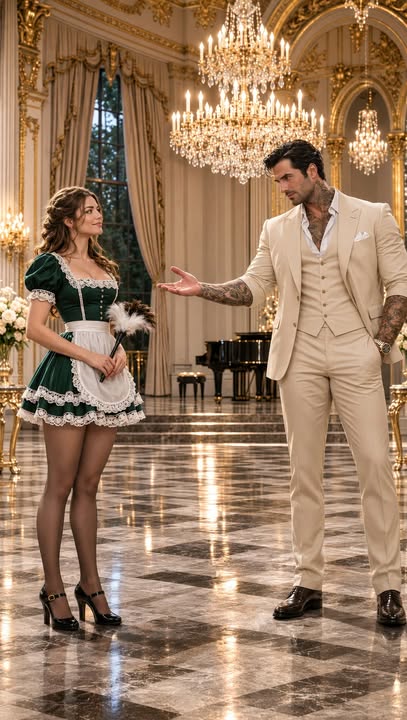
“How do you know my father?”
The question carried farther than I intended.
The orchestra faltered, its final notes thinning into silence, and the ballroom seemed to draw a single breath around us.
Eleanor gripped the arms of her chair as if the room had tilted beneath her.
“Not here,” she said.
Grant lowered his hand.
The joking ease had left his face, replaced by something wary and attentive.
“Grandmother, what is this?”
“I said not here.”
Her gaze stayed fixed on me, and I saw something in it beyond recognition: grief, old and carefully kept.
Vanessa’s smile had vanished.
She glanced from Eleanor to me, then at the guests whose phones remained raised.
“Eleanor, surely this is some kind of misunderstanding,” she said, her voice bright enough to cover the unease beneath it.
“Please, Vanessa,” Eleanor replied.
The softness of her tone made the room quieter than a reprimand could have.
Grant looked toward the guests.
“The music is over,” he said. “Thank you all for coming tonight.”
It was not quite an instruction, but people began to move, relieved to be given something ordinary to do.
The orchestra shifted into a gentle waltz, and conversation cautiously returned around us.
I stood with my hands clasped, suddenly aware of my bare forearms and the blue uniform I had hoped no one would notice.
Grant’s gaze flicked to the apron folded over the chair.
“Emily, you don’t have to stay,” he said.
“I’d like to speak with Eleanor,” I answered, then hesitated. “If she’s willing.”
“I am,” Eleanor said at once.
Grant turned toward her.
“Alone?”
“Not yet.”
The answer seemed to trouble him more than it should have.
Vanessa stepped closer, placing one hand on his sleeve.
“You can’t seriously be indulging this,” she murmured. “She’s a member of the staff.”
Eleanor’s eyes sharpened.
“She is a person asking a question.”
Vanessa’s hand slipped from Grant’s arm.
For a moment, the two women regarded each other across the narrow space between them.
Then Vanessa gave a small, brittle laugh and turned away.
Grant waited until she had gone before looking back at me.
“I’m sorry,” he said.
The words appeared to cost him something.
“For what?” I asked.
“For making a spectacle of you.”
His gaze dropped to the folded apron, then returned to my face.
“I thought I was being funny.”
“You were being entertained,” I said.
He accepted the distinction without arguing.
“Yes,” he said quietly. “I was.”
I had expected a defense, perhaps an explanation about the wine or the guests or the kind of humor people used when they were certain no one could make them uncomfortable.
His apology did not undo the evening, but it made room for something other than anger.
“I shouldn’t have said what I said,” he continued. “And I shouldn’t have expected you to laugh along.”
“No,” I replied. “You shouldn’t have.”
Eleanor reached for my hand.
Her fingers were cool, but her grip was steady.
“Come with me, dear.”
I glanced at Grant.
He stepped aside.
“I’ll make sure no one follows,” he said, then caught himself. “Not because you need guarding. Because you deserve a little privacy.”
That, too, was an apology of sorts.
I followed Eleanor through a side door and into a quiet corridor lined with old landscape paintings.
The ballroom’s music became a distant blur behind us.
At the end of the hall, Eleanor opened a sitting room that smelled faintly of cedar and lemon polish.
A fire burned low in the grate, though the night outside was mild.
She lowered herself onto a sofa and patted the cushion beside her.
I remained standing for a moment.
“Was my father here?” I asked.
“Not tonight,” she said. “But he was here once, a long time ago.”
My breath caught.
“How did you know him?”
Eleanor looked down at her hands.
“I knew him through Thomas.”
“Thomas Whitmore?”
She nodded.
“Your husband?”
“My husband,” she said. “And Grant’s father.”
I sat beside her, keeping a careful space between us.
The ballroom, the promise, Vanessa’s laughter—all of it seemed to belong to another evening.
“Were they friends?”
“Very close friends.”
Her answer came without hesitation, but the sorrow that followed it did not.
“They met when they were young,” she continued. “Thomas was still finding his way in the family business. Your father was building something of his own.”
“Brooks Dance Studio.”
“Yes.”
The name sounded small in that room full of Whitmore history.
My father had taught in a neighborhood studio with a painted sign and a front window that rattled whenever the buses passed.
He had never told me about knowing Thomas Whitmore.
“Why didn’t he ever mention your family?”
“I don’t know.”
Eleanor’s voice thinned around the last word.
“I’ve asked myself that question for years.”
“Did they have a falling-out?”
Her gaze moved to the fire.
“Something happened between them, but I never understood the whole of it.”
It was the first answer that frightened me.
Not because it revealed too much, but because it revealed how much had been hidden from her, too.
“What do you remember?”
“I remember Thomas coming home after spending the afternoon at the studio,” Eleanor said. “He would have dust on his shoes and a look on his face I rarely saw anywhere else.”
“What look?”
“Peace.”
She folded her hands in her lap.
“Your father made him feel welcome. Not as a Whitmore, not as a man with a name people recognized, but simply as Thomas.”
I pictured my father’s old studio, the scuffed floor and the mirror patched at one corner with tape.
He had been good at making people feel they could begin again.
Eleanor continued.
“Then there was a fire.”
I turned toward her.
“The studio burned?”
“Part of it. The front rooms were badly damaged. Thomas told me your father might lose the place.”
My throat tightened.
I remembered the stories in fragments: a winter when lessons were held in borrowed rooms, a stack of donated boards in the basement, my father repainting the studio walls himself.
He had always called it “a difficult season,” as though hardship could be made gentler by choosing a modest name for it.
“Thomas paid to repair it,” Eleanor said. “Quietly, as I understood it. Your father never knew where the money came from.”
I stared at her.
“Are you sure?”
“Thomas told me he wanted it that way.”
“Why?”
“He thought your father would refuse help if he knew.”
A small, disbelieving laugh escaped me.
“That sounds like my father.”
Eleanor’s mouth softened.
“Thomas said the same thing.”
I looked toward the door, half expecting Grant to appear with another careless joke that would make the conversation impossible.
But the corridor remained empty.
“Did my father ever come back here?”
“Not after a while.”
“Why?”
Eleanor closed her eyes briefly.
“I can’t give you a clear answer, Emily. I only know they stopped seeing each other.”
“Did they argue?”
“I don’t know.”
“Did Thomas tell you why?”
“No.”
The honesty was painful in its own way.
There was no tidy explanation waiting for me, no one sentence that could turn years of silence into something understandable.
I lowered my eyes to my hands.
My father had died five years earlier, after an illness that had taken his strength by inches.
Near the end, he had still asked about Rachel’s boys, still wanted to know whether they were learning their letters and eating enough fruit.
He had spoken of the studio, his students, and the music he loved.
He had never spoken of the Whitmores.
“Why did you look so frightened when you saw my stance?” I asked.
Eleanor opened her eyes.
“Because Thomas once showed me a photograph of Daniel teaching him that exact opening step.”
I could almost hear my father’s voice in the memory.
Find your balance first.
“Is that why you recognized it?”
“Yes.”
She looked suddenly much older than she had in the ballroom.
“And because I had not heard your father’s name in this house for a very long time.”
The words settled between us.
I wanted to ask more, but my questions crowded together, each carrying another behind it.
Eleanor reached for my hand again.
“I’m sorry,” she said.
“For what?”
“For the years I let pass without searching for you.”
“You didn’t know who I was.”
“No,” she said. “But I knew there was something unfinished.”
I looked at her, searching her face for an answer she could not give.
“Did Thomas leave anything?”
Eleanor held my gaze.
“Not that I know of.”
A soft knock came at the door.
Grant stepped inside only after Eleanor called him in.
He had removed his jacket and loosened his tie, and the polished ease he wore in public had given way to fatigue.
“Vanessa’s gone to speak with the guests,” he said. “She says the room is settling down.”
Eleanor lifted an eyebrow.
“Did she also say she was sorry?”
“No.”
“Then the room is not the only thing unsettled.”
Grant looked at me.
“I’m sorry,” he said again.
“You already apologized.”
“I know. I wanted to make sure I didn’t hide behind the first one.”
I studied him for a moment.
He seemed less like the man who had offered marriage as a punch line and more like someone beginning to understand what his joke had shown.
“What did you know about my father?” I asked.
“Nothing,” he said. “I’d never heard his name before tonight.”
“Did your father talk about the studio?”
Grant shook his head.
“He died when I was young. I remember him talking about the company, and about my grandmother, and the way he always insisted that the good whiskey should be shared rather than displayed.”
A faint smile touched Eleanor’s face.
“But not Daniel?” I asked.
“Not that I recall.”
Grant took the chair across from us.
“I’d like to understand how he knew your father.”
“So would I,” I said.
Eleanor studied him.
“Wanting to understand is not the same as being entitled to the answer.”
“I know.”
“Do you?”
He lowered his eyes.
“I’m trying to.”
There was no easy warmth between them, but I sensed years of affection beneath the strain.
Eleanor had watched Grant grow up.
Grant, for all his confidence, still seemed to want her approval.
“I’m not interested in being anyone’s puzzle,” I said.
“You aren’t,” Grant replied.
“And I won’t be used to make a better story for the guests.”
His jaw tightened.
“You shouldn’t have been used for one at all.”
It was the right answer, and I wished I could trust it without reservation.
“I have a life outside this house,” I said. “A sister and two nephews who count on me. I don’t want this to turn into some grand gesture that everyone can gossip about.”
“I understand,” Grant said.
“Do you?”
He took a breath before answering.
“I’m beginning to.”
Eleanor gave him a look that suggested beginning was not the same as finishing.
I stood.
“I should go back to work.”
“You’ve done enough for tonight,” Eleanor said.
“I still have to collect the glasses in the east room.”
“Someone else can do it.”
“I’d rather finish what I started.”
It was easier to return to tasks I understood than to remain in a room full of old secrets.
Grant opened the door for me.
This time, he did not offer his hand.
As I passed, he said, “Emily.”
I stopped.
“I’m sorry for the promise, too.”
“You can keep it,” I said, “as a reminder not to make another one in front of two hundred people.”
His expression shifted, almost a smile but not quite.
“Fair.”
When I returned to the ballroom, the guests had begun drifting toward the terrace and the wide front doors.
The orchestra played softly while servers cleared abandoned glasses.
Vanessa stood near a cluster of guests, talking with her back angled toward me.
She did not look at me again.
I collected my tray, retrieved the stained apron, and returned to the service corridor.
My hands worked automatically, even as my thoughts kept circling the same names.
Daniel.
Thomas.
A fire.
A studio saved by money my father never knew he had received.
By the time I finished, the mansion had quieted.
In the staff room, I changed out of the blue uniform and folded it carefully over my arm.
My phone showed a message from Rachel asking whether the boys had remembered their library books.
I replied that I would check with them in the morning, then typed that everything was fine.
It was not exactly true, but I did not yet know what the truth was.
When I stepped into the back hall, Grant was waiting beside the service entrance.
He looked surprised when he saw me.
“I thought you’d gone,” he said.
“I was finishing my shift.”
“Of course.”
His eyes moved to the uniform folded over my arm.
Then he looked away, making no comment.
“I wanted to ask you something,” he said. “About your father.”
“What?”
“Was he a good dancer?”
The question was so ordinary that it loosened something in me.
“He was a patient teacher,” I said. “That’s different.”
“How?”
“He could make you feel there was time to get it right.”
Grant leaned one shoulder against the wall.
“I don’t think anyone has ever described me that way.”
“Maybe you’ve never given them time.”
He nodded, taking the answer seriously.
“I deserved that.”
I almost smiled.
“Did your father dance?”
“Not well,” he said. “But he liked music. My grandmother says he could tell when an orchestra was about to rush the tempo.”
“She’s probably right.”
“Did Daniel teach you in the studio?”
“Mostly. Sometimes at home.”
I could see my father standing in the kitchen, moving a chair aside with his foot so he could show me a turn.
He had laughed when I stepped on his shoes, and told me that every dancer had to learn what a mistake felt like before learning how to recover.
“Do you still dance?” Grant asked.
“No.”
“Because of your father?”
“Because the studio closed after he got sick. Then he was gone, and I didn’t know where to put the music.”
Grant’s face changed.
“I’m sorry.”
“People say that when they don’t know what else to say.”
“Sometimes it’s still true.”
I looked at him, surprised by the quietness of his reply.
For a moment, neither of us spoke.
The house hummed around us, the final guests leaving through the front hall.
“I don’t want you to think I’m asking questions because I’m trying to pull you into something,” he said.
“I don’t know what you’re asking me into.”
“Neither do I.”
That honesty felt more useful than a promise.
“I’ll speak with Eleanor again,” I said. “But I’m not agreeing to dance with you.”
“I didn’t ask.”
“You did earlier.”
“I know.”
He glanced down, then back at me.
“That was the part I needed to apologize for.”
I adjusted the uniform over my arm.
“Good night, Mr. Whitmore.”
“Good night, Emily.”
I walked out into the cool Lake Forest night and waited for the staff shuttle beneath the porte-cochère.
The mansion’s windows glowed behind me.
Somewhere inside, Eleanor was remembering a friendship she had not spoken of in years.
Somewhere beyond the gates, my father’s name had begun to matter again.
The next morning, I arrived early to find Eleanor waiting in the small conservatory.
She sat beside a round table with a box of old photographs beside her.
“I thought you might come,” she said.
“I wasn’t sure I should.”
“Then I’m glad curiosity won.”
She opened the box and searched through several envelopes.
Her hands trembled slightly, but she did not let me help.
At last, she drew out a photograph and held it toward me.
Two young men stood in front of a brick building with a striped awning.
One had a familiar, unmistakable smile.
My father looked younger than I had ever known him, his hair dark, his sleeves rolled to the elbows.
Beside him stood a man with Thomas Whitmore’s eyes.
I lifted the photograph carefully.
On the back, in faded ink, were the words:
“For the promise we made.”
Below them was a date from decades earlier and a line naming a charity dance.
“What promise?” I whispered.
Eleanor’s face had gone pale again.
“I don’t know,” she said. “But I think it may be the reason they stopped speaking.”
The door opened behind us.
Grant stood in the doorway, his eyes fixed on the photograph.
“That’s my father,” he said.
He stepped closer, then stopped.
“Why is he standing beside Daniel Brooks?”
**–END OF PART 2–CLICK “NEXT” AT THE BOTTOM OF THE PAGE TO CONTINUE READING**
* * *
[NEXT: PART 3](https://echoesofstories.idolsgift.com/blog/part-3-the-photograph-eleanor-kept-046)
✓ Lynn R. Adams
“How do you know my father?” The question carried farther than I intended. The orchestra faltered, its final notes thinning into silence, and the ballroom seemed to draw a single breath around us. …