PART 2: The Paperwork Claire Left Behind 035
Part 2 – The Paperwork Claire Left Behind
“Your wife made one final decision while you were in Miami…”
The attorney’s pause stretched until I could hear the faint hum of the nursery’s air purifier behind me.
“What decision?” I asked.
“Mrs. Knox has filed for temporary sole custody of the twins and requested that any contact you have with them be supervised until a judge can assess your fitness as a father.”
For a moment, the words felt detached from me, like they belonged to some other man whose name happened to be Knox.
“Temporary,” I repeated.
“Yes,” he said carefully. “This is a protective request, not a permanent termination of your parental rights.”
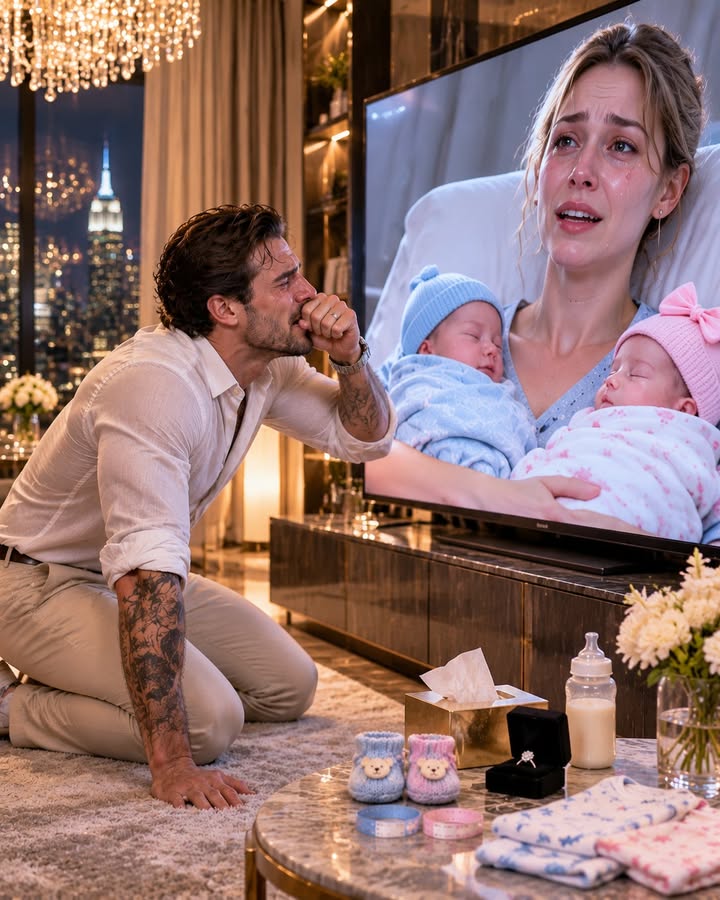
I looked at the empty cribs, then at the bracelets Claire had left on the table.
“Where are my children?”
“They’re safe.”
“Where?”
“I can’t provide their location without Mrs. Knox’s consent. She has asked me to make clear that the babies are stable and receiving appropriate care.”
My chest tightened around the word stable.
“Stable,” I said. “What does that mean? Were they sick?”
The attorney let out a quiet breath.
“Your daughter needed extra support immediately after birth. She spent her first hours in intensive care, but the medical team says she is doing well now.”
The room seemed to tilt.
I braced a hand against the wall, and the paint beneath my palm felt cool and perfectly ordinary, which was somehow worse than if the house had collapsed around me.
“Eva was in intensive care,” I said.
“Yes.”
“And Claire was alone?”
“She had medical staff with her.”
“That’s not what I asked.”
He did not answer.
I pictured Claire in a hospital bed, her face drained of color, asking whether I had arrived while our daughter struggled to breathe.
I had been close enough to leave.
I had chosen not to.
“Can I speak to Claire?”
“She has declined a direct conversation.”
“Then let me see the babies.”
“She has agreed to a brief video call, provided you accept the court’s conditions and do not attempt to locate or approach her in person.”
“Of course I’ll accept.”
“Mr. Knox, I need you to understand that agreeing to the conditions does not mean you will receive unrestricted access.”
“I understand.”
I didn’t, not really.
I understood contracts, leverage, risk, and the careful language people used when they wanted to leave themselves room to maneuver.
I had not yet learned what it meant to accept a limit without searching for the fastest way around it.
The attorney continued.
“The call will be arranged through me. It will be short, and Claire will remain present. You may not record it or share it with anyone.”
“I won’t.”
“Do you have any questions about the filing?”
“Yes,” I said, though my mind had gone blank. “What am I supposed to do now?”
There was another pause, quieter this time.
“Follow the instructions you’re given,” he said. “And remember that this is about the children’s safety and stability, not about punishing you.”
The words landed with a force I couldn’t explain.
I had assumed Claire’s decision was meant to hurt me.
It was easier to believe that than to consider the possibility she had made it because she was frightened of what I might do next.
After the call ended, I stood alone in the nursery with my phone still pressed to my ear.
The house had not changed since I left.
Claire’s reading lamp sat beside the armchair, a cream-colored blanket folded over its back.
A stack of unopened baby books rested on the shelf, their pages bright with promises about first smiles, first words, and the comfort of routines.
I had bought the books after Claire asked me to choose one.
I had sent an assistant to find them.
I couldn’t remember which one I had chosen.
My assistant, Daniel, arrived less than an hour later.
He found me sitting on the nursery floor with one of the empty cribs beside me, my suit jacket discarded across the rocking chair.
“Mr. Knox,” he said softly. “I brought your car around.”
“I’m not going anywhere.”
Daniel stood in the doorway, his expression careful.
“Have you spoken to the attorney?”
“Yes.”
“And?”
“Claire filed for temporary sole custody.”
He lowered his eyes.
“I’m sorry.”
“Don’t be.”
“I should have made sure you saw the calls.”
“You did make sure.”
Daniel did not argue.
The truth was there between us, as clear as the small white bracelets on the table.
He had called me repeatedly.
The hospital had called.
Claire had called.
I had seen their names light up my screen and decided the silence was easier.
“Do you know where she is?” I asked.
“No.”
“Could you find out?”
“I won’t.”
I looked up at him.
Daniel had been my assistant for nine years, and I had trusted him with my calendar, my travel, and the parts of my life that could be sorted into folders and deadlines.
That morning, he was the first person who refused to help me get what I wanted.
“Why not?” I asked.
“Because she asked for privacy, and because finding her would not make her feel safer.”
I wanted to tell him that I was her husband.
Instead, I remembered that she had just told me she could not be my wife anymore.
“Send the jet back to Miami.”
“It’s already been repositioned.”
“Then cancel my meetings for the next month.”
“Your board meeting is tomorrow, and the merger review—”
“Cancel them.”
Daniel studied me, trying to distinguish a sudden reaction from an actual decision.
I couldn’t blame him.
“Would you like me to tell the board you have a family emergency?”
“No.”
“What would you like me to say?”
“Nothing that makes this sound smaller than it is.”
He nodded once.
“I’ll handle it.”
When he turned to leave, I called after him.
“Daniel.”
He stopped.
“Thank you for calling me.”
His mouth tightened, as if he could not decide whether the gratitude was fair.
“I did what I could,” he said.
After he left, I walked through the house, moving from room to room without any real purpose.
Claire’s mug was still beside the sink.
A pair of soft slippers sat near the stairs.
On the kitchen counter, a calendar displayed the month in her careful handwriting, with appointments marked in blue ink.
One square read: “Pediatrician—confirm newborn visit.”
Another read: “Install car seats.”
There was no note reminding me to be there.
There had been no point in writing one.
My phone rang at .
The attorney had arranged the call.
I sat in the library, though the room felt too grand for the small screen in my hand.
A video window opened.
Claire appeared first, her hair pulled back, her face pale in the way it had been in the tablet recording.
She was wearing a soft gray sweater, and one side of the frame showed the edge of a hospital bed.
For a second, neither of us spoke.
I had rehearsed an apology on the way to the room.
The words vanished when I saw her.
“Claire,” I said.
“Adrian.”
She sounded tired, but not fragile.
I had always thought of her as gentle.
I was beginning to understand that I had mistaken gentleness for a willingness to endure anything.
“Thank you for letting me see them.”
“This is a short call,” she said. “The attorney explained the rules.”
“I understand.”
Her eyes held mine briefly, searching for something.
Then she shifted the camera.
Ethan lay beside her, swaddled in a pale blue blanket.
His tiny face was scrunched in sleep, his hands tucked near his cheeks.
Even through the screen, I could see the faint movement of his breathing.
Claire angled the phone toward the second bassinet.
Eva was awake.
Her dark eyes moved slowly beneath a knit cap, and a thin hospital band circled her wrist.
She looked impossibly small.
I had signed papers for buildings larger than the hospital room she was in.
I had bought a penthouse with a view of the water and still somehow missed the most important room in my life.
“Is she all right?” I asked.
“She’s stable now.”
Claire adjusted the blanket around Eva’s shoulder.
“She needed help breathing at first, and the doctors wanted to keep her close while they monitored her.”
“I’m so sorry.”
“I know.”
The reply held no forgiveness, but it wasn’t sharp.
That made it harder to bear.
“Can I say hello to them?”
“They can’t understand you yet,” she said.
“I know.”
“I’m not asking whether you know the science.”
Her gaze returned to the screen.
“I’m asking whether you understand that they don’t need grand gestures. They need someone who shows up when it matters.”
I swallowed.
“I understand.”
“Do you?”
The question was not loud.
It didn’t need to be.
I looked at Ethan’s sleeping face and Eva’s small, watchful eyes.
“No,” I admitted. “Not yet. But I want to.”
Claire’s expression changed almost imperceptibly.
For a moment, she seemed to see the man I had been before the distance between us grew familiar.
Then the moment passed.
“You wanted a family,” she said.
“I did.”
“You said you wanted one.”
I had no defense against the distinction.
“I thought I could keep promising it and still be the man you needed.”
“That’s not the same thing as wanting it.”
“No,” I said. “It isn’t.”
She looked down at Ethan.
“He’s been quiet most of the morning. Eva is the one who keeps us all awake.”
“Already keeping you busy.”
A faint breath left her, not quite a laugh.
“Your mother would say that means she has your temperament.”
“My mother would say that means she has hers.”
Claire’s face softened for half a second, and the sight of it brought a sharp ache behind my ribs.
I wanted to ask whether she had eaten, whether she was in pain, whether she had slept at all.
I had spent years believing that caring meant asking questions.
But I had also spent years ignoring the answers when they interfered with what I wanted.
So I kept quiet.
Claire studied me, perhaps noticing the questions I did not ask.
“The attorney will send the schedule for supervised visits,” she said. “You need to follow it exactly.”
“I will.”
“And you won’t come looking for us.”
“I won’t.”
“Even if you think you can fix this by showing up.”
“I won’t.”
She nodded, though I could tell she did not trust the promise.
I had made too many promises that had sounded sincere in the moment.
“Can I see them again?” I asked.
“That depends on how you follow the instructions.”
“I’ll be there.”
“You weren’t there when it mattered.”
The sentence opened something in me, and I couldn’t make it close again.
“I know.”
Claire’s fingers moved gently over Eva’s blanket.
“I called because I still believed you might answer,” she said. “I need you to understand that. I didn’t call because I thought you had forgotten we were having babies.”
“I’m sorry.”
“Stop saying that as if the words can carry the whole thing.”
“I don’t know what else to say.”
“Then don’t say anything yet.”
She looked down, and for a moment the call held only the quiet sounds of the hospital room.
I watched her shift the phone so both babies fit in the frame.
“They’re here,” she said. “That’s what you need to remember.”
“I will.”
“Goodbye, Adrian.”
“Goodbye, Claire.”
The screen went dark.
I kept holding the phone long after the call ended.
Then I lowered it and began to cry.
Not the controlled tears I had once shed at a memorial, where I could offer condolences and leave before the grief became inconvenient.
These came without permission.
They came with the image of Eva’s wristband, with Ethan’s tiny sleeping face, with Claire’s steady voice telling me that being a father was not a title I could claim simply because I had chosen their names.
When the attorney sent the temporary order, I read every line.
Supervised visits would begin only after the hospital discharged the twins.
The first visit would take place at a family-services center, with a professional supervisor present.
There would be no private contact with Claire, no unannounced visits, and no communication through staff or relatives.
I signed the acknowledgment and returned it before Daniel could remind me.
My mother arrived that afternoon.
Margaret Knox had built her own life beside mine, first as the daughter of a small-town lawyer and later as the woman who could silence a room full of executives with one look.
She found me in the kitchen, staring at a cup of coffee I had not touched.
“Daniel said the babies are stable,” she said.
“They are.”
“And Claire?”
“She’s recovering.”
My mother sat across from me.
“Have you spoken to her?”
“She let me see them on a video call.”
A small relief crossed her face.
“Then perhaps there’s room to repair this.”
“Not the way you mean.”
“What do you mean?”
“She filed for temporary sole custody. Visits will be supervised.”
Her expression tightened, though she held her voice in check.
“Adrian, you’re their father.”
“I know.”
“You have every resource to make sure no one keeps you from your children.”
The sentence might once have sounded like comfort.
Now it sounded like a door opening onto the same mistake in a different hallway.
“I’m not going to fight her.”
“You don’t have to fight Claire. You can have lawyers resolve it.”
“That is a fight with a better vocabulary.”
My mother looked down at the table.
“I’m only trying to protect you.”
“I don’t need protecting from the consequences.”
She reached for my hand.
“Your father used to disappear into work whenever life became difficult. I thought you were different.”
“So did I.”
For a while, we sat without speaking.
Then she said, “You can still be a good father.”
“Not because of what I own.”
“No,” she said softly. “Because of what you do.”
That evening, Sienna called twice.
I let the first call go to voicemail.
When she called again, I answered.
“Adrian,” she said, sounding relieved. “I’ve been waiting all day.”
“I’m not coming back to Miami.”
“I didn’t ask you to.”
“You asked me to stay when my wife was in labor.”
There was a silence.
“I was upset,” she said. “I didn’t know she was that close.”
“The doctor told me she could deliver at any moment.”
“I know you had an appointment.”
“The hospital called twenty-eight times.”
“I know.”
I gripped the phone so tightly my fingers began to ache.
“Then why did you tell me that going back meant I didn’t care about you?”
“I was scared you’d leave and never come back.”
“So you made me choose.”
“I didn’t make you do anything.”
The answer stung because it was technically true.
She had not taken my keys.
She had not locked the door.
She had simply offered me a choice, and I had made it.
“Did you know Claire was in labor when we were on the yacht?” I asked.
“No. You told me the hospital called after the dinner.”
“They called before.”
“I didn’t see your phone.”
“You were standing beside me.”
“I was watching you, Adrian. Not your screen.”
I closed my eyes.
There it was again, the polished edge of a truth I had avoided.
“I need you to collect your things from the penthouse,” I said. “I’ll have Daniel arrange a time.”
“Is this because of the babies?”
“It’s because I chose to build a life around lies and now I’m seeing what that life costs.”
“Are you saying you don’t love me?”
I looked toward the dark kitchen window, where my reflection seemed like the outline of someone I barely recognized.
“I’m saying I can’t keep pretending love excuses what I’ve done.”
She said my name, but I ended the call before I could be persuaded to turn it into another promise.
For the first time in years, I did not send a gift to soften the silence.
I did not ask Daniel to arrange flowers or book another trip.
I stayed in the house.
The following morning, I returned to the nursery and picked up the tablet Claire had used to record her message.
Beneath it lay a folded paper I had not noticed the night before.
It was a hospital folder, creased along one edge, with Claire’s name handwritten on the front.
I opened it carefully.
Inside were appointment summaries, discharge instructions, and a small card from a fertility clinic.
The date printed across the top was four months old.
I knew the clinic.
I had gone with Claire to the first consultation, back when we still thought the process would be simple.
I remembered the waiting room’s muted green walls and the way she had squeezed my hand when the doctor explained the treatment schedule.
I also remembered leaving before the appointment was over because an urgent call had come from the company.
I had told Claire I would make it up to her.
The card had a follow-up date written in her handwriting.
Under it, in smaller letters, were the words: “Adrian unavailable—go alone.”
I sat down on the nursery floor.
The card trembled between my fingers.
Behind it was a second appointment slip, then a third.
The dates stretched across the months I had spent telling myself we were still trying together.
I had no idea what had happened in those rooms after I left.
I had no idea how many times Claire had waited for me before she stopped asking.
At the bottom of the folder, tucked beneath the clinic papers, was a note addressed to me.
It was folded into thirds, and my name was written across the front in her careful blue ink.
I opened it.
The first line read:
“Adrian, I need you to understand why I stopped asking you to come.”
**–END OF PART 2–CLICK “NEXT” AT THE BOTTOM OF THE PAGE TO CONTINUE READING**
* * *
[NEXT: PART 3](https://puretales.idolsgift.com/blog/part-3-the-paperwork-claire-left-behind-035)
✓ Lynn R. Adams
Part 2 – The Paperwork Claire Left Behind “Your wife made one final decision while you were in Miami…” The attorney’s pause stretched until I could hear the faint hum of the nursery’s air purifier b…