PART 2: The Name on the Folded Paper 056
Part 2 – The Name on the Folded Paper
And I had never signed that paper.
For a moment, the bank lobby seemed to recede around me, its polished floors and pale stone walls turning distant and unreal.
The signature looked convincing at first glance, even the small upward curl at the end of the D, but I knew the pressure of my own hand, and I knew I had never pressed a pen to that page.
Richard’s fingers hovered near my wrist, then fell away.
“Daniel, let me explain,” he said.
“Then start with why you told me not to let her open the box.”
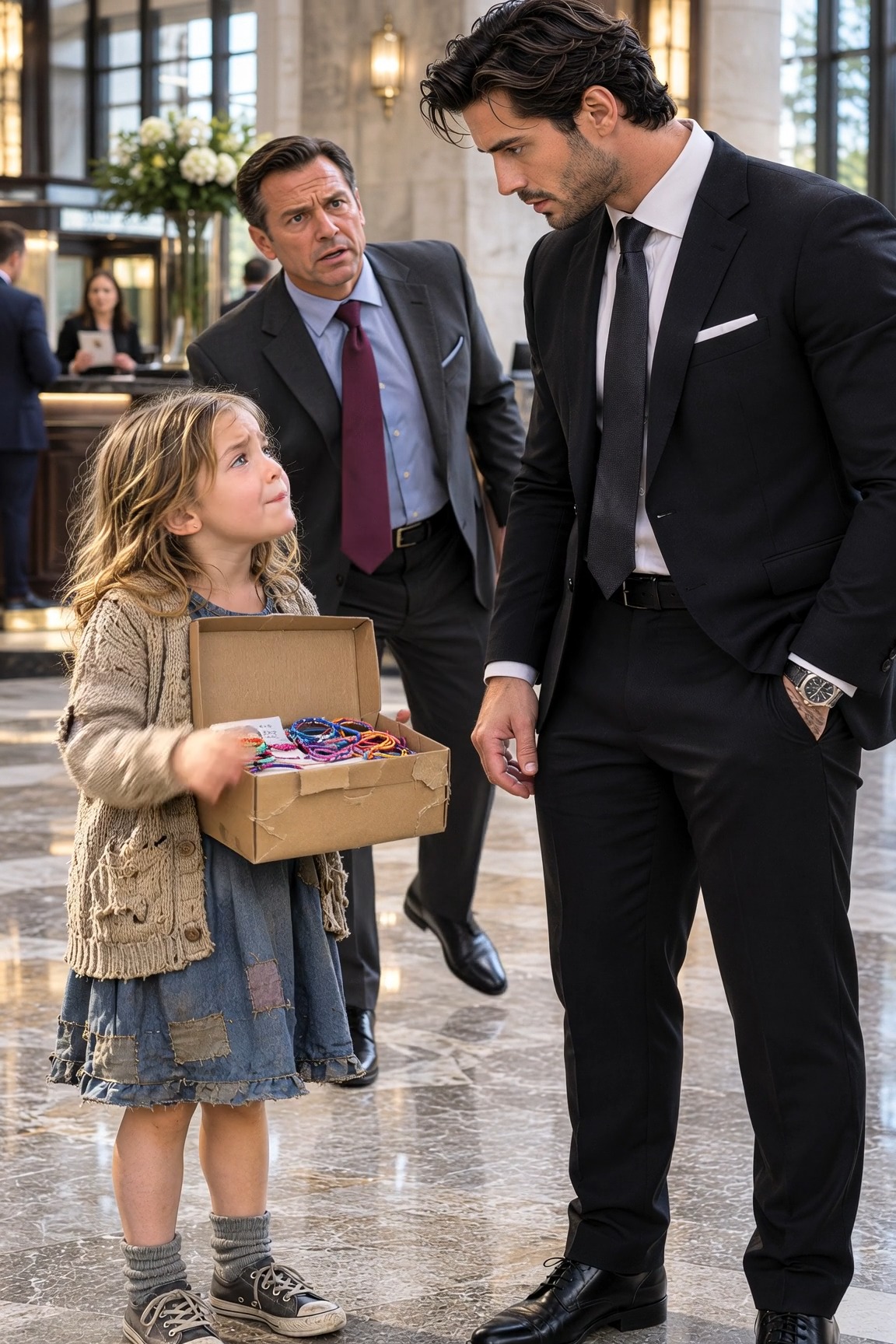
His eyes moved toward Chloe, who sat beside the teller with her cardboard shoebox on her knees.
She had arranged the bracelets in a neat row, as if order might make the room feel safer.
“I said it was nothing,” Richard replied.
“You said it before you knew what was in it.”
The branch manager, a woman named Ms. Patel, stepped closer.
“Mr. Mercer, would you like to come into my office?”
I looked at the paper again.
The heading was partially obscured by a crease, but I could make out the name of my company and the word authorization.
“Yes,” I said. “And I’d like you to secure this document and contact the bank’s fraud officer.”
Richard’s expression tightened.
“There’s no need to turn a routine document into an incident.”
“Then it should be easy to explain.”
Ms. Patel took a clear document sleeve from a drawer and held it open without touching the paper.
I placed the sheet inside, keeping my hands steady through sheer effort.
“I’ll preserve it as received,” she said. “And I’ll call our fraud officer now.”
Richard glanced toward the office door, then back at me.
“Daniel, you don’t understand what this looks like.”
“Then help me understand.”
His mouth opened, but no answer came.
From the teller’s desk, Chloe watched us over the edge of her box.
“Is the paper bad?” she asked.
“No one knows yet,” I said, turning toward her. “That’s why we’re being careful.”
“Will they take my box?”
“No,” Ms. Patel said gently. “It’s yours, and we’ll make sure it stays with you.”
Chloe studied the adults one by one, looking for the person most likely to tell the truth.
I remembered the blue-and-yellow bracelet still looped around my fingers.
“Would you like me to hold that while we talk?” I asked.
She shook her head.
“It’s for my brother.”
“I know.”
“His name is Noah.”
She said it with a small lift of pride, as if the name itself were something she wanted the room to understand.
“Chloe,” the teller said, “you can sit here with me while Mr. Mercer and Mr. Hale speak to Ms. Patel.”
Chloe nodded, but her gaze stayed on the document sleeve.
“Are you still buying the blue one?” she asked me.
“I am.”
I set the five-dollar bill beside her box, where she could see it.
She tucked it carefully into the pocket of her cardigan, then bent to straighten a loose strand of yellow thread.
The branch manager’s office was only a few steps away, but I could still see Chloe through its glass wall.
She kept glancing down at the box, as though she feared the paper might somehow vanish if she looked away.
Ms. Patel closed the office door, leaving it open a crack so Chloe would remain in view.
Richard stayed standing.
I had known him for eleven years, through difficult acquisitions, late-night calls, and more than one crisis in which his calm judgment had steadied the company.
He was not a man who panicked easily.
That was why his fear had unsettled me.
“Sit down, Richard,” I said.
“I’d rather not.”
“Then don’t.”
Ms. Patel placed a notepad on the desk and made a brief call to the bank’s fraud officer.
She gave no details beyond what was necessary, then asked that the original document remain in the bank’s custody until it could be examined.
When she hung up, I turned to Richard.
“What is this authorization?”
“A transfer form, apparently.”
“Apparently?”
“I haven’t seen the whole document.”
“You were standing next to the box when I pulled it out.”
“I saw your signature.”
“My forged signature.”
His gaze lowered to the table.
“Do you know what account it refers to?” I asked.
“I can’t read it from here.”
Ms. Patel opened a secure file on her computer and entered the document’s reference number from the visible portion.
She paused, then looked at me.
“It appears to relate to the Mercer Employee Family Fund.”
I knew the fund.
The company had established it years earlier to help employees and their immediate families with urgent medical expenses, housing emergencies, and other hardships that could not wait for a benefits committee to meet.
I had announced it at an employee gathering and spoken about it as a promise that the company would not forget the people behind its numbers.
The fund was modest compared with our corporate accounts, but its purpose mattered more than its size.
“How much?” I asked.
Ms. Patel kept her voice measured.
“The authorization references a withdrawal of two hundred and forty thousand dollars.”
I looked at Richard.
“That money was meant for employees’ families.”
“Yes.”
“And this bears my name.”
“Yes.”
“Did I authorize it?”
“I don’t know.”
“You were the one who told me not to let a child open the box.”
His jaw shifted.
“That’s not proof of anything.”
“No,” I said. “It isn’t.”
For the first time since I had known him, Richard looked less annoyed than tired.
His shoulders seemed to have settled under an invisible weight, though he still made an effort to stand straight.
“I can’t discuss this in a bank office,” he said.
“You can discuss whether you knew it was in her box.”
“I didn’t.”
“Then why did you tell me to stop her?”
His eyes moved to the narrow opening in the door.
Chloe had begun threading a bracelet around the teller’s wrist, showing her how to knot it so it would not slip.
Richard watched them for a moment.
“She’s a child,” he said quietly.
“That isn’t an answer.”
“I know.”
Ms. Patel folded her hands on the desk.
“We can contact your company’s counsel, Mr. Mercer, but the bank is required to preserve anything that may relate to an unauthorized transfer.”
“I understand,” I said. “Please do.”
Richard’s head turned sharply toward me.
“You don’t have to make this formal before you know what you’re looking at.”
“I already know what I’m looking at.”
“You know a page carries your name.”
“And a transfer took money from a fund created for emergencies.”
“The bank’s records may be wrong.”
“Then they’ll show us.”
Richard looked away.
I wanted to believe he was protecting someone from an unfair assumption, perhaps even protecting me from a costly mistake.
But I could not ignore how quickly he had tried to stop Chloe from reaching for that paper.
A knock came at the office door, and the teller leaned in.
“Chloe is asking whether her brother’s medicine can be picked up today.”
The question went through me more sharply than the money figure had.
“How much does it cost?” I asked.
The teller hesitated.
“She said it was sixty-eight dollars, but that may not be the full prescription.”
“It’s enough for today,” Chloe called from the lobby. “Mommy said the pharmacy will hold it if I bring the rest.”
Her voice was small but perfectly clear.
I stepped out of the office.
Chloe had stopped weaving the bracelet around the teller’s wrist.
Her hands were folded over the shoebox, and she was trying not to look worried.
“I’m sorry,” I said. “You shouldn’t have to wait because we’re looking at paperwork.”
“I can sell more tomorrow.”
“How long has Noah been sick?”
“A while,” she said, then glanced toward the teller. “He gets tired when he walks, and sometimes his chest hurts.”
The teller crouched beside her.
“Your mom is handling it, sweetheart.”
“I know,” Chloe said quickly. “I’m just helping.”
The words were familiar in a way I could not yet name.
She was seven years old, and she had built a little shop out of thread and a shoebox because she believed five-dollar sales could help keep her brother well.
I looked down at the blue-and-yellow bracelet on my wrist.
It was slightly too tight, and one of the knots was uneven.
“I’ll take it,” I said. “And I’ll pay for the others too, if you want to sell them.”
Chloe’s eyes widened.
“But they’re not all five dollars.”
“Then tell me what each one costs.”
She considered the bracelets with serious attention, choosing fairness over the chance to ask for more.
“Five dollars,” she said. “Even the pink one.”
“All right.”
I gave her another twenty-dollar bill and asked the teller to help make sure the money reached her mother for Noah’s prescription.
Chloe accepted it slowly.
“I don’t want you to think you have to buy them because of the paper.”
“I don’t,” I said. “I want to buy them because you made them.”
Her shoulders eased, though only a little.
“Are you going to be mad at Mr. Hale?”
“I’m going to ask questions.”
“Mommy says questions are better than guessing.”
“Your mother sounds wise.”
“She is.”
Chloe began gathering the bracelets into the box.
When she reached for the torn bottom, the folded paper’s corner had left a faint indentation in the cardboard.
She stopped and traced the crease with one finger.
“That paper’s from Mommy’s sewing basket,” she said.
Richard, who had just stepped through the office door, went still.
I looked at Chloe.
“You recognize it?”
“It’s old paper,” she said. “Mommy keeps papers in the basket with the thread and buttons.”
“Did she put it in your box?”
“No. I put the bracelets in the box after I made them.”
She looked down, puzzling it through.
“Maybe the paper was already there.”
“Do you remember seeing it before today?”
Chloe shook her head.
“Not until the bottom started bending.”
Richard took a step closer, then checked himself.
“Chloe,” he said, trying to keep his voice gentle, “did your mother send you here with that paper?”
“No.”
“Did she tell you to bring it to the bank?”
“No.”
“Richard,” I said.
He stopped.
Chloe’s hands had gone still again.
“I’m not in trouble, am I?” she asked.
“No,” I said at once. “You haven’t done anything wrong.”
She looked toward Richard, as if she needed to hear the same answer from him.
He swallowed.
“No,” he said. “You haven’t.”
For the first time, his face softened when he looked at her.
There was recognition in it, but not the easy recognition of someone who had simply been introduced.
It was the look of a man who had heard an old name spoken aloud.
“What is your mother’s name?” I asked.
“Her name is Elena.”
Richard’s fingers closed around the back of the chair beside him.
“Elena who?” he asked.
“Just Elena,” Chloe said. “But she used to work at your company.”
The bank’s quiet seemed to deepen.
I knew Elena’s name from old finance reports, though I had never met her.
She had left the company years earlier after an internal review, and I had been told she resigned following disagreements about process and recordkeeping.
The official summary had been brief, one paragraph among many on my desk.
I had approved the final paperwork without asking to speak with her.
“What department did she work in?” I asked.
“Mommy says she worked with numbers,” Chloe replied. “She helped people get money when their families were sick.”
Richard looked down at the blue bracelet on my wrist.
“Elena,” he said again, barely above a whisper.
Chloe tilted her head.
“You know my mommy?”
“I knew her at work.”
“Are you her friend?”
He did not answer right away.
“I was,” he said at last.
Chloe seemed satisfied with that, but I was not.
“Why did you look so frightened when you saw the paper?” I asked him.
His eyes met mine.
“Because I knew who it might belong to.”
“Your signature is on the authorization?”
“No.”
“Were you involved in moving the money?”
“I can’t answer that without seeing the records.”
“You’ve seen them before.”
His silence was answer enough to unsettle me, though not enough to condemn him.
Ms. Patel returned from the office with a phone at her ear and a notepad in her other hand.
She listened for a few seconds, then said, “Understood. I’ll keep the document secured and send the requested account history through the proper channel.”
After she hung up, she turned to me.
“The fraud officer has confirmed that the reference number belongs to a closed authorization file.”
“What does that mean?”
“It means the transfer was processed years ago, and the bank has archived the supporting records.”
“Can you tell whether this is the authorization used?”
“Not without examination, but the reference matches.”
I looked again at the paper through its plastic sleeve.
A folded edge hid the lower portion.
The typed account description remained visible: Mercer Employee Family Fund.
Below it, the first letters of a routing instruction disappeared into the crease.
“Who approved the transfer?” I asked.
“The archived file lists an internal account credential,” Ms. Patel replied. “We’ll need to retrieve the record before I can say more.”
Richard’s face had gone pale.
I turned to him.
“Do you know whose credential was used?”
He pressed his lips together.
“Richard.”
“I can’t say.”
“Because you don’t know, or because you don’t want to?”
“Because I don’t know what the bank will confirm.”
That was a careful answer, and I had heard him use that kind of care before when a situation was more complicated than the first facts suggested.
I could not tell whether the caution came from loyalty, fear, or guilt.
Chloe had slipped the money into her cardigan pocket.
“Could you tell Mommy I sold some?” she asked me.
“I can do better than that,” I said. “Would you like me to call her?”
She hesitated, then nodded.
The teller helped her find her mother’s number in a small notebook tucked beside the shoebox.
Chloe held the phone with both hands.
“Mommy, I’m okay,” she said when Elena answered. “I’m at the bank with the man who bought the blue bracelet.”
She listened, then glanced at me.
“They’re keeping a paper safe because it has his name on it.”
Another pause.
“No, I didn’t take it from your basket,” she added. “It was in the box already.”
Richard’s eyes closed for a brief moment.
Chloe listened again, then held the phone away from her ear.
“Mommy wants to talk to you.”
I took it.
“This is Daniel Mercer.”
There was a silence on the other end, long enough that I heard faint traffic behind her.
“Mr. Mercer,” Elena said. Her voice was steady, but its edges were worn thin. “Is Chloe safe?”
“She’s safe. The branch manager is with her, and the bank is preserving a document that came from her shoebox.”
“I’m coming.”
“You don’t need to rush.”
“I said I’m coming.”
The call ended before I could ask anything else.
I handed the phone back to Chloe.
“She’s coming now,” I said.
Chloe looked relieved, then worried again.
“Is she mad that I brought the paper?”
“I don’t think so.”
“Mommy gets quiet when she’s scared.”
I glanced toward Richard.
He had heard her.
“What did she tell you about the papers in the sewing basket?” I asked Chloe.
“She said they were old and not for me to play with.”
“Did she ever tell you why she kept them?”
Chloe shook her head.
“She puts letters under the cloth. Sometimes she looks at them when she thinks I’m asleep.”
The words settled over us.
Richard turned toward the bank windows, where late-afternoon light stretched across the tiled lobby.
I watched him studying his reflection in the glass, a man facing his own image as if it might tell him what to say.
“What letters?” I asked.
“I don’t know,” Chloe said. “They have a name on them.”
“Whose name?”
She looked from me to Richard.
“Mr. Hale’s.”
Richard’s hand tightened around the chair.
Chloe leaned closer to me, her voice dropping to a whisper.
“Mommy keeps letters with his name hidden under the sewing cloth.”
Richard said nothing.
And for the first time, I understood that the paper in her shoebox was not just evidence of a stolen transfer.
It was a message that someone had kept hidden for years, and Elena had been waiting for a reason to decide whether it was finally safe to bring it into the light.
**–END OF PART 2–CLICK “NEXT” AT THE BOTTOM OF THE PAGE TO CONTINUE READING**
* * *
[NEXT: PART 3](https://storyly.idolsgift.com/blog/part-3-the-name-on-the-folded-paper-056)
✓ Lynn R. Adams
Part 2 – The Name on the Folded Paper And I had never signed that paper. For a moment, the bank lobby seemed to recede around me, its polished floors and pale stone walls turning distant and unreal….