PART 2: The Name Behind the Watch 061
Part 2 – The Name Behind the Watch
Every guard in the ballroom reached for his weapon.
“Don’t,” I said.
The word came out sharper than I intended, and Lyla flinched.
I lowered my voice and held up one hand, palm open, as if I could somehow calm the room with a gesture.
“No one is going to hurt you,” I told her.
She watched my face, not my guards.
“I need you to believe that,” I added.
For a moment, she seemed to weigh the words against some private memory.
Then she glanced toward the ballroom’s tall windows.
“They know I came here,” she said. “They might come for you, too.”
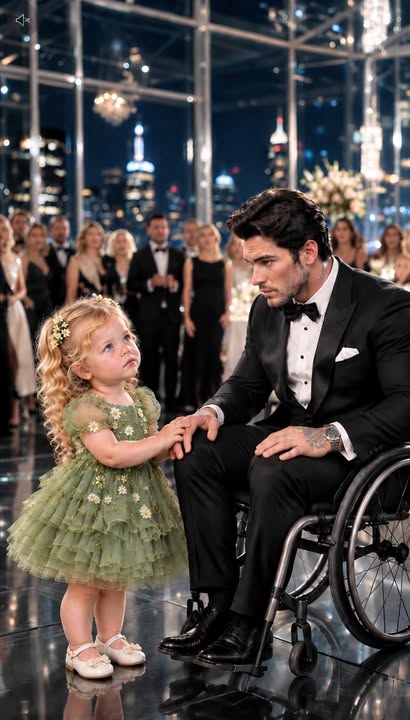
The guests had gone quiet, their attention fixed on the watch in my hand and the little girl standing barefoot beside my chair.
I turned to Victor Hale, my longtime adviser, who had been watching from the edge of the crowd.
“Have the staff clear the ballroom,” I said. “Quietly. No one leaves through the service entrance without checking in with you.”
Victor nodded at once.
“And the guards?”
“Keep them where they are, but lower their hands.”
The men obeyed.
“Please don’t make a scene,” I said to Lyla. “Tell me what happened, and we’ll decide what to do next.”
“I have to go back.”
“Back where?”
“To my mother.”
The word mother softened something in her voice, though the rest of her remained carefully guarded.
“Where is she?”
“I can’t tell you in front of all these people.”
I looked around at the guests, most of whom were pretending not to listen.
“Then we’ll find somewhere private.”
Lyla’s eyes shifted to Victor.
He was already moving toward us, his face arranged in the same composed expression he wore at board meetings and funerals.
I had trusted that expression for years.
Still, when he reached for the watch, his hand stopped before touching it.
“What is it?” I asked.
“Nothing,” he replied. “I was only going to have it examined.”
“You recognize it?”
Victor’s gaze flicked to mine, then to Lyla.
“I recognize the crest.”
“That isn’t what I asked.”
His jaw tightened almost imperceptibly.
“Charles, perhaps we should speak in private.”
“We are about to.”
I pushed my hands against the arms of the wheelchair and tried to stand again.
The strength that had carried me upright a few minutes earlier had vanished.
My legs shook beneath me, and a wave of pain ran through my hips.
I sank back into the chair before I could fall.
Lyla’s hand darted toward my sleeve, then stopped short, as if she wasn’t sure I would welcome it.
“Don’t try again yet,” she said. “You have to let your legs rest.”
Her quiet certainty startled me more than the failed attempt.
“I thought you healed me.”
“I helped,” she said. “I didn’t make you strong.”
The distinction was so plain that I found myself believing her.
“Then you knew I might fall?”
“I knew you might hurt yourself if you tried too soon.”
A doctor began pushing through the crowd, summoned by one of the staff.
I raised a hand to stop him.
“Later.”
“But, sir—”
“Later.”
The doctor hesitated, then stepped back.
I looked toward the nearest side corridor, where the ballroom’s noise faded into a hush.
“Lyla, come with me.”
She hesitated.
“I’ll go first,” I said. “You can stay where you can see the guards.”
“That’s not what I’m worried about.”
“What are you worried about?”
“That you’ll make me tell everything before you decide whether you believe me.”
Her answer landed with the force of a truth she had carried for too long.
“I won’t ask you to tell it all at once.”
She watched me for a moment, then nodded.
Victor moved to take the handles of my wheelchair.
“I can manage,” I said.
“Your legs are weak.”
“I know.”
His hands fell away.
As I wheeled myself toward the corridor, Lyla walked beside me, careful not to get too close.
The guards remained behind us at a distance, their weapons lowered.
Victor followed, though I had not invited him.
At the end of the corridor stood a small music room with a fire burning low in the grate.
It had always been my mother’s favorite room in the house.
I had avoided it since her death.
Tonight, however, it felt like the only place in the estate where Lyla might not feel watched.
I stopped just inside the doorway.
“Would you rather speak here or somewhere else?”
She looked around at the velvet chairs and the polished piano, then at the men behind us.
“Can they wait outside?”
Victor’s expression changed.
Only slightly.
But I saw it.
“Of course,” I said.
I turned to my guards.
“Outside.”
They went at once.
Victor remained.
“Victor,” I said.
He gave me a tight nod and stepped into the hall.
I shut the door.
The click of the latch seemed to settle the room.
Lyla stood beside the piano, hands clasped in front of her.
She looked very small against the tall windows, but there was nothing uncertain in her gaze.
“What’s your mother’s name?” I asked.
“Elena Whitmore.”
I had heard the name in the ballroom, but hearing it again made it real in a way I had not been ready for.
My sister had vanished when she was seventeen.
For twenty years, I had carried the belief that she was gone beyond reach, a belief formed from a family’s careful silences and a search that had ended without answers.
I had not heard her voice since the week she disappeared.
I had not seen her face in two decades.
“Where is she?” I asked.
“I don’t know if I’m allowed to tell you.”
“Allowed by whom?”
“My mother.”
“Why would she tell you to find me and then tell you not to trust me?”
Lyla looked down at the floor.
“She didn’t tell me to find you until today.”
“Today?”
“The men came to our apartment this morning.”
“What men?”
“They asked questions about her. They looked through her things.”
She paused, her mouth tightening.
“They took papers from the desk.”
“Did they hurt her?”
“No. Not then.”
Her answer carried a fear that made the room feel suddenly colder.
“Then what happened?”
“She sent me away before they came back.”
I leaned forward, gripping the armrests.
“Where is she now?”
“I don’t know.”
“You said they found her.”
“I said they already found her because I saw them outside the apartment when I left.”
Her eyes glistened, but she did not cry.
“I thought she was behind me,” she continued. “When I looked back, they were going into the building.”
“Did you see her?”
“No.”
“Did you hear anything?”
“Just a door closing.”
I glanced down at the watch in my hand.
The gold case felt heavier than it should have.
“Why did she send you to me?”
Lyla swallowed.
“She said if anything happened, I had to find Charles Whitmore.”
I watched her carefully.
“Did she say why?”
“She said you were her brother.”
The answer should have made the room tilt again.
Instead, the world seemed to narrow around the sound of my sister’s name.
“Did she tell you anything else about me?”
“She said you might not believe she was alive.”
“That was fair.”
“She also said not to trust the Whitmores.”
I felt a small, bitter laugh catch in my throat.
“I am a Whitmore.”
“I know.”
“Then why come to me?”
“Because she said you were the only person who might know where to look if she disappeared.”
The words settled between us.
For a moment, I could hear nothing but the faint crackle of the fire.
“She told you not to trust my family,” I said, “but she trusted me enough to send you here.”
“She didn’t say she trusted you.”
Lyla’s honesty was blunt, but not cruel.
“What did she say?”
“That you were her brother, and that she hoped you were still the kind of person she remembered.”
I looked away.
There had been a time when Elena and I had shared everything.
She used to sneak into my room after our father had gone to bed, carrying stolen biscuits and stories she had invented about the people in the portraits.
When I was twelve, she had promised she would never leave me alone in the house.
At seventeen, she had vanished.
I had spent years believing she had chosen to leave.
Now a child was telling me she had been afraid of my family.
“Did she ever tell you why she left?” I asked.
“She said your father had something to do with it.”
My fingers tightened around the watch.
“My father is dead.”
“I know.”
“How do you know?”
“My mother kept a newspaper clipping. It said he died several years ago.”
I stared at her, trying to understand how much of her life had been shaped by things I had never known.
“Did she say he made her disappear?”
“She said he arranged it.”
The room grew very still.
I tried to find a quick explanation, something simple enough to fit the years I had lost.
I couldn’t.
My father had never told me Elena was alive.
He had never said she was in danger.
When she vanished, he had told me she had left because she wanted a life away from the family.
I had believed him because I had needed to.
“Did your mother say where she was going?” I asked.
“She only gave me this.”
Lyla pointed to the watch.
“She said if I found you, I should let you see it.”
I turned the watch over.
Its gold surface was scratched with age, and the engraved crest caught the firelight.
The clasp had been repaired at some point with a thin, almost invisible pin.
I remembered the watch from a childhood photograph: Elena holding it up to the camera, grinning because she had convinced our father to let her keep it.
“Did your mother tell you where she got it?”
“She said it was hers.”
“And you believed her?”
“She never lied to me about things that mattered.”
The answer was quiet, but its certainty reached me.
I opened the watch again.
The hands had stopped at .
I could not remember whether they had been frozen there when Elena disappeared, or whether I was inventing the memory because I needed the watch to tell me something.
“What do you remember about your mother’s life?” I asked.
“Mostly our apartment, and the places we moved before that.”
“You moved often?”
“When she thought someone had found us.”
“Who was looking for you?”
“She never told me.”
“Did you have anyone else? Family, friends?”
“She said not to contact anyone with the Whitmore name.”
Lyla’s gaze lifted to mine.
“I didn’t know you were my uncle until today.”
The word uncle caught in my chest.
I had no right to claim that place in her life.
I had missed her first steps, her scraped knees, her school drawings, the years when a child slowly learns which people can be trusted.
Yet I could not deny the small, unreasonable hope that rose in me when she said it.
“Did your mother give you my name before today?”
“She gave it to me a long time ago, in case something happened.”
“And the watch?”
“She put it in my pocket before she sent me out.”
“Why?”
“She said you would recognize it.”
“I did.”
Lyla shifted, and I noticed her bare feet were reddened from the cold outside.
“Why didn’t you put on shoes?”
“I left before I could find them.”
“Was your mother hurt?”
“I don’t know.”
“Lyla—”
“If I knew, I’d tell you.”
She said it without anger, but fear had made her voice thin.
I stopped questioning her.
On the little table beside the piano stood a porcelain cup, left from the afternoon tea my staff had arranged for the guests.
I reached for it, but the sudden strain made my legs ache.
Lyla noticed.
“Don’t,” she said. “You shouldn’t move yet.”
She went to the table, picked up the cup, and set it near me.
“Thank you.”
She nodded, then returned to her place by the piano.
“What happened when you touched my legs?” I asked.
“I don’t know.”
“You must have some idea.”
“I don’t.”
“Has it happened before?”
She shook her head.
“I thought you might know.”
“I only know what my mother told me.”
“What did she tell you?”
“That people can surprise you when they stop deciding what’s impossible.”
I thought of the guests in the ballroom, laughing before I had stood and staring after I did.
Then I thought of the doctors who had told me there was nothing left to expect.
“Is that why you asked me to believe you?”
“She said you’d think I was lying.”
“I didn’t think you were lying.”
“Not at first.”
It was difficult to argue with her.
The door opened a few inches.
Victor leaned in.
“Charles, the guests are contained and the staff have cleared the main hall.”
“Thank you.”
“Should I contact the police?”
Lyla’s expression tightened.
I looked at her.
“Do you want me to?”
“I don’t know.”
Victor’s gaze moved from her to me.
“Given what she’s described, it may be prudent.”
“Not yet,” I said.
Lyla’s shoulders eased, though only a little.
“Would you like something to eat?” I asked her.
“No.”
“When did you last eat?”
“I don’t remember.”
“That means yes.”
“I’m not hungry.”
“Then you can have something and leave it untouched.”
She considered this, then nodded.
I called for tea, bread, and fruit.
When the servant arrived, Lyla thanked him in a voice so quiet that he had to bend closer to hear.
The ordinary kindness of the moment seemed to unsettle her more than the guards had.
She sat in the chair farthest from me, eating a piece of bread in small bites.
I watched her hands.
The bruises were fresh, blue-green marks across the knuckles and wrists.
“Did someone do that to you?”
She glanced at her hands.
“I caught them on a fence.”
“On the way here?”
“Yes.”
“Did you climb it?”
“I had to get out of the street.”
I wanted to ask what she had been running from, but I could see that each question pulled another door open behind her.
So I let the silence remain.
After a while, she set down the bread.
“You really couldn’t walk?”
“No.”
“For how long?”
“Four years.”
“Did you know you could stand again?”
“No.”
“Are you angry?”
The question surprised me.
“At whom?”
“At the doctors, maybe. Or me.”
“I’m not angry at you.”
“Some people are angry when something happens that they can’t explain.”
“I’ve had enough years to become angry at the right things.”
She seemed to think about that.
“Are you angry at your father?”
I looked at the watch.
“I don’t know yet.”
“Are you angry at your sister?”
“No.”
The answer came quickly.
It was the first thing I had said without doubt.
Lyla’s expression softened.
“She said you used to be kind.”
“I hope she was right.”
“She said you were funny, too.”
“I’m not sure that survived.”
“She said you made up stories about the people in the portraits.”
I stared at her.
For the first time, Lyla smiled.
It was brief and uncertain, but it was there.
“She remembers that?”
“She told me the stories when I was little.”
I pictured Elena sitting beside a child in some apartment I had never seen, turning old family memories into bedtime stories.
My sister had lived.
She had laughed.
She had raised a daughter.
And I had known nothing.
“What did she tell you about me?” I asked.
“That you used to make the portrait of Great-Grandfather talk like a pirate.”
“I did not.”
“You did.”
“That’s a family accusation. I should be allowed to deny it.”
Her smile flickered again.
For a moment, she looked like a child rather than someone who had crossed the city alone with a secret hidden in her pocket.
Then the smile faded.
“Do you think they took her?”
“I don’t know.”
“Can you find her?”
“I’ll try.”
“Not with all those men?”
“Not if that frightens you.”
She considered my answer.
“I don’t like guns.”
“Neither do I.”
She glanced toward the closed door, behind which my guards waited.
“You have a lot of them.”
“I do.”
“Why?”
I could have lied.
Instead, I said, “Because I spent a long time thinking that being feared was the same as being safe.”
“Is it?”
“No.”
The answer came out before I could dress it up.
She watched me as if she were listening for a second answer beneath the first.
“I’ll send them away from the room,” I said. “But I can’t promise there won’t be people nearby.”
“I know.”
“Is that enough for now?”
“Yes.”
Victor entered without waiting for an answer to the soft knock.
He had the careful look of a man bringing news he hoped I would prefer not to hear.
“We’ve checked the exterior cameras,” he said. “No one followed her through the main entrance.”
“Did anyone approach the house?”
“Not that we can see.”
Lyla stood abruptly.
“Then I have to go.”
“You can’t leave alone,” I said.
“I came here alone.”
“That doesn’t mean you should have to go back alone.”
“I have to find my mother.”
“So do I.”
Her gaze hardened.
“You don’t know her.”
“No,” I said. “But she is my sister.”
“That doesn’t mean she wants you.”
The words stung because they were true.
Victor stepped in before I could answer.
“Charles, perhaps the girl should stay here until we know more.”
Lyla looked at him.
“You’re Victor Hale,” she said.
He paused.
“Yes.”
“My mother said your name.”
The pause that followed was small, but I felt it.
“What did she say?” Victor asked.
“She said not to tell you anything.”
Victor’s face remained composed.
But his fingers tightened around the back of the chair beside him.
I noticed.
So did Lyla.
“She knows me?” he asked.
“She knew your name.”
“That isn’t the same thing.”
“No,” I said. “It isn’t.”
Victor turned toward me.
“Charles, we should keep this practical. The child needs shelter, and Elena’s situation is unknown. We can search discreetly.”
“Why would my mother tell you not to tell Victor anything?” I asked Lyla.
“I don’t know.”
“Did she say he was dangerous?”
“She said she didn’t trust him.”
Victor gave a small, weary exhale.
“People who have been frightened for a long time can begin to distrust everyone.”
Lyla’s face went still.
“Do you think she’s lying?” I asked him.
“I think we should be cautious before accepting a story that has no evidence beyond a watch.”
I held up the watch.
“You recognized the crest.”
“Yes.”
“You stopped before touching it.”
“I didn’t want to damage it.”
“Why did you think it needed examining?”
Victor’s gaze held mine.
“Because it may have been in the wrong hands for a long time.”
For the first time that evening, he looked uneasy.
I could not tell whether the unease came from concern or something else.
I lowered the watch.
“Go see that the guests are taken care of.”
“Charles—”
“Now.”
Victor left without another word.
Lyla watched the door close behind him.
“He didn’t like that you sent him away.”
“Victor doesn’t like being surprised.”
“Was he surprised?”
I thought about the hesitation in his hand, the change in his face when she spoke his name.
“I don’t know.”
She sat again.
“Can I see the watch?”
I hesitated, then handed it to her.
She held it carefully in both hands, as if the gold might break.
“Does it belong to you?” I asked.
“No. It belongs to my mother.”
“Do you want to keep it?”
“She wanted you to see it.”
“And after that?”
“She didn’t say.”
I leaned closer, trying to see the tiny details inside the case.
“What’s this mark?” I asked.
Lyla tilted the watch toward the light.
“There’s something written there.”
A fine line of lettering curved along the inside rim.
It was too small to read from where I sat.
I wheeled nearer, careful not to push myself too hard.
The inscription was partly worn away, but I could make out two letters and a date.
The first letters were E.W.
The date was from the night Elena disappeared.
I felt a chill pass through me.
“How did you know that?” I asked.
“I didn’t.”
“Has your mother ever shown you this engraving?”
“No.”
I stared at the date.
It was the same date I had spent years avoiding.
The same night our family had been told Elena was gone.
Lyla held the watch as if she could feel the past inside it.
“My mother said if you recognized it, I should tell you one thing.”
“What?”
“She didn’t leave because she wanted to.”
My throat tightened.
“Did she tell you why she left?”
“No.”
“Did she say my father made her go?”
“She said he helped her disappear.”
I looked toward the door.
Beyond it, Victor was somewhere in the corridor, still close enough to hear the ordinary sounds of the house.
My father’s old portrait hung above the music room mantel, his painted eyes directed toward the window.
He had spent the last years of his life insisting Elena was gone.
Now the daughter he had never met was telling me that he had helped her vanish.
“Why would he do that?” I asked.
“I don’t know.”
“Did your mother say she was afraid of him?”
“She said she was afraid of what people around him would do.”
The words made me look again at the watch.
I thought of the safe where my own family heirloom sat.
I thought of my father’s locked study and the papers he had never let me touch.
Most of all, I thought of Victor’s face when Lyla had told him her mother knew his name.
“I want to take you somewhere safe,” I said.
“Where?”
“My family estate.”
Lyla glanced toward the door.
“Is it safer than here?”
“It’s where I live.”
“That isn’t what I asked.”
I had no quick answer.
“It has more people watching the entrances,” I said. “But you can stay in a room by yourself, and I won’t ask you to speak to anyone you don’t want to.”
“Will Victor be there?”
“Yes.”
“Then I don’t know.”
I understood.
“Would it help if you had your own door key?”
She considered that.
“And my mother?”
“We’ll search for her together.”
“Not just send your guards?”
“Not just send my guards.”
Lyla looked at the watch in her hands.
“Promise you won’t make me tell you things she asked me to keep secret.”
“I promise.”
She searched my face.
“Even if you think the secret might help?”
“Even then.”
For the first time, she stepped close enough to place the watch back in my hand without reaching across a distance.
“I’ll go,” she said. “But I’m not staying because you’re my family.”
“Why are you staying?”
“Because my mother said you were the only person who might know where to look.”
I nodded.
“That’s enough for now.”
The staff brought a blanket and a pair of soft slippers.
Lyla accepted the blanket but left the slippers untouched.
When I asked why, she said she wanted to keep her feet ready in case she needed to run.
I did not tell her she would never have to run again.
It was the kind of promise I had no right to make.
Instead, I asked the guards to bring the wheelchair van to the side entrance and to keep every weapon out of sight.
The estate was only a short drive away, but the ride felt longer.
Lyla sat beside me in the back, the blanket folded over her knees and the watch resting in her lap.
She watched the streetlights pass, never leaning back against the seat.
I did not ask her to relax.
At the estate, the entrance staff opened the doors without a word.
The familiar house rose ahead of us, its stone façade pale in the night, its windows glowing warmly against the dark.
I had spent years thinking of it as a refuge.
For Lyla, it might look like the center of everything her mother had warned her about.
We entered through a side door and went directly to the small sitting room adjoining the library.
I asked the staff to prepare a room for her and to leave the door unlocked from the inside.
Lyla chose a chair where she could see both the hall and the windows.
I could not blame her.
The house had barely settled into silence when Victor joined us.
“Everything is ready,” he said. “I’ve also contacted our people about Elena.”
“Only people we can trust,” I said.
“Of course.”
Lyla’s gaze stayed on him.
Victor noticed.
“If there is anything I can do to help your mother,” he told her, “I will.”
“She said not to trust you.”
His expression softened, but his eyes did not.
“I understand.”
“Do you?”
“I understand that she has reasons I may not know.”
The answer was better than I had expected.
It was also careful enough to tell me nothing.
I turned the watch over in my palm.
The tiny inscription caught the lamplight.
“Victor, did you know Elena’s watch had been found?”
He looked at it.
“Yes.”
“When?”
“Years ago, I saw it in the family vault.”
Lyla’s head lifted.
“When was it put there?” I asked.
Victor glanced toward the shelves.
“I couldn’t tell you the precise date.”
“But you knew it was there.”
“I knew the watch was registered among the family effects.”
“Why?”
“Because your father had a record made of the pieces in the vault after Elena disappeared.”
The statement made my pulse quicken.
“My father said Elena had left.”
“He did.”
“But he kept her watch.”
“It may have been returned after she vanished.”
“Returned by whom?”
Victor did not answer right away.
Then he said
**–END OF PART 2–CLICK “NEXT” AT THE BOTTOM OF THE PAGE TO CONTINUE READING**
* * *
[NEXT: PART 3](https://storyly.idolsgift.com/blog/part-3-the-name-behind-the-watch-061)
✓ Lynn R. Adams
Part 2 – The Name Behind the Watch Every guard in the ballroom reached for his weapon. “Don’t,” I said. The word came out sharper than I intended, and Lyla flinched. I lowered my voice and held up…