PART 2: The Letter That Took Seven Years5 025
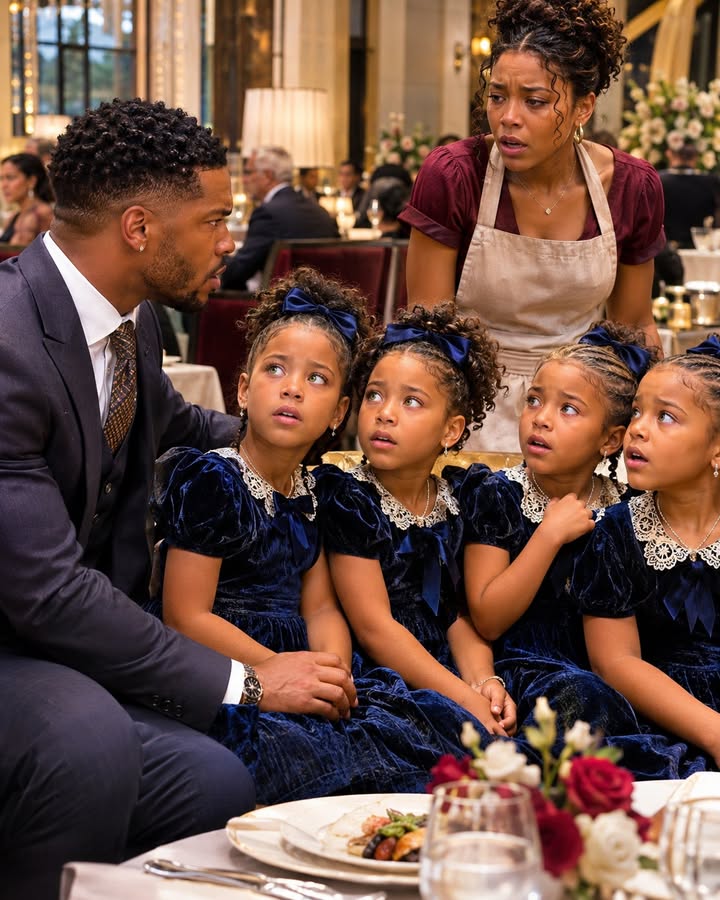
Part 2 – The Letter That Took Seven Years
My mother’s message remained lit on my phone while the February wind moved around us, sharp enough to slip through the girls’ thin coats.
Maren looked from the screen to my face, and whatever hope had briefly softened her expression disappeared.
“She knows,” I said.
“She always knows when she thinks something belongs to her.”
Her voice was quiet, but the words carried the weight of a long-practiced certainty.
Hattie had edged closer to her mother, while Lou watched me with guarded curiosity.
Daisy was rubbing her hands together, and Pip’s teeth had begun to chatter.
I put my phone away without answering my mother.
“Let’s get them warm first,” I said.
Maren’s chin lifted.
“One night,” she replied. “That’s all I’m agreeing to.”
“One night,” I promised.
“And you don’t get to decide what they call you, or tell them who you are.”
“I won’t.”
“Or make promises you can’t keep.”
“I won’t do that either.”
She studied my face as if she were searching for the boy she had once trusted and the man standing in front of her now, measuring the distance between them.
Then Pip reached for her hand.
“Mommy, please.”
Maren closed her eyes for a moment, and when she opened them, she nodded.
I unlocked the SUV and opened the rear door, careful to let Maren help the girls climb in.
They arranged themselves across the back seat with the solemn efficiency of children who had learned how to make do with too little space.
Hattie sat nearest the window, Lou beside her, while Daisy and Pip squeezed together on the other side.
Maren settled in the front passenger seat but kept her duffel bag on her lap.
She held it with both hands, as if even a warm car might ask her to surrender something.
The drive to the Ironworks District took less than fifteen minutes, though the silence made it feel longer.
Every so often, I caught Maren watching me from the corner of her eye.
I wanted to ask what my mother had done, what had happened after Maren refused her money, and why she had believed I had left her.
But the girls were listening.
So I concentrated on the road and the glow of streetlights passing over the windshield.
When we reached the apartment building, I found myself hoping the elevator would move slowly enough to give me time to understand what I was about to do.
It didn’t.
The doors opened onto my empty apartment, all polished concrete floors, tall windows, and furniture chosen by a designer who seemed to believe comfort was a form of clutter.
The girls stepped inside and stopped.
Their four small reflections appeared in the dark windows, framed by the distant lights of the city.
“Is this really your apartment?” Daisy asked.
“It is.”
“Do you live here?” Lou asked.
“Not much.”
“That’s why it looks like nobody lives here,” Hattie concluded.
Maren set down the duffel bags and glanced around with an expression I couldn’t read.
“Where’s the bedroom?” she asked.
“Down the hall.”
“Just one?”
“There are two.”
“Fine,” she said. “The girls can take the larger one. I’ll stay with them.”
“There are clean sheets in the closet, and I can get anything you need.”
“We have what we need.”
Her words were polite, but the wall around them was not.
I showed her the bedrooms, then brought out the spare linens and a set of towels still folded in their packaging.
The girls followed me through the apartment, their eyes taking in every unfamiliar thing.
Pip stopped before a bookshelf filled with old leather-bound volumes.
“Do you have any books for children?”
“I might.”
I looked at the shelves and realized I had no idea what was on them.
My mother had arranged the apartment when I moved to the city, filling it with objects that made it look finished.
I opened the lower cabinet beside the television, where I found a box of things from my childhood that I had never unpacked.
Inside were a few battered paperbacks, a toy wooden boat, and a book with a blue cloth cover.
I recognized the silver moon on its front.
“My mother used to read this to me,” I said, turning it over in my hands.
Maren stared at the title, and something flickered across her face.
“Moonlight on the River,” she said.
“You know it?”
“I used to read it to the girls.”
A strange tenderness moved through me at the thought of her reading the same story I had loved as a boy.
Pip reached for it, but Hattie was already looking at the cover.
“Can we have that one?”
“Of course.”
I held it out, and Hattie took it carefully, as though the book were a gift more valuable than anything else in the room.
Maren watched me.
“You don’t have to entertain them.”
“I’m not trying to.”
“Good.”
“I’m trying to find out what they like.”
Her gaze stayed on mine for a moment, then she turned away to help Daisy take off her coat.
The girls changed into the spare pajamas Maren had packed, each pair a little faded but clean.
Their bedtime routine unfolded with the ease of repetition: Hattie lined up their shoes by the wall, Lou searched for her stuffed rabbit, Daisy asked for water, and Pip insisted she wasn’t tired even as she yawned.
I noticed how different they were.
Hattie wanted to know how things worked and whether the windows opened.
Lou held her rabbit tightly and watched the room before deciding where to sit.
Daisy talked to fill every silence, telling me about a pigeon she had seen that morning and how it had looked offended.
Pip stayed close to Maren, small fingers hooked into her sweater whenever she crossed the room.
They were not four copies of one child.
They were four separate people, sharing a face and a history I had missed.
When the girls were settled beneath the blankets, Hattie patted the space beside her.
“Are you going to read to us?”
Maren paused near the door.
“You don’t have to,” she said to me.
“I know.”
I sat in the chair by the bed and opened the blue book.
My voice sounded unfamiliar at first, rusty from years without reading aloud to anyone.
But the story was still there, the river and its small boat moving through a silver night toward a faraway harbor.
By the second page, Pip’s eyes had closed.
Daisy lasted until the boat reached the bend.
Lou fell asleep with one hand resting on her rabbit.
Hattie listened to the final lines, then looked at me thoughtfully.
“You read it the same way Mommy does.”
I glanced toward Maren.
She had gone very still.
“Maybe it’s a good story,” I said.
Hattie considered that and seemed satisfied.
When I finished, she asked, “Will you be here in the morning?”
Maren’s answer came before mine.
“He’ll be here tonight.”
Hattie didn’t argue.
She simply pulled the blanket up to her chin.
I left the book on the bedside table and stepped into the hallway with Maren.
She closed the bedroom door almost all the way, leaving it open by a narrow gap.
“Thank you for the book,” she said.
“I’m glad they liked it.”
“They did.”
For a moment, neither of us said anything.
The apartment felt too quiet without the girls’ voices.
I could hear the distant hum of the building’s heating system and the low rush of traffic beyond the windows.
“You said my mother offered you money,” I began.
Maren leaned against the wall.
“She came to see me about a month before I left town.”
“Where?”
“At the little café near the old train station.”
I remembered that place, though I hadn’t been there in years.
“What did she say?”
“She told me you were being prepared to take over more of the family business. That your future was already mapped out, and there wasn’t room for me in it.”
I felt my hands curl at my sides.
“She said I loved you, but that love wasn’t enough to change what was coming.”
“She made it sound kind,” Maren said. “That was the worst part. She wasn’t shouting or threatening me. She talked like she was explaining something sensible, something I’d eventually thank her for understanding.”
“And she offered you money.”
“She offered enough to make it clear she thought my life had a price.”
“Did you take it?”
“No.”
The answer came without hesitation.
“Not a dollar.”
“I believe you.”
Her eyes shifted toward me.
“You didn’t seven years ago.”
“I never thought you took money.”
“Then what did you think?”
I struggled to find words that did not sound like another accusation.
“I thought you were leaving because you no longer wanted me.”
Maren’s mouth tightened.
“After I refused your mother, I went to see you.”
“When?”
“Two days later.”
I frowned.
“I never saw you.”
“I know that now.”
She folded her arms, fingers pressing into her sleeves.
“Your mother said you didn’t want to speak with me. She told me you’d made your choice, and that I should leave before I embarrassed myself.”
A memory came back with unsettling clarity: a quiet afternoon in the old house, my mother telling me Maren had stopped calling and that I should respect her decision.
At the time, I had been furious and too proud to ask questions.
“I was told you had gone,” I said.
“I was told you had chosen your family.”
“I didn’t.”
“I know that now,” she repeated, though the words sounded less certain than before.
“Then why did you leave town?”
Her gaze lowered to the floor.
“Because a few days later, I received a letter from you.”
The space between us seemed to narrow.
“What letter?”
“It said you never loved me. That our relationship had been a mistake, and that you wanted no contact.”
I stared at her.
“I never wrote you that.”
“I know you’ll say that.”
“I’m not asking you to take my word blindly. I’m telling you the truth.”
She reached into the inner pocket of her duffel bag and took out a small, worn envelope.
It had been folded and unfolded so many times that the paper had softened at the creases.
Maren held it without offering it to me.
“I kept it,” she said. “For a long time, I thought I kept it because I couldn’t let go. Later, I realized I wanted proof that I hadn’t imagined what happened.”
My throat tightened.
“Can I see it?”
She hesitated, then placed the envelope in my hand.
My name was written across the front in handwriting I recognized at once.
It looked like mine.
The slant of the letters, the narrow capital E, the long stroke on the final t—each detail had been copied carefully enough to fool someone who wanted to believe it.
I opened the envelope and unfolded the letter.
The words were brief and cruel in a way that felt carefully measured.
Maren, I never loved you the way you believed I did.
I have chosen the future my family expects of me, and I want you to leave me alone.
Do not write again.
Everett.
My hand began to shake.
“I didn’t write this.”
Maren looked at me, her face pale but steady.
“That’s what I said when you accused me of taking money.”
“I’m not accusing you of anything.”
“Not now.”
The answer landed between us, and I accepted it because I had no defense.
I read the letter again, searching for something that might prove it false.
The language sounded nothing like me.
The signature was close, but the pressure was wrong, and the pen strokes felt too deliberate.
“When did this arrive?” I asked.
“I don’t remember the exact day. It was late spring.”
“Where was it mailed from?”
“I didn’t keep the envelope it came in.”
“Why not?”
“Because I was twenty-two, and my life had just fallen apart. I didn’t think I was collecting evidence.”
I looked down at the paper.
The date at the top was written in the same careful imitation as the signature.
A date I had spent that week out of the country with my father, attending meetings in London.
I felt the blood leave my face.
“Maren, I wasn’t even here that week.”
She didn’t respond.
“I was in London. My father took me with him. There are travel records, hotel records—”
“I didn’t know where you were.”
“I know.”
“You were gone when I went to see you.”
“I was with my father. My mother must have known.”
For a moment, her expression changed, and beneath the caution I saw the old pain.
Then she looked away.
“I received the letter,” she said. “I believed you had finally told me what everyone else had been trying to tell me.”
“Who was everyone else?”
“My friends knew your family didn’t approve of me. Your mother said you’d never choose a life with me. I was young, and I was scared, and then I found out I was pregnant.”
The last words were soft.
I gripped the letter so tightly that its edge pressed into my palm.
“You were pregnant when you left?”
“I found out after I received it.”
“How long after?”
“Not long.”
“Why didn’t you come back and tell me?”
She took a breath that seemed to catch halfway through.
“Because I thought you had asked me not to.”
“I would never have asked that.”
“I had a letter saying you did.”
“And my mother had already told you I didn’t want to see you.”
Maren’s eyes glistened, but she blinked the tears away before they fell.
“I had no reason to think the two things were connected.”
I wanted to step toward her, but I remembered what she had said outside the restaurant.
I did not have the right to turn old longing into a claim on her.
So I stayed where I was.
“I’m sorry,” I said.
She gave a small, pained laugh.
“For what?”
“For not knowing. For believing you chose to leave without trying harder to understand why.”
“You thought I’d left you.”
“You thought I had.”
Neither of us looked away.
The shared hurt was almost harder to bear than anger.
“What happened after you left town?” I asked.
“I found a small apartment with a woman from work. When the girls were born, I took whatever shifts I could. I stayed in one place as long as I could afford it, and then I moved when the rent changed or the work dried up.”
“You’ve been raising them alone all this time?”
“I’ve been their mother all this time.”
“I didn’t mean—”
“I know what you meant.”
She rubbed her thumb across the side of her hand.
“They have a good life, Everett. It hasn’t always been easy, but they have each other, and they have me.”
“I’m not trying to take that away.”
“Then don’t act as if one night in a warm apartment changes everything.”
“It doesn’t.”
“Good.”
The words were firm, but her voice had softened.
She looked past me toward the bedroom door.
“Hattie notices everything,” she said. “Lou takes time to trust people. Daisy will talk to anyone, but that doesn’t mean she’s comfortable. Pip needs to know I’m close.”
“I’ll remember.”
“You don’t have to remember everything about them tonight.”
“I want to.”
Maren’s face shifted at that, as though she could not decide whether the sentence comforted or frightened her.
“You can want something and still be patient,” she said.
“I’m trying to learn that.”
A faint sound came from the bedroom, followed by Lou’s sleepy voice.
“Mommy?”
Maren went to her at once.
I stayed in the hallway, listening while Maren murmured reassurance.
By the time she returned, the girls were asleep again.
“Can I ask you something?” I said.
“You can ask.”
“Why did you keep the letter?”
She looked at the folded paper in my hand.
“Because I needed to remember that you had said it.”
“But you don’t believe me now.”
“I believe you didn’t write it.”
The words were quiet, almost reluctant.
She took the letter back and placed it carefully in its envelope.
“I don’t yet know what I believe about the rest.”
“That’s fair.”
“I’m not ready to talk about what happens tomorrow.”
“I won’t make you.”
“Or about what the girls are to you.”
“I understand.”
She looked at me as if she were testing whether I could leave those promises untouched.
Then she went into the bedroom and closed the door to the same narrow gap.
I remained in the living room, sitting beneath the soft glow of the kitchen lights.
My mother called twice.
I let both calls go to voicemail.
At some point after midnight, a message appeared from her.
You should not be involving yourself in matters you do not understand.
I read it once, then set the phone facedown.
The letter had left a faint crease across my palm.
I could still see my name at the bottom, forged with enough care to resemble my hand.
I thought of my mother telling me Maren had left.
I thought of Maren hearing that I had rejected her.
Between us had been a letter designed to make each of us believe the other had chosen to walk away.
The apartment settled around me as the night deepened.
I had not moved from the sofa when the bedroom door opened just before dawn.
Hattie stepped out in her socks, clutching the blue book against her chest.
She looked at me, then at the darkened windows.
“Are you awake?”
“Yes.”
“Mommy says we’re leaving after breakfast.”
“I heard.”
She sat in the chair across from me.
“Do you know my dad?”
The question was so simple that it took me a moment to answer.
“I knew someone who might be.”
“Is he nice?”
“I hope he is.”
Hattie studied me carefully.
“Mommy says nice isn’t the same as safe.”
“She’s right.”
“Are you safe?”
“I’d like to be.”
She considered that, then rested the book in her lap.
“I think you’re nervous,” she said.
“I am.”
“Mommy gets nervous too. She cleans when she doesn’t know what to say.”
A smile came despite everything.
“That sounds like something she would do.”
“You knew her when she was younger?”
“I did.”
“Were you friends?”
I looked toward the bedroom where Maren was still sleeping.
“We were more than friends.”
Hattie accepted the answer without asking what it meant.
She opened the book and turned to the page where I had stopped.
“Can you read the ending again?”
I glanced at the bedroom door.
“Would your mother mind?”
“She’s asleep.”
“Then yes.”
I read the final pages in a low voice, and Hattie listened with her chin tucked into the collar of her pajamas.
When I finished, she closed the book.
“The boat found its harbor,” she said.
“It did.”
“Maybe people can find their way back too.”
I didn’t know how to answer her.
Before I could, Maren appeared in the hallway.
She had heard us.
Her eyes moved from Hattie to me, then to the book.
“I’m sorry,” I said. “I didn’t wake her.”
“I know.”
Hattie returned to her mother’s side, holding the book against her chest.
Maren rested a hand on her shoulder.
“Thank you for taking care of us last night,” she said.
“You don’t have to thank me.”
“I’m thanking you anyway.”
The girls woke soon after, and the morning filled with small, ordinary sounds: water running in the bathroom, the rustle of jackets, Daisy asking whether the elevator went all the way down, and Pip searching for a sock that had been tucked under her pillow.
Maren made breakfast from the few things I had in the kitchen.
The girls ate toast at the counter while I stood a careful distance away.
Daisy told me about the pigeon again.
Lou asked if the building had a garden.
Hattie wanted to know how long I had owned the apartment.
Pip said very little, but she let me pass her a glass of juice without retreating behind Maren.
They were small gestures.
They felt larger than anything I had done in years.
When breakfast was over, Maren gathered the duffel bags and began helping the girls with their coats.
I stayed near the door, unwilling to use the morning as leverage.
She paused with her hand on the zipper of Pip’s jacket.
“Everett,” she said, “I need to tell you something else.”
I waited.
“The letter wasn’t the only thing your mother said to me.”
She lowered her voice, glancing toward the girls.
“After I refused her money, she told me that if I came back to you, I’d destroy the future she had spent my whole life arranging.”
“She said that?”
“She said she would make sure your life became impossible if I forced you to choose.”
A wave of anger rose in me, but Maren’s expression stopped it from becoming a performance.
She did not need me to be furious on her behalf.
She needed me to hear her.
“I’m sorry she said that,” I told her.
“I didn’t tell you so you would go after her.”
“I know.”
“I told you because I’m not going to have the girls caught between your family and mine.”
“They won’t be.”
“You can’t promise what other people will do.”
“No,” I said. “But I can promise what I’ll do.”
She held my gaze for a moment.
Then my phone began to ring.
My mother’s name appeared on the screen.
I silenced it.
A message arrived almost immediately.
The children are with you now.
Maren saw the words over my shoulder.
Her face went still.
The sentence was not a warning.
It was a statement of fact.
A second message appeared before either of us could speak.
I know who they are. We need to discuss this before you make matters worse.
Maren reached for her coat.
“Your mother knows the girls,” she said.
“I don’t know how.”
“But you’re going to find out.”
“Yes.”
She looked at me, then at the girls waiting by the door.
“And you’re not going to let her decide what happens to them.”
“No.”
Maren lowered her voice.
“One night, Everett. You promised.”
“I remember.”
She opened the door, but she did not leave right away.
For a moment, I thought she might say something more.
Instead, she looked back at the phone in my hand.
“Whatever she knows,” she said, “she knew it before she saw us last night.”
Then she led the girls into the hall, and the door eased shut behind them.
**–END OF PART 2–CLICK “NEXT” AT THE BOTTOM OF THE PAGE TO CONTINUE READING**
* * *
[NEXT: PART 3](https://puretales.idolsgift.com/blog/part-3-the-letter-that-took-seven-years5-025)
✓ Lynn R. Adams
Part 2 – The Letter That Took Seven Years My mother’s message remained lit on my phone while the February wind moved around us, sharp enough to slip through the girls’ thin coats. Maren looked from …