PART 2: The Letter That Changed Everything 008
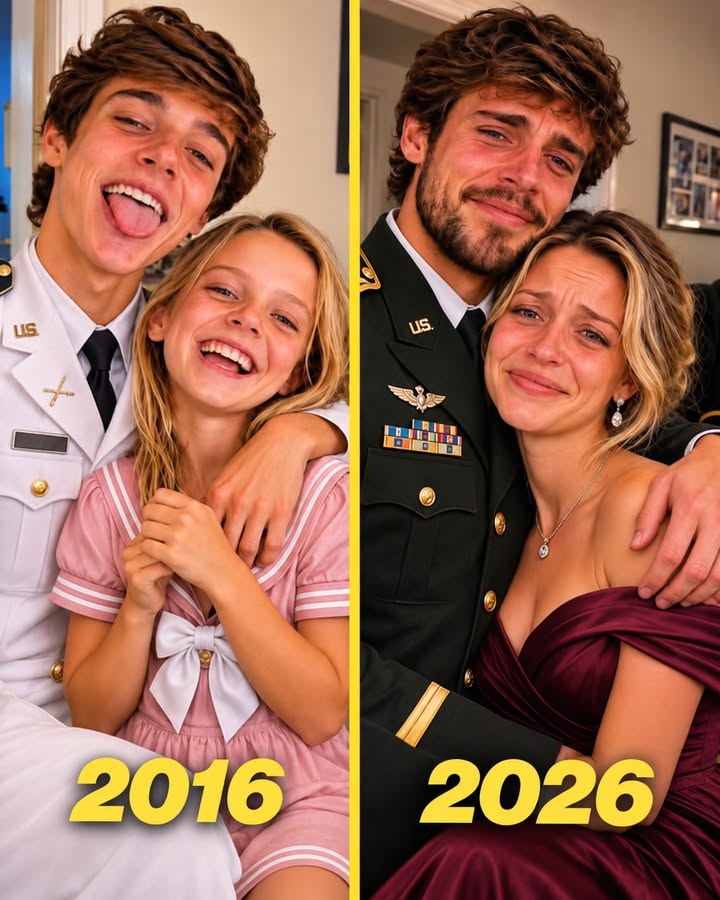
Part 2 – The Letter That Changed Everything
For a moment, nobody answered Rick.
The restaurant seemed to draw in a single breath, its clatter of plates and low conversation fading beneath the silence around our table.
Mom stared at him as if the question had reached her from a great distance.
“Did you know?” Rick asked again, his voice unsteady but clear.
She looked from him to Howard, then down at her hands.
“I didn’t know where the money went,” she whispered.
Howard gave a sharp, humorless laugh.
“That’s enough,” he said. “You’ve made your point.”
Rick glanced at him, then returned his attention to Mom.
“I’m not asking whether you knew where it went,” he said. “I’m asking whether you knew I didn’t take it.”
Mom’s mouth opened, but no words came.
I felt the old ache rising in me, the one I’d spent years trying to bury.
At ten, I had watched her stand beside the sink while my brother begged her to believe him.
Now, ten years later, she was looking at him the same way—afraid of what the truth might ask of her.
Rick lowered the envelope slightly.
“I didn’t come here to ruin your anniversary,” he said. “I came because I couldn’t keep carrying this alone.”
Howard took one step toward him.
“Then stop carrying it and leave.”
“Howard,” Mom said, so quietly I almost didn’t hear her.
He turned to her, and his expression softened just enough to look like concern.
“Don’t let him do this to you,” he said. “He’s had ten years to invent a story.”
Rick’s jaw tightened.
“I didn’t invent anything.”
“You always were good at making people feel sorry for you,” Howard replied.
A murmur passed through the guests, but no one interrupted.
I moved closer to Rick, though I didn’t know what I could do besides stand beside him.
He noticed and reached for my hand.
His palm was warm, his thumb brushing over my knuckles with the same familiar tenderness I remembered from childhood.
“You don’t have to do this alone,” I whispered.
His eyes met mine.
“I know,” he said.
That small answer nearly broke me.
For all those years, I had wondered whether he’d stopped thinking of me, whether he’d forgotten the little sister who clung to his jacket as he walked away.
But his hand held mine as if the distance between us had never changed what we were.
Rick turned toward the guests.
“I’m sorry for interrupting,” he said. “I know this is a celebration.”
Howard’s voice came quickly.
“Then show some respect and leave.”
“I will,” Rick said. “After Mom hears what’s in this envelope.”
He looked at her again.
“Can I?”
Mom’s eyes shone.
She gave a small, uncertain nod.
Rick opened the envelope carefully, as though the paper inside could still be damaged by rough hands.
First, he took out a folded bank deposit slip.
It was yellowed at the edges, creased down the middle, and marked with a date from the week Howard had accused him.
The amount was written in blue ink.
Two hundred dollars.
Mom leaned forward, one hand covering her mouth.
I looked at the slip, then at Rick.
“Where did you get that?” I asked.
“From someone who kept it safe,” he said.
Howard made a dismissive sound.
“A piece of paper proves nothing.”
“It proves the money was found,” Rick said.
He set the deposit slip on the table, then unfolded the second item: a letter, written in careful handwriting on a sheet that had been folded and refolded until the paper had softened along its creases.
His fingers paused over the first line.
I saw his expression change, and the hurt in it looked older than the letter itself.
“This was written the same night I was thrown out,” he said.
Mom shook her head slowly.
“I never saw that.”
Rick studied her face.
“I don’t know whether you did.”
“I didn’t,” she said, more firmly now. “I swear I didn’t.”
Howard’s chair scraped against the floor.
“Enough.”
Rick kept his eyes on Mom.
“I want you to hear it.”
He began to read.
“‘Rick, I found the two hundred dollars behind the kitchen drawer.’”
Mom’s breath caught.
I felt my own fingers go cold.
The kitchen drawer had always stuck on its track, and Mom used to tug it twice before it would open.
I could picture it clearly, right down to the chipped handle.
Rick continued.
“‘I knew you hadn’t taken it before I sent you away.’”
The room seemed to tilt around me.
Howard’s face had gone very still.
“‘I kept quiet because I wanted you out of the house.’”
Rick stopped.
No one moved.
The words sat among us, plain and terrible in their simplicity.
Mom’s eyes filled.
“No,” she breathed.
Howard leaned across the table, his voice controlled but tight.
“That is not my letter.”
Rick looked down at the page.
“You recognize the handwriting.”
“I recognize a forgery when I see one.”
“Then tell me who forged it,” Rick said. “And why.”
Howard’s lips pressed together.
“It’s an old trick, Rick. You show up after ten years with a story, a prop, and an audience.”
“I didn’t bring an audience,” Rick said. “I brought the truth.”
“You brought a piece of paper that anyone could write.”
Mom reached toward the letter, then stopped just short of touching it.
“Can I see?”
Rick held it out to her.
She accepted it with trembling fingers.
For a long moment, she read without speaking.
Her eyes moved down the lines, pausing at the sentence Rick had just read aloud.
Then she shook her head.
“I never saw this,” she repeated.
I wanted to believe her.
I also remembered the way she had twisted that dish towel while Rick begged her to trust him.
The two memories stood side by side in my mind, neither willing to give way.
“Mom,” I said, “did you ever ask Howard whether he found the money?”
She looked at me, pained.
“I asked him what had happened.”
“And?”
“He said Rick had stolen it, and that there was no point making excuses for him.”
“That isn’t what I asked,” I said, quieter than before. “Did you ask whether the money had been found?”
Her fingers tightened around the letter.
“I don’t remember him saying it was found.”
Howard gave a weary sigh.
“Because it wasn’t.”
Rick nodded toward the deposit slip.
“Then what is that?”
“I don’t know,” Howard said. “But I know this letter is false.”
The certainty in his voice unsettled me more than anger would have.
He sounded like a man who had rehearsed those words long before he needed them.
Rick lowered his eyes to the paper.
“I didn’t find this until last month,” he said. “I spent years believing there was nothing left to prove.”
“Who gave it to you?” I asked.
“Mrs. Alvarez.”
I searched my memory.
The name stirred something faint: a woman with silver hair who had lived in the house next to Howard’s before we moved there.
She used to wave at us over the garden fence, and once she had given me a jar of peaches that Mom said we couldn’t accept because we barely knew her.
“She was our neighbor?” I asked.
“Before your mom and Howard bought the house,” Rick said. “She lived next door when we first moved in.”
“Why would she have your letter?”
“She didn’t give me this letter,” he said. “She gave me the envelope.”
He tapped the paper with one finger.
“She’d kept it all these years. She said she thought I might need it someday.”
Howard scoffed.
“How convenient.”
Rick’s gaze shifted to him.
“I didn’t know she still had it. I hadn’t spoken to her since I was a kid.”
“Then why would she keep something like that?”
“I don’t know,” Rick said. “I asked her the same thing.”
He looked down at the envelope, then tucked it back beneath the letter.
“She told me she’d seen what happened that night and always wondered whether anyone had ever told me the truth.”
Mom’s head snapped up.
“She was there?”
“She saw me leave.”
“Why didn’t she come inside?” I asked.
“She said she didn’t know what to do. She was afraid of making things worse.”
Rick’s voice held no accusation, only a tired understanding that somehow hurt more.
“She let me sleep in her guest room that night,” he added. “She gave me breakfast the next morning and helped me find a place to stay.”
I stared at him.
“You were alone?”
“I wasn’t completely alone,” he said gently. “Not after she found me.”
My throat tightened.
I had spent years imagining him on the road, hungry and angry, with nobody to turn to.
Knowing someone had helped him brought relief, but it also brought a fresh ache for all the years I hadn’t known where he was.
“Why didn’t you come back?” I asked.
His thumb moved once over my hand.
“I tried.”
I looked at him.
“What?”
“I called the house a few times. The first time, Howard answered.”
The quiet around us sharpened.
“What did he say?” I asked.
Rick glanced at Mom, and I saw him hesitate.
“He said you were better off without me,” he said. “He said if I came near the house again, I’d only make things harder for you.”
Mom’s face drained of color.
“He never told me you called.”
“I figured he wouldn’t.”
I pulled my hand away from Rick’s.
Not because I wanted to let go, but because the thought of Howard shaping what each of us knew had suddenly made the space between us feel dangerous.
“Did you believe him?” I asked.
“I was sixteen,” Rick said. “I believed enough of it to stay away.”
His eyes softened.
“I didn’t believe you’d stopped loving me.”
The answer settled over me, tender and painful.
I had never stopped loving him either.
I had just learned to hide it.
Mom had risen from her chair.
“Howard, is that true?”
He looked at her with a frown.
“You’re going to take his word over mine?”
“I’m asking whether he called.”
“He called once,” Howard said. “He was angry, and I told him not to stir things up.”
“You said you were protecting us,” Mom whispered.
“I was protecting the family.”
“From Rick?”
“From more trouble.”
Rick folded the letter along its old crease.
“Was I trouble because I stole money,” he asked, “or because I was in the way?”
The question seemed to reach something in Howard.
For a second, his expression shifted—not into guilt, exactly, but into a wary recognition that the old explanation no longer fit neatly between them.
Then the door inside him closed again.
“You were an angry kid who didn’t respect this household.”
“I was a kid who worked after school so I wouldn’t have to ask you for anything.”
“You lived under my roof.”
“Until you threw me out.”
“Enough,” Mom said.
Her voice was quiet, but it carried.
Howard turned toward her.
She was still holding the letter, her fingertips pressed to its edges.
“I don’t know what I’m supposed to believe,” she said. “But I know I never saw this.”
Rick’s expression tightened.
“I’m not asking you to believe the letter because you feel sorry for me.”
“Then what are you asking?”
“For you to look at what you did that night,” he said. “You looked at me and decided it was easier to believe I was guilty than to stand beside me.”
Mom’s eyes filled again.
“I was scared.”
“So was I.”
“I know.”
“No,” Rick said softly. “You know now.”
Her shoulders sank.
I could see the words landing, each one uncovering something she had spent years trying not to face.
Howard reached for the letter.
“Give that to me.”
Mom drew it back against her chest.
“No.”
The refusal surprised all of us, including her.
Howard stared at her.
She looked frightened, but she didn’t move.
Rick watched her carefully, as if he wanted to trust that small act but didn’t yet know how.
I felt my own anger shifting into something less simple.
Part of me wanted to take the letter from Mom and put it safely away.
Another part wanted to ask why she had waited so long to protect either of us.
Rick turned toward the guests.
“I’m not going to read anything else tonight,” he said. “I wanted Mom to know there was proof that the accusation was a lie.”
He placed the deposit slip beside the envelope.
“I don’t know whether this letter is enough for anyone else. But it was enough to tell me I wasn’t crazy for remembering what happened.”
The words made my eyes sting.
For ten years, I had wondered whether I had misunderstood that night, whether grief had made me turn one bad moment into a family’s whole story.
Now I knew Rick had carried the same doubt.
Mom reached for him.
“Rick—”
He took half a step back.
It wasn’t a cruel gesture, but she stopped as if she had struck an invisible boundary.
“Please don’t leave yet,” she said.
“I’m not leaving because you asked me to stay,” he replied. “I’m staying because Emily is here.”
I squeezed his hand again.
Howard looked toward the guests, whose attention had turned politely away and somehow felt more unbearable for it.
“This celebration is over,” he said.
“It doesn’t have to be,” Rick answered. “I’m not here to punish you.”
Howard’s eyes narrowed.
“You think showing everyone that letter isn’t punishment?”
“I think telling the truth isn’t the same as punishment.”
“And what do you want from me?”
Rick considered the question.
“I wanted you to admit you knew I was innocent.”
“I didn’t know that.”
“You knew the money had been found.”
“I never said that.”
The two men stared at each other across the table.
Mom’s grip on the letter tightened.
I could hear the distant clink of a spoon against a glass from another part of the restaurant, an ordinary sound continuing in a room that no longer felt ordinary.
Then Mom looked at me.
“Emily, I need to speak with you.”
Rick’s gaze flickered toward her.
“Now?”
“Just a minute,” she said. “Please.”
I didn’t want to leave him.
He gave my hand a gentle squeeze and let go.
“Go,” he said. “I’ll be right here.”
Mom led me toward the restaurant’s quiet hallway, away from the tables and the lowered voices.
The walls were decorated with old framed photographs of the town, their glass catching the soft golden light.
When we stopped near the coatroom, Mom turned to me.
“I truly never saw that letter,” she said.
“I heard you.”
“Do you believe me?”
I looked at her, seeing both the mother who used to tuck blankets around me and the woman who had stayed silent while Rick walked away.
“I don’t know,” I admitted.
She flinched, but nodded.
“That’s fair.”
“Did you know the money was found?”
She looked down at the letter still in her hands.
“I don’t remember anyone saying it was.”
“But you asked Howard what happened.”
“Yes.”
“And you accepted his answer.”
“I did.”
“Why?”
Mom closed her eyes briefly.
“Because I was afraid of losing the life we’d just started.”
The answer was honest, but it didn’t make the hurt smaller.
“You were afraid of losing Howard?”
“I was afraid of everything,” she said. “I’d spent years trying to keep us steady after your father died. When Howard said Rick was stealing, I thought if I challenged him, the whole house would fall apart.”
I felt anger stir again.
“So you let the house fall apart around Rick instead.”
Her face crumpled.
“Yes,” she whispered. “I did.”
For the first time that night, she didn’t add an excuse.
A door opened at the far end of the hall, and a burst of laughter drifted out from the dining room.
Mom pressed the letter to her chest.
“I wish I could go back.”
“So do I.”
She reached for my hand, then stopped before touching it.
“I don’t expect you to forgive me for one conversation.”
“I don’t know what I expect.”
“I understand.”
We stood together in the narrow hallway, a mother and daughter who had spent years avoiding the same questions.
Then I heard Howard’s voice from behind us.
“Emily, come back in.”
He had followed us, his face composed again.
Mom turned toward him.
“Give us a minute.”
“There’s nothing more to say.”
“There’s plenty more to say,” I told him.
He looked at me as if he hadn’t expected me to answer.
For years, I had been careful around him, even after I left home.
I had kept my distance, but I still found myself measuring my words as if he could decide whether I belonged.
That feeling vanished beneath the weight of the letter in Mom’s hands.
Howard’s eyes moved to it.
“That paper is a lie.”
“Then why are you so afraid of it?” I asked.
His expression hardened.
“I’m not afraid.”
“Then explain it.”
“I already have.”
“No,” I said. “You called it a forgery. You didn’t say why someone would write it.”
He stepped closer, lowering his voice.
“Your brother has always known how to turn people against me.”
“Rick didn’t turn me against you,” I said. “You did that yourself.”
Mom looked between us, her face drawn with exhaustion.
Howard’s mouth tightened.
“Your mother and I are going home.”
“You can,” I said. “But I’m staying.”
He stared at me for a long beat, then turned and walked back toward the dining room.
Mom remained in the hallway.
“Emily,” she began, “there’s something else I should tell you.”
My heart gave a small, uneasy thud.
“What?”
She opened her mouth, then glanced toward the doorway Howard had just passed through.
Whatever she had meant to say, she seemed to lose hold of it.
“I’m sorry,” she said instead.
I wanted to tell her that sorry was not the same as repaired, and that saying it now did not return the years we had lost.
But I also saw how close she was to breaking beneath the truth she had allowed herself to avoid.
So I said nothing.
When we returned to the dining room, Rick was standing beside the table with the envelope tucked under his arm.
He looked up as I approached, and the tension in his face eased.
“You okay?” he asked.
“I think so.”
He studied me, then nodded without pressing.
Mom returned the letter to him.
“I don’t want to keep it,” she said. “It belongs to you.”
Rick took it carefully.
For a moment, their hands touched.
Mom’s fingers lingered at the edge of the page, but Rick drew it back—not sharply, just enough to remind her that closeness would have to be earned.
She understood.
Howard had moved to the far side of the room, speaking quietly with one of the guests.
His posture was stiff, his smile gone.
Rick looked at the deposit slip once more.
“Mrs. Alvarez said she kept this because she didn’t know what else to do with it,” he said. “She wanted me to decide what happened next.”
“Will you ask her to come here?” I asked.
“I invited her,” he said. “She was supposed to arrive later.”
Mom looked startled.
“She’s here tonight?”
“She’s on her way.”
Howard, across the room, turned at the words.
A flicker of alarm passed over his face before he smoothed it away.
Rick noticed.
So did I.
“Why did you invite her?” Mom asked.
“Because she helped me when no one else did,” he said. “And because she deserves to know the truth didn’t disappear.”
He glanced at the envelope.
“She may know more about what happened that night than I do.”
Mom’s expression changed, the worry in it deepening.
“What do you mean?”
Rick looked toward the restaurant entrance.
“I mean she was the one who found the money.”
I turned to him.
“You said Howard found it.”
“I said the letter claims he found it.”
The room seemed to go quiet again, though the guests were still talking and the music had begun softly in the background.
Rick looked at me, then at Mom.
“Mrs. Alvarez told me she saw the money behind the kitchen drawer before I left.”
Mom’s face went pale.
“Why didn’t she tell me?”
“I don’t know,” Rick said. “She never explained everything over the phone.”
He took the deposit slip from the table and slid it back into the envelope.
“She said she wanted to tell us together.”
As if summoned by his words, the restaurant doors opened.
An older woman stepped inside, carrying a small purse in both hands.
Her silver hair was pinned back, and she paused just beyond the threshold as she searched the room.
When her eyes found Rick, she gave a small, solemn nod.
Then her gaze shifted to Mom.
“I’m sorry,” she said.
“I should have told you the whole story years ago.”
**–END OF PART 2–CLICK “NEXT” AT THE BOTTOM OF THE PAGE TO CONTINUE READING**
* * *
[NEXT: PART 3](https://puretales.idolsgift.com/blog/part-3-the-letter-that-changed-everything-008)
✓ Lynn R. Adams
Part 2 – The Letter That Changed Everything For a moment, nobody answered Rick. The restaurant seemed to draw in a single breath, its clatter of plates and low conversation fading beneath the silenc…