PART 2: The Letter Elias Left Behind 057
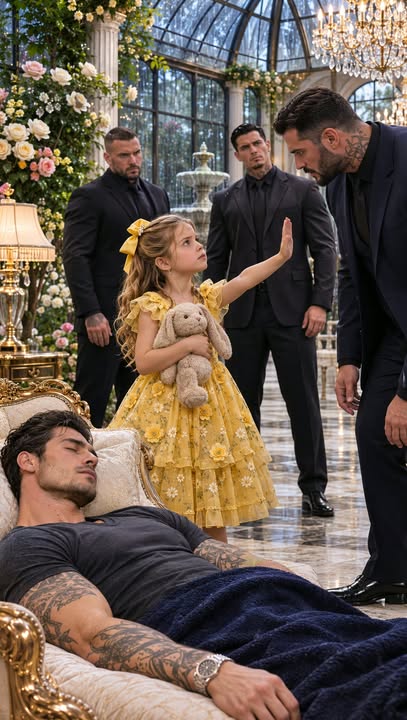
Part 2 – The Letter Elias Left Behind
I stared toward the dark conservatory, remembering Ruby’s innocent smile.
Then I called Silas.
He answered on the second ring, sounding as composed as ever.
“Mateo, I was about to contact you.”
“Why is the foundation reviewing the conservatory’s value?”
There was a brief pause, barely long enough to notice.
“Routine assessment,” he said. “The board asked for an updated property review.”
“And the buyer?”
“An interested party has made an inquiry. That doesn’t mean we’re selling.”
“Your signature is on the authorization.”
“I handled it because you signed off on the review months ago.”
I tightened my grip on the phone.
“I don’t remember doing that.”
“You had a great deal on your mind.”
It was a reasonable answer, delivered in the same calm voice Silas had used for years whenever I failed to remember some detail he had managed on my behalf.
I looked at the envelope in my hand.
“Send me every document connected to it.”
“Of course,” Silas replied. “But don’t let this become personal. The foundation needs to make prudent decisions.”
“It became personal when Elias’s name was attached to the place.”
Another pause followed.
“I understand,” he said. “I’ll gather the records.”
When we ended the call, the house felt larger than it had before.
I stood by the window and watched the rain begin again, tracing silver lines down the glass.
For three years, I had trusted Silas to take care of anything I could not bear to look at.
Now I was asking myself whether he had taken care of me—or simply learned how to keep me from asking questions.
The next morning, I returned to the Rose Conservatory.
I told myself I was there to inspect the property.
The truth was that I wanted to hear Ruby’s voice again.
Mara met me at the entrance, sleeves rolled to her elbows and a smudge of soil across one cheek.
She did not look surprised to see me.
She looked prepared.
“If you’re here about the review,” she said, “you should know the conservatory isn’t for sale.”
“I haven’t said it was.”
“Your foundation has.”
“Silas authorized a valuation. I’m trying to understand why.”
Mara studied my face, weighing my words against whatever she already knew about men who arrived with guards and paperwork.
“And when you understand?” she asked.
“I’ll decide what needs to happen.”
“That sounds a lot like what people say before they decide for everyone else.”
The words stung because they were not entirely unfair.
“I’m not here to order you out,” I said.
“Good.”
She turned toward the greenhouse aisle, apparently satisfied that the conversation was over.
I followed, keeping several paces behind her.
The conservatory smelled of damp soil, citrus leaves, and the faint mineral scent of rainwater running through the old gutters.
Late morning light filtered through the glass roof, falling in pale patches across the tiled path.
Ruby was kneeling beside a broad wooden planter, her blue cardigan pushed to her elbows.
She glanced up when I entered.
“Mr. Mateo,” she said. “You came back.”
“I did.”
“Did you bring the guards?”
“They’re outside.”
“Good,” she said, returning to her plants. “They’re very tall, but they don’t know how to water anything.”
Mara gave her a look.
Ruby dipped her small watering can into a bucket.
“I’m only saying it because it’s true.”
Despite myself, I smiled.
Mara noticed, though she said nothing.
She pointed toward the far wall, where several pots had been moved beneath a patch of ceiling that did not leak.
“We’re shifting things until the roof is repaired.”
“Is there a problem with the roof?”
“There’s been a problem with it for a while.”
She lifted her eyes to the glass above us.
A narrow brown stain ran across one beam, and one corner of the ceiling had been patched with a sheet of clear plastic.
“The foundation’s budget is modest,” she continued. “It covers basic maintenance, soil, heating in winter, and a little programming for the children. When one repair becomes two, we have to choose what can wait.”
“How much would it cost to fix?”
“I don’t know yet. The last contractor stopped returning calls.”
“Why?”
“Because his invoice was paid before the work was completed.”
She said it plainly, without looking at me.
I felt the first small shift in my chest, like a door opening onto a room I had not known was there.
“Do you have the invoice?”
“I have a copy.”
“May I see it?”
“Why?”
“So I can find out what happened.”
“Through the same foundation that supposedly paid him?”
I did not have a good answer.
Mara set her pruners on a bench.
“I’ve spent years keeping this place open with a budget that barely stretches,” she said. “I’m not going to hand over every record because a powerful man suddenly says he wants to help.”
“I’m not asking you to hand it over.”
“You’re asking to see it.”
“That’s different.”
“Not to the person holding the paper.”
Her voice was controlled, but there was a weariness beneath it, the sort that came from having to explain the same practical worries to people who believed their good intentions were enough.
I remembered how quickly I had dismissed the supervisor who had brought me the suspicious payment file.
I had not even opened it.
A man in a neat jacket had entered my office with a concern, and I had treated the concern as an interruption.
“I’ll find the foundation’s copy,” I said.
Mara watched me carefully.
“And what will you do when you find it?”
“I don’t know yet.”
“Then perhaps you should find it before making promises.”
The rebuke was quiet, but I heard it.
“I’ll do that,” I said.
Ruby had stopped watering.
She watched us with a solemn expression, as if she were learning how grown-ups handled difficult things.
Then she held up a small terracotta pot.
“This one is drooping.”
Mara looked over.
“Have you checked the soil?”
Ruby touched it with one finger.
“It’s dry.”
“Then it needs water, not worry.”
Ruby tilted her head.
“Can things be both?”
“Usually,” Mara said.
Ruby gave the plant a careful drink.
I thought of the last three years, of how often I had called worry weakness and buried it beneath work.
The conservatory was quiet except for the soft patter of rain on glass and the occasional tick of a drop landing in a pail.
I noticed how many pails there were.
“You’ve been dealing with this for a long time,” I said.
Mara picked up her pruners again.
“Long enough to know a leak doesn’t become less real when someone stops looking at it.”
I lowered my eyes.
“Then I should start looking.”
She did not thank me.
She did not tell me she believed me.
But she nodded once, and for the moment that was more than I deserved.
I asked whether she would let me help with the roof estimate.
“Not if the help comes with conditions,” she said.
“No conditions.”
“Not even the condition that I have to be grateful?”
I took a breath.
“Not even that.”
She seemed to search my face for some hidden bargain.
I did not blame her.
At last, she said, “You can call the contractor who did the last inspection. You can ask for a written estimate. I’ll review it with you, and with the foundation’s board.”
“That seems fair.”
“It’s the only way I’m willing to do it.”
I nodded.
The decision was modest, practical, and more complicated than writing a check.
It required me to listen.
For someone who had spent years believing a decision was only real if he made it alone, that felt like a different kind of work.
Mara went back to the plants.
I stayed long enough to help move two heavy pots away from the damaged section of roof.
She did not ask me to lift them, and I nearly offered to have someone else do it.
Instead, I took one end of a wooden planter while she took the other.
“Careful,” she said. “The left side is cracked.”
I adjusted my hands.
“Like this?”
“Better.”
We carried it slowly, lowering it onto a dry patch of floor.
When we finished, Ruby clapped once.
“Good teamwork.”
Mara shook her head as if she were trying not to smile.
Ruby returned to her watering.
I looked around the conservatory, seeing details I had never noticed when I came only to sit in Elias’s chair.
A little table held paper cups and a jar of pencils.
Children’s drawings were pinned beside handwritten plant labels.
Several names were written in careful block letters: CHANCELLOR, LADY THUNDERCLOUD, THE CHOIR.
Near the back wall stood a narrow desk with a stack of notebooks beneath it.
One had a worn green cover.
I recognized it before I knew why.
“Elias used to keep a notebook here,” Mara said, following my gaze. “He wrote down plant names, what needed fixing, who donated seeds, and who might need a little extra help.”
She lifted the green notebook from the stack.
The cover was frayed at the corners, and a strip of faded tape held the spine together.
I remembered Elias carrying a notebook in his coat pocket, its pages crowded with crooked handwriting and pressed leaves.
I had not seen it since the funeral.
“He kept it here?” I asked.
“He left it with me.”
“Why didn’t you tell me?”
“You didn’t ask.”
It was a simple answer.
I looked down at the notebook in her hands.
“May I?”
Mara paused before passing it over.
“Please be careful. Some of the pages are brittle.”
I opened it.
The first pages held lists of plants and watering schedules, written in Elias’s quick, uneven script.
Between notes about compost and pruning, he had recorded small acts of kindness as if they were as important as the health of the roses.
A sack of bulbs donated anonymously.
A veteran who came in every Thursday to sit beside the fountain.
A child who planted sunflower seeds and promised to visit them.
One line read, “Mrs. Alvarez stayed until closing to help Ruby find the ladybugs.”
Ruby peered around my elbow.
“That was me,” she said. “I was little-little.”
“You’re still little,” Mara replied.
“I’m bigger in my thoughts.”
Mara’s mouth softened.
I turned another page and found Elias’s handwriting beside a sketch of a rose.
“Everyone thinks a garden is made of flowers,” he had written. “It’s made of the people who keep showing up.”
I had to close the notebook for a moment.
The ache came without warning, sharp but not unbearable.
For years, I had thought grief was a locked room I could survive by never entering.
But there were other ways grief could arrive.
It could sit beside you in a wicker chair.
It could smell like wet leaves.
It could speak in a familiar hand.
Mara stood quietly near the desk.
“He wrote about you,” she said.
I opened the notebook again.
“Where?”
“Near the end.”
I turned the pages with more care.
There were several entries about the conservatory’s expenses, then a list of rose varieties Elias hoped to plant when the roof was fixed.
At the bottom of one page, a line had been written in darker ink.
“Mara has the envelope. Keep it until Mateo is ready.”
My fingers went still.
“What envelope?”
Mara looked down at the notebook.
“He asked me to keep something for you.”
“Why?”
“He didn’t explain much.”
“How long have you had it?”
“Since before the fire.”
The words landed heavily.
“Did you know what was inside?”
“No.”
“Why didn’t you give it to me after he died?”
Mara’s expression changed, not into anger, but into something more difficult to bear.
“Because he asked me to wait until you were ready.”
“And you decided I wasn’t?”
“I decided you were grieving.”
“So everyone decided what I could handle.”
“I didn’t know you well enough to decide anything about you,” she replied. “I only knew what Elias had asked me to do.”
Her answer left me with nowhere to put my anger.
I had spent years telling myself that people kept things from me because they thought I was fragile.
Perhaps some had.
But Mara had simply kept a promise to my brother.
“Do you still have it?” I asked.
“Yes.”
“May I see it?”
She glanced toward Ruby, who was now arranging a row of small pots on the windowsill.
“Not here,” she said. “There’s too much happening, and I don’t want to rush it.”
I swallowed.
“I’m not sure I understand.”
“Neither do I,” she admitted. “But whatever Elias wrote, it was meant for you. I think you should read it somewhere you can sit down.”
I looked at the wicker chair across the room.
“I can sit here.”
“That chair was his,” Mara said gently. “And you’ve been using it as a place to disappear.”
The words were not unkind.
That was what made them difficult to dismiss.
“I thought he left the chair here because he wanted me to use it.”
“He did.”
“Then what’s the difference?”
“Maybe he wanted you to rest, not vanish.”
I could not answer.
The rain had eased outside, and sunlight was gathering in a bright patch on the tiled floor.
Mara put the green notebook back on the desk.
“Come tomorrow,” she said. “I’ll bring the envelope.”
“I’ll come.”
“And Mateo?”
“Yes?”
“Bring questions, not conclusions.”
I looked at her, then at the notebook.
“I’ll try.”
Ruby wandered over, holding a small green leaf between her fingers.
“I found this on the floor,” she said. “It fell off the lemon tree.”
“Is it all right?” I asked.
“Probably. Leaves fall off sometimes.”
She set it gently on the desk beside the notebook.
“Maybe the tree is making room for new ones.”
For a moment, none of us spoke.
Then Ruby asked whether I could help her carry a bag of potting soil.
I followed her toward the planting table.
The bag was heavier than it looked, and I had to adjust my grip halfway across the room.
Ruby laughed when I nearly set it down on her foot.
“Watch out, Mr. Mateo. The soil is stronger than you.”
“I’ll remember that.”
“You should. Plants can be very demanding.”
By the time I left, I had agreed to contact the contractor, request the foundation’s payment records, and return the next afternoon.
I did not promise to save the conservatory.
I did not promise Mara that every problem would disappear.
For once, I understood that a promise made too quickly could be another way of refusing to listen.
At home, I found Silas’s email waiting in my inbox.
He had attached a summary of the property review and several pages of board correspondence.
The message was brief and reassuring.
The review was routine.
The buyer’s interest was nonbinding.
The foundation’s finances were being handled responsibly.
I read the summary twice.
Then I noticed that the supporting documents were missing.
I called Silas.
He answered with his familiar calm.
“I received your summary.”
“Good. It gives you the overview.”
“I asked for every document connected to the review.”
“Those are the relevant documents.”
“Who decided that?”
Silas sighed, not impatiently, but with the practiced patience of someone accustomed to managing me.
“Mateo, you’ve had enough on your plate. The board will send the full packet once it’s compiled.”
“When?”
“Soon.”
“I want the payment records for the conservatory as well.”
“That’s not part of the property review.”
“Then send those separately.”
Another pause.
“I’ll see what I can arrange,” he said.
I looked at the unopened file from the old supervisor, still listed in my archived correspondence.
“I don’t want an arrangement,” I replied. “I want the records.”
“I understand.”
The call ended politely.
That should have reassured me.
It didn’t.
The next afternoon, Mara met me in the conservatory’s small office.
A plain cream envelope rested on the desk between us.
It was sealed, its flap yellowed with age.
My name was written across the front in Elias’s familiar handwriting.
I sat down.
Mara took the chair opposite me.
“I never opened it,” she said. “I didn’t think it belonged to me.”
I ran my thumb over the edge of the paper.
The envelope was lighter than I expected.
For a moment, I could not make myself break the seal.
“What if it’s something ordinary?” I asked.
“Then it will be ordinary.”
“And if it isn’t?”
“Then it will still be yours.”
I looked at her.
She did not reach for the envelope or urge me to hurry.
She simply stayed.
I opened it.
Inside was a single folded letter.
The paper had softened along the creases, and the ink had faded slightly, but Elias’s writing was clear.
Mateo,
If Mara has given you this, then she has waited longer than I asked her to, which means you may have needed more time than I knew how to ask for.
I read the sentence twice.
My throat tightened.
Elias wrote that he was worried about how I had begun disappearing into work.
He said I had always carried too much alone, even before the warehouse fire.
He did not write that I was weak.
He did not tell me to be brave.
Instead, he said that bravery could sometimes look like letting someone tell you something you did not want to hear.
He wrote that people who cared about me would not always make life easier.
Sometimes they would ask me to look at the thing I was trying hardest not to see.
Then came the line that stopped me.
The conservatory is not a cure for anything, and it isn’t meant to hold you hostage to my memory.
But perhaps it can help you remember that you were alive before grief became your only language.
I lowered the letter.
The room seemed to tilt gently around me.
Mara had folded her hands on the desk.
“Did you know he felt that way?” I asked.
“I knew he worried about you,” she said. “He never told me the details of your life. He only said you were taking care of everyone except yourself.”
I looked down again.
At the bottom, Elias had added a final note.
Trust the people who bring you uncomfortable truths, Mateo.
They may be the only ones who love you enough not to let you disappear.
The letter trembled slightly in my hands.
I folded it carefully and placed it back inside the envelope.
For a few moments, I could hear nothing except the light ticking of rain against the glass.
Then someone knocked at the office door.
Mara opened it.
A young man stood in the hallway, holding a thick folder against his chest.
“I’m sorry to interrupt,” he said. “I’m here to deliver the foundation’s records.”
I recognized him as the supervisor I had dismissed three years earlier, the one who had brought me the file I never opened.
His eyes met mine.
“Mr. Varela,” he said quietly. “I didn’t know you’d be here.”
Neither did I know what to say.
He set the folder on the desk.
“I found the original payment file,” he added. “The one I tried to show you before.”
The conservatory seemed to grow still around us.
“What payment file?” Mara asked.
The supervisor looked from her to me.
“The one connected to the foundation’s property review,” he said. “There’s something in it you need to see.”
**–END OF PART 2–CLICK “NEXT” AT THE BOTTOM OF THE PAGE TO CONTINUE READING**
* * *
[NEXT: PART 3](https://storyly.idolsgift.com/blog/part-3-the-letter-elias-left-behind-057)
✓ Lynn R. Adams
Part 2 – The Letter Elias Left Behind I stared toward the dark conservatory, remembering Ruby’s innocent smile. Then I called Silas. He answered on the second ring, sounding as composed as ever. “…