PART 2: The Door No One Was Watching 061
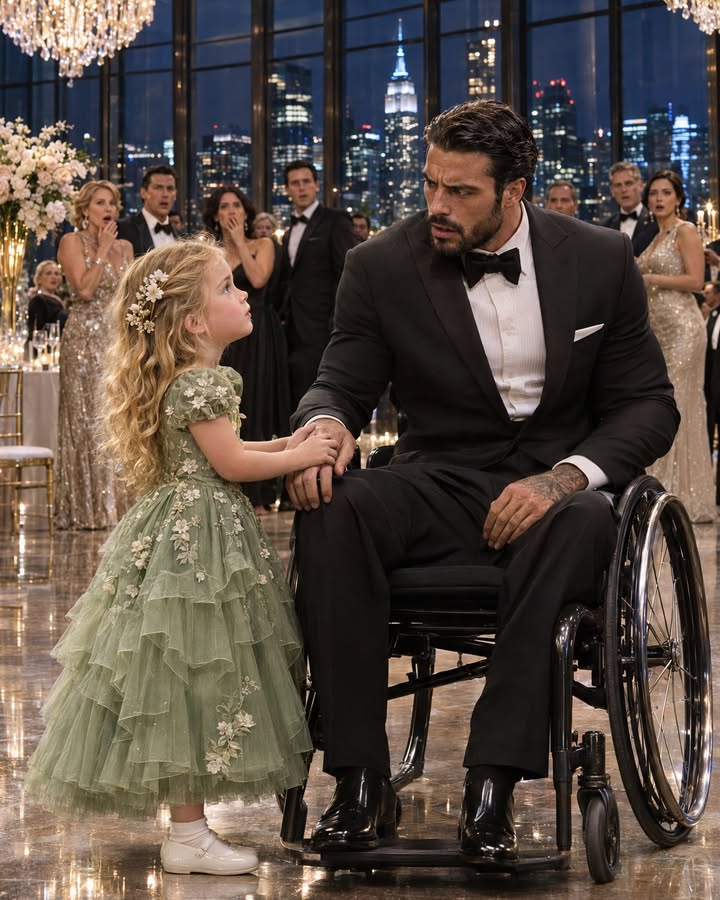
For one suspended second, the ballroom held its breath.
Then my head of security stepped forward, one hand lifted to keep the guests back.
“Mr. Whitmore, we need to get you somewhere secure.”
Lyla flinched at the word secure.
The movement was small, but I saw it.
So did the guard nearest her, who shifted his stance as if she had just become another threat to assess.
I raised my hand.
“Stand down.”
“Sir, we have a child here whose mother may be in danger,” the security chief said carefully. “The building should be locked down until we know what’s happening.”
A ripple of unease passed through the guests.
The same people who had laughed at Lyla were now inching away from her, afraid that her arrival had brought trouble into their polished world.
I looked at the girl.
“How long ago did they find her?”
“I don’t know,” Lyla whispered. “I heard them talking outside.”
“Who did you hear?”
She glanced toward the ballroom’s tall windows, then toward the main doors.
“Men.”
“Were they police?”
“I don’t know.”
“Did they say your mother’s name?”
Lyla pressed her lips together.
The watch in my palm felt suddenly heavy.
“Lyla,” I said, keeping my voice gentle, “I’m not going to make you tell me anything you don’t want to.”
Her eyes searched my face as if she expected a trap to open beneath those words.
“Your guards are going to lock the doors,” she said.
“They’ll keep the guests safe.”
“Will they keep me safe?”
The question cut through the room more cleanly than any shout could have.
I looked at the people around us, at the phones still raised, the champagne still untouched, the open curiosity that had turned into suspicion.
Then I looked at Lyla’s bare feet on the marble.
“Yes,” I said. “If you choose to trust me.”
She did not answer.
My security chief leaned closer.
“Charles, we should move you upstairs. The medical staff can examine your legs, and we can coordinate with the police.”
“Not yet.”
“Sir, you’ve just stood for the first time in four years.”
“I know.”
“You may be injured.”
“I know that too.”
My legs trembled beneath me, and I could feel the effort of standing beginning to drain my strength.
But Lyla was watching the guards.
I lowered myself carefully into the wheelchair.
She startled as if she thought I had changed my mind about her.
“I’m still here,” I told her.
The security chief’s expression tightened.
“Should I have the ballroom sealed?”
“Yes,” I said. “But no one is to touch the girl or take her anywhere.”
His gaze moved from me to Lyla.
“Understood.”
He turned and began giving quiet instructions.
The ballroom doors closed one by one, and the guards stationed themselves along the walls.
Guests were asked to remain where they were while staff checked the adjoining halls.
The room that had been filled with laughter now hummed with whispers and unanswered questions.
Lyla stepped closer to my wheelchair.
“Are they locking us in?”
“They’re making sure no one comes in without being noticed.”
“That isn’t the same thing.”
“No,” I admitted. “It isn’t.”
A woman in a silver dress approached us, perhaps because she had spent the entire evening believing every problem could be solved by speaking louder.
“Charles, darling, if the child’s mother is involved in some kind of criminal matter, you shouldn’t be standing so near her.”
Lyla’s fingers curled around the hem of her oversized coat.
I met the woman’s gaze.
“Go back to your table, Marjorie.”
Her face flushed.
“I’m only trying to help.”
“Then give us room.”
She retreated, and the hush that followed felt more uncomfortable than the earlier laughter.
Lyla studied me.
“You told her to go away.”
“I did.”
“Why?”
“Because she was making you feel smaller.”
The girl looked down at her feet.
“She was already doing that.”
“No,” I said. “She was trying to.”
For the first time since she had entered the ballroom, Lyla’s face softened.
Not enough to call it trust.
Enough to make me hope there might be room for it.
I glanced toward the security chief, who was speaking into his earpiece.
The men beyond the ballroom doors had not been identified.
No one knew whether Lyla had overheard a real conversation or misread something in the noise of the gala.
But the moment she had said, “They already found her,” she had sounded certain.
“Did you come here alone?” I asked.
“Yes.”
“From where?”
“My apartment.”
“Where is it?”
“I don’t want to tell you yet.”
“Fair enough.”
That answer seemed to surprise her.
She had expected questions to be demands.
“I can ask the police to look for your mother,” I said. “But I won’t send them without knowing where she is.”
“They might take her away.”
“Why would they?”
“Because men always say they’re helping when they want to decide things for you.”
Her words had the bluntness of something learned too early.
I felt an old ache stir in my chest, unrelated to the weakness in my legs.
“Who taught you that?”
“My mother.”
“She told you not to trust men?”
“She told me not to trust anyone who says I have to do what they want because it’s for my own good.”
I looked toward the locked doors.
The security chief had finished his call and was approaching us.
“Sir, there are no signs of anyone forcing their way into the building,” he said. “The street entrance is being monitored. We’re checking the service corridors now.”
“Did anyone report seeing Lyla’s mother?”
“No.”
Lyla’s shoulders rose toward her ears.
“Can I speak with you privately?” I asked her.
She shook her head.
“Not if the guards come.”
“They won’t.”
“And not if you send me away afterward.”
“I won’t send you away.”
“You don’t know where I live.”
“No,” I said. “I don’t.”
“And you don’t know if I’m telling the truth.”
“That’s true too.”
“Then why do you believe me?”
I looked at the watch in my hand.
“Because my sister gave that to you.”
“My mother gave it to me.”
“I know.”
“Those aren’t the same thing.”
“No,” I said. “They’re not.”
She regarded me for a long moment, measuring the answer against whatever rules her mother had taught her.
Then she glanced toward the watch.
“Can I have it back?”
I closed my fingers around it, then immediately felt ashamed.
“Yes.”
I held it out.
Lyla did not take it.
“Why?”
“I don’t know.”
“Did it belong to your sister?”
“Yes.”
“Do you know her?”
“Not anymore.”
The words came out before I could stop them.
Lyla’s expression changed.
“She’s dead?”
“That’s what I was told.”
“But you don’t know?”
“I haven’t known anything for twenty years.”
She took the watch from my hand and folded her fingers over it.
For the first time, I wondered whether the story I had told myself about my sister’s death had ever been mine at all.
The security chief returned, his voice lowered.
“Mr. Whitmore, the east service corridor is clear. We can take you through the kitchen and out to the private garage.”
“And Lyla?”
He hesitated.
“Given the uncertainty, it may be safest to keep her here until the authorities arrive.”
Lyla’s face went white.
“No,” she said.
The guard did not move toward her, but she backed away all the same.
I saw her eyes dart to the nearest door, then to the long windows that overlooked the street.
“I’m not staying,” she said.
“Lyla,” I began.
“My mother told me to find you.”
“You said she did?”
She nodded, clutching the watch.
“Before I left.”
The room seemed to fall away around us.
“Why didn’t you tell me that before?”
“I didn’t know if you were the right Charles Whitmore.”
“There are not many.”
“She said there was one who would know the watch.”
I stared at her.
“Your mother said that?”
“She said if anything happened, I should bring it to you and ask you to help us.”
The words struck with a force that no accusation could have carried.
My sister had sent her daughter to me.
If Lyla was right, Eleanor had trusted me enough to send a child through the doors of a ballroom full of strangers, though she had not trusted me enough to come herself.
“Why did she wait until now?” I asked.
“She didn’t want to.”
“What changed?”
Lyla looked at the watch.
“She said someone had started asking questions.”
“Who?”
“I don’t know.”
“Did she tell you what kind of questions?”
“She told me to remember the way home and not to let anyone take the watch.”
Her voice wavered.
“I thought she was just being worried again.”
“What happened to your mother tonight?”
“I left her at home.”
“Was she hurt?”
“I don’t know.”
“You saw her before you came here?”
“Yes.”
“Was she all right?”
Lyla hesitated.
“She had a cut on her forehead, but she said it was nothing.”
The security chief’s expression sharpened.
“Was someone with her?”
“No.”
“Did you see anyone outside the apartment?”
“I saw a car.”
“What kind?”
“I don’t know. Dark.”
“Did anyone speak to you?”
“No.”
Her answers came quickly, but her fingers kept tightening around the watch.
I leaned closer.
“Lyla, I need to understand what we’re dealing with.”
“So do I.”
She was right.
And yet I could not shake the picture of a child alone in the city, carrying a message from a woman I had mourned for half my life.
The security chief spoke quietly.
“Sir, if we leave through the service garage, we can reach the car without going out onto the street.”
“Then we’ll do that.”
“Charles,” he said, “I must advise you not to make decisions while you’re still in shock.”
“I’m not in shock.”
A sharp cramp seized my thigh.
I gripped the wheel of my chair until it passed.
The guard pretended not to notice.
I did not.
“I’m making this decision with my eyes open,” I said. “Lyla is not staying here alone.”
“I can arrange for a female officer to sit with her.”
“No.”
“What if her mother has been taken to a hospital? We need to verify—”
“We will verify it together.”
Lyla looked up at me.
“You’re coming with me?”
“If you want me to.”
“Even if I’m wrong?”
“Yes.”
“Even if my mother isn’t your sister?”
I had no answer that would make the question less painful.
“Even then,” I said.
The security chief lowered his voice.
“I’ll have the route cleared.”
He moved away.
The guests stared at us as the guards opened a narrow door disguised within the paneled wall.
It led into a service passage, stripped of the ballroom’s gilt and glass, where the air smelled of warm bread and lemon polish.
A staff member holding a tray froze as we passed.
I apologized, and he nodded too quickly, eyes fixed on my face.
Lyla kept close to my chair.
“Do you always have this many guards?” she asked.
“Usually more.”
“Are they your friends?”
“Some of them are.”
“Are they all?”
I looked ahead at the security chief’s broad shoulders.
“I thought so.”
She watched me, recognizing the uncertainty.
The passage ended at a service lift.
When its doors opened, the security chief checked the empty interior before allowing us inside.
The lift descended without music.
Lyla stood across from me, her thin arms wrapped around herself.
“Are your legs going to work again?” she asked.
“I don’t know.”
“You moved them.”
“Yes.”
“Does that mean I healed you?”
“I don’t know that either.”
She lowered her eyes.
“Everyone laughed.”
“They were wrong to.”
“But maybe they were right.”
“About what?”
“Maybe I can’t help you.”
I studied her solemn face.
“You did something no one expected.”
“I only touched you.”
“That may be all you did.”
The lift shuddered slightly as it passed the lower floors.
Lyla reached out, then stopped herself before touching my knee again.
I noticed the hesitation and felt an unexpected sadness.
“You don’t have to prove anything,” I told her.
“My mother said you might be the only person who could keep us safe.”
“Did she say why?”
“No.”
“Did she tell you anything about me?”
“She said you were her brother.”
The elevator doors parted onto a quiet corridor beside the kitchens.
The familiar scents of roasting meat and coffee drifted through the air.
A member of staff hurried past with a crate, then froze when she saw my chair and Lyla’s bare feet.
The security chief led us to a small staff room and shut the door while he checked the corridor.
Lyla watched his hand on the knob.
“You trust him?” she asked.
“I’ve trusted him for years.”
“That’s not what I asked.”
I considered this.
“Yes,” I said. “I trust him.”
She gave no sign that she believed me.
When the guard returned, he told us the garage was clear.
We continued through the kitchens, past cooks who went quiet as I rolled by.
At the far end, a plain steel door opened into the underground garage.
My black car waited beside the elevator.
The driver started toward us, but I stopped him.
“Not yet.”
I turned to Lyla.
“Before we leave, you should know where we’re going.”
“To find my mother.”
“Yes.”
“And then?”
“Then we listen to her.”
“If she tells you to leave?”
“I’ll leave.”
Lyla’s gaze remained fixed on me.
“You promise?”
“I promise.”
She nodded once.
Only then did I allow the driver to open the rear door.
I had planned to transfer from the wheelchair to the seat, but when I braced my hands against the frame, my legs responded with a trembling strength I had not felt in years.
The movement was awkward and painful.
The security chief stepped forward to help.
I shook my head.
“I can do it.”
He waited, tense and ready.
I pushed upward.
My knees shook violently, but for several breathless seconds I stood beside the open car door.
Lyla watched without smiling, as if she understood this was not a miracle to celebrate but a fragile thing that might break if we demanded too much of it.
Then I lowered myself into the seat.
The effort left me pale and sweating.
“Does it hurt?” she asked.
“Yes.”
“Are you scared?”
I looked at her.
“Yes.”
She climbed in beside me, leaving a careful space between us.
The security chief took the front passenger seat, and the driver eased the car out of the garage.
We did not use the main entrance.
The vehicle passed through a rear gate and joined the late-night traffic beneath the washed-out glow of streetlights.
Lyla sat with the watch in both hands.
I tried to keep my attention on the road, on the unfamiliar ache in my legs, on the steady pulse of my heart.
But the question that mattered kept returning.
“Lyla, what did your mother tell you about the watch?”
“That it belonged to my birth family.”
“Did she say which side?”
“No.”
“Did she tell you where she got it?”
“She said it came from someone who loved her.”
My fingers tightened on the armrest.
“Did she give it to you recently?”
“She gave it to me when I was little. I wasn’t supposed to take it outside.”
“Then why did you bring it tonight?”
“Because she told me to.”
“What exactly did she say?”
Lyla looked down at the worn gold case.
“She said, ‘If I can’t come with you, take this to Charles Whitmore. He’ll know what it means.’”
I felt the old ache in my chest deepen.
“Did she tell you my name before tonight?”
“Yes.”
“How long ago?”
“A long time.”
“Why would she tell you about me if she didn’t want you to meet me?”
“She said some people should be remembered, even when you can’t trust them.”
The sentence settled between us.
I wanted to ask what she meant by it, but the warning in it was too plain to ignore.
My sister had not sent Lyla to me because she believed I was good.
She had sent her because she believed I might be useful.
And somewhere beneath that thought, I felt a deeper hurt: Eleanor had imagined a world in which I could be reached, yet she had never believed she could safely reach me herself.
I looked at the watch.
The lid had fallen shut during the ride.
“May I see it again?”
Lyla hesitated, then handed it over.
I turned the case beneath the car’s interior light.
The Whitmore crest had been etched by an artisan who had worked for our family for generations.
I knew the tiny flaws in its raised edges.
I knew the delicate curve of the engraved leaves.
And I knew the shallow scratch near the hinge.
My breath caught.
“What is it?” Lyla asked.
I ran my thumb over the mark.
When I was twelve, Eleanor had scratched that very spot with the point of a silver hairpin.
She had been angry with me for hiding her sketchbook, and she had taken the watch from my desk, threatening to keep it until I admitted what I had done.
I had thought she was teasing.
I had spent the next hour trying to polish the scratch away while she laughed at me.
No jeweler had ever managed to remove it.
I closed the watch slowly.
“I know this mark,” I said.
Lyla leaned nearer.
“From your sister?”
“Yes.”
“Does that mean my mother is your sister?”
The words seemed too fragile to touch.
“I don’t know.”
“But you think she is.”
“I think it’s possible.”
“Were you kind to her?”
The question struck deeper than I expected.
“I loved her.”
“That’s not the same thing.”
“No,” I said. “It isn’t.”
She turned her face toward the dark window.
“My mother says love doesn’t always make people safe.”
I could not disagree.
The car turned away from the bright avenues and into a neighborhood where the buildings stood close together, their brick faces darkened by rain.
The driver slowed as the security chief checked the address Lyla had finally given him.
“Two blocks,” Lyla said.
“Can you tell if the car you saw is here?” the chief asked.
“I don’t know. It was dark.”
“Would you rather wait while we check?”
“No.”
“Lyla,” I said, “we can send one person ahead, just to make sure.”
She pressed the watch into her palm.
“My mother told me not to let anyone go ahead without me.”
I heard the words as fear, not defiance.
“Then we’ll go together.”
The car stopped beside a narrow apartment building with a chipped blue door.
A single light glowed behind a second-floor curtain.
Lyla opened her door before the driver could come around.
I followed in the wheelchair, while the security chief stayed close enough to catch me if my legs failed.
The building’s entrance smelled of damp stone and old paint.
Lyla moved through it as if she had memorized every shadow.
At the first landing, she stopped to listen.
Nothing.
At the second, she leaned toward the apartment door.
“Mom?”
The light behind the curtain remained steady.
Lyla knocked twice, waited, then knocked once more.
No one answered.
Her hand closed around the doorknob.
It turned freely.
The door opened a few inches.
Lyla went still.
I moved closer, though every push of the wheels made my legs throb.
“What do you see?” I asked.
“The kitchen light is on.”
The security chief reached past us, then paused when Lyla shook her head.
“No one goes in first.”
She had learned to say no without raising her voice.
I nodded.
“You lead.”
She pushed the door open and stepped into the apartment.
The rooms were modest and clean, with a narrow kitchen, a secondhand couch, and a small table covered in papers.
A coat had been flung over one chair.
A teacup sat untouched beside the sink.
“Mom?”
Lyla’s voice trembled now.
She moved down the short hall and stopped at the open bedroom door.
I saw her shoulders tighten.
Then she rushed forward.
A woman lay on the floor beside the bed, one hand pressed to her temple.
A dark bruise showed beneath her hairline.
“Mom!”
Lyla dropped to her knees.
The woman’s eyes opened.
“Lyla,” she whispered.
“I’m here.”
The woman reached for her daughter, then looked past her and saw me.
For a long moment, neither of us spoke.
Her face was older than the one I had carried in my memory, thinner and marked by years I had never witnessed.
But her eyes were the same.
I knew them before I knew what I was seeing.
“Eleanor,” I said.
She closed her eyes.
“Charles.”
And from the narrow table behind her, a photograph slipped loose from a stack of papers and landed face up on the floor.
A much younger Eleanor stood beside a smiling man whose face I recognized at once.
Victor Hale.
**–END OF PART 2–CLICK “NEXT” AT THE BOTTOM OF THE PAGE TO CONTINUE READING**
* * *
[NEXT: PART 3](https://storyly.idolsgift.com/blog/part-3-the-door-no-one-was-watching-061)
✓ Lynn R. Adams
For one suspended second, the ballroom held its breath. Then my head of security stepped forward, one hand lifted to keep the guests back. “Mr. Whitmore, we need to get you somewhere secure.” Lyla …