PART 2: The Debt Vincent Never Forgot 053
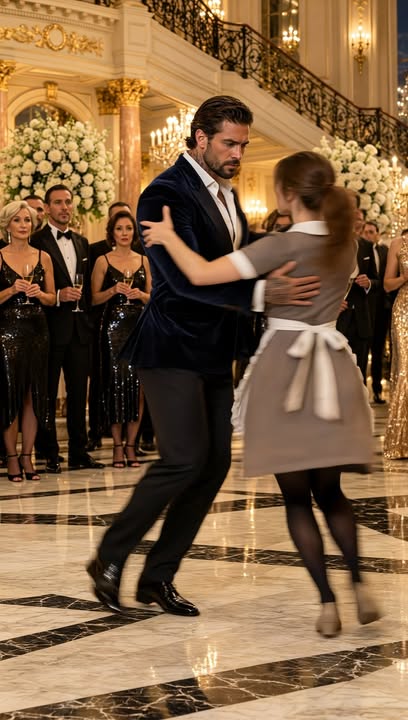
Part 2 – The Debt Vincent Never Forgot
“Your father saved Vincent Graham’s life.”
The words seemed to reach Emma from very far away, even though Levi stood only an arm’s length from her.
For a moment, the Continental’s chandeliers, the orchestra, and the watching crowd dissolved into a blur of gold and shadow.
Emma looked at Vincent.
He had not moved since Levi spoke.
The man who had just crossed the dance floor with the confidence of someone accustomed to being obeyed now seemed unable to find a place for his hands.
“What does that mean?” she asked.
Vincent glanced at the room around them.
“It means this isn’t a conversation for an audience.”
“You’ve had three years to find the right time to tell me.”
A flicker of pain crossed his face.
“I didn’t know who you were.”
“You knew my name.”
“I knew your father’s name,” he said carefully. “I didn’t know you were his daughter.”
The distinction did nothing to ease the tightness in Emma’s chest.
Levi stepped closer, his voice calm but low.
“Let’s go somewhere private.”
Emma’s first instinct was to refuse.
She had spent years learning how to leave a room before powerful people decided they could keep her in it.
But Vincent didn’t reach for her or block her path.
He waited.
That small restraint made her pause.
“All right,” she said. “But I’m not agreeing to anything except hearing the truth.”
“You shouldn’t,” Vincent replied.
He led them not to his private booth, but to a quiet office beyond the main lounge.
The applause and music faded behind the closed door, leaving only the soft hum of the ventilation and the distant thud of a bass line.
Emma remained standing.
Vincent noticed, then stayed on the far side of the room rather than taking the chair nearest her.
Levi closed the door.
“Tell me,” Emma said.
Vincent looked down at his tattooed hands.
“Twenty years ago, I was young enough to think I understood danger and foolish enough to prove it.”
“That sounds like a beginning, not an answer.”
“It was during an ambush,” Levi said.
Vincent’s eyes shifted to him.
Levi continued, choosing each word with care.
“Vincent’s car was forced off the road outside the city. The people after him were looking for his family’s operation, and they’d mistaken him for someone older and more important than he was.”
“Levi,” Vincent said quietly.
“She deserves the truth.”
“I know.”
The simple admission softened something in Levi’s expression.
He turned back to Emma.
“Anton was there because he’d been driving home from a lesson. He saw what was happening and pulled Vincent out before the car caught fire.”
Emma’s fingers curled against her palms.
“My father was a dance teacher.”
“He was also brave,” Levi said. “He got Vincent behind a concrete drainage barrier and stayed with him until help arrived.”
The scene formed unwillingly in Emma’s mind: her father in the dark, younger than she remembered him at the end, standing between a frightened boy and the danger closing in.
“Was he hurt?”
Vincent answered this time.
“His shoulder was badly injured. He needed surgery and months of therapy.”
The words were measured, but his voice was not quite steady.
“Why didn’t he tell me?”
“I don’t know,” Vincent said.
The answer came without excuse.
Emma studied him.
“You never asked?”
“I did, once. He told me it was over and I should stop trying to make it into a debt.”
“Was it?”
“Yes.”
Vincent spoke the word as though it had been waiting twenty years to be said aloud.
“But I never believed him.”
Emma looked away, trying to make the facts fit inside the memory she had of her father.
Anton had never liked talking about his younger years.
He had kept photographs, trophies, and old programs in a wooden cabinet, but whenever Emma asked about the life he’d led before raising her, he would smile and say that the best part of his story was still being written.
She had taken that to mean he preferred the future to the past.
Now she wondered how much he had chosen to leave unwritten.
“What happened after?” she asked.
“Your father told me to go home,” Vincent said. “I didn’t want to leave him.”
“But you did?”
“He insisted. He said I’d already caused enough trouble for one night.”
A faint, rueful smile touched Vincent’s mouth and disappeared.
“He was very direct.”
“That sounds like him.”
For the first time since Emma had entered the office, Vincent’s gaze warmed.
“You recognized him in me?”
“No,” she said. “I recognized the part of you that gets stubborn when someone tells you what to do.”
Levi gave a quiet cough that might have been a laugh.
Vincent’s expression almost joined it.
Then Emma remembered the crowd beyond the door, the way the room had stopped breathing when she corrected him, and the discomfort returned.
“Why tonight?” she asked. “Why did my name change everything?”
Vincent took a moment to answer.
“Because I heard it clearly for the first time.”
“You’ve known me for two years.”
“I know.”
“You’ve watched me serve this room.”
“I know.”
“You never wondered who I was?”
“I should have.”
“That isn’t the same as answering.”
“No,” he said. “It isn’t.”
There was no defense in his tone, and that made her anger harder to hold in a clean, simple shape.
Vincent continued.
“I saw a maid doing her job. I didn’t look beyond the uniform. That was my failure, not yours.”
Emma had expected an explanation.
What she received instead was an apology without a request that she make him feel better.
It unsettled her more than a polished excuse would have.
“Your father’s name was on a photograph I kept,” Vincent said. “When you told us his name, I understood. I should have understood sooner.”
“What photograph?”
Levi glanced toward Vincent.
“You still have it?”
“In my study.”
“What was on it?” Emma asked.
Vincent looked at her as though he was weighing whether to add another piece to a story she had never asked to enter.
“A sign,” he said. “For Anton’s dance studio.”
Emma’s breath caught.
“My father had a studio?”
“He did,” Levi said. “Not far from here, years ago.”
“Where?”
Neither man answered immediately.
That silence frightened her more than the answer might have.
“My father taught me in community halls and rented rooms,” she said. “He never mentioned owning a studio.”
“He rented it,” Vincent said. “A modest place, but it meant a lot to him.”
“Why did you have a photograph of it?”
Vincent looked toward the closed door, where the orchestra’s music pressed faintly through the wood.
“Because I went there.”
“When?”
“After the hospital. Anton was recovering, and I wanted to see him.”
Emma searched his face.
“You were a child.”
“I was seventeen.”
“And already involved in whatever you called an operation?”
“I was near enough to it to understand that my life was shaped by choices I hadn’t made yet.”
“That doesn’t explain why you went to a dance studio.”
“Your father asked me to come.”
The revelation settled between them.
Emma felt the sharp edge of her anger shift, though it did not disappear.
“He invited you?”
“He said I should learn something that didn’t require me to keep looking over my shoulder.”
“That was his way of saying it?”
“Something like that.”
“Did you dance?”
“I tried.”
“And?”
“I was terrible.”
Levi raised an eyebrow.
“You weren’t terrible.”
“I was determined to be terrible.”
Emma pictured a seventeen-year-old Vincent, less polished and less certain, standing in her father’s studio while Anton tried to teach him how to move.
The image felt impossible.
It also felt strangely intimate.
“What did my father teach you?” she asked.
“Patience, mostly.”
“That doesn’t sound like dance instruction.”
“It was connected.”
“Of course it was.”
Vincent’s eyes stayed on hers.
“He taught me that leading didn’t mean forcing someone to follow. It meant paying attention to where they were and giving them room to move.”
Emma remembered his first grip on the dance floor: too firm, too certain, treating the waltz as a thing to conquer.
Then she remembered the way he had listened when she told him to stop trying to control her.
“You forgot the lesson,” she said.
“I have forgotten many things I was taught.”
“And you think remembering my father makes this one different?”
“I think I owe him enough to try.”
Emma flinched at the word.
“Owe,” she repeated.
Vincent lowered his eyes.
“Yes.”
“He saved your life. You don’t get to turn that into a claim on mine.”
“I would never.”
“You don’t get to decide that I should be grateful to you because you knew him.”
“I’m not asking you to be grateful.”
“Then what are you asking for?”
“Nothing.”
The answer arrived so quietly that Emma couldn’t immediately tell whether she believed it.
Vincent opened his hands, palms empty.
“I’m telling you because you deserved to know why I recognized the name. That’s all.”
Levi watched Emma rather than Vincent.
The concern in his face seemed genuine, but Emma had learned that genuine concern could still become a kind of pressure.
She had seen it in hospital corridors, from people who told her to be strong when she wanted to be tired.
She had seen it in well-meaning relatives who offered advice about her future as if grief had made her incapable of choosing one.
“You could have told me before,” she said.
“Yes.”
“You could have asked about my father.”
“Yes.”
“You could have said something the first time I brought his name up, if I ever did.”
“Yes.”
“Why didn’t you?”
“Because I convinced myself the past was where it belonged,” Vincent said. “And because I was afraid that if I went looking for Anton’s family, I would bring my life to their door.”
Emma watched him closely.
There was something carefully restrained in the way he said it.
Not shame alone.
Fear, perhaps, but not for himself.
“Your life?” she asked.
“I’m not going to pretend it’s ordinary.”
“I work in this building.”
“That doesn’t mean you know everything that happens in it.”
“I know enough to understand that powerful people don’t get to make everyone else’s choices for them.”
For a moment, Vincent seemed to have no answer.
Then he said, “You’re right.”
The words did not erase the room full of men, or the way they had watched him on the dance floor as if his every movement might decide the evening’s rules.
But they mattered.
Emma could feel how much it cost him to say them without adding a condition.
Levi moved toward the side table and poured a glass of water.
He offered it to Emma.
She accepted, mostly because her mouth had gone dry.
“Do you have anything of your father’s with you?” Vincent asked.
The question made her shoulders stiffen.
“Why?”
“Because you mentioned his name, and then I remembered the photograph. I thought perhaps you might have one of your own.”
She glanced toward the staff entrance, where she had left her apron on a chair.
Her ordinary things were in the locker room: a purse, a notebook, and the small brown envelope she kept tucked inside it.
Her father’s old photographs were among them.
She had brought the envelope that night because the hospital had called about an overdue storage fee for the last box of Anton’s belongings.
She had been planning to visit the facility after her shift and decide whether she could afford to keep the box another month.
“I have something,” she said. “But it’s personal.”
“Then you don’t have to show it to anyone,” Levi said.
The offer sounded sincere.
Emma took another sip of water, then set the glass down.
“I’ll get it.”
Vincent stood.
“I can come with you.”
“No.”
He stopped at once.
“Levi can stay here,” Emma added. “I’ll go alone.”
Vincent’s jaw tightened briefly, but he nodded.
“All right.”
Levi stayed with him while Emma walked out.
The corridor felt longer on the way back to the staff lockers.
The club resumed around her in pieces: laughter, music, a server balancing a tray, the murmur of a conversation that stopped when she passed.
Her discarded apron lay where she had left it.
She picked it up and folded it, more slowly than necessary.
For years, she had made a habit of keeping her life organized in small, manageable shapes.
Work uniform.
Bills.
Storage fees.
Old memories placed in envelopes and hidden in drawers until she had enough energy to look at them.
She took the brown envelope from her purse.
Inside was a photograph, softened at the corners from being handled.
Anton stood outside a narrow storefront, one arm resting against a painted sign that read Walsh Dance Studio.
He looked younger than Emma had ever known him, his dark hair full and his smile easy.
A girl of about ten stood beside him in a practice skirt, chin lifted with solemn pride.
Emma recognized herself only from the angle of her eyes and the stubborn set of her mouth.
She had forgotten the photograph existed.
On the back, her father had written a date and a note in blue ink: First winter recital. You danced like you belonged to yourself.
Emma pressed the edge of the photograph between her fingers.
For a second, she was in the studio again, warm light on the wooden floor and Anton counting softly as she turned.
She had not remembered how his voice sounded when he was pleased.
The memory opened and closed like a door in a draft.
When she returned to the office, Vincent stood by the window and Levi sat in the chair closest to the door.
Neither man moved toward her.
Emma placed the photograph on the table.
Vincent looked down at the storefront.
His expression changed in a way she could not mistake.
“That’s the studio,” she said.
“Yes.”
“Where was it?”
“On Halsted, near the old viaduct.”
“I thought he only rented rooms.”
“He did later,” Vincent said. “The studio closed years before he died.”
“Why?”
“I don’t know.”
“Was it because of what happened to him?”
“I don’t think so,” Levi said. “He kept teaching after the injury.”
Emma looked up.
“He never said.”
“Anton didn’t talk about what he had lost,” Levi said. “He talked about what he could still do.”
That sounded so much like her father that her throat tightened.
Vincent turned the photograph slightly, careful not to touch the image.
“The sign was still there when I visited.”
“You went back?”
“A few times.”
“After the studio closed?”
“Yes.”
Emma held his gaze.
“Why?”
“I wanted to remember what he had taught me.”
“Did you?”
“Some of it.”
“You said he taught you patience.”
“He did.”
“And dance?”
“He taught me to follow the music before I tried to lead it.”
Emma almost smiled.
“You followed terribly.”
“I told you.”
“Were you always this bad?”
“Only when someone was watching.”
“Good thing the whole city wasn’t there.”
“The whole city wasn’t,” Levi said. “Just a few people who enjoyed telling him so.”
Vincent glanced at him.
“You didn’t have to tell her that.”
“It seemed relevant.”
For the first time, Emma’s breath eased into something close to a laugh.
The sound surprised her.
It surprised Vincent too.
His eyes lifted to hers, and for a moment the distance between a crime boss and a maid, between a daughter and a stranger who had known her father, seemed less absolute.
Then someone knocked at the office door.
Levi stood.
A server leaned in, keeping her voice low.
“Mr. Garrison, the orchestra leader is asking whether they should continue the set.”
“Tell him to take a break,” Levi said. “We’ll let him know.”
The server nodded and disappeared.
Emma looked toward the door.
She could hear the crowd waiting.
“They’re waiting for you,” she said.
“They can wait,” Vincent replied.
“They don’t look like people who enjoy waiting.”
“Then they’re learning something.”
Levi opened the door a few inches, checked the corridor, and closed it again.
“Your staff manager is asking for you,” he told Emma. “She wants to know if you’re all right.”
Emma had not thought about how long she had been gone.
“I should go.”
“Of course,” Vincent said.
She gathered the photograph but paused before slipping it back into the envelope.
“Can I ask you something?”
“Anything.”
“Did my father ever say what he wanted from you?”
Vincent’s face went quiet.
“He wanted me to stop treating my life like a contest I had to win.”
“That’s all?”
“He wanted me to learn how to be still.”
Emma looked at the photograph.
“You’re not very good at that.”
“No.”
“And did he want you to repay him?”
“No. He was very clear that he didn’t.”
“Then why do you keep calling it a debt?”
“Because I was young when he told me that,” Vincent said. “And because I didn’t understand that sometimes the hardest thing is accepting a kindness without trying to pay for it.”
Emma felt those words touch a place she had kept guarded.
She knew the exhaustion of being helped in ways that made a person feel smaller.
She knew the humiliation of an envelope pushed into her hand with a reminder that someone had rescued her.
And she knew the stubbornness required to refuse help even when the need was real.
“What happened to the studio?” she asked.
Vincent glanced at Levi.
Levi’s expression shifted almost imperceptibly.
Emma noticed.
“What?”
“Nothing,” Vincent said.
“That wasn’t nothing.”
Levi rose, his hands settling at his sides.
“The studio closed after Anton moved,” he said. “The building changed owners more than once.”
“Did it get torn down?”
“No,” Vincent replied. “It’s still there.”
Emma’s heart gave one hard beat.
“Still there?”
“As far as I know.”
“Why would you know?”
Vincent looked at her for a long moment.
“Because I’ve kept track of the place.”
“What does that mean?”
“It means I didn’t want the space to disappear.”
“Did you own it?”
“No.”
“Then how did you keep track of it?”
His silence returned, carrying the same careful weight it had held in the office before.
Emma’s fingers tightened around the photograph.
“Vincent.”
“I paid the lease for a time.”
The words seemed too plain for the size of what they meant.
“You paid the rent on my father’s old studio?”
“I helped keep the lease active.”
“Why?”
“Because Anton had cared about that place.”
“He told you not to repay him.”
“I know.”
“So you did it secretly?”
“I didn’t want him to feel that he owed me anything.”
“And you thought hiding it made it different?”
“No,” Vincent said. “I thought it made it less likely to hurt him.”
Emma searched his face, trying to find pride or expectation.
She found neither.
Only the same quiet remorse she had heard when he admitted he had failed to notice her.
“How long?” she asked.
“I can’t remember exactly.”
“How many years?”
“More than one.”
“Did you pay because you thought I might need it someday?”
“No.”
“Did you know I was his daughter?”
“Not until tonight.”
“Then who did you think would use it?”
“I didn’t know. I only knew the space mattered to him.”
Emma could not decide whether that was generous or infuriating.
Perhaps it was both.
“You could have asked him what he wanted done with it.”
“He told me not to turn his life into a debt.”
“That wasn’t an answer.”
“No.”
“Did he know you were paying?”
“I don’t believe so.”
“Are you sure?”
Vincent looked toward Levi.
Levi answered for him.
“Anton knew that someone had kept the lease from lapsing. He never asked who.”
Emma stared at him.
“You knew?”
“I learned later,” Levi said.
“And you didn’t tell me either.”
“I didn’t know you until tonight.”
“But you knew the studio belonged to my father.”
“I knew he’d taught Vincent there. I didn’t know Anton had a daughter.”
Emma looked from Levi to Vincent.
All the hidden years seemed to have gathered in this small office: the studio that had mattered to her father, the man who had tried to repay a kindness he was told not to repay, and the daughter who had never known that either story existed.
“Is it open?” she asked.
“No,” Vincent said. “The lease is inactive now.”
“When did that happen?”
“Recently.”
“What happened to the space?”
“It’s still there,” he repeated. “Empty, as far as I know.”
“Why didn’t you say that first?”
“Because I didn’t want you to think I was offering it to you.”
“I don’t need you to offer it to me.”
“I know.”
“And I don’t need you to make decisions about my future because you feel guilty about my father.”
“I know.”
Emma looked down at the photograph.
The little girl beside Anton had no idea how many times life would ask her to let something go.
She had no idea that one day the pair of shoes in her hand would be sold, or that the music would grow quiet, or that her father would become a face in a photograph she could barely bring herself to open.
The girl had looked as though she belonged to herself.
Emma wondered when she had stopped feeling that way.
“Can I see the studio?” she asked.
Vincent’s eyes lifted.
“Not tonight.”
“I didn’t say tonight.”
“I can find out whether it’s safe and accessible.”
“I can find out myself.”
“Of course.”
The old impulse to protect her had surfaced in his voice, and he had caught it before it could become an instruction.
That mattered too.
Emma slipped the photograph into the envelope.
“I’m going back to work.”
“Emma,” Vincent said.
She stopped.
“I’m sorry,” he told her. “For not seeing you. For not telling you. And for making my guilt sound like something you should carry.”
She turned to face him.
“I don’t know what you think you owe my father.”
“I don’t know either.”
“Then don’t decide what he wanted on my behalf.”
“I won’t.”
“Don’t decide what I need either.”
“I won’t.”
She wanted to believe him.
She also knew that promises were easy when the person making them had never been asked to live by one.
“I’ll ask around about the lease myself,” she said. “If there’s anything left to know, I want to hear it from the people who actually worked there.”
Vincent nodded.
“Fair.”
“And if you know anything else about my father, tell me.”
“I will.”
“All of it?”
“All I remember.”
Emma studied him, then nodded once.
When she stepped back into the Continental, the room had not returned to its earlier ease.
The music had stopped, and conversations resumed only as the watching crowd made a deliberate effort to look elsewhere.
Her staff manager met her near the service entrance.
“Are you all right?”
“I think so.”
“Do you want to go home?”
Emma glanced toward the dance floor.
Her shoes still carried a faint trace of the floor’s polished shine.
“No,” she said. “I want to finish my shift.”
The manager squeezed her shoulder, then let her go.
Emma tied on her apron and picked up her tray.
For the next hour, she moved through the club as she always had, clearing glasses and keeping her eyes on her work.
But nothing felt quite the same.
Now when she passed Vincent’s booth, she saw more than a powerful man in an ivory suit.
She saw a frightened seventeen-year-old waiting behind a concrete barrier.
She saw her father’s old studio, its painted sign and worn wooden floor.
And beneath those memories, she felt the quiet ache of a question she had never thought to ask: what else had Anton chosen not to tell her?
When Emma’s shift finally ended, she collected her coat and purse from the staff room.
The brown envelope was tucked safely inside.
Before leaving, she found Levi waiting near the service corridor.
“Mr. Garrison?”
“Emma.”
“Where exactly was the studio?”
He gave her a street name and cross street.
She recognized the area, though she had never realized the old storefront was there.
“Can I see it tomorrow?”
“I can arrange access.”
“I didn’t ask you to arrange anything.”
He considered her for a moment, then nodded.
“Then I’ll give you the building manager’s number.”
“That’s better.”
Levi wrote it down and handed her the slip.
“Your father was a good man,” he said.
Emma folded the paper and put it in her pocket.
“He was,” she replied. “But I’d like to know who he was before he became my father.”
Levi’s expression softened.
“I think he would have liked that.”
Outside, the night air carried the smell of rain and traffic.
Emma walked to the bus stop with the photograph pressed inside her purse, feeling the music still moving through her body.
Behind her, the Continental shone against the dark street.
Ahead, somewhere among the familiar blocks of the city, her father’s old studio waited in the life she had never known he lived.
At the bus stop, Emma took out Levi’s note.
On its back, in a different hand, someone had written a line she had never seen before.
The rent has been covered. Leave the room for the children.
Emma stared at the words until the bus pulled up beside her.
There was no name beneath them.
Only a date—written just weeks before Anton died.
**–END OF PART 2–CLICK “NEXT” AT THE BOTTOM OF THE PAGE TO CONTINUE READING**
* * *
[NEXT: PART 3](https://storyly.idolsgift.com/blog/part-3-the-debt-vincent-never-forgot-053)
✓ Lynn R. Adams
Part 2 – The Debt Vincent Never Forgot “Your father saved Vincent Graham’s life.” The words seemed to reach Emma from very far away, even though Levi stood only an arm’s length from her. For a mome…