PART 2: The Date on the Policy5 025
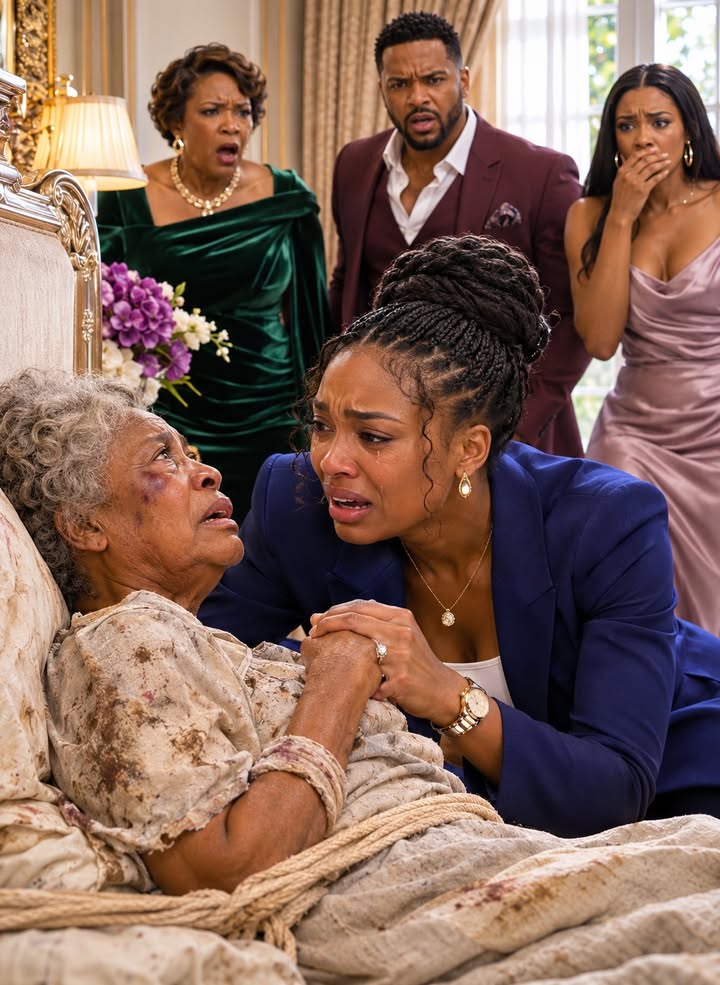
The first police car turned into our driveway, and Mom’s breath caught as she stared at the date printed on the insurance policy.
“Mom,” I whispered, leaning close enough to hear her over the siren, “what does that date mean?”
Her fingers pressed into my wrist.
“It’s your father’s anniversary,” she said. “The day he died.”
For a moment, the room seemed to tilt around me.
My father had been gone for twelve years, and the date still lived in our family like a quiet, unspoken guest.
Mark knew it was painful for me.
He knew I always took the day off, even when I was overseas, and called Mom before the sun went down.
But the policy’s effective date was two days away.
The anniversary.
“He knew,” Mom murmured. “He knew what that day meant to you.”
Before I could ask how she knew, footsteps thudded in the hallway and a woman’s voice called out, calm but firm.
“Fort Myers Police Department. Everyone stay where you are.”
I lifted my phone, still recording, and called back that I was in the upstairs bedroom with my mother and that she needed medical help.
The officers came in carefully, one at a time, their voices measured as they took in the dresser, the stained mattress, and the strips of cloth around Mom’s waist.
One of them knelt beside us.
“Ma’am, I’m Officer Patel. We’re going to get you help. Can you tell me your name?”
“Rosa Morales,” Mom whispered.
“Do you know where you are?”
“My daughter’s house.”
I swallowed at the word daughter’s, though the house had never felt less like mine.
The officer looked at me.
“Are you Elena?”
“Yes.”
“We’ll need to speak with you, but first the paramedics are on their way.”
Behind him, another officer asked Mark to step into the hallway.
Mark looked at me as though he expected me to rescue him with a sentence, as though the years we had shared could still be placed between him and what was in that room.
“I didn’t want this to happen,” he said.
I wanted to ask what he had wanted, exactly.
Instead, I kept one hand on Mom’s shoulder and watched him leave with the officer.
Brenda appeared behind them, her face composed in a way that made the pendant at her throat seem even brighter.
The officer asked her to come downstairs and wait.
Heather was already there, standing beside the living-room sofa with her arms wrapped around herself.
“The money isn’t in her bag,” she repeated, quieter now, as if she had only just understood what the words sounded like.
A second officer asked her what money she meant.
Heather glanced at Mark, who had stopped at the top of the stairs.
“I don’t know,” she said. “I mean, I thought—”
“Please wait downstairs,” the officer told her.
For a few seconds, Mark’s eyes met mine over the officers’ shoulders.
There was fear in them, but also something I could not name, something too tangled to call remorse.
Then the officers guided him away.
I turned back to Mom.
“Don’t try to move,” I said. “The paramedics are coming.”
“I’m all right.”
“You are not all right.”
“I know,” she said, and the smallest, saddest smile crossed her face. “But I’m glad you’re here.”
The paramedics arrived with a stretcher and equipment, speaking gently as they checked her pulse and asked about pain.
Mom answered what she could, then fell quiet when they began examining her legs and arms.
I stayed beside her, telling her where I was each time the paramedics shifted her, because she kept reaching for my hand.
“Stay with me,” she whispered.
“I’m not going anywhere.”
The words came out with a certainty I had not felt in months.
At the hospital, the hours passed beneath bright lights and the muted sounds of rolling carts and closing doors.
A doctor explained that Mom was dehydrated and had several untreated injuries, including painful bruising and a wound that needed care.
They were concerned, but they expected her to recover with treatment and rehabilitation.
I listened closely, asking questions until the doctor assured me she was stable.
Only then did I realize how tightly I had been holding my shoulders.
A nurse brought Mom a cup of water.
I watched her drink small sips, one at a time, and felt shame rise in me for every photograph I had accepted as proof that she was safe.
Mom saw my face.
“Don’t,” she said.
“Don’t what?”
“Turn this into a reason to blame yourself.”
“I should have come home sooner.”
“You trusted your husband to help me.”
“I should have known something was wrong.”
“You knew something was wrong,” she said. “That’s why you came.”
I looked down at our joined hands.
“I let him tell me you were confused.”
“You wanted to believe he was telling the truth.”
It was not absolution, and I did not deserve it as easily as I wanted to.
Still, her voice held no accusation.
She had spent years making room for my mistakes, and I hated that she had needed to do it again.
A nurse returned to ask Mom whether she had taken any medication that day.
Mom said she could not remember.
Then she turned her head toward me.
“They kept bringing me things,” she said. “I didn’t know what was in them.”
“Did you drink any?”
“Sometimes. I stopped when I could.”
Her earlier warning came back with a force that made my stomach tighten.
“Don’t drink anything they give you.”
I had thought she meant the people downstairs, perhaps something offered in a glass.
Now I wondered whether the warning had been about medication, too.
The doctor took the concern seriously and said the hospital would review every prescription and monitor her closely.
I thanked him, then stood beside Mom’s bed while the nurse checked her chart.
When the room was quiet again, I asked about the papers beneath the mattress.
Mom’s eyes moved toward the door.
“Not here,” she said.
“Are you afraid someone will hear?”
“I’m afraid I’ll say it wrong.”
“You can tell me anything.”
She studied my face.
“I know,” she said. “That’s what I was afraid of.”
The answer hurt more than I expected.
A knock came at the door, and Clara Benitez stepped in, still wearing the navy jacket she had worn on the phone call that morning.
Her expression softened when she saw Mom.
“Rosa, I’m glad you’re safe.”
Mom reached for her hand.
“I’m sorry I didn’t call sooner.”
“You did what you could,” Clara said. “That’s enough for tonight.”
Clara had helped me plan my return, quietly reviewing the documents I had described and telling me not to confront anyone before I was home.
Now she looked at the folder the officers had brought from the house.
“Did they find the policy?” she asked.
“They did,” I said. “It names Mark as the beneficiary, and the effective date is my father’s anniversary.”
Clara’s gaze sharpened.
“Did you sign an application?”
“No.”
“Did you authorize anyone to sign for you?”
“No.”
She set the folder on the chair and looked through the documents without touching them more than necessary.
The power of attorney was a photocopy, but the signature resembled mine closely enough that I understood why someone might accept it at a glance.
Clara compared it with my driver’s license.
“It’s a serious warning sign,” she said. “The insurance application and this document should be preserved exactly as they are. Let the investigators handle the originals.”
“Can they stop the policy?”
“The authorities can contact the insurer and request that it be frozen while the circumstances are investigated.”
“Will they?”
“They will now that you’ve reported the suspected forgery.”
I looked at the papers through the folder’s clear sleeve.
The date seemed so ordinary on the page, just numbers printed beside a legal phrase.
Two days from now.
A date I had spent years trying to approach gently.
“Why choose that day?” I asked.
Clara’s voice stayed careful.
“I don’t know yet.”
Mom turned toward the window.
Clara noticed the movement but did not press her.
“Rosa,” she said, “you don’t have to explain everything tonight. You need rest and medical care.”
“I’ve rested enough.”
“Not the kind you mean,” Clara replied softly.
Mom’s lips tightened, and for a moment I saw the stubborn woman who had raised me through my father’s illness and death, the woman who had insisted she could manage the stairs alone long after her hip had healed.
Then she looked at me.
“I kept the records.”
“The receipts?”
“And the statements. I knew you were sending money. I knew how much.”
“Why didn’t you tell me something was missing?”
“Because I couldn’t prove where it went.”
Clara pulled a chair closer to the bed.
“What did you notice?”
Mom took a careful breath.
“At first, the caregiver stopped coming as often. Mark said she had family problems and that Brenda would help instead. Then the physical therapy appointments became less frequent.”
I remembered sending money for those visits, then receiving brief messages that Mom was too tired for calls.
“What happened to the money?” I asked.
“I didn’t know. I only knew what I was paying for wasn’t happening.”
“Why didn’t you call me?”
“I tried.”
My throat tightened.
“The voice message?”
She nodded.
“I left more than one. Some disappeared. I didn’t know whether the phone was broken or someone had erased them.”
“Did you say, ‘Don’t sign anything’?”
Mom glanced at Clara before answering.
“I said that because someone brought me papers.”
“What papers?”
“I wasn’t sure. A release, maybe. They said it would make things easier while you were away.”
“Who brought them?”
“I thought it was Brenda. I was tired, and she talked quickly. She said you had already agreed.”
I remembered the message vanishing from my phone, the crash before Mom’s whisper, the way Mark had dismissed my worry.
“Did you sign?”
“No.”
Her answer came without hesitation.
Clara looked at the power of attorney in the folder.
“Did anyone tell you what this document was?”
Mom stared at the page.
“I saw my name once. I asked why. They said it was for the hospital.”
“That document gives someone authority to act on your behalf,” Clara said. “It isn’t a simple medical release.”
“I knew it felt wrong.”
“Did you tell Mark?”
“I asked him what it was.”
“And what did he say?”
“He said I was confused.”
Mom closed her eyes.
I sat down hard in the chair beside her bed.
There it was again: the same word Mark had used when I questioned him from Doha.
Confused.
A word that could make a person doubt her memory, her judgment, even the right to ask.
Clara placed a hand on the folder.
“Rosa, you did the right thing by keeping copies.”
Mom opened her eyes.
“I started saving the receipts because I knew Elena would ask me what happened to the money one day.”
“Why didn’t you put them somewhere safer?”
“I did,” she said. “Under the mattress. I thought no one would look there.”
The answer might have been funny in another life.
Instead, I covered her hand with mine.
“I’m sorry you were alone.”
“I wasn’t alone,” she said, though she looked away. “I had the papers.”
I thought of every transfer I had made from my small room in Doha, believing the money was becoming medication, therapy, and comfort.
I had sent it with love, but love had not been enough to protect her.
Clara explained that the police would want a full statement once Mom was rested and able to speak comfortably.
She reminded me not to contact Mark or Brenda about the investigation.
Then she asked whether I had made copies of the photographs and recordings from my phone.
“Yes,” I said. “My camera captured the upstairs hall and the bedroom.”
“That may help establish what you found, but leave the original file untouched.”
“I will.”
As Clara left, she paused at the door.
“I’ll stay available tonight,” she told me. “And Elena, the policy date may matter, but don’t assume you understand its meaning yet.”
“I don’t,” I said.
Mom watched Clara go.
“She’s careful,” she murmured.
“She’s good at her job.”
“She was your father’s lawyer once.”
I had known that, though only vaguely.
Clara had helped Mom sort paperwork after his death, back when I was young enough to sit on the kitchen floor and draw while adults spoke in low voices.
The memory came back in pieces: the smell of coffee, my father’s old briefcase on the table, Mom holding a stack of envelopes she could barely look at.
“Did she handle the insurance?” I asked.
Mom hesitated.
“Some of it.”
“What does that have to do with the policy Mark made?”
“Nothing,” she said quickly. Then, after a pause, “At least, not the way he wants you to think.”
I leaned closer.
“What does that mean?”
Mom shook her head.
“I’m tired.”
I wanted to insist, but the doctor had warned us both that she needed to rest.
So I stayed beside her and let the question remain between us.
Later, an officer returned to take my statement.
He asked when I had arrived, who had been in the house, and what I had seen upstairs.
I told him about the dresser, the cloth strips, the mattress, the food, and the papers beneath it.
I described the insurance policy and the forged signature.
I told him about Mom’s vanished voice message and the recordings on my phone.
The officer listened without interrupting, occasionally writing something down.
“Did your husband know you were coming home?” he asked.
“No.”
“Did you see him touch your mother or threaten her?”
“No.”
“Did you hear anyone say what they planned to do with the policy?”
“No.”
I kept my answers exact.
The absence of a threat did not make the papers less real, and the papers did not tell me everything about the people who had made them.
When the officer finished, he said the investigation would continue and that the policy information would be sent to the appropriate authorities.
I asked whether Mark had been arrested.
“He’s being questioned,” he said. “No decisions have been made.”
I nodded, though the word questioned felt too small for what had happened.
By then, the house seemed impossibly far away, as if I had left it in another version of my life.
I returned to Mom’s bedside.
She was awake, staring at the water cup on her table.
“Would you like another sip?” I asked.
She looked at me for a long moment before nodding.
I picked up the cup, checked that it was the one the nurse had brought, and held it while she drank.
“Thank you,” she whispered.
“I’ll always make sure you know what you’re drinking.”
Her eyes shone.
“I didn’t want you to come home to this.”
“I know.”
“I wanted to protect you.”
The words carried a meaning I couldn’t yet reach.
“From Mark?”
She did not answer.
“Mom, you don’t have to protect me from the truth.”
“I know that now.”
She looked toward the folder Clara had left behind, where the date on the policy lay hidden beneath paper.
“Your father chose that day for a reason,” she said.
“Which reason?”
“He thought you would remember him.”
“I do.”
“No,” she whispered. “You remember losing him. That isn’t the same thing.”
I felt the floor of the room shift beneath that distinction.
Before I could ask her to explain, the nurse came in to check Mom’s vitals.
Mom let her examine her and answered the questions, but her eyes remained on mine.
When the nurse left, I tried again.
“What did Dad do?”
Mom’s fingers curled around the edge of the blanket.
“He wanted you to have something that was yours.”
“What was mine?”
Her gaze drifted toward the closed door.
“Not tonight, Elena.”
I wanted to press, but I saw the exhaustion settle into her face, and I understood that whatever she had been carrying had taken years to become speakable.
I pulled the chair closer and rested my hand beside hers.
“I’ll be here in the morning.”
“Promise?”
“I promise.”
She closed her eyes, but she kept hold of my fingers until sleep finally claimed her.
I stayed awake beneath the hospital’s soft lights, thinking of the policy, the forged signature, the missing money, and the date that had followed me from childhood into marriage.
Outside the window, the night thinned toward morning.
My phone vibrated once with a message from Clara.
The insurer had been contacted, and the policy was under review.
A second message followed.
The investigators had found another envelope among the documents from Mom’s room, one that appeared to predate Mark’s application by years.
I looked at Mom, sleeping at last, and did not wake her.
Then Clara’s final message arrived.
“It has your father’s name on it.”
I read the words again, while beside me my mother slept with one hand still wrapped around mine.
**–END OF PART 2–CLICK “NEXT” AT THE BOTTOM OF THE PAGE TO CONTINUE READING**
* * *
[NEXT: PART 3](https://puretales.idolsgift.com/blog/part-3-the-date-on-the-policy5-025)
✓ Lynn R. Adams
The first police car turned into our driveway, and Mom’s breath caught as she stared at the date printed on the insurance policy. “Mom,” I whispered, leaning close enough to hear her over the siren, …