PART 2: The Bracelet Behind the Glass13 026
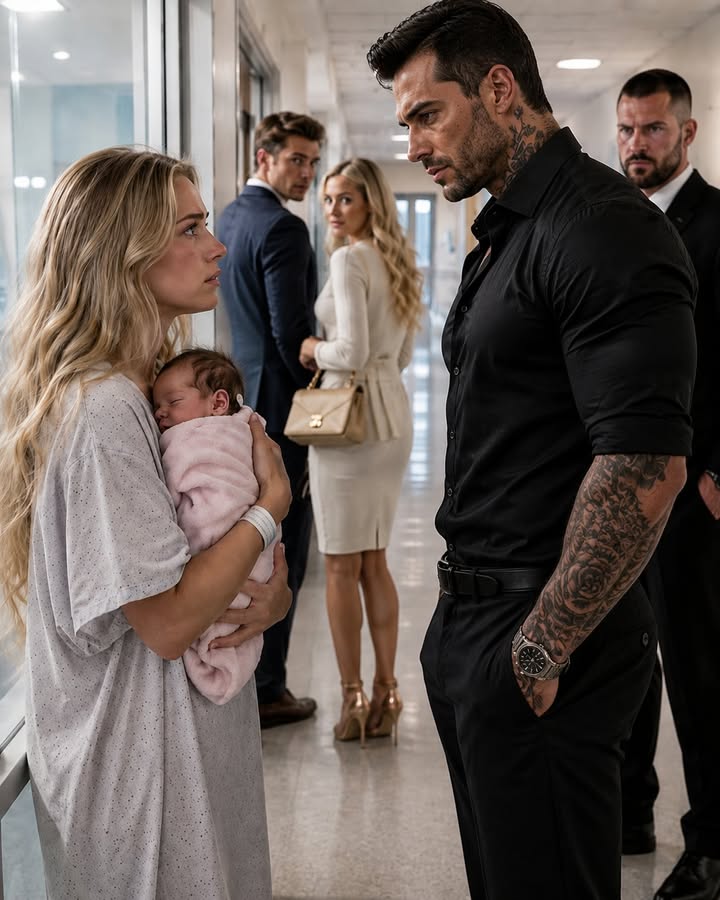
Part 2 – The Bracelet Behind the Glass
The nurse’s hands tightened around the certificate, but Luca’s pen never touched the paper.
“Wait,” I said.
My voice came out thin, yet it was enough to stop him.
Luca turned toward me, his expression changing at once.
“You’re not signing that,” I said, holding my breath against the ache in my body. “You can’t put your name beside my daughter’s.”
“I have no intention of taking anything from you,” he replied.
“Then why did you say it?”
The question hung between us, sharp with fear and exhaustion.
Luca glanced at the nurse, who looked as if she wished she could disappear behind the admissions desk.
“Because I wanted Derek to understand that your daughter would not be left without support,” he said.
“Support isn’t the same as putting your name on a legal document.”
“You’re right.”
His answer came so quickly that I had no ready reply.
He set the pen down and returned the certificate to the nurse, who accepted it with a visible breath of relief.
“I won’t sign anything,” Luca said. “And I won’t make decisions for you.”
The bodyguard behind him shifted his weight, but Luca raised one hand, and the man remained where he was.
“I’m not asking you to trust me,” Luca continued. “I’m asking you to let me explain why I’m here.”
I folded my arms over the hospital gown, though the movement tugged at my sore abdomen.
“Explain from there.”
A nurse hurried from the corridor carrying a small paper cup and a chart, slowing when she saw Luca.
“Mr. Moretti,” she said carefully. “The administrator asked me to let you know that the private room is ready.”
My eyes moved from her to him.
“You arranged a room?”
“The hospital administrator called me after Derek left,” Luca said. “She was concerned you might be pressured while you were still recovering.”
“You know the administrator?”
“Our families have known the hospital for years.”
The answer sounded polished, the sort of thing people said when they did not want to give the whole truth.
“Because your family gives money to it?”
“Among other reasons.”
I heard the quiet assurance in his voice, and for the first time I understood why the nurses had looked so uneasy when he entered the hallway.
Luca Moretti was not merely a stranger who had wandered into a maternity ward.
He was someone whose presence carried weight.
“That doesn’t mean you get to decide what happens to me,” I said.
“No,” he answered. “It means I can ask them to give you a room where you won’t have to share a wall with a crowded hallway.”
I looked toward the nursery, where my daughter slept beneath her pink blanket.
The idea of a private room sounded wonderful.
The idea of accepting anything from him felt dangerous.
“I don’t need a favor that comes with a price.”
“It doesn’t.”
“People who have money often say that.”
A faint crease appeared between his eyebrows.
“You’re right to be cautious.”
He did not sound offended, which unsettled me more than anger might have.
“I will not speak to Derek for you, contact his lawyers, or place my name on any document,” he said. “If he returns, the hospital can ask him to wait until you choose to see him. That is all.”
I searched his face for the hidden bargain.
“What do you get out of this?”
For a moment, something passed through his expression that looked almost like pain.
“An opportunity to do something I should have done a long time ago.”
“That isn’t an answer.”
“No,” he said softly. “It isn’t.”
A nurse approached from the far end of the hall.
“Emma, your doctor would like you back in bed, especially if you’re feeling unsteady.”
I had not realized how tightly I was gripping the windowsill until my fingers began to ache.
“I’m fine.”
“You’ve had a long day,” the nurse said, with the practiced kindness of someone who knew that “fine” often meant the opposite.
Luca stepped aside to make room for her.
He did not offer his arm or try to guide me, and I was grateful for that.
The nurse helped me back toward my room while Luca followed several paces behind, keeping a respectful distance.
My legs trembled by the time I reached the bed.
Pain pulsed low in my abdomen, and I let the nurse help me settle against the pillows.
The little girl in the bassinet stirred, then made a small, breathy sound that seemed to come from somewhere deep inside her.
I reached for her before I thought about anything else.
“Can I hold her?” I asked.
The nurse lifted my daughter with gentle hands and placed her against my chest.
Her warmth eased something in me that had felt clenched since Derek first said the word test.
She opened her mouth against my gown, searching, then tucked her face beneath my chin.
“There you are,” I whispered. “I’m still here.”
When I looked up, Luca stood near the doorway.
He had taken off his jacket, and without it he seemed less like the man who had silenced the corridor and more like someone who had been carrying a weight for too long.
“Would you like me to leave?” he asked.
“Yes,” I said.
He inclined his head.
“Of course.”
He turned to go.
“Wait.”
The word surprised both of us.
I held my daughter closer, careful not to press her against my sore body.
“You can explain,” I said. “But you stay there.”
Luca returned to the chair beside the door rather than taking the one near my bed.
“My sister’s name was Sofia,” he began.
The name moved through me without finding a place to land.
“I’m sorry,” I said, uncertain what else to offer.
“She died two years ago.”
“I’m sorry,” I repeated, and meant it this time.
He lowered his eyes to his hands.
“For a long time, I thought I understood the kind of person she was,” he said. “She was generous, stubborn, and too willing to help people who had no way to repay her.”
“Those sound like good things.”
“They were, though she would have found them embarrassing to hear.”
His almost-smile faded quickly.
“Not long before she died, she told me about a woman who helped her when she had nowhere safe to go.”
I watched his face, but it gave me little to read.
“Sofia had left an abusive partner,” he continued. “She had been frightened and ashamed. She wouldn’t tell our family where she was staying, because she thought we would make decisions for her.”
The words stirred an old memory, faint and far away.
A narrow office with a kettle that never quite boiled.
A woman sitting near the exit, her hands tucked into the sleeves of a worn sweater.
A small shelter room painted a soft, tired yellow.
I blinked, and the memory slipped from reach.
“I’m sorry she went through that,” I said.
“She found help from someone at a women’s shelter,” Luca said. “She told me the woman had made her feel safe without making her feel weak.”
I looked down at my daughter’s dark hair.
“That could describe a lot of people.”
“It could.”
“Do you know who this woman was?”
“No.”
“Then how did you know I was the person she meant?”
“I didn’t,” he said. “Not until today.”
“Today?”
“The administrator told me your name when she called about Derek.”
My skin prickled.
“You came because you saw my name on the paperwork?”
“I came because the administrator told me you were alone, recovering from childbirth, and dealing with a man who was refusing to acknowledge the baby.”
“And my name made you think I might be the woman who helped your sister.”
“It made me wonder.”
“That’s a strange reason to walk into a hospital and start talking about signing a birth certificate.”
“I know.”
His answer carried no defense, only regret.
I wanted to believe that mattered.
I also knew belief did not make a person safe.
“What exactly did Sofia say about the woman?”
“She said she had brown hair, a quiet voice, and a habit of keeping the shelter’s front desk tidy even when the rest of the place was falling apart.”
The memory returned more clearly.
A woman with a loose brown braid, sitting at the corner of a table and making neat stacks of donated towels.
I remembered offering her tea.
I remembered she had declined it, then accepted it when I brought it anyway.
I remembered a silver bracelet with a tiny blue stone slipping down her wrist as she held the cup.
My throat tightened.
“I volunteered at a shelter years ago,” I said.
Luca leaned forward, then caught himself and stayed seated.
“Do you remember Sofia?”
“I remember a lot of people from those shifts, but not everyone’s name.”
“I understand.”
“Did she have dark hair?”
“Yes.”
“Was she wearing a silver bracelet with a small blue stone?”
His face changed.
The grief that had been quiet in him seemed to rise all at once, though he kept his voice steady.
“She wore it every day.”
I closed my eyes.
The woman from the shelter came back to me in fragments: the silver bracelet, a nervous glance at the street-facing windows, the way she had flinched when a car slowed outside.
I had not known her name.
I had not known where she went after she left the shelter.
I had not known she had a brother who might one day sit beside a hospital-room door and tell me he had been searching for the kindness she remembered.
“I think I met her,” I whispered.
Luca did not move.
“Can you tell me anything else?”
“I don’t know how much I remember.”
“You don’t have to force it.”
The answer was gentle, and the kindness of it made my eyes sting.
I looked down at my daughter, who had settled against me with one tiny hand curled near her cheek.
“My shifts were mostly evenings,” I said. “I helped with meals, kept the donation room organized, and sat with women who didn’t want to be alone.”
“That sounds like what Sofia described.”
“There was one woman who came in during a cold week. She barely spoke. She sat near the door, like she needed to be able to leave quickly.”
Luca’s fingers closed around one another.
“I remember bringing her a blanket,” I said. “She didn’t want to take it at first.”
“She hated feeling indebted.”
“She said she didn’t want anyone thinking she owed them something.”
“That sounds like her.”
The two of us sat quietly while the hospital sounds went on around us.
A cart rattled past the open doorway.
Somewhere down the hall, a baby began to cry and was answered by a lullaby sung in a low, tired voice.
I felt a strange sadness growing inside me, not only for Luca and his sister but for the younger version of myself who had helped someone and then never learned what happened.
I had been twenty-three, working part time and studying, certain I could make a difference if I stayed kind enough.
Then I had left the shelter when my schedule changed.
I had imagined the women there moving forward into safer lives.
I had never asked myself what happened afterward.
“Did she ever tell you what became of her?” I asked.
“She said she found a way to begin again.”
“That sounds hopeful.”
“It was.” He paused. “She told me she had one person she wanted me to thank if our paths ever crossed.”
My breath caught.
“You think that was me?”
“I think it might have been.”
“But you don’t know.”
“No.”
“Then we shouldn’t pretend we know more than we do.”
“I agree.”
His willingness to leave the question unanswered made the room feel a little less crowded.
I shifted my daughter higher against my chest and winced.
The nurse appeared at once, checking my position and asking if I needed medication.
“I’m all right,” I told her.
She gave me a look that said she was unconvinced, then adjusted the pillow behind my back.
“Your doctor said you should rest as much as possible.”
“I’ll try.”
The nurse glanced toward Luca.
“Mr. Moretti, the private room is ready whenever Emma wants to move.”
“Thank you,” he said. “She’ll decide.”
The nurse nodded.
I looked around the room I had shared with another new mother until she was discharged that morning.
A curtain separated us from the empty bed, and the corridor noise reached us through the half-open door.
A private room would let me sleep without listening for every footstep outside.
It would also mean accepting something Luca had arranged.
“Would I owe the hospital anything?” I asked.
“No,” the nurse said. “The administrator approved it as a patient-care transfer.”
I turned to Luca.
“You didn’t pay for it?”
“I asked them to make space. The hospital made the decision.”
It was a distinction that mattered to me, even if I could not explain why.
“And nobody gets to come in without my permission?”
“Correct,” the nurse said. “You can choose who visits.”
I glanced at Luca again.
“Derek?”
“If he comes back, we’ll ask you before allowing him into the room,” the nurse said.
The tightness in my chest eased by a fraction.
“I’ll move.”
Luca stood but did not reach for the bassinet or try to help me up.
The nurse helped me sit at the edge of the bed while another staff member brought a wheelchair.
I hated needing it, but my legs were still weak and my body had not yet caught up with the fact that the delivery was over.
The nurse settled my daughter in the bassinet, then pushed me through the corridor.
Luca followed with my overnight bag.
As we passed the nursery window, I turned my head to look.
A row of babies slept beneath soft blankets, each one surrounded by quiet monitors and careful hands.
My daughter’s bassinet rolled just ahead of us.
For the first time since Derek had left, the future did not feel like a blank line on a form.
It felt like a long road I would have to walk one exhausted step at a time.
The private room was at the end of a quieter hall, with a wide window facing the hospital garden.
Bare branches moved in the wind outside.
There was a small armchair near the bed, a lamp with a warm shade, and enough space for the bassinet beside me.
It was not lavish, but it was peaceful.
The nurse helped me back into bed and left a call button within reach.
“I’ll be right outside if you need anything,” she said.
“Thank you.”
Luca set my overnight bag on the chair.
“Would you like me to leave now?”
“Yes,” I said, then paused. “But not because I think you’re lying.”
He waited.
“I just need a little time with her.”
“I understand.”
He moved toward the door.
“Luca?”
He stopped.
“If you did know I was the woman who helped Sofia, why didn’t you tell me before you came in?”
“I didn’t know,” he said. “I only hoped.”
“And if I hadn’t recognized the bracelet?”
“Then I would have explained what I could and left you to decide whether you wanted to hear any more.”
I studied him, searching for the certainty he seemed unwilling to claim.
“You’ve had a long time to think about what you’d say if you found that person.”
“I have.”
“What did you want to say?”
His eyes lowered to the floor.
“That she mattered to my sister.”
The words were so simple that I could not look away from him.
For a moment, I imagined the younger woman at the shelter hearing that from someone who knew her past and had kept it safe.
Then I looked at my daughter, who had begun to stir.
“I’ll think about what you told me,” I said.
“That’s enough.”
He left without asking me to promise anything.
The nurse closed the door behind him, and the quiet that followed felt almost unfamiliar.
I held my daughter and watched the winter light soften against the window.
She made a small sound, then opened her eyes.
They were unfocused and dark, but I felt as if she were studying me with a seriousness no newborn could possibly possess.
“Your father should have been here,” I whispered.
The words hurt less when I said them quietly.
“I don’t know what he’ll do, but I know what I’ll do.”
I kissed the top of her head.
“I’ll keep you safe.”
The following morning, I woke to sunlight and the soft click of the door.
Luca stood outside with a paper cup of coffee in one hand, waiting for me to acknowledge him before he entered.
The bodyguard was nowhere in sight.
“You came back,” I said.
“Only to ask whether you’d like breakfast.”
“I can order it myself.”
“I’m sure you can.”
There was no challenge in his voice.
He placed a small menu on the side table and kept his distance.
I had slept badly, waking whenever my daughter stirred and every time a cart passed in the hall.
Still, I felt more rested than I had the night before.
“Did you sleep?” he asked.
“A little.”
“That’s more than yesterday.”
I almost smiled.
“Are you always this certain you know what people need?”
“No,” he said. “I’m trying to learn when to ask.”
The answer surprised a laugh out of me, though it was small and rough around the edges.
He looked pleased, but did not comment on it.
I ordered toast and tea.
When the nurse came in with the meal, Luca moved toward the door.
“Stay,” I said. “If you want to.”
He looked at me first, as if making sure I meant it.
“I do.”
Over breakfast, he told me a little about Sofia.
She had loved old films and strong coffee, and she could never pass a flower stand without buying something for their mother.
She had been close to him, though she often disappeared into her own thoughts.
“She made people laugh when she was afraid,” he said. “I think she believed it kept them from noticing.”
“That sounds familiar.”
“Does it?”
“Some people would say I make jokes when I’m nervous.”
“What do you say?”
“That I’m very funny.”
This time, his smile stayed longer.
When breakfast was gone, I asked him about the day he had learned Sofia was talking about someone from the shelter.
“She told me after she had left the city,” he said. “She came home to visit our mother and brought a small box of letters with her.”
“Letters to whom?”
“To herself, mostly. Notes she wrote when she didn’t know what else to do.”
He looked toward the window.
“She never gave me the name of the woman from the shelter. I didn’t want to push her. I thought there would be time.”
The words settled heavily in the room.
“I’m sorry,” I said.
“So am I.”
The day stretched in small pieces.
A nurse checked my blood pressure.
The pediatrician examined my daughter and said she was healthy.
I answered questions about feeding, resting, and the paperwork Derek had left unfinished.
Each time someone mentioned the certificate, the blank line seemed to grow larger in my mind.
Luca did not offer to fill it.
He did not say Derek was useless or that he could solve everything with a phone call.
He simply stayed when I asked him to and left when I needed quiet.
That afternoon, the administrator came by to confirm the room arrangement and explain that no outside party would receive information about my location without my permission.
“You asked them to do that?” I said once she had gone.
“I asked them to protect your privacy,” Luca replied.
“Why?”
“Because you were not in a position to make a decision about visitors when I first arrived.”
“You don’t even know me.”
“No,” he said. “But I know what it is to watch someone you love get cornered when they’re already hurting.”
I thought of Derek’s hand on Brittany’s shoulder, guiding her behind him as if my anger were the danger.
“What happens when he comes back?”
“That depends on what you want.”
“And if I don’t know?”
“Then you don’t have to decide this minute.”
His calm did not make my choices disappear.
It only gave me room to feel them.
Later, when the nurse came to take my daughter for a routine check, I asked Luca to wait in the room.
“I’d like you to tell me more about Sofia,” I said.
He sat in the chair beside the window.
“What do you want to know?”
“What she was like after she left the shelter.”
His face grew still, and I wondered if I had asked too much.
“She was never completely free of the fear,” he said. “But she learned to make a life that belonged to her. She worked. She traveled a little. She called our mother more often.”
“I’m glad.”
“So am I.”
“Was she happy?”
“I think she was learning how.”
The nurse returned with my daughter, and I took her back against my chest.
Her fingers opened and closed against my gown.
Luca watched her, but his gaze held no claim.
Only tenderness, and a grief that seemed to belong to a different child, one I had never known.
The thought made me uneasy.
“Is there something else you haven’t told me?” I asked.
He looked directly at me.
“Not about why I came here.”
“Then what?”
“I brought something with me that might help you remember.”
He had been carrying a flat envelope beneath his jacket, though I had not noticed it until then.
He placed it on the chair between us without coming closer.
“You don’t have to look at it,” he said.
I studied the envelope.
“What is it?”
“A photograph Sofia kept in the box with her letters.”
My pulse quickened.
“Why didn’t you show me earlier?”
“Because I didn’t want to turn her memory into proof you owed me something.”
I considered the words, then reached for the envelope.
My hand shook slightly as I opened it.
Inside was a small photograph, the edges worn and soft from being handled.
A young woman stood near a shelter doorway, one shoulder turned toward the camera, dark hair falling across her cheek.
A silver bracelet circled her wrist.
The tiny blue stone caught the light.
I knew the face.
Not perfectly, not as a friend knows someone after years, but as a person recognizes a moment that shaped her without her understanding it at the time.
“She came back,” I whispered.
Luca leaned forward but did not reach for the photograph.
“What do you mean?”
“She came back to the shelter once. Not long after she left.”
I rubbed my thumb along the photograph’s worn edge.
“I remember the bracelet. She stood by the front desk and thanked me for sitting with her the night she arrived.”
Luca’s expression softened, and something in him seemed to break open without making a sound.
“She thanked you?”
“She said she wanted me to know she was going somewhere safe.”
He closed his eyes for a brief moment.
“She never told me that.”
“I didn’t know her name. I didn’t know who she was outside that room.”
“You gave her a place to breathe.”
“I gave her tea and a blanket.”
“Sometimes that is the same thing.”
The photograph trembled between my fingers.
I could see the woman at the shelter again, holding a paper cup with both hands while the blue stone glimmered at her wrist.
She had looked frightened, but not defeated.
I had hoped she would find a life beyond that fear.
Now I knew she had.
And I knew she had remembered me.
“Why did you bring the photograph to the hospital?” I asked.
“Because I wanted to be certain I was asking the right person,” Luca said. “But I didn’t know if you would remember her.”
“I almost didn’t.”
He nodded.
For a while, neither of us spoke.
My daughter slept against me, warm and impossibly small.
The photograph rested in my lap, its corners bent from a journey through years of grief and memory.
I had thought Luca came to the hospital to take over a place Derek had abandoned.
Instead, he had come carrying the last trace of someone I once helped and never expected to see again.
It did not mean I trusted him completely.
It did mean I no longer wanted him to leave.
“Could I see the letters someday?” I asked.
“Yes,” he said. “Whenever you’re ready.”
“I might not be ready soon.”
“I can wait.”
I looked again at the photograph.
“Was Sofia wearing this bracelet when she died?”
“Yes.”
“Do you still have it?”
He hesitated.
“I kept it with her letters.”
The baby shifted in my arms, and I adjusted her blanket.
Luca’s eyes followed the movement with a tenderness that seemed almost painful.
“Would you like to hold her?” I asked.
He looked surprised.
“Only if you’re comfortable.”
“I am.”
I placed my daughter carefully into his arms, supporting her head as the nurse had shown me.
Luca held her with both hands, still and attentive, as though he understood the privilege of being trusted with something so small.
She made a tiny sound and settled against his chest.
For a few seconds, he stared down at her with a tenderness that seemed to belong to the memory of his sister and the child he had once hoped to protect.
Then his phone vibrated.
He glanced at the screen, and the softness in his face vanished.
“Do you need to answer?” I asked.
“No.”
The phone vibrated again.
He set it face down on the table.
“What is it?”
“Nothing you need to worry about.”
I held his gaze.
“Please don’t do that.”
“Do what?”
“Decide what I’m allowed to worry about.”
He seemed to take the correction seriously.
“It was a message from the hospital administrator,” he said. “Derek has called the desk.”
My body stiffened.
“What did he say?”
“He asked whether you were still on the maternity floor.”
“And?”
“They told him they could not give him your room number without your permission.”
I let out a breath.
“Did he ask to see me?”
“He said he was coming back with paperwork.”
My heart began to beat harder.
“What paperwork?”
“I don’t know.”
“Could be the DNA test forms,” I said. “Could be a lawyer’s letter.”
“It could be.”
“You’re not going to stop him from coming here.”
“No,” Luca said. “I’m not.”
The answer steadied me more than a promise to keep Derek away would have.
“But you can decide whether to see him,” he continued. “The staff will respect
**–END OF PART 2–CLICK “NEXT” AT THE BOTTOM OF THE PAGE TO CONTINUE READING**
* * *
[NEXT: PART 3](https://puretales.idolsgift.com/blog/part-3-the-bracelet-behind-the-glass13-026)
✓ Lynn R. Adams
Part 2 – The Bracelet Behind the Glass The nurse’s hands tightened around the certificate, but Luca’s pen never touched the paper. “Wait,” I said. My voice came out thin, yet it was enough to stop …