PART 2: The Boy Who Came Yesterday 041
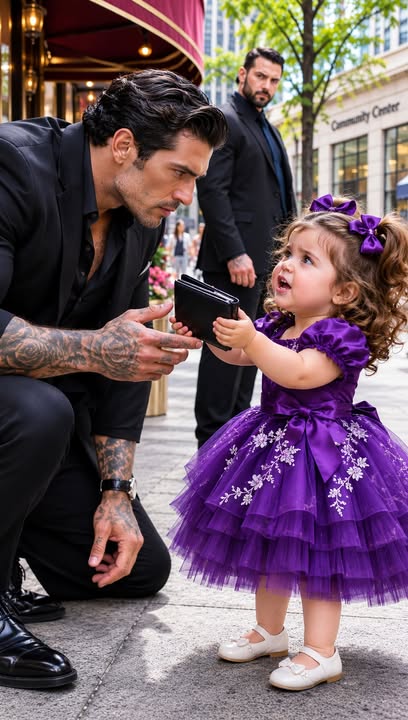
Part 2 – The Boy Who Came Yesterday
“Why did that boy come here yesterday?”
For a moment, the question seemed to take every sound out of the room.
Vincent kept the photograph lifted between his fingers, careful not to crease its old, softened edges.
The boy beside Maria had dark hair, a solemn little mouth, and one hand tucked into hers.
He wore a sweater Vincent remembered owning, though the memory was blurred at the edges, like a picture seen through rain.
The volunteer’s face had gone pale.
“Lily,” she said gently, “where did you hear that?”
The little girl glanced between them, suddenly uncertain.
“I saw him,” she whispered.
Vincent lowered himself until he was level with her.
“Where, sweetheart?”
She pointed toward the front windows, where the afternoon light lay in bright squares across the floor.
“By the books.”
“You saw a boy here yesterday?”
Lily nodded, her curls bouncing.
“He had quiet eyes.”
Vincent’s throat tightened.
“What did he say?”
“He didn’t say lots.” Lily considered this, searching for the right words. “He looked at the picture. Then he went outside.”
The volunteer reached for the photograph, but Vincent held it a little closer to himself.
“Do you remember his name?” he asked.
Lily shook her head.
“He was tall like you, but little.”
Marco had moved nearer, not close enough to crowd them, but close enough that Vincent could feel his attention sharpening.
“Boss,” he murmured, “we should find out who’s been coming in.”
The volunteer’s chin lifted.
“This is a community center, Mr. Moretti.”
“I know.”
“Then you know people come and go.”
There was a quiet firmness in her voice, and Vincent recognized the kind of courage that had nothing to do with muscle or fear.
He looked from her to the children at the tables.
A few had stopped reading.
He lowered his voice.
“I’m not asking you to turn anyone away.”
“Good,” she replied. “Because I wouldn’t.”
Lily’s small hand found the edge of Vincent’s sleeve.
“Don’t be mad at the boy.”
“I’m not mad.”
She studied his face with the solemn concentration of someone twice her age.
“Your eyes look mad.”
Vincent almost corrected her.
Instead, he let the silence settle between them.
The volunteer gave Lily a fond, apologetic smile, then turned back to Vincent.
“My name is Mrs. Alvarez,” she said. “I knew your mother.”
“You said that.”
“I mean I knew her well enough to remember what she was like when no one was watching.”
Vincent glanced down at the photograph again.
His mother’s smile seemed brighter in it than he remembered, though perhaps that was only because it had been so long since he had seen her looking anywhere but at him.
“What was she like?”
Mrs. Alvarez’s expression softened.
“She listened.”
The answer was so simple that Vincent almost looked away.
“She listened to the children, even when they took ten minutes to tell a story that needed one,” Mrs. Alvarez continued. “She remembered who was afraid of dogs, who had a new baby at home, and who needed help sounding out a word but didn’t want anyone to notice.”
Vincent thought of the woman he remembered, elegant and careful, moving through rooms filled with adults who measured every sentence.
He remembered her kneeling beside him on a rug, opening books with worn covers and changing her voice for each character.
He remembered that she would close the bedroom door when his father’s visitors arrived.
But he could not remember her bringing him here.
“Was I with her?” he asked.
Mrs. Alvarez met his eyes.
“Yes.”
The answer struck more deeply than he expected.
“How old?”
“Very young. Four, perhaps. Maybe a little older.”
“That can’t be right.”
“I know what the family said afterward,” she replied, without accusation. “But I remember you.”
Vincent’s shoulders had gone rigid.
“What did the family say?”
Mrs. Alvarez hesitated, looking briefly toward the children.
“That she stopped coming here before you were old enough to remember much.”
Vincent’s grip tightened on the photograph.
“My family said she stopped coming after I was born.”
“I’m sorry.”
“Why would they say that?”
“I don’t know.”
The words were plain, but something in them suggested Mrs. Alvarez had spent years wondering the same thing.
Marco shifted his stance.
“Maybe we should speak somewhere private,” he said.
Mrs. Alvarez’s gaze flicked to him.
“There’s nothing shameful about this place.”
“I didn’t say there was.”
“You didn’t have to.”
Vincent looked at Marco.
“Wait outside.”
Marco’s expression remained composed, but concern showed in the slight crease between his brows.
“Boss, I don’t think—”
“Outside.”
After a beat, Marco nodded.
He left through the front doors, pausing only long enough to look back at Vincent.
Vincent understood the warning in that glance.
There were people who watched the Moretti name, and there were reasons the family had taught him not to trust a story that came too easily.
But no one had threatened him here.
No one had even asked him for money.
The thought unsettled him more than it should have.
Mrs. Alvarez led him to a small office off the reading room.
Lily followed, dragging her shoes softly over the floor, until the volunteer stopped at the doorway.
“Not this time, little bird,” she said kindly. “Why don’t you show the children the book you picked?”
Lily frowned.
“Dragon book?”
“Exactly.”
The girl turned toward Vincent.
“You read it later?”
“If you want me to.”
“I want you to do dragon voice.”
“I’ll see what I can do.”
She seemed to accept this, though not without studying his face one last time.
Then she trotted away, blue bows bobbing above her curls.
Mrs. Alvarez closed the office door.
The room smelled of paper, old coffee, and the lemon cleaner used on the tables.
A small desk stood beneath a window, and shelves held binders, spare craft supplies, and a jar of colored pencils.
Vincent remained standing.
Mrs. Alvarez took the photograph from him only after he offered it.
She held it with both hands, as if it were something alive.
“I haven’t seen this in years,” she said.
“You recognize the boy?”
“I recognize you.”
Vincent stared at her.
“You’re certain?”
“I remember the way you sat under that table in the reading room because you didn’t want to go home.”
He said nothing.
“You were a very quiet child,” she went on. “You didn’t cry when you scraped your knee, and you didn’t ask for anything. Your mother would tell you it was all right to be a child.”
Vincent looked toward the window.
Outside, Marco stood near the entrance, one hand at his ear as he spoke into a small device.
“I don’t remember any of that.”
“You were little.”
“I remember my mother reading to me.”
“She did that here, too.”
Mrs. Alvarez laid the photograph on the desk.
“She would sit with you on the floor and read until you fell asleep against her shoulder.”
A pressure gathered behind Vincent’s ribs.
He had spent years believing his mother’s tenderness belonged only to the private rooms of their home, a fragile kindness hidden from the world his father ruled.
The idea that she had carried that kindness here, among other children, made him feel both closer to her and farther away.
“Why didn’t anyone tell me?”
“After she died, we tried to reach your family. We sent letters. We called. We left messages with people who said they would pass them along.”
“Who?”
“I don’t remember the names anymore. I was younger, and everything was difficult then.”
Vincent’s eyes returned to the photograph.
“You said you remembered me visiting after my family says she stopped.”
“I did.”
“Can you tell me when?”
Mrs. Alvarez rubbed one thumb along the photograph’s edge.
“I can’t give you dates. I remember seasons, mostly. Your mother would bring you when the weather turned cold. You had a red scarf that was always slipping loose.”
A faint, uncertain image surfaced in Vincent’s mind.
A rough scarf against his cheek.
His mother’s hand fastening it.
A wooden shelf taller than he was.
Then the image vanished.
“Was there anyone else with her?”
“Sometimes Rosa came.”
The name meant nothing to him.
“Who was Rosa?”
“She helped your mother for a while. A kind woman, very private. She was good with the children, though she never stayed long.”
“Where is she now?”
“I don’t know. She left the neighborhood years ago.”
Vincent looked up sharply.
“Did she come yesterday?”
“Not that I know of.”
“Then who did?”
“I don’t know, Vincent.”
The way she said his name was gentle, without deference.
It made him want to believe her.
He turned toward the door.
“Do you keep records?”
“Some old sign-in sheets, though not from every year. The center moved once, and we lost boxes of paperwork.”
“Would there be anything with my name?”
“Possibly. But your mother didn’t always use your name.”
Vincent stilled.
“What does that mean?”
Mrs. Alvarez looked down at the photograph.
“Sometimes she signed the books out under another surname.”
“Which one?”
“I can’t remember. It was a long time ago.”
“That’s not a small thing to forget.”
“I know.”
Her voice tightened, and she lifted her gaze to his.
“Your mother was careful. She had her reasons.”
“Was she hiding me?”
“I don’t know.”
“From my father?”
“I don’t know that either.”
Vincent looked away.
His father had built a life where secrets were treated as ordinary tools, passed from one person to another without explanation.
Maria had seemed different from that life, though perhaps he had made her different in memory because he needed her to be.
“What did she tell you about me?”
“That you were curious.”
He gave a humorless breath.
“That doesn’t sound like me.”
“It was you, when you were here. You asked why the moon followed the car. You wanted to know if the books had to sleep when the room was closed.”
Despite himself, Vincent could almost hear the boy she described.
“Your mother laughed,” Mrs. Alvarez said. “She said you noticed everything.”
The office grew quiet.
From the reading room came the murmur of children and the turn of pages.
Vincent tried to picture himself among them, small and unsure, listening to his mother’s voice.
He found only scattered pieces.
A warm coat.
A paper cup of cocoa.
Someone’s hand holding his.
“Did she seem happy here?” he asked.
“Yes.”
“Even then?”
Mrs. Alvarez understood what he meant.
“Especially then.”
He looked at the photograph once more.
Maria stood with one arm around a girl in a striped dress, her face open and unguarded.
The boy beside her was unmistakably him.
The image didn’t explain why she had brought him under another name or why his family had said she stopped coming.
It only proved that the story he had been given was incomplete.
Mrs. Alvarez opened the desk drawer and removed a small cream-colored envelope.
“This was tucked behind the frame when we took it down for repairs,” she said. “I thought it belonged to the center. Then I recognized the handwriting.”
Vincent knew it before she handed it to him.
Maria’s handwriting had a graceful slant, every letter deliberate but never stiff.
The envelope was addressed simply: Vincent.
“You found this with the photograph?”
“Yes. I put it somewhere safe. I’m sorry I didn’t show it to you sooner.”
“Why didn’t you?”
“I didn’t know if you would come back. And I didn’t know whether I had the right to open something meant for you.”
He accepted it.
The paper had softened with age.
He slid one finger beneath the flap, then paused.
Mrs. Alvarez didn’t urge him.
“What if it tells me something I can’t change?” he asked.
“It might.”
“What if it tells me she didn’t want me to know?”
“Then you’ll know she wrote to you, at least.”
He looked down at the envelope.
The answer was not comforting, but it was honest.
Vincent opened it.
Inside was a folded sheet of paper, yellowed along the edges.
His mother’s first line read, My dear Vincent, if you are reading this, then perhaps you are old enough to understand why I brought you here.
He stopped.
The words pulled something loose inside him, a knot he had mistaken for simple grief.
He read on.
She wrote about the reading room, about a book he had chosen because it had a fox on the cover, and how he had insisted that foxes must have a library of their own.
She wrote that he had been brave, though he had not known it.
Then, halfway down the page, the sentence ended.
The ink trailed into a faint stroke, as if the pen had slipped from her hand.
There was no signature.
No second page.
Just empty paper beneath the unfinished line.
Vincent turned it over.
Nothing.
“Was this all?” he asked.
“I’m afraid so.”
“She left it here unfinished?”
“Perhaps she meant to add more.”
He stared at the open letter.
“Or perhaps she changed her mind.”
Mrs. Alvarez didn’t answer.
He carefully folded it along its old creases and returned it to the envelope.
The disappointment that followed was sharp and childish.
He had wanted the letter to open a door.
Instead, it had shown him the door and left it shut.
“Do you remember what happened to the rest of her things?”
“Your family took most of them after the funeral.”
“Did Rosa keep anything?”
Mrs. Alvarez considered this.
“Maybe. She was helping your mother with errands then, but I never knew what became of her.”
“Could you find out?”
“I could ask around. It’s been a long time.”
“Please.”
The word came out quieter than he expected.
Mrs. Alvarez nodded.
“I’ll try.”
Vincent slid the envelope into the inside pocket of his jacket.
For a moment, neither of them spoke.
Then Mrs. Alvarez said, “You don’t have to become like her to remember her.”
He looked at her.
“I didn’t say I wanted to.”
“No. But you’ve been standing in this room like someone expecting to be judged.”
His mouth tightened.
“I’m used to being judged.”
“Perhaps. But children don’t care who your father was, or what people say about your name. They care whether you sit down when they ask you to.”
He glanced toward the reading room.
Lily had climbed onto a chair beside a small boy, holding up a picture book with great authority.
“Do you know who the boy was yesterday?” he asked.
“No.”
“Could he have been a child who comes here?”
“Of course.”
“Could he have been someone connected to my mother?”
“Possibly.”
“Could he have been looking for me?”
Mrs. Alvarez held his gaze.
“Possibly.”
The answer settled between them like a small, bright flame.
Vincent left the office without asking another question.
Marco fell into step beside him as soon as he reached the hall.
“What did you learn?”
“That my mother brought me here.”
Marco’s expression shifted.
“That was never mentioned.”
“No.”
“And the boy?”
“Lily saw someone yesterday. Mrs. Alvarez doesn’t know who.”
“We can ask the staff, check the cameras, speak to the people who were here.”
Vincent looked back through the doorway.
Lily had started telling the boy beside her how the dragon in the book needed to sound.
“Not yet.”
“Boss—”
“Not yet, Marco.”
He didn’t want the boy treated like a mystery to be solved by a team of men in dark suits.
He didn’t want to turn a child’s visit into an investigation that would make everyone at the center afraid to speak.
Most of all, he didn’t want the people who had known his mother to think he had come only to take what he could from them.
“Then what do you want to do?”
“Come back.”
Marco studied him.
“To fund the program?”
“I already did that.”
“So?”
Vincent looked toward the faded photograph hanging above the shelves.
“To find out what Lily saw.”
Marco’s gaze lowered to the envelope visible beneath Vincent’s jacket.
“And the letter?”
“It stops in the middle.”
“Maybe there’s more somewhere.”
“Maybe.”
The possibility was small, but it was the first thing in years that had made Vincent want to wait rather than demand an answer immediately.
When he stepped back into the reading room, Lily spotted him.
“Vincent!”
She hurried over, one hand clutching the dragon book and the other holding a crayon drawing.
“What’s that?” he asked.
“I made the boy.”
She gave him the paper.
A child stood beneath a bright yellow sun, drawn with a circle for a head and straight lines for arms.
Beside him was a woman with long dark hair.
Lily had given them both enormous smiles.
“Is this the boy from yesterday?” Vincent asked.
“Uh-huh.”
“Did he look like this?”
“He had a blue coat.”
She added, after a moment, “He looked at the picture like he missed her.”
Vincent’s fingers curled around the drawing.
“Did he say anything else?”
Lily thought hard.
“He asked where the lady was.”
“Which lady?”
“Your mommy.”
The room seemed to tilt, though nothing had moved.
“What did Mrs. Alvarez tell him?”
“She said she was in the picture.”
“And then?”
“He said, ‘I know.’”
Lily lowered her voice as if sharing a secret with the whole room.
“Then he asked where Vincent was.”
Vincent forgot to breathe.
“Did he say my name?”
Lily nodded.
“He asked if you came here.”
“Did he say why?”
“No.”
“Did anyone answer him?”
“Mrs. Alvarez said you were grown up.”
The little girl gave his hand a solemn pat.
“Then he went away.”
Vincent looked across the room at Mrs. Alvarez.
She had heard every word.
Her face had changed.
Not with recognition, exactly, but with the troubled look of someone finding an old piece of a story in a new place.
“Lily, are you certain?” Vincent asked.
She frowned.
“I remember.”
“What did he look like?”
“Like the boy.”
She pointed at the photograph beneath the envelope, the one showing young Vincent beside Maria.
Vincent looked down at the child in the picture.
Then at the drawing in Lily’s hands.
The boy from yesterday was not merely someone who had noticed Maria’s photograph.
He had come asking for Vincent.
And Lily, with the unshakable certainty of a child who had seen what adults had missed, leaned close and whispered, “He said he’d come back.”
**–END OF PART 2–CLICK “NEXT” AT THE BOTTOM OF THE PAGE TO CONTINUE READING**
* * *
[NEXT: PART 3](https://echoesofstories.idolsgift.com/blog/part-3-the-boy-who-came-yesterday-041)
✓ Lynn R. Adams
Part 2 – The Boy Who Came Yesterday “Why did that boy come here yesterday?” For a moment, the question seemed to take every sound out of the room. Vincent kept the photograph lifted between his fin…