PART 2 finally going to say something
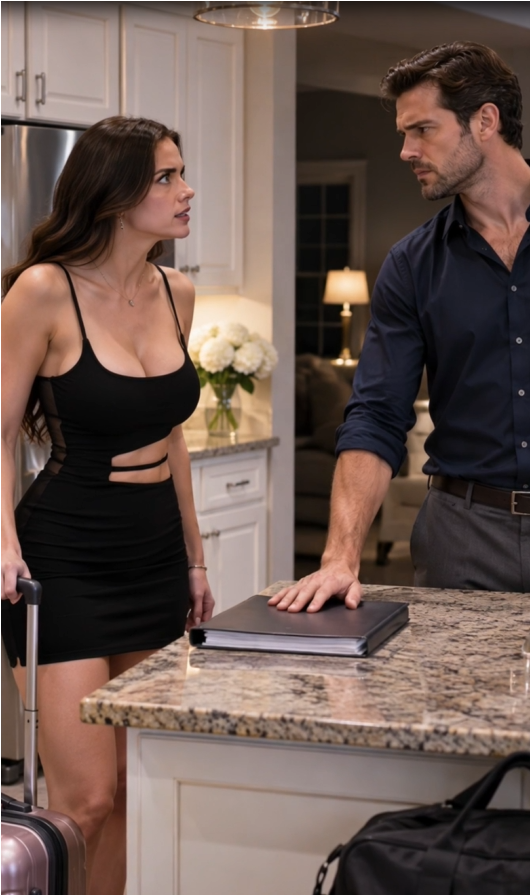
# I FLEW TO MIAMI WITH ANOTHER MAN TO MAKE MY HUSBAND JEALOUS—BUT WHEN I CAME HOME, HE HAD ALREADY PLANNED A LIFE WITHOUT ME
**”Adrian knew exactly what would happen when you came home.”**
Those were the last words my husband said before walking out of our house.
I stood in the kitchen with a thick folder in my hands, watching Nathan disappear through the front door.
Three days earlier, I had threatened to leave him.
I’d packed my prettiest dresses, flown to Miami with another man, and posted photographs designed to make my husband jealous.
I’d wanted Nathan to beg me to come home.
Instead, he’d packed his own bag.
And now, for the first time in our marriage, I was the one begging him to stay.
“Nathan, please!”
I hurried toward the door.
He was already halfway down the driveway.
“Just tell me what you mean!”
He stopped beside his car.
For one hopeful second, I thought he might turn around and come back.
Instead, he looked over his shoulder.
“Read the second page, Claire.”
Then he opened his car door.
I stood on the porch as his headlights swept across the lawn.
I had never watched Nathan drive away without knowing when he’d return.
That night, I didn’t even know whether he intended to.
Inside, the house was painfully quiet.
My rose-gold suitcase stood beside the kitchen island, exactly where I’d abandoned it.
Three days earlier, I’d dragged that suitcase out of our bedroom with a confidence that now seemed almost unbelievable.
I’d told Nathan he was about to lose me.
I’d expected him to stop me.
But he hadn’t.
And now I was staring at documents that suggested he’d spent the entire weekend deciding how to live without me.
I returned to the kitchen counter.
The first page was titled:
**NOTICE OF INTENT TO SEPARATE AND PROPOSED FINANCIAL ARRANGEMENTS**
My name appeared beneath Nathan’s.
There was a paragraph explaining that the documents were preliminary proposals, prepared for legal review, and did not constitute a finalized agreement.
I barely understood what I was reading.
Then I turned to page two.
A yellow sticky note was attached near the top.
Five words, written in Nathan’s familiar handwriting.
**Ask Adrian what he knows.**
Below it was a printed email.
The sender’s name made my stomach drop.
Adrian Cole.
And the recipient was my husband.
I sat down before I finished reading.
Because the email was dated Thursday.
The morning before I flew to Miami.
—
## THE EMAIL I WAS NEVER SUPPOSED TO SEE
Nathan,
I understand this may be uncomfortable, but Claire has made it clear that your marriage has been struggling for some time.
She believes you are emotionally unavailable and that your relationship has become more of an obligation than a marriage.
I care about her.
I’m not interested in creating unnecessary conflict, but I also don’t believe she should remain in a relationship where she feels unwanted.
She’s coming to Miami this weekend because she wants clarity.
I hope you’ll respect her decision and allow her the space to figure out what she wants.
Adrian
I read it three times.
Then I checked the date again.
Thursday, a.m.
Nathan and I had argued about Miami that evening.
Which meant Adrian had contacted my husband before I even announced the trip.
I had never given Adrian permission to email Nathan.
I’d never even told him Nathan’s work email address.
Yet there it was.
And the message made it sound as though Adrian and I had already decided my marriage was over.
My hands began trembling.
I reached for my phone.
Adrian answered on the fourth ring.
“Hey, beautiful. Miss me already?”
His easy confidence made my stomach turn.
“Did you email my husband?”
There was a pause.
“What?”
“Nathan. Did you send him an email on Thursday morning?”
Adrian exhaled.
“Claire, I can explain.”
My heart sank.
“Then explain.”
“I thought it was important for him to understand where things stood.”
“Where things stood?”
“You told me you were unhappy.”
“That doesn’t give you permission to contact my husband!”
His voice hardened.
“Lower your voice.”
I stared at the wall.
For two months, Adrian had spoken to me as though every feeling I had was fascinating.
Now, the first time I challenged him, he sounded irritated.
“I wasn’t trying to cause trouble,” he said.
“Then why didn’t you tell me?”
“Because you would’ve overreacted.”
I closed my eyes.
That sentence sounded painfully familiar.
It was the kind of thing I’d accused Nathan of saying when he dismissed my frustrations.
But Nathan rarely said anything like that.
Usually, he listened.
He just didn’t always respond in the dramatic way I wanted.
“Adrian, what exactly did you tell him?”
“What I wrote in the email.”
“Nothing else?”
Another pause.
“Claire, I think you need to decide what you actually want.”
“I want to know what you’ve been doing behind my back.”
He gave a short, humorless laugh.
“Behind your back? You came to Miami with me. You posted those pictures. Don’t suddenly pretend I forced you.”
The words hit harder because they were true.
“I never said you forced me.”
“Then stop acting like I’m the villain.”
I looked at the folder.
“Did you know Nathan was preparing separation papers?”
Silence.
“Adrian?”
“I knew he was considering it.”
My chest tightened.
“How?”
“He mentioned it.”
“When?”
“Thursday.”
I gripped the phone.
“So you contacted my husband before I left, and he told you he might separate from me?”
“Yes.”
“And you never thought I should know?”
“I didn’t want to ruin our weekend.”
I couldn’t speak.
Finally, I whispered, “You let me spend three days trying to make him jealous when you already knew he was thinking about leaving.”
Adrian sighed.
“Claire, you’re a grown woman. You made your own choices.”
Then he said something that changed the way I remembered every conversation we’d had.
“Besides, you told me your marriage was practically finished.”
I swallowed.
“I said I was unhappy.”
“You said he never paid attention to you.”
“That’s not the same thing.”
“Maybe not to you.”
I ended the call.
And for a long time, I sat at the kitchen island staring at my phone.
Because the worst part wasn’t that Adrian had lied.
The worst part was realizing how many lies I’d told myself.
—
## TWO MONTHS EARLIER
I met Adrian Cole at a marketing conference in Atlanta.
At the time, I was thirty-two years old and had been married to Nathan for almost nine years.
Nathan worked as an operations manager for a regional logistics company outside Richmond.
I worked in corporate communications for a healthcare technology firm.
We didn’t have children.
We had talked about starting a family, but we’d always agreed to wait until we felt more settled.
Looking back, I sometimes wonder whether we were actually waiting for the right time or simply avoiding a conversation neither of us knew how to have.
Our marriage wasn’t terrible.
That was the part I struggled to explain to people afterward.
Nathan wasn’t cruel.
He wasn’t unfaithful.
He didn’t drink excessively, gamble away our money, or disappear for days.
He was dependable.
Almost painfully dependable.
Every morning, he made coffee before I came downstairs.
When my car needed maintenance, he scheduled it.
When my mother had knee surgery, he took two days off work to help drive her to appointments.
He remembered birthdays, paid bills on time, and never let me carry heavy grocery bags if he was nearby.
But somewhere along the way, I stopped noticing those things.
They became background noise.
I focused instead on everything he didn’t do.
He rarely surprised me with flowers.
He wasn’t particularly romantic.
He didn’t send playful messages during the day.
And when I bought a new dress, he sometimes said, “You look nice,” without looking up from whatever email he’d been reading.
I began interpreting his quietness as indifference.
At dinner, I wanted conversation.
Nathan wanted fifteen minutes to decompress after work.
I wanted spontaneous weekend trips.
Nathan wanted to finish the repairs around our house.
I wanted him to look at me like we’d just met.
He seemed content with the life we’d built.
And instead of explaining how lonely I felt, I started keeping score.
Every forgotten compliment.
Every interrupted conversation.
Every evening he fell asleep on the couch.
By the time I arrived in Atlanta, I’d convinced myself that Nathan no longer loved me.
Adrian appeared during a networking reception on the conference’s second evening.
He was tall, charming, and dressed in an expensive charcoal suit.
He approached while I was standing alone near a table of appetizers.
“You’re Claire Bennett, right?”
I smiled.
“That depends. Am I in trouble?”
He laughed.
“Not unless giving the best presentation this morning is a crime.”
I felt myself blush.
Adrian said he’d attended my panel discussion on customer engagement.
He asked thoughtful questions.
He remembered details from my presentation.
And unlike Nathan, who had heard me talk about work for years, Adrian seemed genuinely excited by everything I said.
We talked for nearly forty minutes.
Before leaving, he asked whether I’d like to continue the conversation over coffee the next morning.
I agreed.
There was nothing inappropriate about coffee.
At least that’s what I told myself.
The next day, we sat in the hotel café talking about our careers.
Then our families.
Then our relationships.
Adrian told me he was divorced.
“No kids,” he said. “Just a marriage that taught me what I don’t want.”
“What happened?”
He smiled sadly.
“We stopped choosing each other.”
I remember how deeply that sentence affected me.
Because I immediately thought of Nathan.
Adrian noticed.
“Something familiar about that?”
I hesitated.
Then I began talking.
About the long workdays.
The quiet dinners.
The feeling that I’d become invisible.
Adrian listened without interrupting.
When I finished, he leaned forward.
“Claire, you deserve to feel wanted.”
Six simple words.
And I carried them home like a secret.
—
## THE ATTENTION I STARTED CRAVING
At first, Adrian and I exchanged occasional professional messages.
Then he began texting in the mornings.
*Hope your day is as beautiful as you are.*
*Still thinking about our conversation.*
*You have no idea how refreshing it is to meet someone like you.*
I told myself it was harmless.
But I started checking my phone before checking whether Nathan had made coffee.
I began dressing more carefully for video meetings, even on days when Adrian wasn’t attending.
When Nathan asked why I was smiling at my phone, I said it was a funny message from a coworker.
That was my first deliberate lie.
It was small.
It seemed almost insignificant.
But once I’d crossed that line, the next one became easier.
Adrian started calling during my lunch breaks.
He asked about my day.
He remembered that I liked old bookstores and lemon desserts.
He complimented my voice.
Once, when I mentioned Nathan had forgotten to ask about an important meeting, Adrian said, “A man should never get so comfortable that he forgets what he has.”
I loved hearing that.
I never told Adrian about the flowers Nathan brought home after my presentation in Atlanta.
Or how he’d listened while I practiced it three nights in a row.
Or how he’d driven forty minutes to replace my car battery when I was stranded outside a grocery store.
Those details didn’t fit the story I wanted Adrian to believe.
So I left them out.
And because Adrian only heard the worst parts of my marriage, he increasingly treated Nathan like a man who didn’t deserve me.
I encouraged it.
When Adrian called me beautiful, I compared his words to Nathan’s ordinary compliments.
When Adrian offered spontaneous weekend ideas, I compared them to Nathan’s practical plans.
When Adrian listened to my complaints, I forgot that Nathan had listened to those same complaints for years.
The difference was that Adrian didn’t have to share a mortgage, household responsibilities, or difficult decisions with me.
He got the interesting parts.
The flattering parts.
The parts I carefully selected.
Nathan got the exhausted woman who came home and expected him to read her mind.
At the time, I didn’t see the unfairness.
I only saw the excitement.
—
## THE NIGHT NATHAN ASKED ME A QUESTION I IGNORED
Three weeks before Miami, Nathan asked whether something was wrong.
We were sitting in the living room after dinner.
He’d put his laptop away.
I was scrolling through messages from Adrian.
“Claire?”
“Yeah?”
“Are we okay?”
I looked up.
“What?”
“You’ve seemed distant lately.”
I shrugged.
“Maybe I’m tired of being ignored.”
Nathan stared at me.
“Ignored?”
“Don’t act surprised.”
“I’m not acting. I’m asking.”
I set my phone down.
“Every night, you’re working. When you’re not working, you’re exhausted. I feel like we barely know each other anymore.”
He nodded slowly.
“Okay.”
That irritated me.
“That’s all you have to say?”
“No. I’m trying to understand.”
“Well, maybe you should’ve noticed sooner.”
Nathan rubbed his forehead.
“Claire, I know I’ve been working a lot. We’re short two supervisors, and I’ve been covering both shifts more often than I should.”
“There’s always an excuse.”
He looked hurt.
I noticed.
And instead of softening, I pressed harder.
“Sometimes I wonder whether you’d even care if another man paid attention to me.”
Nathan became very quiet.
“Is there another man?”
I laughed.
“That’s not what I said.”
“Then why bring it up?”
“Because I want to know whether you still care.”
He leaned forward.
“I do care.”
“Then show me.”
He sat there for several seconds.
Then he said, “I don’t want our marriage to become a competition between me and some imaginary guy.”
I remember rolling my eyes.
“Of course you don’t. That would require effort.”
Nathan looked away.
That should have been the moment I realized how cruel I was becoming.
Instead, I considered the conversation proof that he couldn’t give me what I needed.
That night, Adrian texted.
*Wish I could take you somewhere you actually felt appreciated.*
I replied almost immediately.
*So do I.*
—
## THE INVITATION TO MIAMI
Adrian first mentioned Miami during a phone call the following week.
He said he’d be there for meetings with a client.
“Why don’t you come down for the weekend?” he asked.
I laughed.
“Adrian, I’m married.”
“I know.”
“Then you understand why that would be complicated.”
He was quiet for a moment.
“Claire, you’re always telling me how unhappy you are. Maybe a weekend away would help you figure out what you want.”
I should have ended the conversation.
Instead, I asked what hotel he was staying at.
He sent me pictures of the rooftop pool.
The ocean view.
The restaurant overlooking Biscayne Bay.
And suddenly, the idea of Nathan seeing me there became more exciting than the trip itself.
I imagined posting photographs.
I imagined Nathan calling.
I imagined him finally understanding that I had options.
When I told Adrian I was considering going, he replied:
*Good. Maybe this is the wake-up call your husband needs.*
I read that message repeatedly.
It sounded empowering.
Now I recognize how childish it was.
I didn’t want a divorce.
I didn’t want to build a life with Adrian.
I wanted Nathan to become frightened enough to give me exactly what I wanted.
And I was willing to hurt him to get it.
Thursday evening, I opened my suitcase on our bed.
Nathan came in while I was choosing dresses.
“Going somewhere?”
“Miami.”
He looked at the clothes.
“With who?”
“Adrian.”
He stared at me.
“The consultant from Atlanta?”
I nodded.
Nathan had heard the name before.
But he didn’t know how close Adrian and I had become.
“Are you telling me you’re taking a vacation with another man?”
“I’m telling you I’m tired of feeling invisible.”
“Those aren’t the same thing.”
I felt my anger rise.
“Adrian is already in Miami, Nathan. If you don’t care enough to stop me, maybe you really are about to lose me.”
Nathan stood near the doorway.
His face changed.
Not dramatically.
There was no shouting.
He simply looked older.
“Is that what you want?” he asked.
I wanted him to say he couldn’t live without me.
I wanted him to grab the suitcase and demand that I stay.
Instead, I said, “Maybe.”
Nathan looked down.
When he raised his eyes again, something in his expression had settled.
“I’m not going to physically stop you from leaving, Claire.”
I laughed bitterly.
“Of course not.”
He stepped aside.
And I walked past him.
I didn’t know that Adrian had already emailed him that morning.
I didn’t know Nathan had spent the afternoon talking to his older sister, Rebecca.
I didn’t know that after I left the bedroom, Nathan sat on the edge of our bed for nearly an hour.
All I knew was that he hadn’t fought for me.
And I hated him for it.
—
## THE WEEKEND THAT CHANGED EVERYTHING
Friday afternoon, I landed at Miami International Airport.
Adrian met me near baggage claim.
He looked pleased to see me.
“Wow,” he said, looking at my dress. “Nathan really let you walk out looking like that?”
I smiled.
“Apparently.”
Adrian shook his head.
“His loss.”
Those two words gave me exactly the validation I’d come looking for.
We took a rideshare to the hotel.
Adrian had his own room.
I’d booked mine separately.
I told myself those arrangements proved I wasn’t doing anything wrong.
But I knew how the photographs would look.
And that was the point.
That evening, we went to a rooftop restaurant.
The view was spectacular.
Miami glittered beneath us.
Adrian ordered expensive cocktails and complimented my black dress.
I took photographs of everything.
Then I asked him to stand beside me.
“Closer,” I said.
He put his arm around my waist.
I smiled at the camera.
A few minutes later, the picture appeared on my social media page.
I watched the reactions arrive.
Friends commented on the view.
A former coworker asked whether I was celebrating something.
My cousin sent three surprised emojis.
But Nathan said nothing.
I checked my phone throughout dinner.
Nothing.
When Adrian asked what I wanted for dessert, I barely heard him.
“You’re distracted,” he said.
“Just tired.”
He smiled.
“Stop worrying about everything back home. You’re in Miami.”
I tried.
But every time someone else’s phone rang, my heart jumped.
By midnight, I had checked Nathan’s profile six times.
He hadn’t posted anything.
He hadn’t liked my photographs.
He hadn’t even viewed my latest story, as far as I could tell.
Saturday morning, I woke up angry.
I sent Nathan a message.
*Hope you’re having a good weekend.*
It was deliberately casual.
A way of opening the door without admitting I wanted him to respond.
The message showed as delivered.
He never answered.
At lunch, Adrian noticed my mood.
“Still waiting for him?”
I stiffened.
“For who?”
He raised an eyebrow.
“Come on, Claire.”
I looked away.
He leaned back.
“You know, if you spent half as much energy enjoying yourself as you do trying to get his attention, we’d have a pretty amazing weekend.”
I laughed weakly.
But the words embarrassed me.
Because Adrian was right.
I hadn’t come to Miami to discover a new relationship.
I’d come to perform one.
Saturday evening, we sat beside the hotel pool.
Adrian reached for my hand.
I let him hold it.
Then I asked a woman sitting nearby to take a photograph.
Adrian looked at me.
“Another picture?”
“Why not?”
He didn’t answer.
The woman took the photograph.
I posted it.
Then I waited.
Nothing.
By Sunday morning, I was exhausted.
Adrian and I had breakfast in the hotel restaurant.
He was cheerful.
I barely touched my food.
“What’s wrong?” he asked.
“I think I made a mistake.”
He set down his coffee.
“Coming here?”
I hesitated.
“Maybe.”
Adrian studied me.
“Claire, you can’t keep living your life around his reactions.”
I looked at him.
It was almost funny.
Because my entire weekend had been designed around Nathan’s reactions.
And Adrian had encouraged it.
“Do you think he still loves me?” I asked.
Adrian looked uncomfortable.
“That isn’t really something I can answer.”
“But what do you think?”
He sighed.
“I think you deserve someone who chooses you.”
I nodded.
But the words no longer comforted me.
For the first time, I wondered whether Nathan had already made a choice.
And whether I’d given him every reason to make it.
—
## WHAT NATHAN DID WHILE I WAS GONE
I didn’t learn the details until weeks later.
Friday morning, after I boarded my flight, Nathan called Rebecca.
She was forty-one, married, and lived about twenty minutes from us.
Rebecca had always been kind to me.
She’d helped me plan our wedding and had spent Thanksgiving at our house almost every year.
Nathan told her what had happened.
At first, she thought he was exaggerating.
“She actually said she was going to Miami with another man?”
“Yes.”
“And she wanted you to stop her?”
“That’s what it sounded like.”
Rebecca asked whether he’d spoken to Adrian.
Nathan told her about the email.
She read it while they were on the phone.
Then she said, “Nathan, this isn’t a misunderstanding. You need to decide what you can live with.”
He admitted he still loved me.
Rebecca told him love didn’t require accepting humiliation.
That afternoon, Nathan contacted a family-law attorney.
He didn’t file for divorce.
He didn’t secretly drain our accounts.
He didn’t change the locks or try to take property that belonged to both of us.
He asked what a separation would involve.
He wanted to understand our mortgage, savings, household expenses, and the practical steps we would need to take if our marriage ended.
The attorney explained the difference between a proposed separation arrangement and a legally binding agreement.
Nathan requested a written outline.
He also gathered copies of financial records from accounts he was authorized to access.
The folder wasn’t a completed divorce.
It was evidence of something I had never seriously considered.
Nathan was preparing to protect himself.
Not punish me.
Friday evening, he packed a bag.
He planned to stay with Rebecca and her husband, David, while he figured out his next steps.
Saturday, he went through our shared calendar and upcoming bills.
He made notes about automatic payments.
He took photographs of our household inventory for future reference.
Then he printed Adrian’s email.
He placed it behind the financial proposal.
And he attached the yellow sticky note.
*Ask Adrian what he knows.*
Nathan later told me he’d included that note because he wanted to know whether Adrian had been honest with me.
He had asked Adrian not to contact him again after their Thursday exchange.
Adrian had acknowledged the request.
Nathan assumed Adrian would tell me about their correspondence.
He was wrong.
By Sunday afternoon, Nathan had decided he would not confront me about the photographs.
He’d seen enough.
He didn’t need to interrogate me about every moment in Miami.
He didn’t need a confession about what had happened behind hotel doors.
He needed space.
And he intended to take it.
When I came home Sunday night, I thought his silence meant he hadn’t cared.
In reality, it meant he’d spent the weekend making decisions I had never imagined he would make.
—
## THE FIRST NIGHT WITHOUT HIM
After Nathan left, I didn’t sleep.
I called him four times.
He didn’t answer.
I sent messages.
*Nathan, please come home.*
*We need to talk.*
*I didn’t mean for any of this to happen.*
The last message was a lie.
I had meant for something to happen.
I’d wanted to hurt him enough to get a reaction.
I just hadn’t wanted the consequences.
Around two in the morning, I walked into our bedroom.
Nathan’s side of the closet looked almost normal.
He’d taken enough clothes for several days.
His shoes were still lined up beneath the shelf.
His winter coat still hung beside mine.
I opened his bedside drawer.
His reading glasses were there.
So was the small notebook where he kept reminders.
I sat on the edge of the bed and opened it.
The first page contained ordinary things.
*Schedule furnace inspection.*
*Pick up prescription for Claire.*
*Call Mom about Sunday dinner.*
Further down, I found a note written two weeks earlier.
*Ask Claire if she’d like to take a weekend away. No work phones.*
I stared at it.
Two weeks earlier, Nathan had suggested going to a small bed-and-breakfast in Charlottesville.
I’d dismissed the idea.
“That’s not exactly exciting,” I’d said.
He’d looked disappointed.
I remembered that now.
At the time, I’d been comparing his suggestion to Adrian’s descriptions of rooftop restaurants and luxury hotels.
I hadn’t considered that Nathan had been trying.
Not perfectly.
Not dramatically.
But genuinely.
I closed the notebook and began crying.
Not because I suddenly understood every mistake I’d made.
That would take much longer.
I cried because, for the first time, our house felt like a place Nathan might never return to.
—
## MY MOTHER DIDN’T SAY WHAT I WANTED TO HEAR
The next morning, I called my mother.
She lived in Fredericksburg, about an hour away.
I’d always been close to her.
And I expected her to tell me Nathan was overreacting.
Instead, when I explained what had happened, she went quiet.
“Claire,” she finally said, “you went away with another man?”
“It wasn’t like that.”
“Then what was it like?”
“I wanted Nathan to realize he was losing me.”
My mother sighed.
“So you tried to make him jealous.”
“Yes.”
“By taking a trip with someone who was romantically interested in you.”
I swallowed.
“Yes.”
“And now you’re upset because Nathan believed you.”
I stared at the kitchen wall.
“Mom, you’re supposed to be on my side.”
“I am on your side. That’s why I’m telling you the truth.”
I started crying.
“He won’t even talk to me.”
“Would you want to talk to him if he’d spent the weekend in Miami with another woman?”
I opened my mouth.
Then closed it.
“Imagine Nathan posting pictures of himself holding another woman’s hand,” she continued. “Imagine him knowing those pictures would hurt you and posting them anyway.”
“Mom—”
“And imagine him coming home expecting you to prove your love by begging him to stay.”
I covered my face.
“I know.”
“No, sweetheart. I think you’re beginning to know.”
It was the hardest conversation I’d ever had with her.
She didn’t excuse Nathan’s emotional distance.
She acknowledged that long workdays and neglected conversations could damage a marriage.
But she refused to let me use those problems to justify what I’d done.
“You had every right to tell him you were unhappy,” she said. “You had every right to ask for counseling. You even had the right to leave if you couldn’t stay married.”
I nodded through my tears.
“But you didn’t have the right to make him suffer just to measure how much he loved you.”
That sentence stayed with me.
Because it was true.
—
## ADRIAN’S SECOND LIE
Tuesday afternoon, Adrian called.
I almost ignored him.
But I still had questions.
“How are you?” he asked.
“Not good.”
“Did Nathan calm down?”
I stared at the phone.
“Calm down?”
“About the separation.”
“You knew he was planning it.”
“We already talked about that.”
“No, Adrian. We talked about you sending him an email. You never explained why you thought it was appropriate.”
He exhaled.
“Claire, I was trying to make the situation easier.”
“For who?”
“For everyone.”
I laughed bitterly.
“How?”
He hesitated.
Then he said, “I thought if Nathan understood you were serious about moving on, he wouldn’t fight you.”
My stomach tightened.
“Moving on with you?”
“Potentially.”
“Adrian, I never said I was leaving Nathan for you.”
“You said you didn’t feel loved.”
“That’s not the same thing.”
He became defensive.
“You told me you wanted a man who appreciated you.”
“I did.”
“And I appreciated you.”
“Then why did you contact my husband without telling me?”
He didn’t answer.
I pressed harder.
“Did you believe I was coming to Miami because I wanted to start a relationship with you?”
“Didn’t you?”
“No.”
The silence stretched.
Finally, Adrian said, “Then what exactly was I supposed to think?”
I felt ashamed.
Because I’d led him to believe there was something more.
I’d accepted his compliments.
I’d flirted with him.
I’d let him touch me.
I’d posed for intimate photographs.
I had never clearly told him that I was using the trip to provoke my husband.
That didn’t excuse his secrecy.
But it meant I had deceived him, too.
“I should’ve been honest,” I admitted.
Adrian gave a short laugh.
“That would’ve helped.”
Then he said, “Claire, I don’t want to be part of your marriage games.”
The phrase stung.
“Marriage games?”
“You wanted me there to make him jealous. You didn’t want me.”
I couldn’t deny it.
“No,” I whispered. “I didn’t.”
Adrian was quiet.
Then he said, “I genuinely liked you.”
“I know.”
“I thought you were leaving him.”
“I never promised that.”
“No. But you let me believe it.”
I wiped my eyes.
“You’re right.”
That was the first time since Miami I’d admitted fault without immediately defending myself.
Adrian sighed.
“I shouldn’t have contacted Nathan.”
“No, you shouldn’t have.”
“And you shouldn’t have used me.”
“I know.”
Neither of us had a good excuse.
Before ending the call, I told him we couldn’t continue communicating.
He agreed.
There was no dramatic final declaration.
No sudden revelation that he’d been running an elaborate scheme.
Just two adults facing the uncomfortable truth that they’d behaved selfishly.
Adrian had tried to influence a marriage he didn’t understand.
And I had treated him like a tool for manipulating my husband.
Both things were wrong.
But only one of us had promised Nathan a lifetime of loyalty.
That was me.
—
## THE CONVERSATION AT REBECCA’S HOUSE
On Wednesday evening, Nathan finally answered my call.
“Claire.”
Hearing his voice nearly broke me.
“Nathan, please. Can we talk?”
He was quiet.
“About what?”
“Everything.”
“I don’t think I’m ready.”
“I understand.”
There was another pause.
Then I said, “I read the folder.”
“Okay.”
“And I spoke to Adrian.”
Nathan didn’t ask what Adrian said.
That hurt more than I expected.
“Nathan, I know he emailed you.”
“Yes.”
“I didn’t know.”
“I figured that out.”
I swallowed.
“I didn’t ask him to contact you.”
“I know.”
My eyes filled.
“Does that change anything?”
Nathan took a breath.
“Not about Miami.”
I closed my eyes.
“Can I see you?”
After a long silence, he agreed.
We met at Rebecca’s house the next afternoon.
She opened the door and hugged me briefly.
There was no hostility in her expression.
But she didn’t pretend nothing had happened.
“He’s in the living room,” she said.
Nathan sat near the window.
He wore jeans and a gray sweater.
He looked tired.
For years, I had known every ordinary detail of his routines.
What time he woke up.
How he took his coffee.
Which side of the couch he preferred.
Now I didn’t even know where he’d slept the night before.
“Hi,” I whispered.
“Hi.”
I sat opposite him.
For several seconds, neither of us spoke.
Then I said, “I’m sorry.”
Nathan nodded.
“I know.”
“No. I need you to hear what I’m sorry for.”
He looked at me.
I took a breath.
“I’m sorry I made you feel like you had to compete for your own wife.”
His face tightened.
“I’m sorry I used Adrian to hurt you.”
I wiped my eyes.
“I’m sorry I posted those pictures because I wanted you to suffer.”
Nathan looked down.
“And I’m sorry I came home expecting you to apologize for reacting the wrong way.”
That made him look at me again.
For a moment, I thought he might reach for my hand.
He didn’t.
Instead, he asked, “Did anything happen with Adrian that I don’t know about?”
I knew what he meant.
“No. We didn’t sleep together.”
Nathan nodded slowly.
“But you wanted me to believe you might have.”
“Yes.”
He stared out the window.
I waited.
Finally, he said, “Do you understand how humiliating that was?”
My throat tightened.
“I think I’m starting to.”
“No, Claire. I don’t think you do.”
His voice remained quiet.
But every word was heavy.
“Friday night, my brother-in-law called because he’d seen your picture with Adrian. He didn’t know whether to ask if we were separated.”
I covered my mouth.
Nathan continued.
“Saturday morning, one of my coworkers sent a message asking if everything was okay.”
I began crying.
“I didn’t know.”
“You weren’t supposed to know. You were supposed to imagine me sitting here jealous while everyone else watched.”
I shook my head.
“Nathan—”
“That’s what you wanted, wasn’t it?”
I couldn’t answer.
He leaned forward.
“I spent two days wondering whether my wife was sleeping with another man. I wondered whether everyone knew something I didn’t. I wondered whether our marriage had been a joke to you for months.”
“It wasn’t.”
“Then why did you treat it like one?”
I looked at my hands.
Because there was no answer that would make me look better.
“I was selfish,” I whispered.
Nathan sat back.
And for the first time, I saw tears in his eyes.
“I loved you, Claire.”
The past tense made my chest ache.
“Please don’t say it like that.”
He looked away.
“I don’t know how else to say it right now.”
—
## THE QUESTION I COULDN’T ANSWER
We talked for almost two hours.
At first, I kept trying to explain why I’d felt lonely.
Nathan listened.
He admitted that he’d been too absorbed in work.
He acknowledged that he’d allowed our conversations to become shorter and less meaningful.
“I knew something was wrong,” he said. “I just thought we had time to fix it.”
I nodded.
“So did I.”
He shook his head.
“No. You thought you had time to punish me until I became the husband you wanted.”
I stared at him.
The words hurt.
But I couldn’t disagree.
Then Nathan asked me a question.
“Claire, if I’d called you Friday night and begged you to come home, what would you have done?”
I hesitated.
“I would’ve come home.”
“Immediately?”
“Probably.”
He looked at me carefully.
“And what would you have learned?”
I frowned.
“What do you mean?”
“Would you have learned that what you did was wrong?”
I opened my mouth.
Nothing came out.
“Or would you have learned that making me jealous worked?”
I stared at the carpet.
Because the truth was obvious.
If Nathan had begged me to come home, I would have considered the weekend a success.
I might have apologized.
I might have promised never to do it again.
But somewhere inside, I would’ve believed that threatening to replace him was an effective way to get attention.
Nathan saw my expression.
He nodded sadly.
“That’s what I was afraid of.”
I began crying again.
He didn’t comfort me.
Not because he wanted to be cruel.
But because comforting me had always been his instinct, even when I was the one hurting him.
This time, he needed to protect himself.
“I don’t know whether I can trust you again,” he said.
“I’ll do anything.”
“Claire, that’s the problem.”
I looked at him.
“You keep saying you’ll do anything now that you’re afraid of losing me.”
His voice cracked.
“Why wasn’t our marriage worth protecting before you were afraid?”
I had no answer.
And for once, I didn’t try to invent one.
—
## THE SEPARATION
Nathan didn’t return home that week.
Or the next.
We met with separate attorneys to review our finances and discuss a temporary separation arrangement.
The process was less dramatic than I’d imagined.
There were no threats.
No hidden bank accounts.
No sudden attempts to take everything.
We agreed on temporary arrangements for mortgage payments, utilities, and shared expenses while we considered our options.
Nathan continued contributing to obligations we’d taken on together.
I stayed in the house.
He rented a furnished apartment closer to his office after spending several weeks with Rebecca.
The first time I visited the apartment, I cried in the parking lot.
It was small.
Clean.
Almost painfully ordinary.
A gray couch.
A kitchen table.
A bookshelf.
A few framed photographs of his family.
Nothing about it looked like revenge.
It looked like a man quietly rebuilding a life.
And that was far more frightening.
For the first month, I tried everything I could think of to win him back.
I cooked his favorite meals.
I offered to bring them over.
He thanked me but declined.
I sent long messages about our happiest memories.
He replied politely.
I suggested weekend trips.
He said he needed space.
One night, I bought tickets to a concert we’d once talked about attending.
Nathan called me.
“Claire, please stop.”
My stomach dropped.
“I’m just trying to show you I care.”
“I know.”
“Then why won’t you let me?”
He was silent for a moment.
“Because you’re still trying to fix this by creating a reaction.”
I sat down.
“What?”
“Flowers, dinners, tickets, messages. You’re doing everything you think might make me come back.”
“Isn’t that what I’m supposed to do?”
“You’re supposed to understand why I left.”
His words stung.
But they forced me to confront something.
I had spent years measuring love by how dramatically someone expressed it.
Now I was trying to repair my marriage through the same kind of performance.
I wanted a grand gesture.
A romantic reunion.
A moment when Nathan would finally forgive me and everything would return to normal.
But Nathan didn’t want another performance.
He wanted honesty.
And honesty required something much harder than buying concert tickets.
It required admitting that I had become someone I didn’t particularly like.
—
## THE WORK I DIDN’T WANT TO DO
I began seeing a therapist named Dr. Elaine Porter.
At first, I spent most of our appointments talking about Nathan.
His long workdays.
His emotional distance.
His silence after Miami.
I wanted Dr. Porter to explain why he’d reacted so coldly.
Instead, she asked me why I’d chosen jealousy as a way to communicate loneliness.
I said I wanted to feel important.
She asked why I believed hurting Nathan would prove I was important.
I didn’t know.
Over several weeks, we explored patterns I’d never examined.
I had always been uncomfortable asking directly for reassurance.
It felt needy.
So I tested people.
If a friend didn’t call, I’d stop calling and wait to see whether they noticed.
If Nathan seemed distracted, I’d become distant until he asked what was wrong.
If I felt insecure, I’d look for signs that someone else found me attractive.
Adrian hadn’t created those habits.
He’d simply given me an opportunity to indulge them.
The attention had felt intoxicating because it required so little vulnerability.
I didn’t have to tell Adrian about my flaws.
He didn’t see me exhausted after a difficult workday.
He didn’t know what I was like when I was anxious about bills or irritated by household chores.
He saw the version of myself I wanted him to see.
And he admired her.
Nathan knew the real me.
Or at least, he’d known me before I started hiding so much.
One afternoon, Dr. Porter asked, “What did you actually need from Nathan?”
I thought carefully.
“I needed him to spend time with me. I needed to feel desired. I wanted us to have fun again.”
“Did you clearly ask him for those things?”
“Sometimes.”
“How?”
I considered the question.
Usually, I’d said things like, “You never care anymore.”
Or, “Other husbands actually make an effort.”
Or, “Maybe I should find someone who appreciates me.”
Those weren’t requests.
They were accusations.
And when Nathan became defensive or withdrawn, I treated his reaction as proof that he didn’t love me.
The realization was humiliating.
But necessary.
For the first time, I stopped asking how to make Nathan return.
I started asking how to become someone capable of loving another person without trying to control them.
—
## THE MESSAGE FROM ADRIAN
About six weeks after Miami, Adrian sent me a message.
*I hope you’re doing okay. I’ve been thinking about how everything ended.*
I stared at it for a long time.
A few months earlier, that message would’ve thrilled me.
Now it only reminded me of how easily I’d confused attention with intimacy.
I replied once.
*I appreciate you checking in, but I need to focus on my marriage and my own choices. I don’t think we should stay in contact.*
He responded:
*I understand. For what it’s worth, I’m sorry I contacted Nathan.*
I read the message.
Then I blocked his number.
Not because Adrian was solely responsible for what happened.
He wasn’t.
He’d made choices I disagreed with.
But my marriage hadn’t been his promise to keep.
It had been mine.
I also deleted the photographs from Miami.
I didn’t make a public announcement.
I didn’t post a dramatic apology.
I simply removed the images I’d deliberately used to embarrass my husband.
A few days later, a coworker asked whether Nathan and I were okay.
For once, I didn’t pretend.
“We’re separated,” I said.
She looked surprised.
“I’m sorry.”
I nodded.
“Thank you.”
“What happened?”
I could have given her a complicated explanation.
I could have mentioned Nathan’s work schedule.
I could have blamed Adrian.
Instead, I said, “I made some decisions that seriously damaged our marriage.”
She didn’t ask for details.
And I didn’t offer excuses.
—
## THREE MONTHS AFTER MIAMI
Nathan and I agreed to attend marriage counseling.
He made it clear that counseling wasn’t a promise we’d reconcile.
It was an opportunity to understand what had happened and decide whether rebuilding our relationship was possible.
Our counselor, Michael Harris, was direct but fair.
During the first session, Nathan described the weekend in Miami.
I sat beside him listening.
Hearing the story from his perspective was unbearable.
He described standing in our bedroom while I threatened to leave.
He described receiving Adrian’s email.
He described the photographs.
The questions from people who knew us.
The humiliation of wondering whether his wife was publicly beginning another relationship.
Then he described something I hadn’t known.
On Saturday night, he’d taken our wedding album from the bookshelf.
He’d sat on the living room floor looking through it.
“I kept trying to figure out when we became people who would do this to each other,” he said.
My eyes filled.
He continued.
“I wasn’t perfect. I know I wasn’t. But I never thought Claire would deliberately try to humiliate me.”
I began crying.
Michael asked me to listen without interrupting.
So I did.
Nathan told us he’d stopped trusting his own judgment.
He’d believed we were experiencing an ordinary rough patch.
He’d believed our problems were fixable.
Then, within a single weekend, he’d realized I had been sharing intimate parts of our marriage with another man while hiding the relationship from him.
“The Miami trip wasn’t the beginning,” he said.
“It was just the first time I couldn’t pretend nothing was happening.”
That sentence changed everything.
Because I’d spent months telling myself the trip was one mistake.
One reckless weekend.
One terrible decision.
But Nathan was right.
The betrayal had started long before the airport.
It began when I started lying about Adrian’s messages.
When I shared private grievances with him instead of addressing them with Nathan.
When I let him believe my marriage was practically over.
When I decided my husband’s jealousy mattered more than his trust.
Miami was simply the moment everything became visible.
—
## WHAT NATHAN FINALLY TOLD ME
During our fourth counseling session, Nathan said something unexpected.
“I wasn’t happy either.”
I turned toward him.
He rarely admitted that.
He looked at Michael, then at me.
“I felt like nothing I did was enough.”
I swallowed.
He continued.
“I’d come home tired, and Claire would be upset because I hadn’t been excited enough about something. I’d try planning a weekend, and she’d say it was boring. I’d buy flowers, and she’d ask why I hadn’t thought of doing it sooner.”
I stared at my hands.
“I started feeling like I was constantly failing.”
He paused.
“So I worked more. At work, I knew what people expected from me. I could solve problems. I could finish projects. I could be useful.”
His voice softened.
“At home, I felt like I was disappointing someone I loved.”
I began to cry.
Because I’d never considered that Nathan might have been lonely, too.
I’d been so focused on feeling unseen that I’d stopped seeing him.
Nathan looked at me.
“I should’ve told you.”
I shook my head.
“We both should’ve talked.”
“Yes,” he said. “But what you did wasn’t just bad communication.”
“I know.”
“I need you to understand that.”
“I do.”
He studied me.
For the first time since Miami, I believed he was beginning to see that my apologies weren’t just desperate attempts to avoid divorce.
I was finally listening.
But understanding wasn’t the same as forgiveness.
And forgiveness wasn’t the same as trust.
We still had a long way to go.
—
## THE ANNIVERSARY WE SPENT APART
Our ninth wedding anniversary fell in early December.
Normally, we went out for dinner.
That year, Nathan was still living in his apartment.
I woke up expecting to feel devastated.
Instead, I felt strangely quiet.
I made coffee.
I went to work.
I didn’t post photographs from previous anniversaries.
I didn’t send him a long message about our vows.
Around noon, I received a text.
*I know what today is. Hope you’re doing okay.*
I stared at the screen.
Then I replied:
*I know. Thank you. I hope you are too.*
That was all.
Later that evening, I took our wedding album from the bookshelf.
The same album Nathan had looked through while I was in Miami.
I sat on the living room floor and turned the pages.
There we were.
Young.
Happy.
Standing beneath the trees at the small vineyard where we’d married.
Nathan was smiling at me in almost every photograph.
Not a dramatic smile.
Not the exaggerated expression Adrian wore whenever someone pointed a camera at him.
Just the familiar, quiet smile of a man who was happy to be beside me.
I remembered our wedding vows.
We’d promised to be honest.
To support each other.
To choose each other even when life became difficult.
I thought about how easily I’d turned those promises into something conditional.
I would stay faithful if I felt appreciated.
I would be honest if Nathan gave me enough attention.
I would protect our marriage if he made me feel desirable.
That wasn’t what I’d promised.
I closed the album.
For the first time, I understood that I might lose Nathan permanently.
And that loving him meant accepting he had the right to leave.
Even if it broke my heart.
—
## THE DECISION
In January, Nathan asked to meet me for coffee.
We chose a quiet café near downtown Richmond.
I arrived early.
He walked in wearing a dark coat, his hair slightly longer than usual.
He looked healthier.
More rested.
It hurt to notice.
Because part of me wanted to believe he’d been miserable without me.
But I was beginning to understand that his recovery wasn’t a betrayal.
He deserved peace.
We ordered coffee and sat near the window.
For a while, we talked about ordinary things.
Work.
The weather.
Rebecca’s family.
Then Nathan set down his cup.
“Claire, I’ve been thinking a lot.”
My heart began pounding.
I forced myself to remain quiet.
“I care about you,” he said.
“I care about you, too.”
He nodded.
“But I don’t know whether I can be your husband again.”
The words landed heavily.
I looked down.
He continued.
“I’ve tried to imagine moving back into the house. Going back to our routines. Planning a future.”
I waited.
“And every time I do, I wonder what happens the next time you’re unhappy.”
Tears filled my eyes.
“I wouldn’t do that again.”
“I believe you mean that.”
“Then why—”
He raised a hand gently.
“Because believing you mean something today isn’t the same as knowing what you’ll do five years from now.”
I swallowed.
He leaned forward.
“I don’t want to spend the rest of our marriage wondering whether every argument will become another test.”
I nodded slowly.
“That’s fair.”
He looked surprised.
Maybe he’d expected me to argue.
Months earlier, I would have.
I would’ve reminded him of everything I’d done to change.
I would’ve listed my therapy appointments and apologies.
I would’ve asked whether he was really willing to throw away nine years.
But none of those things would have changed what he’d experienced.
So I said, “I understand.”
Nathan looked down at his coffee.
For a moment, neither of us spoke.
Then he said, “I think we should move forward with the divorce.”
I closed my eyes.
I’d imagined those words a hundred times.
They still hurt more than I expected.
“Okay,” I whispered.
Nathan’s eyes filled.
“I’m sorry.”
I shook my head.
“Don’t apologize for being honest.”
He looked at me for a long time.
Then he said, “I wish we’d figured this out before Miami.”
I nodded.
“Me too.”
We sat there quietly.
Two people who had once promised to grow old together.
Now trying to end that promise without hurting each other any more than we already had.
—
## THE HOUSE
The divorce wasn’t finalized overnight.
There were financial disclosures, meetings, paperwork, and difficult conversations.
We agreed to sell the house.
Neither of us wanted to keep it alone.
It was too large for one person.
And too full of memories.
We divided our shared property through the legal process and settled our financial obligations without turning everything into a battle.
One Saturday in March, Nathan came by to collect the last of his belongings.
I was packing dishes in the kitchen.
He stood near the doorway.
For a moment, neither of us spoke.
It was almost exactly where he’d stood the Thursday before Miami.
I looked toward the granite island.
I could still picture the black folder beneath his hand.
“Do you remember that night?” I asked.
He followed my gaze.
“Of course.”
I swallowed.
“I thought you were bluffing.”
Nathan looked at me sadly.
“I know.”
“I thought if I pushed hard enough, you’d finally fight for me.”
He nodded.
“I was fighting for us for a long time, Claire.”
My eyes filled.
“I know that now.”
He picked up a cardboard box.
Then he paused.
“For what it’s worth, I never stopped caring about you that weekend.”
I looked at him.
“Then how did you leave?”
His expression softened.
“Because I finally understood that caring about you couldn’t mean abandoning myself.”
I began crying.
Nathan set the box down and handed me a tissue.
It was such a familiar gesture.
So ordinary.
So completely him.
And somehow, that made it harder.
I wiped my eyes.
“Thank you.”
He nodded.
Then he picked up the box and carried it to his car.
I watched from the doorway.
This time, I didn’t chase him.
I didn’t demand another conversation.
I didn’t ask him to prove that leaving me hurt.
I already knew it had.
And I finally understood that his pain didn’t obligate him to stay.
—
## SIX MONTHS LATER
The divorce became final in late June.
By then, the house had sold.
I moved into a two-bedroom apartment near my office.
Nathan remained in his place closer to work.
We had no children and no reason to remain closely involved in each other’s daily lives.
Our communication gradually became less frequent.
At first, the silence frightened me.
Then it became something I learned to live with.
I continued therapy.
I spent more time with my mother.
I reconnected with friends I’d neglected while obsessing over my marriage and Adrian’s attention.
I started going places alone.
Not to prove anything.
Not to make someone jealous.
Simply because I wanted to.
I learned that loneliness wasn’t always an emergency.
Sometimes it was a feeling I could sit with.
Sometimes it was a sign that I needed friendship, rest, or an honest conversation.
And sometimes it meant a relationship wasn’t meeting my needs.
But it never meant I had the right to manipulate someone into reassuring me.
One evening, while cleaning out an old storage box, I found a small envelope.
Inside was a handwritten note Nathan had given me on our fifth anniversary.
It wasn’t particularly poetic.
Nathan had never been good at grand romantic declarations.
It said:
*Claire,*
*I know I’m not always great at saying the right things.*
*But I hope you know that coming home to you is still the best part of my day.*
*Love, Nathan.*
I sat on the floor holding that note.
And I cried.
Not because I believed the note meant he should return.
But because I finally recognized the love I’d spent years overlooking.
It had been quiet.
Imperfect.
Sometimes distracted.
But real.
And I’d mistaken its familiarity for absence.
—
## THE LAST TIME I SAW NATHAN
Almost a year after Miami, I ran into Nathan at a grocery store.
It was a Saturday afternoon.
I was standing near the produce section when I heard someone say my name.
“Claire?”
I turned.
Nathan stood a few feet away, holding a shopping basket.
For a second, I forgot how to speak.
He looked good.
Relaxed.
A little older.
But peaceful.
“Hi,” I said.
“Hey.”
We stood there awkwardly.
Then he smiled.
“How have you been?”
“Good, actually. You?”
“Good.”
We talked for a few minutes.
He’d received a promotion.
I told him about a project I’d been leading at work.
He mentioned Rebecca’s oldest son had started college.
I laughed because I remembered when that boy was small enough to fall asleep on our couch during Thanksgiving.
For a moment, talking to Nathan felt easy.
Like it had before everything became complicated.
Then I noticed a woman standing at the end of the aisle.
She wasn’t especially glamorous.
She wore jeans and a green sweater.
She smiled when Nathan glanced toward her.
He looked back at me.
“Claire, this is Hannah.”
The woman approached.
“Hi,” she said warmly.
“Hi.”
Nathan explained that we’d been married.
Hannah nodded.
“It’s nice to meet you.”
She didn’t look uncomfortable.
She didn’t seem interested in competing with me.
And I realized something.
She had no idea how many times I’d imagined this moment.
Seeing Nathan with someone else.
I had once believed it would destroy me.
But standing there, I felt something different.
Sadness.
Regret.
And, unexpectedly, relief.
Nathan had found someone who made him smile.
And I didn’t need to turn that into a judgment about myself.
We exchanged a few more polite words.
Then Nathan said, “Take care of yourself, Claire.”
I smiled.
“You too.”
He walked away with Hannah.
I watched them turn the corner.
Then I continued shopping.
I didn’t follow them.
I didn’t call my mother in tears.
I didn’t search Hannah’s social media.
I simply finished buying groceries and went home.
That evening, I made dinner for one.
And for the first time, it didn’t feel like punishment.
—
## WHAT I FINALLY UNDERSTOOD
People sometimes ask whether I regret going to Miami.
Of course I do.
I regret the lies.
The photographs.
The way I used Adrian.
The humiliation I caused Nathan.
I regret every time I dismissed his quiet efforts because they weren’t dramatic enough.
But the truth is more complicated than wishing I could erase one weekend.
Our marriage had problems long before Miami.
Nathan worked too much.
I felt lonely.
We struggled to communicate.
We were both unhappy in ways we didn’t fully understand.
Those problems were real.
But none of them required betrayal.
I could have asked for counseling.
I could have told Nathan exactly what I needed without comparing him to another man.
I could have admitted that my friendship with Adrian had crossed boundaries.
I could have ended the marriage honestly if I truly believed we couldn’t repair it.
Instead, I chose a test.
I wanted Nathan to prove he loved me by showing how badly I could hurt him.
I thought jealousy was evidence of passion.
I thought fear was evidence of commitment.
I thought a man fighting to keep me was the same as a man loving me.
I was wrong.
Nathan had loved me in a thousand ordinary ways.
He’d made coffee.
Remembered appointments.
Checked the tires on my car.
Helped my mother.
Listened to my presentations.
Worked hard to maintain the life we’d built.
None of those things meant he was perfect.
But they meant something.
And I stopped seeing them because I was waiting for love to look like a movie scene.
The irony is that I eventually got my dramatic moment.
A brightly lit kitchen.
A packed suitcase.
A thick black folder.
And a man looking directly into my eyes.
But instead of begging me to stay, Nathan said three words that ended the life I’d taken for granted.
“You’ve already lost me.”
For months, I replayed that moment.
I wondered whether things would’ve been different if I’d canceled Miami.
If I’d confessed about Adrian earlier.
If I’d answered Nathan differently when he asked whether leaving was what I really wanted.
Maybe they would have.
I’ll never know.
What I do know is that Nathan didn’t end our marriage because he failed to love me enough.
He ended it because he no longer trusted me to treat that love with care.
And as painful as that truth is, I understand it now.
I still hope to fall in love again someday.
But if I do, I want to love differently.
I want to speak honestly when I’m unhappy.
I want to recognize effort even when it doesn’t arrive wrapped in romance.
I want to ask for attention instead of punishing someone for not guessing I need it.
And I want to remember that another person’s affection isn’t proof of my worth.
My worth isn’t something a husband, boyfriend, or stranger can grant or take away.
That lesson cost me more than I ever imagined.
Sometimes I think about the night I stood beside my open suitcase and told Nathan he was about to lose me.
I remember how certain I felt.
How convinced I was that he would eventually come running after me.
I remember the expensive hotel, the rooftop cocktails, and the photographs I posted while waiting for his phone call.
I remember coming home and finding every light in our house turned on.
Most of all, I remember the folder sliding across the granite countertop.
At the time, I thought page two contained the worst thing Nathan had discovered.
Adrian’s email.
The secret conversation.
The proof that someone else had been influencing my marriage.
But I understand now that the email wasn’t the most devastating revelation.
The most devastating revelation was that Nathan had finally stopped waiting for me to choose him.
He had chosen himself.
And no amount of jealousy could change that.
**I flew to Miami believing I could make my husband afraid of losing me.**
**I came home and discovered I’d already lost him.**
**The saddest part is that he didn’t stop loving me all at once.**
**He simply reached the point where loving me was no longer enough to make him stay.**
And if there’s one thing I’ve learned from losing the man I once believed would never leave, it’s this:
**Never mistake someone’s patience for permission to keep hurting them.**
Because one day, the person you’ve been testing may finally give you the answer you never expected.
They may stop fighting.
They may stop explaining.
They may quietly pack a bag, place a folder on the kitchen counter, and walk away.
And by the time you realize they were loving you all along, they may already be gone.
**THE END.**
—
**What do you think? Did Nathan make the right decision by leaving, or should he have given Claire another chance after she admitted her mistakes and tried to change?**
✓ Lynn R. Adams
# I FLEW TO MIAMI WITH ANOTHER MAN TO MAKE MY HUSBAND JEALOUS—BUT WHEN I CAME HOME, HE HAD ALREADY PLANNED A LIFE WITHOUT ME **”Adrian knew exactly what would happen when you came home.”** Those wer…