On the morning Claire Bennett was supposed to marry Ethan Mercer,
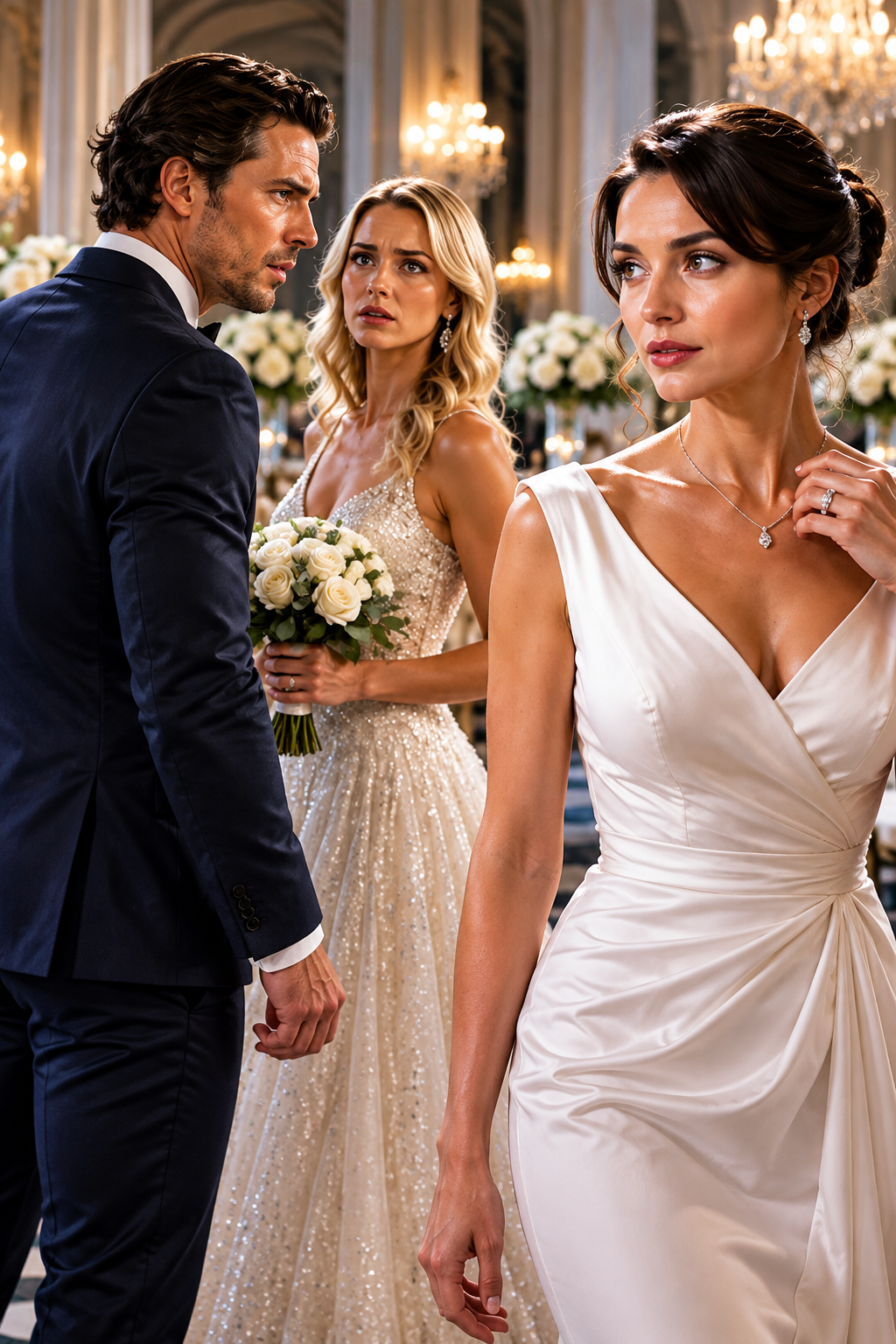
Part 2: I built the company, while Ethan learned to take the credit
Ethan wanted to prove he could build a technology company without relying on his father. I believed him, and I believed in us. I ran product, engineering, and client relationships; he handled financing, publicity, and business connections. Richard suggested naming the business Mercer Meridian Technologies because investors trusted a Mercer name more readily than that of an unknown young engineer. Under the conference table, Ethan squeezed my hand and promised that half the company would always be mine.
For three years, I barely paid myself. I poured money into research, slept four hours a night, rewrote code until sunrise, and flew between Boston and Europe to land our first international contract. In meetings, men twice my age addressed Ethan while asking me to bring coffee. I fixed technical failures for our earliest clients and built the materials for our first financing round. At launch events, Ethan stood beneath bright lights and told reporters how he had turned an idea into a company worth hundreds of millions of dollars.
I never corrected him publicly. I loved him, and I thought we were building one future together. Then Vanessa returned to Boston. She and Ethan had grown up together, attended the same private school, and spent summers at the same family vacation homes. She called him “idiot” or “princess,” stole food from his plate, drank from his glass, and let herself into his apartment without knocking. The first time I said that their closeness made me uncomfortable, Ethan touched my head and said, “She’s just Vanessa.”
After that, those three words answered everything. Vanessa used his fork: she was just Vanessa. Vanessa changed clothes in front of him. She was just Vanessa. She called after midnight and demanded that he drive across town to pick her up; she climbed into his bed after drinking because the guest room was too cold. At Ethan’s birthday party, a game of truth or dare ended with Vanessa kissing him in front of everyone. I counted six seconds before I slapped her.
Ethan looked at me with disgust. He called me unstable; his friends said my jealousy was frightening. Vanessa held her cheek, apologized to Ethan, and promised never to contact him again. Three days later, she developed a high fever, stopped answering her phone, and was found unconscious when Ethan broke down her door. At the hospital, she woke and whispered, “Why did you come? Claire will think I’m pretending again.”
That night, Ethan ended our relationship. He said he could not tolerate my jealousy and instability. My access to the company’s systems was revoked, our apartment lease was terminated, and the board received notice that I had voluntarily withdrawn for personal reasons. Most of my inheritance had gone into the company, my salary records were incomplete, and a broad confidentiality agreement made it difficult to find similar work. Two months later, I was living above a laundromat, baking before dawn and packing medical supplies in a warehouse during the day.
One winter afternoon, Ethan and Vanessa walked into the bakery. His cashmere coat cost more than six months of my rent. Vanessa glanced around the cramped shop and looked at the flour on my apron. Ethan spoke as if he were offering me charity: “When you learn to control your emotions and accept that Vanessa is part of my life, maybe we can talk about starting over.” Vanessa lowered her face to her coffee, hiding a smile. That was the moment my love for Ethan finally died—not when he kissed Vanessa, but when he stood inside the life I had helped build and treated his forgiveness as a prize I had to earn.
Part 3: The old license revealed the company still depended on me
A year later, Rachel Kim found me. We had known each other in graduate school; she had become a mergers-and-acquisitions attorney. She was helping a new trustee review the records my mother had left behind and found my name in an archive box. After the bakery closed one night, she arrived with original documents and a trust attorney. “You never transferred the core technology to Mercer Meridian,” she said, laying the agreement on my small table.
I had signed what I thought was an assignment. It was an exclusive license, not a permanent transfer. The platform still belonged to the Bennett Family Trust, and Mercer Meridian had only a limited right to use it. Rachel also found that my original $8 million had been recorded as convertible founder financing. A scanned copy in the company’s IPO data room called the financing “settled through a founder restructuring,” but the original contained no waiver signed by me and no evidence that the money had ever been converted into equity.
Mercer Meridian was preparing to go public, with a valuation above $1 billion. Its underwriters had already raised questions about ownership of the core technology and the treatment of the original financing. A formal objection from me could stop the IPO, but the Mercer family had powerful lawyers and more resources than I did. I didn’t want to spend years fighting in court or risk losing everything to legal fees. Rachel offered another possibility: Ethan had been asking mutual friends whether I was dating, whether I was still angry, and why I had stopped speaking to everyone.
She never suggested that I forge anything or take files. Instead, she prepared a formal intellectual-property objection, a founder claim notice, and a settlement framework, all to be reviewed by independent counsel. If Ethan chose to bring me back into the company, Rachel said, he might be willing to sign documents that resolved the ownership dispute. I studied my mother’s original license, remembering the years Ethan had accepted applause for my work while calling my anger jealousy. “Prepare the documents,” I told her.
Two months later, Ethan and I got back together. I apologized for being too sensitive and too quick to see threats where none existed. I told him I understood that Vanessa was family. He believed me because I was giving him the answer he had wanted for years. When Vanessa sat on his lap, I smiled. When she took his drink, I ordered another bottle. When she kissed his cheek, I offered to take their picture.
My calm unsettled Ethan. It made Vanessa triumphant. The hotel suite was not the first test she set for me; it was simply the most obvious one. After Ethan drove me away, Vanessa called to say she had slipped getting out of the shower and hurt her ankle. Ethan said he was taking me home, but when she claimed the swelling was getting worse, he pulled over and left to check on her. He promised he would come back that evening. He didn’t.
At ten, Vanessa posted a photograph of herself perched on Ethan’s kitchen counter with her allegedly injured foot resting on his thigh. The sapphire necklace hung at her throat. Her caption read, “The idiot finally remembered who the most important girl in his life is.” I sent a screenshot to Rachel, who reminded me the necklace was registered to me. I turned off my phone and slept.
The next evening, Ethan took me to a private club where Vanessa had arranged a birthday party. Their friends were playing truth or dare. Vanessa drew a card requiring whoever held the ace to kiss her for ten seconds. Ethan drew it. When every face turned toward me, I opened my phone’s camera and told them to go ahead. Ethan kissed Vanessa for more than twenty seconds before shoving her away. In the hallway, he demanded to know why I had let it happen. “You always said a secure woman wouldn’t get upset over little things,” I replied.
Part 4: Ethan’s temper cost him more than the birthday party
Ethan’s anger collapsed into confusion. Vanessa joined us in the hallway, wrapped both hands around his arm, and joked that I had finally stopped acting crazy. I returned to the party and cut the cake. Their friends praised me for becoming “normal” and said I could attend future gatherings now that I no longer ruined everyone’s mood. I smiled and thanked them. Rachel documented the gifts and the evening, just as she had documented the necklace.
As the party wore on, Vanessa leaned close and described what she and Ethan had done in the hotel suite. Ethan slammed his phone on the table and told her to stop. A strand of Vanessa’s hair caught in the necklace clasp; I reached out to free it. Ethan lunged forward, grabbed my wrist, and shoved me away. My hip struck the table, and my forehead hit the marble display behind me. The room went silent as blood ran down my temple.
Vanessa looked from me to Ethan and asked what was wrong with him; she said I had only been trying to move her hair. Ethan, pale with shock, offered to take me to the hospital. Before we reached the door, Vanessa fainted on the sofa. Ethan stopped. “Stay with her,” I said. He offered to send his driver, apologized, and promised to make it up to me. “Whatever you want,” he said. “Send me a list.”
Rachel preserved my medical records, photographs, and witness names. The next morning, she sent a settlement notice to Ethan’s personal attorney. A police report and civil claim would have to be addressed in the company’s IPO disclosure review, and Ethan was afraid the board would learn he had injured the company’s true co-founder while trying to protect Vanessa. After three days of negotiations, we signed a confidential personal settlement that addressed my injuries and certain property matters while preserving all claims to the technology and founder equity.
Ethan had independent counsel and provided financial disclosures. The transfers were properly documented and irrevocable. I received the Harbor Penthouse, art, antique jewelry, two investment accounts, and interests in several private funds—assets worth more than $12 million. Rachel made clear that the settlement did not transfer property from Mercer Meridian or Richard Mercer. It covered Ethan’s personal assets, and it did not resolve my separate founder claims.
At the penthouse, Ethan asked if I was happy. He said I no longer argued, asked where he had been, or cared when Vanessa called. “You used to want me to trust you,” I answered. When Vanessa phoned claiming a back injury, Ethan hesitated before answering. She demanded that he come massage her. I handed him his phone and told him to take the call. He left, promising to return in half an hour, and came back the next afternoon.
Vanessa posted a picture of Ethan asleep beside her hospital bed. “Some people always come when you need them,” she wrote. Ethan sat on my bed and apologized. Then he proposed. He said he would keep his distance from Vanessa after the wedding. “You’ve said that before,” I reminded him. Still, I told him I would consider it—if he put everything from the past in writing.
Part 5: He signed the agreements because he believed we would marry
Rachel prepared three sets of documents. The first was a standard premarital agreement confirming each of our separate assets and liabilities. It did not reach into Mercer Capital or property owned by Richard. The second, a founder settlement, confirmed that the core technology belonged to the Bennett Family Trust and that my original $8 million was still unresolved convertible financing. To settle those claims, Ethan would transfer eighteen percent of the company’s voting power from his personally held shares to my trust.
The third document addressed the company’s dual-class voting structure. Ethan controlled sixty-one percent of the voting power, Richard held twelve percent, and other shareholders held the rest. After the founder settlement, Ethan would retain forty-three percent. Of that, thirty-six percent would be placed in a third-party conditional escrow, with seven percent remaining in his name. The escrow terms were neutral and reviewed by both sides: if either party voluntarily abandoned the marriage before the ceremony began, or if an undisclosed intimate relationship or material breach of trust emerged after execution, the escrow agent could freeze the shares and release the voting rights after review.
If the full thirty-six percent were released to my founder trust, combined with the eighteen percent already transferred, I would hold fifty-four percent of the voting power. Existing shareholders approved the trust as a permitted transferee in advance, so the company could not later reject the transfer on a technicality. Ethan had his own attorneys. Rachel and an outside firm represented me. Negotiations took twenty-one days.
His lawyer tried to narrow the triggers. Richard pushed to discard the voting trust altogether. But the IPO underwriters had confirmed that Mercer Meridian had never received a permanent assignment of the platform it depended on. Without my renewed consent, the offering could be suspended. Ethan expected the wedding to happen and believed the marriage would activate the permanent technology license. He also believed he would never abandon me, so the clause seemed harmless. He signed.
He brought the executed documents to my penthouse himself. “You really think I’d leave our wedding for someone else?” he asked. I reminded him that he had left me on my birthday, shoved me hard enough to split my forehead, and spent the night at the hospital with Vanessa. He said this time would be different. Then he produced a ten-carat emerald-cut diamond ring and asked me to marry him. When I said yes, he looked sincere. That was the most tragic thing about Ethan: when he promised to stay, he believed himself, until Vanessa called.
He planned the wedding on a scale that drew attention from society magazines. He commissioned my dress in Paris, rented an oceanfront estate in Maine, filled its winter gardens with white roses, and hired a pastry chef whose work I had admired. His team recreated details from the wedding photographs I had saved years earlier. An assistant told me how generous Mr. Mercer had been. I looked at the finalized schedule: the penthouse, properties, art, investments, eighteen percent of the voting power, and thirty-six percent already deposited in escrow. “He wants you to feel secure,” she said. “I do,” I replied.
Two weeks before the wedding, Vanessa appeared at my apartment. She studied the transferred paintings and a folder marked Bennett Founder Trust. “You think you won?” she asked. I told her I hadn’t known there was a competition. She insisted Ethan would always choose her, and threatened to call him just to prove he would come. “That would be his choice,” I said. My calm seemed to unsettle her more than any argument ever had.
Part 6: On our wedding day, Ethan chose Vanessa again
The morning of the wedding was bright and bitterly cold. From the estate windows, the Atlantic flashed silver beneath the winter sun. Rachel stood nearby holding a leather folder and reminded me I could still cancel. The founder settlement had been completed, and the technology ownership was confirmed. “Why walk into the chapel?” she asked. “I’m not waiting for him to fail,” I said. “Today, I won’t answer for him.”
At 11:20, Ethan burst into the bridal suite, his tie crooked and phone shaking in his hand. Vanessa had sent a video: she was tied to a chair while a masked man demanded $9.5 million in stablecoin and $500,000 in cash from a Mercer family office safe. The message warned him not to call the police or use tracking devices. The ceremony was forty minutes away. Rachel urged him to contact law enforcement, but Ethan said they would kill Vanessa if he did.
He looked at me and apologized. “Once I bring her back, we can continue the wedding.” “Go,” I said. He asked if I understood. I told him she might be in danger. He embraced me and swore he would return. Then, in front of us, he messaged the wedding director to pause the ceremony and suspend guest entry. He kissed my forehead and ran.
The escrow clause did not ask the agent to judge whom Ethan loved. It required evidence of voluntary departure before the ceremony, including the estate’s access records and his written cancellation instruction. Rachel sent preservation notices to the escrow agent, company counsel, and the board. The shares entered an interim freeze. I removed my wedding dress and prepared to leave through a service exit. A temporary security supervisor told me the main entrance was blocked and said a replacement driver was waiting outside.
Rachel frowned and started to follow, but company counsel called demanding confirmation of the escrow notice. I stepped through the service door, expecting to see a car. The driver was gone. A black cargo van sat beside the wall. When I turned back, someone came up behind me and pressed a cloth over my mouth and nose. The world vanished.
I woke with my hands tied behind a chair in a dusty warehouse. Vanessa sat several yards away, also bound, and two masked men stood near the door. My head throbbed. On my wrist was a diamond bracelet Rachel’s security firm had arranged after Vanessa’s visit. It contained a locator and emergency transmitter—not a camera or microphone, just a signal that continuously sent my position to Rachel and the security center. Vanessa was not smiling now.
One of the men checked his phone. “He’s here.” More than three hours after leaving the estate, Ethan entered carrying a black travel bag and a silver hardware wallet. “Let them go,” he said. The man with the knife laughed. The stablecoin had cleared, and the cash was in the bag. Then he told Ethan to choose: Vanessa or the bride he had left at the altar. Ethan stared at him as Vanessa began to cry.
Part 7: The kidnappers forced Ethan to make his choice aloud
Vanessa pressed a hand to her abdomen and said she was pregnant. The warehouse went quiet. “Eight weeks,” she whispered. The hotel night had happened six weeks earlier, which made the claim sound possible if Ethan didn’t ask questions. He didn’t. He heard only one word: baby. She doubled over and said her stomach hurt, and Ethan moved toward her as the man raised the knife.
Ethan looked at me. For months, I had played the woman who no longer argued, competed, or demanded answers. Now I let my voice shake. “I’m your fiancée,” I said. “We were supposed to be married today.” I wasn’t crying because I thought the words would change him. A small, stubborn part of me still needed to know whether there was any crisis serious enough to make him stop choosing Vanessa.
He closed his eyes. When he opened them, he looked broken. “I choose Vanessa,” he said quietly. The words destroyed the last fragment of hope I had refused to admit was still there. He rushed to untie her and lifted her into his arms. I struggled against the ropes and asked him not to leave me. He said he had to get her to a hospital, that he would bring more money, that he would come back.
“You always say you’ll come back,” I told him. He froze. “How will you compensate me this time?” I asked. “Anything you want,” he said. I held his gaze. “Your company?” His voice cracked. “Take it. Take my shares, my houses, my accounts—everything. Just stay alive until I come back.” A red light glowed near the ceiling. Vanessa had wanted the scene recorded as proof of her final victory.
The camera would later be seized by police under warrant. The agreements already governed the shares; his desperate promise was not what gave me a legal claim. But someday, Ethan would hear his own words again. Vanessa buried her face against his chest. As he turned toward the door, her tears vanished and her mouth curved into the same smile she had worn in the hotel suite. She believed she had won. Ethan carried her out without looking back.
The moment the door closed, I stopped crying. One of the kidnappers stared at me, surprised. Sirens sounded in the distance. Rachel had received the bracelet’s live location when I left the estate, and the security center alerted police after my signal stayed in the industrial district. Officers entered through the front while Rachel’s team secured the rear under police direction. The kidnappers tried to escape through a service door and ran straight into waiting officers.
When they cut the ropes from my wrists, I looked toward the door Ethan had used. For three years, I had wanted him to choose me once. In the end, he had given me something more valuable than a choice: an answer he could never explain away. Vanessa never reached a hospital. State police intercepted Ethan’s car two miles from the warehouse. The investigation quickly showed the plan had begun as a staged kidnapping meant to get Ethan away from the ceremony—and then turned into real extortion when the kidnappers realized he had access to millions.
Vanessa had hired them through a former Mercer Meridian employee and bribed the temporary security supervisor to send me through the service exit. During her visit to my apartment, she had photographed a page summarizing the escrow triggers. She knew that if Ethan voluntarily abandoned the wedding, his voting rights could be frozen. She owed more than $1.3 million and believed she could force him to pay. When the kidnappers discovered how much money Ethan could access, she told them to take me, too. She wanted him to choose in person, and she wanted the answer recorded.
Part 8: The choice cost Ethan control of the company and his future
Vanessa was genuinely pregnant, but the timing unraveled her story. An ultrasound showed she was about twelve weeks along, not eight. Police recovered months of messages and hotel records between her and a married trainer at her private gym. A prenatal paternity test later confirmed the trainer was the father. At the station, Ethan learned only that the timeline did not match. The escrow shares remained frozen while an agent reviewed the estate records, his written cancellation, and his messages.
I spent one night in the hospital. The next morning, Rachel arrived with coffee and a tablet. The agent had found sufficient preliminary evidence of voluntary abandonment; the thirty-six percent in escrow would remain frozen pending final review. My eighteen percent founder settlement remained mine. The permanent technology license had never taken effect because the wedding had not happened, leaving Mercer Meridian dependent on the limited license already under breach review.
At noon, I entered the company boardroom in a white suit, a bandage still covering my forehead. Richard Mercer sat at the head of the table, looking older than he had the day before. Rachel and outside counsel placed the founder settlement, voting trust, escrow agreement, medical records, and preliminary police report in front of the directors. Richard read through the documents and accused me of planning everything. I told him I had made sure that whatever Ethan chose, I would never again be left with nothing.
“He signed because he loved you,” Richard said. “When I gave him eight million dollars and the core technology, I did it because I loved him,” I answered. No one spoke. I had been removed without compensation, and my work had been presented as Ethan’s vision. The documents did not take property from Richard or the company; they confirmed my ownership of the technology, settled the financing claim, and governed shares Ethan had put into escrow with independent counsel.
I asked the board to suspend Ethan as chief executive while it investigated the kidnapping, his judgment, and the company’s IPO disclosures. Even without the share dispute, directors agreed he could not remain in operational control. Under the company’s temporary vacancy rules, the board added me as a director, suspended Ethan, froze his operating authority, and appointed me interim executive chair. The meeting was still underway when Ethan entered with two security officers behind him.
He had not slept. His suit was wrinkled, his eyes bloodshot. “You’re alive,” he said. I reminded him I had been alive when he chose Vanessa. He insisted he had gone back before learning the baby wasn’t his; the police had reached the warehouse first. Then he saw the documents on the table and asked what they were. I told him they were agreements he had signed. His expression drained of color.
“You’re taking the company from me,” he said. “I’m taking back the company I built,” I replied. He insisted he had sacrificed for it too. I agreed: he had become its public face. He said I had used him. I stood and told him I had simply stopped absorbing the consequences of his choices. He promised he would never see Vanessa again. “She may be going to prison,” I said. “That should make it easy.”
He said he loved me. I knew he believed it. He loved me when I admired him, when I worked beside him, when I fought for his attention, and when my silence stopped embarrassing him. But every time loving me required him to refuse Vanessa, he chose her. I removed the engagement ring and placed it on the table. “You always wanted a girlfriend who would never be jealous of Vanessa,” I said. “Now you finally have one.”
Part 9: I took back my work, my name, and my future
Three days later, the escrow agent completed the review and released the voting rights according to the agreement. The eighteen percent I already held, combined with the thirty-six percent from escrow, gave the Bennett Family Trust fifty-four percent of Mercer Meridian’s voting power. A week later, the special committee completed its investigation. Ethan was formally removed as chief executive, and I became executive chair.
Three months later, Vanessa pleaded guilty to conspiracy, extortion, kidnapping, and obstruction-related charges. The paternity test confirmed the married trainer was the father of her child; he did not leave his wife and refused to pay Vanessa’s legal expenses. Ethan sold some of his remaining personal assets to cover legal costs and claims connected to the company’s disclosure failures. Richard barred him from Mercer Capital. The family’s statement called it an extended leave; everyone understood what it meant.
Mercer Meridian did not collapse. Six months later, we restarted the public offering process and opened a new research center named for my mother. For the first time, the company’s headquarters bore a different name: Bennett Meridian Technologies. I made sure the new company credited the engineers and researchers whose work had been hidden behind one famous surname. We kept the platform alive, secured its ownership, and built a future around the people who had actually made it possible.
Ethan wrote me letter after letter. I returned every one unopened. Twice, he waited outside my office building, and security escorted him away. On the first anniversary of the canceled wedding, I stood on the top floor of the research center looking across Boston Harbor. Rachel joined me with two glasses of champagne. “Do you ever think about him?” she asked.
“I miss the person I believed he would become,” I said. “That isn’t the same thing.” Below us, employees crossed the plaza carrying coffee and laptops. The company was alive, and it was no longer Ethan’s or the Mercer family’s. It belonged to the people who had built it, and the trust that had protected my mother’s work.
I had not taken Ethan’s life away from him. I took my technology, my money, my name, and my future out of his hands. Everything else he lost was the consequence of choices he made himself. For years, he believed that no matter how many times he ran to Vanessa, I would still be waiting in the same place when he turned around. He was right for years. He was wrong only once. Once was enough.
✓ Lynn R. Adams
Part 2: I built the company, while Ethan learned to take the credit Ethan wanted to prove he could build a technology company without relying on his father. I believed him, and I believed in us. I ra…