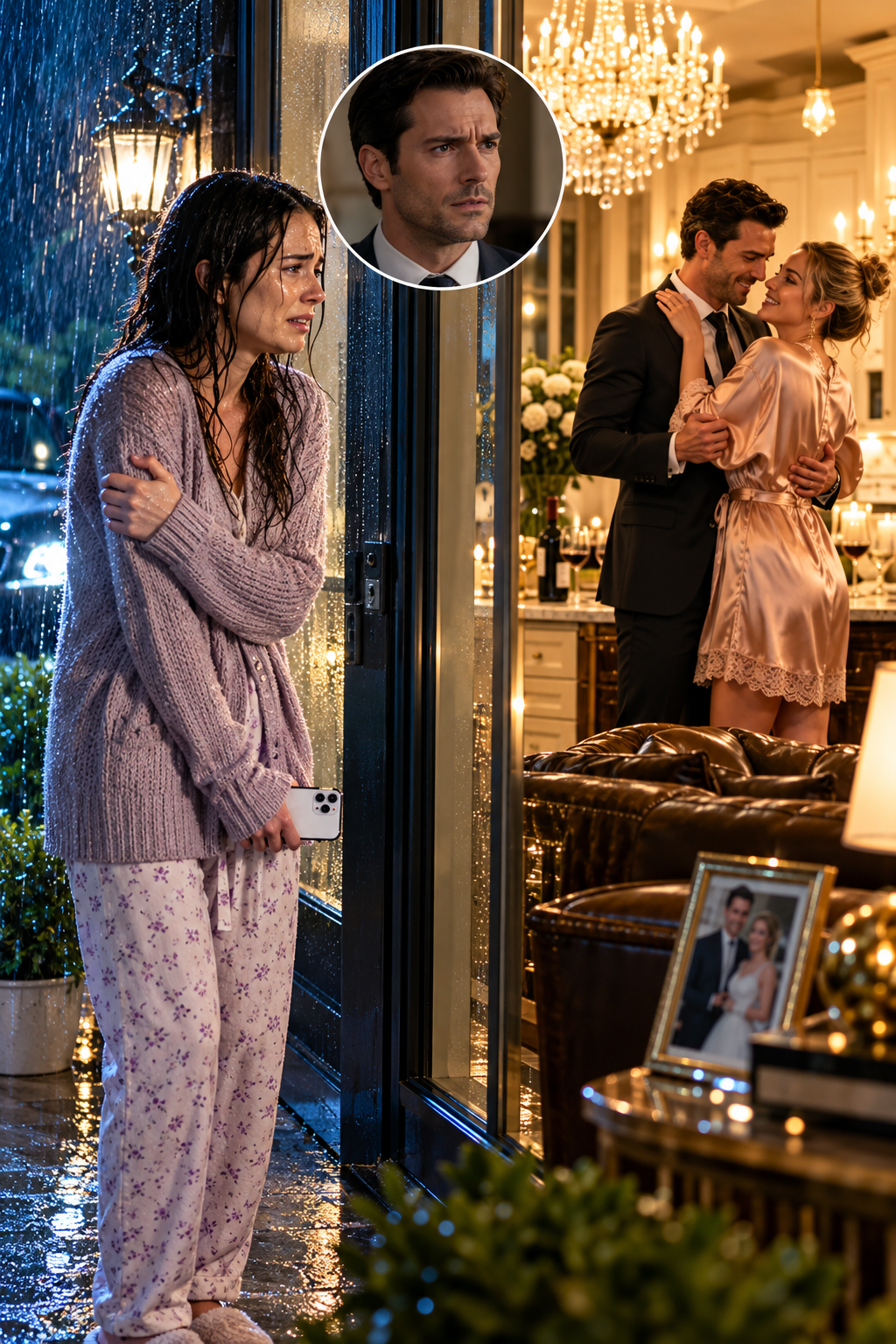
On a freezing November night, Vivienne Cross watched through the glass as
Part 2: My ordinary life concealed the identity Nathaniel never questioned.
Nathaniel had met me eight years earlier at a Boston charity auction, where I introduced myself as Vivienne Hart, a private, comfortably educated woman from Massachusetts who worked with historical archives, and because I wore inexpensive jewelry, drove a practical sedan, avoided social competition, and showed no interest in his family name, he decided almost immediately that my simplicity meant I possessed very little of my own. He pursued me relentlessly for nearly a year, and somewhere between dinners in Back Bay and long weekends on Cape Cod, I allowed myself to believe that a normal marriage might offer something my childhood never had, so when he proposed, I kept the carefully constructed identity I had already been using for years and let him believe the absence of relatives at our wedding was merely evidence of a complicated family history I preferred not to discuss. My real surname was Aldgate, and my father, Dr. Emmett Aldgate, had spent three decades building a private intelligence and cybersecurity organization whose clients included governments, multinational institutions, research agencies, and people powerful enough to require protection without publicity, which meant his greatest professional achievement was that almost nobody outside certain circles knew his organization existed. My father had raised his children with three rules repeated so often they became instinct: always know where the exits are, never let another person believe they control every available option, and remember that the person who appears least dangerous is often the one everyone should have watched more carefully. By twenty-three I had learned those lessons painfully enough to create distance from my family name, build an independent professional identity, complete advanced work in information science and cryptographic archives, and eventually establish a quiet life where nobody cared who my father was, exactly the kind of life Nathaniel assumed had simply happened to me because I lacked ambition.
Theodore Marsh belonged to the world I had stepped away from, a former signals analyst who had built a private investigative security firm around one principle: people who abuse trust usually reveal themselves eventually if someone patient enough keeps watching, and I trusted Theodore because he never confused protection with control or loyalty with flattery. I contacted him when Nathaniel proposed and asked for a discreet background review, and although Theodore found no criminal behavior, he noted patterns of arrogance, hidden debt, aggressive professional shortcuts, and short-lived relationships that concerned him, but I dismissed those warnings because loving someone requires accepting some uncertainty and I was determined not to let my father’s caution choose my husband for me. Six months before that November night, when the first unexplained transfer appeared, I called Theodore again and asked him to watch only what could be legally obtained, believing I was checking whether Nathaniel had made a foolish investment rather than preparing myself for the discovery of an affair and financial fraud. Meanwhile, the university position Nathaniel mocked was in a rare-books and encrypted-archives division containing some of the most significant historical coded materials in the Northeast, and my supposedly modest three-day schedule existed because the institution hired me for specialized work, not because I lacked qualifications or because my husband’s income allowed me to play librarian. Sitting alone in my car after watching Brooke dance against my husband, I finally understood the terrible irony of our marriage: Nathaniel had spent seven years believing he had married a woman too ordinary to challenge him, while I had spent those same seven years deliberately becoming ordinary because I had loved him enough to hope I would never again need the person I had once been.
Part 3: One phone call exposed the empire built from stolen money.
Theodore did not waste time asking whether I was sure, because after confirming I was physically safe, he told me he had completed the financial map three weeks earlier and had been waiting for me to decide when I wanted to hear it, which meant the betrayal waiting inside my house was only the emotional surface of something much uglier. Creekside Property Consulting was a pass-through company directing our eight-thousand-dollar transfers into renovation expenses for a luxury condominium on Commonwealth Avenue titled solely in Brooke Weller’s name, but those household transfers were small compared with the four hundred twelve thousand dollars Nathaniel had diverted from architecture-firm client escrow funds over fourteen months. Two of the affected accounts involved municipal projects, turning what Nathaniel might have attempted to dismiss as internal accounting manipulation into possible criminal conduct involving public money, and Theodore had obtained banking records, access logs, corporate registrations, contractor invoices, and months of communications demonstrating that Nathaniel and Brooke both knew exactly where the condominium money was coming from. I stared through the windshield at the warm kitchen windows while Theodore explained that my husband had funded Brooke’s new apartment, expensive gifts, travel, and renovations partly with money belonging to clients who trusted his firm, and the part of me still searching for a private explanation finally disappeared. Nathaniel had not merely cheated on his wife; he had gambled employees’ livelihoods, clients’ money, his partners’ reputations, and possibly public funds because he believed the systems around him were too slow and the woman beside him too insignificant to notice.
Theodore asked whether I wanted a contained divorce strategy or whether I authorized full legal disclosure, explaining that once evidence concerning public and client funds entered regulatory channels there would be no meaningful way to return the scandal to private negotiations, and for several seconds I listened only to the rain against the roof because I understood exactly what that choice would mean. I thought about payroll clerks, young architects, contractors, municipal departments, and ordinary employees who knew nothing about my marriage but could be hurt if Nathaniel continued moving money, then remembered him locking the kitchen door as Brooke poured my father’s wine, and I realized protecting his reputation would only make me another person helping him hide the damage. “Report everything that belongs with regulators,” I said, adding that I wanted no threats, no physical intimidation, no invented accusations, and nothing outside lawful procedures, because I did not want revenge manufactured for me; I wanted documented facts placed in front of institutions Nathaniel had assumed would never look closely. Theodore told me formal referrals were already prepared for financial investigators and the professional licensing board, while attorneys representing affected interests could pursue preservation orders on questionable assets, including the condominium, and the architecture firm’s major clients would make their own decisions once notified of the financial concerns. Before ending the call, he reminded me that the house security account had always been registered in my name, meaning Nathaniel’s changed garage code had never actually removed my access, and that was the moment I understood his final mistake: he had locked me outside not because he controlled the house, but because I had allowed him to believe control belonged to him.
Part 4: By sunrise, Nathaniel discovered arrogance was never security.
At the next morning, Nathaniel woke beside Brooke to a banking notification announcing that access to his firm’s primary operating accounts had been restricted pending investigation, and although I did not witness the moment, Theodore’s later timeline allowed me to imagine the exact progression from annoyance to disbelief to panic. Nathaniel went to his study, opened his laptop, tried one password after another, then discovered that the client escrow portal was also locked and external review notices had begun appearing, forcing him to confront the possibility that fourteen months of hidden transfers had suddenly become visible to people with authority to ask questions he could not charm away. He had convinced himself that a Delaware LLC, a paid consultant, complicated routing, and the ordinary slowness of large institutions made him invisible, never realizing that concealment works only until one person has enough reason to align the scattered pieces. Sometime before three, he walked to the upstairs window and saw my sedan still parked near the end of the driveway, engine running beneath the rain, and his instinctive reaction was apparently not fear but irritation because he came outside wearing slippers and a robe, crossed the wet stones, and knocked hard against my window. I lowered the glass only a few inches, and when he ordered me to come inside so we could “fix whatever I had started,” his voice carried the first crack I had ever heard in the confidence that had defined him since the day we met.
I asked him what exactly he wanted fixed, and after he complained about frozen accounts, payroll, employees, clients, and his professional license, I told him quietly that perhaps he should have considered those people before financing Brooke’s condominium with escrow money, watching the color leave his face when he realized I knew far more than the eight-thousand-dollar transfers from our savings. He tried saying the transactions were complicated, that outsiders would misunderstand legitimate financial arrangements, that exposing the firm could destroy innocent careers, and finally that I had no idea what I was doing, but every argument collapsed against the simple fact that legitimate transactions do not require shell companies, secret lovers, altered records, and locked doors. When he demanded to know who I had called, I refused to answer because my private history remained mine, and when he accused me of betraying him by reporting financial activity before giving him an opportunity to explain, I reminded him that I had placed the statements on our kitchen counter and asked for that explanation hours earlier. “You told me to get some air,” I said, looking directly into his eyes, “and then you locked the door,” and for the first time since I had known him, Nathaniel Cross had nothing intelligent or charming or condescending to say in return. I raised the window, drove away fifteen minutes later, and watched through the rearview mirror as my husband stood alone in the rain outside the house he had treated like evidence of his authority, finally understanding that doors work differently depending on which side the truth is standing.
Part 5: The mistress learned stolen luxury disappears faster than love.
By seven that morning, Nathaniel’s professional world was collapsing through ordinary channels requiring no theatrics from me, because his managing partner had received urgent correspondence regarding financial irregularities, major clients were requesting independent reviews, and his licensing board had acknowledged a complaint concerning professional conduct. Brooke came downstairs after discovering that Aldridge and Cross had placed her on administrative leave while investigators determined whether she had knowingly received benefits funded by client money, and when she opened her banking applications she learned that accounts connected to suspicious transfers could not simply be emptied because a scandal had become inconvenient. According to messages later produced through legal discovery, Brooke immediately demanded that Nathaniel explain why he had described Creekside as a private consulting venture and the condominium financing as income from successful side investments, proving that while she had knowingly participated in the affair and enjoyed his generosity, even she had not understood the full depth of the financial misconduct beneath their relationship. The luxury apartment she imagined would represent the beginning of a glamorous new life instead became evidence attorneys wanted preserved, while Nathaniel’s company-leased car disappeared from the driveway once the firm’s financial crisis triggered a review of corporate assets. Within twelve hours of dancing in my kitchen, the two people who had treated me like an inconvenient wife were arguing over frozen cards, lawyers, employment consequences, rent payments, public exposure, and which of them had lied more completely to the other.
For years Nathaniel had interpreted my refusal to fight over every household decision as proof that I accepted his superiority, when the truth was simpler and probably more painful to him: I had trusted him enough not to turn marriage into a competition, and he had mistaken generosity for submission because dominance was the only language in which he understood restraint. He had managed investments because I did not care about winning arguments over spreadsheets, selected cars because he enjoyed them more than I did, arranged renovations because architecture was his profession, and hosted clients because I preferred listening to performing, but none of those choices had ever meant I lacked the intelligence or resources to intervene. The difference became obvious only after consequences arrived, because the moment investigators, partners, clients, attorneys, and auditors began asking questions, Nathaniel discovered that the authority he had displayed at home could not command evidence to disappear. Brooke left the house before noon, taking two suitcases and refusing his calls for several days, while Nathaniel remained at the kitchen island surrounded by documents from attorneys and partners, staring at the same countertop where he had laughed at my contribution to our finances less than twenty-four hours earlier. What destroyed him emotionally was not simply losing money or discovering that his mistress would not stand beside him once comfort vanished, but realizing that the supposedly dependent woman he had humiliated possessed an entire life of professional credibility, family protection, legal preparation, and personal strength that had existed beside him every day without ever needing his permission.
Part 6: I returned for one suitcase and ended our marriage.
I spent that night in Cambridge at the apartment of an old security consultant named Octavia Reed, who greeted me without questions, put a kettle on, placed fresh towels beside the guest bed, and understood that sometimes the greatest kindness anyone can offer a person escaping chaos is the absence of curiosity. I did not spend the night tracking Nathaniel’s collapse because Theodore and my attorneys could handle evidence better than emotion ever could, so instead I opened a laptop and returned to a folder I had begun months earlier when the unexplained transfers first told me that my marriage might eventually require an exit. Inside were updated professional credentials under my real name, copies of personal documents, separate financial records, correspondence with an archival research institution in Edinburgh that had been recruiting me for nearly two years, and a draft application I had repeatedly postponed because some stubborn part of me still hoped Nathaniel would give me a reason to stay. At six in the morning I called my father in Zurich and told him the marriage was over, and after confirming I was safe he did something I loved him for: he never said he had warned me, never criticized the years I had spent trying, and never made my heartbreak into proof of his superior judgment. When I admitted I felt foolish for believing Nathaniel could be different, my father answered, “Hope wasn’t your mistake, Vivienne; you simply gave it to someone who treated it like weakness,” and those words finally made me cry, not dramatically or uncontrollably, but quietly enough that Octavia set a cup of tea beside my hand and walked away.
At eight I drove back to Weston Road, parked openly in the driveway, used the front-door key Nathaniel had never bothered changing, and found him sitting at the kitchen island wearing yesterday’s clothes while the house around him looked strangely unfamiliar without the confidence he normally carried through it. Brooke was gone, two half-empty glasses remained near the sink, and the expensive bottle they had opened was still standing uncorked on the counter, but what surprised me most was how ordinary Nathaniel suddenly appeared once money, position, secrecy, and certainty had been stripped away from the scene. I informed him that my attorney would contact his regarding separation and property arrangements, advised him to retain independent counsel for the criminal and professional matters, and told him I would not discuss his investigation because my role ended with providing what I knew to people legally responsible for deciding what happened next. He stared at me for a long time before asking, with none of his usual arrogance, “Who are you?” and I realized he was not asking for my maiden name or my father’s occupation, but genuinely trying to understand how he had lived beside me for seven years without noticing the person underneath the identity he had constructed for me. “I’m the woman you underestimated,” I told him, then carried downstairs the suitcase I had packed weeks earlier, placed it in my car, and drove away without looking back a second time because leaving finally felt less like the destruction of a marriage and more like the end of an impersonation.
Part 7: His downfall continued while I rebuilt the life I buried.
The legal consequences moved slower than that first dramatic night, because real investigations unfold through interviews, subpoenas, forensic accounting, negotiations, and months of procedural work rather than cinematic declarations, but the evidence Nathaniel had left behind eventually proved more damaging than anything I could have said about him personally. Aldridge and Cross survived by removing him from financial authority, cooperating with investigators, replacing outside accountants, repaying affected client funds through insurance and recovered assets where possible, and accepting a brutal restructuring that cost Nathaniel his partnership long before the final professional findings were entered. Brooke cooperated through her attorney, insisting she had believed much of the money came from Nathaniel’s personal investments, and although that did not erase her participation in the affair or every questionable transaction, it separated her romantic cruelty from the larger financial conduct that investigators were actually responsible for evaluating. The Commonwealth Avenue condominium was sold during the legal process, lawsuits consumed much of what Nathaniel still possessed, and the reputation he had spent two decades constructing vanished faster than I would ever have believed possible, proving that prestige often looks permanent only because nobody has yet tested the foundations underneath it. I followed the proceedings only through counsel, because after years of living inside Nathaniel’s ambitions I refused to let his downfall become the organizing principle of my freedom.
Three months after leaving Boston, I accepted the Edinburgh research position and moved into a small stone apartment with tall windows, unreliable heat, and a view across rooftops that turned silver whenever rain crossed the city, and I loved it precisely because nothing inside those rooms had been selected to impress anyone. My work involved encrypted correspondence, private collections, wartime archives, damaged manuscripts, and historical records created by people who had hidden truths for reasons ranging from survival to shame, which made the job feel strangely personal without ever becoming painful. I resumed publishing under Vivienne Aldgate, attended conferences Nathaniel would once have dismissed as obscure, reconnected with colleagues who remembered me before marriage, and slowly discovered how much professional energy I had spent shrinking my achievements because I wanted my husband to feel comfortable being the impressive person in every room. Theodore called occasionally with procedural updates, my father visited twice without bringing security staff into my tiny kitchen, Octavia sent tea strong enough to qualify as controlled equipment, and for the first time in years I built friendships in which nobody required me to perform harmlessness. Freedom did not arrive as a triumphant morning when all pain vanished; it arrived in smaller moments, like realizing I no longer checked another person’s mood before accepting an invitation, no longer minimized good news before sharing it, and no longer felt obligated to make intelligence look accidental so somebody else could remain comfortable.
Part 8: Years later, silence became my strength instead of disguise.
Two years after the night Nathaniel locked me outside, our divorce was long final and the Weston Road house had been sold, with the remaining equity divided according to the settlement and every object from that marriage reduced to either a practical possession, a legal line item, or something neither of us considered worth fighting over. Nathaniel eventually resolved the financial case through a combination of restitution, penalties, professional sanctions, and legal consequences that permanently ended the career he once believed untouchable, and although mutual acquaintances occasionally tried telling me what he was doing afterward, I learned to stop them before the story could become interesting. Brooke left architecture in Boston and disappeared from my world completely, which suited me, because I never needed either of them to suffer forever in order for what they did to have been wrong; accountability was sufficient, and obsession would only have extended their residence inside my life. The stranger consequence was that the night I once considered the destruction of my marriage became the beginning of the most honest period of my adulthood, forcing me to recognize that hiding my identity had once protected me from danger but eventually became a habit that allowed people I loved to know only the parts of me least likely to challenge them. I had confused privacy with disappearance, and Nathaniel’s betrayal taught me that there is a difference between choosing not to advertise your strength and spending years pretending you do not possess any.
One November evening, almost exactly three years after that frozen night in Boston, I left the archive after dark and found Edinburgh covered in cold mist, the streetlamps reflecting across wet stone while students hurried toward cafés and buses groaned through intersections, and for a moment the weather carried me directly back to the kitchen window where I had watched my marriage end. I remembered Brooke’s head on Nathaniel’s shoulder, the bottle of Bordeaux, the click of the lock, the red garage keypad, my frozen hands reaching for the encrypted phone, and the terrifying stillness that entered me when I realized the man I loved had mistaken everything gentle about me for evidence that I was powerless. But the memory no longer hurt in the same place, because I understood now that I had not won by destroying Nathaniel, Theodore had not rescued me, my father had not saved me, and no secret network had created the strength required to leave; all of those resources mattered, but the decision was mine. I had spent years believing that strength was something dangerous that needed to remain hidden until an emergency, when in reality strength could also mean choosing honesty sooner, requiring respect without apology, walking away before betrayal became destruction, and building a life where love did not depend on being underestimated. I pulled my coat tighter, crossed the rain-dark street toward home, and smiled when I remembered the last mistake Nathaniel Cross ever made about me: he thought the woman standing silently outside the locked door had nowhere else to go, when she had actually been carrying the key to another life all along.
✓ Lynn R. Adams
Part 2: My ordinary life concealed the identity Nathaniel never questioned. Nathaniel had met me eight years earlier at a Boston charity auction, where I introduced myself as Vivienne Hart, a private…