My stepmother turned me out……
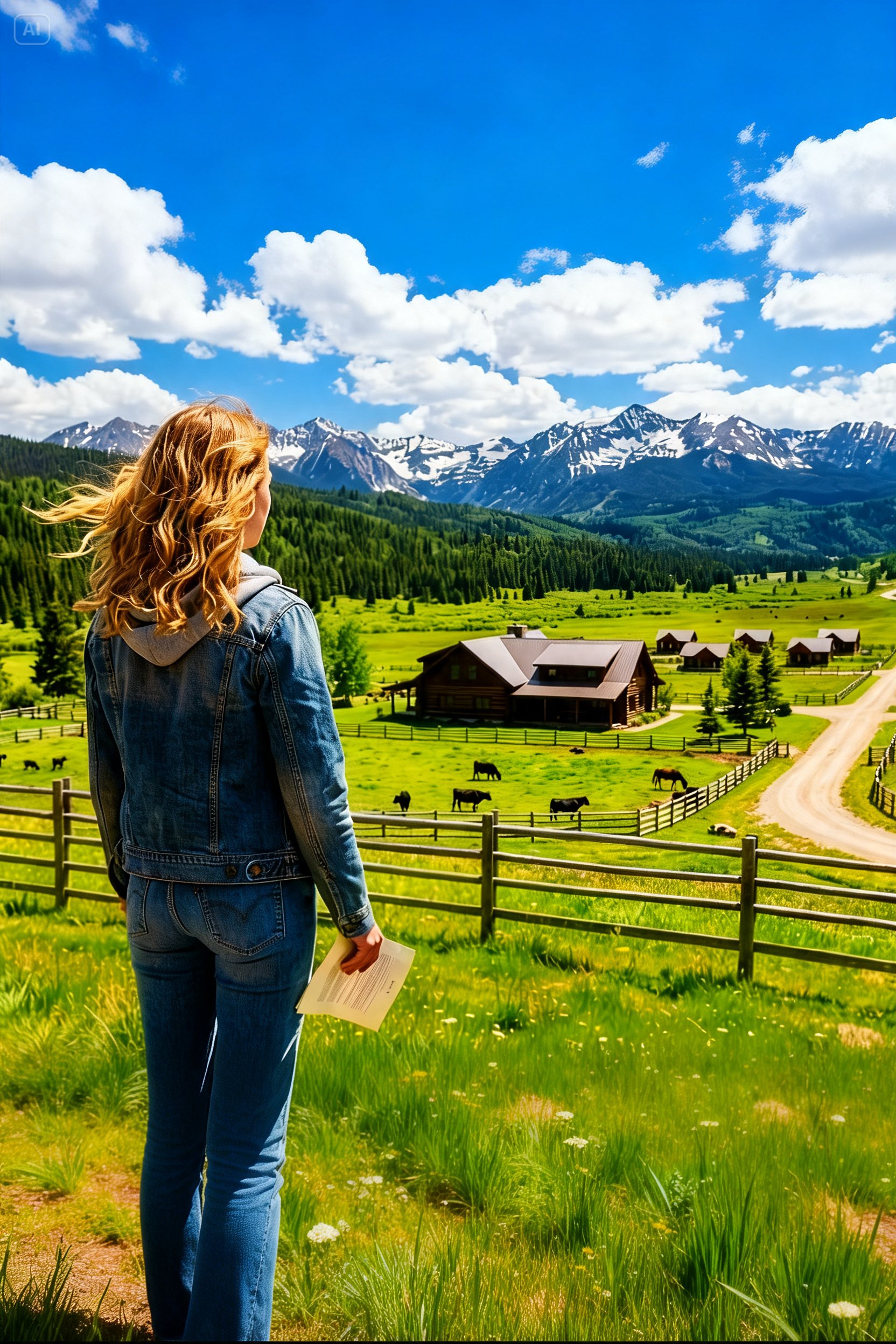
My stepmother turned me out at eighteen with $19 and a shoebox she’d hidden for six years. I thought my father had left me nothing, until an old man saw the brass key around my neck…
The morning I left the only home I could remember, my stepmother didn’t even look up from the kitchen sink. I was eighteen, carrying a duffel bag and nineteen dollars, with an old brass key hanging from a leather cord around my neck. Sandre said the state would stop paying her to care for me that month, and she was finished.
“You’re grown,” she told me, tapping cigarette ash into the sink. “I did more than I signed up for. You’ll figure something out.” When I asked where I was supposed to sleep, she only shrugged. I’d learned not to expect a different answer.
My name is Dileia Ror, though my father called me Dia. He died when I was eleven. Afterward, Sandre told me, over and over, that Elias Ror had worked himself into the grave and left behind nothing but unpaid bills. I believed her because there was never a photograph on the wall, a savings account, or even a story about something kind he’d done.
I did have the key. Dad had put it around my neck when I was five or six, crouching so he could look me in the eye. I could barely remember his face, but I remembered the sawdust on his shirt and his careful hands. “Somewhere good,” he’d called the place it opened. “Hold on to it until you’re grown.”
At the door, Sandre called me back. She pulled a softened shoebox from the hall closet, its lid held by an old rubber band. “These were his,” she said. “Take them or I’m throwing them out.” I took it because the thought of the last of my father going into the trash was more than I could stand.
The lock clicked behind me. I spent my first night on a metal bench outside a bus terminal, my bag looped through both arms. Around three in the morning, a man in a reflective vest told me to move along. I did, because I didn’t have anywhere to argue for.
The next night, a women’s shelter gave me a cot, a worn gray blanket, and coffee that tasted burnt. An older woman on the next cot noticed the way I kept my bag close. She handed me a crushed granola bar and said, “Whatever got you here isn’t the end of you.” I saved half of it for breakfast.
For two days I wouldn’t open the shoebox. I told myself I needed privacy, but really I was frightened of finding out how little of Dad was left. I washed in gas-station bathrooms, divided cheap food into smaller meals, and kept the cash tucked inside my sock. Every time I got scared, my fingers found that brass key.
On the third day, cold rain drove me into a diner off the interstate. I spent a dollar and a quarter on bottomless coffee and sat in a back booth until I finally pulled off the rubber band. It snapped in my fingers. Inside were photographs, a tarnished harmonica, and an unopened envelope.
The first photograph showed Dad on a porch, holding a furious-looking baby. On the back he’d written, “Dileia, three weeks, first morning home.” There was another of him in a garden with an older man, another with his arm around a skinny teenage boy, and one of a blue-gray dog caught in the middle of a bark.
I hadn’t known there was a porch, a garden, or a boy Dad cared about. I lifted the harmonica and caught the faintest trace of the wood-and-grass smell I remembered from his work shirts. For a moment I had to set it down and stare at the table.
The envelope at the bottom was addressed to Miss Dileia Ror, from a lawyer in a town called Cordell. The postmark was six years old, from the year I turned twelve. It had been in Sandre’s closet all that time, unopened, while I grew up hearing that nobody had left me anything.
I unfolded the lawyer’s letter twice before I understood it. Dad’s estate had established a trust naming me the sole beneficiary of a property called Bellweather Farm: 140 acres of land and buildings outside Cordell. I was entitled to take possession at eighteen, after presenting identification, the letter, and any key he’d left with me.
There was a second page, written in Dad’s own hand. He said he knew people would tell me he’d left nothing. He’d made things look that way to protect what he couldn’t safely leave as cash: a place, and the people in it. “Bring the key,” he wrote. “You’ll know the door it opens. I love you more than the whole 140 acres.”
I read those words until the waitress quietly stopped coming by. Part of me wanted to believe every one of them; another part imagined a collapsed barn, years of unpaid taxes, and a bill I couldn’t pay. I had spent too long learning what happened when I hoped for things.
After the coffee I had seventeen dollars and change. A bus ticket toward Cordell cost fourteen. I bought it, leaving myself barely enough money for another meal and no fare home. The next morning, a little after six, I took a window seat and watched the city disappear behind brown October fields.
Cordell was smaller than I’d pictured: brick storefronts, a grain elevator, a church, and a feed store. When the bus left me by the elevator, I stood on the sidewalk with my duffel bag, wondering which way a girl went to find 140 acres she had never seen.
A broad woman with gray hair was sweeping the feed-store steps. When I asked about Bellweather Farm and said my father’s name, she dropped her broom. She looked at my eyes, my jaw, and the key at my throat. “You’re Elias’s girl,” she whispered. “Lord have mercy.”
Her name was Odessa. She ran a feed store with a little lunch counter in back, and before I’d even taken off my coat she’d made me eggs, bacon, and buttery toast. I admitted I couldn’t afford it. “Did I ask you for money?” she said, and turned away so I could eat without her watching.
When I told her people called Dad a fool, Odessa’s expression hardened. After her husband died, she said, an ice storm had ruined her roof. Dad came with a ladder and one of “his boys,” fixed it over two bitter days, and refused payment beyond a slice of pie. She said there were a dozen stories like that around town.
“I don’t have brothers,” I said. Odessa grew quiet. “Not brothers,” she answered, “but you’ve got more family out there than anyone told you. That part needs to come from the people who lived it.” When I asked if the farm was a ruin, she said only, “Booker keeps it up.”
She closed the store and drove me five miles past fields, a creek, and bare trees. On the way she told me Dad had always noticed people the world was ready to throw away. He’d made up his mind not to be another person doing the throwing. I didn’t know what that meant, and Odessa wouldn’t explain it for him.
At a cedar post stood a weathered wooden sign for Bellweather Farm. Odessa parked inside the gate and asked me to walk the last stretch alone. She promised she’d stay until she knew I’d reached the house. I took my bag, touched the crooked sign my father had carved, and climbed the gravel lane.
At the top, I stopped. The white farmhouse had smoke rising from its chimney. A red barn stood open with a light inside; chickens scratched in the yard, a goat watched from a stump, and firewood was stacked for winter. It wasn’t an abandoned ruin. Somebody was living there, and I suddenly wondered whether I’d crossed two counties for a home that already belonged to someone else.
I nearly turned around. Then an old blue-gray herding dog came stiffly down the porch steps and pressed himself against my knees, whining as if he’d recognized me. His nose found the cord at my throat. An elderly man appeared on the porch and watched the dog, bewildered. I took off the cord and held up my brass key. His face changed; he sank onto the steps and whispered, “You came. You actually came.” Part 2…..
I didn’t know what to do with a welcome like that. The old man introduced himself as Booker, and the dog’s name was Bishop. He said my father had asked him to keep the place ready and the light on until I was grown. “I’ve kept it lit six years,” he said, rubbing a hand over his face. “I was beginning to think I was waiting for a ghost.”
I started apologizing for arriving unannounced, but he barely heard me. He told me he’d been sixteen and sleeping in a grain elevator when Dad found him, hungry and angry and with nowhere to go. Dad took him home, fed him, taught him a trade, and never asked to be repaid. “I was the first,” Booker said. “There were others after me.”
Inside, the house was warm. Boots lined the door; a fire burned low in a stone hearth; a kettle waited on the stove. Booker pointed to a table, staircase rail, and rocking chair Dad had made with his own hands. Bishop led me upstairs to a small pale-green room that had once been mine.
There was a dismantled crib, faded picture books, a quilt, and a framed photograph of Dad holding me on that very porch. He’d written “Dileia, first morning home” along the frame. I sat in the rocking chair holding the photograph, finally understanding that my life had begun somewhere real, with someone who wanted me.
Downstairs, Booker handed me a wooden box he’d never opened. Inside were letters Dad had written for birthdays he’d known he would miss, and a worn ledger. Its first page said it was a record of everyone who had come through Bellweather and left better than they’d arrived. My name was at the top: “Dileia, born here, mine.”
I turned pages of names and dates. There was Booker, then a frightened girl named Raina who later trained to be a nurse, a boy who went into the Army, and a brother and sister who’d been separated by the county and reunited at the same table. Other entries described a runaway who learned to drive a tractor, a child who finally went safely home, and one they tried but couldn’t save.
“He took in kids,” I said. Booker nodded. Older foster children, runaways, young people whose families had failed them or whose placements ended when they turned eighteen. Dad gave them a bed, meals, work they could learn, and time to stop being afraid. Bellweather wasn’t just farmland; it had been a refuge. He wrote down even the children he couldn’t help, because he believed nobody should be forgotten.
My happiness came with a question that hurt to say. “If he could help all those kids, why didn’t he keep me?” Booker found a letter Dad had written the summer I turned ten. It explained the illness he’d learned he couldn’t beat, and the custody fight a dying father couldn’t win. His medical bills threatened the farm, and he feared Sandre would sell whatever remained.
He’d put Bellweather into a trust for my eighteenth birthday and made himself look poor on paper so nobody could take it from me while I was little. He knew I’d hear that he’d left me nothing. In the letter he admitted how terribly that would hurt, but said a protected future was the one gift he still knew how to make. Booker had promised to keep the farm alive until I could claim it.
I sat there holding the letter, angry about the childhood I’d lost and grateful for a man I’d barely been allowed to remember. Both feelings belonged in that room. Booker didn’t ask me to choose one. He just poured more coffee and let me read until the fire settled into embers.
The next morning he told me the part he’d been dreading. The trust money set aside for taxes had run out years ago. He’d paid what he could himself, but back taxes and penalties had climbed to a little over $11,000. A county tax sale was scheduled for the third week of the following month, and a land buyer working for a big development company was waiting to pick up our 140 acres.
Booker also had a failing heart valve. He’d been splitting wood, fixing fences, tending animals, and keeping Bishop company through years when even the work of walking uphill left him breathless. “Your daddy left you a farm,” he said, “but he left you a fight, too.” I stared out at the barn. I’d spent only one night under that roof, and already it might be taken away.
“Show me the garden,” I said. It surprised him, but I wanted to know what we had before deciding we had lost it. He told me Dad had planted apple trees the year I was born, even though his health was already slipping. Those trees were heavy with fruit now. He reached for his coat to show me, and Bishop suddenly growled toward the lane.
Sandre’s car was climbing the hill. She stopped beside the farmhouse in the good coat she wore when she wanted to look prosperous. The sight of the house and barn seemed to change her posture. She’d called the lawyer after I left and found out I had claimed a trust. Now she wanted to know what she was owed as Dad’s widow and the woman who had raised me.
I asked Booker to let me handle it. I brought Sandre into the kitchen, laid out the trust letter and the ledger, and showed her the tax notice. “There’s no pile of money here,” I said. “There’s a farm about to be sold for unpaid taxes.” She stared at the numbers and asked why I didn’t just sell it to the company and leave with something.
Instead of answering, I handed her Dad’s letter. She reached the sentence where he called her a tired woman who had never wanted a farm or someone else’s child, and her hand began to tremble. Dad hadn’t insulted her, even in a letter he never expected her to see. I asked why she had kept the lawyer’s envelope hidden for six years.
Sandre admitted she’d known the envelope might matter. She’d told herself she was protecting me from more of Dad’s debts, but the truth was uglier: she resented that he had found a way to care for me after his death when she couldn’t show me affection while I lived in her house. She’d hidden the letter because she was jealous of him. She put another unopened letter from Dad, addressed to her, on the table and said I should have it.
She didn’t ask for forgiveness or try to hug me. At the door she simply reminded me to eat, because I’d always forgotten when I was frightened. Then she drove away. Her apology didn’t erase the nights I’d spent feeling unwanted, but at last the lie I’d grown up inside had a name and an explanation.
I turned to Booker. “I’m not selling a single acre,” I said. “Not the orchard, not the timber, not the back forty.” He looked at the figures again, then reached for the telephone. “Two broke people can’t save this place in three weeks,” he said. “Good thing it’s never been just two of us.”
Part 3 Raina was the first to arrive. She was nearly thirty, still in her nursing scrubs under her jacket, and she’d lived at Bellweather when she was fifteen. Odessa had started calling everybody who had passed through that kitchen. Soon there were trucks in the yard after work and people who looked at me with the startled affection of relatives meeting a child they’d only known in photographs.
A former farm boy who’d made a career in the Army came home with a checkbook and the ability to organize volunteers. The brother and sister Dad had reunited now ran a garage two towns away; they brought tools and fixed cars for extra cash. A woman who’d once arrived here at seventeen and now taught school brought her class to pick apples. None of them treated this as an obligation to repay Dad.
“He never wanted us to owe him,” Raina told me while we counted money into coffee cans. “He wanted us to learn how to help the next person.” Odessa made meals for the crews at her lunch counter. We sold apples by the road, at the feed store, and to a cider press upstate. Churches and diners put out jars. I spent long days on orchard ladders until my arms ached and I slept without wondering where morning would find me.
Four days before the scheduled sale, we counted everything twice. We had just over $8,000 and still needed about $3,000. The trees were picked bare. I sat at Dad’s table remembering the bus-station bench and that old instinct to stop wanting something before it could be taken away.
That night I sat on the porch with my face against Bishop’s neck. I could shut myself off again and lose the farm quietly, or I could let people see how much I wanted to stay and risk being disappointed. The next morning I went with Raina to the county tax office and told the clerk what Bellweather had been, what it meant to me, and how far short we’d fallen.
The clerk remembered Dad. Years earlier he’d paid an elderly stranger’s back taxes and asked her never to say who’d done it. She checked the options available in our case and helped me file for a hardship extension that would give us nine days beyond the planned sale date. It wasn’t money, and it wasn’t a guarantee, but it gave us a little room to try.
Raina sent our story to the county newspaper. It printed a photograph of our crooked farm sign and the orchard, alongside an account of the children who’d found shelter there. Donations began arriving in small pieces: forty dollars from a man who’d once slept in the barn, a hundred-dollar check from a woman Dad had fed for a year, and more coins from Odessa’s jar. The cider press paid extra for our last load of fruit.
One plain envelope arrived without a return address. Inside were a few folded twenties and a line in handwriting I knew: “Toward the taxes, from somebody who owes it.” I knew Sandre had written it. I didn’t pretend it repaired the past, but I put the money with the rest.
On the eve of the sale, the house filled with the people Dad had once sheltered. Odessa cooked, the former Army man kept order among the coffee cans, and Raina totaled the checks while Booker watched from Dad’s chair. He raised a glass of water and said, with a little smile, “He’d have liked this racket.” For an evening, I could hear what that house must have sounded like years before.
On the morning of the sale, we counted once more. We finally had more than $11,000 in checks, bills, and quarters—enough to cover what the county was owed. We drove to the courthouse and paid at the tax window. Across the lobby stood a well-dressed man with a folder and checkbook, waiting for a sale he thought was inevitable.
The clerk stamped our payment receipt and confirmed the delinquent tax claim was cleared. The man across the lobby closed his folder and left. Nobody cheered; I was too shaken to make a sound. I held the receipt in both hands and kept reading it, because I had so rarely been told something precious was still mine.
Booker had been too weak to come. When we got back, he was on the porch in Dad’s rocking chair, a blanket over his knees and Bishop at his feet. I told him the taxes were paid and the farm was safe from that sale. He covered his face with his hands and finally let himself cry.
He’d spent six years keeping a light on for a girl who might never come home. Now he could go to bed without lying awake over a tax bill. I made him tea that night, banked the fire, and slept upstairs in the green room. The next morning the sun came through the curtains, and for once I didn’t wake frightened of losing my bed.
Part 4 Winter was still work. The fences needed repair, the barn roof needed shingles, and every animal expected breakfast whether or not we felt tired. But the tax sale was behind us. By spring, the garage brother and sister were bringing their tools on weekends, Raina was organizing workdays, and Odessa was feeding crews of thirty from the back of her truck.
I turned the garden by hand and planted peas and seed potatoes. I put on muscle, ate regular meals, and grew used to hearing people call out my name when they came up the lane. The house hadn’t become rich or easy. It had simply stopped being empty, and after years of thinking everyone eventually left, I watched people keep coming back.
Booker couldn’t lift much anymore, so he taught me instead. He showed me which fence posts were cedar, how to recognize a failing well pump by its sound, and how to prune the apple trees Dad had planted for me. He gave me Dad’s hand plane, then a sharpening stone, and made sure I learned how to use each one before offering another.
One afternoon, while I stood in the orchard with pruning shears, Booker told me not to be afraid to cut away dead branches so living ones could grow. I looked toward the house, remembering the names in the ledger. I said I didn’t only want to keep Bellweather Farm. I wanted to keep doing what Dad had done there.
I remembered the kids aging out of care and landing on benches like mine, carrying everything they owned in a bag. We had rooms, land, people who knew how to help, and a place that had already done this work for decades. Booker studied my face and said, “Then you’d best get the book. There’s room in it yet.”
We spent the rest of spring and much of summer making the plan workable. Raina helped me navigate the county requirements, the Army veteran tackled the forms, and a retired social worker who had once found refuge at Bellweather came back to advise us. We repaired the spare bedrooms and bunk room over the barn, arranged inspections and approvals, and opened as a licensed place for young people needing safe shelter.
In September, almost a year after I first walked up the lane, a county car pulled in. A boy of about sixteen climbed out with a garbage bag of clothes. His shoulders were stiff; his eyes moved from the house to the barn as if searching for the catch. I recognized that look because I’d worn it myself.
I met him at the bottom of the lane. “You must be tired,” I said. “Come eat first. There’s a room for you, and you don’t have to tell us anything you’re not ready to tell.” Bishop went straight to him and leaned his old body against the boy’s leg, just as he’d done for me.
At supper the boy ate fast with his arm around his plate. No one commented, because most of the adults at that table remembered feeling the same way. Later he asked what he owed us for the food and bed. I gave him breakfast dishes, and told him the only real favor was to help somebody else when he could.
A brother and sister arrived in November, and a seventeen-year-old girl in December. She cried for a week, then began helping in the kitchen. We added a bunk to the green room. The farmhouse filled with footsteps, squabbles over biscuits, and noise from the barn radio. Booker would listen from his chair and say, “He’d have liked this racket.”
Sandre sent a card that fall with a photograph of red maple leaves. She wrote that she was doing all right and hoped the girls I cared for would be kinder to themselves than I’d learned to be. Beneath her name she’d crossed out an unfinished word that looked like “sorry.” I put the card on the mantel beside Dad’s photograph of me as a baby.
Booker lived to see the first snow and beyond, longer than his doctor had led him to expect. As he grew weaker, we moved his bed near the fireplace. The children brought him tea and kept the room quiet when he needed sleep. On better afternoons he watched them carrying wood across the yard, with Bishop thumping his tail beside him.
One afternoon I wheeled Booker to the window facing the orchard. Bare branches stood against the winter sky, already carrying buds for a spring we couldn’t yet see. “Your daddy never got to eat an apple from those trees,” he told me. “Planted them anyway.” He patted my hand. “You’re his apple tree, Dia. You grew into what he hoped for after he was gone.”
Final One evening, after the new boy had finally fallen asleep upstairs, I opened Dad’s ledger to the first blank line beneath his entries. I wrote the boy’s name, the September date, and what I wanted to remember: “Came with a garbage bag and nothing else. Braced for the catch. There isn’t one.” The pencil felt ordinary in my hand, which made the moment matter more.
I thought of that bus terminal bench, the shelter’s thin blanket, the waitress who let me sit over coffee, and the woman who gave me half a reason to keep going. I thought of Odessa’s breakfast, Raina’s stubborn phone calls, Sandre’s difficult truth, and Booker keeping a fire alive for a child he hadn’t seen in years. None of them could undo the past. Together they had made a future that was bigger than the one I’d dared to imagine.
All that time I’d thought Dad left me nothing because he had no money to give. What he’d left was 140 acres, a house that could hold frightened people without asking them to earn their place, a family formed from the children he’d helped, and a book with blank pages waiting for new names. It was more than I could have spent, and it only grew when it was shared.
I took the brass key from the leather cord I’d worn since I was little. For years I’d held it in my palm whenever I was frightened of another locked door. Now I hung it on a nail beside our front door, at eye level for the next nervous teenager who might walk in. There was no reason to keep it hidden against my skin. I was home.
Before going upstairs, I left the porch light on. Booker had kept it burning for me through six long years, and now it was my turn to keep it burning for whoever might still be out there in the cold. The door was unlocked. There was supper in the kitchen, room in the ledger, and somebody waiting to say, “Come inside.”
THE END. I’ve shared the complete story, and I truly hope it touched your heart. If this story moved you, please , like, and share the post. Thank you for reading! ❤️
✓ Lynn R. Adams
My stepmother turned me out at eighteen with $19 and a shoebox she’d hidden for six years. I thought my father had left me nothing, until an old man saw the brass key around my neck… The morning I le…