My Stepmother Threw Me Out and Gave Me a Worthless Cellar—Then I Found What My Father Had Sealed Behind the Wall
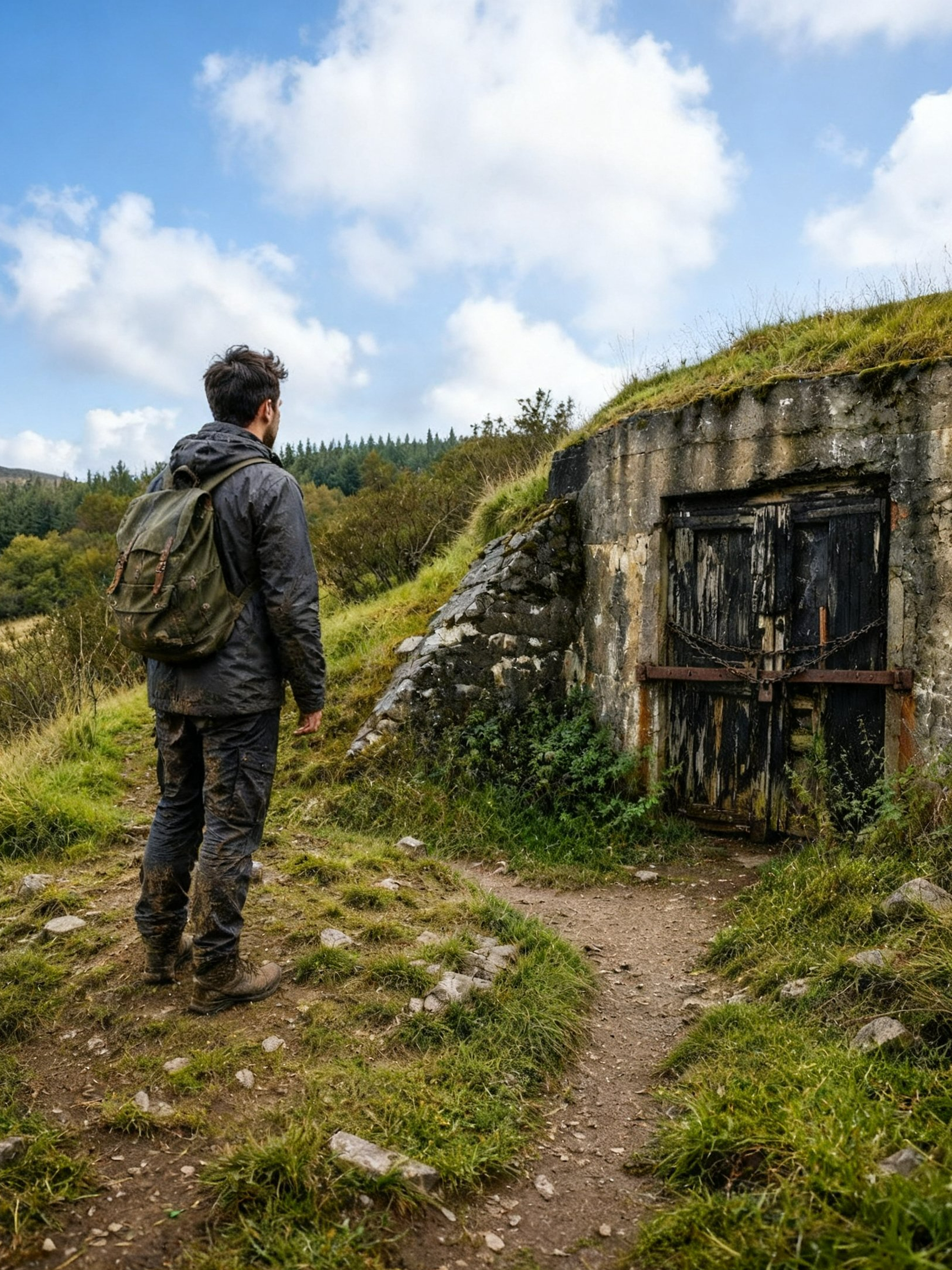
My Stepmother Threw Me Out and Gave Me a Worthless Cellar—Then I Found What My Father Had Sealed Behind the Wall
Three days after my father’s funeral, my stepmother changed the locks on the house I had helped pay for.
Then she slid a rusted cellar key across the kitchen table and said, “Your father left you something after all. The hole under the old carriage house. Seems appropriate.”
My half brother laughed.
The family attorney did not.
That was the first thing I noticed.
I didn’t cry.
I didn’t throw the key back.
I didn’t remind Caroline Mercer that I had spent eleven years keeping my father’s business alive while she spent those same years introducing herself at charity dinners as “Mrs. Harrison Vale.”
I simply picked up the key.
It was heavier than it looked.
Hand-cut teeth.
A tiny letter H scratched near the bow.
My father’s initial.
Caroline leaned against the marble island and folded her arms.
At fifty-eight, she had mastered the expression of a woman who believed a room belonged to her the moment she entered it. Her blond hair was smooth, her black funeral manicure still perfect, and the diamonds my father had given her flashed every time she moved her hand.
“You have until five to get your things,” she said.
My half brother, Grant, was standing behind her drinking my father’s bourbon at eleven in the morning.
“Actually,” Grant said, checking his watch, “four thirty would be better. Realtor’s coming.”
I looked toward the back windows.
Beyond them stretched the property my father had spent forty years building outside Charlottesville, Virginia.
Four hundred and eighty acres.
A historic brick manor.
Three barns.
A vineyard.
A small bottling operation.
Two tenant cottages.
A limestone carriage house from the 1890s.
And beneath that carriage house, according to everyone in the family, a useless cellar that flooded every spring and smelled like wet stone.
Harrison Vale had bought the first eighty acres when he was twenty-six.
He had died owning land worth somewhere between eighteen and twenty-four million dollars.
According to Caroline, none of it was mine.
Not the house.
Not the vineyard.
Not the company.
Not even the bedroom I had slept in since I was sixteen.
Just the cellar.
Grant lifted his glass toward me.
“Dad always did have a sense of humor.”
I looked at him.
“Apparently.”
He frowned.
People get uncomfortable when cruelty doesn’t produce the reaction they paid for.
Caroline expected tears.
Grant expected begging.
Their attorney, Mitchell Sloane, expected an argument he could record, summarize, and use later.
They got none.
I slipped the cellar key into my coat pocket.
Then I walked upstairs and packed one suitcase.
That bothered them more than shouting would have.
I had learned that from my father.
Not the father everyone else knew.
Not Harrison Vale, founder of Vale Heritage Winery, chairman of the regional land conservancy, donor to museums, hospitals, and university buildings.
I mean the man who taught me how to repair irrigation lines in sleet.
The man who made me redo payroll at nineteen because I had rounded a figure wrong by twelve cents.
The man who once told me, when a supplier screamed at me during a harvest disaster, “People show you how weak their position is by how loudly they defend it.”
My mother, Dad’s first wife, died when I was fourteen.
Dad married Caroline two years later.
Grant was nine.
I was sixteen.
Within six months, Caroline had redecorated my mother’s library.
Within a year, she called it “the blue sitting room.”
Within two, most photographs of my mother had vanished from downstairs.
I never confronted her.
My father noticed.
He always noticed.
He simply did not always act soon enough.
That was one of the great tragedies of him.
He loved peace so much that he sometimes confused postponing a fight with preventing one.
By twenty-two, I was working full-time at Vale Heritage.
Not because I had been handed an executive position.
My father put me in inventory.
Then accounts receivable.
Then supplier relations.
Then harvest scheduling.
Then compliance.
I knew which field flooded first after two days of heavy rain.
I knew which fermentation tank had a pressure valve that stuck in cold weather.
I knew which seasonal worker’s daughter had asthma.
I knew the names of the families living in both tenant cottages.
I knew what the business owed.
I knew what it could survive.
Grant knew which restaurants in Richmond had the longest whiskey lists.
Caroline knew what color the dining room should be repainted.
Yet somehow, after my father died, they became the owners.
And I became the inconvenience.
Not because I had failed him.
Because I had been useful for too long.
I had covered payroll twice with my own savings during bad harvest years.
I had canceled a graduate program when Dad had heart surgery.
I had spent six weeks sleeping in the office during the fungal outbreak of 2019.
I had negotiated the distribution agreement that kept our bottles in three states.
I had driven Dad to chemotherapy before sunrise and still made the nine o’clock production meeting.
I had signed no memoir contract.
I had demanded no applause.
I had simply stayed.
I stayed when the money was thin.
I stayed when his hands started shaking.
I stayed when Caroline disappeared to Palm Beach during harvest.
I stayed when Grant said the family business was “depressing.”
I stayed when my father became too weak to climb the hill and asked me, quietly, to describe how the vines looked in September.
And now they wanted me gone before the realtor arrived.
That was the moral arithmetic Caroline had failed to calculate.
The reader of a balance sheet might say I had inherited nothing.
But life has other ledgers.
By four fifteen, I had packed my suitcase, my mother’s recipe box, three photographs, two sweaters, my laptop, and the fountain pen Dad had given me when I turned thirty.
Caroline appeared in my bedroom doorway.
“That’s all?”
“That’s all.”
Her eyes moved around the room.
“You’re not taking the walnut chest.”
“It belonged to Mom.”
“It belongs to the estate.”
That surprised her too.
When someone is stealing your furniture, fighting over the furniture is often exactly what they hope you’ll do.
It keeps you from asking what else they are stealing.
Downstairs, Mitchell Sloane stood in the foyer beside a leather briefcase.
Mitchell had represented my father for nearly fifteen years.
He was sixty-two, silver-haired, careful, and expensive.
He also looked sick.
Not physically.
I stopped beside him.
“Mitchell.”
Grant called from the kitchen, “Don’t start.”
I ignored him.
Mitchell’s gaze dropped briefly toward my coat pocket.
Toward the key.
Then back to my face.
It lasted half a second.
But I saw it.
“Anything you need to tell me?” I asked.
Caroline entered behind me.
“Yes,” she said. “That your father’s estate documents are private and you are not entitled to harass counsel because you’re disappointed.”
Mitchell said nothing.
That told me more.
I nodded once.
“Understood.”
Caroline gave me a bright little smile.
“I’m glad you’re being mature.”
Then she handed me a folded piece of paper.
A property acknowledgment.
It stated that I was taking possession of one specifically devised asset under my father’s supplemental memorandum:
“Subterranean agricultural storage structure, east parcel, commonly identified as Old Carriage Cellar, including fixtures and non-inventoried contents.”
I read that sentence twice.
Non-inventoried contents.
Caroline tapped the signature line.
“The structure is probably worth negative money once you account for drainage.”
Grant laughed again.
Mitchell’s face changed.
A tightening near his jaw.
Caroline snatched the page before the ink dried.
“Wonderful.”
I handed the pen back.
“Can I have a copy?”
Mitchell answered before Caroline could.
He made one.
She did not like that.
I folded it and put it in my bag.
Then I picked up my suitcase.
At the front door, Grant called after me.
“What are you going to do with a cellar?”
I looked at him for a moment.
Then I asked the weakest question I could think of.
“Does it still have electricity?”
His smile widened.
That was the mistake.
Because Grant thought I was worried about where I was going to sleep.
I was wondering why my father had spent $18,400 upgrading electrical service to a worthless cellar six months before he died.
I knew that number because I had approved the invoice.
At the time, he told me it was for humidity control.
I had believed him.
Now I wasn’t sure I believed anything about that cellar.
I drove away at four thirty-seven.
I did not watch the house disappear in the mirror.
I drove straight to the carriage house.
The building stood nearly half a mile east of the manor, beyond an old stand of sycamores and a gravel service road that had not been properly maintained in years.
The upper level had once housed carriages, then tractors, then forgotten equipment.
The cellar entrance was around back.
Two stone walls narrowed toward an oak door reinforced with black iron straps.
Moss filled the mortar lines.
A dead vine clung to the arch.
My father used to call it the root cellar.
Caroline called it a mold pit.
Grant called it “the dungeon.”
I had not been inside since I was a child.
Rain was beginning.
Cold October rain.
I carried my suitcase under the shallow stone overhang and took out the key.
The lock resisted.
I leaned into it.
Something clicked deep inside.
The door opened three inches.
Cold air moved past me.
That was wrong.
The cellar was supposed to flood.
I switched on my phone flashlight.
Stone steps descended into darkness.
I found an old porcelain switch just inside.
Pressed it.
Warm industrial lights flickered on one row at a time.
Not ancient lights.
I stood still.
There were twenty-two steps.
At the bottom, the cellar opened into a long limestone chamber with an arched ceiling.
Metal shelving lined one wall.
Most shelves were empty.
At the far end stood an antique workbench.
Beside it was a new dehumidifier.
The floor was clean.
No standing water.
My father had lied about the condition.
Someone had been maintaining the place.
I closed and locked the door behind me.
That was instinct.
Then I walked slowly through the room.
There were old wine racks.
A broken press.
Wooden crates.
Two iron hooks in the ceiling.
A locked storage cabinet.
Nothing worth eighteen million dollars.
Nothing worth betraying a daughter over.
But the silence felt arranged.
That is the only way I can describe it.
The room did not feel abandoned.
It felt cleared.
I walked the perimeter.
On the north wall, limestone blocks were pale with age.
On the south wall, same.
The west wall was different.
Three rows near the floor had cleaner mortar.
Maybe several years old.
I crouched.
Ran my fingers over it.
Then my phone buzzed.
I answered.
Her voice was falsely pleasant.
“Just making sure you understand that possession of the cellar does not include access across the vineyard roads indefinitely.”
I looked up.
“Interesting.”
“You called forty minutes after I left.”
Then: “I’m clarifying boundaries.”
“Of course.”
“You’ll need to remove anything personal within ten days.”
“Anything personal?”
“Whatever junk Harrison left down there.”
I turned toward the rebuilt section of wall.
My pulse slowed.
Not quickened.
Dad had taught me another thing.
Fear speeds you up.
Evidence should slow you down.
I said, “Caroline, did you ever go inside this cellar?”
Another pause.
“It smelled disgusting.”
The room smelled like cold stone and cedar.
“All right.”
“No reason.”
She recovered quickly.
“Claire, don’t make this unpleasant.”
“You changed the locks three days after my father’s funeral.”
“That was necessary.”
“You gave me four hours to leave.”
“We all need closure.”
“You’re selling the house.”
“That’s none of your concern.”
“Then I imagine we’ve already achieved closure.”
I ended the call.
Thirty seconds later, Grant texted.
MOM SAYS DON’T TOUCH ANY ESTATE PROPERTY STORED THERE.
I stared at the message.
Then at the signed acknowledgment in my bag.
Including fixtures and non-inventoried contents.
I took screenshots.
Then I photographed every inch of the cellar before moving anything.
Every shelf.
Every crate.
Every wall.
Every tool.
Every label.
I uploaded the photographs to two cloud accounts.
Only then did I touch the workbench.
The top drawer contained old pruning shears.
The second held brass tags from wine barrels.
The third was empty except for a carpenter’s pencil and a yellow envelope.
My name was written across the front.
Dad’s handwriting.
I sat down.
For the first time that day, my hands shook.
Not when Caroline threw me out.
Not when Grant laughed.
Not when I signed away the appearance of everything.
Because handwriting is a cruel kind of resurrection.
For one second, someone dead becomes active again.
Intentional.
I opened the envelope.
Inside was one sheet of paper.
If you are reading this, I waited too long to correct something I should have corrected years ago.
Do not remove anything from this room until you have photographed where you found it.
Do not give Caroline, Grant, Mitchell, Vale Heritage Holdings, or the bank voluntary access.
Do not sign a release.
Do not accept a buyout.
Most importantly, do not assume the will is the controlling document.
The wall opposite the stairs was rebuilt in 2018.
You know how to find bad work.
I read it again.
Then a third time.
Mitchell’s name was there.
That hurt differently.
Caroline and Grant betraying me made emotional sense.
Mitchell had eaten Thanksgiving dinner with us.
He had brought my father books during chemo.
He had once told me I was “the only adult in the room” when a distributor dispute went sideways.
And yet Dad had warned me about him.
I photographed the letter.
Then I called no one.
That mattered.
The easiest mistake, when you discover a secret, is to tell somebody before you understand what the secret is.
I put on work gloves from the cabinet.
The wall opposite the stairs was the west wall.
The one with newer mortar.
“You know how to find bad work.”
Dad and I had renovated a tenant cottage together when I was seventeen.
He made me learn how to tap plaster, spot replaced boards, and find hollows behind masonry.
I took the wooden handle of a chisel and tapped the stone.
Three feet from the floor.
I tapped again.
My father had not hidden something behind a loose stone.
He had built a false section.
It took me forty minutes to find the release.
Not a lever.
Not a movie-style secret button.
A disguised steel pin behind an old wine rack bracket.
I pulled it.
Nothing happened.
Then I noticed faint scrape marks in the floor.
I pushed the rack.
A section of limestone wall moved.
Six inches.
Then a foot.
Not masonry.
A steel door faced with thin stone veneer.
Behind it was a room.
Windowless.
Climate-controlled.
Not with gold.
Not with cash.
Not with jewels.
Filing cabinets.
Archive tubes.
Three fireproof safes.
An old desktop computer.
Stacks of ledgers.
Survey maps.
Photographs.
And along the back wall, more than twenty framed documents wrapped in archival plastic.
My disappointment lasted perhaps two seconds.
Then I saw the labels.
VALE FAMILY LAND TRUST.
EMPLOYEE OWNERSHIP AGREEMENT.
BENTON CREEK CONSERVATION EASEMENT.
FOUNDERS’ VOTING SHARES.
ORIGINAL MINERAL AND WATER RIGHTS.
I stopped breathing for a moment.
My father had not hidden treasure.
He had hidden structure.
And structure is where ownership lives.
I took photographs without entering.
Then video.
Then I stepped across the threshold.
On top of the nearest box was another envelope.
CLAIRE — START HERE.
Inside was a flash drive and a handwritten note.
The note said only:
Numbers can be changed.
Dates can be backfilled.
People can lie.
Recorded land cannot forget.
Start with Book 2147, Page 88.
I knew where to go.
Albemarle County land records.
But it was nearly seven at night.
So instead I searched the archive.
By midnight, I understood enough to become afraid.
Not helpless afraid.
Useful afraid.
The kind that makes you check locks twice and put your phone where you can reach it.
My father had been moving assets for years.
Not hiding them from taxes.
Not hiding them from creditors.
Protecting them from his own family.
The vineyard acreage had been divided among multiple entities.
The manor and thirty surrounding acres were held by Vale Heritage Holdings.
Caroline appeared to control that company through the current will.
But two hundred and eighty acres belonged to the Harrison and Eleanor Vale Land Trust.
Eleanor was my mother.
I had never heard of the trust.
Another eighty-seven acres were covered by a conservation easement that prohibited residential development.
Thirty-nine acres around the production facility were subject to an employee ownership option triggered by a “change in family control.”
And the old carriage cellar?
It sat on a six-acre parcel.
The parcel had its own deed.
Its own tax identification number.
Its own access easement.
Its own underground water rights.
And, according to a document dated nineteen years earlier, it had been transferred to something called the Eleanor Vale Testamentary Preservation Trust.
Beneficiary:
Claire Eleanor Vale.
I stared at my name.
Then I found the first twist.
I did not own six worthless acres.
I controlled the legal access corridor connecting the manor parcel to the county road on the east side.
The main western entrance belonged to the winery operation.
Commercial use only.
The driveway Caroline planned to advertise as the private entrance to an eighteen-million-dollar luxury estate crossed my easement for nine hundred feet.
Without my permission, any residential subdivision plan was crippled.
But Dad’s secret was larger than leverage.
Much larger.
At two eighteen in the morning, I opened a red archival box.
Inside were records of payments.
Wire transfers.
Board authorizations.
Appraisal reports.
And photocopies of signatures.
My signature.
Except I had never signed them.
My name appeared on three documents approving land transfers from the preservation trust into Vale Heritage Holdings.
Dates when I had been in Oregon on a distribution trip.
Another document claimed I had waived beneficiary rights.
Then I found a bank letter.
The transfer had been rejected.
Signature discrepancy and insufficient trustee authorization.
Someone had tried to move my land.
And then apparently pretended the failure had never happened.
The next morning, I was sitting in the county clerk’s office when the doors opened.
I requested Book 2147, Page 88.
The clerk, a woman named Denise with red glasses and a hummingbird pin, pulled the record.
There it was.
My father as grantor.
The Eleanor Vale Testamentary Preservation Trust as grantee.
Nineteen years ago.
Attached exhibit:
Six acres and permanent ingress-egress rights extending to County Route 614.
I ordered certified copies.
Then copies of every later filing involving the parcel.
There were attempted changes.
None valid.
One document submitted five years earlier had been withdrawn.
Another had been rejected.
A third had a notation referring to “potential fraud indicators.”
I asked Denise whether that wording was normal.
She lowered her glasses.
“Who submitted it?”
She turned the record.
Mitchell Sloane.
I felt something inside me become very quiet.
Not broken.
By ten thirty, I was in the office of a lawyer my family had never used.
Her name was Rachel Kim.
Forty-three.
Former state attorney general’s office.
Land use and trust litigation.
I chose her because Dad had once complained that she had “taken a developer apart one filing at a time.”
Coming from my father, that was admiration.
Rachel read the certified deed.
Then Dad’s letter.
Then the property acknowledgment Caroline made me sign.
When she reached “including fixtures and non-inventoried contents,” she actually smiled.
“Your stepmother had counsel when she gave you this?”
“Was Sloane present?”
“And he allowed her to transfer possession in writing?”
“He made the copy.”
Rachel leaned back.
“Interesting.”
“That’s what I said.”
She looked at me.
“Claire, before we do anything aggressive, I need to ask a question. Do they know what’s in the cellar?”
“I don’t think Caroline does.”
“My father’s warning suggests he knows something.”
“He thinks electricity is the cellar’s biggest feature.”
Rachel nodded.
“That’s useful.”
“Because people who think they’ve already won keep making decisions.”
We sent nothing that day.
That was Rachel’s advice.
Let them move.
I rented a one-bedroom apartment above a bakery in Charlottesville.
I bought a folding table.
I slept five hours.
And I went to work.
Technically, I had not been fired from Vale Heritage.
That changed Monday.
At nine twelve, an email arrived from Grant.
Effective immediately, my position as Chief Operating Officer was terminated “as part of leadership restructuring.”
My severance?
My company health coverage?
Ending that week.
My access credentials?
At nine twenty-one, Caroline posted a photograph on the winery’s social media accounts.
She and Grant stood in front of the manor smiling.
The caption announced “a bold new chapter for the Vale legacy.”
At eleven, the regional business journal reported that Vale Heritage was exploring a “strategic hospitality conversion” of the estate.
Luxury cottages.
Private event space.
Wellness retreat.
Thirty-eight villa sites.
Estimated project value:
Forty-two million dollars.
That explained the realtor.
It also explained why they needed me gone quickly.
They weren’t selling the house.
They were packaging the land.
At noon, one of our oldest vineyard workers called me.
Luis Mendoza had worked for my father twenty-three years.
“They said seasonal contracts may change,” he said quietly.
“What does that mean?”
“They don’t say.”
“Did Grant meet with you?”
“He sent a consultant.”
That was Caroline’s moral mistake.
Throwing me out was personal.
Firing me was strategic.
Threatening the people who had built the place turned it into something else.
My father had promised Luis and seventeen long-term employees that the production acreage would not be stripped for development.
I found that promise in the cellar archive.
Not on a napkin.
Not in a sentimental note.
In an executed employee option agreement witnessed by two attorneys.
Change in family control triggered the employees’ right to purchase forty percent of the production company at a predetermined formula.
Grant’s new restructuring might have triggered it.
Caroline’s proposed development almost certainly had.
They thought they owned the company completely.
They didn’t.
They thought I was unemployed.
I wasn’t done working.
They thought Luis and the others were labor.
Legally, they might be future owners.
Two days later, Caroline called.
Her voice was sweet again.
“Claire, I’m hearing you’ve been asking questions at the courthouse.”
Small county.
Big mouths.
She exhaled.
“You’re embarrassing yourself.”
“That little parcel has no meaningful value.”
“Then why do you care?”
“I care because your father has been dead less than a week and you’re already trying to manufacture conflict.”
I looked at the original trust ledger open on my table.
“Caroline, who told you I was at the courthouse?”
She ignored that.
“Mitchell says any obsolete filings you find were superseded.”
“The estate plan.”
“Can he send me that in writing?”
Then her voice hardened.
“You always did have a difficult streak.”
“Dad called it due diligence.”
“Your father indulged you.”
That one almost made me laugh.
Dad once made me spend Christmas Eve checking cork inventory because a shipment was short.
Indulgence had not been his parenting style.
Caroline continued.
“We’re prepared to offer you one hundred thousand dollars for the cellar parcel.”
There it was.
I let three seconds pass.
“For the worthless cellar?”
“It would simplify things.”
“Does the parcel interfere with your project?”
“Then why pay a hundred thousand?”
“Because I’m trying to be kind.”
Caroline’s kindness had always been priced like jewelry.
Expensive in public.
Worthless under examination.
I asked softly, “Would you send the offer through Mitchell?”
“Please do.”
“You’ll consider it?”
“I’ll read it.”
She relaxed.
I could hear it.
She thought I was negotiating.
I was collecting admissions.
The written offer arrived forty minutes later.
One hundred thousand dollars.
In exchange for the parcel, all easement rights, all subsurface rights, and “any claims arising from historical trust arrangements whether known or unknown.”
Rachel circled that sentence.
“They know.”
“Sloane knows.”
“At least enough to be scared.”
“Should we answer?”
We countered.
Twenty-six million dollars.
Caroline called within four minutes.
“Have you lost your mind?”
I put her on speaker while Rachel sat across from me.
“You said it had no meaningful value.”
“This is extortion.”
“It’s an offer.”
“For six acres?”
“For everything you asked me to waive.”
“You think some ancient trust paperwork gives you leverage?”
“I didn’t say that.”
“You’re trying to sabotage your father’s legacy.”
People use it when they want ownership without responsibility.
I looked at Rachel.
She nodded once.
I said, “Caroline, do you still want to buy it?”
“Then decline.”
“You’ll regret this.”
“Please put that in writing too.”
She hung up.
Rachel smiled.
“I like you.”
“People in my family generally don’t.”
“Maybe because you listen.”
By Friday, we had enough for the first legal move.
Not the big one.
A narrow one.
Petition to confirm trust ownership and enjoin interference with the six-acre parcel and easement.
Quiet title.
Preservation of evidence.
Nothing dramatic.
Except Rachel included the rejected transfer attempts and disputed signatures.
The judge issued a temporary order within forty-eight hours preventing any conveyance, construction, or alteration affecting the parcel until the hearing.
That stopped the eastern access road.
Mini-payoff number one.
Grant found out while meeting potential development partners at the manor.
One of them was a hotel group from Atlanta.
According to Luis, Grant threw a folder across the office.
Caroline called me twelve times.
I answered none.
Mitchell sent a letter accusing me of “weaponizing technical irregularities.”
Rachel framed that phrase mentally.
“Technical irregularities is lawyer language for something he doesn’t want called fraud yet.”
Then came the second payoff.
The employee group exercised its purchase option.
Grant’s restructuring had indeed triggered it.
Eighteen workers, many of whom Caroline could not identify by name, now had a contractual path to forty percent ownership of the production operation.
Caroline’s consultant tried to say the agreement was outdated.
Rachel found the renewal clause.
Dad had reaffirmed it eighteen months before his death.
The same month his cancer returned.
He had been building a barricade.
The question was against whom.
I returned to the cellar every night.
Not alone anymore.
Rachel insisted on an evidence technician, a locksmith, and two cameras.
We catalogued boxes.
Forty-six in total.
One safe contained family records.
One held corporate documents.
The third would not open.
We found no combination.
I knew Dad used numbers with meaning.
Not birthdays.
Too obvious.
Not anniversaries.
He disliked sentimentality in passwords.
I left it closed.
The archive revealed his logic piece by piece.
Caroline had pushed him for years to sell vineyard acreage.
Grant wanted to convert the estate.
Mitchell had created holding companies.
There had been meetings I was not invited to.
Appraisals I never saw.
Term sheets with developers.
Most never executed.
Dad resisted.
But resistance inside a marriage is messy.
So he used legal structure instead of confrontation.
Land trust.
Conservation easement.
Employee option.
My preservation trust.
He had quietly made the estate impossible to dismantle without multiple independent approvals.
And then he died.
Caroline read the will.
Saw the holding company.
Saw voting control.
And assumed the walls had disappeared.
She never checked the foundation.
Then we found something worse.
A series of emails printed from Dad’s account.
Caroline to Mitchell.
Grant copied.
Language about “consolidating legacy assets.”
“Neutralizing outdated restrictions.”
“Obtaining Claire’s acknowledgment when timing is favorable.”
One message was dated the week after Dad entered hospice.
Claire will be emotional and focused on Harrison. Get the necessary signatures handled before she starts asking operational questions.
I read it twice.
Rachel watched me.
“You okay?”
But pain and incapacity are different things.
I could be hurt and still function.
That distinction had saved me more than once.
The proposed document attached to the email was a comprehensive release.
It would have surrendered my trust rights.
My easement.
My objections to the employee option.
Everything.
There was a signature page.
They never got me to sign it.
Maybe Dad stopped them.
Maybe time did.
Either way, Caroline’s rush after the funeral made sense.
She needed me displaced before I found my legal footing.
The cellar was supposed to humiliate me.
A bone thrown to the unwanted daughter.
Except Dad had turned the bone into a key.
The hearing was set for Tuesday.
Caroline arrived in navy silk.
Grant wore a charcoal suit he had probably purchased for investor meetings.
Mitchell represented them.
Rachel and I sat at the opposite table.
Caroline never looked at me.
That was deliberate.
People who want an audience often deny you eye contact to show power.
The judge was Evelyn Price, sixty-something, efficient, unsentimental.
She read the filings for twenty minutes before speaking.
“Mr. Sloane, your clients characterize the plaintiff’s deed as obsolete.”
“Yes, Your Honor.”
“Show me the superseding instrument.”
Mitchell stood.
“There are subsequent estate planning documents that reflect Mr. Vale’s intent to consolidate—”
“That is not what I asked.”
Judge Price tapped the deed.
“This was recorded.”
“The trust remains active?”
Mitchell hesitated.
“We dispute the current enforceability.”
“Has it been terminated?”
“No formal termination document has been located.”
“Then we can shorten this.”
Caroline’s face changed.
The judge confirmed the temporary injunction.
No development.
No road modification.
No transfer affecting my parcel.
Then Rachel asked for sanctions preservation.
She presented the attempted filings bearing my disputed signature.
Mitchell objected.
The judge looked at him.
“Did your office submit these?”
“We transmitted documents provided by the client.”
Caroline turned her head.
That was interesting.
For the first time, she looked at Mitchell.
He had just created distance.
But visible.
Systems of betrayal rarely collapse from morality.
They collapse from allocation of blame.
The judge ordered all related electronic records preserved.
No deletion.
No alteration.
Outside the courthouse, Grant finally confronted me.
He followed me down the steps.
“You’re destroying everything Dad built.”
Reporters were twenty feet away.
Rachel was beside me.
Grant’s face was red.
“You think those vineyard guys can run this place? You think a dead trust and some dirt make you Dad?”
“Then what the hell do you want?”
I looked at him.
“The same thing you want.”
He laughed bitterly.
His smile faded.
“I want to know what Dad actually owned before everyone started selling it.”
He leaned closer.
“You always thought you were better than us.”
“I thought I worked harder than you.”
That hit because it was measurable.
He lowered his voice.
“You have no idea what Caroline did for him.”
“Probably.”
“She kept him alive.”
“I drove him to every oncology appointment for nine months.”
“She was his wife.”
“And I was his daughter.”
The word came out before he could stop it.
As if daughter were a lower class of claimant.
He saw my expression and knew.
For one moment, Grant looked ashamed.
Then Caroline called his name from the SUV.
That night, I finally opened the third safe.
The combination came from an odd place.
A handwritten barrel code in Dad’s old notebook:
November 3, 1987.
The day my parents bought the original vineyard acreage.
Inside the safe was no currency.
There was a leather binder.
A small cassette recorder.
A sealed legal envelope.
And my mother’s wedding ring.
I sat on the stone floor.
The ring undid me more than the funeral had.
I held it in my palm and cried without sound.
Not because I was weak.
Because grief collects interest.
Eventually, it comes due.
After ten minutes, I wiped my face and opened the binder.
The first page contained a photograph of my mother standing in a field.
Dark hair tied back.
Mud on her jeans.
Dad beside her holding a shovel.
Behind them, nothing but weeds and stakes.
The original vineyard.
Under the photograph, Dad had written:
She built the first ten acres with me.
Never let anyone rewrite that.
The binder documented my mother’s financial contribution.
Inheritance from her grandmother.
Forty-two thousand dollars in 1987.
Nearly the entire down payment on the first property.
She was not just Harrison Vale’s first wife.
She was a founder.
Her name had originally appeared on incorporation papers.
Later, after her death, shares had been transferred into trust.
Those shares had never been properly included in Dad’s estate because they had never been his.
Caroline didn’t control all voting shares.
Neither did Grant.
I might own thirty-four percent outright through my mother.
Combined with the employee option?
Caroline and Grant could lose control of Vale Heritage entirely.
That was twist number one.
The cellar wasn’t my inheritance.
The cellar contained proof that part of the empire had always been mine.
Rachel worked until two in the morning.
At seven, she called a forensic corporate attorney.
By noon, we had an emergency board challenge ready.
The family board had five members.
Dad’s old friend Robert Haines.
And me—though Caroline had claimed my seat ended with my employment.
My seat was attached to the founder-share class.
My mother’s class.
At the next board meeting, I walked in.
Caroline stood.
“You’re not authorized to be here.”
I placed the binder on the conference table.
Mitchell went pale.
Not surprised.
“You’ve seen this before,” I said.
He didn’t answer.
Grant looked between us.
“What is that?”
Caroline spoke first.
“Old paperwork.”
I opened to the share certificate.
Certificate Number 001-B.
Eleanor Mercer Vale.
Thirty-four percent founder interest, adjusted after later issuance.
Grant stared.
“That’s Mom’s company.”
I looked at him.
“No. It was my mother’s too.”
Caroline’s voice sharpened.
“Those shares were absorbed after Eleanor died.”
“Mitchell.”
All eyes turned.
Mitchell took off his glasses.
“Caroline, I need to recommend that we recess.”
Grant stood.
“Because there are questions that should be reviewed.”
“What questions?”
Nobody answered.
Grant slapped both hands on the table.
“What questions?”
I almost pitied him.
Because Caroline had done to Grant what she accused everyone else of doing to her.
She had let him believe certainty was inheritance.
He had grown up inside a story where he was the son.
The natural successor.
The rightful heir.
He never had to learn the architecture beneath the story.
Now the floor was moving.
Robert Haines, seventy-one and normally silent, picked up the certificate.
“I remember this.”
Caroline turned.
“Eleanor owned the original company with Harrison.”
“Not like this.”
Robert looked at her.
“Yes. Like this.”
There are moments when a family myth dies without ceremony.
No thunder.
No confession.
Just an old man saying four words.
Yes. Like this.
The board meeting ended without a vote.
Mitchell withdrew as corporate counsel forty-eight hours later.
That was payoff number three.
He did not withdraw from representing Caroline personally.
Then the hotel group suspended negotiations.
The forty-two-million-dollar development package froze.
Grant’s lenders requested updated title opinions.
The winery’s bank flagged the disputed ownership.
Caroline’s victory week had become a paper avalanche.
And still, I did not move back into the house.
Everyone expected me to.
Even Luis asked.
“Why not go home?”
“Because it isn’t mine yet.”
“But maybe soon.”
“You don’t want them to see you won?”
I looked toward the vineyard.
Rows of vines ran over the hill in late-season red.
“Winning isn’t sleeping in Caroline’s bedroom.”
Luis smiled.
“She’ll hate that answer.”
Caroline’s public strategy changed.
She began telling people I was grieving.
That I was confused.
That I had developed an unhealthy fixation on old records.
Then she suggested my father had kept documents in the cellar because he did not consider them operative.
It was clever.
Never attack the evidence directly if you can attack the person interpreting it.
I said nothing publicly.
Rachel hated social media fights.
“So do judges,” she told me.
Then we found the second twist.
Not in the safe.
Not in the binder.
In the cassette recorder.
There were six tapes.
Most were Dad dictating notes.
Property descriptions.
His voice was weaker than I remembered.
The fifth tape was recorded five months before his death.
He sounded tired.
“Claire, if you’re hearing this, I’m assuming events went badly.”
I stopped the tape.
Rachel sat beside me in the cellar.
I pressed play.
Dad continued.
“Caroline is not the whole problem.”
Rachel looked at me.
The recorder hissed.
“I made a mistake years ago. I believed keeping conflict contained was the same as protecting the family. It wasn’t. It protected bad behavior. Mitchell assisted transactions I later questioned. Some were reversed. Some may not have been. Grant has been told for years he will control the estate. I allowed that expectation because it kept the peace.”
A long breath.
“I was wrong.”
My throat tightened.
“If they move against Claire immediately after my death, assume they are acting from a document I did not authorize.”
Rachel paused the tape.
“What document?”
“I don’t know.”
We searched.
Then we opened the sealed legal envelope.
Inside was a letter addressed to the Virginia State Police Financial Crimes Section.
Dad had been preparing to report possible forgery involving estate documents.
Attached was a photocopy of a new will.
Dated eight weeks before his death.
The will that gave Caroline control.
I stared at it.
Rachel pointed to the witness page.
Two witnesses.
One was a home-health aide.
The other was Mitchell Sloane.
Not illegal by itself.
Then she pointed to the signature.
“Harrison’s.”
“Look at the date.”
A Thursday.
Rachel asked, “Where was your father that Thursday?”
I knew without checking.
“In the hospital.”
“Condition?”
I opened my calendar.
Chemotherapy complication.
Severe infection.
I looked at Rachel.
She said nothing.
I pulled medical records we had already obtained for the trust litigation.
At p.m. on the day the will was supposedly signed, my father’s chart documented him as receiving continuous sedative medication.
At , physician note: patient minimally responsive.
At , the will claimed he signed with witnesses present at home.
He was seventeen miles away in a hospital bed.
That was the real bomb.
The controlling will might be forged.
Everything Caroline thought she had inherited could collapse.
We did not confront her.
We did not confront Grant.
We did not call Mitchell.
Rachel contacted the probate court.
Then law enforcement.
The next ten days felt almost normal from the outside.
That was the strangest part.
Cars drove through town.
Restaurants opened.
Students crossed the university campus.
Leaves turned orange.
People bought coffee.
Meanwhile my family’s entire legal reality was cracking underground.
A forensic document examiner reviewed Dad’s signature.
Preliminary opinion: highly suspicious.
Different pen pressure.
Different formation of the H.
Possible simulation from an existing signature.
Hospital records made execution at the stated place impossible.
The home-health aide, when interviewed, initially claimed she had witnessed signing.
Then investigators showed her the medical timeline.
Her story changed.
She said she had been given a document already signed.
Mitchell told her Harrison had executed it earlier and needed witness verification.
Then her story changed again.
That is what pressure does to weak lies.
It doesn’t always break them immediately.
It makes them migrate.
Caroline retained separate criminal counsel.
So did Mitchell.
Grant called me at 11:47 one night.
I answered.
For a while, he said nothing.
Then, “Did Mom forge Dad’s will?”
I sat on the floor of my apartment.
“Why are you asking me?”
“Because nobody tells me anything.”
“That’s not new.”
His voice cracked.
Not dramatically.
“I don’t know.”
“Do you think she did?”
“I think the document deserves investigation.”
Then he said, “She told me he changed it because he didn’t trust you.”
Even knowing it was probably false, it hurt.
Because parents leave behind echoes.
Some can still wound you after death.
“What else did she tell you?”
“That you were planning to sell your shares to outsiders.”
“I didn’t know I had the shares.”
“That you hated the winery.”
“I gave it eleven years.”
That surprised me.
Grant breathed into the phone.
Then he said something I had never expected from him.
“I was jealous of you.”
I closed my eyes.
“No, just listen. Dad trusted you with things. Real things. He gave me money. Cars. Trips. Titles. But if something was broken, he called you.”
I said nothing.
“You know what that feels like?”
He gave a short, bitter laugh.
“Mom died. Caroline arrived. Dad gave me responsibilities because he didn’t know how to give me comfort.”
Then Grant whispered, “I thought he loved you more.”
“I thought he found me more useful.”
That landed between us.
Two children in the same house.
Both misreading the same father in opposite directions.
But understanding someone’s wound does not erase what they did with it.
Grant had still laughed while I was evicted.
Still signed restructuring papers.
Still threatened workers’ contracts.
Pain explains cruelty more often than people admit.
It does not excuse it.
“Grant,” I said, “you need your own attorney.”
“Are you coming after me?”
“If you forged something, yes.”
“I didn’t.”
“If you moved trust assets?”
“I didn’t know about the trust.”
“If you retaliated against employees for exercising their rights?”
“That,” I said, “you did know.”
He breathed out.
“You should fix what you can before somebody orders you to.”
He hung up.
The next morning, Vale Heritage reinstated all seasonal contracts.
Grant signed the notice.
No announcement.
No apology.
But it was a start.
Caroline was furious.
According to the employee group, she screamed at him in the manor office for twenty minutes.
Their system was splitting.
Mitchell resigned from representing her two days later.
Then he requested a proffer meeting with investigators.
That was when Caroline finally came to see me.
Not at the apartment.
At the cellar.
I was there with Rachel and the evidence team when a black Range Rover stopped outside.
Caroline stepped out alone.
Rachel said, “Do not talk to her privately.”
Caroline descended the stone steps in cream trousers and a camel coat.
She looked around the cellar.
Her face gave away almost nothing.
But when she saw the open false wall, she stopped.
“So,” she said.
I stood beside the workbench.
“All this time.”
“He kept this from me.”
There it was.
Not fear first.
That made her human in a way I almost resented.
She walked slowly toward the hidden room.
Rachel stepped between her and the threshold.
“You can’t enter.”
Caroline looked at her.
“And you are?”
“Rachel Kim. Counsel for Claire and the preservation trust.”
Caroline laughed once.
“Of course.”
Then she looked at me.
“You think your father was some genius protecting you?”
“He was protecting himself.”
“You have no idea what it was like being married to him.”
“That’s true.”
“He shut me out.”
“He shut everyone out.”
“I gave him seventeen years.”
“He promised Grant would be taken care of.”
“He probably intended to.”
“He promised me security.”
“I believe you.”
That unsettled her.
She wanted combat.
I gave her acknowledgment.
People expect hatred to simplify the person they hurt.
Sometimes refusing to simplify them is more powerful.
Caroline walked to the old workbench and placed both hands on it.
“He loved your mother in a way he never loved me.”
I said nothing.
“She was dead, and I still had to compete with her.”
“I didn’t ask you to.”
“No. You just looked like her.”
That explained more than a hundred insults ever had.
Her contempt had not begun with me.
I had simply worn the wrong face.
She turned.
“You came into every room carrying her.”
“I was sixteen.”
For the first time, Caroline looked tired.
Then the hardness returned.
“He told me those shares were gone.”
“Maybe he thought they were.”
“He told me the trust was old paperwork.”
“He told me this estate would pass cleanly.”
“Then why did someone need a forged will?”
Her face froze.
Rachel shifted slightly beside me.
Caroline whispered, “Careful.”
“Is that a threat?”
“What is it?”
“A warning.”
“About what?”
She looked toward the hidden room.
Then back at me.
“Your father had enemies you don’t know about.”
I almost smiled.
It sounded theatrical.
Convenient.
A desperate redirection.
Then she said a name.
“Calder Ridge.”
Rachel’s expression changed.
I had heard the name only once.
A development company.
Years earlier.
They had tried to purchase land bordering the winery.
Dad refused.
Caroline continued.
“You think this is about me wanting a house and Grant wanting money. You think Mitchell invented all of this.”
“Didn’t he?”
“Not all of it.”
“What did Calder Ridge have to do with Dad’s estate?”
She looked at Rachel.
“I’m not speaking with her here.”
“You’re not speaking with me without her.”
Caroline smiled without warmth.
“There she is.”
“The daughter Harrison trained.”
Then she reached into her handbag.
Rachel tensed.
Caroline removed a photocopy.
Placed it on the workbench.
A purchase agreement.
Calder Ridge Development Partners.
Option to acquire 312 acres of Vale property upon death of Harrison Vale.
$9.8 million.
Far below market.
Dad’s signature appeared at the bottom.
Dated twelve years earlier.
My stomach tightened.
“Where did you get this?”
“In Harrison’s office.”
“Why didn’t you disclose it?”
“Because it was expired.”
Rachel picked it up carefully.
Caroline pointed to a renewal clause.
Automatic extensions tied to debt guarantees.
There was a reference to a loan.
A loan I had never seen.
Twenty-one million dollars.
Collateralized through multiple properties.
Caroline watched my face.
“Now you understand why I wanted consolidation.”
“You think I was stealing your vineyard?”
“You tried to buy my rights for a hundred thousand dollars.”
“I was trying to close every title defect before Calder Ridge used them.”
“Without telling me?”
“You would have fought me.”
“And while you were fighting, they would have exercised.”
Rachel asked, “Where is the original?”
Caroline hesitated.
“I don’t know.”
“Who does?”
Another pause.
“Mitchell.”
That was the first moment I considered that Caroline might be telling part of the truth.
The most dangerous lies are not completely fabricated.
They are accurate facts arranged around missing facts.
Rachel said, “Why bring this now?”
Caroline looked at me.
“Because Mitchell is talking.”
“About the will?”
“About everything.”
“You’re worried he’ll blame you.”
“Should he?”
Caroline held my gaze.
“I told him I wanted Harrison’s estate consolidated. I told him I wanted Grant protected. I told him Claire had to be kept from obstructing the transition.”
She had switched to third person without noticing.
“I never told him to forge Harrison’s signature.”
Not innocence.
Boundary drawing.
A woman deciding which crimes belonged to her.
“Did you know the will was false?”
Her eyes moved away.
That was enough.
“You knew,” I said.
“I knew Harrison was not signing papers at home that week.”
“Yet you submitted it.”
“My lawyer told me it was valid.”
“You knew.”
Her voice sharpened.
“I knew we had debt. I knew a developer had a contract. I knew your father was dying and had left a maze nobody could navigate. I knew Grant would lose everything. I knew the employees would panic. I knew the bank would move. I knew if I didn’t gain control immediately, Calder Ridge would.”
She looked at me.
“You would survive.”
That sentence told me everything.
Not because she hated me.
Because she had calculated me.
Claire is competent.
Claire is independent.
Claire will land on her feet.
Therefore Claire can be sacrificed.
Strong people know this logic.
If you can survive harm, people begin calling the harm acceptable.
“You threw me out because you thought I’d survive it.”
“You had somewhere to go.”
“No, I didn’t.”
“You always figure something out.”
“So that made it okay?”
The word came quietly.
Almost uselessly late.
“No,” she repeated.
Then she looked toward my father’s hidden room.
“But neither you nor Grant understand what Harrison put in motion.”
Rachel and I stood in silence.
Then Rachel said, “We need to find the loan.”
It was not twenty-one million anymore.
It was fourteen point six.
The debt was real.
So was Calder Ridge’s involvement.
But the option agreement had a fatal problem.
The land subject to purchase included acreage Dad no longer owned individually.
Trust land.
Conservation land.
Employee-option land.
He had dismantled the collateral base over years.
Not illegally.
Methodically.
Every transaction had lender notices.
Every notice had acknowledgment.
Calder Ridge could claim debt rights.
It could not simply take three hundred twelve acres.
Dad had not built a barricade only against Caroline.
He had built one against them.
The answer arrived in an email from Mitchell’s attorney.
As part of cooperation with investigators, Mitchell produced eighteen years of records.
Among them were communications with Calder Ridge.
The first messages were ordinary.
Land offers.
Negotiations.
Loan restructuring.
Then they changed.
Threats of default.
Personal guarantees.
A proposal to convert the entire Vale estate into a luxury residential complex.
Dad resisted.
Then someone discovered the trust assets.
Calder Ridge’s lawyer suggested “simplifying beneficiary interests.”
Mitchell became the middleman.
Dad discovered what he was doing.
That explained the warning.
That explained the cellar.
That explained why a wealthy man had spent his final years moving pieces across a legal chessboard.
He had not been hiding money.
He had been hiding escape routes.
Two weeks later, the probate court suspended Caroline’s authority as executor.
A neutral administrator was appointed.
The alleged final will was placed under formal contest.
The prior will resurfaced.
Under that document, Caroline received a life interest in the manor plus a generous trust.
Grant received cash, investment assets, and a minority company interest.
I received Dad’s remaining founder shares.
Not everything.
Not even most of the liquid wealth.
But enough.
Combined with my mother’s shares, I controlled fifty-one percent of Vale Heritage.
Assuming the documents held.
Caroline stared at me across the courtroom when the judge read the interim order.
Just the look of someone watching a future she had already furnished disappear room by room.
Outside, reporters shouted questions.
I answered one.
“Are you planning to remove your stepmother from the property?”
That made headlines.
The truth was simpler.
I did not want revenge shaped like homelessness.
I knew what that felt like.
Caroline had sixty days under the court order while the life-interest issue was litigated.
Grant resigned as acting CEO.
The employee group nominated Luis to the board.
He nearly refused.
I told him Dad had planned for workers to have a voice.
Luis said, “Harrison planned many things badly.”
“Also true.”
We appointed an interim operating team.
No luxury villas.
No wellness resort.
No layoffs.
Harvest continued.
Wine does not care that your family is in probate court.
Grapes ripen on schedule.
That steadiness saved me.
Before sunrise, I walked rows with workers.
At noon, I met lawyers.
At night, I catalogued the cellar.
The place Caroline intended as my humiliation became headquarters for rebuilding the truth.
And gradually, something shifted inside me.
For years, I had wanted my father to say it.
You mattered.
You did enough.
I see what you gave.
I thought the inheritance might become that sentence.
Money cannot say what people failed to say.
Shares cannot hug you.
Land cannot apologize.
But justice can correct the public record.
That mattered more than I expected.
My mother’s name returned to the company history.
We restored Eleanor Vale as co-founder on corporate materials.
The employee agreements were honored.
The conservation acreage stayed protected.
Luis and the long-term crew purchased their stake through financing Dad had arranged years earlier.
We created a scholarship for workers’ children using proceeds from a non-core property sale.
Not because I was trying to become a saint.
Because my father had designed the system to reward the people who stayed.
The people everybody else called labor.
The people who knew where pipes froze and tractors failed and vines needed pruning.
The invisible people.
I knew something about being one of them.
Grant came to see me in December.
He looked different.
Not transformed.
Just reduced to normal size.
Without the manor.
Without the title.
Without Caroline speaking for him.
He sat across from me in the cellar.
“I’m going to Denver,” he said.
“For what?”
“What kind?”
“Commercial insurance.”
I almost smiled.
“You hate insurance.”
“I also hate being indicted.”
“You haven’t been indicted.”
“Motivational distinction.”
Then his face turned serious.
“I signed some things.”
“I didn’t forge anything.”
“The investigators said I may have exposure on the employee contracts.”
“I’m cooperating.”
He looked at Dad’s workbench.
“Do you hate me?”
“Because that would require a lot of maintenance.”
Then, after a moment, “I’m sorry I laughed.”
That was the apology I wanted from him.
Not for the company.
Not for the court filings.
For the kitchen.
For the bourbon glass.
For making my humiliation entertainment.
“I know,” I said.
He swallowed.
“You always do that.”
“Make people work harder because you don’t give them the reaction they expect.”
“I learned it here.”
“From Dad?”
“From all of you.”
That hurt him.
But truth sometimes should.
He stood to leave.
At the stairs, he stopped.
“Mom’s scared.”
“She should listen to her lawyer.”
“I don’t mean court.”
I looked at him.
“What do you mean?”
“She thinks somebody has been watching the house.”
“She won’t say.”
“Calder Ridge?”
He rubbed his hands together.
“There was a black truck outside three nights. No plates in front.”
“Virginia only requires rear plates?”
He gave me a look.
“You know what I mean.”
“You tell police?”
“She won’t.”
“Because she says police are the least dangerous people who might start asking questions.”
That night, I called Rachel.
We increased security.
Two cameras became six.
The cellar alarm was upgraded.
For three weeks, nothing happened.
Then, on January 8, at a.m., my phone alerted.
East entrance.
I opened the camera feed.
A person in a dark jacket stood outside the cellar.
Face covered.
Gloved hands.
They did not force the main door.
They walked directly to the side retaining wall.
To a spot I had never paid attention to.
Then they knelt.
Removed three stones.
Behind them was a metal panel.
A second entrance.
My father had built another hidden compartment.
The intruder knew exactly where it was.
I called the sheriff.
Then I watched the screen.
The person opened the panel.
Reached inside.
And removed a long archival tube.
They turned toward the camera.
For half a second, the floodlight caught their face.
Not Mitchell.
Not Caroline.
Robert Haines.
My father’s oldest friend.
The board member who had confirmed my mother’s ownership.
The man who had sided with me.
The man who had known my parents before I was born.
Police arrived eleven minutes later.
Robert was gone.
The tube was gone.
Inside the compartment, deputies found only one object.
An envelope.
My name on it.
Dad’s handwriting again.
This time, the paper inside contained one sentence.
Claire, if Robert takes the map, do not stop him.
Below it was a question.
Did he take the blue one or the red one?
I read the line three times.
Then I looked inside the empty compartment.
Two circular dust marks covered the shelf.
Two tubes had been stored there.
One was gone.
One was already missing.
I called Robert.
I called Grant.
Then my phone buzzed.
Unknown number.
A photograph appeared.
Grant was sitting in the passenger seat of a car.
Beside him, barely visible in the darkness, was the red archival tube.
Under the photograph was one message:
YOUR FATHER DIDN’T HIDE THE LAND FROM CAROLINE.
HE HID WHAT WAS UNDER IT.
Then another message arrived.
Four words.
ASK WHY YOUR MOTHER DIED.
I stood in the cellar with my father’s note trembling between my fingers.
Rachel was speaking to a deputy behind me.
Rain struck the stone entrance.
For the first time since Caroline threw me out, I felt something colder than betrayal.
Because the money had been real.
The forged will had been real.
The land war had been real.
But suddenly all of it looked like the outer wall around something my father had spent nineteen years trying to bury.
I looked at the empty space where the second tube had been.
Then at the final question in his handwriting.
Did he take the blue one or the red one?
The strange thing was, I finally understood why Dad had worded it that way.
He wasn’t asking which map Robert stole.
He was telling me there had always been two.
And if Robert had just taken the blue one while Grant was sitting beside the red one…
who had opened the cellar before I ever got the key?
✓ Lynn R. Adams
My Stepmother Threw Me Out and Gave Me a Worthless Cellar—Then I Found What My Father Had Sealed Behind the Wall Three days after my father’s funeral, my stepmother changed the locks on the house I h…