My son-in-law told fourteen dinner guests that I could eat after everyone else, even though
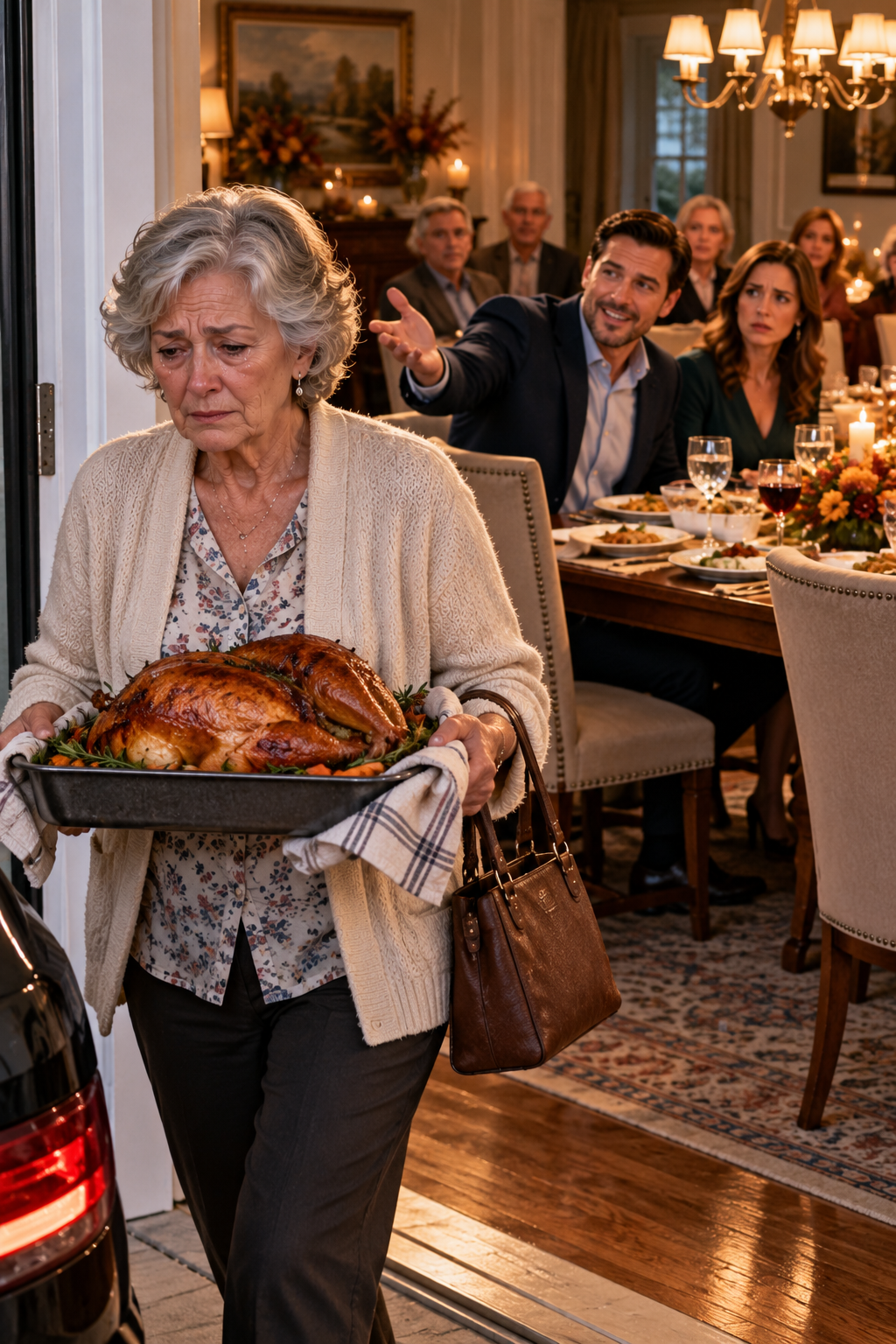
Part 2: My daughter’s loving concern had quietly become complete control
The next morning, I woke shortly before six, expecting to hear Cliff’s television through the wall or Nadine speaking loudly into her phone while organizing everyone else’s day. Instead, the house was silent except for the furnace and a few birds gathering beneath the bedroom window. I remained beneath the covers for several minutes, enjoying the unfamiliar sensation of waking without anticipating instructions. At Nadine’s house, my mornings had begun with reminders about medication, breakfast, appointments, and chores she believed were appropriate for someone my age. In my own bedroom, there was nobody to supervise me, and the absence of supervision felt almost luxurious.
The arrangement with Nadine had begun innocently enough. After Gordon died, she visited frequently, bringing groceries and helping me sort through the paperwork associated with his estate. She was organized, efficient, and successful in her career, qualities I had always admired because they reminded me of the determination she displayed as a child. When she suggested adding her name to my checking account so she could help pay bills, I agreed because the administrative burden of widowhood felt overwhelming. She assured me that everything would remain mine and that the arrangement was merely temporary.
Temporary arrangements have a dangerous way of becoming permanent when nobody stops to examine them. First, Nadine changed the mailing address on several accounts so important documents would arrive at her house. Then she began scheduling my medical appointments, explaining that centralized planning would prevent confusion. She persuaded me to transfer utility payments to automatic billing and offered to manage my insurance correspondence. Each decision seemed reasonable by itself, but together they created a system in which I increasingly depended on my daughter for information about my own affairs.
When she suggested that I move into her guest bedroom, I initially refused. I was healthy enough to drive, cook, shop, and maintain most of the house, although my knees complained after too much gardening. Nadine argued that the property was too large for one person and that living alone exposed me to unnecessary risks. Cliff supported her, pointing out that I could save money by leaving the house empty rather than maintaining two separate households. Eventually, worn down by their repeated concern and my own grief, I packed two suitcases and agreed to try the arrangement.
During the first few weeks, I appreciated having people around me. Nadine prepared dinner most evenings, Cliff asked about my day, and the grandchildren visited often enough to make the house feel lively. But soon, Nadine began treating my preferences as problems to be solved rather than choices to be respected. She questioned my driving, criticized my grocery purchases, and discouraged me from spending money on hobbies. When I mentioned returning to piano teaching, she suggested that I should enjoy retirement instead of placing unnecessary demands on myself.
Cliff’s behavior changed more gradually. At first, he called me Eleanor and thanked me whenever I helped with dinner. Then he began referring to me as Mom, not with affection but with the casual authority of someone who expected obedience. He asked me to fold laundry, collect packages, and supervise visiting children while he worked. When I declined a request because I had plans, he seemed surprised that I considered my time my own.
I remember one particular Saturday when I planned to visit the botanical garden. Gordon and I had spent countless afternoons there, and walking among the roses helped me feel connected to him. As I reached for my car keys, Nadine asked where I was going and frowned when I told her. She reminded me that the garden paths could be slippery and suggested I wait until someone was available to accompany me. I was embarrassed to admit how quickly I surrendered, putting the keys back in my purse as though I were a teenager who had been denied permission to leave.
My son, Philip, noticed the changes before I was willing to acknowledge them. He lived across town with his family and called every Sunday, usually asking about my week rather than offering advice. One afternoon, he asked whether I still felt comfortable making my own decisions. I laughed and told him Nadine was simply trying to help, but his silence suggested that he was not convinced. He gently reminded me that accepting assistance did not require surrendering independence.
His daughter, Sloan, was even more direct. At twenty-four, she worked for an environmental nonprofit and had inherited Gordon’s stubborn curiosity about the world. She frequently sent photographs of her cat, Biscuit, along with articles about older people learning new skills or beginning unexpected adventures. Two weeks before Thanksgiving, she called to tell me about a seventy-five-year-old woman who had completed her first open-water swimming event. “Grandma, you could absolutely do something like that,” she said, laughing when I told her my knees might disagree.
I had laughed with her, but afterward I felt strangely sad. Sloan still saw me as a capable person who might surprise herself, while Nadine increasingly treated me as a collection of limitations requiring supervision. The contrast became impossible to ignore after Thanksgiving, when I realized that the people who respected me most were the ones who did not need to control me. Sitting at my kitchen table the following morning, I decided that reclaiming my life would require more than moving back into my house. I would need to discover exactly how much authority I had surrendered and begin taking it back.
Part 3: A forgotten folder exposed the financial independence I had surrendered
I found the folder in the bottom drawer of Gordon’s old desk, exactly where we had kept important papers throughout our marriage. The cardboard cover was worn at the corners, and his handwriting appeared across the front in thick black letters: “HOUSE, BANK, INSURANCE.” Inside were our property deed, old tax records, insurance policies, estate documents, and a copy of the living trust we had established years earlier. I spread everything across the dining table, suddenly embarrassed by how long it had been since I reviewed my own financial affairs. Then I found several bank statements dated before Nadine changed my mailing address, and I realized that I had not personally examined a complete statement in more than a year.
I took out a yellow legal pad and began making a list. The first item was to contact the bank and verify every person authorized to access my accounts. The second was to restore my mailing address and request copies of recent statements. The third was to contact the law office that had handled Gordon’s estate and arrange a review of my will and trust. I added a fourth item almost as an afterthought: call Philip and tell him the truth about what happened at Thanksgiving.
Before I finished writing, my phone rang. Nadine’s name appeared on the screen, followed by a series of messages asking where I was and why I had left without telling anyone. Her first message claimed that the family had been worried about my safety, although she had not called until the following morning. The second accused me of embarrassing Cliff in front of his relatives. The third suggested that my reaction might indicate emotional distress and asked whether I wanted her to schedule an appointment with my doctor.
I read the messages without responding. It was remarkable how quickly Nadine transformed my decision to leave an insulting situation into a problem with my judgment. She did not ask why I had been denied a seat at the table or acknowledge the hours I spent preparing dinner. Instead, she focused on the inconvenience my departure created for everyone else. I placed the phone facedown and returned to my list.
Philip called shortly after nine. His voice sounded cautious, and I could tell Nadine had already spoken to him. He asked whether I was safe, and I told him I was sitting in my own kitchen drinking coffee. When he asked what happened, I described Cliff’s announcement, the crowded table, and my decision to leave with the turkey. He was silent for several seconds before asking whether I had eaten dinner. I told him the turkey had been delicious, and he laughed softly.
Then his tone became serious. He said Nadine was telling everyone that I had behaved irrationally and disappeared without warning. I explained that I had driven three miles to a house I owned and spent the evening doing exactly what I wanted. Philip agreed that my actions were entirely reasonable and asked whether I needed help with anything. I told him I wanted someone to accompany me to the bank, not because I couldn’t manage the appointment, but because I wanted a witness to the information I might discover.
He immediately offered to come Thursday. Then he asked whether Sloan could visit sooner, explaining that she had been worried about me for months. I agreed, feeling a warmth in my chest that had been absent since Thanksgiving. Before ending the call, Philip said something that stayed with me for the rest of the day. “Mom, you don’t have to prove you’re capable to people who should already know.”
After breakfast, I drove to the grocery store. The simple act of choosing my own food felt unexpectedly meaningful after eighteen months of eating whatever Nadine planned. I bought fresh salmon, carrots, lemons, sourdough bread, and a bunch of parsley because I liked the smell. I walked slowly through the aisles, enjoying the freedom to compare prices without someone suggesting I was taking too long. At the checkout counter, the cashier asked whether I had found everything, and I answered yes with more feeling than she could possibly have understood.
When I returned home, I noticed the neglected garden outside the kitchen window. Black-eyed Susans had spread beyond their borders, weeds crowded the flower beds, and the climbing roses needed attention. Nadine had repeatedly discouraged me from gardening, insisting that bending and lifting would be too difficult. She promised to hire someone to maintain the property, but the work had never been arranged. Looking at the garden now, I felt an unexpected excitement at the prospect of restoring it myself, slowly and with whatever assistance I chose.
That afternoon, I found a photograph of Gordon and me celebrating our fortieth wedding anniversary. We were laughing on a dance floor, his hand resting lightly at my waist while I looked up at him. Gordon had loved dancing, especially when the music was terrible and everyone else refused to participate. I remembered a small studio on Marchmont Street advertising beginner ballroom classes on Tuesday mornings. For the first time in years, I wondered whether I might enjoy dancing again.
I added the studio’s telephone number to my list. It seemed like a small decision compared with reviewing bank accounts or confronting my daughter, but something about it mattered deeply. I was beginning to remember that independence involved more than protecting money and property. It also meant allowing myself to want things simply because they brought me joy.
Part 4: My granddaughter arrived with a gift that changed everything
Sloan arrived shortly after five that evening, carrying a paper grocery bag and wearing hiking boots still muddy from an afternoon on the trails. She greeted me with a hug so enthusiastic that I nearly lost my balance, then stepped back to study my face. “You look different,” she announced, before I had even invited her inside. I asked whether that was a polite way of saying I looked tired, and she shook her head. “No, Grandma. You look like you can finally breathe.”
From the grocery bag, she produced a small Meyer lemon tree in a terracotta pot. It was barely taller than my forearm, with glossy green leaves and a faint citrus scent that reminded me of summer. She explained that she had seen it at a nursery and immediately thought of my kitchen window. “You always said a house should have something growing in it,” she reminded me. I held the little tree carefully and felt tears gathering before I could stop them.
We placed it on the windowsill above the sink, where the afternoon light would reach it. Sloan examined the pantry and suggested we make lentil soup with whatever ingredients I already had. I found dried lentils, canned tomatoes, onions, and a tin of olive oil that Gordon had purchased during a trip years earlier. As we chopped vegetables, she told me about her work restoring wetlands and the latest disaster caused by Biscuit, her mischievous cat. I laughed more freely than I had in months.
Eventually, Sloan asked what Thanksgiving had felt like from my perspective. She already knew the basic facts because Philip had told her, but she wanted to understand why I had finally decided to leave. I stirred the soup and searched for words that would explain eighteen months of gradually disappearing from my own life. “It felt like I had been holding something heavy for so long that I forgot my hands were supposed to be free,” I told her. She stopped chopping onions and looked at me with an expression of such immediate understanding that I nearly cried.
Sloan said she did not believe Nadine intended to be cruel. I agreed, explaining that my daughter genuinely thought she was protecting me from difficulties associated with aging. But good intentions did not erase the harm caused by treating another adult as incapable of making decisions. Sloan nodded and said that concern could become control when people stopped listening to the person they claimed to be helping. Hearing that from someone so young made me realize how obvious the problem had become to everyone except the people directly responsible.
We ate soup at the kitchen table with warm sourdough bread. Sloan told me about a pottery class she had started and described her first bowl as structurally sound but aesthetically alarming. I laughed so hard that I had to put down my spoon. For a few precious hours, I forgot about Nadine’s messages, Cliff’s insult, and the bank appointment waiting later in the week. I was simply a grandmother enjoying dinner with a granddaughter who loved me without trying to manage me.
Before leaving, Sloan asked whether she could visit twice a week. She said she missed our conversations and wanted to help restore the garden when the weather improved. I accepted happily, but I told her that she did not need to take responsibility for my happiness. She smiled and said she wasn’t trying to rescue me; she simply enjoyed spending time with me. That distinction mattered more than she knew.
After she left, I stood at the kitchen sink washing our bowls. The lemon tree sat beside the revived spider plant, its leaves catching the last light of the evening. I thought about how quickly the house had begun feeling alive again, despite having stood mostly empty for eighteen months. Nothing extraordinary had happened, yet ordinary things had acquired a new significance because they were happening on my terms. I dried the dishes and placed them in the cabinet without anyone correcting my arrangement.
The next morning, I called the ballroom studio. A cheerful woman named Beverly answered and explained that the Tuesday beginner class included several older students, including an eighty-one-year-old woman who rarely missed a session. She assured me that nobody expected perfection and that the instructors could accommodate different levels of mobility. I registered before I could talk myself out of it. When I hung up, I felt the nervous excitement I remembered from beginning piano lessons as a child.
Then I called the bank to schedule my appointment. The representative confirmed that I would need identification and that the staff could review account permissions, transaction histories, and security settings with me. I gathered the necessary documents and placed them in a folder beside my legal pad. I was determined to understand every account I owned and every arrangement Nadine had established. If there were mistakes, I would correct them, and if there were transactions I did not recognize, I would investigate them.
That night, I received another message from Nadine. She said Cliff expected an apology for the scene I caused at Thanksgiving and suggested we discuss my behavior before Christmas. I stared at the screen, astonished by how thoroughly she had misunderstood what happened. Then I typed a short response telling her I was safe, comfortable at home, and willing to talk when she was prepared to listen. I sent the message and turned off my phone.
Part 5: The bank records revealed how much authority my daughter possessed
Thursday morning arrived cold and bright, with a thin layer of frost covering the grass beneath the maple tree. Philip pulled into my driveway shortly before nine, carrying two coffees and wearing the worried expression he had inherited from Gordon. He hugged me, handed me a cup, and asked whether I was ready. I told him I had been ready for several days. Then we drove to the bank, where I intended to discover exactly what had happened to my financial independence.
The account representative was a young man named Garrett who greeted us politely and led us into a small office. I explained that I wanted a complete review of every account, including authorized users, automatic transfers, mailing addresses, and recent transactions. Garrett verified my identity, opened the records, and began examining the information on his screen. His expression became more serious as he moved through the account history. He asked whether I had authorized Nadine to access my primary checking account eighteen months earlier, and I confirmed that I had.
Then he showed me several additional arrangements. Nadine had been granted access to a second account during the previous winter, and automatic transfers had been established between accounts I rarely reviewed. Some transactions appeared to cover legitimate household expenses, but others were unfamiliar to me. Garrett carefully explained that an authorized user’s activity was not automatically improper, yet I had the right to question transactions and change permissions according to the account agreements. He recommended that we review the records in detail and establish stronger security protections.
I felt embarrassed as I examined the statements. The amounts were not enormous individually, but together they represented money I had earned, saved, and trusted someone else to manage. I recognized payments for utilities and groceries, yet several transfers had been made without any explanation I could remember. I asked Garrett to provide copies of the records and help me understand the procedures for removing Nadine’s access. He explained the available options, including opening new accounts where appropriate and updating authorization arrangements.
Philip remained quiet throughout the appointment. I appreciated his restraint because I needed to hear the information without someone interpreting it for me. When Garrett asked whether I wanted to change my mailing address back to my own home, I answered immediately. We also reviewed online access, account alerts, and methods for monitoring future activity. By the time the appointment ended, I felt exhausted but significantly more secure.
Outside, Philip placed a hand on my shoulder and asked whether I was all right. I told him I was disappointed in myself for allowing the situation to continue so long. He shook his head and reminded me that I had trusted my daughter during one of the most difficult periods of my life. “Trusting someone isn’t the same as giving them permission to stop respecting you,” he said. I knew he was right, but accepting that truth would take time.
We went to a diner nearby for lunch. Philip ordered a patty melt, and I chose grilled cheese with tomato soup because I wanted something comforting. As we ate, he apologized for not intervening earlier when he noticed Nadine becoming increasingly controlling. I told him that he had raised concerns, but I had not been ready to hear them. We had all been grieving Gordon, and each of us responded differently to the loss.
Philip admitted that Nadine had always preferred to be the responsible person in the family. As children, she organized games, assigned chores, and became frustrated whenever anyone ignored her plans. Those qualities helped her succeed professionally, but they also made it difficult for her to accept that other people might choose differently. I told Philip that I did not need Nadine to become a different person. I needed her to recognize that I was not one of her projects.
Later that afternoon, I visited the law office that had handled Gordon’s estate. Mr. Featherstone, the attorney I remembered, had retired, but his colleague, Caroline Hayes, agreed to meet with me. She was direct, attentive, and refreshingly uninterested in treating my age as evidence that I required special handling. I explained the financial arrangements, the move to Nadine’s house, and my decision to return home. Caroline listened carefully before reviewing my existing will and trust.
She explained that estate planning documents should reflect my current wishes rather than assumptions made years earlier. We discussed the responsibilities of trustees, the importance of choosing people I trusted, and ways to document my intentions clearly. I asked her to prepare updated documents that would preserve my independence and ensure my assets were distributed according to my values. Caroline emphasized that the decisions were mine and that no family member was entitled to dictate them. I left with a folder of draft documents and an appointment to review the final versions.
Driving home, I felt both relieved and saddened. I had not discovered a dramatic criminal conspiracy, but I had confirmed that my daughter possessed more financial authority than I was comfortable granting. The problem was not simply money; it was the gradual disappearance of my right to decide what happened to it. Restoring that right required paperwork, patience, and uncomfortable conversations. But for the first time since Gordon died, I was actively directing my own future.
That evening, I placed the bank statements and legal documents in a locked drawer. I made dinner, watered the lemon tree, and sat beside the window watching the streetlights come on. I knew Nadine would eventually discover that I had changed the account arrangements, and I expected her reaction to be difficult. Yet I no longer feared her displeasure as much as I feared returning to the life I had left behind. The next step was to tell her the truth directly.
Part 6: My daughter arrived demanding answers and received the truth
Nadine appeared on my doorstep the following Saturday carrying an apple pie from a bakery we both loved. She wore a carefully chosen sweater, her hair was perfectly arranged, and her expression suggested that she had rehearsed the conversation during the drive. I noticed immediately that she rang the doorbell instead of using the key she had carried for years. It was a small gesture, but it suggested that she understood something had changed. I opened the door and invited her inside.
She followed me into the kitchen, placed the pie on the counter, and looked around with obvious surprise. The spider plant had been watered, fresh groceries filled the refrigerator, and the lemon tree stood proudly in the window. My legal pad remained on the table beside a stack of library books and the brochure from the dance studio. Nadine examined everything as though she were inspecting a property that had unexpectedly changed ownership. Then she announced that she had come to discuss my behavior at Thanksgiving.
I asked her to sit, but before I finished speaking, she pulled out a chair and settled herself at the table. The gesture was so familiar that I almost ignored it. Then I realized that allowing small assumptions to pass without challenge was exactly how our relationship had become so unequal. I calmly explained that I wanted us to begin treating my home as my space, which meant asking rather than assuming. Nadine looked offended, but she remained seated and waited for me to continue.
I told her that I had left Thanksgiving because Cliff publicly denied me a seat at the table after I spent two days preparing the meal. She immediately defended him, explaining that he had been stressed by the number of guests and had not intended to hurt me. I acknowledged that possibility but reminded her that neither of them apologized or followed me when I left. Instead, their first concern had been the embarrassment my departure caused. Nadine opened her mouth to respond, then closed it.
I explained that Thanksgiving was not an isolated incident. During the eighteen months I lived with her, she had gradually taken control of my schedule, finances, transportation, and social activities. She discouraged hobbies, questioned ordinary purchases, and made decisions about my life without asking what I wanted. I told her that I had begun feeling like a dependent child rather than an adult woman with decades of experience. Most painfully, I had started doubting my own judgment because she questioned it so frequently.
Nadine’s face tightened. She insisted that everything she did came from love and concern, especially after Gordon’s death. I told her I believed she loved me, but love did not automatically make every decision helpful. I reminded her that I had raised two children, managed household finances, taught music, and cared for my husband through his final illness. I was capable of recognizing my limitations without surrendering every choice to someone else.
Then I told her about the bank appointment. Her expression changed immediately, and she asked whether I had removed her from my accounts. I explained that I had reviewed the permissions, updated security arrangements, and taken steps to regain direct control of my finances. She seemed hurt, asking whether I no longer trusted her. I answered that trust required transparency and that I should never have reached a point where I did not understand transactions involving my own money.
She defended the transfers as household expenses and reminded me that living with her family had cost money. I agreed that contributing fairly to shared expenses was reasonable, but I pointed out that we had never established a clear agreement about those payments. I told her I wanted copies of the relevant records so we could reconcile everything accurately. She reluctantly agreed, although I could see that she resented being questioned. For once, I did not apologize for asking.
The conversation lasted nearly two hours. At times, Nadine cried, and at other moments she became defensive, insisting that I was exaggerating the situation. I remained calm because I had already decided that my independence was not negotiable. I told her I loved her and wanted a relationship with her, but I would not return to her house or accept being managed as though I were incapable. If we were going to rebuild our connection, it would have to begin with mutual respect.
Near the end, Nadine asked whether I had been unhappy the entire time I lived with her. I considered the question carefully before answering. There had been good moments, family dinners, conversations with the grandchildren, and evenings when I appreciated not being alone. But those moments did not erase the steady erosion of my autonomy. I told her that the saddest part was how gradually it happened, because I had not realized how much of myself I was surrendering until I finally walked away.
Nadine looked down at the table, where my legal pad listed the steps I had taken to reclaim my life. She read several items silently, then asked whether I was really going to take ballroom dancing lessons. I smiled and told her I had already registered. For a moment, she looked like the little girl who once begged Gordon to teach her how to waltz in our living room. Then she whispered that she had forgotten how much I loved dancing.
When she left, there was no dramatic reconciliation. She hugged me briefly at the door and said she needed time to think about everything I had told her. I accepted that because meaningful change rarely happens during a single conversation. After she drove away, I cut myself a slice of the apple pie and made tea. The pie was excellent, and I enjoyed every bite while sitting at my own table.
Part 7: Ballroom dancing helped me reclaim the woman I once was
The ballroom studio occupied the second floor of an old brick building on Marchmont Street. I climbed the stairs slowly, gripping the wooden railing while wondering whether I had made a ridiculous mistake. Through the doorway, I could hear music, laughter, and the unmistakable sound of shoes moving across a polished floor. I nearly turned around when I saw my reflection in the hallway mirror, a seventy-two-year-old widow carrying a handbag and wearing shoes purchased specifically for dancing. Then I remembered Gordon laughing whenever I worried about looking foolish, and I pushed open the door.
The instructor, Beverly, greeted me with a warm handshake and introduced me to the other students. There were six people in the beginner class, ranging from their late forties to a woman named Betty who proudly announced that she was eighty-one. Betty wore pearl earrings and sneakers decorated with tiny rhinestones, and she moved with the confidence of someone who had stopped caring about other people’s opinions decades earlier. A cheerful man named Raymond admitted that he had forgotten the basic box step three times. Everyone laughed, and I immediately felt less nervous.
We began with simple movements. Beverly demonstrated how to shift weight, maintain posture, and follow the rhythm without worrying about perfection. My knees complained almost immediately, and I discovered that my balance was not quite what it had been when Gordon and I danced at weddings. But as the music continued, my body remembered something my mind had nearly forgotten. I began moving more confidently, counting the steps beneath my breath while smiling at the familiar sensation of dancing.
During a break, Betty asked whether I had danced before. I told her about Gordon and the way he insisted on dancing at every celebration, even when the band was terrible. She smiled and said her husband had been equally enthusiastic and considerably less talented. We laughed together, sharing the easy understanding of women who had loved deeply and learned to continue living after loss. By the end of class, Betty had invited me for coffee the following week.
I drove home along the longer route, passing the botanical garden and the hardware store where Gordon used to spend Saturday mornings. The town looked familiar, yet I experienced it differently because I was no longer traveling according to someone else’s schedule. I stopped at a small bakery and bought a cinnamon roll simply because I wanted one. At home, I ate it with coffee while looking through the photographs Sloan had helped organize. I found another picture of Gordon dancing with me, and instead of crying, I smiled.
Over the following weeks, the Tuesday classes became the highlight of my schedule. Raymond finally mastered the box step, Betty taught me how to laugh at mistakes, and Beverly encouraged us to practice without expecting immediate perfection. I began noticing small improvements in my posture and confidence. The physical benefits mattered, but the emotional change was even more significant. I was doing something because it delighted me, not because someone had assigned it as an appropriate activity for my age.
Sloan visited twice a week as promised. We worked in the garden, cooked together, and discussed everything from environmental conservation to the ridiculous behavior of her cat. She helped me purchase raised garden beds that reduced the need for bending, allowing me to grow vegetables without aggravating my knees. We planted herbs, lettuce, and flowers that attracted butterflies. Watching the garden recover became a quiet symbol of my own renewal.
Philip continued calling every Sunday, but our conversations changed. Instead of asking whether I needed assistance, he asked what I had been doing and listened with genuine interest. I told him about dance classes, gardening, and the books I borrowed from the library. He shared stories about his work and children, and sometimes we simply laughed about family memories. Our relationship felt more balanced because neither of us was trying to manage the other.
Nadine remained cautious. She sent occasional messages asking how I was doing, but she no longer demanded immediate responses or insisted on arranging my schedule. One Sunday, she sent an old photograph of Gordon and me during our anniversary trip to Vermont. We were laughing across a restaurant table, his hand resting near mine. I thanked her for the picture, and she replied with a small heart.
It was not an apology, but it was a gesture of connection without control. I appreciated it because I knew Nadine was struggling to change habits she had developed over many years. She had always believed that organizing everything was the best way to express love. Now she was learning that sometimes love meant allowing someone else to make decisions she might not understand. I hoped she would continue learning, but I no longer made my happiness dependent on her progress.
Caroline Hayes finalized my updated estate documents that month. I reviewed each provision carefully, ensuring that my wishes were clear and that the people entrusted with responsibilities understood them. I made decisions based on relationships, practical considerations, and the values Gordon and I shared. Sloan would eventually receive a personal letter explaining how much her kindness meant to me, but I chose not to tell her about the details immediately. I wanted her visits to remain exactly what they were: expressions of affection freely given.
By the time November arrived, I had developed a routine that felt entirely my own. I attended dance classes, tended the garden, volunteered occasionally at the botanical garden, and invited friends for coffee. My house no longer felt like an abandoned building waiting for someone to return. It felt like a home filled with ordinary life, laughter, and possibilities I had nearly forgotten. And every evening, when I locked the front door, I felt gratitude rather than loneliness.
Part 8: A year after Thanksgiving, I finally found my own place
The following Thanksgiving, I received an invitation from Nadine and Cliff several weeks in advance. The message was polite, carefully worded, and noticeably different from the casual assumptions they had made the previous year. Nadine asked whether I would like to join them for dinner and assured me that I would not be expected to cook unless I wanted to. She also mentioned that Cliff hoped to apologize for what happened at the previous gathering. I read the invitation twice before deciding how to respond.
I told Nadine that I appreciated the invitation but had already made plans to host a small dinner at my own house. Philip, Sloan, and several friends from the dance studio were coming, and I was looking forward to preparing the meal. I added that she and Cliff were welcome to visit another day if they wished. Nadine responded warmly, saying she understood and hoped we could spend time together soon. For the first time in years, she accepted my decision without attempting to change it.
Cliff called a few days later. His voice sounded awkward, and he began by admitting that he had handled the previous Thanksgiving badly. He said he had been focused on entertaining guests and had not considered how humiliating his comment would feel. I listened, then explained that the problem was not simply the missing chair. It was the assumption that my contributions were expected while my presence was optional.
He was quiet for a moment before acknowledging that I was right. He apologized directly and said he hoped we could move forward. I thanked him but did not pretend that one conversation erased the past. Respect, I had learned, was demonstrated through consistent behavior rather than occasional declarations. Still, I appreciated that he had finally taken responsibility without asking me to excuse his actions.
My Thanksgiving dinner was smaller than the previous year’s gathering, but it was infinitely happier. Philip arrived early to help with the turkey, Sloan brought homemade cranberry sauce, and Betty appeared carrying a pumpkin pie decorated with an alarming amount of whipped cream. Raymond contributed flowers and insisted on helping set the table, although he somehow managed to place the forks on the wrong side of every plate. We laughed, corrected the settings, and continued preparing the meal without anyone feeling embarrassed or unwelcome.
When the turkey emerged from the oven, I remembered the humiliation of the previous year. The memory no longer carried the same sharp pain, although I could still recall every detail of Cliff’s dismissive words. I placed the platter in the center of the table and looked around at the people waiting patiently for everyone to sit. There was a chair for me, a plate already set, and no suggestion that I should serve everyone else before eating. I felt an unexpected rush of emotion as Philip pulled out my chair.
During dinner, Sloan proposed a toast. She thanked me for teaching her that growing older did not mean becoming smaller and that independence could be reclaimed at any stage of life. I laughed and told her she was making me sound like a motivational speaker. But I understood what she meant, and I was deeply moved by the sincerity in her voice. We raised our glasses and celebrated the simple privilege of being together.
After dessert, Betty persuaded Raymond to demonstrate the dance steps we had been practicing. He protested that he needed more room, then nearly collided with a chair while attempting a turn. Everyone laughed, and I joined him for a short waltz in the living room. My knees still complained, but my heart felt light. For a moment, I imagined Gordon standing near the doorway, smiling at the sight of me dancing again.
The following morning, I woke to a house filled with the pleasant remnants of celebration. There were dishes to wash, leftover turkey in the refrigerator, and flowers on the dining table. I made coffee and sat beside the kitchen window, watching sunlight touch the leaves of Sloan’s lemon tree. It had grown considerably since she brought it to me, and several small blossoms had appeared among the branches. The spider plant beside it was thriving, sending new shoots over the edge of its pot.
I thought about the woman I had been eighteen months earlier, when I packed my belongings and moved into Nadine’s guest bedroom. She had been grieving, uncertain, and willing to surrender small freedoms because she believed doing so would make life easier for everyone. I did not judge her harshly, because she had been doing her best to survive a devastating loss. But I was grateful that she had eventually found the courage to question the arrangement that was slowly erasing her identity. The woman sitting at the kitchen table now was not younger or physically stronger, but she was far more certain of her worth.
Over the following months, Nadine and I continued rebuilding our relationship. She visited occasionally, sometimes bringing lunch or asking whether I wanted to attend a concert together. She still struggled with the urge to offer unsolicited advice, but she began catching herself and asking whether I wanted suggestions. I appreciated the effort because it showed that she was learning to recognize the difference between helping and controlling. We were not the same people we had been before Thanksgiving, and perhaps that was necessary.
Philip remained a steady presence, offering support without attempting to direct my choices. Sloan continued visiting, bringing stories about her work, photographs of Biscuit, and occasional plants that threatened to take over my windowsills. My dance classes became a permanent part of my week, and I even participated in a small community recital. I was nervous before stepping onto the floor, but the applause afterward reminded me that courage was not reserved for the young. Sometimes it simply meant showing up and allowing yourself to enjoy being alive.
One evening, I found Gordon’s old recipe card for pot roast tucked inside a cookbook. The handwriting was unmistakably his, complete with a note insisting that a pinch of allspice was essential. I called Sloan and invited her over to make it with me, and we spent the afternoon following his instructions exactly. As the roast simmered, I told her stories about her grandfather that I had not shared in years. We laughed about his terrible attempts at home repairs and the disastrous camping trip that ended with everyone sleeping in the car.
When we finally sat down to eat, Sloan closed her eyes after the first bite. She said it tasted exactly the way she remembered, and I told her Gordon would have been delighted. Then she corrected me, saying he would have been unbearably smug about getting the recipe right. We laughed until tears filled our eyes. For a moment, Gordon felt close enough to join the conversation.
After Sloan left, I washed the dishes and placed the green-bordered plates back in their cabinet. I checked the locks, watered the plants, and turned off the kitchen light. The house settled around me with the familiar sounds of old wood, heating pipes, and branches brushing against the windows. I stood in the hallway for a moment, feeling the quiet comfort of belonging exactly where I wanted to be. Then I went upstairs to the bedroom that had always been mine.
I sometimes wonder what would have happened if I had stayed at Nadine’s Thanksgiving table and quietly waited for someone to offer me a plate. Perhaps nothing would have changed, and I would have continued shrinking inside a life that should have been mine. Perhaps I would have spent years convincing myself that being useful was the same as being loved. Instead, I carried my turkey out of that house and drove toward a future I had almost forgotten I was allowed to choose. And now, whenever I sit down to dinner, I remember the most important lesson of all: I do not need anyone’s permission to take my rightful place at the table.
✓ Lynn R. Adams
Part 2: My daughter’s loving concern had quietly become complete control The next morning, I woke shortly before six, expecting to hear Cliff’s television through the wall or Nadine speaking loudly i…