My Sister Stayed Silent for 27 Years—Then Her Manor Revealed the $528 Million Secret Our Family Buried
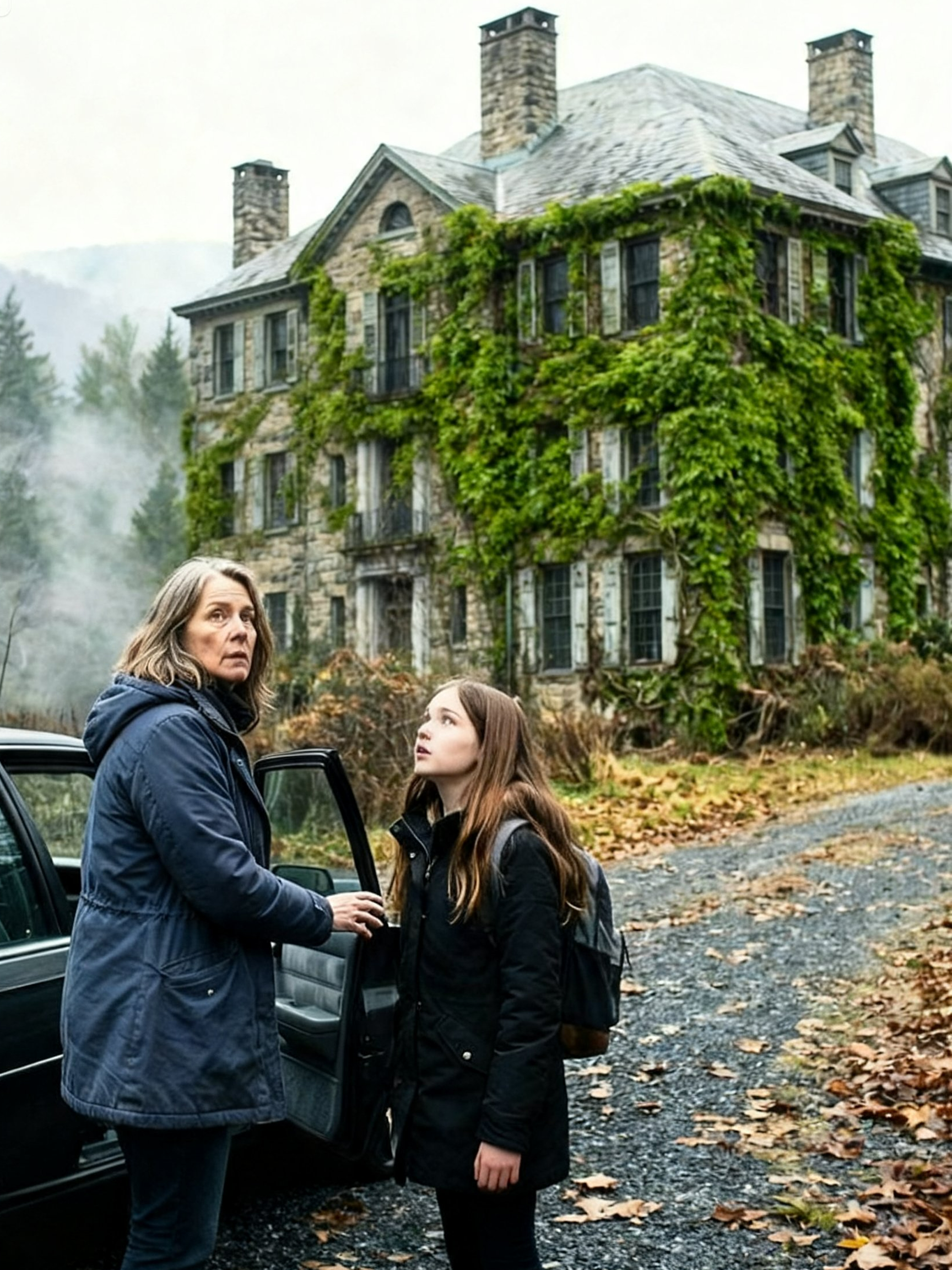
My Sister Stayed Silent for 27 Years—Then Her Manor Revealed the $528 Million Secret Our Family Buried
“You have three days to get out of my sister’s house.”
Richard Hart said it before Eleanor’s funeral flowers had even begun to wilt.
He stood beneath the carved walnut staircase at Blackthorn Manor with one hand inside his suit pocket, surrounded by his children, two attorneys, a banker, and three cousins who had spent the afternoon drinking Eleanor’s wine and discussing which rooms they would renovate first.
Then my niece Vanessa looked at the small suitcase beside my feet and smiled.
“Honestly, Aunt Margaret, you should be grateful we’re giving you three days. Eleanor didn’t speak to you for twenty-seven years. Showing up after she dies doesn’t make you family again.”
I looked at her.
Then I looked at Richard.
Then at Grant, my nephew, who was already holding a contractor’s estimate for turning the east wing into luxury guest suites.
Nobody in that room appeared embarrassed.
So I wasn’t going to embarrass myself for them.
I didn’t cry.
I didn’t explain.
I didn’t remind Richard that I had changed his diapers when our mother was sick, that I had given up my first semester at the University of Virginia because our father said the family needed me at home, that I had worked nights at St. Agnes Hospital so Richard could finish business school, or that I had spent seven years caring for our mother after the stroke that left half her body paralyzed.
I didn’t remind Vanessa that the woman she was insulting had paid six months of her father’s mortgage during the recession.
I didn’t remind Grant that I had once driven fourteen hours through an ice storm because he had wrecked his truck outside Nashville and was too afraid to call his father.
Instead, I nodded.
“All right.”
Richard’s eyebrows rose.
That was the first moment he looked uncertain.
People like Richard know what to do with tears.
They know what to do with shouting.
They know what to do when you beg.
Silence is harder.
Silence gives them nothing to push against.
Vanessa crossed her arms.
“That’s it?”
“That’s it.”
Grant laughed.
“Good. At least somebody’s finally being realistic.”
I picked up my handbag.
That was when Mrs. Danner appeared at the doorway.
She had been Blackthorn Manor’s housekeeper for nearly thirty years. She was seventy-two now, narrow-shouldered and silver-haired, with the kind of posture women acquire after a lifetime of carrying other people’s messes without commenting on them.
“Mrs. Sloan,” she said quietly.
Everyone turned.
She walked toward me holding something beneath a folded linen napkin.
Richard frowned.
“Edith, we’re having a family discussion.”
Mrs. Danner stopped beside me.
“So was Mrs. Whitcomb.”
Eleanor’s married name.
Richard’s face tightened.
Mrs. Danner lifted the napkin.
Inside lay a small brass key attached to a faded blue ribbon.
Stamped into the key were three characters.
Richard stared at it.
Grant moved closer.
“What’s that?”
Mrs. Danner ignored him.
She placed the key in my palm and folded my fingers around it.
“Your sister told me to give you this only if they tried to remove you from the house before Friday.”
Nobody laughed after that.
Friday was the scheduled reading of Eleanor’s will.
Richard stepped forward.
“What did Eleanor say it opened?”
Mrs. Danner looked at him.
“She told me not to answer that question.”
Then she looked back at me.
“There’s something else.”
From the pocket of her black dress, she removed a cream envelope.
My name was written across the front in Eleanor’s handwriting.
I knew it immediately.
Twenty-seven years had passed since I had last received a letter from my sister.
Handwriting survives longer than anger.
I slid my thumb beneath the flap.
Inside was a single sheet.
Eight lines.
If they make you leave, leave.
Do not fight over the house.
Do not sign anything.
Do not let anyone persuade you that the 1999 agreement settled what happened to us.
Keep the key.
When Naomi Price arrives, ask her for the west inventory.
And Maggie—if Richard tells you I hated you, ask yourself why I spent twenty-seven years making sure he could never do to you again what Dad did to us once.
My brother had gone pale.
Not dramatically pale.
Just enough.
I folded the letter.
Vanessa said, “What does it say?”
“Nothing you need.”
Richard’s expression hardened immediately.
“That house and everything in it are estate property.”
“If Eleanor gave you something belonging to the estate—”
“It’s a key, Richard.”
I put it in my handbag.
“I suppose we’ll find out.”
That was when the first crack appeared in the certainty surrounding him.
It was small.
But I saw it.
For most of my life, my family had mistaken quietness for surrender.
They had mistaken caregiving for weakness.
They had mistaken forgiveness for stupidity.
They had mistaken exhaustion for consent.
Most of all, they had mistaken twenty-seven years of silence between two sisters for hatred.
They were wrong about every one of those things.
I was sixty-two years old when Eleanor died.
She was fifty-nine.
For twenty-seven years, we had not spent Christmas together.
We had not exchanged birthday calls.
She had never met my late husband, Paul.
She had not attended his funeral.
She had never seen the little bungalow outside Richmond where I spent twenty years growing tomatoes in bad soil and pretending I did not care that my younger sister lived behind iron gates in a stone manor eighty miles away.
Blackthorn sat in Virginia’s Shenandoah Valley, tucked behind nearly five hundred acres of oak forest and pasture.
It had twenty-two rooms, five fireplaces, a limestone terrace, a carriage house, a lake, an abandoned stable complex, and an older western wing that Eleanor rarely opened.
Local people called it a manor because “house” seemed insulting.
It had been built in 1908 by a railroad attorney and later purchased by Eleanor’s husband, Graham Whitcomb, a private-equity investor who had been twenty-three years older than she was.
Our family treated that marriage as proof that Eleanor had always been ambitious.
I had believed some of it.
That is difficult to admit.
When somebody disappears from your life, other people rush to explain why.
Richard told me Eleanor considered me provincial.
Dad told me Eleanor resented the years she had spent “waiting for Maggie to stop being everyone’s martyr.”
Aunt Camille told me Eleanor thought I had manipulated our mother.
By the fifth year of silence, I stopped asking questions.
By the tenth, I stopped expecting answers.
By the twentieth, I convinced myself I didn’t need them.
Then, two weeks before Eleanor died, I received a call from a hospice nurse.
“Mrs. Sloan?”
“My name is Rachel Mendoza. I’m calling on behalf of Eleanor Whitcomb.”
I sat down.
Rachel hesitated.
“Your sister has late-stage pancreatic cancer.”
I remember looking at the dish towel in my hand.
Yellow cotton.
A tomato embroidered on one corner.
The human mind notices ridiculous things when life moves beneath it.
“Does she want to speak to me?”
Another pause.
“She said she wanted you informed.”
That hurt more than if she had said no.
I drove to Blackthorn anyway.
Richard’s son Grant met me at the gate.
He would not let me through.
“Aunt Maggie, don’t do this.”
“My sister is dying.”
“She made her wishes clear.”
“To everyone.”
“Did she say my name?”
Grant looked away.
That was my answer.
I went home.
Eleanor died nine days later.
At the funeral, Richard hugged people he barely knew.
Vanessa cried for cameras.
Grant gave a eulogy about “Aunt Eleanor’s fierce independence.”
I sat in the second row because nobody had reserved a seat for me in the first.
When the service ended, Mrs. Danner approached and said Eleanor had left instructions that I stay at Blackthorn until the will reading.
That lasted seventy-one hours.
On the third morning, before sunrise, I heard voices downstairs.
By seven, two of Grant’s contractors were measuring the upstairs hallway.
By eight, Vanessa had removed three paintings from Eleanor’s bedroom.
By nine, Richard informed me that an older copy of Eleanor’s will left “all material family property” to the Hart Family Preservation Foundation, whose chairman happened to be Richard.
The locks were changed at eleven-fifteen.
My suitcase was placed on the gravel circular drive at eleven-twenty.
The blue brass key remained in my handbag.
I drove away at eleven-twenty-seven.
I did not look back.
That bothered them more than if I had screamed.
I checked into a Hampton Inn seventeen miles away, paid for four nights, carried my own bag upstairs, and made coffee from the little machine beside the television.
Then I took out Eleanor’s letter.
I read it six times.
The sentence that mattered was not about the key.
It was about 1999.
Do not let anyone persuade you that the 1999 agreement settled what happened to us.
I had spent years trying not to think about 1999.
Our mother, Lillian, had suffered a massive stroke two years earlier.
Dad still ran Hart River Holdings then, the land and timber company founded by our grandfather.
Richard worked beneath him.
Eleanor had recently left Virginia.
I was the dependable one.
I managed Mom’s appointments.
I handled medications.
I washed her hair.
I learned to understand what she meant when her speech became garbled.
I slept in a recliner outside her room because Dad refused to hire overnight care until I threatened to quit my job.
I paid bills from my own checking account when the household office “forgot.”
And when my husband-to-be Paul once suggested that perhaps Richard could cover a few nights so I could rest, Dad told him, “Margaret likes being needed.”
That became the family’s favorite explanation.
I liked being needed.
It was easier than saying I had been trained to believe love was measured by how much discomfort I could absorb without inconveniencing anybody else.
In October of 1999, Dad brought several documents to the hospital cafeteria.
Mom had been readmitted with pneumonia.
I had slept four hours in two days.
Dad placed a folder beside my coffee.
“Estate equalization paperwork,” he said.
“What does that mean?”
“Housekeeping. Your mother’s trust is being reorganized.”
“I want an attorney to look at it.”
Dad smiled.
“Margaret, you have an attorney. Howard Bell represents the family.”
Howard Bell.
The same man who stood inside Blackthorn Manor twenty-seven years later while my brother told me to leave.
I signed where yellow flags had been placed.
Or I believed I had.
Within six months, Mom’s trust disappeared from family conversation.
Within a year, Richard controlled Hart River Holdings.
Within two, Dad had sold three properties my grandfather once said would belong equally to his children.
I received nothing.
I asked once.
Dad said I had voluntarily waived my interest to keep the company intact.
I remember laughing because I thought he was joking.
I demanded copies.
He told me Howard Bell would send them.
Howard never did.
Then Eleanor called me.
December 3, 1999.
The last real conversation we had.
“Maggie, did Dad make you sign something?”
“I don’t know. Trust paperwork.”
Her breathing changed.
“Did Howard explain it?”
“Did you have your own lawyer?”
“Eleanor, Mom is sick. I don’t have time for one of your fights.”
Then she said, “You need to make time for this one.”
I was exhausted.
I was frightened.
And because older sisters sometimes wound younger sisters in the exact place they once promised to protect, I said something I regretted for twenty-seven years.
“You left. I stayed. Don’t call me from wherever you are and tell me how to manage the family you walked away from.”
Eleanor said nothing for several seconds.
Then she whispered, “I didn’t walk away from you.”
That was the last time I heard her voice.
Until Blackthorn.
Friday morning, a black Lincoln pulled into the Hampton Inn parking lot at .
A woman stepped out wearing a charcoal suit.
She was around fifty, with cropped dark hair and the controlled expression of someone who billed people for underestimating her.
She introduced herself as Naomi Price.
“I represented your sister for eleven years.”
I invited her into the little breakfast area.
Naomi declined coffee.
“Did Edith give you the key?”
“Did anyone see?”
“Everyone saw.”
A faint smile.
“Eleanor expected that.”
I gave her the letter.
She read it.
Then she returned it carefully.
“Did you sign anything at Blackthorn?”
“Did Richard ask?”
“Not directly.”
“What exactly is happening?”
Naomi studied me.
“Your brother believes he knows.”
“That isn’t what I asked.”
Another almost-smile.
“No. It isn’t.”
She opened her briefcase.
Inside were two documents.
One was Eleanor’s 2018 will.
The other was dated eleven months before her death.
Naomi placed the older one before me first.
“Richard obtained this yesterday through Howard Bell.”
I scanned it.
The Hart Family Preservation Foundation appeared in Article Seven.
Blackthorn Manor appeared in Article Nine.
Richard had been right about one thing.
The old will apparently left substantial property to the foundation.
Then Naomi pushed forward the newer document.
“This is a pour-over will. Eleanor’s assets pass to the Lillian Hart Restitution Trust.”
I looked up.
“My mother?”
“Named after her.”
“Who controls the trust?”
Naomi turned the page.
I read my own name.
Margaret Anne Hart Sloan.
Successor trustee.
Primary lifetime beneficiary.
Trust protector.
I stared at it.
“I don’t understand.”
“You will.”
“How much is in it?”
Naomi closed the folder.
“First we need to visit Blackthorn.”
“They changed the locks.”
“That was considerate of them.”
“Considerate?”
“They documented possession.”
Her tone stayed perfectly dry.
“Your sister was extremely thorough.”
We drove to the courthouse first.
A probate judge had already issued a temporary preservation order based on Naomi’s filing.
The order gave us access to Blackthorn for estate inventory purposes and prohibited removal or transfer of additional property.
Richard’s attorney objected.
The judge denied the objection.
At 12:16 p.m., Naomi and I entered Blackthorn through the same front door I had been pushed through forty-eight hours earlier.
Grant stood in the foyer.
“Absolutely not.”
Naomi handed him the order.
“You can read it slowly or quickly. The result is the same.”
Richard came from the library.
Howard Bell followed.
Vanessa appeared at the top of the stairs wearing one of Eleanor’s scarves.
That detail angered me more than being thrown out.
It was a green Hermès scarf Eleanor had worn in the photograph beside her obituary.
I looked at Vanessa.
“Take it off.”
She laughed.
“Excuse me?”
“The scarf.”
“It belongs to the estate.”
Naomi said, “Actually, under today’s preservation order, wearing inventoried personal property after notice may become surprisingly inconvenient for you.”
Vanessa removed it.
She did not laugh again.
Naomi asked Richard to remain downstairs.
Then she led Mrs. Danner and me toward the western corridor.
The west wing had always been the oldest part of Blackthorn.
Its rooms smelled faintly of cedar and stone.
The last door belonged to the music room.
Inside sat a Steinway grand piano, two covered chairs, a marble fireplace, and a walnut cabinet occupying most of the far wall.
Naomi looked at me.
I took it out.
There was no visible lock.
Mrs. Danner walked to the cabinet and removed a narrow strip of decorative molding.
Behind it was a brass keyhole.
My hand shook for the first time.
I inserted the key.
Something heavy released inside the wall.
The entire cabinet shifted forward two inches.
Mrs. Danner began to cry.
Not loudly.
She covered her mouth with both hands.
Naomi pulled the cabinet aside.
Behind it was a steel door.
Another lock.
This one opened with a code Naomi entered.
The room beyond was windowless.
Temperature controlled.
Approximately twelve feet wide and twenty feet deep.
Metal shelving lined both walls.
There were archival boxes, deed books, binders, hard drives, banker’s boxes, old ledgers, three locked cabinets, and a long table beneath recessed lights.
On the table sat a photograph.
Eleanor and me.
Summer of 1988.
We were barefoot beside the Rappahannock River.
I was twenty-four.
She was twenty-one.
Her arm was around my waist.
Behind the photograph stood a black leather binder.
Embossed across the front were four words.
FOR MARGARET. READ FIRST.
My knees nearly failed me.
Naomi pulled out a chair.
Inside the binder was a letter seventy-three pages long.
Eleanor had written it over fourteen months.
I did not read all of it that day.
I couldn’t.
But I read enough.
If you are reading this, I lost the argument with time.
There are two things I need you to know before lawyers turn my life into columns of numbers.
First: I loved you every year I was silent.
Second: silence was the worst decision I ever made, even when I believed it was the safest one.
She explained 1999.
She had discovered that Dad and Richard intended to consolidate nearly all Hart family assets under Richard’s control before Mom died.
Mom’s original trust gave each daughter an eighteen-percent beneficial interest in Hart River Holdings, plus interests in three parcels of development land and mineral leases in West Virginia.
Richard was supposed to receive twenty-eight percent.
The balance belonged to charitable and employee trusts.
Dad wanted control centralized.
Howard Bell produced “equalization agreements.”
Eleanor refused to sign hers.
Mine was different.
Mine, according to Eleanor, had been assembled from pages I signed in the hospital combined with pages I had never seen.
The document transferred my beneficial interest to a holding company controlled by Dad and Richard.
Eleanor confronted them.
Dad threatened to terminate private nursing care for Mom.
He also threatened to accuse me of misusing Mom’s checking account because I had reimbursed myself $18,400 for medical equipment, prescriptions, home modifications, and caregivers I had paid from my own salary.
Every reimbursement had receipts.
It did not matter.
Dad knew accusation alone would destroy me.
Eleanor wrote:
I believed I was protecting you.
At first I stayed away because Dad told me that if I involved you in the challenge, he would bury you in litigation while Mom was dying.
After Mom died, I should have come back.
By then I had found proof of what they had done, and Howard had built enough paper around the theft that every attorney told me litigation could take a decade.
Then Graham helped me create another strategy.
I told myself I would return when I could bring you something stronger than an apology.
The stronger I became, the more ashamed I was that I had waited.
Five years became ten.
Ten became twenty.
There is no legal document that excuses that.
There is no fortune large enough to repay a sister for believing she was unwanted.
Please do not turn me into a saint after I’m gone.
I was afraid.
I was proud.
I was wrong.
But I never stopped trying to put back what they took.
I lowered the page.
For several minutes, nobody spoke.
Naomi finally said, “There’s more.”
After marrying Graham, Eleanor had access to capital, lawyers, private investigators, forensic accountants, and patience.
She used all four.
She began buying.
Not houses.
Not jewelry.
Not revenge toys.
Land options.
Dormant partnership interests.
Distressed notes.
Mineral rights.
Water rights.
Timber easements.
Pension claims.
Every time Hart River Holdings weakened, Eleanor bought a piece through an entity the family did not connect to her.
During the 2008 financial crisis, she acquired debt secured against 6,400 acres after Richard overleveraged the company.
In 2012, she bought minority shares from three elderly cousins who wanted cash.
In 2016, she purchased mineral royalty rights Dad had transferred into a shell company and forgotten.
In 2020, when Hart River needed liquidity, an investment vehicle called Alder Crown Partners provided forty-three million dollars in exchange for preferred shares and conversion rights.
Richard had celebrated that transaction.
He had no idea Eleanor controlled Alder Crown.
By the time she was diagnosed with cancer, the Lillian Hart Restitution Trust directly or indirectly controlled 61.8 percent of the voting equity in Hart River Holdings.
It also held first-position notes on several properties Richard believed belonged securely to his side of the family.
Blackthorn was only the front door.
The room behind it was the map.
Naomi opened another binder.
The first page contained a valuation prepared six weeks earlier by an independent accounting firm.
Total estimated trust assets:
$528,417,003.
I read the number twice.
Then again.
“This can’t be real.”
“All of this belongs to me?”
Naomi shook her head.
“That is the part Eleanor was most specific about.”
She showed me the trust schedule.
I would receive Blackthorn Manor and its surrounding 487 acres.
I would receive a personal lifetime trust valued at approximately eighty-six million dollars, with unrestricted income and broad principal access.
But the rest had instructions.
One hundred forty-two million dollars was designated for former Hart River employees, pensioners, tenant farmers, and families identified as having lost land or benefits through transactions Eleanor’s investigators considered fraudulent or abusive.
Sixty million would establish the Lillian Hart Caregiver Foundation for unpaid family caregivers.
Another forty million was allocated to legal defense and restitution claims.
Substantial holdings would remain invested.
Certain parcels were to be returned where possible rather than sold.
And the Hart River shares?
Those came with voting control.
Not because Eleanor wanted me rich.
Because she wanted me in the chair Richard had spent his life believing only he deserved.
I laughed then.
One short sound.
Naomi watched me carefully.
I looked around the archive room.
“All those years, Richard said Eleanor had married Graham for money.”
Naomi’s mouth tightened.
“She used Graham’s money to buy Richard.”
The beauty of Eleanor’s plan was not the size.
It was the structure.
Richard could not simply contest one will and grab everything.
The assets sat across multiple trusts and companies.
Some transfers had occurred more than a decade earlier.
Several deeds had been recorded publicly, but through names Richard’s lawyers had never bothered tracing to the ultimate beneficial owner.
Blackthorn itself had been transferred to the restitution trust nine years before Eleanor died.
The 2018 will Richard was waving around did not control it.
He had thrown me out of a house he did not own.
Grant had ordered renovations inside property he did not own.
Vanessa had removed items from rooms she had no authority to enter.
And forty-eight hours before the preservation order, Richard had done something even more interesting.
He had pledged Blackthorn Manor as collateral for a nineteen-million-dollar bridge loan.
Naomi slid the bank paperwork toward me.
The loan officer was Julian Cross.
A longtime family friend.
The same Julian Cross who had sat in Blackthorn’s foyer while Richard told me to leave.
“They borrowed against it?” I asked.
“They attempted to.”
“Can you mortgage a house you don’t own?”
Naomi smiled without humor.
“You can attempt almost anything with enough confidence.”
The bank had not yet funded the loan.
But documents had been signed.
Representations had been made.
Howard Bell had issued an opinion letter asserting that the Hart Family Preservation Foundation would receive Blackthorn upon probate.
He had apparently failed to run a current title search.
Or had chosen not to.
Both possibilities were bad.
Richard arrived at the archive-room door before sunset.
He had stopped pretending.
“What did she leave you?”
I closed Eleanor’s binder.
“Because half of whatever fairy tale she built belongs to the family.”
“You mean you.”
“I mean the Harts.”
“I’m a Hart.”
His jaw moved.
“You walked away from the company.”
“I was told I signed it away.”
There it was again.
The small crack.
Howard Bell stepped beside him.
“Margaret, I strongly advise you not to make accusations based on whatever grievances Eleanor preserved in this room.”
Naomi rose.
“Howard, you don’t represent her.”
“I represent the family.”
“No,” I said.
Everyone looked at me.
“You represent Richard.”
Howard smiled as if speaking to a child.
“Those distinctions are less meaningful than you think.”
“They’re about to become very meaningful.”
That was the first openly threatening thing I said.
I said it quietly.
Richard stared.
For the next three weeks, the family system moved exactly the way Eleanor had predicted.
First came affection.
Vanessa called me.
“Aunt Maggie, I think emotions got out of hand.”
I said nothing.
“We all loved Eleanor.”
“Dad is under enormous stress.”
“We should handle this privately.”
She paused.
“Because we’re family.”
I almost admired the nerve.
Three days earlier, I had not counted as family.
Now $528 million had improved my bloodline.
Then came money.
Richard offered me five million dollars to surrender trustee authority and “avoid years of litigation.”
I declined.
The offer became twelve million.
I declined.
Then twenty-five.
I declined.
Grant came to my motel.
He stood outside my door wearing a navy suit and the expression of a man who had only recently discovered doors could remain closed after he knocked.
“Aunt Maggie, you have no idea how complicated Hart River is.”
“You may be right.”
“That company employs eight hundred people.”
“Seven hundred forty-two.”
He blinked.
I had spent four nights reading.
He continued.
“If you interfere with management, innocent people could lose jobs.”
“Is that why executive bonuses increased eighteen percent last year while the pension plan remained underfunded?”
He stared at me.
I had found that in Eleanor’s files too.
“You don’t understand how corporate finance works.”
“Then explain it.”
He opened his mouth.
Eventually he said, “Eleanor poisoned you against us.”
“No, Grant.”
I looked at him.
“She gave me records.”
Records are harder to argue with than resentment.
When affection and money failed, they tried shame.
A local business blog published an article portraying me as an estranged sister exploiting a dying woman’s estate.
An anonymous source described me as “financially unsophisticated.”
Another claimed I had been “unstable” after Paul died.
Someone leaked the fact that I had worked thirty-one years as a medical records supervisor, as though earning an ordinary salary were evidence of moral inferiority.
Richard gave a statement about protecting Eleanor’s legacy.
I gave none.
That frightened Naomi at first.
“You’re allowed to defend yourself.”
“They’re defining the story.”
“For whom?”
“The public.”
I looked at her.
“The public isn’t deciding title.”
She leaned back.
Then she smiled.
“You really are Eleanor’s sister.”
I wasn’t sure whether that was praise.
The cruelty hurt.
Of course it did.
But Eleanor had taught me something from beyond the grave.
People become careless when they think they have already humiliated you.
Richard believed my silence meant I had no strategy.
Grant believed my ordinary career meant I could not understand financial records.
Vanessa believed age made me easy to shame.
Howard Bell believed the absence of an immediate lawsuit meant Naomi lacked evidence.
Julian Cross believed bank paperwork could be corrected quietly.
So they kept talking.
They kept emailing.
They kept changing documents.
They kept explaining.
And Naomi kept collecting.
Then Eleanor’s second trap opened.
Inside the archive were forty-one years of notary logs maintained by our grandfather’s original estate office.
Not photocopies.
Original bound journals.
Each notarization contained a date, document name, signatory, identity method, commission number, and seal impression.
The 1999 agreement supposedly bearing my signature had been notarized by Patricia Morrow.
But Patricia Morrow’s original log contained no entry for me.
No entry for the agreement.
No entry for the date.
Worse, the seal appearing on Richard’s version of the agreement carried commission number 44281.
Virginia records showed Patricia Morrow did not receive commission 44281 until 2001.
Two years after I supposedly signed the document.
Naomi called me from her office.
“Do you know what that means?”
“It means somebody got lazy.”
There was silence.
Then Naomi laughed so hard she had to put me on speaker.
That was not the only problem.
The signature pages did contain my handwriting.
But forensic examination showed something Eleanor had suspected.
The pages I had actually signed in the hospital came from a caregiver reimbursement authorization and a tax election.
The paper stock differed.
Printer toner differed.
Staple impressions did not align.
Page numbering had been recreated.
A photocopied signature page had been integrated with a transfer instrument.
Howard Bell’s office had retained a draft version on a backup tape Eleanor’s investigator acquired legally years later during discovery in an unrelated partnership dispute.
The draft lacked my signature.
Its metadata showed edits two days after the date I supposedly executed it.
Eleanor had known.
She simply waited until she could prove it without relying on anyone’s memory.
Meanwhile, Richard made the mistake that ended his control of Hart River.
He called an emergency board meeting.
His goal was to dilute the Lillian Hart Restitution Trust’s voting stake by issuing new shares to entities controlled by Grant and Vanessa.
That might have worked twenty years earlier.
It did not work against Eleanor’s preferred-share agreement.
The 2020 financing documents contained an anti-dilution provision.
Any attempt to issue new controlling shares without Alder Crown’s approval automatically converted its preferred interest and triggered accelerated voting rights.
Richard had signed it personally.
He had even bragged about negotiating the financing himself.
At 10:03 on a Tuesday morning, he opened the board meeting believing he controlled Hart River.
At 10:19, Naomi entered with corporate counsel representing Alder Crown.
At 10:24, the conversion notice was served.
At 10:31, the shareholder registry was updated.
At 10:37, the meeting reconvened.
At 10:42, I walked into the boardroom.
Richard was sitting at the head of the table.
Grant stood near the windows.
Vanessa had gone completely still.
There were fourteen directors present.
Some I remembered from childhood.
Some had known me only as Richard’s quiet older sister.
I wore a navy suit I had bought on sale eight years earlier for Paul’s memorial service.
I carried Eleanor’s black binder.
Richard did not stand.
“This is absurd.”
I placed the binder on the table.
Naomi pulled out the chair opposite him.
Richard looked at the corporate secretary.
“Get security.”
The secretary did not move.
“Did you hear me?”
The woman cleared her throat.
“Mr. Hart, Mrs. Sloan currently represents the largest voting block.”
Richard turned red.
Grant said, “Temporary voting block.”
Naomi replied, “No.”
I looked at Richard.
He looked old for the first time.
There is a difference.
Power can keep age hidden for years.
Losing it reveals everything at once.
The vote began.
Richard was removed as chairman by eleven votes to three.
Grant was suspended as chief operating officer pending financial review.
Vanessa’s consulting contract was terminated.
An independent audit committee was authorized.
Executive distributions were frozen.
Pension funding was restored before bonuses.
Three pending land sales were halted.
Twenty-seven years after I had supposedly surrendered everything, I became interim chair of Hart River Holdings.
I did not smile.
That disappointed people.
Revenge stories are supposed to contain a moment when the humiliated woman looks around and savors everyone’s fear.
I mostly felt tired.
Because the boardroom was not the victory.
The victory was an envelope Eleanor had placed in a separate drawer.
Inside were forty-three names.
The first belonged to Samuel and Denise Porter.
In 2003, Hart River had forced them from a 160-acre farm their family had leased with purchase rights for thirty-four years.
Richard’s company claimed the option had expired.
Eleanor’s files contained the original extension agreement.
The Porters had been cheated.
Samuel died before Eleanor found them.
Denise was seventy-eight.
The trust bought the land back.
I drove there myself.
Denise lived outside Roanoke in a one-story brick house with plastic flowers on the porch.
When I told her why I had come, she did not understand at first.
Then I placed the deed on her kitchen table.
Her hands began shaking.
“You’re giving it back?”
“It should never have been taken.”
She stared at me.
“Who are you?”
That question stayed with me.
For most of my life, I had been somebody in relation to someone else.
Lillian’s daughter.
Eleanor’s sister.
Richard’s reliable one.
Paul’s wife.
The aunt who came when called.
The employee who covered holidays because younger women had children at home.
The woman who said, “It’s fine,” when it wasn’t.
I told Denise, “I’m someone whose sister kept records.”
She laughed through tears.
That became the real work.
Caregiving stipends.
Old lawsuits.
The $528 million number fascinated reporters.
It became the headline.
But money was not the secret Eleanor left inside Blackthorn.
The secret was accountability with enough capital behind it to be unavoidable.
She had built a machine that could force memory onto people who had profited from forgetting.
Richard fought until the end.
He contested the trust.
He claimed Eleanor lacked capacity.
Eleanor had anticipated that.
Every major trust amendment had been accompanied by independent medical evaluations.
He claimed undue influence.
Eleanor had executed documents in rooms Naomi deliberately kept free of beneficiaries.
He claimed Graham’s estate had funded assets improperly.
Audits disproved it.
He claimed the Hart River shares belonged to the Preservation Foundation.
Stock ledgers disproved it.
He claimed I had manipulated Eleanor during her illness.
Telephone records showed Eleanor and I had never spoken.
That accusation hurt in a way I could not explain.
My innocence depended on our estrangement.
Even the proof that saved me was evidence of what we had lost.
One evening, months after the board vote, I sat alone in Blackthorn’s music room.
Mrs. Danner had gone home.
Rain tapped the tall western windows.
Eleanor’s photograph rested beside me.
I had finished all seventy-three pages of her letter.
Near the end, she wrote:
Maggie, I know exactly what people will say.
They will say I made you rich.
That is not what I am trying to do.
Money cannot restore twenty-seven Christmas mornings.
It cannot give you back the years you cared for Mom while I allowed Dad to turn us against each other.
It cannot return Paul to you.
It cannot make me brave enough to call when I still had time.
What money can do is remove the excuse powerful people use when they say making things right is too complicated.
I have tried to remove every excuse.
You were never the weak sister.
You were the sister they could exploit because you believed duty mattered.
I was the sister who learned their language.
Use what I built.
I pressed my palm over the page.
For the first time since the funeral, I cried.
Not beautifully.
Not cinematically.
There was no thunder.
Just an old room and a dead sister’s handwriting and twenty-seven years that could not be litigated back into existence.
I cried because Eleanor had loved me.
I cried because she had failed me.
Both things were true.
That was harder than hatred.
Hatred is clean.
Love mixed with failure is not.
Six months later, the state attorney general’s financial crimes division opened an investigation after the independent Hart River audit uncovered altered land records, undisclosed related-party payments, and pension transfers.
I did not request criminal charges.
I did not prevent them either.
Howard Bell resigned from his firm.
Julian Cross left Commonwealth Valley Bank after its internal review concluded that the Blackthorn loan application bypassed multiple title requirements.
Grant repaid compensation connected to several self-dealing contracts as part of a civil settlement.
Vanessa moved to Florida and gave exactly one interview in which she described the situation as “a tragic family misunderstanding.”
Richard stayed.
Men like my brother do not leave the stage voluntarily.
He hired new lawyers.
Then more lawyers.
Eventually, after nineteen months, the major civil claims reached mediation.
Richard arrived with three attorneys.
I came with Naomi and a cardboard box.
The mediator was a retired federal judge named Harrison Cole.
For nine hours, lawyers discussed valuation adjustments, releases, indemnities, voting rights, restitution reserves, and confidentiality.
Richard wanted three things.
Protection from future civil claims.
A buyout of his remaining shares.
And a statement saying no member of the Hart family admitted wrongdoing.
I wanted something simpler.
At that evening, Naomi slid the proposed settlement toward me.
The number attached to Richard’s exit was far lower than he had demanded and far higher than I thought he deserved.
But hundreds of employees needed stability.
Denise Porter had her farm.
The pension fund was whole.
The restitution trust had begun distributions.
Blackthorn belonged to me.
And the old Hart system was finished.
I picked up the pen.
Howard Bell, who had attended as a witness regarding the 1999 transactions, sat two seats from Richard.
He looked exhausted.
Richard leaned back.
“For God’s sake, Margaret. Sign it.”
I looked at him.
The room became very quiet.
“You spent your entire life acting like paperwork mattered more than people,” I said.
Richard rubbed his forehead.
“I’m not doing this with you.”
“That’s all right.”
I placed the pen down.
“I only have one question.”
His lawyer sighed.
“What question?”
I opened the cardboard box.
Inside was Patricia Morrow’s original 1999 notary journal.
I placed it on the table.
Then the Virginia commission record.
Then the agreement that had supposedly transferred my inheritance.
Howard Bell stopped breathing normally.
Richard looked at him.
I turned the agreement so everyone could see the seal.
Commission 44281.
Dated October 18, 1999.
The mediator leaned forward.
Naomi said nothing.
She didn’t need to.
I looked at my brother.
Twenty-seven years earlier, I had been tired enough to believe my father when he told me I had signed away my future.
Twenty-seven years earlier, Eleanor had been frightened enough to believe silence could protect me.
For twenty-seven years, Richard had mistaken both mistakes for permanent victory.
I touched the notary stamp with one finger.
My voice stayed soft.
“So before I sign anything, Richard, would you mind explaining why the notary seal proving I gave you my inheritance didn’t exist until two years later?”
Nobody answered.
And that was the answer that finally gave my sister back to me.
✓ Lynn R. Adams
My Sister Stayed Silent for 27 Years—Then Her Manor Revealed the $528 Million Secret Our Family Buried “You have three days to get out of my sister’s house.” Richard Hart said it before Eleanor’s fu…