My Sister Secretly Moved Our Family Dinner to Keep Me Away—Then One Phone Call to Dad Exposed Eight Years of Lies
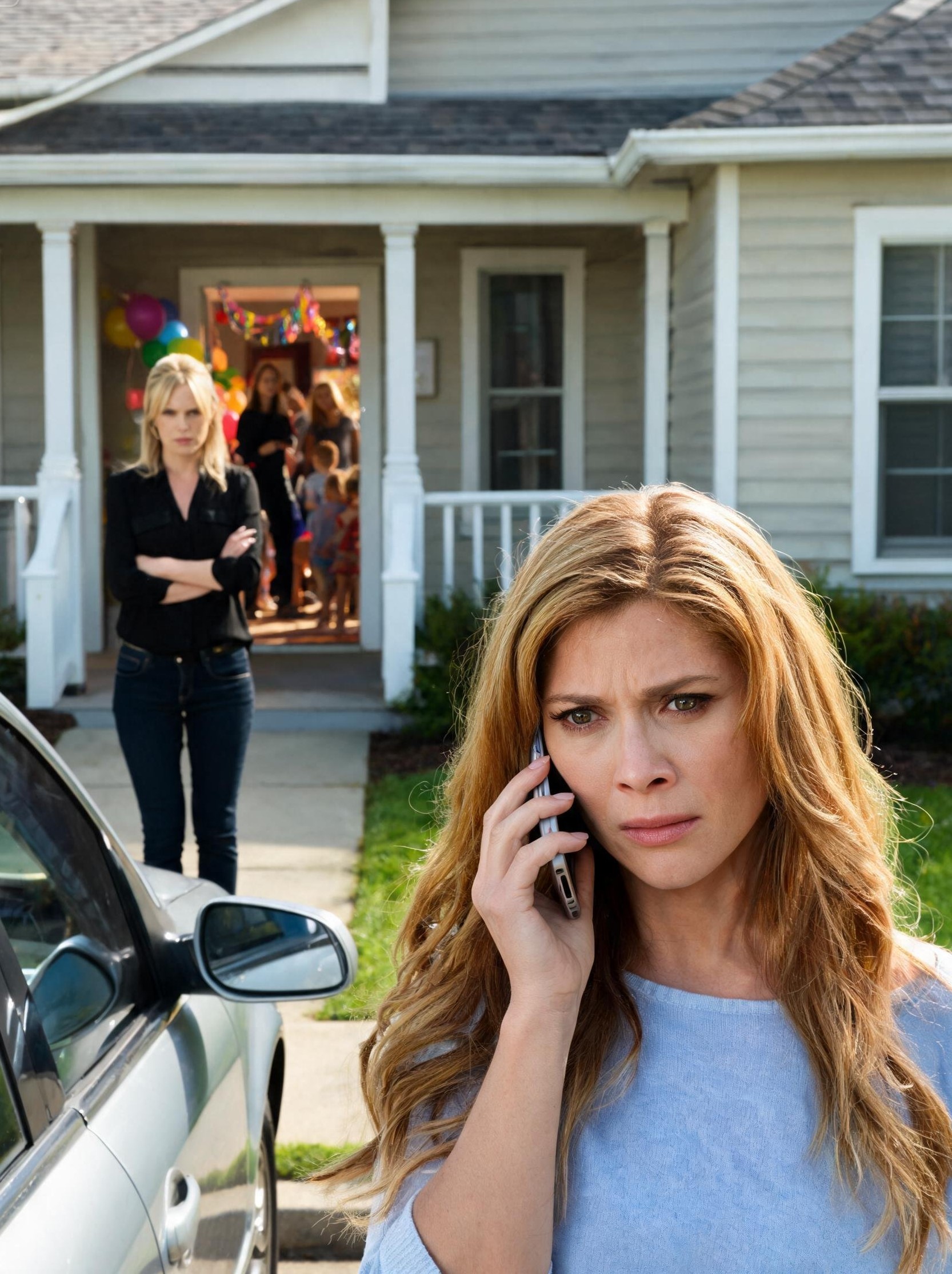
My Sister Secretly Moved Our Family Dinner to Keep Me Away—Then One Phone Call to Dad Exposed Eight Years of Lies
My sister looked straight at me at my nephew’s birthday party and said, “Maybe take the hint next time.” Twenty minutes earlier, I had discovered my entire family had held our annual dinner without me, and the father I hadn’t properly spoken to in eight years had been sitting in my usual chair. What Brooke didn’t know was that I was about to call him for the first time since I was twenty—and his first sentence would expose a lie neither of us realized we had been living inside.
I’m Sarah Mitchell, thirty-two, and until that Saturday I believed my family’s biggest problem was my father, David. He had left my mother when I was twenty, started dating another woman far too quickly, and handled the divorce with the emotional grace of a man canceling cable service. I had said things I meant for five minutes and regretted for eight years. Dad had responded by doing exactly what I told him to do: leaving me alone.
My nephew Noah’s tenth birthday was supposed to be simple. Pizza, blue frosting, eleven screaming kids, and adults standing around my sister Brooke’s suburban Columbus backyard pretending we weren’t stealing pepperoni from the children’s table. I walked in carrying Noah’s gift and announced that I was looking forward to the family dinner the next night. My cousin Matt laughed so suddenly that soda nearly came out of his nose.
“Tomorrow?” he said.
I smiled because I thought I had missed a joke. Aunt Linda stopped cutting cake. Brooke, standing beside the patio doors with a stack of paper plates, became very interested in separating two plates that were already separated.
“What?” I asked.
Aunt Linda reached for her phone. “Honey, dinner was last night.”
She showed me the pictures.
Everyone was there.
Mom was there.
Brooke was there.
Dad was there.
Everyone was there except me.
The photos had the casual cruelty of ordinary happiness. Dad was holding a wineglass beside Grandma. Mom sat at the opposite end of the table, smiling at something Matt had said. Brooke stood behind Noah with her hands on his shoulders, and there was one empty chair tucked against the wall as if nobody had ever expected another person.
I looked at Brooke.
“You moved dinner?”
She shrugged.
Not nervously.
Not apologetically.
Almost impatiently.
“Friday worked better.”
“You told me Sunday.”
“Plans change.”
“And nobody called me?”
Her mouth tightened. “Sarah, maybe take the hint next time.”
That was the moment the whole backyard seemed to become silent even though twelve children were yelling behind me.
Mom said, “Brooke.”
Aunt Linda whispered my name.
Matt suddenly found the grass fascinating.
I didn’t scream.
I didn’t cry.
I didn’t throw the cake.
I set Noah’s unopened gift beside the others, smiled when he ran past me with a plastic sword, and walked toward the driveway.
I remembered every Christmas Dad supposedly decided not to attend.
I remembered every birthday Brooke said Dad had “other plans.”
I remembered every time she told me he had asked about everyone except me.
I remembered every message I sent through her because calling him felt impossible.
I remembered every silence I had blamed on him.
My hands were shaking when I reached my car, but my voice was steady.
I found Dad’s number.
I almost didn’t recognize the contact because I hadn’t used it in years.
I pressed call.
He answered on the fourth ring.
The surprise in his voice stopped me cold.
“Did you know I wasn’t invited last night?”
Then, “What are you talking about?”
“The family dinner.”
Another silence, longer this time.
Dad said, “Brooke told me you knew I was coming.”
I leaned against the driver’s door.
“That isn’t what I asked.”
“Did you know I wasn’t invited?”
I closed my eyes.
Dad continued carefully.
“She told me dinner had to move to Friday because that was the only night I could come. I asked whether you knew. She said yes.”
My stomach tightened.
“What else?”
He hesitated.
“What else did she say?”
“She said you’d rather sit this one out.”
Cars passed at the end of the street.
Somebody’s dog barked.
A kid screamed happily from Brooke’s backyard.
Everything ordinary continued while the foundation of eight years shifted underneath me.
“I never said that.”
“I know that now.”
“You believed her?”
Dad exhaled.
“You haven’t wanted to be around me for years.”
That hurt because it was fair.
I had avoided him.
I had rejected two birthday calls.
I had once mailed back a Christmas card unopened because I recognized his handwriting.
But I had never told Brooke to erase me from family events.
“What exactly did you ask her?” I said.
Dad answered slowly.
“I said, ‘Does Sarah know I’m coming?’ Brooke said yes. I asked whether it would be a problem. She told me, ‘Sarah decided to sit this one out.’”
I stared through the windshield.
“That’s a lie.”
“Has she done this before?”
Dad didn’t answer.
I opened my eyes.
His voice changed.
“Sarah, there’s something I think you need to see.”
“I kept the messages.”
My fingers tightened around the phone.
“What messages?”
“The ones Brooke sent me about you.”
I said nothing.
Dad continued.
“Some of them go back seven years.”
A cold feeling moved through me.
“How many?”
“I don’t know.”
“Dad, how many?”
He swallowed audibly.
“Hundreds.”
I looked back toward Brooke’s house.
Through the front window, I could see my sister laughing while she handed our mother another plate.
She looked calm.
Comfortable.
Completely unaware that the wall she had built between our father and me had just developed its first crack.
Then Dad said the sentence that turned my anger into fear.
“Sarah, some of these messages are screenshots of conversations you supposedly had with her.”
I stopped breathing.
“I never sent Brooke screenshots.”
“Because in three of them, the phone number at the top isn’t yours.”
I stayed inside my car for six minutes before moving. Dad wanted to send everything immediately, but I told him not to—not until I knew whether Brooke still had access to Mom’s phone, Grandma’s accounts, or anything else she had been “managing” for the family. That word suddenly sounded different to me. Managing had always been Brooke’s specialty.
After our parents divorced, Brooke became the family switchboard. Dad called her to ask who was attending Thanksgiving. Mom asked her whether Dad had paid his share of Grandma’s medical bill. I asked her whether Dad had mentioned me, because apparently I preferred emotional espionage to making a thirty-second phone call.
Brooke never seemed resentful back then. She was two years older, organized, efficient, and always ready with an answer. If tension appeared, she solved it before the rest of us had to feel it.
That afternoon, I walked back into Noah’s party as if nothing had happened.
Brooke glanced at me once.
Her eyes dropped immediately to my phone.
That small movement told me more than an apology could have.
I didn’t confront her yet.
I helped Noah build the model rocket I had bought him. I laughed when the dog stole half a hamburger. I even stood beside Brooke while Mom took a picture, because Noah deserved one birthday that wasn’t remembered as the day his mother and aunt detonated the family.
But I started asking quiet questions.
I asked Aunt Linda who told her the dinner had moved.
I asked Matt.
I asked Grandma.
“Brooke handled the invitations.”
Then I asked Mom.
She frowned.
“I thought you refused to come because your father would be there.”
“Who told you that?”
Mom looked toward Brooke.
I didn’t need the answer.
When most of the children went outside, I found Brooke alone in the kitchen loading paper cups into a trash bag.
“Why did Dad think I refused an invitation I never received?”
Her hands stopped.
Not for long.
Half a second.
But long enough.
She kept pushing cups into the bag.
“Because every time you and Dad are in the same room, everyone else pays for it.”
“So you lied.”
“I solved a problem.”
The answer came too fast.
“For whom?”
“For everybody.”
She tied the trash bag harder than necessary.
“Do you know how exhausting you two are? Eight years, Sarah. Eight years of ‘Is Dad coming?’ and ‘Does Sarah know?’ and ‘Will Mom be upset?’ and ‘Maybe I shouldn’t go.’ I’m tired.”
“That gave you permission to erase me from dinner?”
“It gave me permission to stop one event from becoming another hostage negotiation.”
I stared at her.
There it was.
Her motive.
Not jealousy.
Control disguised as exhaustion.
Brooke had spent so long preventing conflict that she had started believing conflict itself was evidence that she had failed.
“You told Dad I refused.”
“I told him what was probably going to happen.”
“You don’t get to turn your prediction into my decision.”
She looked at me then.
Really looked.
Her face was pale.
“You would have made it complicated.”
“You would have asked if Mom knew he was coming.”
“Probably.”
“You would have spent three days deciding whether to show up.”
“Maybe I would have.”
“And Dad would have heard you were uncomfortable, then he’d cancel, then Mom would feel guilty, Grandma would start crying, and I’d have to fix it.”
Her voice cracked on the last three words.
I understood her.
That was the dangerous part.
I understood exactly how she had arrived here.
But understanding someone’s road does not mean you let them keep driving over you.
“So from now on,” I said, “you don’t carry messages between Dad and me.”
Brooke laughed once.
“I’m serious.”
“If he wants to ask me something, he calls me.”
“If I want to know what he thinks, I call him.”
“Even better.”
“And you never tell another person I said something unless I actually said it.”
Her eyes sharpened.
That was it.
The first real flash of panic.
I kept my face neutral.
“Why does that bother you?”
“It doesn’t.”
“It looked like it did.”
“You came back inside ready for a trial.”
I stepped closer.
“I came back inside wondering how many conversations you’ve had for me.”
Brooke’s jaw tightened.
“You’re being dramatic.”
“Dad kept your messages.”
The color left her face.
Only for a second.
But I saw it.
She turned toward the sink and began rinsing an already clean knife.
“Of course he did.”
“Hundreds.”
Her hand stopped under the faucet.
She didn’t look at me.
That frightened me more than if she had screamed.
Finally, she turned off the water.
“Sarah, your father is not some innocent victim.”
“I didn’t say he was.”
“Then his lies can stand on their own.”
“He walked away from us.”
“And you spent years hating him.”
“And now one phone call happens and suddenly I’m the villain?”
I picked up my purse.
“Right now, you’re the person who lied about one dinner.”
Brooke stared at me.
“And tomorrow?”
“That depends on what’s in the messages.”
I left before she could answer.
Dad emailed me that night.
There were 312 screenshots.
I made coffee, locked my apartment door, and began reading.
At first, they were exactly what I expected.
Brooke telling Dad I wasn’t ready to talk.
Brooke telling Dad not to send a birthday gift because it would upset me.
Brooke telling Dad that I had said I never wanted him at my graduation.
Some claims were believable.
Some were based loosely on things I had actually said.
Then I reached a screenshot dated three weeks before my college graduation.
The conversation showed Brooke asking me whether Dad could attend.
The fake version of me replied:
If he shows up, I’ll leave.
My hands went cold.
I had never written that.
I zoomed in.
The phone number attached to the conversation ended in 4819.
Mine ended in 6732.
I called Dad.
“That isn’t my number.”
“Whose is it?”
“I don’t know.”
I searched the number online.
Then I added it to my contacts.
A profile picture appeared in one of my messaging apps.
It wasn’t Brooke.
It was my mother.
I stared at Mom’s smiling face on the screen.
And suddenly the question was no longer whether Brooke had lied to Dad.
The question was why fake messages supposedly written by me had been sent from a phone number registered to our mother.
I didn’t call Mom that night. Anger wanted speed, but speed had already damaged enough in our family. I printed six screenshots, highlighted dates and phone numbers, and put them in a yellow folder like evidence from a crime that technically wasn’t one. Then I slept for exactly two hours.
The next morning, Mom called me first.
“Why did Brooke come home crying?”
Mom still lived in the house where Brooke and I grew up, though Brooke had moved fifteen minutes away after getting married. Hearing Mom ask that question made something inside me harden. Brooke had lied about me for years, and yet somehow I was already standing in the defendant’s position.
“I asked her why she excluded me from dinner.”
“She was trying to prevent a scene.”
“There was no scene until she lied.”
“Mom, do you still have your old phone number ending in 4819?”
It was tiny.
But after the day before, I had become very good at hearing silence.
“I changed numbers years ago.”
“What is this about?”
“Who had that phone in 2019?”
Mom took too long.
“Did Brooke ever use it?”
Another pause.
“She might have.”
“For what?”
“Why are you interrogating me?”
“Because someone used that number to create fake screenshots showing me telling Brooke I would leave my college graduation if Dad attended.”
Mom stopped breathing loudly enough for me to hear it.
I closed my eyes.
“I don’t know anything about fake messages.”
“That wasn’t my question.”
“Brooke used my old phone sometimes.”
“When hers broke.”
“For how long?”
“A few weeks.”
The screenshot had been created during those weeks.
I drove to Mom’s house.
She opened the door wearing gardening gloves, though there wasn’t a single gardening tool outside.
The yellow folder was under my arm.
Mom stared at it.
“What are you doing?”
“Trying to figure out which parts of my life were mine.”
“That’s dramatic.”
Brooke had used the same word.
I walked into the kitchen.
The family dinner table was still extended from Friday.
My chair—my actual chair—was pushed against the wall.
I touched its wooden back.
Mom saw me looking.
“Did you know she didn’t invite me?”
“I knew you weren’t coming.”
“That’s different.”
She removed her gloves.
“I thought you chose not to.”
“Because Brooke told you?”
“Do you ever verify anything she says?”
Mom stiffened.
“That’s unfair.”
I opened the folder.
Mom read the first screenshot.
Then the second.
Her expression changed at the third.
“You recognize something.”
“I said nothing.”
I slid the paper closer.
The fake message said:
Tell him I don’t need a father who chooses another woman over us.
Mom sat down.
“That sounds like something you would have said back then.”
“But I didn’t.”
“You said similar things.”
“To Brooke?”
“Sometimes.”
“That doesn’t explain the fake screenshot.”
Mom rubbed her forehead.
“This family was a disaster after the divorce.”
“That still doesn’t explain it.”
“Your father would call. You’d get upset. Brooke would get upset. I would get upset. Every conversation lasted for days.”
“So sometimes Brooke told him not to call.”
My stomach sank.
“On whose authority?”
Mom looked toward the window.
“You let her?”
“I didn’t know what else to do.”
“You were the parent.”
Mom flinched.
Some sentences deserve to land.
“I was barely functioning,” she said. “Your father had left. Bills were changing. Your grandmother needed surgery. Brooke stepped in.”
“She was twenty-two.”
“You made a twenty-two-year-old responsible for everybody’s emotions.”
“I didn’t make her.”
“You allowed it.”
Mom’s mouth tightened.
“You think I don’t regret things?”
“I don’t know what you regret because nobody in this family says what they mean.”
The words came out harder than I intended.
But they were true.
“Your father broke this family.”
“And then we spent eight years making sure nothing could ever be repaired.”
She stared at me.
I picked up the screenshots.
“Did you ever tell Brooke to make messages look like they came from me?”
“Did you ever know she was doing it?”
“Did you ever ask her to keep Dad away from me?”
Mom hesitated.
The second twist moved closer.
“After the divorce.”
“How long?”
“I don’t remember.”
Mom sat again.
“For the first year.”
My throat tightened.
“Because you were angry.”
“I was twenty.”
“You were falling apart.”
“So you told Brooke to keep him away?”
“I told Brooke that if your father called asking whether he should come to something, she should discourage him.”
I laughed once.
There was no humor in it.
“And did you ever tell her to stop?”
Mom looked down.
I already knew.
Brooke hadn’t invented the job.
She had inherited it.
Mom had placed her in the middle, Dad and I had kept her there, and over time Brooke had turned temporary permission into permanent authority.
Still, the fake messages were hers.
That line mattered.
Understanding the system did not erase the choices made inside it.
My phone buzzed.
I almost ignored it.
Then I answered.
“I found something else,” he said.
“A voicemail.”
“From Brooke?”
His voice sounded strange.
“From your mother.”
Mom was close enough to hear.
Her face changed.
Dad continued.
“It’s from the week before your graduation.”
I looked directly at Mom.
“What does she say?”
Dad hesitated.
Then played it.
Mom’s younger voice filled my phone.
David, please don’t come. Sarah says she’ll walk out if she sees you. Brooke showed me the messages. Don’t make this harder than it already is.
The recording ended.
My mother covered her mouth.
I stared at her.
“You called him.”
She whispered, “I believed Brooke.”
“You didn’t ask me.”
“You didn’t even ask me.”
“I thought I was protecting you.”
For eight years, everyone had been protecting me from conversations I never knew existed.
I grabbed the folder.
Mom followed me to the door.
“Sarah, where are you going?”
“To talk to Brooke.”
“Please don’t destroy your relationship with your sister over this.”
“I’m not the one who decided relationships can be managed by deleting people.”
Then Dad spoke through the phone.
“Sarah, wait.”
“There’s one more thing.”
“The voicemail has another recording attached.”
“What recording?”
“A call that happened ten minutes after your mother’s message.”
“Who called you?”
Dad’s answer made Mom grip the kitchen counter.
“What did she say?”
Dad was silent for several seconds.
Then he said, “She told me your mother was lying.”
Dad and I met that afternoon at a diner halfway between our homes. He was already sitting in a booth when I arrived, both hands wrapped around a coffee mug he clearly hadn’t touched. Eight years had added gray around his temples, deeper lines beside his mouth, and a slight carefulness when he stood, as though he no longer trusted his knees completely. For the first time, I understood that while I had been waiting for him to become my father again, he had been aging without me.
We didn’t hug.
That would have been too easy.
I sat across from him.
Dad unlocked an old phone.
Brooke’s voice came through the speaker.
Dad, Mom is going to call you and tell you Sarah doesn’t want you at graduation. Don’t listen to her. Sarah’s angry, but she never said she’d leave if you came.
I stared at him.
The recording continued.
I don’t know why Mom is doing this. Maybe she thinks keeping you away will make Sarah feel like she picked her side. Just don’t tell Mom I warned you.
Then Brooke’s voice stopped.
My entire theory collapsed.
“She defended me.”
Dad nodded.
“So why didn’t you come?”
“Because ten minutes later Brooke called again.”
He played the second recording.
This time Brooke sounded exhausted.
Forget what I said. Mom showed me another conversation with Sarah. She really doesn’t want him there. I’m sorry.
I looked at Dad.
“She changed her story.”
“Did Mom show her a fake conversation?”
“I don’t know.”
That was when I realized we might never identify the first lie.
Maybe Mom had misrepresented something.
Maybe Brooke had.
Maybe both had spent so many years speaking for others that even they no longer knew which thoughts belonged to whom.
Dad put his phone down.
“I should have called you.”
“I thought respecting your wishes meant staying away.”
“You stayed away for eight years.”
I wanted to punish him with that sentence.
Instead he nodded.
No excuses.
No argument.
That made anger harder.
“I wanted you to fight for me,” I said.
Dad looked down at his coffee.
“I thought fighting for you meant ignoring what you asked for.”
“I didn’t ask.”
“I know that now.”
“Even after graduation, you could have called.”
“I did twice.”
“I didn’t answer.”
“Then I stopped.”
“That was the problem.”
“No, Dad, I don’t think you do.”
My voice remained quiet.
“I was twenty. I told you to stop pretending you wanted a relationship with me because I wanted you to prove I was wrong.”
His eyes lifted.
“That’s a terrible way to communicate.”
“It also sounds exactly like something I might have misunderstood.”
We sat there with two cups of coffee between us and eight years of consequences.
He had failed me.
I had tested him instead of telling him what I needed.
Mom had treated communication like a weapon.
Brooke had treated it like a control panel.
Nobody had been innocent.
That didn’t mean everyone was equally responsible.
It meant blame was finally becoming specific.
Dad reached into his coat and handed me a folded sheet of paper.
“What’s this?”
“Times I asked Brooke about you.”
There were forty-seven entries.
Birthday gifts.
Christmas invitations.
A hospital stay I had never known Dad knew about.
My promotion.
The apartment fire in my building.
Grandma’s surgery.
Beside each entry, Dad had written what Brooke told him.
Sarah needs space.
Sarah doesn’t want you involved.
Sarah said not to come.
Sarah will reach out when she’s ready.
The last entry was only three months old.
I read it twice.
Did Sarah ever get the birthday card?
Brooke’s answer:
She returned it.
I looked at Dad.
“I never got a birthday card.”
“It came back to me unopened.”
“Where did you send it?”
He showed me the envelope.
The address was Brooke’s.
I nearly laughed.
“Why would you send my birthday card to Brooke?”
“Because she told me you had moved and didn’t want me to have your address.”
I stared out the diner window.
Brooke had not merely passed messages.
She had become a border.
And borders survive because everyone agrees not to cross them.
“I’m done using her,” I said.
Dad nodded.
“That doesn’t mean everything between us is fixed.”
“I don’t forgive you for disappearing.”
“I’m not asking you to.”
“I’m not ready to meet your wife.”
“I’m not ready for Christmas.”
“I might be ready for coffee.”
Dad smiled faintly.
“Coffee I can do.”
There was no dramatic hug.
No tears across the table.
Just two adults finally stating terms without an interpreter.
That evening I went to Brooke’s house.
Her husband, Mark, opened the door.
“She’s upstairs.”
“Does she know I’m coming?”
“She guessed.”
Brooke was sitting on her bed with a cardboard storage box beside her.
She looked exhausted.
“I found Mom’s old phone,” she said.
“She gave it to me after you left.”
“Because she remembered something.”
Brooke opened the box.
Inside were three old phones, charging cables, notebooks, and envelopes.
She held up the phone ending in 4819.
“I made some fake screenshots.”
She looked directly at me.
“There it is.”
No performance.
Just the truth.
“How many?”
“Dad has more than seven.”
“Then who made the others?”
“I don’t know.”
“I’m serious.”
“Why did you make any?”
Brooke looked down.
“Because sometimes you said things verbally, then later denied saying them.”
My jaw tightened.
“That doesn’t give you the right—”
She cut me off.
“I know now.”
She opened an old notebook.
“You told me Dad could rot before graduation.”
“I was angry.”
“You told me you never wanted to see him again.”
“For one night.”
“I took everything literally because nobody would talk directly.”
“So you manufactured evidence?”
“That’s insane.”
The speed of her agreement stopped me.
She wasn’t fighting anymore.
Brooke rubbed her hands together.
“At first I thought I was helping. Mom would ask what you said, Dad would ask what you said, and you would ask what they said. Then everyone started getting angry when my answers weren’t clear enough.”
“So you made them clear.”
“I made them definite.”
“You changed my life.”
Her eyes filled, but she didn’t cry.
“And you changed mine too.”
“What does that mean?”
“For eight years, none of you asked me what I wanted. You just handed me your fear and told me to deliver it.”
“That doesn’t excuse lying.”
“Stop saying that.”
“What do you want me to say?”
“The truth.”
She looked toward the old phone.
“Then here’s the truth.”
Brooke turned it on.
The screen flickered.
She opened an archived text folder.
“Seven screenshots were mine.”
She handed me the phone.
“Eleven weren’t.”
I scrolled.
The messages were dated months before Brooke had borrowed Mom’s phone.
My chest tightened.
“Who had this phone then?”
Brooke looked at me.
And at the bottom of one conversation was a draft message that had never been deleted.
It was addressed to Dad.
Keep Sarah angry long enough, and she’ll eventually stop asking questions about why you really left.
Brooke and I drove to Mom’s house together.
For the first time in nearly a decade, neither of us was carrying a message for someone else.
We carried the phone.
Mom was sitting in the living room when we arrived.
She looked at the device in Brooke’s hand and closed her eyes.
That was our answer before she said anything.
“I wondered when you’d find it.”
My stomach dropped.
Brooke whispered, “You knew?”
Mom looked older suddenly.
Not weaker.
Just tired of holding something.
“I knew there were drafts.”
“You wrote them?” I asked.
“How many?”
“I don’t remember.”
Mom looked at Brooke.
“I need you to leave.”
Brooke laughed bitterly.
“This is between Sarah and me.”
“That hasn’t stopped anyone in this family from putting me in the middle before.”
Mom flinched.
Brooke sat beside me.
“For once, I’m staying.”
Mom’s hands folded in her lap.
“Your father didn’t leave only because the marriage was unhappy.”
I felt my chest tighten.
“Then why?”
“He discovered I had taken money from an account that belonged to your grandmother.”
Brooke’s face changed.
“It wasn’t theft the way it sounds.”
“Those are usually the words people say before explaining theft,” I said.
Mom ignored that.
“Your grandmother was going through a bad period. Bills were piling up. I moved money to protect it.”
“Into whose account?”
Mom said nothing.
“How much?”
“Thirty-two thousand dollars.”
Brooke stood.
“Oh my God.”
“I paid most of it back.”
“Eventually.”
“And Dad found out?”
Mom’s voice became smaller.
“He told me I had to tell Grandma.”
“You didn’t.”
“He threatened to?”
“So what happened?”
“I told him if he exposed me, the divorce would become ugly.”
The room seemed too quiet.
I finally understood the draft.
Keep Sarah angry long enough, and she’ll eventually stop asking questions about why you really left.
“You needed me to blame Dad.”
Mom looked at me.
“I needed the divorce to end.”
“That isn’t the same thing.”
“You were already furious with him.”
“So you fed it.”
Mom shook her head.
“I didn’t invent his girlfriend.”
“I didn’t invent how quickly he moved on.”
“I didn’t make him leave.”
I leaned forward.
“But you made sure I never asked why.”
Mom began crying then.
It did not rescue her.
It did not transform the room.
Sometimes tears are remorse.
Sometimes they are simply what happens when secrecy becomes heavier than the person carrying it.
Brooke sat down again.
“So you used me.”
Mom wiped her face.
“I leaned on you.”
Brooke’s voice was flat.
“You taught me that controlling information was the same thing as protecting people.”
Mom looked away.
“And then you hated me when I got too good at it.”
Nobody spoke.
That was the first moment I felt sorry for Brooke without excusing her.
She had lied.
She had fabricated screenshots.
She had decided where people belonged.
But the first blueprint had been handed to her by our mother.
I took out my phone.
Mom looked alarmed.
“Who are you calling?”
“Sarah, please.”
“No more messengers.”
He answered.
“Dad, I’m at Mom’s.”
“I found the old phone.”
Longer silence.
“Then you know.”
“Some of it.”
Mom closed her eyes.
“Tell me the rest.”
He told me he had found the missing money six months before the divorce.
He told Mom to repay Grandma and confess.
Mom begged him not to.
They fought for weeks.
Their marriage had already been failing.
Then Dad met Caroline, the woman who later became his wife.
He admitted the emotional relationship began before he moved out.
That mattered.
Mom had not invented his betrayal.
But Dad had threatened to expose the missing money after the separation, and Mom had threatened to tell us he left solely for Caroline.
In the end, neither told the whole truth.
Each allowed the ugliest version of the other to survive.
Brooke became the courier.
And I became the audience.
“What happened to Grandma’s money?” I asked.
Dad sighed.
“Your mother repaid it.”
“All of it?”
“Three years later.”
Grandma had never known.
Mom whispered, “I was ashamed.”
Dad replied through the speaker.
“So was I.”
For once, nobody tried to win.
That was the strangest part.
After eight years of silent war, the truth arrived looking less like a bomb and more like a pile of unpaid bills.
Embarrassing.
“I need space.”
Mom panicked.
“Real space.”
I looked directly at her.
“Not space Brooke communicates for me. Not space Dad guesses about. Space I am telling you I need.”
Mom nodded.
“How long?”
“I don’t know.”
Brooke started to speak.
I raised a hand.
She stopped.
“I love you.”
Her face crumpled slightly.
“But I don’t trust you.”
She nodded.
“I understand.”
“You don’t get access to my plans, my messages, or my relationship with Dad.”
“If someone asks you what I think, you say you don’t know.”
“If Dad asks whether I’m attending Christmas—”
“I tell him to ask you.”
She gave a sad smile.
“I can do that.”
“I hope so.”
Dad and I started meeting for coffee.
Not every week.
Sometimes a month passed.
Our third conversation ended badly when he tried to explain Caroline again and I told him I wasn’t interested in hearing a defense of an emotional affair.
He apologized the next morning.
No interpreter.
Months later, Grandma turned eighty-four.
Brooke created a family group chat.
Her message said:
Grandma’s birthday is Saturday at . Mom is coming. Dad is coming. Sarah is invited. I am not managing anyone’s reaction to anyone else.
I smiled when I read it.
Dad texted separately.
I’m planning to attend. Just wanted you to hear it from me.
Thanks. I’m going too.
Saturday evening, I stood outside Grandma’s house for almost a full minute before walking inside.
Dad was near the kitchen.
Mom sat beside Aunt Linda.
Brooke was carrying a birthday cake.
Nobody moved.
Nobody changed seats.
Nobody rushed over to ask whether I was okay.
It was gloriously uncomfortable.
Dad nodded.
“Hey, Sarah.”
That was all.
Twenty minutes later, he asked about work.
I asked about his shoulder surgery.
Mom and I exchanged three polite sentences near the punch bowl.
Brooke stayed out of all of it.
And somehow, without anyone controlling the room, the room survived.
Grandma blew out her candles.
Noah stole frosting.
Matt told an inappropriate story.
Aunt Linda complained about parking.
Life continued.
That was when I finally understood something.
Peace was not the absence of discomfort.
Peace was the absence of manipulation.
People could be angry and still stay in the room.
People could feel betrayed and still decide what happened next.
People could forgive slowly.
Or not forgive at all.
What mattered was that the choice belonged to them.
As I was leaving, Brooke followed me onto the porch.
“I’m sorry.”
She had said it before.
This time she added nothing.
No explanation.
No justification.
No reminder that we had all contributed.
Just two words.
I looked at her.
“I believe you’re sorry.”
“Is that enough?”
She nodded.
Then she handed me a small envelope.
“What’s this?”
“Something I found in Mom’s storage box.”
My name was written on the front.
Dad’s handwriting.
The postmark was from eight years earlier.
The envelope had never been opened.
“I didn’t hide this one,” Brooke said quickly. “I swear.”
I believed her.
That was almost worse.
I opened it in my car.
Inside was a two-page letter Dad had written three weeks after he moved out.
I know you think I left because loving you and Brooke stopped mattering. That isn’t true. I also know saying that may not mean much right now.
There are things about the marriage you don’t know, and things I’ve done that I’m ashamed of. Your mother has things she is ashamed of too. I don’t want either of us to turn you into a judge.
You told me to stop pretending I want a relationship with you.
I am going to give you some space.
But I will keep trying unless you tell me directly, not through anyone else, that you want me gone.
I read the last sentence three times.
Unless you tell me directly.
Dad had understood the rule eight years before any of us did.
So why had he stopped trying?
I turned the page.
There was one final paragraph.
It had been crossed out in black ink.
Not with Dad’s pen.
With a thick marker.
I held the paper toward the dome light.
Under the ink, faint words were still visible.
I could make out only part of the sentence.
If anything ever happens to me, ask Linda about the account in Grandma’s name and the property outside Dayton.
My pulse quickened.
Aunt Linda?
The same aunt who had shown me the dinner photos.
The same aunt who had acted completely confused.
I looked back through Grandma’s front window.
Linda was standing beside Mom.
They weren’t laughing anymore.
They were arguing.
Then Linda turned toward the window.
Her expression changed when she saw the letter in my hand.
My phone rang.
Unknown number.
I answered.
A woman said, “Is this Sarah Mitchell?”
“My name is Rebecca Sloan. I’m an attorney in Dayton.”
I looked again at the crossed-out paragraph.
Rebecca continued.
“I’ve been trying to locate you because your grandmother’s name appears on a property trust that hasn’t been touched in eighteen years.”
My hand tightened around the phone.
“What property?”
There was a pause.
“Ms. Mitchell, according to the trust documents, your family owns sixty-three acres outside Dayton.”
I stopped breathing.
“And there’s one more thing.”
“Your father isn’t the person who created the trust.”
I stared through the windshield at Aunt Linda.
The attorney answered.
“Your mother.”
✓ Lynn R. Adams
My Sister Secretly Moved Our Family Dinner to Keep Me Away—Then One Phone Call to Dad Exposed Eight Years of Lies My sister looked straight at me at my nephew’s birthday party and said, “Maybe take t…