My relatives laughed when…
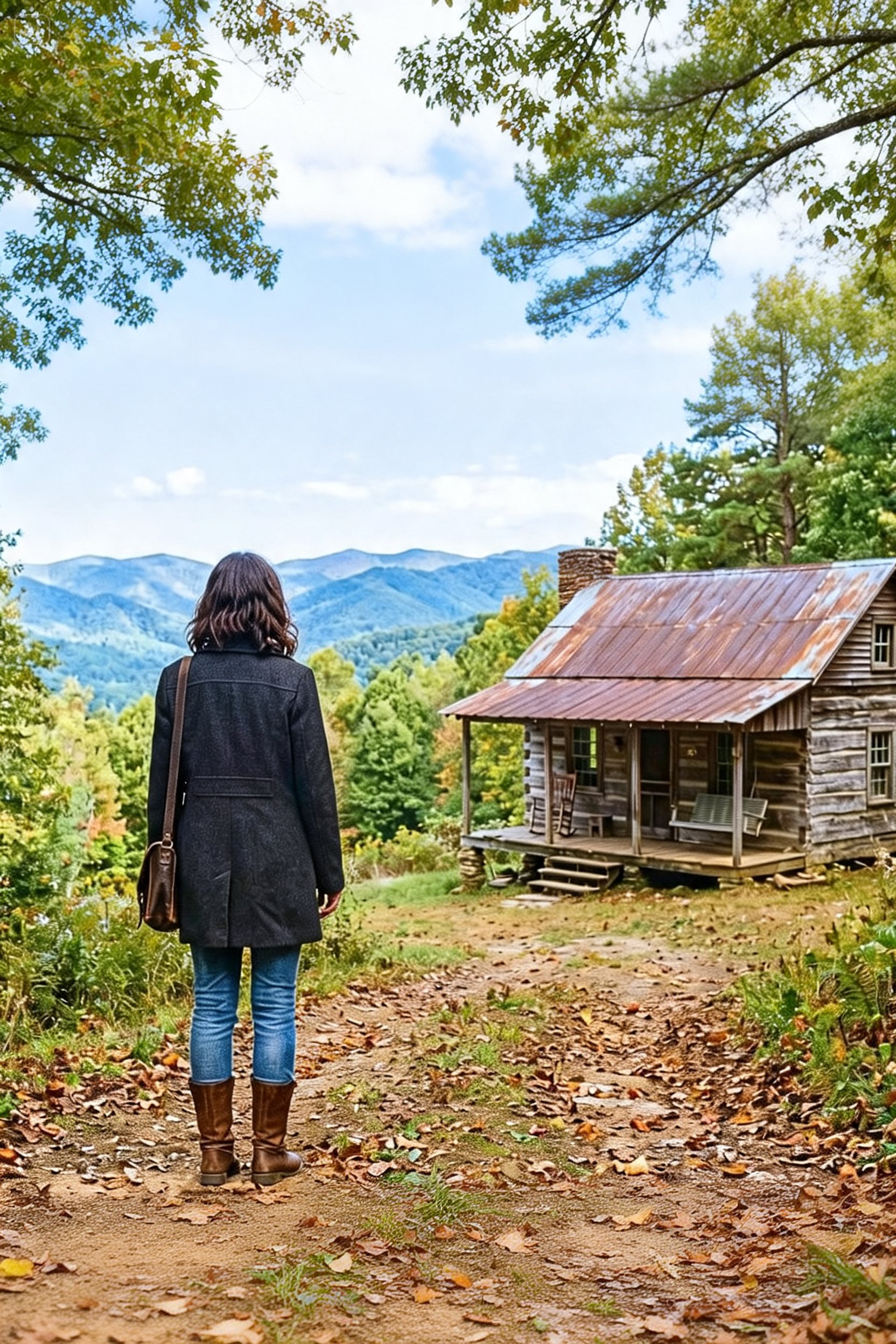
My relatives laughed when Grandma left me her weathered mountain cabin instead of money. I went there that night with the private envelope her lawyer had quietly given me, and found something none of them knew was under the floor….
My name is Samantha Reed. I was 39 when my grandmother died, and I hadn’t called Maple Ridge, West Virginia, home in nearly fourteen years. But I still remembered every bend in the mountain road, every church bell, and the way November fog gathered in the hollows before sunrise.
Grandma Evelyn died peacefully at 87. She had been the one person in my family who never treated my quietness as something I needed to fix. When I was nine and other children made fun of me for hardly speaking, she held my hand on the porch of her mountain cabin and said, “The loudest person in the room rarely hears what matters most.”
At her funeral, I kept hearing those words. I also noticed the familiar looks from relatives who knew my marriage had ended and that I hadn’t come home with the success they’d expected. Uncle Richard nodded once. Aunt Diane offered a careful smile. My cousin Emily barely looked up. I told myself I was there for Grandma, not for their approval.
The will was read that afternoon in Henry Caldwell’s law office above the hardware store on Main Street. Henry was 72, with silver hair and a measured way of speaking. Twelve family members gathered around a walnut table while November light faded outside the window.
Richard received a savings account. Diane and two nieces shared Grandma’s jewelry. One grandson got her Buick, which he’d used to take her to appointments, and Emily inherited the antique grandfather clock. People nodded, already calculating what their gifts might be worth. I kept my hands folded in my lap.
Then Henry read my name. Grandma had left me the cabin and surrounding land eleven miles north of town, including everything inside it. For a second the room was still. Then Richard let out a laugh, and Emily turned toward her mother with a grin.
“You mean that old place is still standing?” Emily asked. Somebody joked about mice. Richard leaned back and called it a fixer-upper, as if he were doing me a favor by finding the situation funny. I could feel my cheeks getting warm, but I didn’t join in.
I knew that cabin better than any of them. Grandma and I had picked blackberries by its creek, drunk coffee with extra milk and sugar from chipped enamel cups, and watched storms cross the mountains from the porch. The others had complained that it was cold and too far from everything. To me, it had always been the one place where silence felt comfortable.
When Richard offered to help me find somebody willing to pay a few thousand dollars for the land, I told him I intended to keep it. He shrugged and followed the others out. I was reaching for my coat when Henry asked me to sit down again.
He waited until the conference room door clicked shut. From a drawer he took a cream-colored envelope with my name written in Grandma’s unmistakable handwriting. She had given it to him six months earlier, with instructions to hand it over only after the will was read and everybody else had gone.
There was something hard inside, as well as a folded letter. I asked whether Grandma had explained herself. Henry said only, “She told me you’d understand when you were ready.” I slid the envelope into my coat pocket, suddenly remembering the summer I had asked why she never sold that remote piece of property.
“Some things lose their value the moment you put a price on them,” she’d told me. I was fourteen and thought that was simply one of Grandma’s strange sayings. Standing in Henry’s office twenty-five years later, I wasn’t so sure.
I drove toward the mountain before the daylight disappeared. My aging silver Ford climbed the gravel road past a rusted mailbox, an empty barn, and the creek where Grandma taught me to skip stones. When the cabin finally appeared among the bare trees, the porch railing was sagging and one shutter hung crooked.
I parked and sat there a minute. I could almost see Grandma in her rocker, waiting for me to come running up the steps with stained fingers and a basket of berries. The memory hurt so sharply that I had to grip the steering wheel until it passed.
I used the cabin key that came with the property papers. Inside, the air smelled of cedar, dust, and stone. Her faded quilt still lay across the couch. The enamel coffee pot sat beside the stove. Her rocking chair faced the fireplace as if she had only stepped outside for a moment.
“I missed you, Grandma,” I whispered, touching the back of the chair. I built a small fire, sat down, and finally opened the envelope. A little brass key dropped into my palm. The letter inside was short, and the first sentence made my eyes sting: “People have always mistaken your quietness for weakness. I never did.”
Grandma wrote that the cabin held memories our family had kept for generations. Then came a peculiar instruction: “If you still remember how to listen, start with the floor. You’ll know where.” I read it three times, listening to the fire pop and the old house settle around me.
When I was little, I’d once crawled around the fireplace tapping floorboards with a wooden spoon, pretending they were piano keys. One board had sounded different from all the others. Grandma had noticed, but she hadn’t scolded me or told me what I’d found. She had just smiled and asked me to help set the table.
I stood, moved the braided rug near the hearth, and knelt in the dust. At first I saw nothing but worn wood. Then the firelight caught a faint rectangular outline and a tiny brass lock set into the floor.
The little key fit perfectly. I turned it, heard a click, and pulled a recessed iron ring. A section of flooring lifted, releasing a breath of cold air. Seven narrow steps descended into darkness, beneath a cabin everyone had just laughed at.
I went to the car for a flashlight. Every reasonable thought told me to wait until morning, but I couldn’t. I climbed down slowly, aiming the beam at stone walls, wooden shelves, metal cases, and carefully labeled boxes. Then something on one shelf flashed gold.
There were old coins in protective sleeves, military medals, bundles of letters, photographs, savings bonds, and a leather-bound ledger. None of it looked abandoned; somebody had been taking extraordinary care of it. I stood under those dusty floorboards with the flashlight shaking in my hand, wondering what Grandma had protected all these years—and why she’d trusted me to find it. Part 2…..
The first box I opened held a black-and-white photograph of a young serviceman, a tarnished medal, and a letter that began, “Dear Mama, if this reaches you before I do.” I put the letter down before finishing it. Those shelves held things people had carried through wars, families, and losses, not just things somebody might sell.
I sat on a crate with the leather ledger balanced on my knees. Its entries listed names, dates, locations, and the story behind each object. One silver dollar had come home in Thomas Reed’s pocket in 1945 because his wife had insisted he bring both himself and the coin back to West Virginia.
Another entry belonged to Walter Collins, a boy from two farms away who went to Europe at nineteen and never came home. His mother had given his medal to my great-grandfather because she couldn’t bear to throw it away or bear to keep seeing it. I held the case for a long time, thinking about the woman who had made that impossible choice.
Near the back of the ledger, Grandma had added details that wouldn’t have mattered to an auctioneer: who loved peach pie, who played hymns by ear, who was afraid of thunderstorms. Then I found a sentence she’d underlined twice: “Not everything is beneath this house.” I didn’t know what it meant, only that she had left more for me to discover.
It was nearly midnight when I climbed back up. I made coffee in her old enamel pot and sat at the kitchen table, remembering how often my family had interrupted me and how my former husband used to say I thought too much. I’d spent years believing there was something wrong with being the person who listened.
Grandma’s note made me consider another possibility. Maybe she’d chosen me not because no one else wanted the cabin, but because she knew I’d take the time to learn whose belongings these were. I looked at her empty rocker and asked aloud, “Is that why you chose me?”
The next morning I started an inventory. I photographed labels, matched letters to names in the ledger, and handled the old papers as carefully as I could. After a full day’s work I’d cataloged only part of one shelf, but for the first time in a long while I felt certain of what I wanted to do next.
Then Aunt Diane called. Her voice was unusually sweet as she asked whether I’d found any coins or keepsakes and suggested that anything valuable really belonged to “the family” in some broader sense. A few days earlier, no one had wanted responsibility for that old cabin.
“Grandma left the cabin and everything in it to me,” I told her. “I’ll make sure what’s here is protected.” Diane began to object, but I ended the call politely. My hands were a little unsteady afterward. Even so, I smiled at how different it felt to say what I meant without apologizing.
I spent the rest of the week working through photographs, medals, and documents. On a rainy Thursday I found an envelope tucked between pages of the ledger. In Grandma’s handwriting it was marked “Private Appraisal Records.”
The document listed a rare gold coin at $38,000; historic silver dollars at $110,000; military medals and wartime memorabilia at $74,000; unredeemed savings bonds at $340,000; and several rare coin lots valued at almost $900,000. The partial estimate at the bottom was $1,862,000. And that report was nearly fifteen years old.
I stared at the number. The objects weren’t more meaningful than they’d been an hour before, but suddenly I worried about who might come looking for them. I wanted to know whether the appraisal was still accurate, so the next morning I called Samuel Bennett, the historical-collections and coin specialist whose name appeared on the report.
When I mentioned Grandma, Samuel went quiet. “Evelyn,” he said at last. “You’re her granddaughter? I wondered who she’d choose.” He remembered her refusal to sell and repeated something she had once told him: “Money changes hands. History disappears.”
Samuel agreed to visit. I spent the hours before he arrived preparing an inventory and wondering whether Grandma had told him something she hadn’t told me. I was beginning to understand the collection, but I hadn’t yet grasped the size of the responsibility.
Part 3 Samuel came the following afternoon in an old dark green pickup, carrying two leather cases. He was 68, with wire-rimmed glasses and a careful, unhurried manner. Downstairs he examined coins, records, and cases for nearly an hour, sometimes murmuring to himself while I stood by the steps.
When we sat at the kitchen table, I poured him coffee and asked what he thought. He said Grandma had cared for the collection better than some museums did. Certain coins had appreciated, some documents had valuable histories of ownership, and other pieces still needed authentication.
“How much are we talking about?” I asked. Samuel waited a moment before answering. “More than two million dollars, by my estimate today.” He made clear that was an estimate, not a finished appraisal or a promise of what a sale would bring.
I thought of Grandma living quietly with all of it beneath her floor. She could have sold pieces, repaired the cabin, or made her life easier. But Samuel said she never considered herself the collection’s absolute owner. She considered herself its keeper until the next person was ready.
Before he left, Samuel examined a brass compass from one of the wooden cases. On the back was a small sycamore-leaf symbol inside a circle. He recognized the same mark beside a 1953 ledger entry that read, “Original creek line. Follow the sycamore marker to where the first Reed cabin stood.”
“The first cabin?” I asked. Nobody had ever told me there had been another. Samuel closed the ledger carefully and said, “I’d say your grandmother still has something to tell you.”
That evening Uncle Richard texted: “We need to talk about what you found in Grandma’s cabin.” I had told no relatives about Samuel or the appraisal. When Diane called the next day and said Richard knew there might be valuables, I realized the news was already circulating, though I still didn’t know who had told them.
Within days three more relatives called. One proposed an auction; another wanted the proceeds divided. Richard demanded to know whether I meant to keep two million dollars to myself. I told him that Grandma had decided who would care for her collection, and that it wasn’t simply a pile of money.
He said I didn’t get to decide the future of our family history. “Grandma decided who would protect it,” I answered. I ended the conversation feeling shaken but relieved. For once, someone else’s certainty hadn’t erased my own.
Then I noticed boot prints near the woodpile and tire tracks at the end of the road. One night headlights paused between the trees before driving away. I couldn’t tell who had been there, but I wasn’t willing to gamble with the boxes downstairs. I photographed everything, made digital copies of the ledger, bought better locks and motion lights, and protected the most fragile papers.
Henry Caldwell phoned to warn that some relatives had consulted another lawyer. They were asking whether Grandma had understood her will and whether the cabin’s contents were included. Henry reminded me that the will expressly covered everything inside and said Grandma had kept years of inventories, ownership papers, appraisals, and written instructions.
When I asked if she’d been competent when she signed, he almost chuckled. She had corrected a spelling mistake ten minutes beforehand, he said. I could picture her doing it. Nothing had been settled in court, but the care she’d taken gave Henry documents to answer their questions.
I returned to the ledger and the compass. From the cabin I followed an overgrown trail toward the property’s western side, where I remembered an enormous sycamore beside a creek bed. After nearly half a mile, I found a rusted marker nailed to its trunk, bearing the same leaf-and-circle symbol.
Behind it, a narrow path led into the trees. I followed until I reached the remains of a stone foundation. There, beside the stones, sat a weathered wooden box with two faded words on the lid: “For the keeper.”
I knelt beside it and lifted the lid. There was no lock, no gold, and no money. Only letters, old family photographs, and something in Grandma’s handwriting that would explain a different kind of inheritance.
Final The photographs showed a cabin I had never seen, built beside the original creek line. One picture showed my great-grandfather as a twelve-year-old boy standing with his family on its porch. The letters told of soldiers leaving home, women keeping farms running through hard winters, children growing up, and loved ones who never returned.
At the bottom of the box lay a page Grandma had written: “Every generation needs someone willing to remember. Not someone who wants to own the past, someone willing to carry it.” Below was a list of names—my great-grandfather, my grandfather, then Grandma. Beside each were the words “the keeper.” The final line was empty.
I sat against the old stones with the paper in my lap. It wasn’t an invitation to take the most expensive thing I could find. It was an invitation to accept a responsibility that had passed through our family for generations. I wrote my name on that final line: “Samantha Reed, the keeper.”
Back at the cabin, I called Samuel again. This time I didn’t ask about appraisals. I told him I wanted to preserve the collection and make sure the stories stayed attached to the people and the place they came from. He introduced me to archivists and preservation specialists; I also reached out to a regional historical society and a veterans organization.
We began planning how to document the materials and share the stories responsibly without scattering everything through sales. I knew money mattered. I had debts and ordinary expenses like anyone else. But I couldn’t bear the idea of reducing a soldier’s last photograph or a mother’s letter to a price tag just because that would be easier.
Richard hated my decision, and Diane called it selfish. The questions about Grandma’s will continued for a while, but Henry produced the records she’d prepared over many years. Eventually the arguments quieted. I hadn’t won everyone’s approval, and I stopped treating that as a condition for doing what I believed was right.
One cold afternoon, Emily drove up carrying a cardboard box she’d found in her father’s attic. Inside were letters, photographs, and a Purple Heart wrapped in an old handkerchief. She admitted she’d almost thrown them away, then heard what I was trying to do at the cabin.
“Maybe they belong with the others,” she said. I invited her inside. We spent the afternoon reading beside Grandma’s fireplace. Some letters made us laugh, and one left Emily with wet eyes. For the first time I could remember, we talked about our family without fighting over what anyone deserved.
By the first snowfall, the cabin was beginning to be a place where veterans and families could bring old stories, identify people in photographs, and help younger visitors understand the lives behind dates in a book. It wasn’t a grand museum. It was still Grandma’s little cabin, with its weathered porch and enamel coffee pot, but now it had room for other people’s memories too.
I thought that was the end of what she’d left me. Then, one evening while checking the final pages of her ledger, I found a small envelope tucked into the back cover. It read, “For the next keeper.” Inside was one last letter from Grandma.
She wrote that relatives had often asked about the coins, the land, and what they might be worth one day. But when I was nine, I’d picked up a soldier’s photograph and asked, “Grandma, who was he?” Not “How much is it worth?” She had never forgotten the difference.
The last lines answered the question I’d been asking since Henry placed that first envelope in my hand: “I didn’t choose you because you were the quietest. I chose you because you listened.” I sat at the table for a long time, remembering all those years I’d mistaken my nature for a weakness because other people treated it that way.
My family laughed when I inherited a rundown cabin. Later, some of them wanted a share of the collection worth more than two million dollars. But the greatest gift Grandma left me couldn’t be sold. She had shown me that my ability to listen could be a purpose, not an apology.
If there’s an old photograph in your family no one asks about, or a story a parent or grandparent keeps trying to tell, ask about it while you still can. I wish I could have one more evening on that porch with Grandma. Since I can’t, I’ll keep listening to the stories she saved—and make sure someone after me can hear them too.
THE END. I’ve shared the complete story, and I truly hope it touched your heart. If this story moved you, please , like, and share the post. Thank you for reading! ❤️
✓ Lynn R. Adams
My relatives laughed when Grandma left me her weathered mountain cabin instead of money. I went there that night with the private envelope her lawyer had quietly given me, and found something none of …