My parents walked into probate court certain they could take the $4.7 million
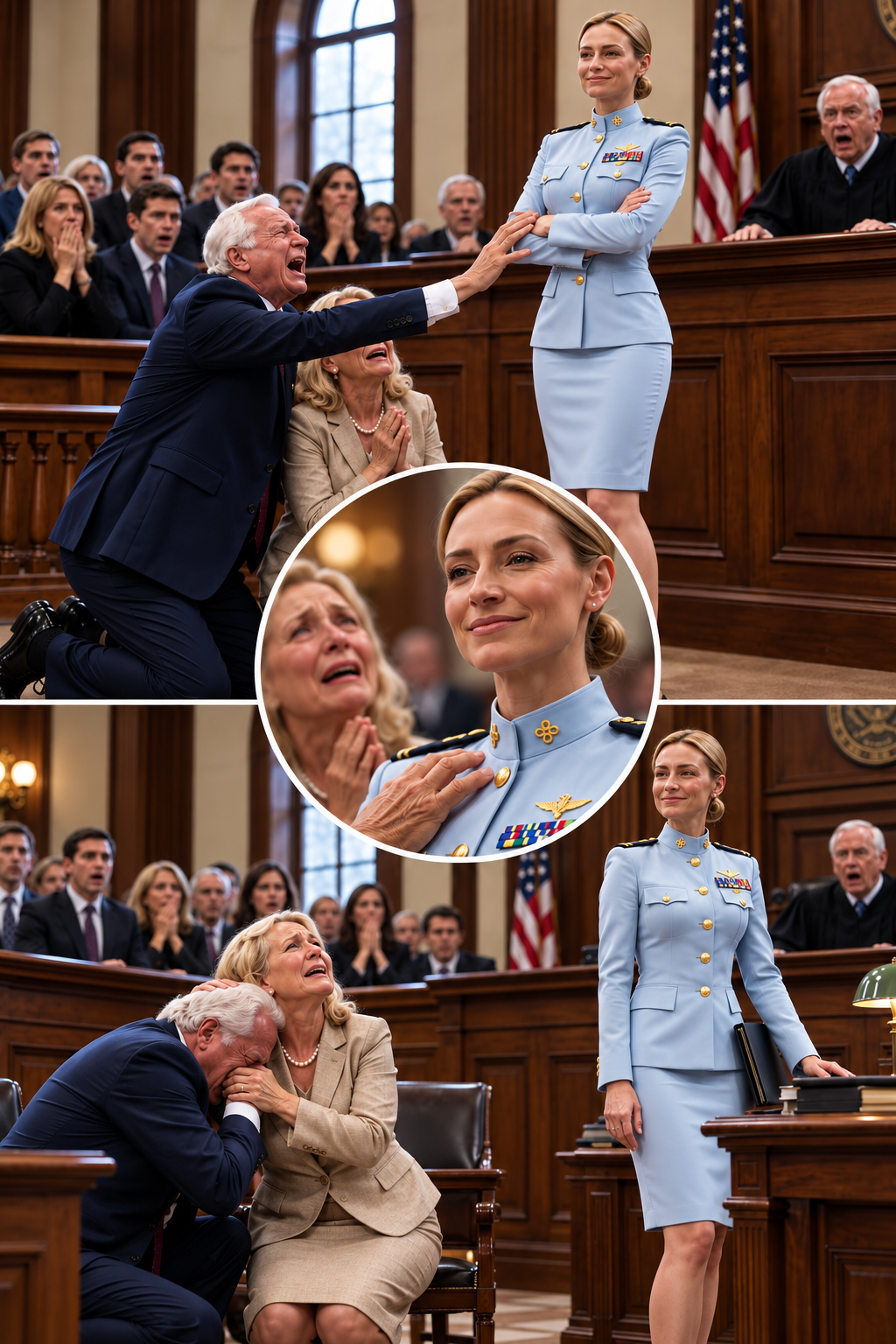
Part 2: Eleanor’s recordings turned their courtroom accusations against them
Whitmore tried to recover by arguing that military rank did not prevent undue influence, and I agreed before he could turn the point into a speech. Eleanor had lived independently until eleven days before her death, managed her own appointments and finances, and completed two competency evaluations after telling her attorney that her children might challenge her will. Whitmore emphasized how often I visited, hoping repetition would make ordinary affection sound sinister. I answered that Eleanor invited me because she was lonely. My mother’s expression tightened at the word, as if the loneliness belonged to me for naming it.
When the judge asked what evidence I planned to offer, I listed medical records, emails, journals, financial statements, sworn declarations, and recordings preserved by an independent digital examiner. Whitmore claimed he had never received the videos, so I gave the clerk a receipt showing his office had been sent access six weeks earlier. His assistant checked the firm’s records and leaned close to him, and the color drained from his face. The judge called a recess so counsel could review the files, while my parents crowded Whitmore in the hall and demanded to know what Eleanor’s cameras had captured. I stayed in court, remembering the week my grandmother told me Dad had used his emergency key to enter her house and lied about repairing a leak that did not exist.
The first recording showed my parents in Eleanor’s study, with Dad sliding a document across the desk and calling it a fairer will. Eleanor asked what made the change fair, and Mom accused her of humiliating the family by leaving me more than anyone else. When Eleanor refused to sign, Dad suggested that an eighty-two-year-old woman making “irrational decisions” might not be safe living alone. He spoke softly about guardianship, as though he were discussing home repairs instead of threatening her independence. Mom leaned forward and said, “We’re worried about you; Rebecca keeps filling your head with ideas, and someone may have to decide whether you can still manage your affairs.”
The next recording showed Mom searching cabinets while claiming she was looking for medication kept upstairs. When Eleanor confronted her, Mom accused me of visiting for the house, and Eleanor calmly replied that I had repeatedly asked her to keep the estate divided evenly. My father stared at the screen, stunned that his own mother had anticipated their accusations and recorded the truth. The judge then reviewed Eleanor’s journal, which documented nearly $900,000 in support for my parents, large loans to Daniel’s failing ventures, and a house purchased for Melissa. I had received ordinary birthday gifts and little else, while Eleanor’s notes described generosity that her children had gradually begun to treat as an obligation.
Part 3: A forged transfer revealed the family’s greed ran deeper
One journal entry made Judge Whitfield pause: eight months before Eleanor died, someone had tried to move $2 million from her investment account. I handed the bailiff a bank-fraud report showing that the attempted transfer was directed to Lawson Property Renewal Group, Daniel’s company, and carried an electronic signature Eleanor had denied making. Whitmore argued that Daniel’s business had nothing to do with the will dispute. That might have been true if the transfer had not originated from an internet address registered to my parents’ home. My mother made a small, involuntary sound, and Dad reached under the table to grip her wrist until the judge ordered him to let go.
Mom turned to me and asked how I could report my own family. I told her I had reported an attempted theft from an elderly woman, and she answered that Daniel was my brother, as if that settled the matter. The judge dismissed my parents’ petition, finding no persuasive evidence of incapacity or undue influence and substantial evidence that Eleanor had made her choice freely. The will stood, and the inheritance remained mine, but I felt no triumph after months of accusations and relatives who had accepted my parents’ story without calling me. Then a court officer brought in a second filing, and the room’s brief relief vanished.
A woman named Helen Mercer entered carrying a sealed evidence bag and a newer will, supposedly signed three weeks before Eleanor died. Helen had worked in Eleanor’s house for fifteen years, and I trusted her enough to leave her alone with the medication, jewelry, and keys. She could barely look at me when the judge said the document revoked all earlier wills. My father’s confidence returned when he heard that Eleanor had supposedly left everything to the Eleanor Lawson Justice Foundation. I had never heard of the foundation, and the paper’s witness line held my name in a signature so convincing that even I recognized the strange break in the final stroke.
I told the judge I had never signed the document, and Helen whispered that she was sorry. Before anyone could question her, two federal investigators entered with Colonel Nathan Reed, my commanding officer. Reed said someone had used credentials tied to my military identity to enter a secure legal database on the night Eleanor died. I had been more than four hundred miles away at my installation, with my access card in my possession, while a neighborhood camera showed a woman in a military coat entering Eleanor’s house at 11:43 p.m. When analysts enhanced the grainy image, the face at the door was mine.
Part 4: The woman in the footage had my face and another life
Colonel Reed told me Eleanor had believed she was not her grandmother’s only granddaughter, and my parents reacted before I understood the words. Mom began to cry, while Dad stared at the table as if the wood might open and swallow him. When Reed asked what the other woman was called, my father finally whispered, “Rachel.” Mom said Rachel was my identical twin, born during a winter storm when an electrical fire forced an evacuation at the hospital. The story she gave us was that one baby had died in the chaos, and frightened young parents had left with the surviving child because hospital staff said there was nothing more to be done.
Reed had the original birth record, listing Rebecca Anne Lawson and Rachel Eleanor Lawson as two living infants. Helen explained that Eleanor discovered the contradiction eight years earlier, hired a private investigator, and eventually found Rachel living under another name. Rachel had been abandoned outside a church days after the fire and passed through foster homes without a reliable identity. Eleanor contacted her carefully, first by letter and then in person, because Rachel feared the people who had erased her might still be looking. The identity theft, the false will, and the database intrusion appeared to be part of Rachel’s attempt to trace the network behind the hospital records.
Helen confessed that Eleanor had asked Rachel to sign my name on the strange foundation will because she wanted certain people to believe I was involved. The paper was bait, not my grandmother’s final plan. Before the judge could decide what that meant, the courtroom lights went out, red emergency lamps flickered on, and a gunshot cracked from the back entrance. Colonel Reed pulled me down as someone slammed into my shoulder and shoved me behind the counsel table. When the lights returned, officers had cornered a wounded attacker, and a woman with my face stood over me holding a weapon pointed safely at the floor.
The officers ordered her to drop the weapon, and she obeyed without taking her eyes off me. Rachel said the attacker, Victor Hale, worked for private lenders connected to Daniel’s failing business. She believed Daniel had reached out to people tied to the old adoption network after the attempted transfer failed. Then she named Adrian Voss, the founder of Meridian Strategic Systems, one of the country’s largest defense contractors, and Reed understood why Rachel’s search had touched secure databases. Rachel told me she had watched from a distance at one of my promotion ceremonies and stood across the street at Eleanor’s funeral, never knowing whether introducing herself would rescue her or ruin us both.
I told her she had overestimated the advantages of having my parents, and for one second her expression softened into something almost like humor. Then Helen handed us the brass key to Eleanor’s safe-deposit box. She said our grandmother’s final instruction was to open it together if Rachel returned. If Rachel never came back, I was supposed to leave before whoever wanted the records realized what Eleanor had hidden. The inheritance, it seemed, had never been the whole story.
Part 5: Eleanor’s safe-deposit box connected us to a criminal network
The box held adoption records, photographs, coded financial documents, cassette tapes, and a letter addressed to “my girls.” Rachel went perfectly still at those words, and I felt the years between us gather in the space separating our shoulders. Eleanor apologized for keeping us apart and wrote that fear could imitate protection until time revealed the cruelty underneath. Her letter said the money we were fighting over was not the true inheritance. One photograph showed her beside a young nurse named Clara Voss, with a note identifying Clara as someone who had helped Rachel survive the night of the hospital fire.
The note said Clara was Adrian Voss’s mother and had been hidden in a private care facility in northern Virginia. Federal agents arranged protection, but when we arrived, smoke was already rolling out from the roof. Rachel found Clara locked inside a basement room before the fire spread to that wing. Clara opened her eyes long enough to see our matching faces and whispered that we had finally found each other. Then she warned us that Adrian knew more than we thought, and added, “Adrian isn’t controlling Daniel; Daniel is controlling Adrian.”
The warning redirected the investigation. Daniel had disappeared, my parents denied knowing where he was, and phone records showed Dad had called him eleven times after the courtroom attack. Mom had sent a message telling Daniel that I knew everything and that he should come home. Rachel read it beside me in a safe house and said what I had known since childhood: no matter what Daniel did, my parents’ first instinct was to protect him. Clara recovered enough to explain that Adrian’s father, Malcolm Voss, had financed a criminal adoption network using falsified birth and death certificates to separate children from their families.
Clara had discovered the operation as a young nurse and carried one infant through a service corridor during the hospital fire. She believed that child was Rachel, because the hospital’s identity bands had been deliberately switched. Malcolm threatened Clara’s young son, Adrian, if she spoke, then raised him on a story in which his mother had abandoned him. Years later, Adrian began collecting records against the network, but Daniel found them while tracing his own adoption. A social worker connected to the network had arranged Daniel’s placement with my parents months after the fire.
The truth Daniel found was not just about his adoption: Malcolm Voss was his biological father, making Adrian his half brother. Rather than expose the network, Daniel began blackmailing Adrian with victims’ identities and borrowed money through layers of intermediaries. The attempted transfer from Eleanor was no emergency loan; Daniel wanted an archive of stolen identities he could use as leverage. Agents traced his last signal to a warehouse near Baltimore Harbor. We did not charge in alone: Rachel gave investigators an access route she had discovered years earlier, and I joined Reed’s team only after he agreed my knowledge of Daniel could help during negotiations.
Part 6: Daniel’s stolen past became an excuse for deliberate harm
Daniel stood among filing cabinets with a portable drive in one hand and a trigger device in the other. He looked less like a mastermind than the older brother who once complained whenever I beat him at chess. He accused me of always showing up where I did not belong, then stared at Rachel as though a ghost had stepped out of his childhood. When I asked why he had tried to rob Eleanor and endanger strangers, he said he had spent his life pretending to belong to a family that had acquired him through silence. I reminded him our parents had not known about the network when they adopted him.
His pain was real, but it did not excuse what he had chosen to do with it. Eleanor had searched for Rachel and left me money; Daniel had learned that his biological father belonged to a powerful family and decided everyone else had been given a truth he deserved. Rachel told him she understood what it meant to be stolen, but she had tried to expose the people who built the system instead of becoming one of them. Daniel pointed out explosives wired through the warehouse and threatened to destroy every physical record if the agents came closer. Rachel quietly noticed the supposed dead-man trigger was connected through a visible receiver.
Our parents emerged from behind a row of cabinets, having followed Daniel’s messages without understanding the danger. Mom begged him to come home, and Dad promised they could fix everything. Daniel looked suddenly like the frightened teenager who once broke a neighbor’s window and waited days to confess because he feared disappointing Dad. Adrian stepped through another entrance with federal officers behind him and told Daniel the stolen network did not belong to either of them. Daniel accused him of cleaning up Malcolm’s crimes to inherit them; Adrian replied that some inheritances deserved to end.
Daniel fired during the confusion, wounding Adrian, while Rachel cut the receiver cable and agents disarmed my brother. The drive in Daniel’s coat contained decoys, and he laughed as though getting caught had been part of his plan. I followed his gaze to Mom, who was backing toward the exit with one hand inside her purse. When I told her to put it down, she clutched it to her chest and whispered, “I can’t.” Inside was the real archive.
Mom admitted she had helped Daniel because he was her son, and when I reminded her that I was her daughter too, she answered, “You never needed me.” She accused me of leaving, succeeding, choosing the Army, and becoming someone she could not control, while Daniel had stayed close enough for her to protect. Rachel stood beside me, and Mom looked at the daughter she had believed dead before saying Rachel should have stayed that way. The warehouse went silent. Her words landed harder than the shots.
Part 7: My mother had hidden Rachel and the truth from us
Under questioning, Mom admitted she had found one of Eleanor’s letters about Rachel years earlier and destroyed it. Rachel’s survival would have forced her to face a grief she had already built her life around, so Mom called her silence mercy. Rachel listened through tears but did not comfort her. “You didn’t lose me twice,” she said. “You lost me once, then chose not to find me the second time.” Mom had no answer that could make those years disappear.
The archive opened dozens of investigations, but an encrypted folder marked ELEANOR held a video recorded shortly before my grandmother died. Eleanor said the $4.7 million inheritance was partly bait; she knew greed would drag hidden relationships into the open. The larger fortune came from a seventeen-percent stake in Meridian Strategic Systems, worth nearly $180 million, accumulated quietly through investments she inherited from my grandfather. Adrian had agreed to transfer another large voting block to the Eleanor Lawson Justice Foundation if the network could be proven. Eleanor had not meant for us to spend the fortune freely; she wanted us to use its power to expose records, compensate victims, and restore stolen identities.
“Rebecca understands what law can do when it works,” Eleanor said in the video. “Rachel understands what happens when it doesn’t.” Rachel covered her mouth, and I reached for her hand without thinking. She squeezed back and admitted she had no idea how to run a foundation. I told her I had no idea how to have a sister, so at least we could be incompetent together. Three nights later, Daniel escaped custody during a fraudulent medical transfer, and Dad disappeared at the same time.
A message on my phone demanded that Rachel and I bring the archive to the abandoned St. Catherine’s Hospital, where the maternity fire had happened. Daniel threatened to kill Dad “where your sister should have,” and whatever softness I had preserved for my brother vanished. Reed set up a tactical team while Rachel and I approached with transmitters, because Daniel had promised to hurt Dad if he saw an obvious law-enforcement presence. Rain poured through the hospital roof as we crossed corridors where stolen children had once been moved. In the old maternity ward, Dad sat tied to a chair, bruised, while Daniel held a gun and demanded the archive.
Daniel asked if I still considered Thomas Lawson my father after everything he had hidden. I said raising someone imperfectly did not erase the fact that he had raised me. Dad then revealed that Eleanor had once offered Daniel a five-million-dollar trust, help finding his biological relatives, and legal support exposing the network. Daniel had burned the letter after reading its conditions, believing counseling, repayment, and cooperation were punishments. He had never read the final page: after five years without a serious crime, the money would become unrestricted.
Part 8: Rachel saved the brother who had tried to destroy us
Daniel stood in the ruined ward with the gun as he realized the crimes he had committed to seize security had destroyed the security already offered to him. He called Dad a liar, but Thomas had photographed Eleanor’s letter before Daniel burned it, afraid his son might one day need proof of what anger had erased. Rachel told Daniel she knew how seductive it was to believe pain entitled you to ignore every rule that protected other people. “You decided your pain made you special,” she said. “It didn’t; it made you hurt.” Daniel raised the gun toward her.
Dad threw himself sideways as Daniel fired, sending the bullet into an empty chair. In the struggle that followed, the rotted floor broke beneath Daniel, and he caught a steel support above the collapsed basement. Rachel stood over him with every reason to let go. He begged her to help, and I understood for one terrible moment why mercy could feel like an insult to justice. Rachel lowered herself, caught his wrist, and I grabbed her waist while Dad anchored me from behind; together, we pulled Daniel onto solid floor.
Under the emergency lights, Daniel asked Rachel why she had saved him. “Because you don’t get to decide what kind of person your cruelty turns me into,” she answered. He surrendered without another shot. Months later, he pleaded guilty to federal charges and cooperated with investigators, while Mom accepted responsibility for obstruction and helping conceal the archive. Dad filed for divorce and admitted that passivity had been his preferred form of innocence. He had let Mom’s favoritism, Daniel’s excuses, and Eleanor’s financial rescues continue because challenging any of them would have meant choosing conflict.
The investigation seemed settled until a DNA specialist asked Rachel and me to return because one result did not fit the story we had believed. We were related, but we did not share two biological parents. We had been born eleven minutes apart at the same hospital, and altered records had merged our identities in the fire’s confusion, but Rachel was not technically my twin. Clara Voss was her biological mother, and Malcolm Voss was her biological father. Rachel’s life had been tied to the network from the very beginning.
Clara explained that Malcolm had controlled and abused her, then arranged for their infant to vanish into the adoption network. During the fire, she found Rachel near me among deliberately switched identification bands and made a Lawson record, believing that a legitimate family name might keep Malcolm from reclaiming her. Eleanor eventually learned Rachel was not her biological granddaughter, but she never stopped calling her one. Rachel asked if the truth changed anything. “Only the paperwork,” I said.
Part 9: The fortune mattered less than the family we restored
A year after Daniel’s arrest, Eleanor’s restored home became the headquarters of the justice foundation. Her study turned into a legal-aid office, her dining room into a private reunion space, and her garden into a memorial to people who had spent decades living under names chosen for them. Rachel became director of investigations, and I left active military service to serve as the foundation’s chief legal counsel. Above the entrance we placed one sentence: The truth belongs to the people who lived it. For the first time, Eleanor’s house was full of people working to repair what secrecy had broken.
I visited Mom in prison almost two years later, and she looked smaller behind the glass than the woman who once controlled every room in our childhood. She told me Daniel wrote often and had started therapy, then said she loved me. Once, I would have rushed to reassure her and made the conversation easier for her. Instead, I told her she had loved us in ways that protected her comfort, which was not the same as loving us well. She apologized without asking me to forgive her, and I told her I hoped she would learn to live honestly with what she had done.
Dad began volunteering at the foundation after cooperating with investigators, never asking me to call him a good father or pretend his silence had been harmless. Adrian transferred the promised shares, helped put Meridian under independent oversight, and began rebuilding his relationship with Clara. Daniel received a long sentence, reduced because his cooperation helped identify remaining members of the adoption network. In his third year of incarceration, he wrote that he had spent his life believing that being chosen required somebody else to be rejected. For once, he did not ask anyone to excuse him.
Rachel eventually married Nathan Reed in Eleanor’s garden after a courtship built from arguments, security briefings, distrust, and mutual respect. I stood beside her wearing Eleanor’s silver watch, while Clara sat in the first row and Dad sat several chairs away. Before the ceremony, Rachel admitted she was terrified. I reminded her she had survived armed men, helped expose a criminal network, testified before Congress, and once jumped through a courthouse security barrier. “None of those situations required dancing,” she said, and we laughed as the music began.
Months later, the foundation found another victim of the St. Catherine’s network: Anne Carter, a sixty-year-old teacher whose genetic records connected her to Eleanor. Anne was Eleanor’s biological daughter, a child my grandmother had been told died long before my father was born. In Eleanor’s study, Anne found a box marked FOR MY LOST CHILD, filled with birthday cards written every year for six decades. She sat on the floor and read them while Rachel and I stayed beside her, because some grief needs witnesses more than advice. When Anne pressed the final envelope to her chest, she whispered that Eleanor had loved someone she never truly knew.
Five years after the hearing, hundreds of false records had been corrected, families reunited, and the foundation’s compensation funds had paid for legal help and counseling. We gathered beneath the lights in Eleanor’s garden, surrounded by people who had finally reclaimed their names. The $4.7 million that had started the fight seemed small beside what the estate had helped make possible. My parents had thought the inheritance was money they deserved; I had thought it proved Eleanor valued me more than they did. Rachel had thought it was bait, and Daniel had mistaken it for rejection.
The inheritance was the truth: Anne reading sixty years of birthday cards, Rachel stealing the last slice of Eleanor’s pie, Dad learning to apologize without demanding forgiveness, and Daniel finally understanding that pain could explain his anger without excusing his crimes. Most of all, it was the knowledge that being overlooked had never made me lesser. Rachel raised her glass beneath the garden lights and said, “To Eleanor.” We all repeated it, and then she leaned against my shoulder and joked that the whole disaster began because our parents wanted $4.7 million.
I looked toward my grandmother’s dark study window and remembered the first morning in court, when Mom rolled her eyes, Dad said I deserved nothing, and Whitmore called me unstable. “No,” I said. “It began because Eleanor stopped letting them decide what I deserved.” Rachel lifted her glass again, and I lifted mine beside hers. Around us, children from reunited families ran between the roses while adults introduced themselves with names they had chosen for themselves. For the first time in my life, I was surrounded by family without wondering what I had to provide to remain welcome.
I used to think victory would feel like winning a case, but it was quieter than that. It was knowing the truth and choosing who remained. It was learning that family could be built from honesty, accountability, and the people who showed up after the lies were exposed. Rachel had spent years fearing she would have to disappear to belong; I had spent years believing I had to be useful. Neither of us had to do that anymore. And after everything they tried to take, the one inheritance nobody could contest was the life we chose together.
✓ Lynn R. Adams
Part 2: Eleanor’s recordings turned their courtroom accusations against them Whitmore tried to recover by arguing that military rank did not prevent undue influence, and I agreed before he could turn…