My parents skipped my MIT graduation for my sister Sophia’s four-minute ballet recital, and twenty minutes before I walked across the stage Dad told me
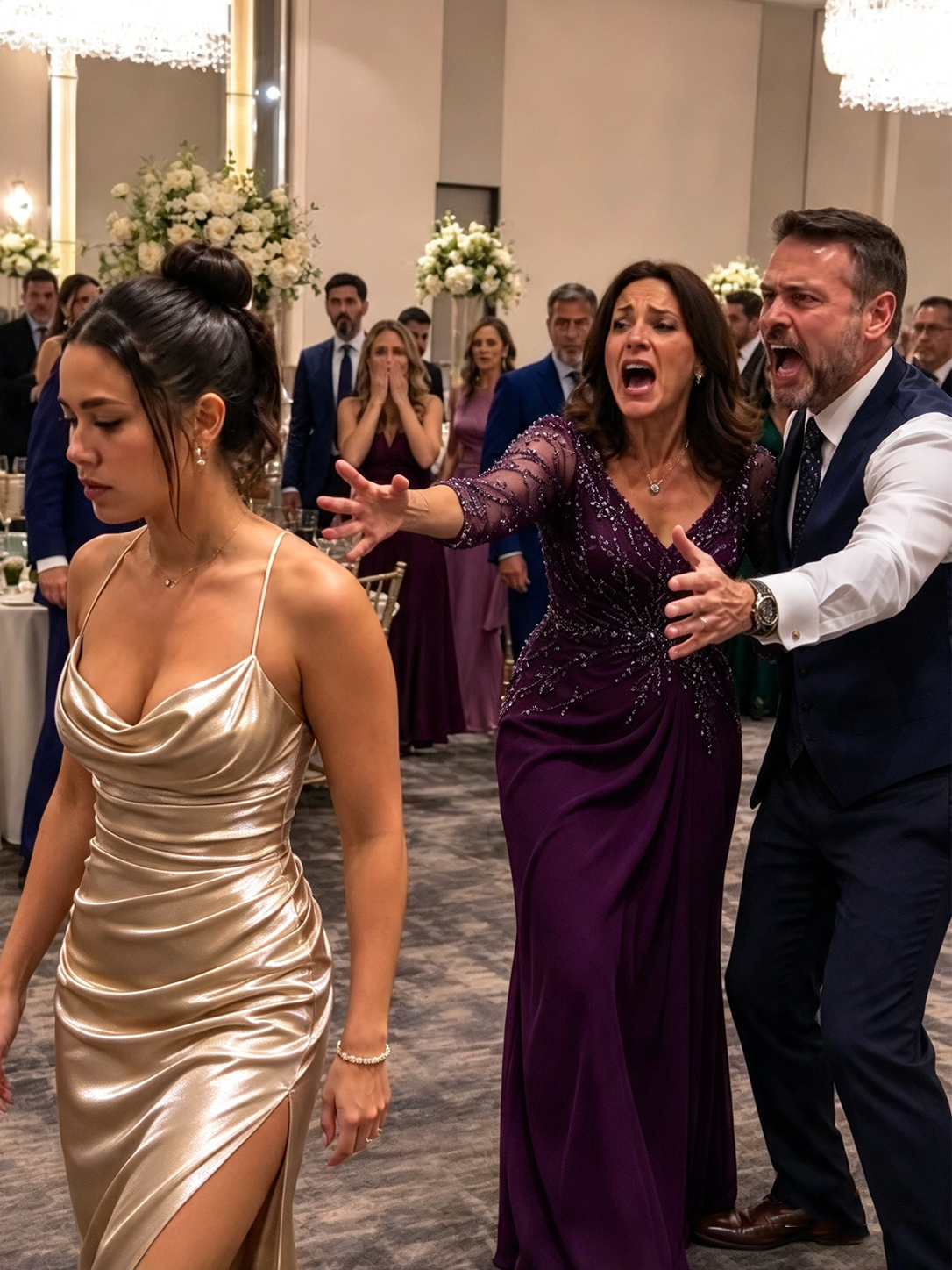
My parents skipped my MIT graduation for my sister Sophia’s four-minute ballet recital, and twenty minutes before I walked across the stage Dad told me, “You understand. You always do.” After I saw Mom’s glowing post about showing up for your children, I finally stopped being the understanding one. Five years later, we ended up at my cousin’s wedding, where they realized how much they had missed…
The morning I graduated from MIT, I ironed my gown in a Cambridge apartment so small that the ironing board blocked the front door. Outside, the sky was the color of wet cement, and I kept checking the weather because my parents were supposed to be driving in. I had spent four years picturing them somewhere in the crowd, looking up when my name was called.
There were two seats set aside with their names taped to them. I had sent them the ceremony information weeks earlier, along with parking directions and the time they needed to arrive. Mom had answered with a string of heart emojis, and Dad had written, “Wouldn’t miss it.” I believed them, which embarrasses me more than I like to admit.
Twenty minutes before the ceremony, my phone buzzed. Mom’s message said, “We are so sorry, honey. Sophia is nervous. She needs us today. We will celebrate you later.” I read it twice, standing in a hallway full of graduates adjusting caps and taking pictures with their families.
Dad followed with one sentence: “You understand. You always do.” I could hear his voice saying it, warm and certain, the way he used to thank me for not making a fuss when plans changed. There was no question mark, no offer to come late, no indication that either of them had considered choosing differently.
Sophia had a ballet recital that afternoon at a community theater near home. She wasn’t dancing a lead role or auditioning for a company; she would be in the second row for about four minutes. I knew she was nervous because Sophia got nervous before every performance, and I had always tried to be kind about it.
This wasn’t about whether ballet mattered. It mattered to my sister, and that was enough reason for our parents to care. What I couldn’t understand was why caring about her had so often meant there was nothing left for me.
When we were kids, Mom could name every pair of pointe shoes Sophia had worn out. She knew which ribbons rubbed her heels and exactly when the next pair needed replacing. When I needed a laptop that could handle my schoolwork, Dad found a used one and told me a resourceful kid could make it work.
I did make it work, mostly. It froze at inconvenient moments, and I learned to save everything twice. I wasn’t angry that we couldn’t afford the newest equipment; I knew money didn’t stretch forever. I was angry that the rules about what counted as necessary always seemed to change depending on which daughter was asking.
On weekends, the family car followed Sophia to competitions. I packed for robotics tournaments on my own and figured out rides when my events were called too far away. At dinner, my parents wanted to know whether Sophia had finally landed a difficult turn, and I learned to summarize weeks of work with “It went fine.”
The year I won a national scholarship, I ran into the kitchen holding the letter, barely able to get the words out. Mom hugged me, and for a second I thought we were going to celebrate. Then she lowered her voice and said, “That is wonderful, but do not make your sister feel behind.” I folded the letter back into its envelope before Sophia got home.
I wasn’t a saint about any of this. Sometimes I was jealous, and sometimes I snapped at Sophia over things that weren’t her fault. She was a kid who liked to dance, and our parents had taught both of us to arrange our lives around that fact. When I went away to college, I thought distance might help us become an ordinary family.
At MIT, I discovered what it felt like when people expected me to take up space. My roommate would pull up a chair when I got stuck on an assignment instead of telling me not to be dramatic. Professors remembered my questions, and friends came to presentations because they knew I’d worked hard. I still called home, usually to hear what Sophia was rehearsing.
There were semesters when I slept badly, stretched meals, and wondered whether I was smart enough to stay. I took work apart and put it back together until it finally made sense, then did the same thing the next day. Through all of it, I kept a private picture of graduation in my mind: my parents in the audience, proud of something that belonged to me.
That was the picture I carried into the ceremony. I watched other graduates turn to wave at familiar faces, and I looked toward the two chairs with the paper names on them. Both were empty. My stomach dropped, but I smoothed my gown, put my phone away, and stayed in line.
When my name was called, I crossed the stage and accepted the degree I’d nearly exhausted myself earning. I smiled for the camera because I wanted a picture I could bear to look at later. Then I walked back to my seat and caught myself scanning the crowd one more time, as though my parents might have slipped in unnoticed.
My advisor found me afterward and hugged me longer than usual. She had noticed the empty chairs but didn’t ask me to explain them. My roommate took pictures, making me laugh by telling me to stand straighter, and one of my professors bought me coffee. “You should be surrounded by people today,” he said.
I told him, “I am.” I meant it, although it took a few minutes for me to realize I did. People who knew how hard I’d worked were standing right there, asking whether I’d eaten and saving the good photos to send me later. Still, a small, stubborn part of me waited for a call from home.
I went back to my apartment in the evening without taking off my gown. The degree folder sat beside me on the couch while I sorted through pictures, deciding which one I might send to my parents. I had already begun writing a message that said I hoped Sophia’s recital went well when I opened Facebook instead.
Mom had posted a photograph from the theater. She held flowers, Dad stood beside her grinning, and Sophia smiled between them in her stage makeup. Underneath, Mom had written, “Our beautiful Sophia shined tonight. Nothing matters more than showing up for your children.”
I stared at those words until the screen dimmed. It wasn’t that Mom had forgotten what day it was; she’d texted me just before the ceremony. She knew exactly where I was, and she had found a way to celebrate showing up without acknowledging the child she’d left waiting.
For years I had defended them before anyone could criticize them. I’d said Sophia needed more attention, that my parents were busy, that I didn’t mind. Sitting there with my graduation gown wrinkling beneath me, I couldn’t find one honest reason to keep saying those things. I wasn’t asking to become the favorite; I was asking not to disappear.
I deleted the cheerful message I’d started. Then I wrote to both of them: “I love you, but today hurt me more than I can explain. I’m not going to keep pretending this is okay, and I need you to stop expecting me to. I’m taking space, and I won’t be answering calls or messages.” I read it once, sent it, and blocked their numbers before I could talk myself out of it.
The apartment went quiet except for the refrigerator humming across the room. My hands were shaking, and I had no idea how long I could hold that boundary. But for the first time in my life, I had made a decision about my family without asking whether Sophia needed something more. Part 2…..
IF FACEBOOK BROUGHT YOU HERE, HERE’S THE CONTINUATION YOU’VE BEEN WAITING FOR. ENJOY! 👇 The next morning, I woke up reaching for my phone the way I always did after a disagreement at home. Usually, I would find a way to apologize first, even when I hadn’t caused the problem. This time I looked at my degree folder on the table and went to make coffee instead.
Blocking my parents didn’t magically make me feel brave. For the first few weeks, I missed them in ordinary, embarrassing ways: hearing a joke Dad would have liked, passing the kind of flowers Mom put on the kitchen counter, realizing I didn’t know who would care when I started my first job. I could still love them and know I couldn’t keep living in their shadow.
They found other ways to reach me. Emails arrived saying they were confused, that the recital had been planned long ago, that I was making one mistake into a lifetime judgment. One from Dad ended with “Please don’t punish your mother for loving both her girls.” I kept that sentence in a folder because I didn’t trust myself to remember later how it felt to read it.
I answered once, after a month had passed. I said the graduation was not the whole problem, only the day I could no longer explain it away. I named the scholarship, the robotics trips, the times I’d been asked to shrink a good moment so my sister wouldn’t feel bad. I wrote that I wasn’t ready for a relationship in which every concern turned into a discussion of how much I was hurting them.
Mom replied that she had never intended to make me feel second best. Dad said they had done their best and wanted to talk in person. Neither message mentioned the two empty seats or what they might have done differently. I stopped answering, not to teach them a lesson, but because I couldn’t have the same conversation forever.
Sophia tried once, too. Her message was shorter: “I didn’t ask them to miss it. I wish they had gone.” I believed her. I told her I knew she hadn’t made the choice, but I needed time away from the family dynamic, and I wasn’t ready to pretend things were normal between us either.
Starting work helped in a practical way. I moved into a slightly better apartment, learned the names of people at my new job, and started building a life that didn’t depend on whether my parents noticed it. I paid my bills, made mistakes, went on bad dates, took walks when I was worried, and discovered that a quiet weekend could feel peaceful instead of lonely.
The hardest part was resisting the urge to report every little milestone. Whenever something good happened, I would reach for my phone and remember why I had stopped. Over time, I shared those moments with the people who actually called back, including my old roommate, who still made sure I got in a picture instead of only taking them.
My cousin Rachel understood more than anyone else in the family. We had grown up close enough to trade holiday stories, and she never demanded an explanation beyond what I wanted to give. She invited me to ordinary things—a lunch when she was in town, a birthday dinner, a walk after work—and never tried to turn them into an ambush.
Some relatives told me I was being stubborn. Others said parents make mistakes and children ought to move on. I didn’t argue with them. I just stopped letting the family’s opinion decide how much of my life I was allowed to protect.
A few years passed. I became better at my job, moved again, and filled my home with things I liked rather than whatever would fit. I no longer spent holidays staring at my phone, waiting to see whether I was missed. I wasn’t happy every day, but the happiness I had didn’t require somebody else to be overlooked.
Then, five years after graduation, Rachel called to tell me she was getting married. I was thrilled for her, right up until I realized what a wedding meant: cousins, aunts, uncles, old stories, and two people I hadn’t seen since before MIT handed me my degree. Rachel didn’t minimize it. “Your parents will be there,” she said, “and I want you there too. But I won’t ask you to do anything that makes you uncomfortable.”
Part 3 Rachel offered to seat me away from my parents and told me I could leave whenever I needed to. I thought about staying home, sending an expensive gift, and sparing us all the awkwardness. Then I remembered how many important days I’d already surrendered because I knew someone else would be uncomfortable.
So I told her yes. I picked a simple outfit, booked a room near the wedding venue, and asked my old roommate to be my emergency phone call if I needed one. It felt ridiculous to make an exit plan for a family wedding, but planning was how I kept myself from talking myself out of going.
When I reached the ceremony, Rachel spotted me before anyone else did. She crossed the room to squeeze my hand and whispered, “You came.” I promised I was there for her, and the smile she gave me made the trip feel worthwhile before the ceremony even started.
I saw Mom and Dad during the photographs afterward. Mom’s hair had more gray in it, and Dad moved a little slower than I remembered. They were standing beside Sophia, who looked older too, her shoulders no longer held in the stiff, practiced posture I remembered from dance performances.
Mom saw me first. Her expression changed so quickly that I looked away, embarrassed by how much I still knew her face. Dad followed her gaze and stood very still. For a moment, none of us moved, and then a relative called for another photograph and the crowd shifted between us.
I didn’t rush toward them, and I didn’t run. I congratulated Rachel, helped an older aunt find her table, and spent the first part of the reception talking with cousins I’d barely seen in years. People asked about my work and where I lived, and I answered without watching my parents for a reaction.
After dinner, Sophia approached me near the edge of the room. She didn’t hug me or pretend we’d spoken yesterday. “You look good,” she said, then shook her head at herself. “I’m sorry. I don’t know how to do this.”
“Neither do I,” I said. We stood beside a window while people on the dance floor tried to remember the steps to an old song. She told me she’d started teaching younger dancers and that she still performed sometimes, mostly because she loved it rather than because anyone was watching.
I told her I was glad. She picked at the edge of her napkin and finally said, “I used to think you had it easy because you never needed anything. I didn’t understand that you stopped asking.” That was more than I’d expected her to say, and I needed a moment before answering.
“You were my sister,” I told her. “I wasn’t asking you to give up dancing. I just wanted there to be room for both of us.” Sophia nodded, eyes on the napkin. She said she’d looked at the graduation pictures later and only then realized how alone I had looked standing with my degree.
Mom and Dad came over while we were still talking. Mom stopped a few feet away and asked, “Would you be willing to speak with us for a minute?” I glanced toward the tables and Rachel, laughing with her new husband, and said I would talk outside as long as we kept the wedding out of it.
We went onto a small patio where we could still hear music through the door. No one raised a voice. In some ways that made it harder, because my parents were right there in front of me, looking like ordinary people who had gotten older while I built an entire life they didn’t know. Dad opened his mouth, closed it, and waited for Mom to speak.
Mom asked about my job, then stopped herself. “I don’t even know what to ask you first,” she admitted. “I missed five years.” I looked at her and realized it was the first time I’d heard her describe our distance as something lost instead of something I was doing to her.
Final Dad held the patio door open when someone came outside, and we stepped aside to let them pass. He had always been better with practical gestures than difficult conversations. “I thought if we gave you enough time, you’d come around,” he said. “I didn’t think about what it meant that you had to grow up without us knowing you.”
I told him that the years before graduation counted, too. “You called me understanding because it was convenient,” I said. “You got to make choices, and I got to make them feel reasonable.” His face tightened, but this time he didn’t argue with me or reach for a reason Sophia had needed more.
Mom rubbed her palms together, the way she did when she couldn’t find the right words. “I remember writing that post,” she said. “I was proud of Sophia. I didn’t think about how it would look to you.” She swallowed. “And that is exactly what you’re talking about, isn’t it? We didn’t think about you.”
I had imagined that admission so many times, usually with a speech prepared in response. But standing outside Rachel’s wedding, all I felt was tired. “It wasn’t the post by itself,” I said. “I spent my whole childhood learning that wanting you there was asking too much.”
Dad looked through the glass at people dancing and then back at me. “I told you that you always understood,” he said. “I made that sound like a compliment. It was an excuse.” He didn’t ask me to forgive him, and that mattered more than I expected.
Mom began to cry quietly, and I handed her a tissue from the little packet I kept in my bag. It was a familiar movement, taking care of her before she had to ask. I nearly laughed at myself, then said, “I can be kind to you without agreeing to go back to how things were.”
She nodded. Dad asked if there was any way they could know me again. I told them I wasn’t promising that, and that I needed them to respect the distance instead of asking other relatives to bring us together. Both said they would, though I knew a promise on a patio was only a beginning, not proof.
When I went back inside, Rachel caught my eye from across the room. I smiled, and she returned to dancing without coming over to check on me. She knew I’d tell her if I wanted to talk. I stayed until the last song because I had come to celebrate someone who had always made room for me.
The following week, Sophia sent me a message asking whether I’d like to get coffee sometime, just the two of us. She didn’t mention Mom or Dad or ask me to pass anything along. I said yes, and we talked about our lives, awkwardly at first, then with a little more ease; rebuilding something with her felt possible because she was willing to start where we actually were.
My parents kept their word about giving me space. I don’t know whether we’ll find a relationship that feels safe, and I no longer treat that uncertainty as a problem I have to solve for them. The five years didn’t disappear because they finally acknowledged them. Neither did the people and the life I’d built during that time.
I still have my graduation picture, the one my roommate took when I was trying to stand straight and pretend the empty chairs hadn’t hurt. For years I saw only who wasn’t there. Now I can see the people just outside the frame, cheering for me, and the young woman in the gown who finally decided she deserved to be one of them.
THE END. I’ve shared the complete story, and I truly hope it touched your heart. If this story moved you, please , like, and share the post. Thank you for reading! ❤️
✓ Lynn R. Adams
My parents skipped my MIT graduation for my sister Sophia’s four-minute ballet recital, and twenty minutes before I walked across the stage Dad told me, “You understand. You always do.” After I saw Mo…