My Parents Chose an Anniversary Dinner Over My Newborn—Then Learned What Their Cruelty Had Cost Them
My Parents Chose an Anniversary Dinner Over My Newborn—Then Learned What Their Cruelty Had Cost Them
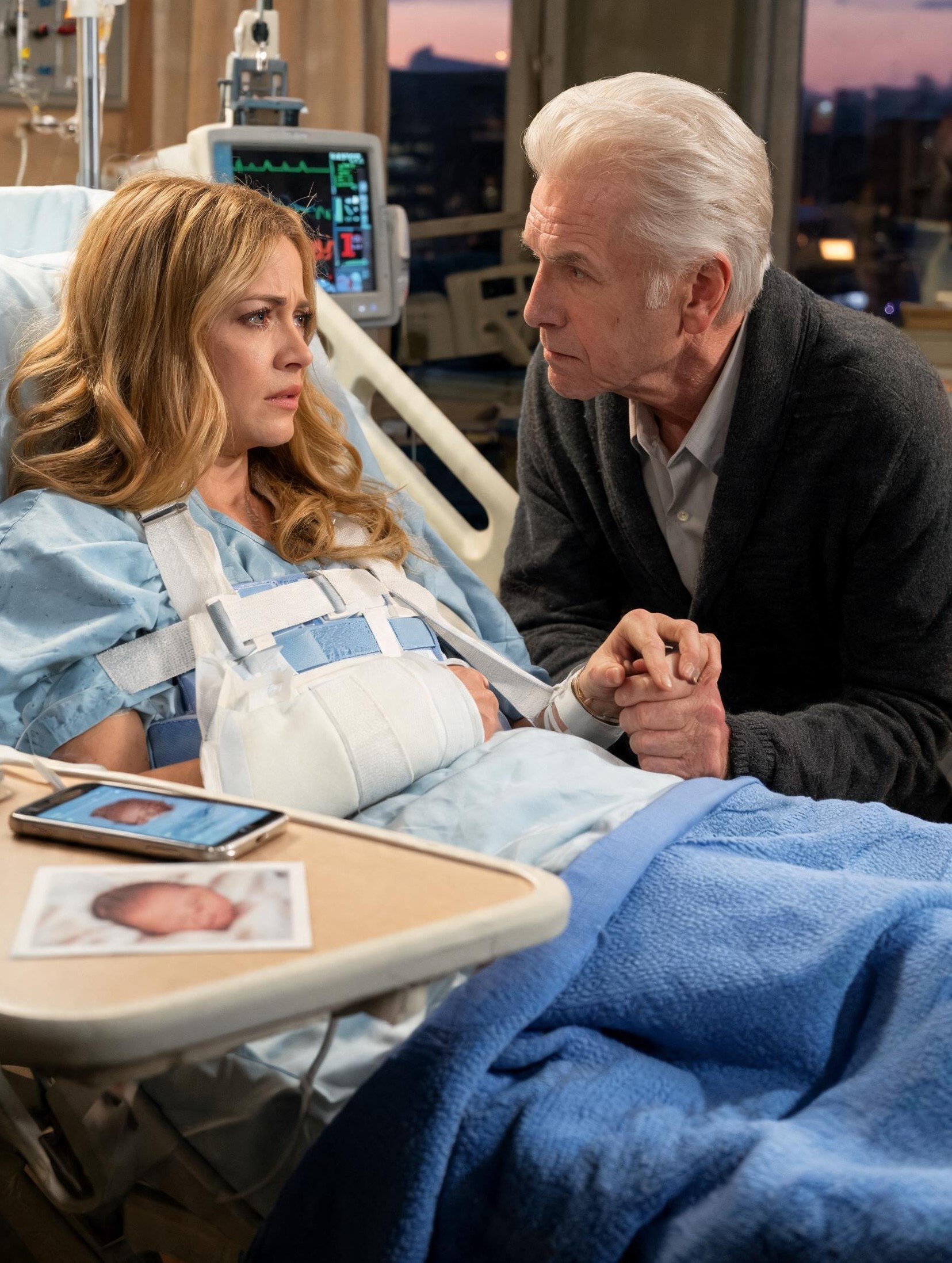
Six weeks after I gave birth to my daughter, I was lying on a hospital gurney with two cracked ribs, a fractured collarbone, and blood drying along my hairline when my mother told me her dinner reservation mattered more than picking up my newborn. Then she compared me to my younger sister, who was drinking cocktails somewhere in the Caribbean. “Bree never has emergencies like this,” she said, as if getting T-boned by a pickup truck was a character flaw. I stared at the fluorescent light above me and realized something I should have understood years earlier. My family loved what I provided far more reliably than they loved me.
My name is Paige Tanner, and I was thirty-four that Tuesday morning when another driver ran a red light on Clearwater Avenue and slammed into the driver’s side of my Subaru. I had left Nora with my neighbor Diane for what was supposed to be twenty minutes while I bought formula, diapers, and enough groceries to get through the week. I remembered the green light, a horn, and something silver filling my window. Then nothing until a paramedic was cutting my sweater away and asking whether I knew my name. My first clear thought wasn’t about my ribs or the wrecked car—it was Nora.
At St. Augustine Medical, a nurse helped me hold my phone because lifting my right arm sent white-hot pain through my shoulder. I called my mother three times before she answered. When she finally picked up, restaurant noise hummed behind her, and I could hear my father asking whether they were still going to make their reservation. I told her I had been in a serious accident, that doctors were admitting me, and that my six-week-old daughter was at Diane Palmer’s house on Fern Court. “Mom, I need you to pick her up.”
There was a long pause. Then my mother, Linda Tanner, covered the phone badly enough that I could still hear her whispering with my father. When she came back, her voice had that clipped tone she used whenever somebody else’s problem threatened to disturb her plans. “Paige, tonight is our anniversary dinner. We’ve had these reservations for three weeks.” I thought the pain medication was making me confused, so I asked her what that had to do with Nora.
“She’s safe with your neighbor,” Mom said. “Call a babysitting company.”
I looked at the IV taped to my hand. “She’s six weeks old.”
“You’re making this more dramatic than it needs to be.”
“I have two broken ribs.”
“Your sister never does this to us.”
That sentence stopped me colder than the accident had.
I had called because I was hurt. I had called because my daughter needed someone. I had called because I had spent nine years making sure my parents never had to panic about money. I had called because family was supposed to mean something when life stopped being convenient. I had called because I still believed my mother would come when I truly needed her.
Then she mentioned Bree’s Caribbean cruise.
“She plans ahead,” Mom said. “She doesn’t create emergencies.”
My sister Bree was thirty-one, unemployed by choice for most of the previous year, and currently on a ten-day cruise she had bragged about for months. Somehow, in my mother’s mind, Bree ordering another frozen margarita near Aruba was evidence of responsibility, while I lay strapped into a hospital brace because a stranger ran a red light. I didn’t argue. I didn’t beg again. I simply said, “Enjoy dinner,” and ended the call.
Then I solved the problem.
Diane agreed to keep Nora until I could arrange help. From my hospital bed, between X-rays and a CT scan, I found a licensed emergency childcare agency, verified their credentials, spoke directly with a coordinator, and paid for overnight care. I texted Nora’s feeding schedule, pediatrician information, allergy notes, and emergency contacts. Diane transferred the diaper bag and infant car seat. Forty-two minutes after my mother refused to drive twelve minutes for her granddaughter, a certified neonatal caregiver named Marissa was holding my baby safely.
Marissa sent me a photograph at p.m. Nora was asleep against her shoulder in a pale-yellow onesie, one tiny fist tucked beneath her chin. I stared at the photo until my vision blurred. Then I opened my banking app.
For nine years, $4,500 had left my checking account automatically on the first of every month.
It had started after Dad lost his regional sales job when his company downsized. Their mortgage had been six weeks from default, Mom was panicking, and I had recently sold my first software company stake. I offered temporary help. Temporary became six months. Six months became two years. Eventually nobody even called to say thank you.
Nine years.
One hundred eight payments.
I selected the recurring transfer.
The app asked whether I was sure.
I pressed yes.
My parents learned about it the next morning.
Before they arrived, though, someone else came.
At that night, my grandfather Gerald Tanner walked into my hospital room wearing an old navy windbreaker and carrying a paper cup of coffee he clearly hated. He was seventy-nine, broad-shouldered despite his age, with silver hair and eyes that missed almost nothing. He took one look at the brace around my shoulder and the monitor beside my bed, then pulled the chair close.
“Where’s the baby?”
I told him Nora was safe.
His jaw tightened anyway.
“Your mother called me,” he said.
I almost smiled. “To tell you I was injured?”
“To complain that you hung up on her.”
That was so perfectly my mother that I actually laughed, then grabbed my ribs and regretted it instantly.
Grandpa stayed almost two hours. He listened while I told him everything—the accident, Nora, the dinner reservation, the cruise comment, the childcare agency, the canceled transfer. He didn’t interrupt. He didn’t defend anyone. He just sat there with one hand covering mine.
When I finished, he looked toward the dark hospital window.
“You’ve carried them too long,” he said.
Something inside me loosened.
“I thought helping them was what family did.”
“It is,” he said. “Until only one person is doing it.”
I swallowed hard.
Then Grandpa reached inside his jacket and pulled out a folded envelope.
My name was written across the front.
“I wasn’t planning to show you this tonight,” he said.
I looked at him.
“What is it?”
His expression changed.
“Proof that your mother’s dinner reservation may be the smallest problem in this family.”
The envelope stayed unopened until after Grandpa left because a nurse came in to check my vitals and adjust my medication. By then I was exhausted, my shoulder throbbed, and Marissa had sent another photo of Nora sleeping peacefully in her bassinet. I placed the envelope inside my overnight bag. Whatever ugly thing was waiting inside could survive until morning. I had already learned enough about my family for one day.
My parents arrived at a.m.
Mom walked in first wearing cream slacks, a silk blouse, and the same pearl earrings she had worn in anniversary pictures posted online the night before. Apparently the reservation had survived my emergency. Dad followed several steps behind her, hands inside his jacket pockets. He looked at my bruised face and immediately looked away. Mom looked directly at me, but not once at the brace, the IV, or the swelling along my collarbone.
“We need to talk about what you did.”
No how are you.
No how is Nora.
I folded my hands across the blanket. “Good morning to you too.”
Her mouth tightened.
“The bank notified us that next month’s transfer has been canceled.”
“That’s correct.”
“Permanently?”
Dad shifted near the door.
Mom moved closer to the bed. “Paige, I understand that you were upset yesterday, but making a nearly five-thousand-dollar financial decision while medicated is reckless.”
“Four thousand five hundred.”
“That’s what I’ve sent you every month for nine years. If you’re going to discuss my money, use the correct number.”
Her cheeks flushed.
I continued before she could answer.
“One hundred eight payments. $486,000. I gave it because I believed I was helping family. Yesterday I discovered that when I needed one hour of that same family’s time, your anniversary steak was more important.”
“It wasn’t just dinner.”
Dad finally murmured, “Linda…”
Mom ignored him.
“We had plans. Your father and I are allowed to have lives.”
“Of course.”
“You could have called someone else.”
That stopped her.
I told her about Marissa.
Mom stared at me as though I had somehow cheated.
“So everything worked out.”
“Then I don’t understand why you’re doing this.”
That sentence almost impressed me.
I looked at Dad. “Do you understand?”
His face changed.
For one second, I saw embarrassment.
Then Mom turned toward him, and it vanished.
“We should all calm down,” he said.
“I am calm.”
Mom laughed sharply. “You’re punishing us.”
“No. Punishment would mean I’m trying to hurt you. I’m simply no longer financing two adults who have made their priorities clear.”
“You promised to help us.”
“I helped you.”
“You know what I mean.”
And suddenly I remembered the envelope in my bag.
Grandpa’s words.
I didn’t reach for it yet.
Instead, I asked a simple question.
“How much do you still owe on the house?”
Dad looked at her.
That was enough.
Their home had been purchased twenty-four years earlier for $310,000. Dad once told me the remaining mortgage was under $90,000. With nine years of my support, they should have been nearly debt-free.
Mom recovered first.
“That is none of your business.”
“It became my business after I sent you almost half a million dollars.”
“We used your help for living expenses.”
“Yes. Because it’s over now.”
She stared at me for several seconds, then picked up her purse.
“You’re going to regret humiliating us over one misunderstanding.”
“What misunderstanding?”
But she was already walking away.
Dad paused at the door.
For a second, I thought he might apologize.
Instead he said, “Your mother’s under a lot of stress.”
Then he followed her out.
I waited until their footsteps disappeared.
Then I opened Grandpa’s envelope.
Inside were six photocopied bank statements.
They weren’t mine.
They belonged to my parents.
Grandpa had apparently been helping Dad organize tax documents after Dad complained about an audit notice. While reviewing statements Dad had given him voluntarily, Grandpa noticed recurring transfers.
$1,200 to Bree.
$2,000 to Bree.
A payment marked CONDO HOA.
Another marked AUTO PAYMENT.
Then an $8,740 charge three months earlier to Ocean Crown Cruises.
The same cruise Bree was currently enjoying while Mom lectured me about responsibility.
I turned the pages slowly.
Over three years, my parents had transferred more than $117,000 to my sister.
Money I had been sending them because I believed they were struggling.
My phone rang.
“Did you open it?”
“I’m sorry.”
I kept reading.
There was one more page.
It wasn’t a bank statement.
It was a photocopy of a mortgage application.
My parents had applied for a cash-out refinance only five weeks earlier.
Requested amount: $380,000.
Under supplemental household income, someone had listed a guaranteed family support payment of $4,500 per month.
My payment.
Then I saw an attached declaration.
“I, Paige Tanner, agree to continue monthly financial support payments to Robert and Linda Tanner in the amount of $4,500 for no fewer than fifteen years.”
There was a signature beneath it.
My signature.
Except I had never signed that document.
My fingers went cold.
“I saw it yesterday morning,” he said. “I was trying to figure out how to tell you.”
“Where did this come from?”
“The lender mailed a verification copy to your father’s house. He left it in the tax folder.”
I stared at my own forged name.
The bruise along my ribs suddenly felt very far away.
“They forged my signature.”
“I believe they did.”
I closed my eyes.
And for the first time since the accident, I felt afraid.
Not emotional.
Not heartbroken.
Because refusing to pick up Nora was cruelty.
Using my money to finance Bree was betrayal.
But forging my name on a financial document was something else entirely.
And if my parents were willing to put my signature on a mortgage application without telling me…
What else had they signed?
I left the hospital two days later with a sling, pain medication, and a list of restrictions that made caring for a newborn nearly impossible alone. Grandpa picked me up before noon. He had already arranged for Marissa to stay another week, despite my protests that I could cover it myself. “I know you can,” he said. “That isn’t the point.”
That sentence stayed with me.
For years, everyone in my family had confused my ability to handle things with an obligation to handle everything.
Grandpa drove me to Diane’s house first.
When Diane opened the door carrying Nora, my daughter’s little face turned toward my voice before I even reached for her. I couldn’t lift her properly with my injured shoulder, so Diane settled Nora carefully against my chest. I smelled baby shampoo, formula, and the soft cotton blanket wrapped around her.
I kissed her forehead.
That was the moment my decision became permanent.
Nobody who treated my child like an inconvenience was going to control my life again.
At home, I called an attorney.
Not my parents.
An attorney.
Her name was Rebecca Sloan, and she specialized in financial fraud and civil litigation. Grandpa had used her firm years earlier for a business matter. I emailed the forged document, the bank statements, and records of my transfers. Then I froze my credit and requested reports from all three bureaus.
By the following morning, Rebecca called.
“The good news is I don’t see a funded loan in your name.”
“And the bad news?”
“The declaration is fraudulent, and the lender appears to have relied on it during underwriting.”
“Can they hold me responsible?”
“Not if you didn’t sign it. But we need to notify them immediately.”
The refinance was frozen that afternoon.
At p.m., my mother called eleven times.
I didn’t answer.
At , Dad called.
At , Bree texted me from Miami.
Apparently the cruise had returned.
WHAT THE HELL DID YOU DO?
I stared at the message.
Then another arrived.
Mom says you sabotaged their mortgage because you’re throwing a tantrum.
Do you realize how selfish you’re being?
I almost admired the consistency.
I typed back one sentence.
Ask Mom who signed my name.
Three dots appeared.
Disappeared.
Appeared again.
I don’t know what you’re talking about.
I didn’t answer.
Twenty minutes later, Bree called.
I let it ring twice before picking up.
She started immediately.
“You need to fix this.”
“Paige, they could lose the house.”
“They applied for a $380,000 refinance using a fraudulent document.”
“Mom said you had always agreed to support them.”
“I never signed anything.”
“You’ve been giving them the money for years.”
“Voluntarily.”
“You can’t just stop because you got mad.”
There it was again.
That strange family belief that generosity, repeated often enough, became ownership.
“I can stop whenever I want.”
Bree exhaled loudly.
“You know Mom and Dad help me too.”
“Yes. I know.”
It took her a second.
“The bank statements.”
Another silence.
Longer this time.
I pictured her standing somewhere with one expensive suitcase still unpacked, realizing that her secret wasn’t secret anymore.
“You went through their bank account?”
“That’s illegal.”
“You should probably avoid giving legal advice this week.”
She snapped.
“You always do this.”
“Act superior because you make more money.”
I looked down at Nora sleeping beside me.
“I paid for your condo fees.”
Bree stopped talking.
“I paid your car payment.”
“I paid for at least part of your cruise.”
“You didn’t pay me.”
“No. Apparently I paid Mom, then Mom paid you. Very efficient.”
“You have more than enough money.”
And there it was.
Not denial.
Entitlement.
“You have millions, Paige.”
“So $4,500 a month is nothing to you.”
“Then it should be easy for you to replace.”
She cursed.
I ended the call.
Ten minutes later, screenshots started arriving from Bree.
Old family group chats.
Messages between her and Mom.
Most were ordinary.
Then I saw one from six months earlier.
Mom: Paige’s transfer hits Friday. I can cover your HOA after that.
Bree: What if Paige ever stops?
Mom: She won’t. She needs to feel useful.
I read that line twice.
She needs to feel useful.
My mother had figured me out years earlier.
Not because I was weak.
Because I cared.
And she had learned how to turn that into a revenue stream.
Another message made my stomach tighten.
Bree: Dad says lender needs proof the payment continues.
Mom: I’ll handle Paige.
Bree: Is she signing something?
Mom: Don’t worry about it.
I forwarded everything to Rebecca.
Then I texted Bree.
Why are you sending me these?
Her answer came almost immediately.
Because Mom lied to me too.
That was the first crack.
Over the next hour, Bree told me the refinance wasn’t meant to save the house.
It was meant to pull out nearly $300,000 in equity.
Mom had promised Bree $60,000 toward a new condo.
Dad wanted a new truck.
They planned a Mediterranean vacation the following spring.
And they had assumed my monthly transfer would continue financing the debt.
For the first time, Bree sounded less angry than scared.
“I thought you knew,” she said on the phone later.
“You thought I knew they were using my money for you?”
“I thought you knew about some of it.”
“And the signature?”
I believed her about that.
Then she said something that changed the direction of the entire situation.
“Paige, there’s something else.”
“Grandpa needs to check his papers.”
“Because Mom told Dad last Christmas that if they could get one more signature from Gerald, everything would finally be covered.”
Grandpa came to my apartment the next morning carrying a metal document box.
Rebecca joined us by video call.
Nora slept in her bassinet while three adults spread decades of financial paperwork across my dining table. Deeds. Insurance policies. Tax statements. Trust documents. Grandpa had always been organized, but age had made him more willing to let Dad help with forms over the previous two years.
That suddenly looked dangerous.
We found the document after forty minutes.
A durable power of attorney.
It appeared to give my father broad authority over Grandpa’s financial affairs.
Grandpa stared at it.
“I never signed this.”
The room went silent.
Rebecca leaned closer to her camera.
“Gerald, don’t touch anything else unnecessarily. Paige, photograph every page.”
The signature looked convincing.
Much better than the fake version of mine.
But Grandpa knew his own handwriting.
More importantly, the notary stamp belonged to a notary public located sixty miles away in Jacksonville.
Grandpa had never met her.
Rebecca started making calls.
By lunchtime, we knew enough to understand that this wasn’t simply a toxic family dispute anymore.
The power of attorney had been used twice.
Once to inquire about a line of credit against Grandpa’s lake property.
Once to request information about one of his investment accounts.
No money appeared to have moved yet.
But somebody had been preparing the ground.
Grandpa sat at my kitchen table, shoulders rigid.
For the first time in my life, he looked old.
I hated my parents for that more than I hated what they had done to me.
He had defended them for years.
Helped them.
Paid part of their original down payment.
Given Dad work when Dad was unemployed.
Hosted every Thanksgiving even when Mom complained about the drive.
And they had apparently decided his trust was simply another resource waiting to be harvested.
“I should have seen this,” he said.
“I let Robert handle paperwork.”
“You trusted your son.”
He looked at Nora.
“That seems to be an expensive habit in this family.”
By late afternoon, Rebecca had contacted the lender, Grandpa’s bank, and the county clerk. Every account received a fraud alert. The fraudulent power of attorney was formally disputed. The pending refinance on my parents’ house remained frozen.
That evening, my parents finally came to my apartment.
Mom knocked hard enough to wake Nora.
I opened the door but left the security chain in place.
Dad stood behind her looking ten years older than he had three days earlier.
“We need to come in,” Mom said.
“Nora is sleeping.”
“This is a family emergency.”
I almost laughed.
Three days earlier, apparently, family emergencies had operating hours.
Grandpa stepped into the hallway behind me.
Mom’s face changed.
He didn’t answer.
Dad looked at him, then at me.
“What have you done?”
Grandpa’s voice was quiet.
“What did you do with my signature, Robert?”
Dad went pale.
Mom recovered first.
“I don’t know what Bree has been telling everyone—”
“Bree didn’t show me the document,” Grandpa said. “Paige found it.”
Mom looked at me with naked hatred.
Not embarrassment.
That told me more than a confession would have.
Dad lowered his voice.
“Let us explain.”
Grandpa opened the door fully.
Not to invite them inside.
To step into the hallway.
“I spent seventy-nine years learning that when someone says ‘let me explain’ before admitting what they did, the explanation is usually for themselves.”
Dad flinched.
Mom crossed her arms.
“We were trying to protect this family.”
“From what?” I asked.
“Instability.”
I glanced toward my daughter’s room.
“You mean consequences.”
“You don’t understand what it’s like when everything depends on money.”
I stared at her.
“I sent you $486,000.”
“And you could afford it!”
Her voice echoed down the hallway.
There it was.
The truth beneath everything.
Not gratitude.
Not necessity.
Calculation.
Because I could afford to give, they believed they deserved to receive.
Dad rubbed both hands over his face.
“We made mistakes.”
“Did you forge my signature?” I asked.
He didn’t answer.
“It wasn’t supposed to hurt you.”
That was as close to an admission as I expected.
Grandpa’s expression hardened.
“And mine?”
Mom’s eyes flickered.
Grandpa turned away from them.
Dad stepped forward. “Dad—”
Mom’s voice sharpened.
“You can’t turn everyone against us because Paige is emotional.”
I actually smiled.
Grandpa looked back.
“Paige is the least emotional person in this hallway.”
My father closed his eyes.
Mom stared at all of us.
Then she said something almost unbelievable.
“What happens to us now?”
Grandpa answered before I could.
“The same thing that happened to Paige when she called you from the hospital.”
Mom’s face tightened.
“You figure it out.”
The elevator doors closed behind them.
For the first time all week, the hallway became completely silent.
Grandpa placed one hand against the wall.
I thought the moment had finally broken him.
Instead, he looked at me.
“There’s one more thing.”
I felt tired immediately.
“I changed my estate plan this morning.”
“Not because I’m angry.”
He looked toward Nora’s room.
“Because I finally understand who protects this family when things become difficult.”
I shook my head.
“I don’t want their inheritance.”
“It isn’t theirs.”
He explained that the majority of his estate would eventually go into a protected trust for Nora and any future grandchildren I might have. Bree would receive a separate smaller trust controlled independently. My parents would receive nothing beyond a modest amount specifically designated for final expenses and any legitimate debt Grandpa personally owed them.
I didn’t know what to say.
Then Grandpa added, “And before you object, you aren’t the trustee.”
“A professional fiduciary.”
I laughed softly.
That should have been the ending.
At 11:18 that night, Rebecca called.
Her voice had changed.
“Paige, I need you to listen carefully.”
I sat upright on the couch.
“What happened?”
“The lender’s fraud department finished comparing the documents.”
“They found your signature on something else.”
Rebecca emailed the file while we were still on the phone.
I opened it with my left hand while my right shoulder remained strapped in the sling.
The document was dated fourteen months earlier.
Not five weeks.
Not during the refinance.
Fourteen months.
Which meant the deception had started long before the accident exposed anything.
It was an income verification letter submitted to a private lender during an earlier attempt to obtain financing.
The letter claimed that I had agreed to provide my parents with “ongoing family support without anticipated termination.”
My forged signature sat beneath the statement.
But that wasn’t the worst part.
Attached to the letter was a copy of my driver’s license.
An old one.
The address belonged to the condo I had lived in three years earlier.
I stared at the image.
“How did they get that?”
“Do your parents ever keep copies of your identification?”
Then I remembered.
Four years earlier, Dad had helped me move.
A folder containing old tax forms, passport copies, insurance paperwork, and an expired license had disappeared.
I assumed the movers had misplaced it.
Apparently they hadn’t.
Rebecca continued.
“The lender also sent us a document package associated with Robert and Linda. Some files involve Gerald.”
My stomach tightened.
“How many?”
“We don’t know yet.”
I looked toward Nora’s bassinet.
For six weeks, motherhood had felt like learning to live with my heart outside my body.
Now another feeling settled beside it.
Protection.
Not revenge.
Protection.
“Tell me what I need to do.”
The next morning, Rebecca arranged for me and Grandpa to meet with investigators from the lender’s fraud unit. We provided copies of my transfer history, Bree’s screenshots, Grandpa’s disputed power of attorney, and identification specimens.
Bree surprised me by coming too.
She looked exhausted.
No vacation glow.
No expensive sunglasses.
Just my little sister sitting across from me in a conference room, twisting her fingers together.
“I gave them everything I had,” she said.
Her phone contained years of messages from Mom.
Most were manipulative rather than criminal.
But manipulation tells a story.
Mom repeatedly referred to my transfer as “our monthly money.”
She told Bree not to bother me with requests directly because “Paige gets suspicious when people seem needy.”
She told Dad to make sure I never saw certain household statements.
And once, almost two years earlier, she wrote:
If Paige ever starts asking questions, remind her what we sacrificed raising her.
I read that message without speaking.
Bree looked at me.
“Did she say things like that to you too?”
“Different words.”
“I thought you were the favorite.”
I almost laughed.
“You thought I was the favorite?”
“You were the successful one.”
“That isn’t the same thing.”
For the first time in our adult lives, Bree and I looked at each other without Mom standing invisibly between us.
She had convinced Bree that I thought I was better than her.
She had convinced me that Bree was too selfish to care about anything.
Both stories had contained enough truth to survive.
But not all the truth.
Bree had accepted money she should have questioned.
I had given money long after I should have demanded transparency.
Neither of those mistakes excused what our parents did.
But for the first time, I understood that Mom had built the family around comparison.
One daughter was irresponsible.
The other was dependable.
One needed rescuing.
The other existed to rescue.
As long as Bree and I resented each other, neither of us looked closely at the person controlling the story.
That afternoon, Dad called me.
I answered.
His voice sounded rough.
“I need five minutes.”
“You have them.”
He was silent.
Then he said, “Your mother handled most of the paperwork.”
I closed my eyes.
“I signed things I shouldn’t have signed.”
“Did you forge my name?”
Another pause.
No qualification.
Strangely, that hurt less.
Truth has clean edges.
“Did Mom ask you to?”
“We were drowning.”
That surprised me.
“How much?”
He told me.
Credit cards.
Personal loans.
A failed investment.
Money loaned to Bree.
Vacations they couldn’t afford.
Home improvements.
A luxury SUV Mom insisted they deserved after “years of sacrifice.”
Nearly $260,000 beyond the remaining mortgage.
My $4,500 monthly payments weren’t saving them.
They were allowing them to pretend they didn’t need saving.
“Why didn’t you tell me?”
“Because you would’ve stopped the money.”
Dad started crying quietly.
I didn’t rescue him.
That mattered.
Old Paige would have filled the silence.
Would have offered a solution.
Would have asked what amount could fix everything.
Instead, I waited.
Finally he said, “I’m sorry.”
“For what?”
Another silence.
“For treating your help like it belonged to us.”
That was better than nothing.
But better than nothing is not the same as enough.
“I hope you cooperate with the investigation.”
“Your mother won’t.”
“That’s her choice.”
“She thinks Gerald poisoned you against us.”
I looked down at Nora.
“No, Dad. A red-light accident did that.”
He didn’t understand.
So I explained.
“If that driver hadn’t hit me, I might have kept sending the money for another ten years. I might never have questioned anything. Mom could have picked up Nora, held her for one night, and your entire system would still be running.”
Dad was silent.
“That’s the part you should think about,” I said. “This didn’t fall apart because I was cruel. It fell apart because for one hour, when there was absolutely nothing in it for either of you, I needed my parents.”
“No. I think you’re starting to.”
I ended the call.
Over the next three weeks, my ribs began healing.
The bruises faded.
Marissa became someone I trusted enough to call before I called relatives.
Diane came over with casseroles and refused payment for the groceries she kept buying.
Grandpa visited every other day.
Bree and I started talking carefully.
Not forgiving everything.
Not pretending.
Just talking.
My parents’ refinance remained canceled.
The lender opened a formal fraud investigation.
Grandpa revoked every old authorization connected to Dad and moved his accounts to a new institution.
I never restarted the $4,500 transfer.
The first day of the next month arrived quietly.
At a.m., I checked my account.
Nothing left.
For the first time in nine years, that money stayed mine.
I transferred $1,000 into Nora’s college fund.
I put another portion into emergency savings.
Then I bought coffee and sat by the window with my daughter asleep against my chest.
I expected guilt.
It never came.
What came instead was peace.
For years, I thought being a good daughter meant absorbing every problem before it touched anybody else.
Now I understood something simpler.
Love is not automatic access.
Generosity is not a lifetime contract.
And blood does not transform exploitation into loyalty.
At 10:16 a.m., someone knocked.
Grandpa entered carrying a bakery box.
“Cinnamon rolls,” he announced.
“You’re becoming irresponsible.”
“At seventy-nine, I’ve earned it.”
He took Nora while I poured coffee.
For a few minutes, everything felt ordinary.
Then my phone rang.
Unknown number.
I almost ignored it.
Something made me answer.
“Paige Tanner?”
“This is Detective Lauren Mitchell with the Financial Crimes Division.”
I set my coffee down.
Grandpa saw my face.
“What happened?”
The detective continued.
“We received a referral connected to the documents submitted under your name.”
“I know about the mortgage papers.”
“That isn’t why I’m calling.”
My hand tightened around the phone.
She asked me whether I had ever signed financial documents involving a corporation called Tanner Family Holdings LLC.
“I’ve never heard of it.”
Grandpa stopped bouncing Nora.
The detective went quiet for half a second.
Then she said, “Ms. Tanner, according to state records, you’ve been listed as a managing member for seven years.”
“That’s impossible.”
“We found eleven documents carrying what appears to be your signature.”
My forged support declaration suddenly felt small.
“What kind of documents?”
“Loan guarantees. Property transfers. Two business credit applications.”
My mouth went dry.
Grandpa was staring at me now.
Then the detective said the sentence that changed everything again.
“One of those guarantees is attached to a default notice for $1.8 million.”
I couldn’t speak.
Nora made a tiny sound against Grandpa’s shoulder.
The detective continued.
“And, Ms. Tanner…”
“The address registered to Tanner Family Holdings is your grandfather’s lake property.”
Grandpa went completely still.
I looked at him.
He looked at me.
Neither of us said a word.
Because three weeks earlier, I had believed the worst thing my family had ever done was refuse to pick up my six-week-old daughter while I lay injured in a hospital.
Then I thought the worst thing was stealing my money.
Then forging my signature.
But as I stood in my kitchen with my daughter in my grandfather’s arms and a detective telling me somebody had buried my name inside a seven-year-old company carrying $1.8 million in debt, I finally understood something terrifying.
Canceling that $4,500 transfer hadn’t started the disaster.
It had only made the people behind it realize I was no longer asleep.
And somewhere, buried under seven years of paperwork, there was still one question nobody had answered.
Who had created Tanner Family Holdings in my name—and what were they willing to do now that I had finally found it?
✓ Lynn R. Adams
My Parents Chose an Anniversary Dinner Over My Newborn—Then Learned What Their Cruelty Had Cost Them Six weeks after I gave birth to my daughter, I was lying on a hospital gurney with two cracked rib…