My mother wanted….
My mother wanted me to renew my vows after my husband got my sister pregnant. Then I noticed the date of her anniversary party, and something about those nine days made my stomach turn….
My mother asked me to renew my wedding vows at her fortieth anniversary party. She made the request in her living room, with the air conditioner rattling and lemon bars on the coffee table, while my pregnant sister sat beside her and my husband stared out the window. My husband was the father of my sister’s baby. My mother already knew.
“Just say ‘I do’ one more time, Claire,” she said. “In front of everybody. People are talking, and a vow renewal will shut every mouth in Savannah.” My father looked down at the carpet. My husband said he wanted to fix our marriage. My sister kept one hand on her stomach and said nothing.
I’m Claire Beaumont, a preservation architect in Savannah, Georgia. I was forty-one that summer, and I spent my workdays protecting old buildings from people who wanted to tear out whatever stood in their way. I never imagined I’d have to do the same thing for my own home.
The trouble started in August, at a bakery on Whitaker Street. My mother, Lorraine, was planning her and Dad’s fortieth anniversary as if half of Georgia were invited. She’d dragged my sister, Margot, and me out to taste six cakes. Margot was thirty-four and five months pregnant. The family story was that a bartender in Charleston had stopped taking her calls.
Margot had been staying rent-free in the carriage house behind my home on Jones Street. My husband, Preston Ashby, had insisted she needed a quiet place to get back on her feet. He was a restoration contractor; I designed preservation work, and he’d sometimes worked on my projects. We’d been married almost ten years. When he’d called Margot “family,” I’d agreed to take her in without a second thought.
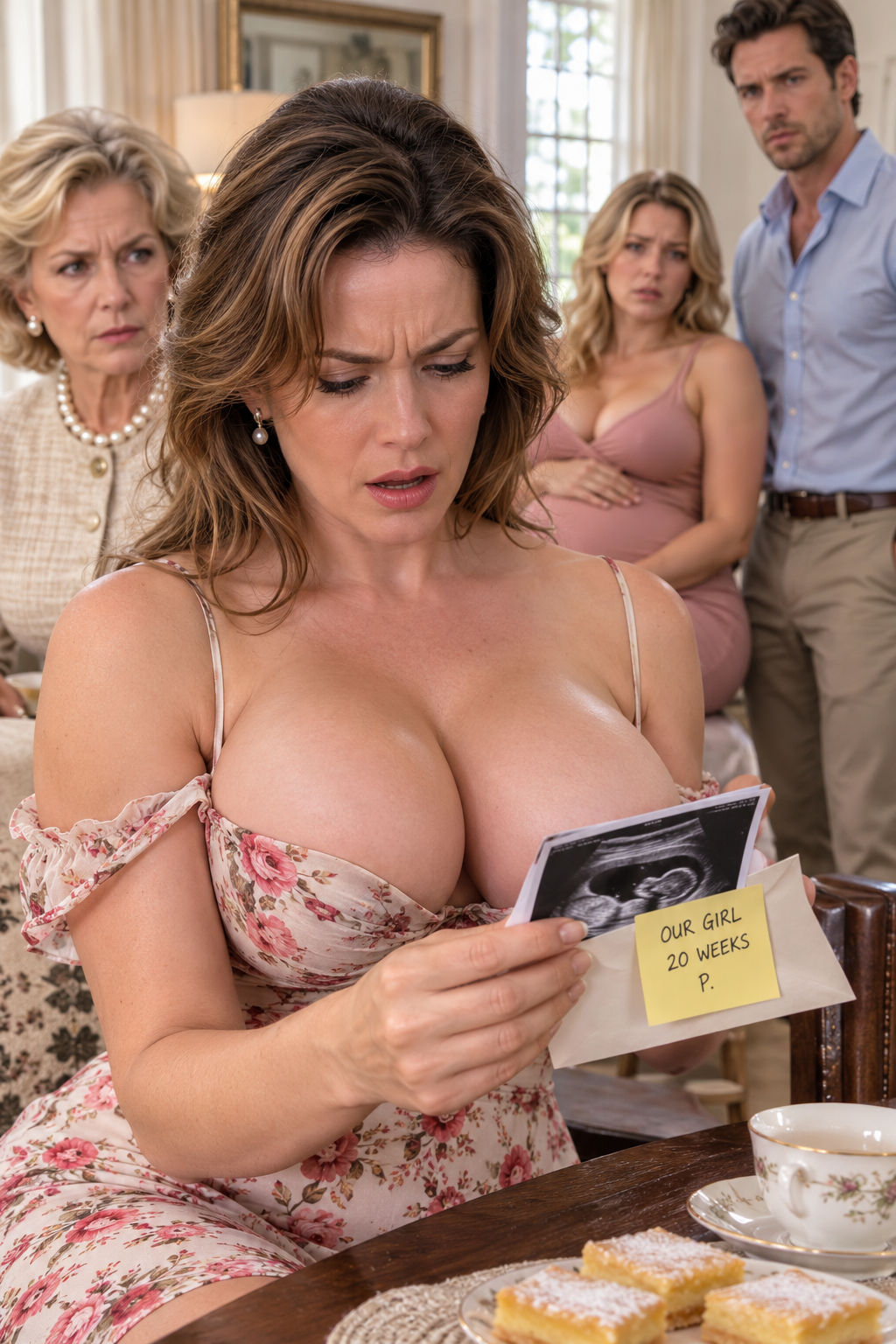
Halfway through the hummingbird cake, Margot reached into her purse for a tissue. An envelope slipped onto the floor near my chair. I picked it up. The return address belonged to an obstetrics practice on Abercorn Street, and an ultrasound picture was sticking out. There was a yellow note attached, written in tall, square block letters: “Our girl. 20 weeks. P.”
I’d seen that handwriting on Preston’s blueprints and birthday cards for a decade. I looked at my sister and asked, “Whose P, Margot?” She went pale. But instead of looking at me, she looked at our mother. That’s when I realized somebody else at that table already knew.
“Lower your voice,” Mom said, carefully setting down her fork. “We’re in public.” I asked if the baby was Preston’s. She didn’t deny it. “I’ve known since Easter,” she said. “We were going to tell you when the time was right.” Margot began to cry and whispered that it had just happened. I looked at the words “our girl” and wondered how long an accident had to last before it became a plan.
Mom put the envelope back into Margot’s purse and told me not to cause a scene before the party. I drove home and waited on the steps of the house my grandmother had given me. Mimi had lived there for fifty years. When Preston and I got engaged, she’d deeded it to me as a wedding gift, but she’d insisted on a prenuptial agreement. “Love is a fine thing, sugar,” she’d told me, “but a house is forever.”
I had been thirty-one, in love, and certain Preston was different. Against Mimi’s advice, I’d asked our lawyer to add one provision. If Preston and I reached our tenth wedding anniversary still married, with no divorce filed, the Jones Street house would become ours in equal shares. I called it my faith clause. Mimi called it foolish. My mother had been sitting in the lawyer’s office when I signed it, smiling.
The house had been standing on Jones Street since before the Civil War. Its worn staircase, tall windows, and creaking floors weren’t things I wanted replaced; they were the sound of my childhood. Mimi had spent fifty years tending to that place, and even when she got older, she could point to every repaired floorboard and tell you who’d done the work. My mother, on the other hand, had always talked about the house as if it were an inheritance somebody had unfairly kept from her. I had never taken those remarks seriously. I thought her disappointment had softened after Mimi died. Now, sitting on my steps with the afternoon fading, I wasn’t so sure.
Preston came home around six. He saw me on the steps and sat down without even asking what was wrong. “Your mother said she’d tell you when it was time,” he admitted. He apologized for how I found out, not for what he’d done. I told him to sleep in the guest room.
The following Sunday, Mom summoned everyone to my childhood home in Ardsley Park. Dad sat in his recliner. Margot took the loveseat. Preston stood by the window. Mom laid out her proposal as if she were organizing a church fundraiser: at the October eighteenth celebration at the River Club on Wilmington Island, in front of 120 guests, Preston and I would renew our vows. Then Margot would raise her baby and Preston would help as a supposedly devoted uncle.
I asked whether she truly expected me to promise fidelity to the man who’d gotten my sister pregnant. “I expect you to protect this family,” Mom answered. “You’re the strong one. You always have been.” That was the role I’d played since childhood. When Margot broke Mimi’s crystal bowl, I swept up the pieces. When she crashed my car at nineteen, somehow I was blamed for leaving the keys out.
Preston said he’d do anything to fix us. I said I needed time. Mom smiled and reminded me the date was set: October eighteenth. A few days later, standing in my office in a converted cotton warehouse on River Street, I looked at a calendar and suddenly felt cold.
My parents had married on August sixteenth. They’d always celebrated in August, even during Savannah’s worst heat. My own tenth wedding anniversary was October ninth. Under the provision I’d insisted on adding, Preston only needed to remain my husband, with no divorce complaint filed, through that date to gain half of Mimi’s home. Mom’s grand vow renewal was scheduled for nine days afterward.
I called the River Club and asked its events manager, Darnell, when the date had been set. He told me Mom had originally booked August sixteenth the previous fall. Then she had called to move the whole celebration to October eighteenth, claiming the heat would be too hard on the guests. I asked him to check the day she called. He typed for a moment, then said, “May second.”
Easter had been in April. My mother had known whose baby Margot was carrying, and then she’d moved her own anniversary party to nine days after my marriage would give Preston half my grandmother’s house. I stared at my calendar, trying to understand how far ahead they had planned—and what they expected me to surrender next. Part 2…..
The first person I called was Odessa Grant, the attorney who’d drafted the prenup ten years earlier. Her office was in a pink stucco building on Chippewa Square, and she had no patience for wishful thinking. She read my faith clause twice, took off her glasses, and told me the house was worth about $1.4 million. If I stayed married through October ninth without filing, Preston would have a claim to half. He could even seek a court-ordered sale.
I told her about Mom moving the party. “I’ve seen husbands do that kind of math,” Odessa said. “I’ve never seen a mother do it.” When I asked what to do, she pointed to the words on the page: the clause depended on whether a divorce complaint had been filed, not whether Preston knew about it. She advised me to file before October ninth. Then, she said, I could choose when he learned the truth.
After our meeting I went to the cathedral and sat in Mimi’s old pew. I didn’t have a speech prepared for God. I just sat there thinking about Mimi telling me she knew too many men, and me insisting that love should come with a grand gesture. By the time I got home, I knew I wasn’t going to let Preston take her house. I also knew my family couldn’t be trusted with my plans.
A real estate agent named Bitsy Calhoun called two days later. I’d known Bitsy for years through preservation projects. She sounded embarrassed, but she told me Preston had recently asked her to value the Jones Street house. He’d also asked what happened if one co-owner wanted the other out. When Bitsy said the house was in my name, he replied that wouldn’t be a problem after the middle of October.
Then Bitsy repeated the part that made my stomach drop: Preston had said his co-owner wouldn’t want to stay once she saw who was moving in. Bitsy had written down the conversation and agreed to keep her notes. I looked through my kitchen window at the carriage house, where Margot was living without paying me a cent. This wasn’t only about money. They planned to move into my home and make me the one who left.
So I told Mom I’d stand under the arch on October eighteenth. She hugged me and said she was proud of me. She ordered a tea-length ivory dress from a boutique on Broughton Street and insisted Margot be my matron of honor in blush pink, because it would show the guests there were no hard feelings. I attended the fittings and said as little as I could.
Preston grew wonderfully attentive. He brought coffee to bed, repaired a porch step I’d asked about for two years, and started calling me darling again. When he wanted to move out of the guest room, I told him it was better to leave things as they were for now. He seemed to hear something hopeful in that answer. At dinner one evening he suggested we put the house in both our names before the ceremony as a symbol of partnership.
“I’ll ask Odessa what paperwork is involved,” I said. I did. She laughed so hard she had to set down her pen. Preston had apparently decided that waiting nine more days for his share was still too risky.
One Saturday, Mom brought Margot over to try on her dress in my parlor. Margot wandered upstairs, and I heard her call down, “Mom, come look at this little room with the window seat. It would make the cutest—” Mom hurried to the stairs and cut her off, reminding her it was my sewing room. She later dismissed the comment as pregnancy brain.
But that room had been Mimi’s sewing room for fifty years. She used to hem my school dresses by the window while I did homework at her feet. Margot had already imagined a nursery there. After they left, I sat on the window seat and made myself a promise: nobody was going to paint that room pink.
At my final dress fitting, Margot sat scrolling her phone and eating the mints on the counter. When the seamstress stepped away, she told me she knew I hated her. I said I didn’t. Hate wasn’t what I felt anymore. Then she gave me a small, knowing smile and said, “After the party, everything’s going to be different. Everybody’s going to be happier.”
I met her eyes in the mirror. “You’re right,” I said. She didn’t notice that I hadn’t said who I thought would be happier.
Part 3 On October first, I filed for divorce in Chatham County Superior Court. Odessa handled the paperwork and gave me a stamped copy outside the courthouse. I held that envelope against my chest on the walk to my car. For the first time in weeks, I could picture walking through the front door of Mimi’s house without wondering how long I’d be allowed to stay.
That evening Preston mentioned seeing my car downtown near the courthouse. I told him I’d had a Historic Preservation Commission meeting about the Gordon Street row houses. That was true; I’d scheduled it nearby on purpose. “Did you get what you needed?” he asked. “Everything,” I said. He smiled and went upstairs to shower.
On October ninth, our tenth anniversary, he took me to dinner at the Olde Pink House. He gave me a diamond bracelet and a card written in his familiar block capitals: “10 years. Here’s to forever.” He watched me open it as if a prize had finally been delivered to him. I thanked him, put it on, and let him believe the clock had run out in his favor.
The night before Mom’s party, my business partner, Theo, came over with Chinese food and bourbon. He was the only person besides Odessa who knew I’d filed. Theo asked whether I really intended to attend the ceremony instead of simply having Preston served. I told him Mom had chosen the stage, the audience, and the date. I was going to keep that date.
On October eighteenth, the River Club’s lawn was set with 120 white chairs beneath live oaks and Spanish moss. White hydrangeas framed an arch by the water, a string quartet played, and a banner celebrated forty years of Hal and Lorraine. Mom greeted everyone in champagne silk. Dad stood beside her in seersucker. Margot wore the blush dress and Mimi’s pearls, which Mom had persuaded me to lend her.
Preston waited under the arch in a navy suit beside Reverend Callaway, the same minister who’d married my parents and later married us. I walked down the aisle in my ivory dress, holding white roses. Hidden beneath the bouquet was a thick cream envelope. Preston squeezed my hands and told me I looked beautiful.
The reverend began the ceremony and finally asked whether I took Preston again as my husband, to love and honor him, forsaking all others. I looked at Preston. Then I looked at Margot, holding her bouquet over her stomach. “No,” I said.
For a second, all I could hear was the river. Preston’s smile locked in place. I turned toward the guests and apologized for interrupting what should have been a happy anniversary. Then I told them I couldn’t repeat vows I no longer believed, and that they deserved to know why.
I said Margot was twenty-nine weeks pregnant and that her child’s father was Preston, not a bartender in Charleston. I told them Mom had known since Easter. Mom stood and said I was lying, that I was upset and unwell. I took out my envelope and showed the front rows the record from the River Club: Mom had moved the celebration from August sixteenth to October eighteenth on May second.
Then I explained the house Mimi had given me, the faith clause I’d added ten years ago, and the difference between October ninth and October eighteenth. I didn’t tell everyone how they ought to feel about it. I simply said that Mom had planned a public vow renewal for nine days after Preston stood to become half owner of my grandmother’s house.
Preston interrupted. “That clause already happened,” he said. “The house is half mine. You can’t undo it.” He sounded more angry about the property than about the pregnancy. I unfolded my stamped court copy and held it up. “I filed for divorce on October first,” I said. “Eight days before our anniversary. The clause never took effect.”
I unclasped the bracelet and put it in his hand. The color drained from his face, and he looked toward Mom as if she might have an answer. She had none. Margot blurted, “But we had the nursery picked out,” then covered her mouth. I told her I knew exactly which room she’d chosen: Mimi’s sewing room.
Mom gripped the back of a chair. “You’re ruining my anniversary,” she said. I looked at her and answered, “You planned to ruin mine at yours. I just kept the date.”
Part 4 Dad stood up. He’d been quiet through every family argument I could remember, including the afternoon Mom tried to make me renew my vows. This time he looked directly at her. “You told me it was the heat, Lorraine,” he said. “Forty Augusts, and you never once minded the heat.” He removed the white rose from his lapel, set it on his chair, and walked out down the center aisle.
Reverend Callaway closed his book. He said he’d known us for forty years, that he would pray for us, but that he wouldn’t bless a lie. Then he stepped away from the arch. Margot reached for Mimi’s pearls at her throat. I held out my hand, and after a long moment, she unclasped them and gave them back.
I walked down the aisle alone, the pearls safe in my pocket. Near the back, Miss Adelaide, Mimi’s oldest friend, stood in her purple hat. “Mimi would be proud of you, sugar,” she said loudly enough for the nearby guests to hear. I carried those words home with me.
Preston was served on Monday morning at a job site on Gaston Street, in front of his crew. He called repeatedly; I didn’t answer. Two weeks later we met for mediation in Odessa’s building. Preston’s lawyer had read the prenup and the stamped filing date. He told Preston he had no claim to the Jones Street house and warned that continuing to press it could leave him paying more legal fees.
Preston slammed a hand on the table. “I gave her ten years of my life, and I walk out with nothing?” Odessa reminded him he was keeping what he’d brought into the marriage, including his truck and tools, along with his share of the checking account. He asked me where he was supposed to live. I told him to ask Margot. She’d already planned a nursery.
The story didn’t stay inside those 120 chairs. Savannah is a small city when your work depends on people trusting you with historic homes. By Thanksgiving, three of Preston’s biggest clients had canceled their restoration contracts. By Christmas, I heard he was subcontracting drywall work in Pooler for a company that didn’t care about his reputation.
I gave Margot written notice to leave the carriage house within thirty days. She was due in January and protested that she had nowhere to go. I reminded her she’d lived rent-free behind my home while she planned to take over the rooms inside it. She said I had always taken care of her because I was the strong one. “I was,” I told her. “For thirty-four years. I’m done.”
Dad had moved to the fishing cabin on the Ogeechee River the day after the party. By Halloween he’d filed for divorce, too. Mom faced selling the Ardsley Park house, and the friends she valued so much weren’t calling. Margot moved out a day before her deadline, leaving the carriage house key under a flowerpot with no note.
Final I saw Mom again in December, on what would have been Mimi’s ninetieth birthday. She was sitting alone in Mimi’s pew at the cathedral, wearing a coat from Goodwill. She said she’d lost Dad, the house, and her friends. Then she finally told me why she’d done it: Mimi had given the Jones Street house to me instead of her own daughter, and Mom had spent years believing that was unfair.
“I thought if Margot and the baby got half, it would finally be fair,” she said. I understood then that this hadn’t begun with Preston or even Margot. It had begun with Mom’s resentment of Mimi, and she’d decided I should pay for it. I told her Mimi had known what she was doing when she gave me the house. Then I said goodbye and left the cathedral.
Odessa finalized my divorce the following spring, and the judge signed off on it. It’s been a year since the party now. The house on Jones Street is still mine, and I’d made plans to leave it to a historic preservation trust someday, with a letter explaining why. Margot had a daughter in January; I heard about the birth from Miss Adelaide. I didn’t ask the child’s name. Dad called on my birthday, but I let it go to voicemail. His walking out at the party hadn’t erased all the years he’d stayed silent.
Last month I repainted the ceiling of my front porch a pale greenish blue, the way Mimi always did. People in Savannah call it haint blue. According to an old story, the color fools harmful spirits into thinking they’re looking at water they can’t cross. When I was little, Mimi told me that only worked if you knew whom to keep out.
Standing there with my brush, I finally understood her. Some things that harm a home don’t arrive like strangers. They come to Sunday dinner. They bring lemon bars. And now I know which door to close.
THE END. I’ve shared the complete story, and I truly hope it touched your heart. If this story moved you, please , like, and share the post. Thank you for reading! ❤️
✓ Lynn R. Adams
My mother wanted me to renew my vows after my husband got my sister pregnant. Then I noticed the date of her anniversary party, and something about those nine days made my stomach turn…. My mother as…