My mother-in-law threw my late mother’s cello into the trash while I was away, and when I asked my husband why he hadn’t stopped her, his four-word answer sent me calling someone I’d sworn off nine years earlier…
My mother-in-law threw my late mother’s cello into the trash while I was away, and when I asked my husband why he hadn’t stopped her, his four-word answer sent me calling someone I’d sworn off nine years earlier…
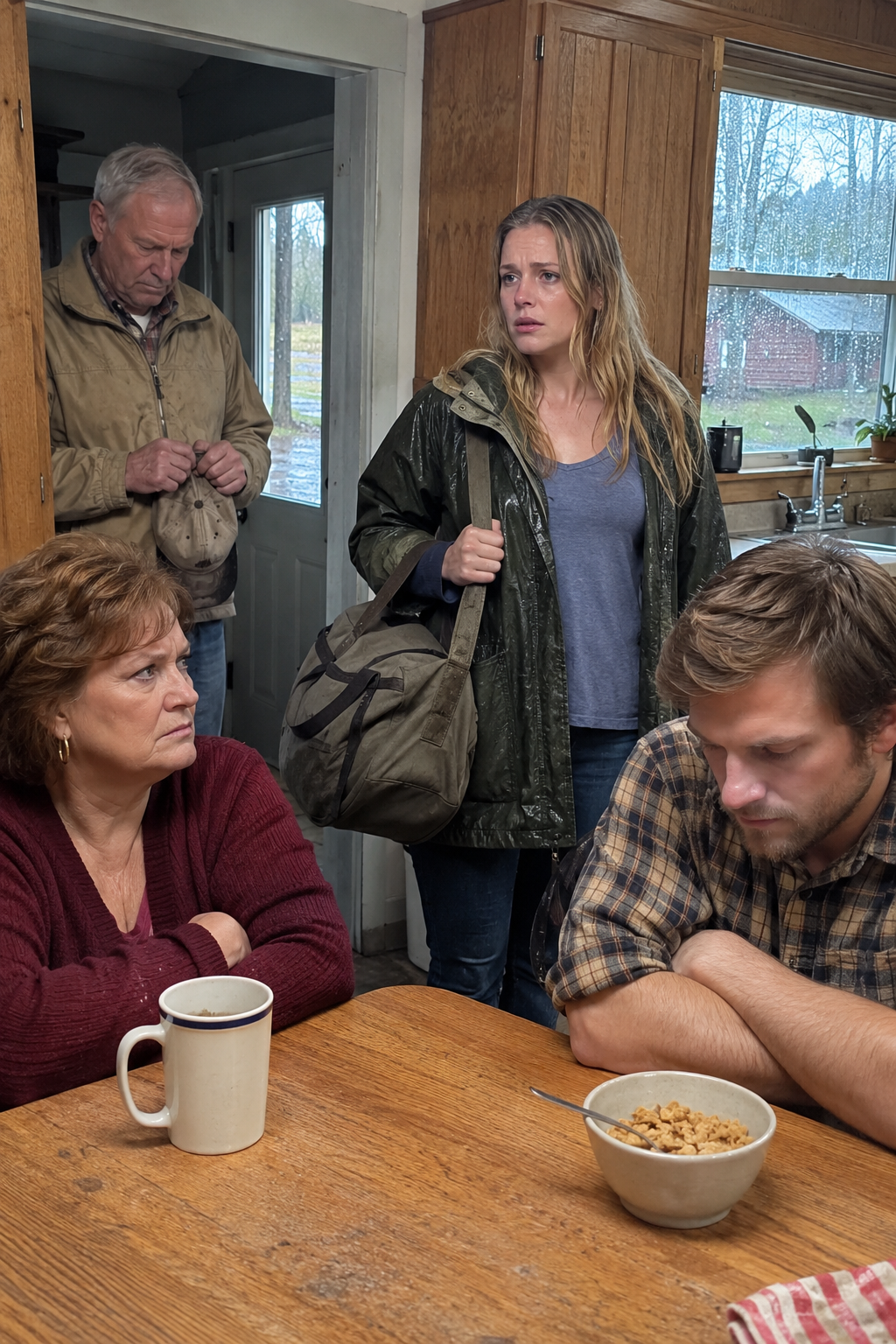
“Your things are out with the trash, where they belong,” Sharon Ostrander said, without looking up from her coffee. Rain ran down the sleeves of my coat and onto the farmhouse kitchen floor as I stood there with my overnight bag. I asked her one question: “Where is my mother’s cello?”
Sharon gave me a thin smile. “A woman who lies to this family doesn’t get to keep her precious keepsakes. Ryan agrees.” My husband sat at the table staring into a bowl of cereal, and I waited for him to contradict her. He didn’t.
Before I tell you what happened that morning, I owe you the part that makes me look bad. I had lied to Ryan for six years, starting with our second date. At twenty-five, I told him my mother had died when I was nineteen and that my father was gone, too.
My mother really was gone. Anne was a second-chair cellist with the Cleveland Orchestra, a woman who hummed while she stirred soup and kept handwritten journals of songs she wanted to teach me. Cancer took her before I was old enough to understand how much of my life she had been holding together.
But my father wasn’t dead. His name was August Danforth, and he founded Danforth Meridian, a real estate company big enough to put his face on buildings in four states. I hadn’t spoken to him since I was twenty-two, and I wanted no part of his money or his name.
When I was little, Dad promised Mom he would never touch Ferris Row, an old mill neighborhood where her best friend, Mrs. Olsson, lived. There were forty families there, in row houses with porch swings and tomato gardens. Two years after Mom died, Dad had the neighborhood demolished for a luxury development, and his lawyers called the checks they offered the families “fair market value.”
I watched Mrs. Olsson’s home come down and told him I would never use his name or his money again. I went by my mother’s surname and became a middle school music teacher in Cairo, a small Ohio town. By the time I met Ryan, I wanted people to know me as Joelle, not as August Danforth’s daughter.
Ryan worked the register at his family’s lumberyard. He made me laugh during a stretch of my life when laughter didn’t come easily, and his steadiness felt like a gift. When he asked about my father, I imagined the look that would cross his face at the word “billionaire,” and I took the coward’s way out instead.
The lie didn’t stay small. His parents spent $31,000 of lumberyard savings on our wedding, money they could hardly spare. Sharon cried as she told me a girl without family deserved a proper celebration, and I accepted their kindness without correcting the story I’d given them.
I could have paid for that wedding with a single phone call. I didn’t make it, because calling my father felt like breaking the promise I’d made beside the ruins of Ferris Row. None of that excuses letting the Ostranders make such a sacrifice, and I know it now.
Eight days before I came home to that empty bedroom, Marcus Feld called. He had been Dad’s attorney for as long as I could remember, a tall man who used to carry butterscotch candies for children at Christmas parties. His voice sounded older when he said my father had suffered a heart attack and needed quadruple-bypass surgery.
“Your father is asking for you, Joelle,” Marcus said. “I wouldn’t be calling if the doctors weren’t worried about his chances.” I sat alone with the phone against my ear, looking at the cello stand by the window. Then I told Ryan I had a music educators’ conference in Chicago and packed my bag.
I drove four hours to the hospital, gripping the steering wheel until my fingers hurt. My father looked smaller than I had ever seen him, with gray stubble on his cheeks and an IV against his arm. I had practiced nine years’ worth of angry speeches, but when he opened his eyes and whispered, “Annie’s girl,” I couldn’t deliver a single one.
I stayed six days. He never apologized for Ferris Row, and I never told him I forgave him. On the fourth night, I woke in the chair beside his bed and found him holding my hand, and I let him keep holding it.
Back in Ohio, Ryan’s younger sister, Kristen, had been looking through my phone for weeks. She was twenty-nine, devout, and convinced that catching a lie was the same thing as doing the right thing. She found messages from a contact saved as “Dad,” remembered that I’d said my father was dead, and showed them to Sharon.
Sharon didn’t call to ask me what the messages meant. She called Ryan at the lumberyard and suggested I might be cheating, or that my entire history might be a fabrication. Ryan didn’t call me either, even though the two of us had promised in front of a hundred wedding guests that we would face hard things together.
Instead, Sharon emptied our bedroom while I was gone. My clothes and books disappeared, along with Mom’s song journals, the patchwork quilt she had sewn when I was six, and the cello she had played for years. Ryan watched them carry those things out of the house we had been living in.
When I stepped into our bedroom that rainy morning, the closet was bare. Back in the kitchen, Sharon told me she had rented a dumpster for a home cleanup and filled it with my belongings. Rollins Waste had picked it up at seven that morning and taken it to the county transfer station.
“I lied about my father,” I said. “He’s alive, and I’m sorry I told you otherwise. But you had no right to touch my mother’s things.” Sharon pushed her coffee cup aside and said I’d been living in her house, eating her food, and taking her son’s name, though I’d actually kept my mother’s surname.
I turned to Ryan. “Where were you when they carried out her cello?” He swallowed, stared at the table, then finally answered, “I was holding the door.” He didn’t say he’d tried to stop them, because he hadn’t.
In the mudroom, my father-in-law, Merle, stood twisting his cap between his hands. He had nothing to say either. I walked past him into the rain, got into my car, and opened a message thread I hadn’t used in nine years.
“They threw Mom’s things away,” I wrote. I wasn’t asking for money or promising a fight; I just wanted someone who had known Anne to understand what had been lost. A reply came asking where the belongings were, and I answered, “County transfer station. Probably compacted by tonight. It’s fine. Don’t do anything.”
Three minutes later, the phone rang. Dad’s voice was thin from surgery, but when he said, “Tell me exactly what happened, slowly,” I could hear the man I remembered underneath. I told him about the dumpster, the quilt, the journals, and the cello, and when I’d finished he said he was sending his plane and told me to drive to the transfer station.
A worker in a reflective vest stopped me at the gate. Private visitors couldn’t go in, he explained, and a lost-property request would take five to seven business days. When I told him it was my late mother’s cello, his face softened, but he said the morning’s loads were scheduled for compaction and transfer that night.
I sat in my car watching the light fade beyond the chain-link fence, helpless for the first time since Mom’s funeral. At p.m., three black SUVs pulled up on the gravel. Marcus got out first, followed by two people carrying briefcases, and then a driver helped my father step slowly into the night, one hand pressed to his chest beneath a camel-colored coat.
He stopped a few feet away, looking uncertain in a way I’d never seen before. “Hello, Joey,” he said, using the name I hadn’t heard from him since I was twenty-two. Behind him, the transfer station gate was still locked. Part 2…..
IF FACEBOOK BROUGHT YOU HERE, HERE’S THE CONTINUATION YOU’VE BEEN WAITING FOR. ENJOY! 👇 “You shouldn’t even be out of the hospital,” I told him. Dad glanced at the driver supporting his elbow and said he’d signed himself out. His attempt at a smile vanished when he saw the trucks and the garbage piled beyond the fence.
Marcus introduced the two people who had come with him: Lynn Aldis, an attorney who handled environmental and property law, and Tom Sprague, a broad-shouldered litigator who spoke quietly and listened hard. My stomach tightened at the sight of them. I remembered all too well what my father could accomplish with lawyers and a deadline.
But Lynn didn’t threaten anyone at the gate. She went to the station manager’s trailer with a folder, explained what had happened, and started calling county officials. The station had safety rules, and the workers couldn’t simply let strangers walk through active machinery, no matter whose father had arrived in an expensive coat.
Within twenty minutes, Lynn was speaking with the county solid waste director. About forty minutes after that, the station approved a supervised search of a designated section of that morning’s intake, with operations in that area stopped until midnight. It was an emergency arrangement, not a promise that anything could be recovered.
Tom stood beside me while the gate rolled back. He explained that disposing of someone else’s personal property without permission could support a civil claim for conversion in Ohio. He could prepare a complaint if I wanted, he said, but I told him to leave it alone for the moment. “I just want Mom’s things.”
Dad watched me for a few seconds and then said, almost casually, that he could buy the lumberyard by Friday. Marcus had found that the business was four months behind on its debt, and Dad could acquire the debt, the land, and the building. “They would never bother you again,” he said.
I felt the old distance open between us. “That’s what you said about Ferris Row.” He flinched, and I was glad he did, because for once I needed him to hear what his solutions sounded like to someone on the receiving end.
“If you do that, you aren’t helping me,” I said. “You’re using money to punish people because you can, and I’ll have every reason to walk away from you again.” I looked through the gate at the heap of refuse. “Help me find our cello, Dad. Help me dig.”
He stood silent long enough that I thought I’d asked the impossible. Then he turned to Marcus and told him to cancel the call to the bank. He unbuttoned his coat, asked a worker where he could stand without getting in the crew’s way, and followed us through the gate.
By ten o’clock, we were working under portable floodlights. Station operators handled the machinery and directed us away from unstable piles, while the rest of us searched the section they said might hold the load from the Ostrander house. I wore borrowed gloves, Lynn pulled rubber boots over the hem of her good navy suit, and Tom dragged a tarp through the muddy ground.
Marcus, now around seventy and limping on a bad hip, kept cutting open bags and calling out what he found. Dad, pale and moving carefully after his surgery, stayed where the workers told him and shone his flashlight across each newly exposed patch. Every time he saw a gray contractor bag, he’d ask me to check it.
I had grown up watching people rearrange their lives around my father’s money. Seeing him stand beside trash, unable to buy a shortcut and unwilling to leave, was stranger than the SUVs or the attorneys. I didn’t know whether it made up for anything, but I knew my mother would have recognized the effort.
At 11:40, we found her quilt. It was jammed into a contractor bag beside a rotting couch cushion, damp and stained, but in one piece. I unfolded a corner under the floodlight and saw the crooked yellow star Mom had sewn for me because, she said, every child ought to have one star that wasn’t quite perfect.
My knees gave way and I sat down on the edge of the pile, holding that dirty quilt against my coat. Dad lowered himself beside me, slowly and with some pain. After a while he said Anne had once made him a quilt, too, the year they married, and that he’d let an assistant put it in storage because it didn’t match his office.
“Where is it now?” I asked. He shook his head and admitted he didn’t know. He said he’d been wondering about it for nine years, and when I looked at his face I understood that this was one of the few questions his money couldn’t answer.
“Joelle?” a voice called from the edge of the lights. Kristen stood there in a coat thrown over her pajamas, her hair flattened on one side and her eyes swollen from crying. She was holding a dented tin box with both hands.
She admitted she’d searched my phone and given Sharon the messages. At the time, she’d told herself she was protecting her brother and honoring her faith. Then she had watched Sharon smile while the garbage truck carried my mother’s belongings away, and realized her mother had wanted a reason to reject me all along.
“I spent so much time deciding who was honest,” Kristen said, “that I never asked what I was going to do with the truth.” She held out the tin box. It had been near the curb when the truck came, and she’d picked it up before anyone noticed.
It was Mom’s music box, with Mrs. Olsson’s name engraved underneath. Mrs. Olsson had given it to Mom as a wedding gift, back when Ferris Row still stood. When I opened it, four familiar notes played, the same little tune Mom used to hum over a pot of soup.
Kristen said she’d tell the truth to anyone who asked, even under oath if there was a case. She didn’t ask me to forgive her, and I couldn’t have done it that night. But I thanked her for bringing the box, and she stayed until we were ready to search again.
The workers kept our search area secured past midnight, and at in the morning one of the operators called out that he’d found a hard case trapped under a flattened refrigerator door. The black shell was cracked down one side, and it took three of us to pull it free. Tom helped me work the bent latches because my fingers wouldn’t stay steady.
The cello was there. Its neck was broken at the joint, the scroll hung loose by a few strings, and a long crack crossed the top plate. Still, the wooden body and all its pieces were inside, and when I bent close I could smell rosin and the faint lavender Mom kept in her studio.
I rested my forehead against the wood. No one spoke until Dad said, in a hoarse voice, that Anne would have laughed at the sight of a billionaire and three lawyers rummaging through garbage. I imagined her standing there, shaking her head at us all, and for the first time that night I smiled.
We carried the damaged cello out carefully. The instrument would need an expert, and there was no guarantee it would ever sound the same, but it hadn’t vanished into a landfill. When we left the transfer station, I knew I had to go back to the Ostrander farmhouse once more.
Part 3 I hadn’t slept when I returned at eight the next morning. Mom’s cello was secured in the backseat, with the quilt and music box beside it. Dad followed in one SUV and the attorneys in another, but I asked all of them to stay outside while I went in alone.
Dad started to object, then stopped himself. “This is yours,” he said. It was a small sentence, but from August Danforth it was a different kind of help.
Sharon was sitting at the same kitchen table, her coffee beside her phone. She had seen the SUVs, and she had clearly looked up the man wearing the camel coat because his photograph was on her screen. “Joelle, honey,” she said, suddenly gentle, “why didn’t you tell us you were a Danforth?”
I’d imagined dozens of angry things I might say, but that question settled it. “Yesterday I was a liar from nowhere. Today I’m a Danforth. Which one of those women did you throw in the dumpster?”
She said she had only been protecting her family and that, if she’d known who my father was, everything would have been different. “That’s the problem,” I told her. “You would have treated my father’s last name more kindly than you treated me.” For once, she didn’t have a sharp answer ready.
Ryan came downstairs unshaven, with red eyes and the same soft voice I had once loved. He said he’d called me nine times during the night and hadn’t slept. I told him I’d switched off my phone because I had been trying to save what was left of my mother’s things.
“I should have called you before Mom touched anything,” he said. He admitted he’d been afraid I was cheating and afraid he’d look foolish if he defended me. He hadn’t wanted to ask questions that might make his life harder.
“I lied about my father,” I said. “I won’t pretend I didn’t, and I know it damaged your trust.” Then I reminded him that he’d watched his mother throw away the belongings of a woman who was dead and couldn’t defend herself. “When you didn’t understand me, you didn’t try. You held the door.”
He began to cry, but I was past the point where his tears could decide what happened next. I took off my wedding ring and set it on the table. “I’m filing for divorce, Ryan. I won’t ask for the house, the lumberyard, or any of your family’s money.”
Sharon looked from my ring to the SUVs outside. She asked if I was going to sue them. Tom had explained that I could bring a civil case over the destroyed and damaged belongings, and he had already prepared a draft complaint for me to consider.
“I could go after you,” I said. “Dad could hurt the business even faster. But I won’t turn a family into another Ferris Row, and I won’t spend my life doing what you did to me.” I told her there would be no separate lawsuit, no attempt to take the yard, and no revenge.
Merle had come into the kitchen and stood near the doorframe, holding the same worn cap. I took an envelope from my coat and handed him a cashier’s check for $31,000. Marcus had helped arrange it early that morning, and I wanted to return the money his family had spent on our wedding.
“I let you pay for something I could have paid for myself,” I said. “I was wrong to let you do that without knowing the truth.” He stared at the check, then admitted he’d noticed things about me over the years that hadn’t quite fit the story of a woman with no family or resources.
He hadn’t wanted to ask, he said, because he was afraid of the answer. More importantly, he’d stood silent while they carried out my belongings. “That’s on me, Joelle,” he said, his hands trembling as he held the envelope.
“Take the check back,” he told me. “I won’t hold a woman’s apology against her.” I explained that I had already apologized; this was repayment. Finally, he folded the envelope and put it in his shirt pocket.
At the door, I told Sharon to expect the divorce paperwork and nothing else from me. I wasn’t letting her off because what she’d done was harmless. I was leaving because I refused to let her decide the kind of person I’d become.
Ryan followed me out to my car and put a hand against the open door. “Is there any chance?” he asked. I looked at the man who had made me laugh when grief had seemed permanent, and I hated that I still knew his face so well.
“Maybe in another life,” I said. “But in this one, you were supposed to stand beside me, and you didn’t. You can be sorry and still be too late.” He nodded, moved his hand, and let me go.
On Monday I walked into the principal’s office at Carroll Middle School before a rumor could reach her first. I explained my family history, the lie I’d told my husband, and why people might hear an ugly version of it. Sharon had already emailed the school to suggest I was dishonest and unfit to teach children.
My principal listened until I finished. Then she reminded me that I’d taught there for nine years, put on choir concerts, and never had a parent complaint. “I think we’ll be all right, Joelle,” she said, handing me a tissue and nudging a plate of cookies across her desk.
I moved into a one-bedroom apartment above a music shop on Main Street. It was smaller than the farmhouse, and the stairs creaked, but the key fit a lock that was mine to use. The divorce went through quietly in April, without a battle over the lumberyard or the house.
Ryan sent me a letter afterward. I put it in a drawer next to Mom’s music box and left it unopened, not to hurt him, but because I wasn’t ready to let his explanation back into every room of my life. Some things can be understood without being resumed.
Final A luthier in Cleveland spent three months repairing Mom’s cello, including the broken neck and the cracked top. When I brought it home, I set it by the window in my apartment and stood looking at it for a long time. The luthier said it sounded better than before; I play it badly, but I play it every night. Mom’s handwritten song journals were never recovered, and I miss them, too.
Dad and I started having dinner on Sundays. He still called too often and offered to pay for things I hadn’t asked him to buy, while I still had to remind him that a relationship wasn’t a business problem. Last month he offered me a seat on the Danforth board, and when I said no, he smiled and told me he’d figured as much.
There was one thing I did ask him to do. If he wanted a place in my life, I said, he had to face what he’d done to Ferris Row instead of explaining it away with market values. He listened without reaching for his phone, which was a start.
Over the following months, Dad found the families who had once lived in those forty houses. Some had moved away and some had died, but he met with the people he could find, in their kitchens and living rooms, and heard what losing the neighborhood had cost them. I didn’t attend those meetings; their stories belonged to them.
In September, a housing cooperative broke ground two miles from the old neighborhood. Its board included former Ferris Row residents, and its plans called for forty homes with porches and space for tomato gardens. Mrs. Olsson’s daughter cut the ribbon, and Dad left his own name off the sign when I asked him to.
Kristen writes to me every few weeks. She moved out of Sharon’s house and took a job at a nonprofit in Columbus, and I’ve written back twice. We aren’t friends, but we might someday become something gentler than strangers who know each other’s worst mistake.
Last week Kristen mailed me a photograph of Mom holding me when I was six, the crooked-star quilt spread behind us. On the back she’d written, “I kept this safe.” I pinned it above the cello, where I can see both of our faces when I practice.
I haven’t heard from Sharon, and I don’t expect to. Merle sends a Christmas card with one careful line, “Thinking of you. Not holding the door anymore.” I write back each year, because he said aloud what he failed to do, and I think that matters.
None of this feels like winning. I lost my marriage, my home, and people I’d thought would love me even when the truth became uncomfortable. I also had to admit that my little lie was never a clean way to begin a life with someone.
But Mom’s music is back in my hands, Dad is learning to listen instead of buy his way out of regret, and I can live with the woman I see in the mirror. I left that farmhouse without making anyone pay for my pain in the way I’d once watched my father make others pay for his plans. For me, that quiet choice has lasted longer than any victory could have.
THE END. I’ve shared the complete story, and I truly hope it touched your heart. If this story moved you, please , like, and share the post. Thank you for reading! ❤️
✓ Lynn R. Adams
My mother-in-law threw my late mother’s cello into the trash while I was away, and when I asked my husband why he hadn’t stopped her, his four-word answer sent me calling someone I’d sworn off nine ye…