My Mother-in-Law Called Him Her “Real Grandson”—She Never Knew My Son’s Chair Hid the Key to a $42 Million Estate
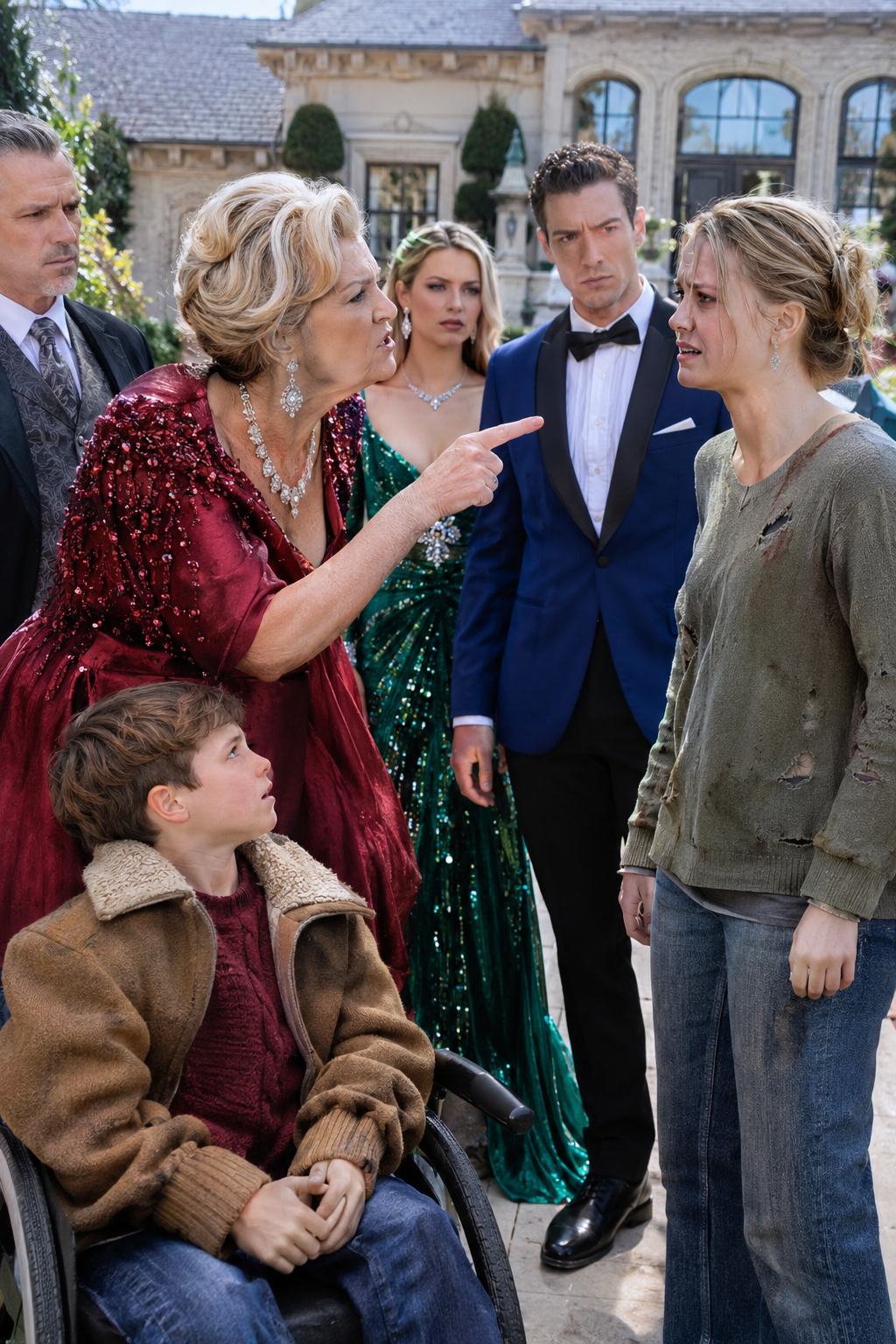
My Mother-in-Law Called Him Her “Real Grandson”—She Never Knew My Son’s Chair Hid the Key to a $42 Million Estate
“My real grandson sits here.”
My mother-in-law said it softly enough that the silverware kept moving around the Thanksgiving table, then she put both hands on my six-year-old son’s shoulders and shoved him out of his grandfather’s chair.
Eli hit the hardwood floor on one knee.
Nobody helped him up.
Not my husband.
Not his sister.
Not the cousins who had eaten food I bought, slept in rooms I renovated, and spent ten years joking that I was “the practical one” whenever their family needed a bill paid.
I stood from my chair.
Across the table, Margaret Whitmore adjusted the emerald silk scarf at her throat and smiled at the blond eight-year-old boy she had just seated in Eli’s place.
My sister-in-law Vanessa’s son.
The child Margaret had apparently decided was more legitimate than mine because Caleb carried the Whitmore last name and Eli did not.
At least, that was the excuse.
The real reason was sitting beneath Caleb.
An old walnut dining chair.
High-backed.
Hand-carved.
Ugly by the standards of Margaret’s glossy remodeled mansion.
Worthless, according to everyone in the room.
Except my late father-in-law had made me promise never to let anyone throw it away.
And two weeks before he died, he had whispered something stranger.
“Rachel, when they finally show you who they are, don’t argue with them.”
He had been lying in a hospital bed then, oxygen hissing softly through a clear tube.
“Take the chair.”
I had thought the morphine was speaking.
Now I watched Margaret seat her “real grandson” on it like a queen planting a flag.
And for the first time, I understood that Thomas Whitmore had not been confused at all.
Eli pushed himself up.
His little face had gone pale.
There was a red mark forming below his knee.
He didn’t cry.
That made me angrier than crying would have.
He looked at his father.
Daniel stared at his plate.
That one movement told me everything.
Not Margaret’s shove.
Not Vanessa’s satisfied smile.
Not Caleb’s confusion as he sat in a chair that was never meant to be part of their cruelty.
Daniel staring at his plate.
My husband of eleven years had chosen his side before we walked into the room.
I crossed the floor and knelt beside Eli.
“You hurt anywhere besides your knee?”
He shook his head.
“Can you walk?”
Another nod.
“Get your coat.”
Margaret laughed.
“Oh, Rachel, please. Don’t turn this into one of your dramatic little exits.”
I looked up at her.
“I didn’t say anything.”
That stopped her for half a second.
People who expect tears are unsettled by silence.
People who expect yelling are even more unsettled when you start collecting your purse.
Daniel finally looked at me.
I slipped Eli’s arms into his navy winter coat.
“Mom didn’t mean to hurt him.”
Margaret took a sip of wine.
“I meant to move him.”
Vanessa snorted.
Her husband covered it with a cough.
Daniel rubbed his forehead.
“This is exactly what I didn’t want tonight.”
I zipped Eli’s coat.
“What did you want?”
He hesitated.
And that hesitation was the crack that let the whole rotten structure show through.
I had paid Daniel’s graduate-school loans.
I had worked double shifts while he launched Whitmore Development.
I had sold my first condo to cover payroll when one of his projects went underwater.
I had sat beside Thomas through chemotherapy when his own daughter said hospitals made her “too anxious.”
I had managed Margaret’s medications after her hip surgery.
I had spent three Christmases cooking for twenty people while Daniel networked with his father’s investors.
I had raised Eli through fevers, nightmares, school meetings, and every small heartbreak while Daniel said he was building something “for us.”
I had stayed when staying cost more than leaving.
I had stayed when Margaret called me temporary.
I had stayed when Vanessa introduced me as Daniel’s “first serious mistake” at a charity luncheon.
I had stayed when Daniel moved our savings into his company and told me afterward.
I had stayed when Thomas quietly apologized for the family he had raised.
I had stayed until my six-year-old son looked at his father for protection and found a man studying mashed potatoes.
Then I stopped staying.
Daniel stood.
“Rachel, don’t do this in front of everybody.”
“I’m taking Eli home.”
“You are home.”
That came from Margaret.
I turned toward her.
She smiled.
Not warmly.
Victoriously.
“No,” she said. “Actually, I suppose that’s something we should discuss.”
Vanessa placed her wineglass down with theatrical care.
There it was.
The prepared moment.
The reason everyone had been watching me all evening.
Daniel said, “Mom.”
Margaret ignored him.
“You’ve lived very comfortably because Thomas was generous. But Thomas is gone. The estate is being settled. And this house belongs to the Whitmore family.”
I looked around the dining room.
The twelve-foot ceilings.
The limestone fireplace I had personally argued should be preserved when Margaret wanted white marble.
The original oak molding Thomas loved.
The chandelier Vanessa had ordered from Milan using a card I later had to negotiate with the bank when the charge froze Margaret’s account.
“Okay,” I said.
Margaret blinked.
She had prepared for resistance.
“So,” she continued, “given the tension, I think you and Eli should make other arrangements.”
Daniel took a step toward me.
“Rachel, she means temporarily.”
“No,” Margaret said.
Daniel’s jaw tightened.
Vanessa leaned back in her chair.
Margaret went on.
“The family trust will be reorganized. Daniel will have his responsibilities here. Vanessa and I have discussed what is best for continuity. I don’t think your presence helps.”
“My presence.”
“And Eli’s?”
Margaret glanced at my son.
For one second.
“He isn’t a Whitmore.”
The room became very still.
Daniel whispered, “Mom, enough.”
But not stop.
Not apologize.
Not get out.
Just enough.
A word weak men use when they want the person causing harm to reduce the volume without changing the behavior.
I took Eli’s hand.
“How long?”
Margaret frowned.
“For what?”
“To make other arrangements.”
Daniel answered before she could.
“A few days.”
I looked at him.
His expression changed.
He knew that tone.
It was the same tone I used with contractors before canceling them.
The same one I used with bankers before moving accounts.
The same one I used in meetings when I already knew the answer and wanted to see who would lie.
“Three days?”
“Fine. Three days.”
Vanessa smiled.
“You’re taking this surprisingly well.”
I looked at her.
“I’m listening.”
She shrugged.
“Well, maybe that’s growth.”
Margaret almost smiled.
They thought silence was surrender.
They thought calm meant shock.
They thought because I wasn’t throwing wine or screaming about betrayal, I had not understood the size of what they were doing.
I understood perfectly.
They believed Thomas’s death had finally given them control of the estate.
They believed the house, the acreage, the development company shares, the timber rights, the old quarry lease, and the land outside Lexington had all passed into the trust Daniel and Vanessa expected to control.
They believed I had spent eleven years helping build wealth I could now be separated from with a few signatures.
They believed the old man’s chair was furniture.
They believed they had everything.
I knew only one thing they did not.
Thomas had made me promise to take that chair.
I stepped toward Caleb.
His eyes widened.
I smiled at him.
“Sweetheart, stand up for a second.”
Vanessa immediately said, “Excuse me?”
“I’m taking the chair.”
Margaret laughed.
It was a sharp, delighted sound.
“You’re what?”
“The chair.”
“You cannot be serious.”
Vanessa looked at Daniel.
“Is she having some kind of breakdown?”
Daniel stared at me.
“Rachel, leave it.”
Margaret spread both hands.
“Of all the things in this house, that hideous chair is what you want?”
Her smile returned.
Daniel said, “Mom—”
“Oh, let her.” Margaret waved dismissively. “Consider it her inheritance.”
Several people laughed.
Neither did Eli.
I walked into the mudroom, took the folded moving blanket I kept in my SUV, and came back.
Caleb stepped away from the chair.
I wrapped the old walnut frame carefully.
Vanessa watched me like I was stealing a trash can.
“Need help carrying your fortune?”
Thomas had been seventy-six when he taught me how the back stretcher detached.
“Old craftsmen planned for houses with narrow doors,” he had told me.
That evening, for the first time in forty years, the chair came apart.
The carved back lifted free.
Then the seat.
Then the lower frame.
And when I slid the seat panel into the blanket, I felt something shift inside it.
A faint metallic click.
I kept my face still.
Daniel heard it.
His eyes moved toward my hands.
“What was that?”
“Old wood.”
I folded the blanket.
Then I took my son home.
For exactly three days.
On the first morning, Daniel left for the office at .
At , I photographed every room.
At , I downloaded eleven years of tax returns from our home server.
At , I copied insurance policies, property records, loan statements, trust correspondence, and every financial authorization carrying my signature.
At , I called the attorney whose card Thomas had slipped into my cookbook six months earlier.
Her name was Evelyn Hart.
She answered personally.
“Mrs. Whitmore?”
“Rachel Bennett Whitmore.”
There was a pause.
Then she said, “Mr. Whitmore told me you would call when they asked you to leave.”
My hand tightened around the phone.
“He hoped he was wrong.”
I looked across the kitchen at the disassembled chair.
“Can you meet today?”
“Should I bring something?”
Another pause.
“The chair.”
I looked at it.
“What is inside it?”
“I’m not permitted to tell you over the phone.”
That was the first moment my pulse changed.
Not when Margaret shoved Eli.
Not when Daniel failed us.
Not when they threw me from a house I had helped save.
Because suddenly Thomas’s strange request was no longer sentimental.
It was procedure.
By noon, I was sitting in Evelyn Hart’s office in downtown Louisville.
She was in her early sixties, silver-haired, precise, with the posture of someone who had spent thirty years letting other people underestimate how much she remembered.
She looked at the chair seat resting on her conference table.
“You kept it.”
“I gave Thomas my word.”
She nodded.
“He believed you would.”
From her desk she retrieved a small brass key.
Then she turned the chair seat upside down.
Under the rear rail was a wooden peg no larger than my thumb.
She pressed it.
A panel released.
Inside the hollow seat was a narrow metal box.
I stared at it.
Evelyn inserted the key.
The lock clicked.
Inside were four things.
An old photograph.
A sealed envelope.
A black ledger.
And a notarized document wrapped in waxed paper.
The photograph showed Thomas as a young man standing beside a woman I had never seen.
She was maybe thirty.
Work boots.
A baby on one hip.
Behind them was a wide stretch of Kentucky farmland.
On the back, Thomas had written:
For Ruth, who paid first and was thanked last.
I looked at Evelyn.
“Who was Ruth?”
“Thomas’s older sister.”
“Daniel never mentioned an aunt.”
“Because Margaret made certain the family stopped mentioning her.”
Evelyn opened the notarized document.
“What do you know about the Whitmore estate?”
“About two hundred acres around the house. Commercial parcels. Whitmore Development stock. Timberland. Some mineral rights.”
“How much do you think it’s worth?”
“Maybe eighteen million.”
“Forty-two to forty-six, depending on the quarry valuation.”
I sat very still.
Evelyn continued.
“But that is not the important part.”
She opened the black ledger.
The pages were handwritten.
Farm income.
Property purchases.
Loan repayments.
And one name over and over.
“Thomas and Ruth grew up poor,” Evelyn said. “Their father died when Thomas was fifteen. Ruth left nursing school and worked at a textile mill. Later she worked nights at a hospital laundry. Almost every parcel that became the Whitmore estate was purchased with money Ruth earned or money borrowed against property she already owned.”
I looked again at the photograph.
“What happened to her?”
“She died at forty-three.”
“And the baby?”
“Her daughter.”
I already knew the answer before asking.
“What happened to her daughter?”
“Margaret happened.”
Evelyn’s mouth tightened.
“When Thomas married Margaret, the business expanded quickly. Ruth was sick by then. Her daughter, Claire, was sixteen. Ruth wanted her ownership documented. Margaret argued the family could not attract investors if the company appeared fragmented among relatives. Thomas persuaded Ruth to temporarily consolidate several deeds and interests under his name.”
“Temporarily.”
I looked at the ledger.
“He never gave them back.”
The words landed harder than I expected.
Thomas had been kind to me.
Kind to Eli.
But kindness did not erase what he had done.
Evelyn seemed to read my face.
“He spent most of his later life regretting it.”
“That doesn’t fix it.”
“What happened to Claire?”
“She disappeared from the family’s life after Ruth died. Thomas paid for college. Margaret stopped the payments after two semesters.”
“Claire challenged the ownership.”
I looked toward the sealed envelope.
Evelyn pushed it toward me.
“It’s addressed to you.”
I broke the seal.
If you are reading this, my family has done what I feared they would do.
Do not protect my reputation.
Protect the truth.
The land was never mine alone.
Ruth bought it with years of her life. I let ambition make me a coward, and I allowed Margaret to turn my cowardice into family policy.
I could not undo every wrong while I was alive without inviting litigation that would have consumed the estate before Claire or her descendants saw justice.
So I did something Margaret never understood.
I followed the paperwork.
Attached is the controlling instrument.
The chair contains the original ledger because Margaret destroyed two copies in 1989.
The estate does not transfer upon my death.
It converts.
If Margaret, Daniel, Vanessa, or any beneficiary attempts to remove Ruth’s descendants—or any legal guardian protecting them—from the family residence or estate property before final probate, their beneficial control is suspended pending lineage review.
If Ruth’s line is found, controlling ownership returns to it.
Rachel, Ruth’s line has already been found.
You know him.
I stopped reading.
My mouth went dry.
Evelyn placed both hands on the table.
I read the next line.
Eli is Ruth’s great-grandson.
For several seconds, I heard nothing except the HVAC vent above us.
Then traffic far below.
Then my own voice.
Evelyn did not react.
I looked at her.
“That’s impossible.”
“It isn’t.”
“My family has no connection to the Whitmores.”
“Your mother did.”
The chair scraped behind me.
“My mother died when I was nineteen.”
“She grew up in Indiana.”
“Her mother’s name was Claire.”
Evelyn said nothing.
I sat down again.
My grandmother.
Claire Bennett.
A woman who never spoke about Kentucky.
A woman who used to say rich families were simply poor families with better ways to hide their sins.
I stared at Thomas’s letter.
“Thomas knew?”
“For eight years.”
“He recognized your mother’s maiden name when Daniel became engaged to you. He hired genealogists privately.”
“And he said nothing?”
“He wanted proof strong enough to survive challenge.”
I laughed once.
No humor in it.
“So I married into the family that stole from my grandmother.”
“And my son—”
“Is Ruth’s direct descendant.”
I looked down at my hands.
All the Thanksgiving dinners.
All the Christmas mornings.
All the times Margaret called me an outsider.
All the times Vanessa said I should be grateful to have married up.
All the times Daniel told me his family had earned what they had.
The farmland.
The company foundation.
The old orchard.
The limestone quarry.
All built on Ruth’s work.
A woman erased so completely that her own family treated her great-grandson like a trespasser.
I folded Thomas’s letter.
“What happens now?”
Evelyn opened the notarized document.
“Thomas created a testamentary conversion trust twelve years ago, then amended it after confirming your lineage.”
“Meaning the moment Margaret forced you and Eli out, a condition was triggered.”
“What condition?”
“Suspension of her authority.”
I looked at Evelyn.
“And Daniel?”
“If he knowingly participated, his too.”
I remembered his face at Thanksgiving.
His eyes on his plate.
“He knew they were making us leave.”
“That may be enough.”
“What does the trust own?”
Evelyn turned a page.
“Seventy-one percent of Whitmore Development.”
Another page.
“The primary residence.”
“The original two hundred and twelve acres.”
“Royalty rights connected to the limestone lease.”
“Three commercial properties in Louisville.”
“Water rights on the adjoining tract.”
Then she looked up.
“And the land under the new Whitmore Ridge development.”
I knew that project.
Everyone in Kentucky real estate knew it.
Two hundred luxury homes.
A private club.
Projected value above one hundred million when completed.
Daniel had personally guaranteed portions of the financing.
“How much of that land?”
“All of it.”
I stared at her.
“The company doesn’t own it?”
“The Ruth Whitmore Restorative Trust does.”
I almost smiled.
Not because Daniel was about to lose.
Because suddenly I could see Thomas’s final strategy.
He had not simply hidden money for Eli.
He had anchored the future of the family business to the debt they owed a woman they erased.
“What do we do?”
“Nothing today.”
I looked up.
Evelyn smiled faintly.
“Your silence has legal value right now.”
That suited me.
I went home and packed.
Daniel returned around eight.
He found twelve boxes in the foyer.
“That’s it?”
“For tonight.”
He frowned.
“You don’t have to rush.”
“You gave me three days.”
“I didn’t give you anything. Mom was upset.”
“Don’t revise what happened while I’m still standing in the room.”
He looked away.
That had always been his tell.
He walked into the kitchen.
The empty space where the chair pieces had been caught his attention.
“You already moved that thing?”
“To where?”
It was not technically a lie.
Evelyn’s evidence vault stored things.
Daniel opened the refrigerator.
“You know Mom’s been under pressure since Dad died.”
“So have I.”
“She’s worried about the estate.”
Something in my tone registered.
“Because you moved our personal savings into Whitmore Development last month.”
His expression froze.
There it was.
Another betrayal.
Smaller than Thanksgiving.
Potentially more useful.
“You saw that?”
“I see every account with my name attached.”
“It was temporary.”
“How much?”
“You know how development financing works.”
“How much, Daniel?”
“Six hundred thousand.”
“Eight hundred forty-two.”
His face changed.
I had the statements.
He knew it.
“The Ridge project needed liquidity.”
“You used money from the account containing the proceeds from my condo.”
“Our account.”
“You didn’t ask me.”
“I knew you’d say no.”
“That is not a defense.”
He rubbed his jaw.
“This is exactly why Mom thinks you don’t understand the family.”
I looked at him.
“No. I’m beginning to understand it extremely well.”
He went quiet.
Then his eyes narrowed.
“What does that mean?”
“It means I’ll be gone by Thursday.”
That relaxed him.
A tiny shift in the shoulders.
He thought he had won.
He came closer.
“Rachel, once probate is over, things will calm down. Maybe we can talk.”
I almost admired it.
He wanted me out.
But not gone.
I was useful.
I knew the books.
I knew investors.
I knew which contractors could be trusted and which permits were sitting on which county desks.
He wanted a wife available for repair work after his family finished dividing the estate.
“Maybe,” I said.
He touched my arm.
I did not pull away.
Sometimes the best way to hear the truth is to let a liar believe access remains open.
The next day, Margaret came over with Vanessa.
No warning.
They walked through the front door using Margaret’s emergency key.
I was taping a box in the living room.
Margaret wore cream wool and pearl earrings.
Vanessa carried coffee.
They looked cheerful.
Margaret glanced at the boxes.
“I’m glad you’re being sensible.”
I pressed tape over the seam.
Vanessa wandered toward the bookshelves.
“Where are you going?”
“Apartment downtown.”
“With Eli?”
I looked at her.
“No, Vanessa. I’m putting him in a storage unit.”
She rolled her eyes.
“There she is.”
Margaret ignored us.
“We need the keys to Thomas’s file cabinet.”
“I don’t have them.”
“You handled his medical documents.”
“That doesn’t mean I handled his office.”
Margaret studied me.
“You were alone with him often.”
“What did he tell you?”
A dangerous question disguised as casual curiosity.
I tore the tape with my thumb.
“He told me your pot roast needed salt.”
Vanessa laughed before Margaret looked at her.
Then stopped.
Margaret’s voice cooled.
“Thomas became secretive near the end.”
“He was dying.”
“He was confused.”
“No. He was extremely clear.”
The room tightened.
Margaret stepped closer.
“Did he give you anything?”
I looked at her.
There are moments when guilt announces itself by asking too specifically.
“Like what?”
“Documents.”
“What documents?”
“A letter. A key. Anything.”
Vanessa stopped pretending to browse.
I knew then.
They did not know exactly what Thomas had done.
But Margaret knew enough to be afraid of paper.
I shook my head.
“He gave Eli a birthday card.”
Margaret exhaled.
There it was again.
She looked around the room.
“And the old chair?”
“In storage.”
“Throw it away.”
“Because it’s hideous.”
“You seemed happy enough to put your real grandson in it.”
Vanessa whispered, “Jesus.”
Margaret’s mouth hardened.
“I will not apologize for wanting this family protected.”
“From a six-year-old?”
“From confusion.”
“What confusion?”
“You married Daniel. Eli is your son from before Daniel.”
I stared at her.
That was true.
Eli was two when Daniel and I married.
His biological father, Mark Bennett, had died in a highway accident when Eli was fourteen months old.
Daniel adopted Eli legally.
Thomas treated him like blood.
Margaret never did.
But her fixation now carried a different edge.
Not merely snobbery.
She needed Eli outside the family line.
“Daniel adopted him.”
“That doesn’t change blood.”
“No,” I said quietly. “I suppose blood matters.”
Something flickered in her face.
A warning bell.
She had heard more in my sentence than I intended.
So I smiled.
Just slightly.
Then looked down at the box.
Margaret recovered.
“I hope you find something suitable.”
“I already did.”
She picked up her handbag.
At the door, she turned.
“Oh, and Rachel?”
“Do not attend Monday’s probate conference.”
“It’s family only.”
“I understand.”
She left believing she had just barred Ruth Whitmore’s heir from the meeting where she planned to claim Ruth Whitmore’s estate.
Monday arrived cold and gray.
At a.m., Margaret walked into Hart, Cole & Meyer’s largest conference room wearing navy.
Vanessa wore red.
Daniel wore charcoal.
According to Evelyn, they brought two corporate attorneys, the family accountant, a tax adviser, and one of Daniel’s lenders.
Confidence likes an audience.
I was in the smaller conference room next door with Eli at school and a cup of coffee cooling between my hands.
At , Evelyn entered their room.
At , she distributed copies of Thomas’s death certificate.
At , according to the audio record later entered into court filings, Margaret asked when control of Thomas’s voting shares would transfer.
At , Evelyn said they would not.
At , Vanessa called it absurd.
At , Daniel requested clarification.
At , Evelyn read Section Fourteen of the Whitmore Restorative Trust.
At , Margaret demanded a recess.
At , Evelyn declined.
At , the first attorney asked whether a triggering event had occurred.
Evelyn answered yes.
At , Daniel asked which event.
Evelyn said:
“The forced removal of a protected descendant from the primary family residence.”
Twenty-seven seconds of it.
Then Margaret said, “There is no protected descendant.”
Evelyn replied, “There is.”
Vanessa asked who.
Evelyn opened the connecting door.
I walked in.
Nobody spoke.
Daniel went white.
Margaret stared at me as if a corpse had sat down.
Vanessa’s mouth actually opened.
I took the empty chair beside Evelyn.
Margaret recovered first.
“This is a joke.”
“No,” Evelyn said.
“She is not family.”
Evelyn slid a genealogy report across the table.
Then birth certificates.
Then marriage licenses.
Then Thomas’s sworn affidavit.
Then the photograph of Ruth.
Margaret did not touch them.
Her attorney did.
That told me everything.
He read the first page.
Then the second.
Then he stopped looking like her employee and started looking like a lawyer worried about malpractice.
Daniel whispered, “Rachel.”
I looked at him.
He said nothing else.
Evelyn spoke.
“Rachel Bennett Whitmore is the granddaughter of Claire Whitmore Bennett and the great-niece of Ruth Whitmore. Her son Elijah Bennett Whitmore is Ruth Whitmore’s direct great-grandson through Claire’s line.”
Margaret slammed her palm on the table.
“Thomas had no right.”
Evelyn did not blink.
“He had every legal right to dispose of assets titled in his name. The trust structure was reviewed by independent counsel in three jurisdictions.”
“He was incompetent.”
“We have competency evaluations dated within forty-eight hours of each amendment.”
“He was manipulated.”
Margaret looked at me.
That was her mistake.
Evelyn said, “Mrs. Whitmore was unaware of the trust.”
Daniel’s corporate attorney slowly leaned back.
Vanessa stared at me.
“You knew at Thanksgiving?”
“Then why did you take that chair?”
I looked at Margaret.
“Thomas asked me to.”
The blood drained from her face.
She whispered, “What was in it?”
I said nothing.
Her voice sharpened.
“What was in the chair?”
Evelyn placed the black ledger on the table.
Margaret closed her eyes.
But I saw it.
So did her lawyer.
“What is that?” Daniel asked.
Margaret said, “Nothing.”
Evelyn opened it.
“It is Ruth Whitmore’s original contribution ledger.”
Margaret stood.
“This meeting is over.”
“No,” her lawyer said.
Everyone looked at him.
He spoke calmly.
“Margaret. Sit down.”
She stared at him.
He repeated it.
“Sit down.”
For the next forty minutes, Evelyn explained what Thomas had done.
He had not left me a pile of money.
He had done something more difficult.
He had created a mechanism for restitution.
Control of the principal estate assets shifted to a trust for Ruth’s descendants if the existing beneficiaries demonstrated the same conduct Thomas believed had allowed Ruth to be erased in the first place: exclusion, concealment, retaliation, or forced removal.
Margaret had triggered it.
Vanessa had supported it.
Daniel had knowingly allowed it.
Their arrogance was not incidental.
It was the test.
And they had failed it.
Margaret’s attorney asked the obvious question.
“What does Ms. Whitmore receive?”
Evelyn looked at me.
“Rachel does not personally inherit the estate.”
Margaret almost smiled.
Then Evelyn continued.
“She serves as trustee and legal guardian of the primary beneficiary until he reaches thirty.”
Margaret’s smile disappeared.
Vanessa laughed sharply.
“You’re saying a six-year-old owns Whitmore Development?”
“No. A trust benefiting Ruth’s descendant controls seventy-one percent of its voting shares.”
Daniel gripped the edge of the table.
“What happens to my position?”
“You remain CEO unless the trustee removes you.”
Everyone looked at me.
I took one sip of coffee.
Daniel’s face changed.
Calculation.
The same man who had stared at mashed potatoes while his mother humiliated my son now looked at me with sudden respect.
It arrived eleven years too late.
He leaned forward.
“Rachel, we need to discuss this privately.”
Margaret looked at him.
He ignored her.
“We built this company together.”
I almost laughed.
There are sentences that reveal an entire marriage.
That one revealed mine.
When the company belonged to him, I was the wife who didn’t understand his family.
When seventy-one percent of the votes came under my control, suddenly we had built it together.
I folded my hands.
“You’re right.”
Hope appeared in his eyes.
Then I opened a folder.
“That’s why I brought the records showing you transferred eight hundred forty-two thousand dollars from our marital account into a company project without my authorization.”
His face fell.
His lawyer whispered something.
Daniel stopped talking.
Margaret looked at him.
“You did what?”
Interesting.
There were betrayals even she had not authorized.
Evelyn continued the meeting.
The house would remain trust property.
Margaret could reside there under a life-use provision only if she complied with occupancy conditions.
One condition prohibited harassment of protected beneficiaries.
Another prohibited removing trust property.
Another required immediate return of certain archived documents.
Vanessa’s anticipated distribution was frozen.
Daniel’s voting authority was suspended pending forensic review.
The Ridge project could continue.
But only with trustee approval.
The meeting ended at 11:12.
Margaret was the last to stand.
She walked around the table toward me.
Evelyn’s assistant moved closer.
I raised one hand.
I wanted to hear her.
Margaret stopped three feet away.
“You think this makes you one of us?”
“You think Thomas loved you more?”
“You think a ledger changes history?”
For the first time, she looked uncertain.
“A ledger proves history.”
Her eyes narrowed.
“You don’t know what Ruth was like.”
“I know what she paid.”
“You know what Thomas wanted you to know.”
“And you know what he feared I would find.”
Her expression changed.
I leaned closer.
“Why did you ask me what was in the chair before you knew there was anything inside it?”
Margaret went perfectly still.
Vanessa looked at her mother.
Daniel looked at her too.
I saw the question travel around the room.
Margaret had known the chair mattered.
Perhaps not why.
Perhaps not exactly what it contained.
But she had known.
She turned away.
“We’re done.”
I let her go.
Because Evelyn had taught me something important.
Never grab at the first confession when fear may lead you to the rest.
The next month looked peaceful from the outside.
That was the strange part.
Eli and I moved into a three-bedroom townhouse near his school.
Not the mansion.
I had no interest in moving back into a place where he had been told he did not belong.
I bought him a desk by the window.
He chose a green lamp.
He asked once whether Grandma Margaret hated him.
I said, “Some adults care more about what people represent than who they are.”
He considered that.
“Is that stupid?”
Then he went back to building a cardboard bridge.
Children can survive truth when adults stop decorating it.
Daniel called daily at first.
I answered only when the subject was Eli or company operations.
He apologized on day four.
“I should’ve stepped in.”
“I was caught between you and Mom.”
He was quiet.
“What do you mean?”
“You were standing beside one and watching the other.”
He did not call again that day.
At Whitmore Development, I requested three things.
A payroll audit.
A land-title audit.
And every internal communication concerning Whitmore Ridge financing for the previous five years.
Daniel resisted the third.
That made it the most important.
The board meeting where I formally exercised voting control lasted nine minutes.
Daniel arrived early.
Vanessa came though she had no board seat.
Margaret arrived with a different attorney.
I voted to appoint an independent forensic accountant.
Daniel asked for thirty days.
I gave him seven.
He asked why I was treating him like a criminal.
I said, “I’m treating records like records.”
He stared at me.
It was becoming clear that he did not recognize the woman he had married.
That was fair.
Neither did I.
For years, my competence had been distributed among other people’s emergencies.
Thomas needed rides.
Margaret needed recovery help.
Daniel needed capital.
Vanessa needed introductions.
The company needed budgeting.
The family needed someone to remember birthdays, renew insurance, catch accounting errors, and smooth over feuds.
Competence used in service can look like obedience.
Remove the service, and people are surprised to discover the machinery belonged to you.
The audit found problems quickly.
Personal vehicles charged to the company.
Consulting contracts to Vanessa’s friends.
Renovation expenses buried under development costs.
Payments to a shell company connected to Margaret’s cousin.
Daniel’s unauthorized loan from our account was ugly.
But legal counsel believed recoverable.
None of it was the larger danger.
That appeared eleven days later.
I was making dinner when Evelyn called.
“Are you alone?”
“Eli’s upstairs.”
I lowered the stove.
“What happened?”
“The title team found a deed.”
“Whitmore Ridge.”
“I thought the trust owns the land.”
“Then what deed?”
“A competing transfer.”
I went still.
“Eight months before Thomas died.”
“Signed by Thomas?”
“Purportedly.”
“Purportedly.”
“The signature is questionable.”
“Whitmore Holdings Two.”
I knew the name.
Daniel had formed it.
He had told me it was a financing vehicle.
“Who controls it?”
“Daniel, Margaret, and Vanessa.”
The room seemed to sharpen around me.
“They transferred the Ridge land to themselves?”
“They attempted to.”
“Did Thomas know?”
“That’s what we need to establish.”
“What happens if the deed is valid?”
“The Ridge property may be outside the restorative trust.”
That was enormous.
The land alone was worth around fourteen million before development.
More importantly, it secured almost forty million in loans.
I turned off the burner completely.
“Where was the deed filed?”
“It wasn’t.”
“Then how did you find it?”
“Your audit request uncovered it in a lender data room.”
I understood.
They had been using an unrecorded deed as evidence of future control.
Perhaps waiting for Thomas to die before recording it.
“Who witnessed the signature?”
“Margaret.”
“Notarized?”
Evelyn paused again.
“Someone who died last year.”
Convenient.
I leaned against the counter.
“So the big question is whether Thomas signed it.”
“Do we have a signature sample from the same period?”
“Hundreds.”
“There’s another problem.”
“The deed references an exhibit showing the exact boundary description.”
“We don’t have the exhibit.”
“Who does?”
“Daniel’s attorney claims it was never attached.”
I almost smiled.
“That means it was attached.”
Evelyn laughed quietly.
“I had the same thought.”
That evening, Daniel came to the townhouse.
He had texted first.
I let him in.
He looked tired.
Not ruined.
Not humbled enough.
Just tired.
He stood in my small living room and looked at Eli’s Lego pieces on the rug.
“This is where you want to live?”
“You could move back.”
“Mom won’t bother you.”
“That isn’t the problem.”
He rubbed his hands together.
“Rachel, I’ve made mistakes.”
“I’m trying here.”
“You’re managing consequences.”
“That’s not fair.”
I looked at him.
Then he sat down.
“We need to talk about Ridge.”
There it was.
I remained standing.
“The lenders are nervous.”
“They should be.”
“If you freeze the project, hundreds of people lose work.”
“I haven’t frozen anything.”
“The audit is scaring investors.”
“Fraud scares investors.”
His eyes lifted.
“No one committed fraud.”
I watched him.
“Did Thomas sign the Ridge transfer?”
Daniel’s face did not move.
But his left hand stopped rubbing his right.
“I’m not discussing privileged company documents.”
“You came to my house to discuss Ridge.”
“That’s different.”
“You’re enjoying this.”
“You always hated how my family treated you.”
“So part of you likes watching them panic.”
I thought about that.
Then answered truthfully.
“Part of me likes watching people finally read documents before telling me I don’t belong in the room.”
His jaw tightened.
“I loved Eli.”
“Past tense?”
He flinched.
“Did your father sign the deed?”
He walked toward the door.
I did not stop him.
His hand touched the knob.
Then he turned.
“My father was losing capacity.”
A very careful sentence.
“He passed every evaluation.”
“Evaluations can miss things.”
“Did he sign?”
Daniel opened the door.
“You should think about what happens to all of us if you destroy the company.”
I locked the door.
Then I called Evelyn.
“He knows there’s a problem with the signature.”
“What makes you say that?”
“He answered a forgery question with dementia.”
“Good catch.”
Two days later, the handwriting expert concluded the signature was probably genuine.
That surprised me.
Margaret’s attorney immediately sent a triumphant letter.
Daniel called Evelyn and demanded the audit stop.
Vanessa posted a smiling family photo online from the Ridge sales center.
They thought they had survived.
They thought the deed pulled the largest development out of the trust.
They thought that because Thomas’s signature was real, the fight was over.
I remembered Thomas’s letter.
Do not protect my reputation.
Protect the truth.
So I reread every page.
Then I reread the ledger.
Then the deed.
Then Thomas’s hospital calendar.
Then the dates.
The deed had been signed on March 18.
Thomas had been admitted for pneumonia March 17.
That alone proved nothing.
People sign documents in hospitals.
But on March 18, Thomas had undergone a procedure at a.m.
The deed was notarized at .
At , according to his chart, Thomas was under post-anesthesia monitoring.
Could he have signed?
Could he have signed earlier?
Could the deed have been backdated?
Still not enough.
I went through the chair photographs again.
The old photo.
The ledger.
The letter.
The trust instrument.
And the empty metal box.
I stared at that thought.
Why was the box sized for more?
One document slot had been vacant.
I drove to Evelyn’s office.
“Did you remove anything from the chair before I arrived?”
“Possibly.”
“What was supposed to be there?”
“I don’t know.”
We examined the box.
Inside the lid, scratched faintly into the metal, were three letters.
Evelyn frowned.
“Ruth Whitmore?”
“H isn’t her middle initial.”
We checked.
Ruth Ellen Whitmore.
Then I remembered something.
Thomas’s workshop.
A row of old wooden planes.
Each stamped with letters.
Whitmore House.
But Thomas never called the mansion Whitmore House.
His father had.
The original farmhouse had been demolished in 1986.
Except part of it had not.
The smokehouse remained.
Converted into a tool shed at the edge of the orchard.
I drove there with Evelyn.
Margaret still lived on the property, so we gave legal notice.
She came outside while we walked toward the orchard.
“What are you doing?”
“Trust inspection.”
“You need permission.”
“I’m the trustee.”
Her face tightened.
The old smokehouse smelled of cold stone, cedar shavings, and machine oil.
Thomas’s workbench sat beneath the rear window.
I had stood there a hundred times.
Handing him clamps.
Listening to him explain dovetail joints.
Watching Eli sand scrap wood.
I ran my hand along the bench.
The rear edge had a shallow carved line.
Three small holes.
Chair joinery.
I pressed the center hole.
A drawer released beneath the bench.
Margaret made a sound behind me.
Almost nothing.
She was pale.
Evelyn saw it too.
Inside the drawer was a flat leather envelope.
On it Thomas had written:
RUTH WHITMORE — HOME.
My fingers were steady when I opened it.
Inside was the missing deed exhibit.
Not the one Daniel wanted.
An older survey.
Much older.
Stamped 1984.
It showed the Ridge acreage.
But there was a handwritten notation across the legal description.
PROPERTY HELD SUBJECT TO RUTH WHITMORE BENEFICIAL OWNERSHIP AGREEMENT.
Attached behind it was an agreement bearing Thomas’s signature and Ruth’s.
It stated that any transfer of the land required consent of Ruth or her direct descendants.
Ruth had died.
Her daughter Claire had never consented.
Neither had my mother.
Neither had I.
Meaning Thomas himself had never possessed unilateral authority to transfer the Ridge acreage.
His signature on Daniel’s deed did not matter.
The deed was legally poisoned at the root.
Margaret sat down on Thomas’s stool.
It came out like air.
I looked at her.
“You knew this was here.”
She shook her head.
“You knew something was.”
“You asked about the chair. You followed us out here. You knew.”
She looked at Evelyn.
“I want my attorney.”
“Call him.”
Margaret’s eyes moved to the agreement.
Then something broke.
Not loudly.
She did not scream.
She looked old.
“I told Thomas to burn those.”
There it was.
Evelyn took out her phone and began recording.
Margaret realized.
“I didn’t mean—”
I held up one hand.
She looked at me.
For thirty years she had probably practiced versions of this story where she was not the villain.
“Because Ruth would’ve destroyed everything.”
“She was dead.”
“Claire, then.”
“My grandmother.”
“She hated Thomas.”
“She wanted half.”
“Was half hers?”
Margaret looked away.
The orchard trees rattled in the winter wind.
“She didn’t build the company.”
“Ruth financed the land.”
“Money isn’t the same as building.”
“She worked herself sick.”
“So did Thomas.”
“And somehow only his name survived.”
Margaret’s lips pressed tight.
Then anger gave her strength.
“You think women like Ruth are saints because they suffer quietly. She wasn’t. She was bitter. She resented Thomas because he became successful. Claire resented him too.”
“Maybe they resented being robbed.”
“He gave them money.”
“Their own?”
That silenced her.
Evelyn closed the envelope.
“We’re done here.”
But I wasn’t.
I looked around the smokehouse.
Thomas had hidden the agreement somewhere Margaret knew to fear but not locate.
He had left the chair clue for me.
He had known his family would search obvious places.
He had known they might destroy evidence.
So he built a path only someone who listened to him would follow.
The workshop.
Justice delivered through woodworking joints and old paper.
That should have been the end.
The court moved quickly once Margaret’s recorded statement was added to the evidence.
The competing Ridge deed was suspended.
Lenders accepted the trust structure.
Daniel was removed as CEO pending investigation.
I voted for an interim executive from outside the family.
Vanessa lost access to company accounts.
Margaret retained the right to live in the main house, but nothing more.
The press eventually learned that Whitmore Development had undergone “estate-related restructuring.”
I refused interviews.
I did not want Eli growing up as a headline.
The money mattered.
Of course it did.
Forty-two million dollars changes lives.
But I did not buy a mansion.
I did not buy a car.
I did not post victory pictures.
The first trust expenditure I approved was a scholarship for women returning to nursing school after family financial hardship.
The Ruth E. Whitmore Fund.
The second was full repayment to the trust of every dollar Ruth’s ledger showed she had contributed, adjusted for inflation and investment growth, then earmarked for Eli’s future and charitable grants.
The third restored Claire Bennett’s name to the official history of the company.
Her photograph went into headquarters.
So did Ruth’s.
Not Thomas alone anymore.
Three people.
Three truths.
Daniel saw the new display the day he came to collect personal items from his old office.
He stood in front of Ruth’s photograph for a long time.
Then he came to my office.
“I didn’t know.”
I closed the document I was reading.
“You knew enough.”
That surprised me.
“My mother told us Ruth tried to take Dad’s company.”
“She tried to protect her property.”
“I know that now.”
He sat across from me.
“I signed the Ridge documents.”
“Dad signed too.”
“He was angry.”
That was new.
I leaned back.
Daniel looked toward the window.
“He realized she’d been moving documents. Destroying some. He told me the transfer would force everything into the open.”
I stared at him.
“He said Ridge had to become contested.”
My pulse changed.
“He wouldn’t tell me.”
“I thought he was trying to save taxes. Or trap Mom somehow.”
“You participated in a deed you knew might be invalid.”
“Why didn’t you tell me?”
“Because by then Dad was sick, Mom was panicking, investors were nervous, and every person in the family was telling me I had to hold everything together.”
I almost smiled at the irony.
“So you chose silence.”
He looked at me.
“So did I.”
He understood.
There would be no reconciliation.
Not because I hated him.
Because I finally believed what he had shown me.
At the door, he stopped.
“There’s something else.”
My hand paused over my pen.
“Dad met someone the month before he died.”
“I don’t know.”
“The smokehouse.”
That got my attention.
“You saw them?”
“No. Security did.”
“Why wasn’t it in the logs?”
“Dad deleted the entry.”
“How do you know?”
“I restored old camera backups when we were looking for missing documents.”
“Man or woman?”
“Maybe sixty.”
“Did you recognize her?”
He reached into his coat.
Then placed a printed security image on my desk.
Black and white.
Thomas stood near the smokehouse door.
Beside him was a woman with shoulder-length gray hair.
Her face was turned partly toward the camera.
I did not recognize her.
But she was holding something.
A photograph.
The same photograph I had found in the chair.
I looked at the timestamp.
Twenty-six days before Thomas died.
“Why are you giving me this now?”
Daniel looked tired again.
“Because when Dad died, that woman came to the funeral.”
I looked up.
“She stood across the road.”
“Did Mom see her?”
“What did your mother do?”
His answer was almost a whisper.
“She told me never to ask who she was.”
That evening, I drove to Margaret’s house.
For the first time since Thanksgiving, she opened the door herself.
Just a gray cardigan.
She looked at the photograph in my hand and immediately knew.
“You’ve spoken to Daniel.”
“He never could leave buried things alone.”
“That’s a strange criticism from this family.”
She almost shut the door.
I put my hand against it.
Not forcefully.
Just enough.
“Who is she?”
“I don’t know.”
“She met Thomas.”
“Many people met Thomas.”
“She carried Ruth’s photograph.”
Margaret said nothing.
I stepped inside.
The dining room was visible from the foyer.
The place where Eli had fallen.
The old chair was gone now, of course.
A modern upholstered one stood in its place.
Margaret followed my eyes.
“You got what you wanted.”
“You have the company.”
“It isn’t mine.”
“The land.”
“Not mine.”
“The money.”
“Still not mine.”
Her mouth twisted.
“Spare me.”
I raised the security photo.
“I want the truth.”
She stared at the woman.
And for the first time since I had known Margaret Whitmore, I saw something stronger than pride.
Not fear of losing money.
That had already happened.
This was older.
“She came once before,” Margaret said.
“Thirty-eight years ago.”
“Who is she?”
“I told you—”
“Margaret.”
My voice stayed low.
She looked toward the stairs.
As if someone might be listening.
Then back at me.
“Thomas believed Ruth had one child.”
My stomach tightened.
“He was wrong?”
Margaret sat down in the foyer chair.
“She had another baby.”
I stared at her.
“Before Claire.”
“What happened to the child?”
“Why isn’t that in the records?”
“Because Ruth never told Thomas.”
“Then how do you know?”
Margaret looked at me.
“She told me.”
The room went cold.
“Before she died.”
“Because she hated Thomas.”
“That doesn’t explain why she trusted you.”
“She didn’t.”
Margaret’s eyes filled with something close to shame.
Recognition.
“She wanted me to tell him after she was gone.”
“And you didn’t.”
“Because one claimant was already enough.”
There it was.
No defense left.
I looked at the photograph again.
“If that woman is Ruth’s daughter—”
“She may have a stronger claim than Eli.”
The words landed differently than Margaret intended.
She expected fear.
Competition.
Perhaps panic.
Instead I thought of Ruth.
Working nights.
Losing her land.
Losing her name.
Losing one daughter to family betrayal.
Another to secrecy.
Justice had never been about Eli becoming rich.
It had been about restoring what was taken.
If another descendant existed, she belonged in that restoration.
Margaret watched my face.
“You’re not worried?”
“I’m interested.”
“She could challenge everything.”
“Then we’ll read the documents.”
Margaret stared at me like calm itself offended her.
“You still don’t understand.”
“Then help me.”
“That woman didn’t come asking for money.”
“What did she ask for?”
Margaret’s voice dropped.
“The original family Bible.”
The Whitmore Bible was famous inside the family.
Leather-bound.
Thomas kept it in a glass cabinet in his study.
Births and deaths recorded back to the 1800s.
“What does the Bible prove?”
“I don’t know.”
“You’re lying.”
Margaret stood.
“I’m done.”
“Where is it?”
“In the study.”
Her face changed.
Tiny mistake.
I caught it.
“The Bible isn’t in the study anymore, is it?”
She said nothing.
“Where is it?”
I took out my phone.
Margaret laughed bitterly.
“Calling your lawyer?”
I opened the inventory from the trust audit.
The family Bible had been listed three weeks after Thomas’s death.
Location: primary residence study.
I looked at Margaret.
“When did it disappear?”
She turned away.
I followed.
Her shoulders stiffened.
“Thanksgiving night.”
My pulse slowed.
Not sped up.
The chair had been removed that night.
So had the Bible.
Someone else had known events were moving.
“Who took it?”
“I don’t know.”
“Security cameras?”
“Convenient.”
“I did not shut them off.”
“Who knew the code?”
Thomas, before his death.
A few staff.
I thought of Caleb sitting in Eli’s chair.
Margaret’s declaration.
My real grandson.
The whole dinner suddenly looked different.
Had someone wanted us fighting?
Had someone expected the chair to leave the house?
Had Thanksgiving been merely cruelty—or had it been timed?
I reached the front door.
Margaret said my name.
She was gripping the stair rail.
“If you find that woman, be careful.”
“Because Ruth didn’t hide her first child from Thomas.”
“You just said she did.”
Margaret swallowed.
“She hid the child from the child’s father.”
Margaret looked straight at me.
“And the father was not a Whitmore.”
That night, Evelyn and I went through the genealogy again.
Ruth’s first daughter would be in her late sixties now.
The woman on the security footage looked about that age.
No birth certificate named Ruth.
No adoption record was easily accessible.
No obvious connection.
At 11:40 p.m., I returned to Thomas’s letter.
I had read it at least twenty times.
This time, I noticed the envelope.
Not the letter.
Inside the flap was a faint line of handwriting.
Nearly erased.
Ask Margaret what happened at Bell County Hospital, June 1958.
I called Evelyn.
She answered on the second ring.
“I found something.”
Within an hour, we had a research request underway.
Bell County.
Ruth would have been nineteen.
Hospital records that old were unlikely to exist in complete form.
But newspapers did.
Church records.
County archives.
Birth announcements.
Property filings.
We found the first clue at a.m.
A local newspaper item.
A nineteen-year-old textile worker named Ruth Whitmore had been injured in a vehicle collision outside Pineville.
Hospitalized six days.
Nothing about pregnancy.
Nothing about a baby.
Then Evelyn found another item four months later.
An adoption notice.
Sealed names.
Private placement.
Attorney listed.
Charles Mercer.
The name meant nothing to me.
But it meant something to Evelyn.
She stopped typing.
She looked at me.
“Thomas used Charles Mercer thirty years later.”
“For what?”
“The original trust work involving Ruth’s property.”
I felt the floor shift beneath the story again.
The same lawyer connected Ruth’s secret adoption and the property structure that later erased her ownership.
Not coincidence.
Not likely.
Evelyn searched older bar records.
Charles Mercer had represented one other person involved with the Whitmores in 1958.
A man named Samuel Harrow.
Industrialist.
And according to a newspaper archive, Samuel Harrow had purchased the Whitmore family’s mortgage note two months after Ruth’s hospital stay.
He later forgave the debt.
I stared at the screen.
Evelyn said nothing.
“A baby disappears. Then a rich married man clears her family’s debt.”
“That’s one interpretation.”
“And Thomas eventually uses the same lawyer.”
I thought of Margaret’s warning.
The father was not a Whitmore.
If Samuel Harrow was the father, Ruth’s hidden daughter descended from another wealthy Kentucky family.
Maybe that was why Thomas had been afraid.
Not because she could claim Whitmore property.
Because she could prove why the original Whitmore property had survived at all.
The next morning, I received an email from an unknown address.
No subject.
One attachment.
A photograph.
The missing family Bible was open on a wooden table.
One handwritten entry had been circled.
June 14, 1958.
Baby Girl Whitmore.
No father listed.
Below the image were nine words.
Thomas kept his promise too late. Will you keep yours?
I called Evelyn.
Then Daniel.
Then the police, because the Bible was trust property.
Then I looked at the email metadata.
The sender had made one mistake.
A recovery address had briefly appeared before being masked.
Helen Mercer.
I searched public records.
Helen Mercer.
Sixty-eight.
Retired history professor.
No children listed.
Mother: unknown.
Father: unknown.
The security-camera woman.
I sat at my kitchen table for several minutes.
Then another email arrived.
This one contained no attachment.
Just an address in a small Kentucky town two hours south.
And one sentence.
Come alone if you want to know what Thomas was really protecting.
I did not go alone.
I am not stupid.
Evelyn drove separately and waited three blocks away.
A private investigator sat in a truck near the town square.
I entered the café at p.m.
Helen Mercer sat in the rear booth.
The grainy security photograph had not captured her eyes.
Not because I had seen them before.
Because Eli had them.
She looked at me as I approached.
“You brought backup.”
“Thomas said you were careful.”
“He was right.”
I sat down.
The family Bible rested beside her.
“You stole trust property.”
“I borrowed family property.”
“Not a good opening.”
She smiled.
“Thomas liked you.”
“I liked him.”
“That made what he did harder for him.”
“What did he do?”
Helen placed a file on the table.
“Your family believes Ruth was cheated once.”
I said nothing.
“She was cheated twice.”
She opened the file.
Inside were photocopies of letters.
Ruth’s handwriting.
Samuel Harrow’s.
Charles Mercer’s.
Helen pushed one toward me.
“My biological father didn’t merely pay the Whitmore mortgage.”
“He bought the land?”
“More than that.”
The letter described an arrangement.
Samuel Harrow had financed Ruth’s acquisition of additional acreage secretly, using Charles Mercer as nominee, because acknowledging Ruth publicly would expose his affair.
Ruth, in return, insisted the land ultimately benefit her children.
My chest tightened.
“So half the restorative claim may belong to you.”
Helen smiled faintly.
“That’s what Margaret thinks you should fear.”
Her smile faded.
“Thomas said you wouldn’t.”
“Why didn’t you come forward earlier?”
“Because I wanted evidence before I inherited a war.”
“Reasonable.”
“And because Thomas asked me to wait until his family showed whether they had changed.”
Thanksgiving.
The trigger.
Thomas had not merely suspected his family would exclude Ruth’s descendants.
He had structured everything around proving it.
Helen folded her hands.
“He hoped Daniel would stop Margaret.”
“He didn’t.”
“He hoped Vanessa would refuse.”
“She didn’t.”
“He hoped Margaret had become better than the woman who burned Ruth’s records.”
“She hadn’t.”
Helen nodded.
“So the trust activated.”
She looked out the café window.
“Then Thomas was right.”
“About them.”
“And about you?”
I said nothing.
Helen slid another document toward me.
It was not old.
Dated four months before Thomas died.
A memorandum signed by Thomas and Helen.
I read slowly.
If Ruth’s second line is verified, Helen Mercer receives equal beneficial standing.
Then I reached the final paragraph.
I read it twice.
Helen watched me.
“What?” I asked.
“You saw it.”
The clause was simple.
If the acting trustee concealed the existence of another Ruth descendant, self-dealt trust property, or attempted to exclude a competing heir, trustee control terminated immediately.
Thomas had built a second test.
I almost laughed.
Even dead, the man distrusted power.
He should have.
I looked at Helen.
“You waited to see if I would hide you.”
“And if I had?”
“You’d lose control.”
“Reasonable.”
She tilted her head.
“You’re not angry.”
“I’ve spent my entire adult life around people who believed rules were insults when the rules applied to them.”
I signed the acknowledgment form Evelyn had prepared before I left Louisville.
It recognized Helen’s potential claim pending DNA confirmation.
I slid it across the table.
Helen stared at my signature.
“You brought that with you?”
“Before hearing my proof?”
“I knew enough.”
Her eyes softened.
Then she handed me the family Bible.
“I think you should have this.”
“Because there is something inside the back cover.”
I opened it.
The leather lining had separated slightly.
Inside was a thin folded sheet.
A bank document.
Not forty years old.
Six months before Thomas died.
A wire transfer.
Nine million dollars.
From an account controlled by Whitmore Development.
To a numbered holding company in Delaware.
Authorized by Daniel Whitmore.
My husband.
I read the amount again.
$9,000,000.
Helen spoke softly.
“Thomas discovered that the family’s inheritance fight wasn’t the biggest theft happening.”
I looked at her.
“What is the holding company?”
“Thomas didn’t know when he met me.”
“But you do now.”
“Who owns it?”
Helen did not answer.
Instead, she placed one final photograph on the table.
All three walking into a private bank office.
Beside them was a fourth person.
The Whitmore company accountant.
The same man who had prepared the probate numbers.
The same man who had assured investors the Ridge financing was sound.
The same man who had told Evelyn there were no undisclosed entities.
I felt no shock.
Not anymore.
Only clarity.
They had expected inheritance.
But they had also prepared for failure.
Nine million dollars moved before Thomas died.
An unrecorded land deed.
A hidden company.
A family accountant lying to both sides.
They had built an escape hatch.
Helen tapped the photograph.
“There’s more.”
“How much more?”
“Thomas believed the nine million was only the first transfer.”
I closed the Bible.
“How much did he think was missing?”
“Between twenty-eight and thirty-three million.”
For the first time that day, I leaned back.
Not because I was afraid.
Because I was recalculating.
That amount was not a family secret.
It was potential bank fraud.
Tax exposure.
Investor deception.
Possibly criminal conspiracy.
And Daniel had come to my townhouse asking me not to destroy the company.
Maybe he had not been asking me to save employees.
Maybe he had been asking me not to look under the floorboards.
Helen looked up.
“Where are you going?”
“To ask Daniel something.”
“That seems dangerous.”
I picked up the photograph.
“The dangerous part was when he thought I didn’t know.”
At that evening, Daniel entered my office at Whitmore Development.
He had agreed to meet because I told him it concerned Ridge financing.
He closed the door.
“You said this couldn’t wait.”
He sat down.
I had placed nothing on the desk.
No photograph.
People are more comfortable when they cannot see the weapon.
Daniel looked exhausted.
“What now?”
I studied the man I had loved.
The man who adopted my son.
The man who let his mother push that child to the floor.
The man who had moved our money.
Signed questionable deeds.
Hidden nine million dollars.
Maybe more.
And still believed the worst thing I could do was become emotional.
So I gave him exactly what had protected me from the beginning.
I smiled slightly.
A harmless smile.
Almost tired.
Then I asked the smallest question I could think of.
“Can you remind me why a company with no employees needed thirty-three million dollars?”
His face went blank.
And before he could answer, someone behind me quietly locked the conference-room door.
✓ Lynn R. Adams
My Mother-in-Law Called Him Her “Real Grandson”—She Never Knew My Son’s Chair Hid the Key to a $42 Million Estate “My real grandson sits here.” My mother-in-law said it softly enough that the silver…