My Mother Hit My Pregnant Stomach for Stealing My Sister’s First Grandchild—Then Grandma Arrived With a Fifteen-Year-Old Secret
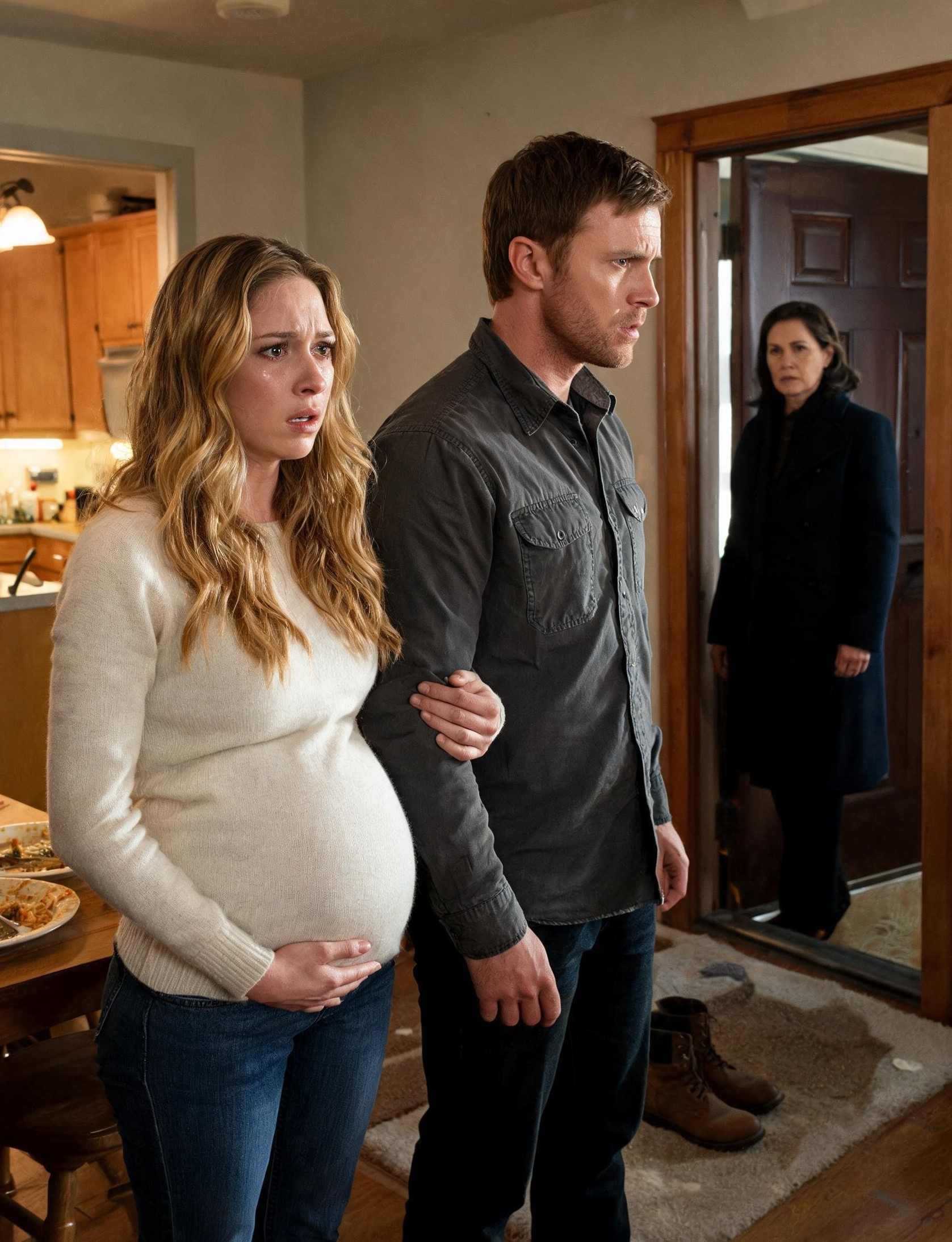
My Mother Hit My Pregnant Stomach for Stealing My Sister’s First Grandchild—Then Grandma Arrived With a Fifteen-Year-Old Secret
My mother hit me in the stomach when I told her I was pregnant.
Then she pointed at the front door and screamed, “Get rid of it before Delaney has to live with what you’ve stolen from her.”
My father watched from his recliner and never moved.
I was nine weeks pregnant.
And until that second, I had still believed there were limits to how little my family could love me.
My name is Whitney Cole. I was twenty-nine years old, married, financially independent, and carrying a baby my husband and I had prayed almost two years to conceive. There was no scandal. No affair. No teenage pregnancy. No crisis that needed fixing. My only crime was becoming pregnant before my younger sister.
Growing up in Dayton, Ohio, everyone outside our house thought Delaney and I were lucky.
Our father, Grant Cole, owned a small commercial insurance agency. Our mother, Marianne, volunteered at church fundraisers, dressed beautifully, remembered birthdays, and could make strangers feel like the most important people in a room. From the outside, our brick colonial with white shutters looked like the kind of house where daughters came home every Sunday and grandchildren eventually played under the maple trees.
Inside, love had rules.
Delaney got dance lessons.
I got told money was tight.
Delaney got a new car at sixteen.
I bought a twelve-year-old Honda Civic after working two summers at a grocery store.
When Delaney failed algebra, Mom blamed the teacher.
When I brought home a B-plus, Dad asked what happened to the A.
I remembered.
I adjusted.
I survived.
I stopped asking.
By adulthood, I had made peace with being the daughter who was expected to need less.
Then I met Jasper Cohen.
Jasper was an electrician with broad shoulders, permanently scraped knuckles, and a habit of making coffee before speaking in the morning. He wasn’t flashy. He didn’t come from money. He drove a work truck that always had wire clippings under the seats and kept a screwdriver in places where normal people kept pens.
But he listened.
That alone felt revolutionary.
When I had a bad day, he didn’t explain my feelings to me.
When my mother canceled my birthday dinner because Delaney suddenly wanted to go shopping, Jasper bought two steaks, burned one of them, opened a bottle of cheap red wine, and said, “Congratulations. You get me all to yourself.”
I married him at twenty-six.
We started trying for a baby the following year.
Month after month, nothing happened.
Then came the doctors, bloodwork, vitamins, calendars, temperatures, private disappointments, and the strange humiliation of trying to make something miraculous happen on a schedule.
After twenty-two months, I stopped buying pregnancy tests in packs.
I bought them one at a time.
That was how I ended up in a gas station bathroom on a rainy Tuesday morning, staring at two pink lines while somebody outside rattled the locked door.
I laughed first.
Then I covered my mouth.
Then I cried.
Jasper cried harder when I told him that night.
He sat on the edge of our bed holding the plastic test like it was something carved out of gold.
“Are you sure?”
“There are two lines.”
“What if two lines means something else?”
“It means pregnant.”
He looked at me.
Then the toughest man I knew folded forward, pressed his face against my stomach, and sobbed.
We spent that night whispering about names.
About whether we could afford to turn the office into a nursery.
About whether our child would get my dark hair or Jasper’s green eyes.
And against every instinct I had developed over twenty-nine years, I decided to tell my parents.
I wanted one normal family moment.
That Sunday, I put a tiny white onesie inside a gift bag.
Across the chest, in pale gray letters, it said, GRANDMA’S FAVORITE.
It was supposed to be a joke.
Looking back, I sometimes wonder whether some part of me knew exactly how dangerous those words were.
Delaney was already at the house when I arrived.
She was twenty-six, beautiful in the effortless way that made people assume life had always been kind to her. She was stretched across the couch in leggings, scrolling through her phone. Mom was cutting lemons in the kitchen. Dad was watching golf.
I handed Mom the bag.
She pulled out the onesie.
Her face changed.
Not surprise.
Calculation.
“I’m pregnant,” I said. “Nine weeks. Due in April.”
Dad muted the television.
Mom stared at the onesie for several seconds.
Then she asked the strangest question I had ever heard.
“Does Delaney know you’re doing this?”
Nobody else did.
“Doing what?”
Delaney slowly lowered her phone.
Mom’s mouth had become a hard line.
“You know what.”
“No, Mom. I really don’t.”
Delaney’s eyes moved between us.
Then she said quietly, “I was supposed to be first.”
The sentence landed wrong.
It sounded rehearsed.
I should have noticed that.
Instead, I felt twenty-nine years of swallowed resentment rise into my throat.
“Delaney, you’re not even dating anyone.”
Her cheeks went pink.
Mom slammed the onesie onto the counter.
“That is not the point.”
“What is the point?”
“The point is that your sister has always wanted to give us our first grandchild.”
Delaney looked down.
That should have told me something too.
But I was too stunned.
“This isn’t a promotion at Dad’s office,” I said. “Nobody gets seniority.”
Mom crossed the kitchen so fast that I barely had time to stand.
Her palm struck low across my abdomen.
The force shoved me backward against the wall.
For one frozen second, nobody breathed.
Then Mom screamed.
“The first grandchild must be hers!”
My hands flew over my stomach.
My knees went weak.
“Marianne,” Dad said.
Just her name.
Not what have you done?
Just her name.
Mom took another step toward me.
“You fix this.”
I stared at her.
She lowered her voice.
That made it worse.
“You get rid of it, Whitney. You are not doing this to your sister.”
I looked at Dad.
He looked away.
I looked at Delaney.
She had gone completely white.
Her phone slipped from her fingers onto the couch.
And then I left.
I didn’t scream.
I didn’t throw anything.
I didn’t beg my father to defend me.
I picked up my purse, walked out the front door, locked myself in my Honda, and drove until I couldn’t remember which streets I had taken.
Jasper found me on our bathroom floor an hour later.
My coat was still buttoned.
My shoes were still on.
He crouched in front of me.
“What happened?”
I told him.
His face didn’t change much.
That was how I knew he was furious.
He took my hands, checked my stomach for bruising, then drove me straight to urgent care.
The baby was fine.
The doctor said the pregnancy appeared normal, though she warned me to return immediately if I experienced bleeding, severe cramps, dizziness, or increasing pain.
Jasper barely spoke until we were back in the truck.
Then he looked at me and said, “You will never be alone with either of them again.”
He squeezed my hand.
“No one touches you like that twice.”
For three days, my phone stayed silent.
No apology.
No call from Dad.
No message asking whether the baby was okay.
Thursday night, while Jasper and I were eating takeout pasta because neither of us had felt like cooking, our doorbell rang.
Jasper opened it.
I heard silence.
Then he said, “Whitney, you should come here.”
Standing on our porch was a woman I had not seen since I was fourteen.
My grandmother Eleanor Voss.
She was seventy-six now, silver-haired and narrow-shouldered, wearing a camel-colored wool coat. A polished black cane rested beneath one hand.
Under the other arm was a thick blue folder.
She looked past Jasper at me.
Then her eyes dropped to my stomach.
“I heard your mother hit you.”
My throat tightened.
Eleanor stepped inside.
“Delaney called me.”
That was the first twist.
The second was inside the folder.
Grandma Eleanor had been treated like a ghost in our family for fifteen years.
Her name was almost never spoken.
If I asked Mom about her, the answer was always some variation of, “She made her choices.”
What those choices were changed depending on the year.
Sometimes Eleanor had supposedly tried to control Mom with money.
Sometimes she’d insulted Dad.
Sometimes she’d favored one grandchild over the other.
That last accusation suddenly felt interesting.
Eleanor sat at our kitchen table while Jasper made coffee.
She didn’t touch hers.
Instead, she placed the blue folder between us.
“Before you open this,” she said, “I want you to understand something about your sister.”
My shoulders stiffened.
“I’m not interested in excuses for what she said.”
“You shouldn’t be. But you should know where the words came from.”
She slid her phone across the table.
There were seventeen missed calls from Delaney.
Then a text conversation.
The first message had been sent less than thirty minutes after I left my parents’ house.
Grandma, I know you hate Mom. Please answer.
Mom hit Whitney.
She hit her stomach.
Whitney is pregnant.
I think this is my fault.
I stared at the screen.
Eleanor continued.
“Your sister has been hearing one story since she was seventeen. Marianne told her that my estate plan rewarded the first granddaughter who gave me a great-grandchild.”
“That doesn’t make sense.”
“No. It doesn’t.”
“She told Delaney she’d inherit something?”
“She told Delaney that I had promised a special inheritance to the first baby in the next generation. And she twisted that into a contest between the two of you.”
Jasper leaned against the counter.
“How much money are we talking about?”
Eleanor’s expression stayed flat.
“Enough for foolish people to become dangerous.”
She opened the folder.
On top sat a trust document.
The Eleanor Voss Family Education and Security Trust.
Beneficiary: First Great-Grandchild of Eleanor Voss.
The trust held investment accounts, municipal bonds, and a commercial property outside Columbus.
I stopped reading when I saw the estimated value.
$2.4 million.
My fingers went cold.
“This goes to my baby?”
“Eventually. Under conditions. Education, healthcare, first home, business assistance. It isn’t a suitcase full of cash.”
“Did Mom know?”
“She knew I had created something years ago. She did not know the final terms.”
“Then why tell Delaney she had to be first?”
Eleanor looked toward the dark kitchen window.
“Because your mother wanted to regain control of money that was never hers.”
The room became very quiet.
Then Eleanor explained.
Fifteen years earlier, she had discovered that Mom had taken money from an account Eleanor created for my college tuition.
Not Delaney’s.
Thirty-eight thousand dollars.
Mom had used it to help Dad cover debts from a failed investment.
When Eleanor confronted her, Mom insisted that family money belonged to the family and that I “would figure college out.”
Eleanor cut them off financially.
Mom cut Eleanor out of our lives.
That was the great family feud.
I sat there feeling something inside me rearrange itself.
I remembered working twenty-eight hours a week during college.
I remembered eating cereal for dinner.
I remembered Dad telling me student loans built character.
I remembered Delaney graduating debt-free three years later.
Jasper pulled out the chair beside me and sat down.
Eleanor’s voice softened.
“Your mother convinced herself that if Delaney had my first great-grandchild, she could put herself close enough to the trust to influence it.”
I closed the folder.
“And when I got pregnant first…”
“She panicked.”
I laughed once.
It sounded ugly.
Jasper said, “We’re going to the police.”
I turned toward him.
He wasn’t asking.
Eleanor nodded.
“You should document what happened. Whether Whitney chooses to press charges is her decision.”
I stared at my hands.
The old version of me would have refused.
She would have worried about embarrassing Mom.
She would have worried about Dad’s business.
She would have worried about Delaney.
She would have worried about Christmas.
She would have worried about what everyone would say.
The woman sitting at that table had spent an afternoon listening to her unborn child’s heartbeat after her own mother struck her.
Something had changed.
“I’ll file a report tomorrow.”
Jasper kissed my temple.
Eleanor gave the smallest nod.
Then my phone rang.
I almost ignored it.
Eleanor said, “Answer.”
My sister was crying before she spoke.
Not delicate tears.
Ugly, breathless crying.
“Whitney, I’m sorry.”
I said nothing.
“I don’t even know why I said that.”
“You said it because you believed it.”
“At least you’re honest.”
“I’ve heard it forever. Mom would say, ‘You’ll give me my first grandbaby, won’t you?’ She’d joke about how you’d probably wait until forty because you were always too busy being responsible. Then when Grandma’s trust came up, it became this whole thing. I didn’t realize how insane it sounded until…”
“Until she hit me.”
Delaney started crying harder.
I closed my eyes.
“I can’t comfort you about what happened to me.”
That answer surprised me.
Then she whispered, “There’s something else.”
“I heard Mom and Dad talking after you left.”
I sat straighter.
“What did they say?”
There was a pause.
Then Delaney said, “Dad told her she had made a mess because now Grandma might check the old paperwork.”
Eleanor’s eyes snapped toward me.
“What paperwork?” I asked.
“I don’t know.”
“They were in Dad’s office. Mom said, ‘Eleanor can’t prove anything after all these years.’ Dad said, ‘She can if Whitney asks questions.’”
Eleanor reached for my phone.
I put the call on speaker.
“Delaney,” she said, “did they mention a bank?”
Then Delaney inhaled sharply.
“First Mercer.”
Grandma Eleanor stood so fast her chair scraped across the floor.
For the first time that night, she looked frightened.
Jasper noticed.
“So the trust isn’t the whole story,” he said.
Eleanor looked at me.
“What is First Mercer?”
She slowly sat back down.
“A bank that hasn’t existed under that name since 2011.”
Her knuckles tightened around her cane.
“And it held an account your grandfather created for you the week you were born.”
The next morning, I filed a police report against my mother.
I gave the officer the urgent-care paperwork.
I showed him the faint red mark that had darkened overnight near my lower abdomen.
I gave him Delaney’s name as a witness.
I did not exaggerate.
I did not minimize.
I told the truth.
There is a strange power in doing that after a lifetime of being trained to smooth everything over.
By noon, my mother knew.
At 12:17, she sent her first message.
You are destroying this family.
Your father could lose clients if this becomes public.
I barely touched you.
Delaney is devastated.
You have always been jealous of your sister.
I saved every message.
Then I blocked her.
Jasper looked over my shoulder.
“That was satisfying.”
“You’re enjoying this too much.”
“I’ve been polite to your mother for four years. I’ve earned this.”
Despite everything, I laughed.
That afternoon, Eleanor arrived with an attorney.
Her name was Rachel Kim, forty-something, sharp-eyed, carrying a laptop bag and speaking with the calm efficiency of someone who billed by the minute.
She had spent the morning tracing First Mercer Bank through two mergers.
The records still existed.
What they showed was worse than the stolen college money.
My grandfather, Harold Voss, had died when I was six.
Before his death, he placed $75,000 into a custodial investment account for me.
Not because he disliked Delaney.
She had not been born yet.
He had been sick and wanted to leave something directly to his first grandchild.
By the time I turned eighteen, the account should have been worth somewhere between $140,000 and $190,000 depending on market performance.
I never received a dollar.
Rachel turned her laptop toward me.
“The account was closed when you were seventeen.”
“Your mother, using paperwork indicating you had been legally emancipated and had authorized a transfer.”
I stared at her.
“I was never emancipated.”
“I was in high school.”
“Where did the money go?”
Rachel clicked another document.
A business account belonging to Cole & Merritt Insurance Services.
My father’s old company.
Jasper swore under his breath.
I felt strangely calm.
Maybe betrayal has a saturation point.
After enough of it, shock becomes mathematics.
“What happens now?” I asked.
Rachel watched me carefully.
“We confirm the signature is fraudulent. We establish the transfer history. Then you decide whether to pursue civil remedies, criminal referral, or both.”
Eleanor sat rigid beside her.
“This is why Marianne didn’t want questions.”
I looked at Grandma.
“You suspected?”
“I suspected money disappeared. I never knew Harold created this account. He handled certain investments separately before he died.”
There was grief in her face.
Not theatrical grief.
The quiet kind.
The kind that had been sitting there for years.
My phone buzzed.
A message from an unknown number.
It was Dad.
Whitney, your mother is unstable right now. Don’t make permanent decisions based on temporary emotions. Come talk to us privately.
I showed Jasper.
He took one look.
I typed back.
All communication goes through my attorney.
Then I blocked him too.
By Friday, my parents’ strategy changed.
They stopped pleading.
They started performing.
Mom told relatives I had suffered “pregnancy anxiety” and misinterpreted a family argument.
Dad told my uncle that Jasper was manipulating me because he wanted access to Eleanor’s money.
A cousin I barely knew sent me a Facebook message saying, Families shouldn’t involve police.
I responded once.
Pregnant daughters shouldn’t have to.
Then I blocked her.
Delaney, meanwhile, surprised everyone.
She gave a formal statement to the police.
She told them exactly what she had seen.
No excuses.
No editing.
Mom responded by cutting her off.
Her credit card.
Her phone plan.
The rent on the apartment my parents had been partially paying for.
For the first time in her life, Delaney discovered how quickly conditional love becomes a weapon once you stop obeying.
She called me from her car one night.
“I think I finally understand you.”
“No,” I said. “You understand one week of me.”
Then she said, “That’s fair.”
That was the moment I believed she might actually be changing.
Not because she apologized.
Because she stopped demanding forgiveness.
Three weeks passed.
My pregnancy remained healthy.
Jasper painted the nursery pale green.
Eleanor came by every Sunday carrying something ridiculous: a knitted blanket, an antique children’s book, tiny socks, a wooden rocking horse that absolutely did not fit in our house.
Slowly, fear loosened its grip.
Then Rachel called.
“We have confirmation.”
The signature authorizing the old First Mercer transfer had been forged.
A document examiner found multiple inconsistencies.
Worse, the emancipation order attached to the bank file was fake.
The court case number belonged to an unrelated property dispute.
This wasn’t sloppy.
Someone had built a paper trail.
I sat in Rachel’s office with Jasper beside me and asked the question nobody had said aloud.
“Could Dad go to prison?”
Rachel chose her words carefully.
“There are statutes of limitation issues because of how old some of this conduct is. But fraudulent concealment can affect those calculations. There may also be tax and financial records that create separate concerns.”
“So maybe.”
“What about Mom?”
“Same answer.”
I thought I would feel triumphant.
Instead, I felt tired.
Then Rachel slid a second document toward me.
“This is the part I don’t understand.”
It was a copy of the original custodial account application.
My grandfather’s signature.
My date of birth.
And a line labeled relationship to beneficiary.
Rachel tapped it.
The handwriting had been partially obscured in the scanned copy, but the words were still readable.
Maternal guardian authorization attached.
“Why is that strange?” Jasper asked.
Rachel looked at Eleanor.
Grandma had gone pale.
“Because,” she said, “when this account was created, Marianne wasn’t listed as Whitney’s legal guardian.”
I stared at her.
“She was my mother.”
Eleanor didn’t answer.
Rachel folded her hands.
“That’s why we need to talk to your parents in a controlled setting.”
I felt cold all over.
Eleanor stared down at the desk.
“What aren’t you telling me?”
She looked up.
And for the first time since she reentered my life, Eleanor Voss had tears in her eyes.
“I don’t know the whole truth.”
“But you know something.”
She whispered, “Your first six months of life are not recorded in the family history the way you were told.”
I did not sleep that night.
Jasper tried.
He lasted twenty minutes before turning on the lamp.
“Okay,” he said. “We’re both awake.”
I stared at the ceiling.
“What does that even mean?”
“I don’t know.”
“Not recorded correctly?”
“I don’t know.”
“Was I adopted?”
“I don’t know.”
He rolled toward me.
“You’re doing the thing.”
“What thing?”
“The thing where you ask questions nobody in the room can answer until you’ve scared yourself with twelve imaginary answers.”
He was right.
I hated that.
“So what do I do?”
“You wait for facts.”
That had become my new rule.
Not Mom’s version.
Not Dad’s version.
Not childhood mythology.
Two days later, Eleanor arranged the confrontation.
Not at my parents’ house.
Not at ours.
Rachel booked a private conference room at her law office.
Neutral ground.
There were cameras in the hallway.
A receptionist outside.
No one could claim later that they had been ambushed in someone’s living room.
Mom arrived in a cream coat and dark sunglasses.
Dad wore the same navy suit he used for client meetings.
They looked less like parents and more like people arriving for a deposition.
Delaney came separately.
She sat beside me.
Jasper sat on my other side.
Eleanor faced my parents from across the table.
Rachel placed a recorder in the center.
Mom looked at it.
“This is absurd.”
Rachel replied, “Then you are free to leave.”
Mom stayed.
Dad’s jaw tightened.
For ten minutes, Rachel laid out the account records.
The forged authorization.
The false emancipation document.
The transfer.
The business account.
Dad said almost nothing.
Mom repeatedly claimed not to remember.
Then Rachel placed a copy of the original custodial account form on the table.
Eleanor leaned forward.
“Tell her.”
Mom’s eyes flicked toward me.
“Tell me what?” I asked.
Nobody answered.
Eleanor’s voice hardened.
“Marianne. Tell your daughter why you were not listed as her legal guardian when Harold opened that account.”
Mom’s lips parted.
Dad suddenly said, “This has nothing to do with the money.”
That was the wrong sentence.
Rachel noticed.
“What has nothing to do with the money?” I asked.
Dad looked at the window.
Mom stared at him.
Then Delaney spoke.
“For once in your life, answer her.”
Mom whipped toward her.
“Stay out of this.”
Mom seemed genuinely shocked.
Delaney continued.
“You spent my entire life telling me Whitney was cold, selfish, difficult, jealous. You spent her entire life punishing her for not being me. And now I find out you’ve been lying about money, documents, Grandma—what else?”
Mom’s face twisted.
“I gave you everything.”
“That isn’t an answer.”
I looked at Mom.
“Who was my legal guardian?”
I repeated the question.
This time Dad answered.
I turned toward Grandma.
Eleanor looked devastated.
“For six months.”
Mom stood suddenly.
“We are done.”
Jasper stood too.
He didn’t threaten her.
He didn’t need to.
“Sit down,” Dad muttered.
Mom stared at him.
Something passed between them.
Then she slowly sat.
Eleanor folded her hands.
“When you were born, Marianne was twenty-two. Your father was twenty-four. They were not married yet.”
That alone wasn’t shocking.
“They told me they married before I was born.”
“They didn’t.”
Mom looked away.
Eleanor continued.
“Marianne had complications after delivery. She was hospitalized again two weeks later. Grant was traveling constantly for work. You stayed with your grandfather and me.”
“For six months?”
“Why was that hidden?”
Mom finally spoke.
“Because people judged unmarried mothers differently then.”
“1997 wasn’t 1950.”
Her cheeks flushed.
“It mattered to me.”
There was more.
I could feel it.
Rachel could too.
“So Eleanor had temporary guardianship,” Rachel said. “That’s not especially unusual under those circumstances. Why falsify the family timeline?”
Nobody answered.
Then Dad rubbed both hands over his face.
And said, “Because Whitney wasn’t born Cole.”
The room disappeared around me.
I heard Delaney inhale.
Jasper’s hand closed around mine.
I looked at Dad.
“What did you say?”
His voice came rough.
“Your birth certificate originally had another surname.”
Mom hissed, “Grant.”
But he kept talking.
“I adopted you.”
My heart did not break.
It stopped.
There is a difference.
“You’re not my biological father.”
Dad stared at the table.
I turned toward Mom.
She looked furious.
Not ashamed.
Furious that the secret had escaped her control.
She crossed her arms.
“He’s irrelevant.”
I almost laughed.
“You hit my pregnant stomach because you thought my baby might interfere with money. You stole from me. You lied about my birth. You forged documents. You don’t get to decide what’s irrelevant anymore.”
Her nostrils flared.
Eleanor said quietly, “Marianne, tell her the name.”
Mom glared at her.
“You don’t know what happened.”
“I know enough.”
“Then say it yourself.”
Grandma looked at me.
And hesitated.
That hesitation frightened me more than anything else that day.
“His name was Daniel Voss.”
My grandmother’s surname.
Dad closed his eyes.
Delaney whispered, “Who was Daniel?”
Eleanor looked at Mom.
Then at me.
The room went silent.
I stared at her.
“Your son?”
“My oldest.”
I looked from Eleanor to Mom.
“But Mom is your daughter.”
The meaning hit a second later.
My stomach turned.
Eleanor shook her head quickly.
“No. No, Whitney. Marianne and Daniel were not siblings by blood.”
I couldn’t breathe.
She continued fast.
“Daniel was my husband’s son from his first marriage. My stepson. He was six years older than Marianne. They were raised in the same extended household for several years but were not biologically related.”
Mom looked like she wanted to disappear.
Eleanor’s voice broke.
“They became involved as adults.”
“Daniel was my biological father?”
“What happened to him?”
Nobody answered.
That was when I understood there was still another locked door.
“This has gone far enough.”
I looked at him.
“You’ve known?”
“For twenty-nine years?”
“Did Daniel know about me?”
Mom’s eyes filled with something I had never seen in them before.
That was my answer.
I turned to Eleanor.
“What happened to him?”
She whispered, “He died when you were seven months old.”
For the first time that day, I lost my composure.
Not by screaming.
Not by throwing anything.
I simply stood up and walked out.
Jasper followed.
I made it as far as the parking garage before my legs stopped cooperating.
He caught me by the elbows.
“I had a father.”
“And nobody told me.”
I pressed both hands against my face.
Then I remembered the baby.
I lowered them.
Jasper waited.
That was what he did best.
He didn’t crowd pain.
He stood beside it.
When I could speak again, I said, “I need to know everything.”
So we went back upstairs.
Mom was gone.
Dad had stayed.
So had Delaney, Eleanor, and Rachel.
Dad looked twenty years older than he had an hour earlier.
I sat down.
“Start talking.”
Daniel Voss had been thirty when I was born.
He worked as a structural engineer in Cincinnati.
Mom had known him since adolescence but had not grown up continuously in the same house with him. Their relationship began years later, after both were adults.
The family reacted badly.
Not because they were biologically related.
Because everyone saw it as crossing a family boundary.
Eleanor and Harold opposed the relationship.
Mom became pregnant.
Daniel wanted to marry her.
Mom refused after months of family conflict.
She met Grant while pregnant.
Grant knew.
He married her after my birth and adopted me when I was eight months old.
Daniel died in a car accident before the adoption was finalized.
I listened without interrupting.
Then I asked, “Did he ever meet me?”
Eleanor covered her mouth.
Dad answered.
“How many times?”
“I don’t know.”
“Did he want me?”
That word hurt the most.
Not because I had feared rejection.
Because I had spent twenty-nine years being treated like the extra daughter while somewhere in my past was a man who had wanted me enough for people to erase him.
“Why did Mom hate me?”
Dad flinched.
“I don’t think she hates you.”
Delaney actually laughed.
Not because it was funny.
Because it was absurd.
I looked at Dad.
“Try again.”
He rubbed his eyes.
“After Daniel died, you reminded her of him.”
There it was.
Not a justification.
But an explanation.
Delaney had been born three years later.
Biologically Dad’s.
Their uncomplicated child.
Their clean beginning.
I was the living evidence of everything Mom wanted buried.
Suddenly, a thousand childhood moments changed shape.
Why Dad had always seemed detached but guilty.
Why Mom couldn’t look at me when people said I resembled no one.
Why Eleanor had fought over my education money.
Why my grandfather created an account only for me.
Why Mom pushed Delaney forward every time I achieved something.
Favoritism had never really been about Delaney being brighter, prettier, easier, sweeter.
She had simply been free of the past.
I looked at Dad.
“And the money?”
His shoulders collapsed.
“My business was failing.”
“So you stole mine.”
“You forged my signature.”
“Your mother handled the documents.”
“But you took the money.”
“Did you ever plan to repay it?”
He stared at the table.
That was another answer.
“I have nothing else to ask you.”
He stopped.
“I spent my entire life trying to earn a place in your family. I studied harder. Needed less. Asked for less. Took out loans because you told me there was no money. Worked through college because you said adulthood required sacrifice.”
His eyes watered.
I felt nothing.
“You taught me sacrifice using money you stole from me.”
He lowered his head.
“And then when Mom hit your pregnant daughter in front of you, you sat in a chair.”
“I was shocked.”
“So was I.”
He had no answer.
I turned to Delaney.
“You ready?”
She nodded.
We left together.
Over the next three months, consequences arrived quietly.
That was the surprising part.
Real consequences rarely enter with dramatic music.
They show up in certified mail.
Court dates.
Bank records.
Attorney invoices.
Cancelled contracts.
Statements under oath.
My mother’s assault case moved forward as a misdemeanor.
I did not ask prosecutors to be harsh.
I also did not ask them to go easy.
My parents eventually agreed to a civil settlement regarding the stolen account.
Dad sold his remaining share in the insurance business.
A portion of the money went into restitution.
Mom blamed me for everything.
I blocked every new number she used.
Delaney found a full-time job at a medical billing company.
She moved into a smaller apartment.
She sold the luxury SUV Dad had helped finance and bought a used Toyota.
For the first time in her adult life, nobody was paying to keep her dependent.
Strangely, she became happier.
She also became very careful with me.
She never asked when I would forgive her.
Never said, “But Mom made me.”
Never tried to turn her guilt into my responsibility.
She simply showed up.
At twenty weeks, she came to my anatomy scan.
When the technician said, “It’s a girl,” Delaney covered her mouth and cried.
Jasper looked at me.
Our daughter was healthy.
Ten fingers.
Strong heart.
We named her Adeline Grace Cohen.
Adeline for Jasper’s grandmother.
Grace because we thought every child deserved at least one name that sounded like a blessing.
Mom did not attend the baby shower.
Dad sent a gift.
I returned it.
Eleanor gave us a handmade wooden cradle that Daniel had apparently built in a high school woodworking class decades earlier.
When she told me that, I cried for the man I never knew.
Not because I had memories of him.
Because I should have.
Adeline was born on April 11 at in the morning.
Seven pounds, six ounces.
Green eyes that later turned hazel.
Jasper cried exactly as hard as he had over the pregnancy test.
Delaney was the third person to hold her.
She stood beside my hospital bed, staring down at my daughter.
“I almost became Mom.”
“No,” I said.
She looked at me.
“You repeated Mom.”
“What’s the difference?”
“You stopped.”
Her face crumpled.
I reached out.
Not to erase what happened.
Not to pretend childhood had been fair.
But because healing does not require amnesia.
Eleanor visited every Sunday.
Sometimes she talked about Daniel.
Little things.
He hated mayonnaise.
Loved baseball.
Could solve math problems in his head.
Collected ticket stubs.
Once drove eight hours because Eleanor mentioned over the phone that her furnace sounded strange.
He had wanted to call me Whitney.
That one nearly destroyed me.
Mom had told me my name was hers.
It came from him.
Six months after Adeline’s birth, Rachel called.
By then I thought the secrets were finally exhausted.
The assault case was nearly finished.
The financial settlement had been signed.
Dad and Mom were separated, though not formally divorced.
Dad had started therapy.
Mom had not.
Delaney and I were rebuilding something cautious but real.
I was back at work three days a week.
Jasper had started his own electrical contracting business.
Our life was ordinary.
Beautifully ordinary.
Then Rachel said, “Whitney, Eleanor and I found something while closing out the old First Mercer records.”
My chest tightened.
“A safe-deposit reference.”
“Daniel’s.”
I stood in our kitchen holding Adeline against my shoulder.
“She said Daniel died twenty-nine years ago.”
“So how can there still be a box?”
“There isn’t.”
I closed my eyes.
“It was emptied.”
“Four days after Daniel died.”
Then she said, “Your mother.”
“What was inside?”
“We don’t know.”
I almost laughed.
“Then why are you calling me?”
“Because Daniel left an inventory sheet with the bank.”
My grip tightened around the phone.
Rachel continued.
“Whitney, there were three items listed.”
“Personal letters.”
“And a sealed envelope marked for his daughter.”
I stopped breathing.
Adeline stirred against me.
“When did Mom take it?”
“Four days after his death.”
“Did she destroy it?”
“We don’t know.”
Then Rachel said the sentence that reopened everything.
“But that’s not the strange part.”
I sat down.
“Yesterday, Eleanor received a package with no return address.”
My heart started pounding.
“What was in it?”
“The watch.”
I said nothing.
“One of Daniel’s letters.”
I closed my eyes.
“And the envelope?”
Rachel exhaled slowly.
“It was there too.”
My hand began to shake.
“What does it say?”
“Eleanor hasn’t opened it.”
“Because Daniel wrote your name across the front.”
I looked down at my daughter sleeping against my chest.
Twenty-nine years of lies had already been stripped away.
I thought there couldn’t possibly be anything left beneath them.
Then Rachel spoke again.
“Whitney, there’s something else written under your name.”
Her voice dropped.
“Do not let Marianne tell her who caused the accident.”
✓ Lynn R. Adams
My Mother Hit My Pregnant Stomach for Stealing My Sister’s First Grandchild—Then Grandma Arrived With a Fifteen-Year-Old Secret My mother hit me in the stomach when I told her I was pregnant. Then s…