My manager refused a tired hiker a glass of water and called him a stray, so I gave him my own lunch instead, only to have two men corner me on the mountain trail the next
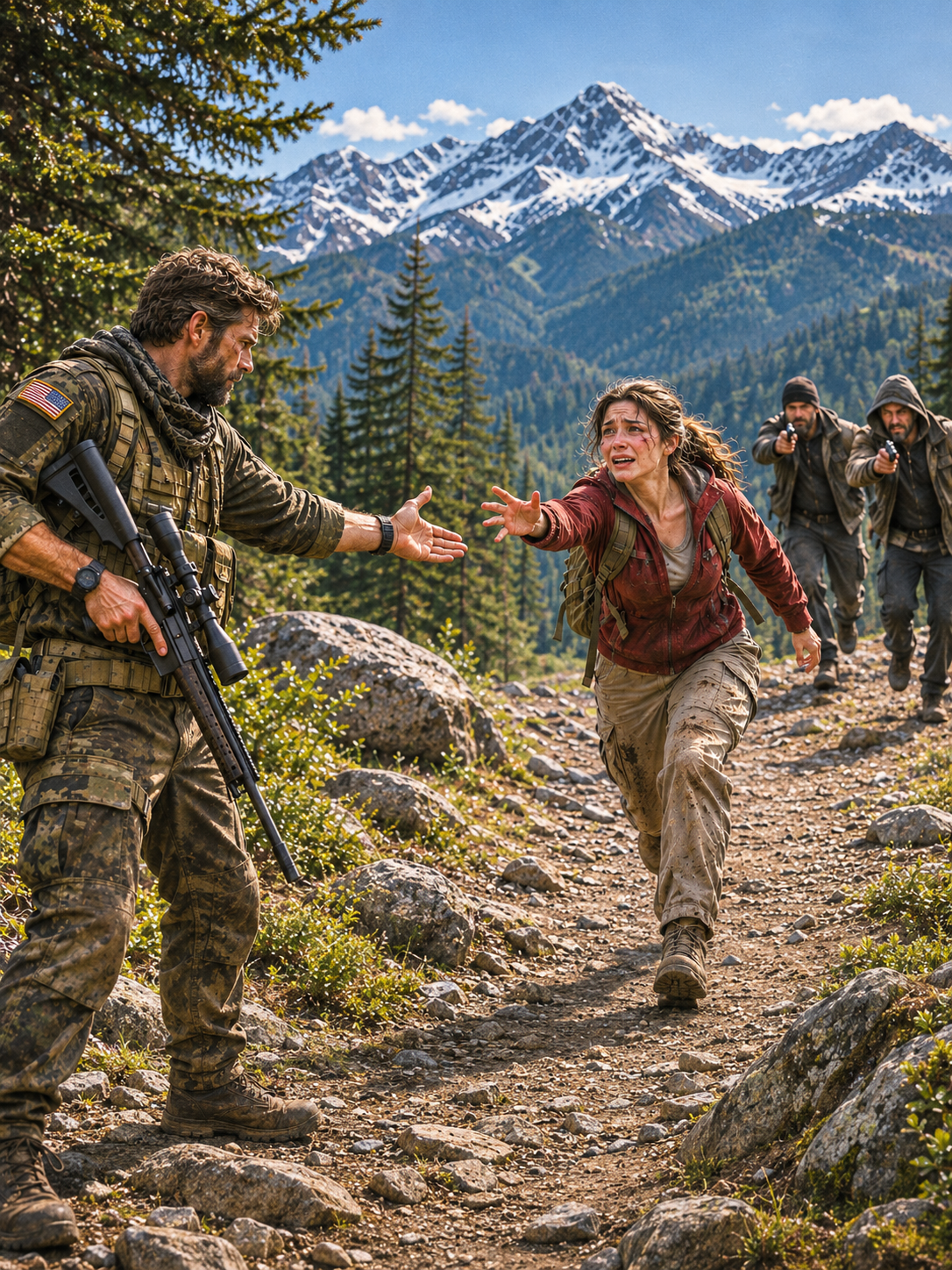
My manager refused a tired hiker a glass of water and called him a stray, so I gave him my own lunch instead, only to have two men corner me on the mountain trail the next afternoon and demand the little green notebook I’d been keeping about missing cash bookings—until the stranger I’d helped quietly stepped between us…
“Water’s for guests. You staying here?” Grant asked the man standing at the lodge counter. The stranger said he was only passing through and offered to pay for a glass, but Grant told him to keep moving and pointed out that the trail map was free. The man asked for nothing more than water. He looked tired, dusty from the trail, and in no position to argue.
I was folding towels behind the desk when I heard Grant say the new owners were coming the next morning at nine. He wanted the place looking respectable because, according to him, the investors would walk the property themselves. I stepped forward and asked him to give the hiker a drink. Grant told me to stay out of it and get back to my rooms, but I said the man wasn’t hurting anyone. It was a cup of water.
Grant finally let me fill one. I apologized to the stranger, and he thanked me without making a fuss. Before he left, I warned him not to use the trailhead spigot because the water had been rusty since August and nobody had fixed it. I had packed two sandwiches for my shift, so I offered him one. He hesitated, then accepted when I told him I never ate both.
“Nora, we don’t feed strays around here,” Grant said. I reminded him it was my sandwich. He responded by cutting my long break down to an hour and ordering me back by four because rooms were turning over. That was how it usually went: if I questioned him, something came out of my schedule. Still, I couldn’t make myself regret giving the man lunch.
The stranger asked whether everything was all right at the lodge. I told him there was a lot happening before the sale, but I didn’t explain more. Grant had been tense for weeks, and the closer we got to the ownership change, the more closely he watched the staff. He knew when I took breaks, which rooms I cleaned, and when I left the building. I had learned to keep my concerns to myself.
I had another reason to be careful. Since the sale, I had noticed cash bookings disappearing from the records. A room would be booked and paid for, then the reservation would be marked cancelled, while no matching deposit appeared in the bank records I could see. I didn’t accuse anyone without proof. I started writing down only the entries I could verify in a small green notebook, keeping dates, room numbers, and amounts.
The lodge mattered to me for reasons beyond my paycheck. My father had walked the ridge above Cedar Falls every Sunday, even when he was exhausted. After he died, he left debts behind, and I had spent four years paying them down. I still owed $26,000. The trail was where I went when the work and the bills felt too heavy. Dad used to say the mountain made everything people carried seem smaller.
That afternoon, the hiker returned to the subject of my break. He asked if I planned to walk the lookout trail after two, and I said I usually went there when I needed quiet. He seemed interested in the lodge’s preparations for the new owners, but he didn’t press me. I thought he was simply a considerate stranger. I didn’t know he had noticed Grant’s behavior, the dented gray pickup near the trailhead, or the way I had shared my lunch without asking who he was.
The next day, I later learned, was supposed to bring a meeting at nine. The stranger had quietly asked someone to pull Cedar Falls’s financial records for the previous ninety days and compare the bookings with the deposits. He had also noticed that I carried the green notebook. At the time, I knew none of that. All I knew was that I had one hour to breathe before returning to a shift that seemed to get harder every week.
I took my notebook with me and started up the ridge. I wrote down every missing booking I could verify, then tucked the book into my bag. I was nearly at the overlook when I heard footsteps behind me. Two men I had never seen before came toward me and asked if I was Nora. One of them said they were looking for a little green notebook and wanted to see what I had written.
I asked why they cared about my notes. They said someone wanted to know what was in them, and that if I let them look, they would leave. I told them the notes were mine. Their answer made my stomach tighten: they had been told I would say that. They weren’t asking out of curiosity. They knew what I had recorded, and somebody had told them where to find me.
One of the men insisted they didn’t want an argument. I asked who had sent them, but he refused to say. Then I heard the familiar voice of the hiker from the lodge. He came up the same trail and told me he was right there. I turned toward him, startled that he had found me, and he calmly told me to look at him and walk toward a pale boulder farther down the trail.
I was frightened and unsure what was happening, but he kept his voice even. He told me to take one step at a time and promised he wasn’t leaving me there. I moved toward the boulder while he stayed behind. The two men challenged him, telling him to mind his own business. He asked who had sent them to look for my notebook and said they had been given the wrong information if they thought it belonged to the lodge.
The stranger had noticed their gray pickup at the trailhead. Its dented tailgate made it easy to identify, even among the other vehicles. He told the men to leave me alone and take the downhill path back to the parking lot. After a tense pause, they backed away. I waited by the pale boulder, still holding my bag close, and watched them go. They had come looking for something I had written, and they knew my name.
When the hiker joined me, I asked how he knew to come after me. He said he had heard Grant mention my break and the trail, and wanted to make sure I was all right. I asked who he really was. He told me he had spent twelve years in the Marines, but that still didn’t explain why strangers wanted my notebook. He asked whether I had kept it safe. I said yes. Then he told me there was more he needed to explain tomorrow. Part 2…..
IF FACEBOOK BROUGHT YOU HERE, HERE’S THE CONTINUATION YOU’VE BEEN WAITING FOR. ENJOY! 👇 By the time we came down from the ridge, I still had a shift to finish. The hiker walked with me as far as the lodge and reminded me to stay near the other staff that evening. I thanked him, but I still didn’t know his name or why he had taken such an interest in what was happening there.
After four, Grant called me into his office. He said the morning register was $200 short. I told him I had counted it before lunch and it had balanced, but he said his report showed a different amount. I asked him to review the numbers with me instead of blaming me. He said he had already reviewed them, then announced that I was fired because I had questioned the missing bookings.
He demanded my keys. I told him I had kept copies of every record I could verify, but he ended the conversation and sent me home. I knew the timing was no coincidence. Grant had known exactly when I would be on the trail, and now he was using a register discrepancy to remove me the evening before the ownership meeting.
I found the hiker and told him what had happened. He asked whether Grant had given me anything in writing. I said no; he had simply demanded my keys. The hiker told me to come back to the lobby at nine the next morning because the new owner needed to hear my story. I asked why I should return after being fired. He said to bring the notebook and let the records speak.
I went home with my bag still over my shoulder and the green notebook tucked safely inside. I barely slept. I kept thinking about the two men on the ridge, the dented gray pickup, and the fact that somebody had known what I was writing down. At nine, I returned to Cedar Falls as I had been asked.
Part 3 Grant was already in the lobby. When I walked in, he told me I was no longer employed there. A man introduced himself as Marcus Bell, the lodge’s operations director, and said the new owner was already inside. Grant looked confused; he had been watching the entrance and apparently expected the owner to arrive from outside.
Then the hiker from the day before stepped into view. Marcus addressed him as Elias Reed and said everything was ready. Elias thanked him and placed the ownership documents and records on the table. The transfer, he explained, had been completed three weeks earlier. Grant had been speaking to the principal owner of Cedar Falls when he refused him water and called me back to my rooms.
I looked at Elias and told him I had offered to pay for that glass. He said he remembered, and that he had appreciated the sandwich, too. I told him he had let me believe he had nothing. He answered that I had helped him without knowing who he was, and that was exactly why the kindness mattered. Then he turned the meeting to the reason I had come back.
Elias asked me to read one of my entries. I opened the green notebook to room 14: September 22, three nights paid in cash, totaling $420. The booking had later been marked cancelled, and no matching deposit had reached the bank. Elias asked how many entries showed the same pattern. I told him I had verified 43 bookings with discrepancies. The financial review showed $61,000 unaccounted for since September.
He also told me that I had contacted the owners’ complaints office nine days earlier. I said I had never received a reply. Elias apologized and acknowledged that the office had failed to escalate my report. He said they should have listened before the situation reached this point. For the first time, I felt the records were being heard as records, not treated as a housekeeper making trouble.
A county deputy and the people reviewing the accounts were also there. They asked Grant Whitlock to clarify the previous afternoon’s trail schedule. The sheriff had identified the owner of the gray pickup, and investigators had recovered messages about my notebook. The questions were about timing and who had arranged for the men to approach me, not about a conclusion that had already been reached.
Grant finally admitted that he had wanted the men to get the notebook. He said he had not expected things to go that far. I stared at him, remembering how calmly the strangers had said they were told I would refuse. He had not merely been suspicious of my notes; he had sent people to find me on a remote trail and pressure me into handing them over.
Elias reminded Grant that the water was available to everyone. Grant said he had a family to support and tried to explain his behavior. Elias told him that was exactly why honesty mattered. The ownership team continued its review, and Grant no longer controlled the records or the meeting. I was relieved the truth was finally on the table, but I was still angry about what had happened on the mountain.
Final After the questions were finished, Elias asked whether we could speak privately on the porch. I went with him, but I did not pretend the morning had erased what happened. I told him I was still angry—not because he was wealthy or because he had hidden his identity, but because he had watched Grant mention my break and the trail, then followed me without telling me what he knew.
Elias said he had heard Grant mention the trail and my schedule. He had gone after me because he wanted to make sure I was safe. I thanked him for coming when he did, but told him he still owed me an honest explanation. He accepted that. There was no grand speech, just two people trying to speak plainly after a frightening afternoon.
Then he told me he had asked Marcus to prepare an offer for me: the general manager position at Cedar Falls. I laughed a little because I was a housekeeper, not a lodge manager. Elias said I had understood the books better than Grant had, and that he could teach me budgets and operations, but he could not teach me integrity. He would not have offered if he did not believe I could do the job.
The offer included a $26,000 bonus. I looked at him, surprised that he remembered what I had told him about my father’s debt. I had spent four years paying it down, and $26,000 was what I still owed. Elias also remembered my father’s words about the mountain making what people carried feel smaller. He said he thought someone should remember the effort I had made.
I told him I would accept, but only with two conditions. Ray’s housekeeping pay had to be addressed fairly, and the trailhead spigot had to be fixed so nobody else would be sent away from rusty water. Elias listened and agreed to take care of both. I did not want the job to become a reward that helped only me; the people who kept Cedar Falls running deserved to be treated with respect, too.
When I came back to work as general manager, the lodge felt different in ordinary, visible ways. Staff were being listened to, the bookings were being handled openly, and the trailhead spigot ran clear. Ray’s work was recognized in his pay. I put the bonus toward the debt I had spent four years carrying, and the ridge became a place I could visit without feeling that every burden was mine alone.
On a later visit, Elias came through the lobby and I welcomed him back. He asked whether things were running smoothly and whether the staff were doing well; I told him they were, and that he should see the bookings. When I teased, “Water is for guests, you know,” he offered to pay. I told him it was on the house—and that the spigot ran clear, too.
THE END. I’ve shared the complete story, and I truly hope it touched your heart. If this story moved you, please , like, and share the post. Thank you for reading! ❤️
✓ Lynn R. Adams
My manager refused a tired hiker a glass of water and called him a stray, so I gave him my own lunch instead, only to have two men corner me on the mountain trail the next afternoon and demand the lit…