My In-Laws Threw Me a Surprise Party—Then I Learned They Needed My Signature to Steal a $42 Million Inheritance
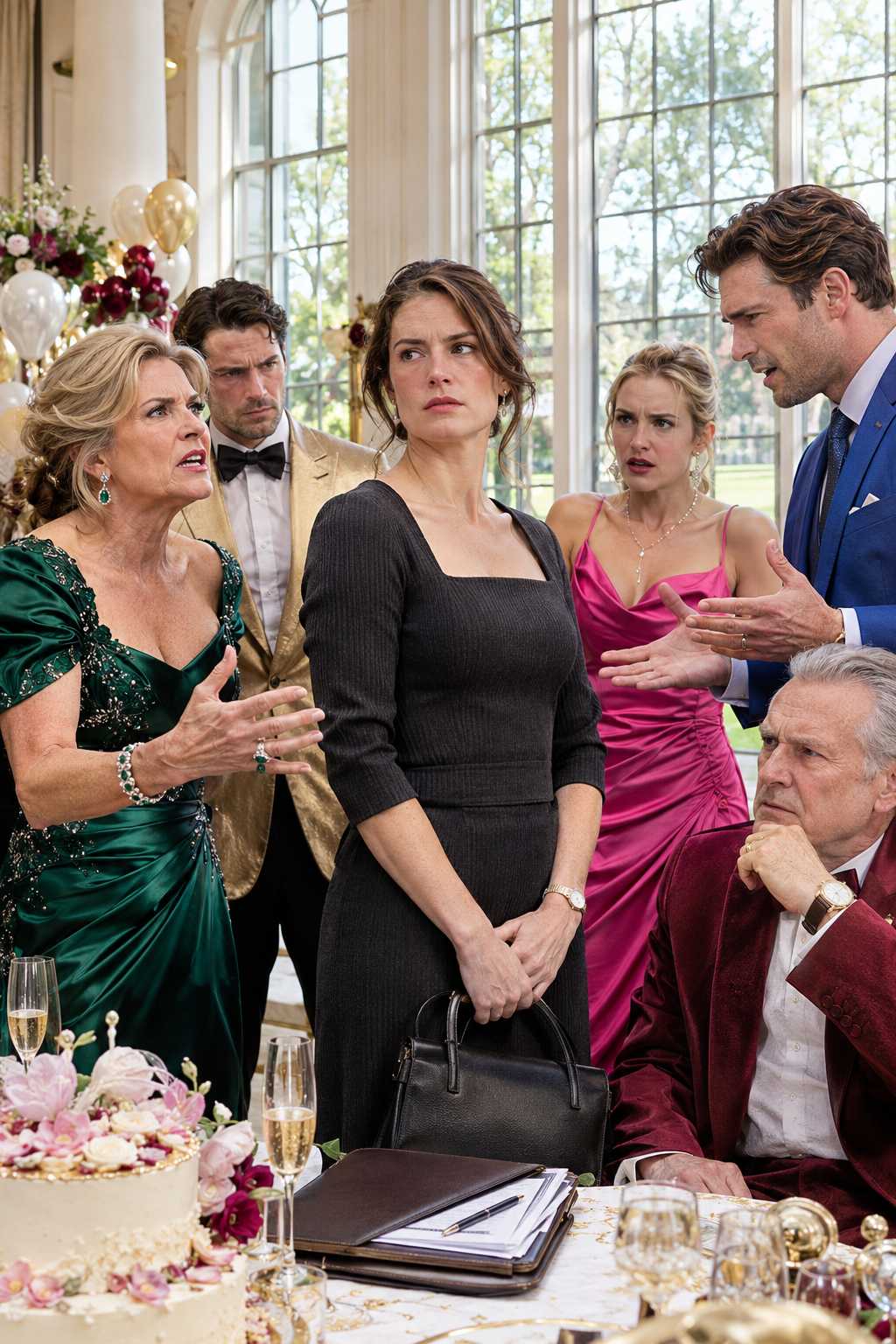
My In-Laws Threw Me a Surprise Party—Then I Learned They Needed My Signature to Steal a $42 Million Inheritance
The first thing my mother-in-law said when I walked into my own surprise party was, “There she is—the woman who’s finally going to make this family rich.”
Everyone laughed.
Twenty-three people stood beneath gold balloons in the ballroom of the Hawthorne Country Club outside Richmond, Virginia, holding champagne glasses and smiling at me like I had just won something.
I had just inherited a dead woman’s estate worth more than forty-two million dollars.
And taped beneath the lining of my handbag was the one document my husband’s family didn’t know existed.
My husband, Grant, kissed my cheek.
Too quickly.
Too carefully.
“Happy birthday, Claire.”
“My birthday was three weeks ago.”
His smile stayed in place.
“So we’re late.”
Across the room, his mother, Margaret Whitmore, raised her crystal flute.
Margaret was sixty-six, silver-haired, thin as a letter opener, and dressed in emerald silk that probably cost more than the first car I had owned.
“We prefer,” she said, “to think of it as an inheritance celebration.”
The room erupted in another round of laughter.
I looked around.
Grant’s brother Thomas was there with his wife, Rebecca.
His sister Natalie stood near the piano with her husband, Aaron.
Uncle Peter had flown in from Atlanta.
Cousin Daniel had driven down from Arlington.
Their longtime family attorney, Howard Bell, stood beside the bar.
Their accountant, Martin Gresham, was talking quietly to Margaret’s younger brother.
Even Grant’s business partner had been invited.
That was when I understood.
This wasn’t a party.
It was a board meeting with cake.
Grant placed a hand against the small of my back.
“You okay?”
That answer unsettled him.
Just for half a second.
Then the music started again.
A waiter offered me champagne.
I took sparkling water instead.
Grant noticed that too.
He had always noticed the things about me he could use.
For fourteen years, I had made the mistake of believing noticing meant caring.
Fourteen years earlier, Grant had married a woman who owned three decent dresses, drove a ten-year-old Honda, and spent Saturday mornings helping an elderly widow organize boxes in a collapsing farmhouse outside Charlottesville.
That widow’s name was Eleanor Hayes.
Everyone in Grant’s family called her my “charity project.”
They had laughed about her cracked porch.
They had laughed about the ancient Buick in her barn.
They had laughed when I turned down weekends at the beach because Eleanor needed help after hip surgery.
They laughed because they thought poverty was something they could recognize by looking at someone’s shoes.
Eleanor had worn twelve-dollar canvas sneakers.
Eleanor had also quietly owned controlling interests in timberland, commercial warehouses, agricultural leases, historic properties, mineral rights, and one extremely profitable logistics company created by her late husband in the 1970s.
She never told me.
Not until she died.
By then, neither of us needed money from the other.
We needed loyalty.
I had given her mine.
She had apparently decided to leave me something larger.
Much larger.
But not simple.
Nothing Eleanor did was simple.
I learned that two weeks after her funeral, when her attorney, Samuel Price, asked me to meet him alone.
His office sat above an old bookstore in downtown Charlottesville.
No reception desk made of glass.
Just shelves of legal volumes and an old brass lamp.
Samuel placed a sealed envelope in front of me.
“Eleanor wrote this eight years ago.”
I opened it.
If you are reading this, I finally managed to die before you did, which means I have won at least one argument.
Then I stopped.
The next lines were different.
Do not tell Grant everything.
Do not let Margaret know what you have.
Do not sign anything presented by the Whitmore family, Bell & Associates, Gresham Financial, or anyone claiming a transfer is “required for probate.”
There are two wills.
There are two trusts.
And there is one property they do not know belongs to you already.
My hands had gone still.
Samuel watched me carefully.
“Keep reading.”
I had sacrificed for Eleanor when nobody considered it impressive.
I had sacrificed when Grant called my visits “an obsession.”
I had sacrificed when Margaret told me caring for an old woman who wasn’t family was “a strange way to avoid having children.”
I had sacrificed when I left corporate accounting for a lower-paying consulting role because Eleanor needed help through cancer treatments.
I had sacrificed when Grant stopped coming with me because her house smelled, in his words, “like dust and old medicine.”
I had sacrificed when nobody knew there would ever be anything to inherit.
That was why the money mattered.
Not because it was money.
Because Eleanor remembered who had stayed before anyone knew staying could pay.
The night of the surprise party, Margaret led me toward the ballroom’s long walnut table.
A white cake sat at one end.
At the other sat a leather folder.
Nobody had bothered hiding it.
“How festive,” I said.
Grant’s brother Thomas chuckled.
“Claire always did have that dry sense of humor.”
Margaret touched the folder.
“We have a few administrative things to handle.”
“At my surprise party?”
“It’s efficient.”
Howard Bell stepped forward.
He was in his early sixties, heavyset, polished, and almost aggressively reassuring.
“Nothing complicated.”
“That’s what attorneys say before complicated things.”
Another little silence.
Grant squeezed my shoulder.
There was warning in the way he said my name.
I smiled at Howard.
“Please. Continue.”
He opened the folder.
Inside were four documents.
I recognized the first immediately.
Limited power of attorney.
The second was a trust amendment consent.
The third concerned appointment of a financial manager.
The fourth was a transfer authorization.
Howard rotated them toward me.
“These merely allow Grant to act on your behalf during the probate period.”
“To simplify matters.”
“What matters?”
“Valuation. Distribution. Management.”
“Management by whom?”
Grant answered.
“Our family office.”
I looked at him.
“You have a family office?”
Thomas laughed.
“You’re sitting in a room with it.”
There it was.
The first moment nobody bothered pretending.
Margaret took a sip of champagne.
“Claire, you’ve never managed assets on this scale.”
“I was a forensic accountant for nine years.”
“That isn’t wealth management.”
“No. It’s usually what happens after bad wealth management.”
Natalie lowered her glass.
Howard’s smile tightened.
Grant leaned closer.
“This doesn’t have to become uncomfortable.”
“It isn’t.”
“You’re interrogating everyone.”
“I’m reading.”
I touched the top page.
No one spoke.
That was one of the things Grant had always hated most about me.
I didn’t fill silence to rescue other people from it.
Most people will tell you everything if you let an empty room remain empty long enough.
Margaret finally put down her glass.
“Eleanor was confused at the end.”
I looked at her.
“You barely knew Eleanor.”
“I knew enough.”
“Apparently not.”
Her eyes hardened.
Grant stepped in.
“Mom means the estate structure is unusual.”
“How do you know?”
He hesitated.
“Howard reviewed the filing.”
“Public filing?”
“Then you know only the probate estate.”
Howard shifted his weight.
That was the first real reaction.
I looked at him.
“How many trusts did Eleanor have, Howard?”
His expression returned to neutral.
“We don’t know.”
“Interesting.”
Grant’s fingers tightened against my back.
I picked up the limited power of attorney.
It granted Grant authority over banking, property transactions, investment decisions, business interests, litigation settlements, real estate transfers, and trust distributions.
It was broad enough to swallow a life.
“Where did this come from?”
Howard said, “Standard language.”
“Whose standard?”
“Bell & Associates?”
“Eleanor specifically named your firm in a letter warning me not to sign anything you prepared.”
Nobody moved.
Not even the waiters.
Grant’s hand left my back.
Margaret’s mouth became a thin line.
Thomas said, “What letter?”
I folded my hands.
“I didn’t say I brought it.”
That was when Margaret smiled.
Not warmly.
Not socially.
The way someone smiles when they realize negotiations have finally begun.
“Very well.”
She gestured toward the doors.
Two waiters quietly left.
The doors closed behind them.
Twenty-three family members remained.
Plus Howard.
Plus Martin.
Margaret sat.
“Now we can speak plainly.”
She studied me.
“You married into this family with nothing.”
Grant looked down.
No one stopped her.
Margaret continued.
“We gave you a home.”
I looked around the ballroom.
“You didn’t give me this country club.”
“I’m speaking about your life.”
“My house is jointly titled.”
“Because Grant was generous.”
“Because I paid forty-three percent of the mortgage.”
Thomas muttered, “Here we go.”
I turned toward him.
“You want your percentage too?”
He looked away.
Margaret tapped one manicured finger on the leather folder.
“This estate can transform all of us.”
“Eleanor didn’t leave it to all of us.”
“You’re family.”
“Was Eleanor?”
I looked at Grant.
“Was she family when I drove her to radiation?”
His jaw tightened.
“Was she family when you told me I was wasting our weekends?”
“That was years ago.”
“Was she family when your mother called her a manipulative old parasite?”
Margaret’s eyes flashed.
“I said she was using you.”
“She was dying.”
“She was wealthy.”
“You didn’t know that.”
That landed.
Everyone knew it.
Margaret leaned back.
The champagne flutes glowed beneath the chandelier.
Outside, rain had started hitting the tall ballroom windows.
Grant pulled out the chair beside me and sat.
His voice changed.
The voice he used during difficult business negotiations.
“We’ve handled this badly.”
“You think?”
“And I’m sorry.”
“For what?”
He glanced toward his mother.
“For making this feel like pressure.”
“It is pressure.”
He exhaled.
“We’re asking you to think about the future.”
“There are twenty-three people in this room, Grant.”
“You know what I mean.”
His eyes sharpened.
“Our family.”
I looked at the folder.
Then at him.
“How much debt is Whitmore Development carrying?”
Thomas stood.
“That has nothing to do with this.”
“So, a lot.”
“Sit down, Claire.”
I looked at him.
“Thomas, you don’t even own the chair you’re standing beside.”
His face reddened.
Grant lowered his voice.
I turned back.
“How much?”
He said nothing.
I already knew.
Thirty-one million dollars.
I had found the loan covenant notices three days earlier.
They were hidden in Grant’s home office beneath an architectural proposal.
Whitmore Development had expanded aggressively into mixed-use commercial properties after interest rates rose.
Two projects had stalled.
One anchor tenant had filed bankruptcy.
A private lender was demanding additional collateral.
A bank review was scheduled in six weeks.
And somewhere along the way, my husband and his family had decided Eleanor’s estate wasn’t my inheritance.
It was their bailout.
Margaret folded her arms.
“What do you want?”
That almost made me smile.
“Nothing from you.”
“Everyone wants something.”
“I wanted a husband who didn’t hold a secret strategy meeting about my inheritance.”
Grant’s face changed.
Just slightly.
I had guessed.
The room confirmed it.
There had been a meeting.
Probably several.
I looked at Martin Gresham.
“You ran projections?”
His eyes dropped.
That was answer enough.
Howard stepped forward.
“Claire, whatever family discussions occurred, the legal documents are completely voluntary.”
I pushed the folder away.
“Then I decline.”
Margaret stood.
It was the first time her voice cracked through the room.
Not loudly.
But absolutely.
“You don’t decline and walk out as if none of this concerns us.”
I looked up at her.
“It doesn’t concern you.”
“You live in my son’s house.”
“Our house.”
“You work because my son’s name opened doors.”
“My largest client doesn’t know Grant.”
“You attend events because of this family.”
“I avoid events because of this family.”
Thomas snorted.
Margaret kept going.
“We tolerated your little independence act for fourteen years. We tolerated your strange attachment to that old woman. We tolerated the distance you created between Grant and the people who actually matter.”
Grant immediately rose too.
Margaret’s eyes dropped to my handbag.
Then back to me.
“What did Eleanor leave you?”
There it was.
The only question that mattered to them.
I lifted my bag from the chair.
“Enough to make everyone in this room forget my birthday was three weeks ago.”
Nobody laughed.
I walked toward the doors.
Grant followed me into the hallway.
I kept walking.
“Claire, stop.”
He came around in front of me.
The corridor was empty.
Rainwater crawled down the windows.
“You embarrassed me.”
I stared at him.
“That’s your concern?”
“My whole family was in there.”
“You could have handled it privately.”
“You invited your accountant.”
“That was Mom.”
“You invited a lawyer.”
“That was Mom.”
“You invited your business partner.”
He said nothing.
“That one was you.”
His face hardened.
“You don’t understand what’s at stake.”
“I understand perfectly.”
“No. You understand numbers. You don’t understand what thirty million dollars in restructuring debt does to six companies, ninety employees, four active projects, and three generations of family assets.”
There it was.
His real argument.
The only one that almost worked.
Because there were employees.
People who hadn’t schemed against me.
I softened my voice.
“Then restructure honestly.”
“We need liquidity.”
“Sell assets.”
“We’d take losses.”
“Then take losses.”
“You can’t say that when you’re sitting on forty million dollars.”
“I’m not sitting on Whitmore money.”
He stared at me.
“Money is money.”
I stepped closer.
“Eleanor’s money is eighteen years of timber leases she managed while people assumed she was senile.”
Grant said nothing.
“It’s warehouses her husband built and she kept profitable after he died.”
I continued.
“It’s land developers tried to cheat her out of.”
His eyes narrowed.
“It’s scholarship funds she maintained anonymously.”
I could hear Margaret’s heels approaching from the ballroom now.
“It’s thirty-seven years of a woman being underestimated because she wore old shoes and drove an ugly Buick.”
Grant’s jaw tightened.
“Now it’s mine to protect.”
Margaret appeared behind him.
“You mean yours to hoard.”
I looked at her.
“No. Yours to fail without.”
Three days later, Grant threw me out of our house.
Not physically.
Grant preferred paperwork.
He waited until Friday afternoon.
I came home at six twelve.
The garage remote didn’t work.
I tried the front door.
New keypad.
There was a white envelope taped to the glass.
Inside was a letter from Howard Bell.
NOTICE OF SEPARATION AND TEMPORARY EXCLUSIVE OCCUPANCY.
I read it twice.
Then I looked through the glass.
My suitcase stood in the foyer.
One suitcase.
Fourteen years of marriage reduced to luggage selected by someone else.
Grant appeared behind it.
He opened the door halfway.
“You can stay at a hotel.”
I looked at him.
“You changed the locks.”
“Temporary measure.”
“On jointly owned property.”
“My attorney says—”
“Howard says many things.”
Grant exhaled.
“Don’t make this ugly.”
“You locked me outside.”
“You’ve made it clear you don’t consider us a family.”
“So you changed the locks to prove me wrong?”
His face went flat.
“Sign the documents.”
“Then file whatever you want.”
I looked past him.
Margaret was standing at the end of the hallway.
She had moved into my house.
That was almost funny.
I pointed toward my suitcase.
“Who packed that?”
“Mom helped.”
“Of course.”
Grant glanced toward the driveway.
“It’s going to rain again.”
“I noticed.”
That disturbed him more than anger would have.
“Claire, where are you going?”
“I’ll manage.”
He looked at my handbag.
The same bag I had carried to the party.
“Samuel Price contacted Howard.”
“He says Eleanor’s estate documents are still being reviewed.”
“They are.”
“What’s missing?”
“Good night, Grant.”
I picked up the suitcase.
He stepped closer.
“Is there another trust?”
I walked away.
I opened my car.
“Is there?”
I put the suitcase inside.
“Ask Howard.”
Then I drove to Charlottesville.
Samuel Price was waiting at Eleanor’s farmhouse when I arrived.
The place looked exactly as it had for years.
White clapboard.
Green shutters.
One porch light glowing above the steps.
Eleanor’s rocking chair still sat near the window.
I stood in the rain looking at it until Samuel opened the door.
“You took your time.”
“My husband changed the locks.”
Samuel’s expression barely moved.
I laughed once.
“That isn’t the response most lawyers give.”
“It is when timing matters.”
Inside, Eleanor’s house smelled like cedar, coffee, and the lavender soap she had used for decades.
Samuel led me to the kitchen.
A thick metal case sat on the table.
I touched the latch.
“This was in the floor safe?”
“Because the condition was triggered.”
I looked at him.
“What condition?”
He slid a document across the table.
Eleanor Hayes Family Preservation Trust.
Article Nine.
I read slowly.
In the event that Claire Bennett Whitmore is threatened, coerced, dispossessed of her primary residence, subjected to marital abandonment, or pressured to transfer assets inherited hereunder, the protective succession provisions shall become immediately effective.
Then read it again.
“How could Eleanor possibly know?”
Samuel smiled faintly.
“She met Margaret.”
I actually laughed.
For the first time in days.
Then Samuel pointed at the case.
Inside were property records.
Corporate certificates.
A handwritten ledger.
And a small brass key.
I recognized it.
I had seen Eleanor wear it on a chain beneath her blouse for years.
She once told me it belonged to “something everybody walks past.”
I lifted it.
“What does it open?”
Samuel pointed to the final folder.
I unfolded the survey map.
Then I saw the boundary lines.
My breath stopped.
Whitmore Ridge.
Grant’s family estate.
Three hundred and twelve acres.
The country club.
Two commercial parcels.
An access road.
Part of Whitmore Development’s flagship office complex.
I looked up.
Samuel nodded.
“This is impossible.”
“It isn’t.”
“Grant’s grandfather bought that land.”
“He bought improvements.”
I stared at him.
Samuel tapped the original deed.
“The underlying ground lease traces back to Eleanor’s husband’s holding company.”
I looked at the date.
“He never owned the land?”
“Not entirely.”
“What happened?”
“The Whitmores were given a ninety-nine-year lease with renewal options tied to performance conditions.”
“What conditions?”
“No fraudulent encumbrances. No unauthorized transfer of control. No material misrepresentation to lenders.”
My eyes lifted.
Samuel’s expression said the rest.
I whispered, “They pledged the land.”
“Against development debt.”
“Without owning it.”
I sat back.
Rain ticked against the kitchen window.
The brass key felt cold in my palm.
“How much land does Eleanor’s trust actually control?”
“After consolidation?”
Samuel opened another map.
“Approximately eleven hundred acres across three counties.”
I stared at the red outlines.
That was the forty-two million dollar question.
Except the answer was bigger.
Much bigger.
Because Eleanor’s liquid estate was valued at forty-two million.
The land was separate.
And the mineral, water, timber, and easement rights had never been included in the probate valuation.
“How much?”
Samuel didn’t pretend not to understand.
“Conservative valuation?”
“Between seventy-eight and ninety-four million.”
I said nothing.
Samuel leaned back.
“The inheritance is not forty-two million dollars, Claire.”
I looked at him.
“It is closer to one hundred thirty.”
My husband had changed the locks on Friday.
By Monday morning, his family believed they had won.
They moved quickly.
Howard filed for temporary marital relief.
Grant froze our joint investment account.
Margaret told relatives I had “become unstable after inheriting money.”
Thomas contacted two banks.
Martin Gresham began preparing what he apparently called a “post-separation asset map.”
They believed pressure would bring me back.
They believed loneliness would bring me back.
They believed Grant’s house, Grant’s family, Grant’s status, Grant’s social circle, and Grant’s attorneys were the architecture of my life.
They had never noticed I had spent years learning how to stand in rooms where nobody valued me.
Silence was not surrender.
Silence was where I did the math.
I rented a furnished apartment near downtown Charlottesville.
One bedroom.
Brick walls.
A cheap kitchen.
A view of a parking garage.
It was perfect.
On Tuesday, I met Samuel at the county recorder’s office.
Wednesday, we reviewed deeds.
Thursday, I called three independent valuation firms.
Friday, I hired a litigation attorney named Dana Mercer.
Dana was forty-eight, sharp-eyed, unsentimental, and delighted by organized evidence.
She opened the first binder I brought her.
Loan documents.
Corporate filings.
Text messages.
Property records.
Copies of Grant’s proposed power of attorney.
The surprise-party guest list.
She looked up.
“You made a guest list?”
“I wrote down everyone present when I got home.”
“Witnesses.”
Dana smiled.
“We’re going to get along.”
Two weeks later, Grant called.
I let it ring twice.
His voice sounded tired.
“We need to talk.”
“You’re talking.”
“Not like this.”
“I’m comfortable.”
“Mom says you’ve hired litigation counsel.”
“She reads court filings quickly.”
“This doesn’t need to become a war.”
“It became a war when you changed the locks.”
“I made a mistake.”
“I was under pressure.”
“So was I.”
“You don’t know what this company means to me.”
“I know exactly what it means.”
“It’s my grandfather’s legacy.”
I looked at Eleanor’s map spread across my dining table.
“That’s an interesting word.”
“I want to fix this.”
“Then start.”
“Come home.”
“We’ll reverse the occupancy filing.”
“I’ll tell Mom to stay away.”
“What do you want?”
Always that question.
Always assuming I must want something from them.
“I want you to answer one question.”
He hesitated.
“Did you authorize Whitmore Ridge land as collateral on the Southern Commonwealth loan?”
Not ordinary silence.
Recognition.
I could almost hear him sit upright.
“Where did you get that name?”
“That’s company business.”
“It’s land business.”
“What are you talking about?”
“Yes or no?”
He lowered his voice.
“Thank you.”
“What is this?”
I ended the call.
Three days later, Whitmore Development received formal notice from the Hayes Family Preservation Trust.
DEFAULT OF GROUND LEASE.
NOTICE OF IMPROPER ENCUMBRANCE.
DEMAND FOR CURE.
Grant drove to Charlottesville that night.
He arrived at my apartment at 10:17.
I watched him through the peephole.
He knocked.
I didn’t answer.
He knocked again.
“Claire, I know you’re home.”
I opened the door but kept the chain latched.
His tie was loose.
His hair was wet from rain.
For the first time since I had known him, Grant Whitmore looked like a man who understood the ground could move beneath him.
“What did you do?”
“I sent a notice.”
“You own Whitmore Ridge?”
“Not personally.”
“Your trust does.”
“Don’t play games.”
His voice rose.
“My family has lived there for forty years.”
“On leased land.”
“That’s impossible.”
“Your attorney disagrees.”
“Howard says the lease is defective.”
“Howard also said his power of attorney was standard.”
Grant grabbed the doorframe.
“You planned this.”
“You knew at the party.”
“I suspected.”
“You knew when I locked you out.”
“I learned the details afterward.”
His face twisted.
“You’re going to destroy my family because we asked for help?”
I stared at him.
“You didn’t ask.”
“We were desperate.”
“You staged a party.”
“We were trying to keep everyone calm.”
“You put transfer documents beside my birthday cake.”
He looked away.
That was one of those moments when truth becomes too ridiculous to defend.
I lowered my voice.
“You didn’t throw me out because I refused to help.”
His eyes returned to mine.
“You threw me out because you thought fear would make me sign.”
“That’s the difference.”
He swallowed.
“We can negotiate.”
“Through attorneys.”
“Claire, please.”
I almost closed the door.
Then he said it.
“My mother will lose the house.”
There was no triumph in me.
Only a strange heaviness.
Grant’s family estate had been built into their identity.
Christmases.
Portraits on walls.
Four generations of children running across the lawn.
Eleanor understood that too.
Her trust did not automatically evict them.
It gave them a chance to cure the default.
That mattered.
Justice and cruelty were not the same thing.
I opened the door another inch.
“Your mother doesn’t have to lose anything.”
Grant stared.
“Cure the unauthorized liens.”
“We can’t.”
“Then restructure them.”
“We can’t.”
“Sell the Richmond hotel project.”
He went still.
He knew I knew.
The hotel project was Margaret’s obsession.
A luxury redevelopment she had pushed through against every financial warning.
It had consumed nearly eighteen million dollars.
Selling it now would be humiliating.
But it would save Whitmore Ridge.
Grant shook his head.
“Mom won’t.”
“Then your mother is choosing a hotel over the house.”
“It isn’t that simple.”
“It rarely is.”
“Can you extend the cure period?”
“We need ninety days.”
“You have forty-five.”
“That’s impossible.”
“Then stop wasting nights driving to Charlottesville.”
I closed the door.
The family responded exactly as Dana predicted.
They attacked my credibility.
Margaret told friends I had manipulated Eleanor while she was dying.
Thomas claimed I had isolated an elderly woman for financial gain.
Natalie posted a carefully worded statement online about “predatory caregiving.”
Howard filed a petition requesting review of Eleanor’s testamentary capacity.
Grant stopped calling me privately.
Everything came through lawyers.
For ten days, their version spread faster than facts.
Then Samuel opened Eleanor’s archive.
She had anticipated that too.
There were medical evaluations.
Independent psychiatric assessments.
Video-recorded estate meetings.
Letters written over nine years.
Copies of messages in which Grant mocked my visits to Eleanor.
One email from Margaret said:
If Claire wants to spend her best years wiping an old woman’s counters, let her. Maybe it will cure her need to feel important.
Dana read it twice.
Then looked at me.
“You kept this?”
“Eleanor did.”
“Apparently Eleanor kept everything.”
The hearing was scheduled for a Thursday morning.
Henrico County Circuit Court.
The Whitmores arrived early.
Margaret wore navy.
Grant sat beside Howard.
Thomas and Natalie sat behind them.
Martin Gresham was two rows back.
They looked like a family attending a funeral they expected to survive.
I entered with Dana and Samuel.
No entourage.
No dramatic entrance.
Margaret watched me walk past.
She smiled.
“Still carrying that bag?”
I looked down.
Same handbag.
Same hidden lining.
Same document.
She shook her head.
“Some things never improve.”
The hearing began at nine.
Howard argued that Eleanor’s trust amendments had been influenced by dependency.
Dana introduced medical evaluations showing full competence.
Howard argued that I had isolated Eleanor.
Dana introduced calendars showing nurses, neighbors, church volunteers, physicians, accountants, attorneys, and friends visiting regularly.
Howard suggested Eleanor had developed hostility toward the Whitmore family through my influence.
Samuel produced a recorded estate conference from six years earlier.
The judge permitted a short excerpt.
Eleanor appeared on a screen.
Gray-haired.
Sharp-eyed.
Samuel’s recorded voice asked, “Mrs. Hayes, why are you restricting disclosure of certain trust assets?”
Eleanor looked directly toward the camera.
“Because Margaret Whitmore can smell an inheritance from three counties away.”
Someone in the courtroom coughed to hide a laugh.
Margaret turned white.
The video continued.
“And Grant?”
Eleanor’s face softened.
“Grant is weak where his family is concerned. Weak men are dangerous when they want to be considered strong.”
Grant looked down at the table.
My chest tightened.
Not because I enjoyed it.
Because Eleanor had understood him before I had.
The hearing lasted five hours.
At two thirty-eight, the judge denied the emergency challenge to Eleanor’s competence.
The trust remained intact.
That was the payoff everyone expected.
It was not the one I had prepared.
Dana stood.
“Your Honor, there is one additional issue.”
Howard looked up.
“We have not been served with—”
“You were served yesterday,” Dana said.
The judge reviewed the document.
Howard’s face changed.
“What is this?”
Dana turned toward him.
“A notice concerning fraudulent encumbrance of trust-controlled real property.”
Margaret whispered something to Grant.
Dana continued.
“During discovery, we obtained loan schedules showing that Bell & Associates issued an ownership opinion certifying Whitmore Development held fee-simple title to parcels it did not own.”
The courtroom became still.
Howard stood.
“That statement is misleading.”
Dana lifted a file.
“Is this your signature?”
Howard said nothing.
“Your Honor?”
The judge examined the copy.
Dana continued.
“The Southern Commonwealth loan relied upon that opinion.”
Grant turned sharply toward Howard.
Thomas whispered, “What the hell?”
Howard’s voice dropped.
“There were historical title ambiguities.”
Samuel leaned toward me.
I could feel the room changing.
The Whitmores had arrived believing the case was about whether I manipulated Eleanor.
Now their own attorney was being asked why he certified ownership of land Eleanor’s trust had leased to them.
Dana introduced the 1978 ground lease.
The 1996 renewal.
The 2014 amendment.
And the provision requiring landlord consent before encumbrance.
No consent existed.
Then she introduced a memo.
Howard had written it.
Nine months earlier.
To Grant, Thomas, Margaret, and Martin.
SUBJECT: LEGACY TITLE EXPOSURE.
The first paragraph was enough.
Historical deed review indicates the Whitmore Ridge holdings may be subject to surviving Hayes ground interests. Recommend title resolution before future collateralization.
Grant stared at Howard.
“You knew?”
Howard didn’t answer.
Margaret’s head snapped toward Grant.
“You told me this was handled.”
Grant whispered, “He said it was.”
Dana looked at the judge.
“They knew there was a title problem before pledging the property.”
That was the moment they understood.
Not when Eleanor left me money.
Not when their trust challenge failed.
Not when the ground lease appeared.
Because now the bank loan wasn’t just unstable.
It was potentially based on a knowingly defective ownership representation.
And my husband’s family had signed the paperwork.
The judge did not rule on liability that day.
That would require separate proceedings.
But outside the courthouse, reporters were already waiting.
Somebody had tipped them off.
Samuel suspected the bank.
Grant caught up with me on the courthouse steps.
Dana turned.
I touched her arm.
“It’s okay.”
Grant stopped three feet away.
His family gathered behind him.
Howard was nowhere to be seen.
Grant looked exhausted.
“You knew about the memo?”
“Since discovery.”
“You could have warned me.”
I stared at him.
“You had the memo nine months ago.”
“I trusted Howard.”
“I trusted you.”
That ended that argument.
Margaret stepped forward.
“This has gone far enough.”
I looked at her.
For years, that sentence had worked.
At Thanksgiving.
At Christmas.
During arguments.
At dinners.
Whenever someone challenged the Whitmore family version of reality.
This has gone far enough.
Meaning stop.
Meaning surrender.
Meaning the family has decided the truth is inconvenient.
She stared at me.
“This hasn’t gone nearly far enough.”
Grant’s face changed.
“What does that mean?”
I lifted my handbag.
The same one Margaret had mocked minutes earlier.
The same one Grant had watched at the party.
The same one I had carried when he changed the locks.
Then I opened the inner lining.
And removed Eleanor’s final envelope.
Samuel had told me not to open it until the first trust challenge was resolved.
That condition had just been satisfied.
Margaret’s expression sharpened.
“What is that?”
“I don’t know yet.”
Grant stared at the envelope.
“You’ve been carrying something this entire time?”
“Since the party?”
“A letter.”
“From Eleanor?”
Margaret stepped closer.
I almost laughed.
For the first time in fourteen years, Margaret Whitmore sounded impatient in a way she couldn’t disguise.
I looked at the handwriting.
FOR CLAIRE ONLY.
TO BE OPENED AFTER THE FIRST LEGAL CHALLENGE FAILS.
I broke the seal.
Inside were three pages.
And a photograph.
The photograph showed Eleanor beside Grant’s grandfather, Charles Whitmore.
They were young.
Maybe thirty.
Standing in front of the original farmhouse at Whitmore Ridge.
Charles had one arm around Eleanor.
Not casually.
Not socially.
Intimately.
Grant saw it.
His face went blank.
“What is that?”
I read the first page.
Then I stopped.
Samuel stepped closer.
I handed him the photograph.
His eyebrows lifted.
Dana looked over his shoulder.
Margaret snatched in a breath.
I looked at her.
“You recognize it.”
“You recognize them.”
“Of course I recognize Charles.”
“Then what are you denying?”
Her lips trembled.
It was the first sign of fear I had ever seen on her face.
Grant looked between us.
Margaret said nothing.
I returned to the letter.
If the Whitmores challenge you, it means Margaret has chosen pride over memory again.
There is something I never told you because I hoped it would die with my generation.
Charles Whitmore was not simply my husband’s business associate.
I continued reading silently.
Then I reached the paragraph that made me sit down on the courthouse bench.
Grant crouched in front of me.
I looked at him.
“Your father.”
“What about him?”
I gave the page to Samuel.
Margaret backed away.
Grant stood.
“What does it say?”
Nobody answered fast enough.
He grabbed the page from Samuel.
His eyes moved across the lines.
Then stopped.
He read them again.
His face drained.
“My father was…”
Margaret whispered, “Don’t.”
Grant looked at her.
“My father was Eleanor’s son?”
The courthouse noise seemed to disappear.
Cars passed.
A door opened behind us.
Somewhere, a reporter shouted a question.
But all I could hear was the wind moving through the trees.
Margaret sat abruptly on the stone ledge.
Grant read aloud.
Richard Whitmore was born Richard Hayes. Charles agreed to raise him as his son, and the matter was legally sealed after Eleanor’s husband returned from military service and chose not to contest paternity.
Thomas stared.
Natalie whispered, “Jesus.”
I took the letter back.
There was more.
Eleanor had not chosen me randomly.
I had assumed she left me her estate because I cared for her.
That was true.
But not complete.
Grant’s father, Richard, had been Eleanor’s biological son.
Which meant Grant and his siblings were Eleanor’s grandchildren.
Margaret knew.
Charles knew.
Richard knew.
Eleanor knew.
Grant did not.
And somewhere inside Eleanor’s trust was a provision tied not merely to me.
But to them.
I read the final paragraph.
If they behave with integrity, you may choose to tell them.
If they try to take what I have left you, reveal the bloodline and activate Schedule Twelve.
I looked at Samuel.
“What is Schedule Twelve?”
His expression changed.
That worried me.
“You haven’t seen it?”
“I haven’t either.”
Dana frowned.
“Then where is it?”
Samuel stared toward the envelope.
I checked inside.
There was a small card.
One sentence.
The brass key opens the box beneath Charles Whitmore’s memorial chapel.
Grant saw it.
So did Margaret.
Her entire body went rigid.
Samuel looked at her.
“You know the chapel.”
Grant stepped toward her.
“What’s under the chapel?”
“Eleanor says there’s a box.”
“She lied.”
Samuel said quietly, “Margaret.”
She turned on him.
“You stay out of this.”
He looked almost amused.
“I’m the trustee.”
“You were her errand boy.”
“And apparently you were keeping secrets for forty years.”
Grant moved in front of his mother.
“What is under the chapel?”
Margaret looked at him.
For a few seconds, she was no longer the woman in emerald silk at the party.
No longer the family matriarch.
No longer the person who decided who sat where, who inherited what jewelry, who was invited to Christmas, who was forgiven, who was not.
She looked old.
And trapped.
“You don’t understand.”
“Then explain.”
Her eyes moved to me.
I saw something there I had never seen before.
Calculation.
She was deciding whether she could still control the story.
I put Eleanor’s letter back in my handbag.
Everyone looked at me.
Grant said, “No what?”
“We’re not doing this here.”
Margaret almost sagged in relief.
I continued.
“We’ll go to the chapel.”
Her relief vanished.
Whitmore Ridge sat twenty minutes west of Richmond behind stone pillars and iron gates.
I had driven through those gates hundreds of times.
For birthdays.
Christmas parties.
Memorial services.
Sunday dinners.
The chapel stood on the northern hill beneath old oak trees.
Charles Whitmore had built it after Richard died.
Or at least that was what I had always been told.
A place of remembrance.
White stone.
Stained-glass windows.
A bronze plaque outside.
CHARLES AND RICHARD WHITMORE MEMORIAL CHAPEL.
Grant drove separately.
Samuel and Dana rode with me.
Margaret arrived with Thomas and Natalie.
Nobody called Howard.
The air smelled like wet leaves.
Late afternoon light stretched across the lawn.
I unlocked the chapel with the brass key.
The door opened.
Inside were six rows of wooden pews.
Two brass candle stands.
Portraits of Charles and Richard.
I had seen them before.
Never looked at them long enough.
Richard had Eleanor’s eyes.
Grant noticed too.
He stood beneath the portrait.
“My whole life.”
Margaret said nothing.
Samuel walked toward the altar.
“Beneath the chapel.”
Dana examined the floor.
Stone tile.
No obvious trapdoor.
Thomas said, “This is insane.”
Natalie whispered, “Shut up.”
I looked at the brass key.
Not made for the chapel door alone.
Then I saw a narrow keyhole in the wooden base beneath Richard’s portrait.
I inserted it.
Part of the panel released.
Behind it was a metal handle.
Grant pulled.
A section of floor beside the wall lifted.
Stone steps descended into darkness.
Margaret closed her eyes.
“You knew,” Grant said.
She whispered, “Charles made me promise.”
“Promise what?”
She didn’t answer.
Samuel turned on his phone flashlight.
We descended.
The space below was dry.
Concrete walls.
Metal shelving.
One steel cabinet.
One cedar box.
On top of it rested a sealed binder.
SCHEDULE TWELVE.
Grant leaned against the wall.
Dana opened the binder.
Inside were deeds.
Stock certificates.
Trust amendments.
And one recorded declaration.
Samuel found a small battery-operated player beside it.
Eleanor’s handwriting covered the label.
PLAY IF THE WHITMORES COME FOR CLAIRE.
Margaret whispered, “Don’t.”
Grant looked at her.
“Because dead people should stay dead.”
I pressed play.
Eleanor’s voice filled the room.
But unmistakably clear.
If you are hearing this, Margaret has probably convinced herself that property matters more than truth.
Margaret turned away.
Eleanor continued.
Richard was my son.
Charles raised him with my blessing.
He had a good life, and I have never regretted protecting him from a scandal created by adults before he was born.
Grant stared at the player.
But the Whitmore estate was built partly on Hayes land, Hayes capital, and Hayes guarantees. Charles knew this. Richard knew this. Margaret knew this after Richard’s death.
Thomas looked at his mother.
She didn’t move.
Years ago, Margaret asked me to surrender the ground interests permanently. I refused. Not because I wanted the estate back, but because she told me my family’s contribution meant nothing.
The recording crackled.
I heard Eleanor inhale.
If Claire is hearing this, then I was right about one thing. Claire understands something Margaret never did.
Property does not preserve a family.
Character does.
I swallowed.
Grant looked at me.
Eleanor’s voice continued.
Schedule Twelve establishes three choices.
Dana opened the next page.
Choice one: the Whitmore descendants may cure all improper encumbrances and retain a sixty-year protected ground lease.
Choice two: they may surrender commercial interests while preserving the residence and chapel under a family occupancy trust.
Choice three: if they engage in coercion, fraudulent transfer, or legal action intended to seize Claire’s inheritance, all renewal rights terminate and ownership consolidates into the Claire Bennett Preservation Foundation.
Grant turned slowly toward Margaret.
“You challenged the will.”
Her face was pale.
Thomas whispered, “Oh my God.”
Dana kept reading.
“The trust defines coercion to include pressure to execute powers of attorney, removal from a marital residence to compel financial compliance, fraudulent challenges to testamentary capacity, and attempts to encumber trust property.”
Everyone looked at me.
The surprise party.
The papers.
The changed locks.
The lawsuit.
Every move they had made because they thought they were closing a trap around me.
They had been closing it around themselves.
Grant sat on the bottom step.
Samuel continued reading.
“The condition appears self-executing following trustee certification.”
Margaret grabbed the binder.
Samuel caught it before she could tear anything.
“You knew this existed,” he said.
“I knew Charles had papers down here.”
“You knew enough to be afraid.”
“I knew Eleanor hated me.”
From the recorder, Eleanor’s voice answered almost perfectly.
I do not hate Margaret.
Everyone froze.
The recording continued.
Hate is exhausting.
I simply stopped trusting her.
Margaret’s eyes filled.
Not with remorse.
She looked at me.
“You think you earned this because you drove an old woman to doctors?”
“You think sitting beside her bed makes you better than us?”
“She was Grant’s grandmother.”
“She should have left it to them.”
“She tried.”
Margaret stopped.
I pointed toward Schedule Twelve.
“She gave your children a path to keep the home.”
“That isn’t ownership.”
“It’s humiliation.”
“Only if you think living somewhere requires owning the ground beneath everyone else.”
She slapped me.
The sound cracked through the underground room.
Grant stood instantly.
I didn’t touch my cheek.
I didn’t step back.
I simply looked at her.
She stared at me, breathing hard.
Then I said, “Thank you.”
Her face changed.
“For what?”
Dana lifted her phone.
“Recording.”
Margaret looked at the screen.
Dana had been documenting the inspection from the moment we entered.
The binder grab.
The statements.
Everything.
Margaret laughed once.
A broken, furious sound.
“You people planned this.”
I shook my head.
I looked toward Eleanor’s recorder.
The trust certification took eleven days.
Whitmore Development’s lenders demanded emergency meetings.
Howard Bell retained his own attorney.
Martin Gresham cooperated with investigators almost immediately.
Thomas blamed Grant.
Grant blamed Howard.
Margaret blamed Eleanor.
Natalie stopped blaming anyone and hired separate counsel.
The hotel project went on the market.
Two commercial parcels were surrendered.
Whitmore Ridge’s residence and chapel entered the family occupancy trust.
The Whitmores could continue living there.
They could not mortgage it.
They could not sell it.
They could not use it as leverage.
For the first time in generations, the house became what they had always claimed it was.
Not an asset.
The commercial land consolidated under the Claire Bennett Preservation Foundation.
I changed the name before the first board meeting.
Eleanor Hayes Preservation Foundation.
The foundation’s charter funded elder-care legal aid, rural health transportation, caregiver grants, historic land preservation, and scholarships for adults returning to school after years spent caring for family members.
The money mattered.
But what it did mattered more.
Eleanor had spent decades watching people confuse value with price.
I wanted the estate to prove she had been right not to.
Grant and I divorced quietly.
He didn’t fight for my inheritance.
By then, he understood he had no claim.
He did fight for the house.
Not legally.
Emotionally.
The last time we spoke there, autumn leaves covered the driveway.
He stood beside my old hydrangeas.
“You know what hurts most?”
“I was your husband for fourteen years.”
“And Eleanor trusted you more than she trusted her own grandchildren.”
I looked at him.
“She didn’t know you were her grandson until after I already loved her.”
“That’s not what I mean.”
He stared toward the house.
“I could have been different.”
“You really believe that?”
“I believed it for fourteen years.”
He looked at me.
That was probably the cruelest truthful thing I ever said to him.
Then walked inside.
Margaret moved out six months later.
Not because she was forced to.
Because she could no longer tolerate living in a house she didn’t control.
Thomas relocated to Atlanta.
Natalie stayed.
Strangely, Natalie became the first Whitmore to volunteer with the foundation.
No speeches.
No apology campaign.
She showed up one Tuesday morning wearing jeans and carrying boxes.
“What are those?”
“Richard’s papers.”
I looked at her.
She nodded.
“Mom was going through storage before she left.”
She placed the boxes on my office floor.
“I think you should see them.”
“Because there’s something wrong.”
That sentence reopened everything.
We spent six hours going through Richard Whitmore’s records.
Old tax returns.
Corporate notes.
Photographs.
One journal.
Then Natalie found an envelope marked CHARLES—PRIVATE.
Inside was a photocopy of a birth certificate.
A second trust reference.
And a letter from Richard to Eleanor.
I know what Charles did with the western parcel.
I know why Margaret thinks it belongs to us.
It does not.
If anything happens to me before we correct the record, do not let them develop that ridge.
There is contamination under the old military storage site, and Charles knew.
My stomach dropped.
Natalie whispered, “Military storage?”
I read it again.
Western parcel.
The foundation owned it.
Seven hundred acres.
Undeveloped.
Worth tens of millions if rezoned.
Two developers had already contacted us.
Samuel came in twenty minutes later.
Dana arrived an hour after that.
Environmental records were requested.
Historical maps surfaced.
Then federal documents.
During the 1950s, part of the western ridge had been leased for military storage.
Not weapons.
Industrial solvents.
Chemical drums.
Most removed decades ago.
Apparently not all.
Charles Whitmore had discovered contamination in the late 1980s.
And concealed it.
Not just from Eleanor.
From regulators.
The ground lease documents included an indemnification clause.
If the contamination resulted from Whitmore-controlled development or concealment, liability could transfer.
The estate battle had ended.
Now a much larger problem had begun.
Cleanup costs could reach tens of millions.
Federal penalties could follow.
More importantly, wells on neighboring rural properties might have been affected.
Real families.
Real farms.
Real drinking water.
That changed everything.
I drove to the western ridge the next morning.
Cold wind moved through bare trees.
The land looked beautiful.
Mist rested in the valley.
A creek ran along the bottom of the slope.
Standing there, you would never guess anything poisonous might be buried beneath the soil.
That bothered me more than seeing damage would have.
Some dangers announce themselves.
Others grow grass over the evidence.
Dana walked beside me.
“Testing crews can start Monday.”
“This could get expensive.”
“The foundation may need to freeze grants until we understand exposure.”
She studied me.
“You’re not hesitating.”
“Most clients hesitate when the number has that many zeros.”
I looked across the ridge.
“This was never about keeping every dollar.”
“What was it about?”
I thought of Eleanor.
Her cracked porch.
Her old Buick.
Her hands shaking as she signed birthday cards.
The way Margaret dismissed her.
The way Grant avoided her.
The way Eleanor saved receipts, letters, deeds, warnings, proof.
“The truth surviving whoever benefits from hiding it.”
Three days later, environmental engineers found buried drums.
Then another cluster.
Then contaminated soil.
The state was notified.
Federal agencies followed.
Local residents were offered testing at foundation expense.
The story hit the newspapers.
WHITMORE LEGACY LAND LINKED TO HISTORIC CONTAMINATION.
Margaret called me for the first time in months.
I almost didn’t answer.
Then I did.
“Margaret.”
“You gave them the records.”
“You didn’t have to.”
“You could have handled it privately.”
That sentence again.
I stood at my office window.
“You said that at the party too.”
“This could destroy Grant.”
“Grant didn’t bury the drums.”
“His grandfather did.”
“Then Grant should help fix what his grandfather left.”
“You think you’re some kind of judge.”
“You’ve punished this family enough.”
“I didn’t contaminate the land.”
“You released the documents.”
She was silent.
Then she said something unexpected.
“Charles wasn’t the one who ordered the burial.”
I straightened.
“Margaret.”
She exhaled.
My hand tightened around the phone.
“Grant’s father?”
“That contradicts his letter.”
“Because the letter was written to protect someone.”
“I won’t say over the phone.”
“Then tell Dana.”
“Federal investigators.”
I closed my eyes.
“What do you want?”
For once, Margaret did not answer immediately.
Then she said, “Come to the house.”
“Because there is one room Eleanor never knew about.”
I almost laughed.
“There are no secret rooms left, Margaret.”
“Yes, there are.”
“Behind Charles’s library.”
I looked toward Natalie, who was sitting across from me.
She could hear enough to know something was wrong.
Margaret continued.
“Bring the brass key.”
I went still.
“The key opened the chapel.”
“It opens something else.”
“How do you know?”
“Because Charles gave it to Eleanor after Richard died.”
“Because he thought she would eventually discover what he had done.”
“And did she?”
“Because she gave the key to you before she understood what it opened.”
I looked down at my handbag.
I still carried the key.
Not because I expected another lock.
Because sometimes an object becomes a reminder.
Margaret’s voice softened.
“If you open that room, none of us get to choose what happens next.”
That sounded like fear.
Not fear of money.
Not fear of status.
Something older.
I asked Dana to meet me there.
Samuel came too.
Grant arrived after Natalie called him.
Margaret stood in Charles’s library beside a wall of dark walnut shelves.
The room smelled of dust and leather.
No one spoke.
She removed three books.
Behind them was a brass plate.
One keyhole.
I inserted Eleanor’s key.
The entire center bookshelf released.
Behind it was a narrow steel door.
Grant stared at his mother.
“You knew this was here?”
“For how long?”
“Thirty-two years.”
“And you never told Dad?”
“Your father showed it to me.”
The door opened.
Inside was not a room.
It was a vault.
Boxes lined the walls.
Film canisters.
Photographs.
Federal correspondence.
And one metal case stamped with the seal of a defense contractor that had ceased operating in 1984.
Dana whispered, “Nobody touches anything.”
Samuel nodded.
“We need investigators.”
Margaret walked to the far shelf.
“You wanted proof.”
She removed a black ledger.
“I kept one thing out.”
Dana’s head snapped toward her.
“You removed evidence?”
“I protected my husband.”
“From what?”
Margaret handed the ledger to me.
Inside were payment records.
Cash transfers.
One name appeared repeatedly.
Not Richard.
Not Charles.
Eleanor Hayes.
I stared at it.
Margaret smiled sadly.
“That’s what I said.”
I turned pages.
Waste disposal payments.
Land access.
Contractor invoices.
Authorization notes.
Grant whispered, “Eleanor?”
Samuel shook his head.
“This proves initials. Nothing more.”
Margaret reached into her coat.
Dana immediately said, “Hands where I can see them.”
Margaret slowly removed a cassette tape.
A handwritten label.
APRIL 1989.
ELEANOR / CHARLES.
Samuel stared at it.
“Where did you get that?”
“Richard had it.”
We found an old cassette player in Charles’s desk.
Dana photographed everything first.
Then she pressed play.
A chair scraping.
Charles’s voice.
You signed the transport approvals.
A woman answered.
I signed because you told me the material was being transferred to a licensed facility.
Charles said something too quiet to hear.
Eleanor’s voice sharpened.
You buried it?
Then Charles.
Richard handled the contractor.
Eleanor shouted.
You used my company authorization?
It was temporary.
Nothing buried in soil is temporary.
The tape clicked.
Then Eleanor said the sentence that changed the room.
If one family gets sick because of this, Charles, I will burn every acre of Whitmore Ridge to the ground before I let Richard inherit a lie.
The recording ended.
Margaret looked at me.
“She knew.”
I nodded slowly.
“She knew in 1989.”
“But she never reported it.”
That was the problem.
Silence can protect.
Silence can prepare.
Silence can also become complicity.
For the first time since Eleanor died, I had evidence that did not make her look wise or heroic.
It made her human.
Compromised.
Maybe guilty.
The foundation immediately turned the entire vault over to investigators.
No selective release.
No hiding documents favorable to Eleanor.
No protecting her reputation.
That decision cost us.
Public opinion turned.
Some headlines called Eleanor a whistleblower who failed to blow the whistle.
Others called the foundation hypocritical.
Grant’s family hired crisis consultants.
Margaret gave no interviews.
Neither did I.
We funded testing.
We opened records.
We paid temporary relocation expenses for three families whose wells showed contamination above safe levels.
We established an independent remediation fund before courts ordered us to.
Three months later, investigators discovered the final piece.
E.H. did not refer to Eleanor Hayes.
It referred to Eastern Hauling.
A disposal subcontractor.
Eleanor had signed transport approvals, believing material was leaving the property.
Richard Whitmore later redirected the trucks.
Charles helped conceal it.
Eleanor discovered the burial weeks afterward.
She threatened disclosure.
Then Richard was diagnosed with an aggressive illness.
He begged her to delay.
Weeks became months.
Months became years.
By the time Richard died, records had disappeared and Charles convinced Eleanor cleanup had been completed quietly.
It had not.
Eleanor’s failure was not causing the contamination.
It was trusting people she loved after she knew they were capable of lying.
I understood that failure better than I wanted to.
The Whitmore scandal eventually settled into something less dramatic than headlines.
Remediation.
Civil agreements.
Land restoration.
Years of groundwater monitoring.
The foundation survived.
Whitmore Development survived too.
Also smaller.
Grant sold two divisions.
Thomas left.
Natalie stayed involved with both the company and the foundation.
Margaret disappeared from Richmond society almost entirely.
Howard Bell surrendered his license after separate misconduct proceedings tied to the loan certification.
Martin Gresham testified.
The western ridge will never become luxury condos.
We placed most of it under permanent conservation once remediation allowed.
A research center now operates near the former storage area.
Its focus is rural contamination and groundwater safety.
Eleanor would have liked that.
Or complained about the building design.
Probably both.
Two years after the surprise party, I stood on the porch of her farmhouse.
The boards had been repaired.
The roof replaced.
Her rocking chair restored.
A young woman named Kayla lived there now with her eight-year-old son.
Kayla had spent six years caring for her mother through early-onset dementia and had nearly lost everything.
The foundation hired her as a regional caregiver advocate.
When she asked me why she had been chosen, I told her the truth.
“Because somebody once chose me when everyone else thought caring didn’t count.”
She smiled.
That evening, after she left, I sat alone on the porch.
My phone buzzed.
A message from Grant.
Haven’t bothered you in months. Need to show you something.
I almost ignored it.
Then another message arrived.
Photo attached.
It showed an old envelope.
Eleanor’s handwriting.
CLAIRE—ONLY IF SCHEDULE TWELVE IS ACTIVATED.
My chest tightened.
I called immediately.
Grant answered on the first ring.
“Where did you find that?”
“Dad’s safe deposit box.”
“You opened it?”
“Not the envelope.”
“Because it says your name.”
I stared across the dark field.
Crickets sang near the fence.
The farmhouse windows glowed behind me.
“Bring it tomorrow.”
“I can come tonight.”
His voice became quiet.
“There’s something written on the back.”
He hesitated.
Then read it.
If Claire has reached this letter, the Whitmores have already learned who owned the land.
But Claire still does not know why I chose her.
I stopped breathing for a second.
Grant continued.
There’s one more line.
“What does it say?”
His voice was barely above a whisper.
Ask Claire whether she remembers the little girl in the red coat at Richmond Memorial Hospital, December 18, 1987.
My hand went cold.
I was four years old in December 1987.
My mother had died at Richmond Memorial that winter.
I had spent one night sitting outside the ICU in a red coat while my father argued with doctors and relatives.
I had forgotten almost everything about that night.
Except one elderly woman who sat beside me.
She gave me a peppermint.
She held my hand.
She told me not to be afraid of quiet rooms.
For thirty-nine years, I had never known her name.
I looked toward Eleanor’s empty rocking chair.
Then back into the darkness.
Grant was still on the phone.
“Do you remember?”
I closed my eyes.
I could see the hospital corridor.
Fluorescent lights.
Brown carpet.
My tiny red sleeves.
A wrinkled hand holding mine.
And one sentence.
Someday, sweetheart, when everyone else is making noise, pay attention to the person who stays quiet.
I opened my eyes.
Grant exhaled.
“What do we do with the letter?”
For a long moment, I said nothing.
Then I asked the smallest question I could think of.
“Grant… before you bring it to me, would you mind checking who signed the back of the envelope?”
✓ Lynn R. Adams
My In-Laws Threw Me a Surprise Party—Then I Learned They Needed My Signature to Steal a $42 Million Inheritance The first thing my mother-in-law said when I walked into my own surprise party was, “Th…