My ice-cold boss was too drunk to drive, so I took her home and slept fully dressed on her sofa, never expecting to wake with her head on my chest; by Monday, the document in her purse would reveal why she had been drinking
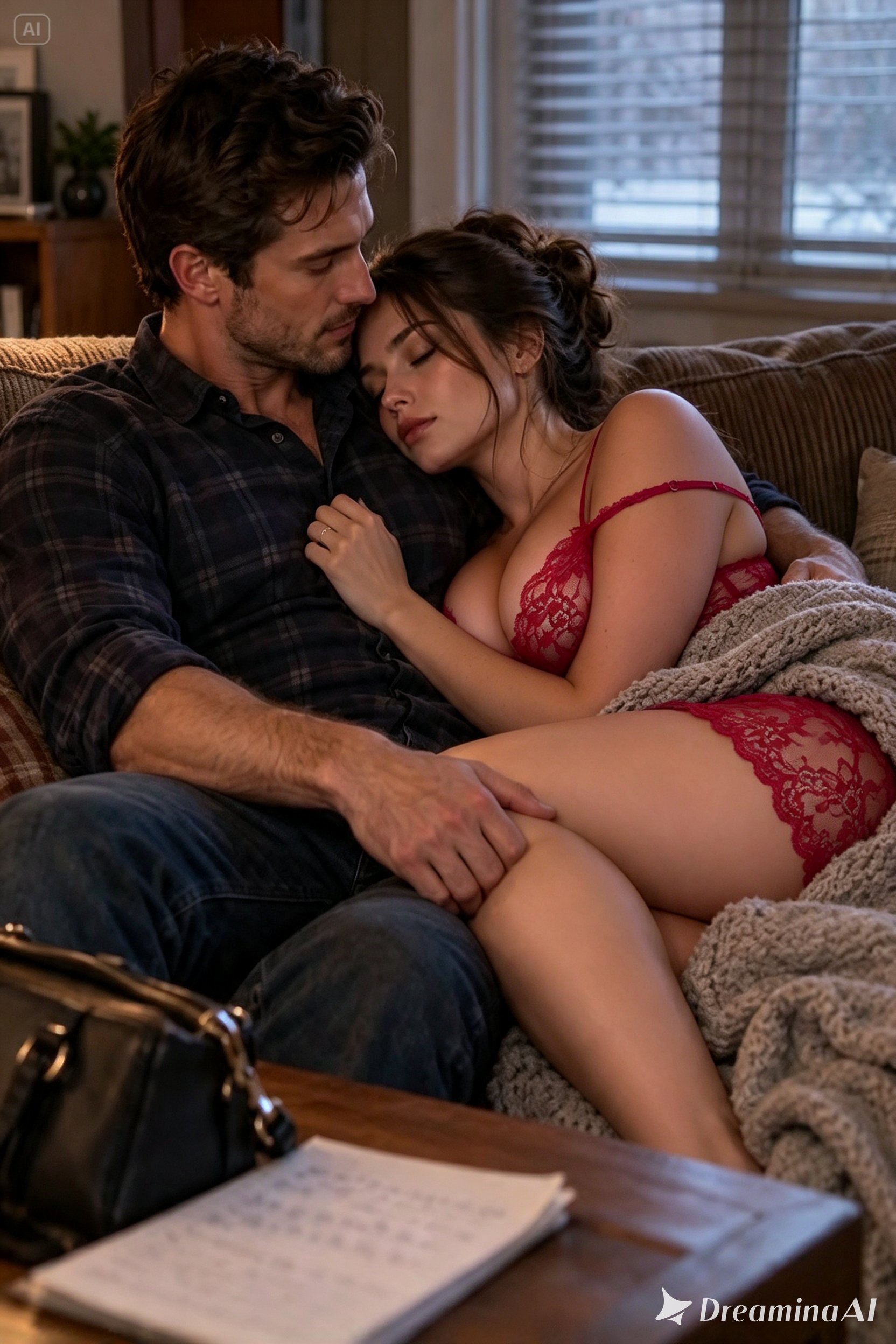
My ice-cold boss was too drunk to drive, so I took her home and slept fully dressed on her sofa, never expecting to wake with her head on my chest; by Monday, the document in her purse would reveal why she had been drinking, why a senior executive had tried to force her into his car, and why 112 factory families were suddenly in danger…
“Don’t move.” The whisper came from the woman sleeping against my chest. I froze; it was on a freezing Saturday morning, and my boss—the strict plant manager at Dracott Industrial’s Fenwick Mills factory—was curled up beside me on her living room sofa. Her dark hair spilled across my navy flannel shirt, one hand tangled in the fabric near my heart.
I hadn’t put her there. Eight hours earlier, she could barely stand, and I had driven her home because she was too drunk to get behind the wheel. I’d helped her inside, left water beside her, and spent the night fully dressed on the couch; I had never entered her bedroom except to leave a glass on the bedside table.
Her name was Elise Varga. For eight months, she had been the woman who could stop a production floor with one look and the boss who wrote me up for restarting a machine without permission. She had never called me Luke; to her, I was Brennan, a maintenance technician whose job was to keep old equipment running and stay out of management’s way.
Now she was holding on to me as if I were the only warm thing in the world. I whispered, “Miss Varga?” and her fingers tightened. “Luke,” she murmured without opening her eyes, asking me to stay another minute.
I stared at the ceiling, afraid to wake her. Her black leather purse lay on the floor beside the sofa, its clasp open, and a thick document had slipped halfway out; I could see a numbered list and a total printed at the bottom: 112.
I didn’t know then that my name was number fourteen; I only knew something had happened to the woman who never let anyone see her frightened. The night before had started with a breakdown on Line Three, and I stayed late to trace a conveyor sensor rather than leave the night crew with a machine that could jam under load. I had worked at Fenwick Mills for six years and knew which bearings complained before they failed.
Elise arrived shortly after nine, still wearing the dark coat she’d had on at the corporate dinner. Loose strands framed her face; her eyes were red, and she gripped her purse so tightly her knuckles had gone pale. “Brennan,” she said, asking whether the line was safe.
I told her it would be when I finished the test cycle; I wasn’t sending anyone back onto it until I knew why the sensor kept dropping. She gave a small nod, then glanced toward the glass doors at the end of the corridor. A black company SUV was waiting in the visitor lot, its engine running.
A man in an expensive charcoal coat came through the doors. I knew him as Grant Mercer, Dracott’s senior vice president of operations; he visited twice a year and spoke about efficiency as if people were replaceable parts.
“Elise,” he said, telling her they were leaving. She didn’t move and told him she wasn’t signing it tonight. Mercer lowered his voice and said she was tired, had too much to drink, and could finish it in the car.
“I said no, Grant.” He reached for her elbow, and when she pulled away he caught her again and turned her toward the exit. I put down my wrench and walked over; I wasn’t looking for a fight, but I knew what it looked like when someone was being pushed somewhere they had refused to go.
“She said no,” I told him. Mercer looked at me as though he had only just noticed the factory had employees, then ordered me back to my machine because it was a management matter. Elise pulled her arm free and told him she wasn’t going with him.
Mercer stared at me, straightened his coat, and walked back to the SUV. Elise waited until the taillights disappeared, then looked down at the keys in her hand. “I shouldn’t drive,” she said, the first honest thing either of us had said all evening.
I offered to take her home; she hesitated, handed me the keys, and gave me her address. I asked if she wanted me to call someone, but she said no. On the drive, she stared at the wet road and answered only when I asked which turn to take.
Her house was quiet and carefully kept. She managed the front steps, but once inside she had to grip the hall table; I got her water, and she tried to sound like my boss again when she offered to call me a cab.
“You shouldn’t be alone until you’ve sobered up,” I said, offering to stay on the sofa until morning. She looked at me for a long second, then nodded. I put her purse on the side table, left a second glass of water by her bedroom door, and stayed out of the room.
I slept in my work trousers and flannel shirt, my boots on the floor beside the couch. Sometime in the night, I woke when the cushion shifted; Elise stood beside the sofa, unsteady and half asleep, and I asked if she needed help. She shook her head, sat down carefully, and leaned against me as if she had mistaken me for the back of the couch. I stayed still until her breathing evened out; I didn’t move her or take liberties while she was too drunk to make a clear decision.
Now, in the gray morning light, she was awake enough to know where she was. She opened her eyes, startled to find me there, and started to sit up before noticing her hand still gripping my shirt. “I’m sorry,” she whispered.
I told her she didn’t have to apologize: she had come out in the night, and I had stayed where I was. She looked toward the purse, and the fear returned to her face so plainly that I forgot she was my boss. “You saw that?” she asked.
“Only the number at the bottom.” She sat up and drew the purse into her lap. “It’s a list of the people they intend to put out of work,” she said, explaining that it named 112 people across production, maintenance, shipping, quality, and the office.
I looked at the page. The names were arranged by department, and mine was fourteenth, directly beneath two men I had worked beside for years. “Why are our names on it?” I asked.
“Because Dracott plans to close Fenwick Mills in ten days,” she said. Mercer wanted her to sign the closure recommendation and stand in front of the workforce when the notices went out. She had refused, and he had threatened to make the board believe she was too unstable to manage the plant.
She swallowed and looked down at the list. “Last night he tried to get me into his car so he could take me to the hotel and make me sign it there,” she said. She had been drinking at the dinner, but she knew exactly what he was asking and had said no.
I looked at the names again. Number fourteen was mine, and I thought of the people behind every name: the father on second shift, the woman packing lunches for three kids, the older machinist with a year before retirement. This wasn’t a spreadsheet; it was 112 households waiting for someone else to decide what happened to them.
Elise closed the document and held it against her knees. “I’m not asking you to fix this,” she said, and reminded me that what happened last night didn’t change our jobs. I believed her, but I couldn’t pretend I hadn’t seen the list.
“If they’re closing the plant in ten days, I think the people on that list deserve to know what they’re being asked to lose.” She looked at me for a long moment, then turned the document over; a second page was clipped behind the names, carrying a date, a board meeting time, and a line marked EMPLOYEE NOTIFICATION AUTHORIZATION.
At the bottom was a signature box with Elise Varga’s name already typed beneath it. The box was empty. “Mercer told me the decision was final,” she said quietly. “But if it was final, why does he need my signature?” Part 2…..
IF FACEBOOK BROUGHT YOU HERE, HERE’S THE CONTINUATION YOU’VE BEEN WAITING FOR. ENJOY! 👇 Elise didn’t answer straight away. She laid the two pages side by side and explained that the board had authorized a closure proposal, but the employee notices could not be released until the plant manager certified the staffing schedule. Her signature would make her the person who formally confirmed that every department and every name had been checked.
“Which means if you sign, they can say you approved it,” I said. She nodded. Mercer wanted her signature before Monday’s board meeting, when the final shutdown timetable would be approved. The ten days weren’t a warning to the workers; they were the time left before the notices became official.
“I thought I could get the board to look at the actual numbers,” she said. Fenwick had met its production targets for three consecutive quarters, but the proposal described the plant as outdated and too expensive to maintain. The document in her purse contained the names, not the financial analysis behind the decision.
She told me Mercer had presented the closure as a decision already made by the executive committee. He wanted her to stand with him at the announcement, and when she refused, he said the board would hear about her drinking and her “unpredictable behavior.” She had gone to the dinner believing she could still change his mind; by the time she left, she understood he intended to make her the public face of the closure.
I asked whether she had told anyone about what happened in the parking lot. She said she hadn’t, partly because she knew Mercer would deny it and partly because she feared he would use the incident to prove his claim that she was unstable. I told her that silence would leave his version as the only one on record.
She looked at me, then at the list. “I’m not going to ask you to risk your job.” I told her I was already on the list, whether I helped or not. I wasn’t offering to be a hero; I wanted a fair account of what Fenwick could do and what closing it would cost.
Elise picked up her phone and called the company’s general counsel. She reported Mercer’s attempt to force her into his vehicle, the pressure to sign the staffing authorization, and the threat to damage her credibility with the board. The lawyer asked her to preserve the document, write down the time and location, and avoid any private meeting with Mercer until the company could review the complaint.
She made the report without crying or raising her voice. When the call ended, her hands were shaking again. I offered to make coffee, and she gave me a tired look that almost became a smile. “There’s a machine in the kitchen,” she said. “I’m not sure it’s ever been used.”
The coffee was terrible, but it gave us something ordinary to do while she opened the operating reports on her laptop. She showed me the plant’s production figures, maintenance spending, scrap rates, and delivery record. Fenwick wasn’t perfect, but it was not the failing operation described in the closure proposal.
Some equipment was old, and a few lines needed capital work. But the maintenance logs showed that our repairs had reduced unplanned downtime, and the last two quarters had delivered fewer rejected orders. The proposal counted the cost of keeping the plant open but barely acknowledged the expense of moving its work, retraining another workforce, or shipping finished goods farther.
“Can you verify the maintenance figures?” she asked. I told her I could pull the approved work orders and downtime reports from the system. I wouldn’t change a number or take a document I wasn’t authorized to access, but I could explain what each repair had fixed and why the costs were what they were.
She nodded and said, “That’s all I need: facts we can stand behind.” She made a note to ask the plant controller for a full cost comparison, then closed the laptop. The board would meet Monday afternoon, and she had less than forty-eight hours to prepare a response.
I left before noon. At the door, Elise thanked me for bringing her home and for not making the night into something it wasn’t. I told her she didn’t owe me an explanation. She looked as if she wanted to say more, but settled for, “I’ll see you Monday, Brennan.”
By Monday, the factory was running on rumors. People had heard that corporate executives were visiting, and a few had noticed Mercer’s SUV in the lot on Friday. Omar from shipping asked whether he should start looking for another job. I told him I didn’t know what the board would decide, and I wasn’t going to pretend I did.
Elise called a short meeting before the morning shift. She didn’t promise the plant was safe, and she didn’t tell anyone the closure was certain. She said a proposal to close Fenwick was under review, that no employee notices had been authorized, and that she would challenge the plan with verified operating information. The room stayed quiet, but people stopped looking at the floor.
After the meeting, she asked me to bring the maintenance records to the conference room. I printed the work orders I was permitted to access, checked each date against the downtime log, and marked the repairs that had returned equipment to service. I included the Line Three sensor issue, because I wasn’t going to hide a problem just because it might make our case less tidy.
Part 3 Mercer arrived shortly before lunch. He didn’t look at me when he passed the maintenance office, but he stopped at Elise’s door and asked her to join him in the executive conference room. She declined and said all further discussions about the closure would take place with counsel present. For once, he had no private room in which to corner her.
That afternoon, the plant controller sent Elise a cost comparison. The numbers confirmed what the maintenance records suggested: Fenwick could remain viable if Dracott funded a limited equipment upgrade and kept two existing production contracts here. Closing the site would save money on the property in the short term, but moving the work would add freight, retraining, and restart costs that the proposal had left out.
Elise read the comparison twice. Then she looked at me and said, “This is the first honest reason I’ve seen to keep the plant open.” She wasn’t smiling. The figures gave us an argument, not a guarantee, and the board still had the authority to shut the doors.
Before I left, she asked me to write a witness statement about Mercer grabbing her arm and trying to steer her toward the SUV. I wrote only what I had seen and heard, checked it for accuracy, and signed it. I didn’t add what I guessed he intended or what I thought he deserved.
Elise placed my statement with the complaint to general counsel. “Thank you,” she said. “Whatever happens Monday, I want the record to be right.” I walked back onto the floor knowing the next meeting could decide whether 112 people had a job ten days from then.
At two, Elise walked into the boardroom with the closure proposal, the plant controller’s comparison, and the maintenance records. I waited outside until general counsel asked me to come in as a technical witness. Mercer sat at the far end of the table, his expression composed, as if Friday night had never happened.
Elise spoke first. She did not argue that Fenwick should stay open because people loved the town or because the plant had history. She showed the board its production results, delivery performance, maintenance costs, and the two contracts that could remain at Fenwick if the company funded a limited upgrade. Then she explained what the proposal had left out: the cost of moving equipment, retraining workers, and shipping orders from farther away.
One director asked whether the maintenance figures were reliable. I explained how the downtime reports were generated, how work orders were closed, and why the Line Three repair had been recorded as a sensor failure rather than an operator error. I also told them where the plant still needed investment. I wasn’t there to make Fenwick look perfect; I was there to tell them what the records actually showed.
Mercer interrupted twice. The first time, he said a maintenance technician couldn’t understand the financial strategy. The second time, he suggested Elise was using an emotional attachment to the workforce to cloud her judgment. General counsel stopped him and reminded the room that the board had asked for operational evidence, not personal attacks.
Then the chair asked Elise whether she had anything else to report. She described the attempt to force her into Mercer’s vehicle and the pressure to sign the employee notification authorization. She submitted her written complaint and my witness statement. I answered the board’s questions about what I had seen, without guessing at what Mercer intended.
The board did not vote to save the plant that morning. It voted to suspend the closure recommendation for thirty days, prohibit employee notices during that review, and commission an independent comparison of the cost of operating Fenwick against the cost of closing and transferring its work. General counsel also confirmed that Mercer would have no further private contact with Elise while the complaint was reviewed.
When we left the room, Elise’s shoulders were still tense. She had won time, not a guarantee. I told her thirty days was more than we had when we walked in. She nodded and said, “Then we use every one of them.”
Over the next month, the plant did what it had always done: it made orders, fixed breakdowns, and got trucks out on time. Elise asked every department for practical improvements, not miracle savings. The shipping team found a better way to schedule outbound loads; quality tightened one inspection step; maintenance built a realistic replacement plan for the oldest equipment.
I worked with the controller to verify the repair costs and helped prepare a schedule for the Line Three upgrade. We found two recurring stoppages that could be reduced with parts already approved in the budget. It wasn’t glamorous work, but the numbers were measurable, and every improvement made the case stronger.
Meanwhile, the company’s review team interviewed employees and examined the closure proposal. General counsel also investigated Elise’s complaint. I was interviewed twice about the parking lot, and I repeated the same account both times. Mercer was placed on administrative leave while the review was underway; nobody told me what he said in response, and I didn’t ask.
On the thirtieth day, the board met again. This time the controller presented the independent comparison. Keeping Fenwick open required investment, but the savings projected from closure were smaller than the original proposal claimed. The two production contracts could remain at the plant, and the updated maintenance plan gave the board a way to measure whether the improvements were working.
The board approved a twelve-month operating plan instead of the closure. It funded the essential equipment work, kept the existing workforce in place, and set quarterly performance reviews. No termination notices went out. The decision wasn’t a promise that Fenwick would never face another hard year, but it meant those 112 families had not been written off.
After the meeting, people gathered in the break room. No one cheered at first; they seemed to need a moment to believe what they had heard. Then Omar hugged the shipping supervisor, somebody started clapping, and the sound moved around the room until even the people who usually kept to themselves were smiling.
Part 4 Elise stood near the doorway, watching without stepping into the middle of it. I went over and told her she had given them a chance. She shook her head. “They gave me the facts,” she said. “You all gave me something worth taking back to the board.”
She also told me the company’s review had confirmed that Mercer had pressured her to sign before the board had approved the final staffing plan. The review found his conduct inconsistent with company policy, and he was no longer in his operations role. She didn’t celebrate it. She only said she was relieved he would not be able to corner another employee in the same way.
Over the next quarter, the approved plan became ordinary work. The company funded the Line Three controls, the shipping team kept its improved schedule, and the quality department tracked rejected orders every week. There were still breakdowns and tight deadlines, but the plant was no longer being judged on a closure proposal that ignored the cost of moving its work.
Elise stayed long enough to get the transition underway. The board then offered her a regional operations position at headquarters, where she would oversee several facilities in a different division rather than manage Fenwick day to day. She accepted after asking that the plant receive an independent manager and that the twelve-month review remain in place.
The new plant manager had no reason to report to Elise, and I was promoted to maintenance supervisor after the company posted the role and interviewed the qualified applicants. I had been doing much of the coordination already, but the title came with responsibility for budgets, safety, and a team of people who deserved more than someone who could fix a motor.
On her last Friday at Fenwick, Elise came to the maintenance shop after the day shift had left. She thanked me for the witness statement and the records, then apologized for the write-up she’d given me months earlier. She said the procedure mattered, but she should have listened when I explained why I had restarted the machine. I told her I had learned to ask first, and she had learned to hear the answer.
At the door, she paused. “I don’t want you to feel you owe me anything because I was your boss,” she said. “When the reporting lines are settled, would you have coffee with me? Not a work meeting. Just coffee.” I told her I would, provided she didn’t bring a spreadsheet.
She laughed, and it was the first time I had heard her laugh without immediately checking who might be listening. “No spreadsheets,” she promised. Then she left for headquarters, and I went back to checking the maintenance schedule.
Two weeks later, we met at a diner halfway between the plant and her new office. Elise wore a plain sweater and jeans instead of her dark work suits, and she arrived five minutes early. She asked about the shift crew, but when I reminded her we weren’t having a work meeting, she put her phone away and asked what I liked to do when I wasn’t repairing something.
I told her I liked fishing, old trucks, and breakfast that didn’t come from a vending machine. She admitted she had never been fishing and usually forgot to eat breakfast. We talked for two hours, mostly about ordinary things, and when she offered to pay, I asked her to let me buy the next one. She agreed.
After that, we took our time. We went to dinner, walked through the Saturday farmers market, and once spent an entire afternoon helping a neighbor get an old pickup started. Elise was still direct and exacting, but away from the factory she began to let silences sit without treating them like problems that needed solving.
She never pretended that the night she drank too much had been romantic. She remembered enough to be embarrassed, and I told her there was nothing to be ashamed of in needing help. What mattered to me was that she had trusted me to respect her boundaries, and that she had chosen to see me again when she was clear-headed and free to say no.
At the end of the twelve-month plan, Fenwick met its targets. The two contracts were renewed, the equipment upgrade had reduced stoppages, and the board approved continued operation with a second phase of investment. The 112 jobs on that list had not disappeared; most of the people named on it were still working in the same departments, now with a better-maintained plant and a clearer plan.
Mercer was gone from Dracott by then. The company never gave employees a dramatic explanation, and I didn’t need one. The internal review had addressed his conduct, Elise’s complaint was on record, and he no longer had the authority to pressure her or anyone at Fenwick into signing something in private.
Final By the time the first anniversary of the closure proposal came around, Elise and I had stopped pretending our dinners were just coffee. She was still busy, and I was still busy, but neither of us treated affection like another item on a schedule. We had learned to ask instead of assume.
She had also learned to come to Fenwick without walking onto the floor as if every person were waiting to disappoint her. She listened more, and when she disagreed, she explained why. The crews still respected her; now they knew she could respect them back.
I was proud of the work I did as maintenance supervisor, but I was prouder when one of the newer technicians caught a fault early and stopped a line before it became a breakdown. I praised him in front of the crew. It was the kind of thing Elise once would have called unnecessary, and later admitted was exactly how a good plant should run.
One Friday evening, after a long week of production reviews, Elise came to my place carrying takeout and a small paper bag from the bakery. She had left her work phone in the car. I noticed because it was the first time she’d visited without bringing the whole company through the door with her.
We ate at the kitchen table and talked about the people at Fenwick, then moved on to a terrible movie neither of us was following. Halfway through it, Elise leaned against me and let her eyes close. There was no alcohol, no panic, and no confusion about where she was.
I shifted to make her more comfortable, and she stirred. “Don’t move,” she whispered, smiling with her eyes still closed. This time I knew exactly why she was there, and she knew I was awake.
I asked if she was comfortable. She nodded and tucked her hand into the front of my sweater. “I used to think needing someone meant I had failed,” she said. “That night on the sofa, I was frightened and exhausted, and you gave me room to be both without asking for anything.”
I told her I hadn’t stayed because she was my boss or because I expected something from her. I stayed because she was a person who shouldn’t have been left alone in that condition. Everything after that had been her choice, made when she was sober and able to decide what she wanted.
She lifted her head and looked at me. “And what do you want now, Luke?” I told her I wanted the ordinary things: breakfast together, honest conversations, and someone who would tell me when I was being stubborn. She smiled and said she could manage at least two of those.
Outside, the town was quiet. The factory lights glowed in the distance, and tomorrow there would be another shift, another maintenance check, another list of things that needed doing. But the 112 names that had once been printed as a plan for ending people’s livelihoods were now just names on a payroll, attached to families who could keep making plans of their own.
THE END. I’ve shared the complete story, and I truly hope it touched your heart. If this story moved you, please , like, and share the post. Thank you for reading! ❤️
✓ Lynn R. Adams
My ice-cold boss was too drunk to drive, so I took her home and slept fully dressed on her sofa, never expecting to wake with her head on my chest; by Monday, the document in her purse would reveal wh…