My Husband’s Pregnant Attaché Expected Me to Vanish for $90 Million—Then I Found Out What His Family Was Really Buying
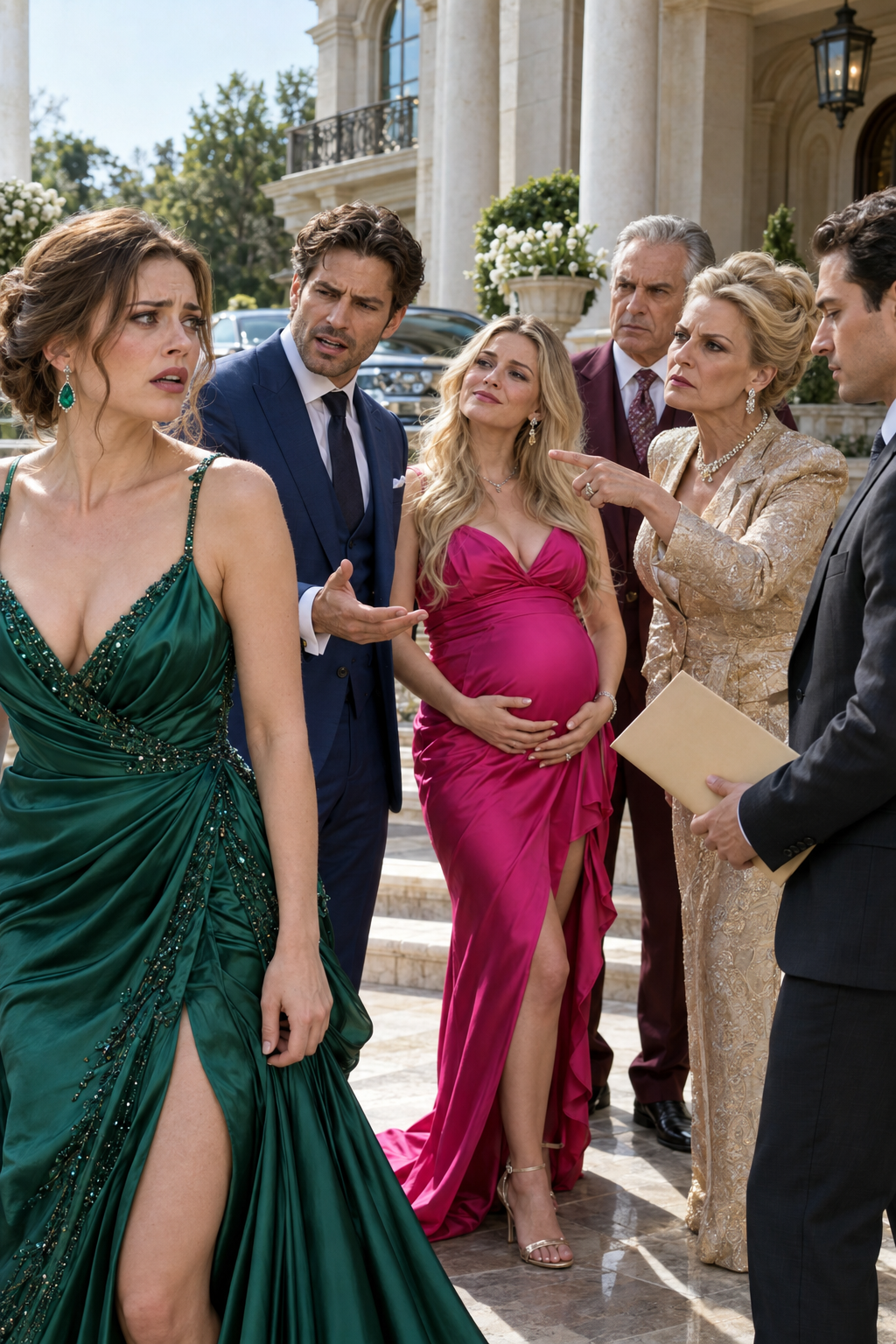
My Husband’s Pregnant Attaché Expected Me to Vanish for $90 Million—Then I Found Out What His Family Was Really Buying
The first time I saw the ultrasound of my husband’s twins, his mother was holding it like a stock certificate.
“We can make this painless,” Evelyn Mercer said, sliding a ninety-million-dollar agreement across the white marble table.
The babies’ mother was not me.
She was my husband’s attaché.
And according to the contract sitting beside my untouched coffee, the Mercer family expected me to sign away my marriage, my name, my company rights, my silence—and then disappear before anyone started asking questions.
I looked at the number again.
$90,000,000.
Nine zeroes designed to make a woman stop reading.
I kept reading.
That was the first thing they got wrong about me.
Across the breakfast room of the Mercer estate, my husband, Graham, stood beside the French doors with both hands in his pockets.
He didn’t sit beside me.
He didn’t look ashamed.
He looked impatient.
At thirty-nine, Graham Mercer had perfected the expression wealthy men wore when they believed consequences were administrative problems.
His navy suit had been tailored in London.
His cuff links had belonged to his grandfather.
His face had appeared on business magazines, charity programs, economic panels, and once on the cover of a Washington society publication beneath the words AMERICA’S NEXT GLOBAL POWER COUPLE.
I had been standing beside him in that photograph.
Now Sophie Caldwell was standing three feet behind him with one hand resting over a stomach that had only recently begun to show.
Thirty-one.
Fluent in French and German.
Hired eighteen months earlier as Graham’s international affairs attaché because, according to him, he needed someone “who understood protocol.”
Apparently she also understood my husband.
Evelyn tapped one manicured finger against the contract.
“The offer expires at five this afternoon.”
I turned another page.
There were forty-three pages.
Nobody needed forty-three pages to give away money.
They needed forty-three pages to hide what they were taking.
Harrison Mercer, Graham’s father, sat at the head of the table.
He was seventy-two and still carried himself like every room belonged to him, including rooms that legally belonged to someone else.
He said nothing.
That concerned me more than Evelyn’s smile.
Harrison never stayed silent unless he believed the outcome had already been decided.
Graham finally spoke.
“Maddie, don’t make this ugly.”
I lifted my eyes.
He had called me Maddie for fourteen years.
That morning, it sounded like something printed on luggage he planned to throw away.
“How long?”
Sophie shifted.
Graham didn’t.
“Does it matter?”
His jaw tightened.
“Six months.”
I looked at Sophie’s stomach.
“Six months together?”
“Or six months since you learned she was pregnant?”
Evelyn exhaled sharply.
“This is exactly what we hoped to avoid.”
I looked back at the contract.
Page seven.
Confidentiality.
Page eleven.
Residential relocation.
Page sixteen.
Waiver of spousal claims.
Page twenty-three.
Resignation from the Mercer Foundation.
Page twenty-nine.
Transfer of “all present and contingent economic interests arising through marital association.”
That sentence deserved a second reading.
Then a third.
There it was.
I closed the document.
“How many weeks pregnant are you, Sophie?”
Her eyes moved to Graham.
That tiny movement told me more than an answer would have.
Graham spoke for her.
“Twenty weeks.”
Twenty weeks.
I folded my hands on the table.
I did not throw my coffee.
I did not slap my husband.
I did not ask Sophie how she could sit through Christmas dinner across from me while carrying his children.
I did not beg Graham to explain fourteen years of marriage in a sentence.
I did not give Evelyn the satisfaction of seeing a woman break just because the Mercer family had already written a price beside her name.
I had spent too many years sitting in conference rooms with people who mistook silence for surrender.
Silence was how you heard the machinery behind the walls.
And something inside that forty-three-page agreement was moving very fast.
“So,” I said, “you want me gone.”
Evelyn smiled.
“We want everyone to move forward.”
“Before five.”
“With ninety million dollars.”
Graham stepped closer.
“You’ll never have to work again.”
That almost made me laugh.
Graham had always underestimated how insulting that sentence was.
I had worked before I met him.
I had worked while he slept.
I had worked while his family introduced me as “Graham’s wife” in rooms where half the financial models on the screens had been built by me.
When Graham inherited his grandfather’s struggling logistics division at twenty-eight, it had been drowning in debt.
I had restructured it.
When Mercer Global entered advanced medical transport, I negotiated the acquisition.
When Harrison wanted to sell the data division for eighty million dollars, I argued that its predictive-routing patents would become the most valuable part of the company.
Six years later, that division alone was worth close to two billion.
But in family photographs, Graham stood in the middle.
I was good with that.
Until that morning.
“You’ve thought of everything,” I said.
Evelyn relaxed slightly.
That was useful.
People revealed themselves when they believed resistance was over.
She pushed a black fountain pen toward me.
“We tried to be generous.”
I picked it up.
Graham breathed out.
Sophie’s shoulders dropped.
Then I used the pen to circle one sentence on page twenty-nine.
“What is this?”
Evelyn’s smile paused.
Graham looked at his father.
Harrison finally spoke.
“Standard separation language.”
“No, it isn’t.”
“It is according to our counsel.”
“Your counsel.”
I turned the contract toward him.
“‘Present and contingent economic interests arising through marital association.’ Why not list the assets?”
Harrison’s gaze sharpened.
“Because there are several.”
“Name them.”
“Maddie,” Graham said.
I looked at him.
“Name one.”
That was the second thing they got wrong.
They assumed ninety million dollars would feel large enough that I wouldn’t ask what I was selling.
I placed the pen down.
“I’ll have my attorney review it.”
Evelyn’s expression changed for the first time.
Just enough.
“No outside counsel.”
I leaned back.
“Excuse me?”
“This is a private family matter.”
“A forty-three-page private family matter?”
“You know what I mean.”
Sophie spoke softly.
“Madeline, nobody wants to hurt you.”
It was the first thing she had said.
I looked at her.
She wore cream wool, pearl earrings, and the Cartier watch Graham once told me he had purchased for a diplomatic retirement gift.
Interesting.
Her hand remained on her stomach.
Protective.
Possessive.
Maybe both.
“You don’t get to call me Madeline like we’re negotiating a seating chart,” I said.
Her face reddened.
Graham stepped forward.
“Don’t attack her.”
I stared at him for two seconds.
There are moments when a marriage doesn’t end because of infidelity.
It ends because of instinct.
Your husband sees you wounded.
He chooses who to protect.
Graham had just chosen.
Evelyn’s hand landed on the contract.
“We need an answer.”
“You have one.”
“You’re rejecting ninety million dollars?”
“I’m rejecting a deadline.”
Harrison looked at his watch.
“You walk out now, the offer may not exist when you return.”
I picked up my purse.
“Then it wasn’t an offer.”
I looked directly at him.
“It was pressure.”
Nobody followed me out of the breakfast room.
That was the third thing they got wrong.
They thought I was leaving because I was emotional.
I was leaving because my phone was in my purse, and I needed to make three calls before anyone realized I had understood page twenty-nine.
The Mercer estate sat on forty-two acres outside Middleburg, Virginia.
It had a limestone façade, twelve bedrooms, a wine cellar Harrison loved to show governors, and a private road long enough for a person to reconsider every decision that had brought them there.
I drove that road without turning on the radio.
At the gate, my phone rang.
I declined the call.
Then I called my attorney.
Her name was Naomi Feld.
She had represented me before my marriage and insisted on representing me during the prenuptial negotiations even when Evelyn complained it was “hostile.”
Naomi answered on the second ring.
“Good morning.”
“I need you to clear the day.”
“My husband’s attaché is pregnant with twins.”
Another pause.
“Apparently.”
“His family offered me ninety million dollars to disappear by five.”
This pause lasted longer.
Then Naomi said, “Do not sign anything.”
“I wasn’t planning to.”
“Photographs?”
“I scanned every page while Evelyn was making coffee.”
Naomi laughed once.
That was why I hired her.
“Send them.”
“They included an assignment of contingent marital economic interests.”
The laughter stopped.
“What exact language?”
I repeated it.
Naomi was silent.
Then she said, “Maddie, where are you?”
“Leaving Middleburg.”
“Come directly to my office.”
“I need to make two calls first.”
“What are you thinking?”
“That ninety million is the distraction.”
“And the real number?”
“I don’t know yet.”
Naomi’s voice lowered.
I made the second call to Julian Price, a forensic accountant who had once helped me identify a six-million-dollar reporting discrepancy inside a Mercer subsidiary.
His firm technically worked for Mercer Global.
Julian personally worked for facts.
“I need a favor,” I said.
“Those are expensive.”
He chuckled.
“What do you need?”
“Any pending transactions tied to Mercer Global, Mercer Stratton Holdings, or the family voting trust that haven’t been publicly announced.”
“That’s not a favor. That’s an invitation to prison.”
“Public filings, board notices, regulatory calendars, lender disclosures. Nothing internal.”
“That I can do.”
“I need it today.”
“Because somebody thinks I’m worth exactly ninety million dollars until five p.m.”
Julian stopped joking.
“I’ll call you.”
The third call was to my bank.
Not Mercer Private Bank.
The one nobody in Graham’s family knew I still used.
I moved enough money to cover six months of legal work, housing, private security, and forensic review.
Then I locked every personal credit line connected to my name.
By the time Graham noticed, I intended to be boringly difficult to financially intimidate.
His second call came before I reached Route 50.
I answered.
“Where are you?”
“Come back.”
“You’re upset.”
“No, Graham. I’m informed.”
“You don’t have the full picture.”
“I saw an ultrasound beside a ninety-million-dollar exit agreement while your girlfriend stood in your parents’ breakfast room. I think I have enough picture to begin with.”
“She is not my girlfriend.”
That was so absurd I nearly missed my turn.
“What is she?”
“I care about Sophie.”
“And she’s carrying twins.”
“Your twins.”
Another pause.
“You know that?”
His voice hardened.
“What does that mean?”
“It means I asked a simple question.”
“They’re mine.”
“Then congratulations.”
“What did page twenty-nine buy?”
I smiled despite myself.
“That’s what I thought.”
“You need to stop treating this like one of your deals.”
“You put a deadline on my marriage and attached nine zeroes.”
“Because I’m trying to take care of you.”
“You slept with your attaché.”
“I made a mistake.”
“A mistake is putting diesel in a gasoline car.”
His breathing changed.
I continued.
“You built a second life.”
“I’m trying not to destroy you.”
“No. You’re trying to control the manner in which I’m destroyed because disorder makes your family nervous.”
He lowered his voice.
“My mother is trying to protect everyone.”
“From what?”
“What happens at five, Graham?”
“You’re being paranoid.”
“Then answer.”
“It’s just when the offer expires.”
“No. What happens at five?”
I disconnected.
By ten-thirty, I was sitting in Naomi’s office in Washington.
She had removed her earrings.
That meant the situation was officially interesting.
The forty-three-page agreement lay across her conference table.
A yellow legal pad sat beside it with increasingly angry handwriting.
“This is not a divorce settlement,” she said.
“It attempts to function like one without calling itself one.”
“What does page twenty-nine do?”
“If enforceable? Potentially assigns anything you could claim through marital appreciation, joint enterprise, derivative equity, contingent distributions, side agreements, or trust-linked compensation.”
“In English.”
“They’re not buying your wedding ring.”
Naomi tapped the paper.
“They’re buying whatever they think you may own without realizing you own it.”
I stared through the glass wall at downtown Washington.
“Can they?”
“Not with this sloppy language unless you help them.”
“Why ninety million?”
“That’s the question.”
She flipped another page.
“And I hate this.”
“The relocation clause.”
I read it again.
It provided for a twelve-month residence outside Virginia, Maryland, the District of Columbia, New York, Connecticut, California, Switzerland, and the United Kingdom.
“Why those places?”
“Jurisdictions where Mercer entities, trusts, subsidiaries, or litigation are concentrated.”
“They literally mapped where they don’t want me.”
“And the confidentiality clause?”
“Broad enough to bury you alive.”
My phone buzzed.
I answered on speaker.
“You were right,” he said.
Naomi looked at me.
“About what?”
“There’s a transaction.”
“Publicly? Nothing yet. But three regulatory notices hit this week. Mercer Stratton filed for an expedited antitrust review using a confidential treatment request. There’s a debt syndication involving a Swiss bank. And a Delaware entity called MS Orion Acquisition was formed forty-eight hours ago.”
“Not public.”
“Estimate.”
“Based on debt registration?”
He exhaled.
“Between six and eight billion.”
Naomi mouthed a word I had never heard her use in court.
I said, “When?”
“One of the notices references a binding window opening tomorrow.”
“Tomorrow.”
My eyes moved to the agreement.
Offer expires today at five.
Transaction window tomorrow.
“What else?”
“There’s a shareholder consent trigger.”
My skin prickled.
“Something in Mercer Stratton’s capital structure requires supermajority approval if the transaction changes beneficial control.”
“How much?”
“Seventy-five percent.”
I sat slowly.
The Mercer family trust controlled roughly fifty-nine percent.
Senior executives held another eleven.
Public minority and legacy shareholders held the rest.
I looked at Naomi.
She already knew.
“Your restricted founder units,” she said.
I hadn’t thought about them in years.
When I rebuilt the medical transport division, Harrison had given me a package of nontransferable performance units.
Not shares, exactly.
Not options either.
At the time, Mercer lawyers described them as symbolic.
A way to make me “feel invested,” as Evelyn had phrased it.
I had never exercised them because a family tax adviser suggested waiting.
“How many votes?” I asked.
Naomi was already opening files.
“I need the original grant.”
“I have it.”
“My office at home.”
“At the Middleburg estate?”
I looked at her.
“At the Georgetown house Graham forgot I still own.”
Three years before we married, I bought a narrow brick townhouse in Georgetown.
I rented it for most of our marriage.
When the last tenant moved out, I never bothered finding another.
Graham disliked the place because parking was difficult.
That had suddenly become one of my favorite things about it.
“Go nowhere alone,” Naomi said.
“I’m not frightened of Graham.”
“I’m not frightened of Graham either.”
She looked down at the agreement.
“I’m frightened of people who put ninety million dollars on a table before lunch.”
At 12:14 p.m., Julian called again.
He sounded different.
“Maddie, I found the target.”
Naomi put him on speaker.
“Go ahead.”
“Helix Vector.”
I stopped breathing for half a second.
Helix Vector was a genomic logistics and cold-storage company based in Boston.
Three years earlier, Mercer had tried to buy it for $2.4 billion.
I had opposed the acquisition because their regulatory exposure was a mess.
The deal died.
“They’re buying Helix now?”
“Looks like it.”
“For how much?”
“Possibly $7.8 billion.”
“Their reproductive-tissue tracking patents were approved last year. The company has doubled in value.”
Naomi wrote something down.
Julian continued.
“And there’s another piece. Orion Acquisition appears structured so that certain legacy performance units convert into voting equity at closing.”
I looked at Naomi.
“How many?”
“I can’t see your personal grant.”
At , Naomi and I entered my Georgetown townhouse with a private security contractor she had used in a previous executive divorce.
His name was Marcus Hill, fifty-two, former federal protective service, allergic to small talk.
The house smelled faintly of dust and cedar.
Nothing had been touched.
I went upstairs to the small office.
My files were exactly where I had left them.
Tax returns.
Real-estate records.
Old consulting contracts.
Prenuptial agreement.
Then the blue leather folder.
MERCER STRATTON PERFORMANCE PARTICIPATION PLAN.
I sat on the floor and opened it.
Naomi crouched beside me.
We read for twelve minutes.
Then she sat back against the bookcase.
“Oh, they are in trouble.”
I felt no triumph.
“How much?”
“Your original units represented 3.8 percent of the company on a fully converted basis.”
“That isn’t enough to stop seventy-five percent.”
“Keep reading.”
There was a provision added in handwriting and initialed by Harrison.
A founder-protection clause.
I remembered the meeting.
Mercer Stratton had been much smaller then.
Harrison wanted me to abandon my consulting firm and work exclusively on the turnaround.
He offered money.
He offered equity.
I told him equity was worthless if the family could dilute it.
Harrison laughed, called me “a suspicious little thing,” then drafted an anti-dilution protection on the spot.
Back then, everyone thought it was charming.
Now Mercer Stratton was more than ten times larger.
And according to the formula—
Naomi used her calculator.
Then again.
“Your units convert to just over twelve percent of voting equity in a change-of-control transaction.”
I stared at her.
“Approximately 12.4, depending on the closing cap table.”
“The family has fifty-nine.”
“Executives eleven.”
“If everyone else agrees—”
“They still need you.”
The room became very quiet.
Ninety million dollars.
My laugh came out once.
Almost embarrassed.
“They weren’t paying me to leave Graham.”
Naomi lifted the forty-three-page agreement.
“They were trying to buy twelve percent of a multibillion-dollar transaction for ninety million dollars.”
I looked at the founder agreement.
“How much could my position be worth?”
“Economic value and voting leverage are different questions.”
“Conservatively?”
“Hundreds of millions.”
I said nothing.
“Potentially more than a billion if the conversion rights attach the way I think they do.”
There it was.
Twist number one.
The pregnancy was real.
The affair was real.
The humiliation was real.
But the ninety million dollars had almost nothing to do with adultery.
My marriage was being used as camouflage for a corporate extraction.
At , Graham texted.
PLEASE COME BACK BEFORE THIS GETS WORSE.
I showed Naomi.
She smiled without humor.
“Ask him whether Helix knows he doesn’t have your votes.”
I typed exactly that.
Three dots appeared immediately.
Appeared again.
Then my phone rang.
I answered.
His voice had changed.
“Who told you?”
“Interesting first question.”
“Does Helix know?”
“You’re out of your depth.”
“No. I’m sitting in Georgetown with the document your father signed giving me anti-dilution voting rights.”
I could hear a door closing on his end.
Then his voice dropped.
“We need to speak privately.”
“We did that this morning.”
“This is different.”
“Because now I know what ninety million buys?”
“You’re mixing personal issues with business.”
I looked at Naomi.
She raised both eyebrows.
“I’m mixing them?”
“Maddie, Helix is critical to the company.”
“Then you should have negotiated with me as a shareholder.”
“You are not a shareholder.”
“Your father’s handwriting disagrees.”
“The units are conditional.”
“So is your merger.”
A long silence.
Then Graham said something that erased the last small piece of hesitation I had been carrying.
“You’re going to ruin everything because you’re jealous of Sophie?”
I closed my eyes.
There it was.
Not apology.
Not fear of losing me.
He genuinely believed that if he said jealousy often enough, it would reduce my objection to something emotional.
I opened my eyes.
My voice was calm.
“I am going to read every document before I decide what I ruin.”
“Maddie, please.”
“Tell Sophie congratulations.”
I ended the call.
At , my access to the Mercer family financial portal was terminated.
At , the alarm code at the Middleburg estate was changed.
At , my Mercer Global email account was suspended.
At , Evelyn texted me.
The offer remains available until 5. I hope you will choose dignity.
I took a screenshot.
Then I replied.
Dignity doesn’t expire at five.
She did not answer.
At , Marcus called from downstairs.
“There’s a car outside.”
“What kind?”
“Black Escalade. Virginia plates. Same vehicle passed twice.”
Naomi glanced toward the window.
“Mercer security?”
“Probably.”
I almost smiled.
“They’re nervous.”
“Good,” Naomi said. “Nervous people create evidence.”
At , we sent formal preservation notices to Mercer Global, Mercer Stratton Holdings, Harrison Mercer, Graham Mercer, the family trust, and every law firm named anywhere in the forty-three-page agreement.
Preserve emails.
Transaction drafts.
Board communications.
Cap tables.
Trust documents.
Any discussion concerning my performance units.
Any discussion concerning the proposed separation agreement.
At , Naomi obtained a copy of the confidential board calendar from an independent director who owed her a favor.
Emergency board meeting.
Topic listed as: Transaction Continuity.
I looked at the clock.
“So five isn’t their deadline.”
“No,” Naomi said.
“It’s mine.”
“They need your signature before the board meets.”
At , Sophie texted me.
I had never given her my private number.
I stared at the message.
I’m sorry this happened this way.
I showed Naomi.
“Don’t answer.”
Another message arrived.
Graham told me you knew the marriage was over.
I put the phone facedown.
Naomi watched me.
“You okay?”
That was mostly true.
The human mind does strange things during betrayal.
It doesn’t always focus on the biggest wound.
Sometimes it chooses a small detail because the large one is too heavy to lift.
I thought about Thanksgiving.
Sophie had sat at my right.
She asked for cranberry sauce.
I passed it to her.
She had already been pregnant.
Maybe she knew.
Maybe she didn’t.
At Christmas, she gave me a cashmere scarf.
At New Year’s, she had organized Graham’s travel schedule while I stood in our bedroom choosing a tuxedo for him.
All those ordinary moments had changed shape without moving.
My phone buzzed again.
I never wanted your life.
That time, I replied.
Then why are you standing in it?
At , Harrison arrived at the Georgetown house.
Not Graham.
Not Evelyn.
Marcus opened the door only after I approved it.
Harrison came alone.
No overcoat despite the January cold.
No briefcase.
He walked into my living room, looked around, and said, “I always liked this house.”
“You once called it a shoebox.”
“I was wrong.”
“That must be uncomfortable.”
He almost smiled.
Naomi remained beside the fireplace.
Harrison noticed her.
“Mr. Mercer.”
He looked at me.
“May we speak alone?”
His jaw tightened.
Then he sat.
“You found the units.”
“I remembered them.”
“Same difference.”
I sat opposite him.
“You forgot me. I didn’t forget myself.”
For the first time that day, a Mercer looked ashamed.
Only for a moment.
“I did not approve the way Evelyn handled this morning.”
“But you sat there.”
“You let her put a deadline on my marriage.”
“You let Graham call it generosity.”
He stared at his hands.
“You built a large part of that company.”
“Graham knows too.”
“He resents it.”
There it was.
Not an excuse.
Harrison looked toward the darkening window.
“My son has spent his life trying to determine which of his achievements belong to him.”
“Sleeping with Sophie belonged to him.”
Naomi glanced at me.
Harrison continued.
“The Helix transaction matters.”
“To forty thousand employees.”
“That line works better when CEOs haven’t just tried to steal a billion dollars from their daughter-in-law.”
His mouth tightened.
“Ninety million was not theft.”
“Then tell me what my units are worth.”
“One billion?”
He said nothing.
“Half a billion?”
“Eight hundred million?”
His eyelid moved.
I leaned back.
“And you offered ninety.”
“We offered liquidity, confidentiality, independence, and immediate freedom from a family situation that has become intolerable.”
“You offered me ten cents because you hoped I wouldn’t notice the dollar.”
His expression cooled.
We were done pretending.
“What do you want?” he asked.
“The truth.”
“You already have it.”
I looked at him.
“I have the corporate truth.”
His face did not change.
“I’m still missing the personal one.”
Harrison glanced at Naomi.
“Graham has behaved disgracefully.”
“That isn’t the missing part.”
“What exactly do you think is missing?”
“The pregnancy.”
I shook my head.
“Sophie is twenty weeks pregnant. According to Graham, the affair began six months ago. You’ve known long enough to plan a forty-three-page exit agreement.”
He said nothing.
“You waited until the night before the Helix transaction.”
“You know why.”
I leaned forward.
“What does Sophie’s pregnancy have to do with Helix?”
That got him.
Not dramatically.
Harrison Mercer had negotiated with sovereign wealth funds and senators.
He did not gasp.
He did not flinch.
He simply became still.
Naomi saw it too.
I felt my heartbeat slow.
“Harrison.”
“Then why did you just stop breathing?”
“That’s ridiculous.”
“We’re done.”
I stood too.
“No, we are not.”
His eyes hardened.
“You have leverage, Madeline. Do not confuse leverage with invulnerability.”
Marcus appeared in the doorway.
Harrison looked at him, then back at me.
There it was again.
A warning that could still pretend to be advice.
“I suggest,” Harrison said, “that you negotiate the business issue and leave the pregnancy alone.”
I stared at him.
His voice went flat.
“Because not every truth improves the life of the person who finds it.”
Then he walked out.
Naomi and I remained silent until the front door closed.
She looked at me.
“What the hell was that?”
I picked up my phone.
“I don’t know.”
But for the first time since breakfast, the ninety million dollars stopped being the most frightening thing in the story.
The emergency board meeting began at without me.
It ended at when Naomi emailed the chairman proof of my voting conversion rights and a formal notice that any transaction approved without my participation would be challenged immediately.
At , the board secretary called.
“Mrs. Mercer?”
“We are reconvening tomorrow at nine.”
“Your attendance is requested.”
“I assumed.”
There was a pause.
“Mr. Mercer asked whether your counsel would also attend.”
“Which Mr. Mercer?”
Another pause.
At , I ordered Thai food.
Naomi stared at me.
“You’re hungry?”
“I missed lunch.”
“You discovered your husband has a pregnant mistress, learned his family tried to buy your billion-dollar voting position for ninety million, stopped an eight-billion-dollar acquisition, and you want pad see ew?”
“Extra broccoli.”
She laughed until she had tears in her eyes.
Not because I was stronger.
Because I knew if I started, I might not stop.
And I still needed my brain.
At , I went upstairs alone.
That was when I finally took off my wedding ring.
Not at breakfast.
Not when Sophie touched her stomach.
Not when Graham defended her.
Not when I found out the money was a trap.
I removed it while standing beside the bathroom sink in a house Graham had always considered too small.
The ring left a pale circle around my finger.
Fourteen years.
I put it in a jewelry box.
Then I sat on the closed toilet lid for exactly five minutes and let myself feel everything I had postponed.
I remembered Graham at twenty-nine, standing in my first apartment with a bottle of cheap champagne because Mercer Logistics had finally made quarterly profit.
I remembered him sleeping on the floor beside my hospital bed after my first egg retrieval because the anesthesia made me sick.
I remembered him painting the Georgetown bedroom himself because we could not agree on a contractor.
I remembered the night we learned our third embryo transfer had failed.
He had pressed his forehead against mine and said, “It’s you and me. That’s enough.”
I believed him.
Maybe he believed himself.
That was the painful part.
People wanted betrayal to rewrite the past cleanly.
Some of the good memories had been real.
They had simply failed to predict the ending.
My phone vibrated on the sink.
Unknown number.
I almost ignored it.
Then I answered.
“Mrs. Mercer?”
“My name is Dr. Aaron Kellerman.”
The name meant something.
It took me three seconds.
Then I stood.
Kellerman Reproductive Medicine.
Our fertility clinic.
The room seemed to tilt by one degree.
“Dr. Kellerman.”
“I apologize for calling so late.”
“Is something wrong?”
“I’m calling regarding your cryopreservation account.”
I gripped the sink.
“Our account was closed two years ago.”
“That’s why I’m calling.”
Cold moved through me.
Graham and I had undergone IVF five years earlier.
We created seven embryos.
Three transfers failed.
One embryo was genetically abnormal and discarded with our written consent.
Two remained frozen.
Then, after our marriage became consumed by work and my body became something I no longer wanted measured by hormone levels, we stopped treatment.
Two years ago, Graham told me he had completed the paperwork to discontinue storage.
I signed what I believed was a joint destruction authorization.
He returned the clinic copy.
We never discussed it again.
“What about the account?” I asked.
Dr. Kellerman sounded uncomfortable.
“We’re conducting an internal review.”
“I can’t discuss certain patient information over the phone.”
“They were my embryos.”
Another pause.
My mouth went dry.
“What happened?”
“I need you to come in.”
“If possible.”
“What happened to my embryos?”
“I would prefer—”
My voice sharpened.
“You called me at eight o’clock at night after two years of silence. What happened?”
He exhaled.
“Our records indicate the disposition authorization on file did not direct destruction.”
Every hair on my arms rose.
“What did it direct?”
“I cannot ethically continue this conversation by phone.”
I closed my eyes.
“What time?”
“I can meet you at nine-thirty.”
“I’ll be there.”
Naomi was waiting in the hallway when I came out.
She saw my face.
“What happened?”
“My fertility clinic just called.”
Her expression changed.
“I don’t know yet.”
Nine-thirty at night in downtown Washington makes medical offices look dishonest even when they aren’t.
The lobby lights were dim.
Dr. Aaron Kellerman met us personally.
Sixty-something.
Silver hair.
No lab coat.
He looked like a man who had spent several hours talking to lawyers.
That did not reassure me.
Naomi introduced herself.
He frowned.
“I was hoping to speak privately with Mrs. Mercer.”
“She stays.”
“I’m afraid patient confidentiality—”
“I waive whatever I need to waive.”
He led us into his office.
On the desk sat a red file folder.
Not digital.
That worried me too.
Dr. Kellerman folded his hands.
“Mrs. Mercer, approximately twenty-six months ago, our office received a disposition modification involving the two cryopreserved embryos remaining from your treatment cycle.”
“I signed destruction paperwork.”
“Our system contains a scanned form with your signature directing transfer of the embryos to long-term external storage.”
“I’m still confirming.”
I stared at him.
“That isn’t what I signed.”
“We’re aware there may be a discrepancy.”
He looked at Naomi.
She said, “Answer her.”
“One of our former records administrators flagged the file.”
“Three weeks ago.”
“Why call me tonight?”
His eyes dropped to the red folder.
“Because this afternoon an attorney representing Mercer Stratton Holdings contacted our legal department regarding archival data connected to Helix Vector.”
Naomi and I looked at each other.
There it was again.
“What does Helix have to do with my embryos?” I asked.
Dr. Kellerman rubbed one thumb over the other.
“Helix acquired our former cryogenic transport provider eighteen months ago.”
My stomach tightened.
“Were my embryos transported?”
“We believe so.”
“Our chain-of-custody record is incomplete.”
Naomi touched my wrist.
Not to stop me.
To anchor me.
Dr. Kellerman continued.
“The two embryos left this facility nineteen months ago.”
“Destination.”
“Northstar Reproductive Services in New York.”
“I don’t know.”
“Who authorized it?”
His silence told me before he answered.
“Your husband’s signature appears on the transfer request.”
“There is a spousal consent document.”
“Did I sign it?”
“We are investigating whether the signature is authentic.”
I laughed once.
It sounded wrong.
“Investigating?”
Naomi leaned forward.
“I want complete copies of every document in this file immediately.”
“Our counsel—”
“Your counsel can explain tomorrow why a clinic transported my client’s embryos across state lines under a disputed authorization.”
Dr. Kellerman swallowed.
“I can provide documents belonging to Mrs. Mercer.”
“All of them.”
I looked at him.
“What happened after Northstar received them?”
“I don’t have that information.”
“You called me at night for more than missing paperwork.”
He looked at me.
For the first time, I saw fear.
Not for himself.
“Mrs. Mercer, I recommend you speak to your husband.”
I stood very still.
“About what?”
“I truly cannot say more until I verify the external records.”
“Because if the preliminary information we received is incorrect, I would be causing extraordinary distress based on incomplete data.”
“What preliminary information?”
His eyes moved to Naomi again.
She didn’t blink.
I said, “Doctor.”
He closed the red folder.
“One of the embryo identifiers was recently referenced in an insurance query.”
The room went silent.
“What kind of insurance query?”
“Prenatal.”
My fingers went numb.
Naomi whispered, “Oh my God.”
I couldn’t.
Because my brain had already started counting backward.
Nineteen months since transfer.
Twenty weeks of Sophie’s pregnancy.
The Mercer transaction.
There were too many impossible steps between those facts.
Too many crimes.
Too many people who would have had to cooperate.
Too many signatures.
Too many safeguards.
I stared at Dr. Kellerman.
“Were my embryos used?”
“I do not know.”
“Find out.”
His face tightened.
Outside, Naomi and I sat in her car without starting the engine.
Washington traffic moved along the wet street.
Headlights slid over the windshield.
Naomi spoke first.
“We do not know anything yet.”
“Yes, we do.”
“We know your embryos were transferred.”
“Without my consent.”
“Apparently.”
“To a clinic connected through a provider now owned by the company Graham is desperate to buy.”
“And one of the identifiers appeared in a prenatal insurance query.”
I turned toward her.
“How many frozen embryos did Graham and I have?”
“How many babies is Sophie carrying?”
Naomi’s eyes closed.
At 11:18, Graham finally found me.
Not physically.
He sent a voice message.
Maddie, I don’t know what you think you’ve found, but you need to stop contacting people connected to our private medical history. There are explanations you do not understand. Come home. We can handle this inside the family.
I played it twice.
Naomi stared at my phone.
“He knows.”
“He said ‘medical history.’ I never told him the clinic called.”
We looked at each other.
Then Naomi said, “Save that in six places.”
The next morning, Mercer Global’s boardroom looked like a funeral where everyone had been told not to mention the body.
Nine directors.
Four lawyers.
Sophie was not there.
I arrived with Naomi at .
Graham stood as I entered.
He looked exhausted.
For the first time since I learned about the affair, I felt nothing when I saw him.
That frightened me more than anger would have.
Harrison opened the meeting at nine.
“We are here to address the proposed acquisition of Helix Vector and certain unresolved voting questions.”
“Before we start,” I said, “I need one conflict disclosed.”
Every face turned toward me.
Graham’s eyes narrowed.
I continued.
“Has Mercer Global, Mercer Stratton, any Mercer-controlled entity, or any member of the Mercer family funded, guaranteed, reimbursed, or otherwise participated in reproductive medical care involving Sophie Caldwell?”
Graham stood.
“This is outrageous.”
The independent chairman, Daniel Ross, looked at him.
“Sit down.”
Graham didn’t.
I watched him.
“This is not relevant to corporate governance.”
“I’ll decide what’s relevant to my vote.”
Harrison spoke.
“Madeline.”
I looked around the table.
“Before anyone asks me to approve the acquisition of a reproductive-tissue logistics company, I want to know why embryos created by Graham and me were moved without my informed consent into a network later acquired by that same company.”
The room changed.
Not subtly.
A director actually dropped his pen.
Daniel Ross looked at Harrison.
“What is she talking about?”
Graham’s face went pale.
Evelyn did not.
That told me exactly where to look.
She folded her hands.
“This is grotesquely inappropriate.”
“Did you know my embryos were moved?”
“You’re distraught.”
“Did you know?”
“I will not dignify—”
“Did you know?”
Harrison slammed one palm on the table.
I looked at him.
The chairman stood.
“Harrison, if there is a potential undisclosed related-party issue involving Helix, this meeting is suspended until outside counsel reviews it.”
“There is no related-party issue,” Harrison said.
I pulled a copy of Dr. Kellerman’s records from my folder.
“Then explain why Mercer family counsel contacted my former fertility clinic yesterday regarding Helix archives.”
Nobody moved.
Naomi placed the preservation letter beside it.
Daniel Ross’s face hardened.
“Who contacted the clinic?”
He looked at Graham.
“I don’t know.”
“Harrison?”
Then Evelyn spoke.
“You’re all being manipulated by a woman whose husband is having a child with someone else.”
That sentence did more damage to her than anything I could have said.
The directors looked at her.
Because Evelyn had just confirmed the pregnancy while trying to reduce me to a jealous wife.
I leaned back.
“Two children.”
Her mouth closed.
“Twins,” I said. “Remember?”
The board meeting was suspended at .
The Helix transaction was frozen at .
By , outside counsel had been retained.
At 10:02, Graham cornered me in a private conference room.
Naomi remained outside the glass door.
He looked twenty years older.
“What have you done?”
I stared at him.
“What have I done?”
“You could collapse the transaction.”
“I asked a question.”
“You humiliated my mother.”
“Your mother offered me ninety million dollars to erase myself yesterday morning.”
“She was trying to prevent exactly this.”
I stepped closer.
“What is this, Graham?”
His face shut down.
I saw the boy he had once been beneath the man he had become.
Still entitled enough to believe fear excused cowardice.
“What happened to our embryos?”
“What happened?”
“They were supposed to be stored.”
“I don’t remember.”
“You signed the transfer.”
“It was two years ago.”
“Nineteen months.”
His eyes moved.
“You remember.”
“I handled paperwork.”
“Did Sophie receive our embryos?”
His face changed so quickly I almost missed it.
Real shock.
That confused me.
“Did Sophie receive our embryos?”
“That is insane.”
“Then why did you tell me to stop contacting people about our medical history before I told you I had contacted anyone?”
He stared at me.
“My mother said you were asking questions.”
“Your mother knew?”
He looked toward the glass door.
I lowered my voice.
“What did Evelyn tell you?”
“That you were digging through old IVF records.”
“Last night.”
“How did she know?”
For the first time, I saw the possibility that Graham was not at the center of every ugly thing happening.
That did not make him innocent.
It made the situation worse.
He sat down.
His hands trembled.
I had seen my husband nervous during billion-dollar negotiations.
I had never seen his hands shake.
“I signed a storage transfer,” he said.
“To Northstar?”
“I don’t know. My mother handled it.”
My stomach dropped.
“Because you couldn’t deal with it anymore.”
“I asked you to destroy them.”
“You said you never wanted to think about it again.”
“That is not the same sentence.”
“I thought keeping them preserved gave us options.”
“You lied to me.”
“I thought maybe one day—”
“One day what?”
He looked away.
“Maybe we’d try again.”
“Without telling me the embryos still existed?”
“I was going to tell you.”
I stepped back.
“Did Sophie know?”
“About our embryos? No.”
“Are you certain?”
“How did she become pregnant?”
His eyes hardened.
“That is none of your business.”
“Oh, I think we left that territory yesterday.”
“We were together.”
“Obviously.”
“She got pregnant.”
“Obviously.”
“We confirmed twins at eight weeks.”
“What do you mean, how?”
“Doctor? Clinic?”
He hesitated.
My heart started pounding.
“Northstar.”
There it was.
He saw my face.
“Sophie went to Northstar?”
“For monitoring.”
“Why would a healthy thirty-one-year-old woman who conceived naturally in Virginia go to a fertility clinic in New York for pregnancy monitoring?”
“She had complications.”
“What complications?”
“I don’t know all the details.”
“She works for you.”
“She travels to New York.”
“She’s carrying your children and you don’t know?”
“Did you ever see a conception date?”
“This is sick.”
“Did you ever see a DNA test?”
His face went still.
“Did you request one?”
“Because I was sleeping with her.”
“That makes you mathematically possible, not genetically confirmed.”
“They’re mine.”
“You keep saying that.”
“They are.”
“Then prove it.”
His voice became dangerous.
“You want to humiliate Sophie with a paternity test?”
I looked at him.
“No, Graham.”
Then I opened the door.
“I want to know why your mother seems more certain about those babies than you do.”
By noon, I had moved into a hotel under Naomi’s firm account.
By one, a judge had issued a temporary preservation order covering my Mercer units after Naomi showed evidence that company counsel had attempted to interpret them as forfeited upon marital separation.
Mini-payoff number one.
At two, the independent board committee formally barred Graham and Harrison from participating in Helix negotiations pending review.
Mini-payoff number two.
At three, Mercer Global restored my access to corporate records.
Mini-payoff number three.
At four, the public announcement came.
MERCER STRATTON DELAYS STRATEGIC TRANSACTION.
No reason given.
Financial reporters immediately began calling.
I answered none of them.
At , Evelyn arrived at my hotel.
I did not invite her up.
She waited in the lobby.
I went down with Marcus standing twenty feet away.
She wore camel cashmere and an expression that could have frozen champagne.
“You are enjoying this.”
“You expect me to believe that?”
“I would enjoy a vacation. This is paperwork with adultery.”
Her lips thinned.
“Graham made an error.”
“Repeatedly.”
“Sophie is young.”
“So is that the new defense?”
“I am telling you that lives are more complicated than your spreadsheets.”
I almost admired her ability to insult me while requesting something.
“What do you want?”
“Withdraw the board objection.”
“Helix is worth more to this family than your anger.”
“This stopped being about my anger yesterday.”
Her eyes narrowed.
“I can increase the offer.”
I stared at her.
That was interesting.
“One hundred twenty million.”
“You still don’t understand.”
“One hundred fifty.”
A man reading a newspaper across the lobby looked up.
I nearly smiled.
“Two hundred million.”
“Why are you so desperate?”
“Because you are destroying value to prove a point.”
“You tried to steal my voting rights.”
“You were compensated.”
“Ninety million dollars.”
“More money than most people see in ten lifetimes.”
“And less than my rights are worth.”
She leaned closer.
“You married into this family.”
That sentence landed exactly where she intended.
Then I answered quietly.
She blinked.
“I helped build the version of this family you’re trying to protect.”
“You are not a Mercer.”
She inhaled sharply.
I continued.
“I don’t want your name anymore.”
Something moved behind her eyes.
Hard to tell.
“You will regret making enemies of us.”
“Then stop behaving like one.”
I turned to leave.
Her voice stopped me.
“The embryos were never yours alone.”
The lobby noise seemed to disappear.
I turned slowly.
Evelyn’s face changed.
She knew she had said too much.
I walked back.
“What did you just say?”
“You said the embryos were never mine alone.”
“They were created with Graham.”
“How do you know they’re relevant?”
“You’ve been waving medical records around a boardroom all morning.”
I shook my head.
“You knew before that.”
She grabbed her purse.
“I am finished with this conversation.”
I stepped in front of her.
Marcus moved closer but did not intervene.
“What did you do?”
Her voice dropped.
“You wanted them destroyed.”
“Graham did not.”
“What did you do?”
“I preserved my son’s options.”
My pulse hammered.
“By forging my signature?”
“I did not forge anything.”
“Then who did?”
“Did you move my embryos to Northstar?”
Her mouth tightened.
“Ask Graham.”
For the first time, Evelyn looked genuinely surprised.
“What did he say?”
“That you handled it.”
Her face lost color.
A tiny amount.
But enough.
She looked away.
And suddenly I understood something terrible.
Graham had lied to me.
Evelyn had lied to Graham.
Harrison had warned me to leave the pregnancy alone.
And Sophie had spent half her pregnancy under the care of the same fertility network that received embryos I believed had been destroyed.
I lowered my voice.
“Are Sophie’s twins mine?”
Evelyn looked straight at me.
Her face became perfectly still.
Then she said, “You sound unwell.”
And walked out.
That night, I hired an investigator.
Not because I needed photographs of Graham and Sophie.
I had no interest in catching a man I already knew was cheating.
I needed paper.
Clinic ownership.
Transportation logs.
Who met whom.
Naomi recommended Jack Brennan, a former federal investigator with the personality of an unplugged refrigerator.
He listened without interrupting.
Then he asked one question.
“Do you want the answer even if it’s worse than the theory?”
“Most people say yes too quickly.”
“I’m not most people.”
He looked at the forty-three-page agreement.
“I’m starting to see that.”
Over the next four days, the Mercer family launched a war designed to look like concern.
Anonymous sources told a society columnist that Graham and I had been “quietly separated for months.”
We had not.
A financial blog reported that my board challenge was “emotionally motivated.”
Naomi sent a correction letter attaching my equity documents.
The blog updated the article within an hour.
Someone leaked that Sophie was pregnant.
That backfired.
Reporters immediately wanted to know why a company executive had impregnated a subordinate involved in international negotiations.
Mercer Global announced an internal ethics review.
Graham stepped back from daily operations.
Evelyn called it “temporary.”
The board called it “mandatory.”
Another payoff.
Satisfying.
Not enough.
On Friday afternoon, Sophie asked to meet me.
I refused the alone part.
She agreed to meet in a private room at Naomi’s office.
She arrived wearing a long gray coat and no makeup.
Without the polished clothes, she looked younger.
For one second, I hated myself for noticing that her face was swollen.
Then I remembered she had slept with my husband.
Compassion and anger can occupy the same chair.
Sophie sat across from me.
Naomi remained near the wall.
“I didn’t know about the shares,” Sophie said.
“I didn’t ask.”
“I didn’t know about the ninety million either.”
“Until when?”
“After breakfast?”
“You were standing in the room.”
“I thought they were offering you a settlement.”
“Ninety million seemed normal?”
She swallowed.
“Nothing about the Mercers seems normal after a while.”
That almost sounded honest.
I said nothing.
She rubbed her palms over her coat.
“Graham told me your marriage was finished.”
“It wasn’t.”
“I know that now.”
“When did he tell you?”
“Last summer.”
“When did you start sleeping together?”
Her face reddened.
“You need details?”
“I need chronology.”
The climate summit.
I had been in Chicago negotiating a hospital transport contract.
Graham called me from Geneva and said the hotel internet was terrible.
Sophie continued.
“It happened once.”
“At first.”
I almost laughed.
“They all say that in movies.”
“I’m not asking you to forgive me.”
“I was going to leave the job.”
“He said he loved me.”
There it was.
Her motive.
Not innocence.
Not seduction by evil wealth.
She wanted the man.
She believed his promises because the promises benefited her.
Believable.
“When did you learn you were pregnant?”
“September.”
My fingers tightened around the armrest.
That timeline did not make sense.
“You’re twenty weeks pregnant.”
“It’s January.”
She stared at me.
Her breathing changed.
“How pregnant were you when you found out in September?”
“How many weeks?”
She looked toward Naomi.
Naomi said nothing.
Sophie whispered, “I don’t remember.”
“Yes, you do.”
“I was overwhelmed.”
“What clinic confirmed the pregnancy?”
Her face went pale.
I already knew.
Still, I made her say it.
“Northstar.”
“Why were you at a fertility clinic?”
“I knew this was a mistake.”
“Sit down.”
“You don’t control me.”
I remained calm.
“But somebody does.”
That stopped her.
I leaned forward.
“Sophie, I don’t care whether you hate me. I don’t care whether you love Graham. I don’t care whether you planned to take my house and my place at Thanksgiving.”
Her eyes filled.
“But if you are carrying two babies and you do not know exactly how you became pregnant, you have a larger problem than me.”
She sat slowly.
Naomi’s voice softened.
“Sophie, did you undergo fertility treatment?”
She looked at the floor.
My chest tightened.
She pressed one hand to her abdomen.
“Graham didn’t know.”
That surprised me.
“He still doesn’t.”
“Why did you need fertility treatment if the affair had just started?”
“I didn’t need it.”
“Then why?”
She closed her eyes.
There it was.
“What did she do?”
“She found out about us.”
“Before I knew she knew.”
“I don’t know.”
“She asked me to lunch.”
I pictured it perfectly.
Evelyn Mercer did most of her violence over linen tablecloths.
“She said Graham had always wanted children,” Sophie continued.
“He told me he did.”
My mouth tasted metallic.
“She said he had spent years pretending he didn’t care because you couldn’t give him any.”
I almost interrupted.
Then I stopped.
Let her talk.
“She said there were ways to make sure if Graham and I were serious.”
“Make sure of what?”
“That we could have a family.”
“And you agreed to IVF?”
“It wasn’t IVF exactly.”
My skin went cold.
“What exactly?”
“She said embryos already existed.”
Sophie looked up.
Her eyes met mine.
And whatever she saw in my face made her start crying.
Not dramatic sobs.
Just sudden tears.
She shook her head.
“She told me they were donor embryos.”
Nobody moved.
“She told me they were screened. She said they were from a private donor program. She said Graham couldn’t know until after the pregnancy was stable because he’d think she was interfering.”
I felt the entire room narrow.
“How many embryos were transferred?”
Her lips trembled.
I heard Naomi inhale.
Sophie looked at me.
She shook her head harder.
“No, Madeline.”
I didn’t speak.
“They’re not yours.”
I still didn’t speak.
“She would have told me.”
“Would she?”
“She said anonymous donors.”
“What clinic?”
“Northstar.”
“What date?”
She gave it to us.
Naomi was already typing.
I knew the date before she finished.
It was three days after my two embryos left long-term storage.
Sophie began to understand.
Her hand flew to her mouth.
“Oh my God.”
I finally spoke.
“Did Graham know you had an embryo transfer?”
“Has he ever asked why you were at Northstar?”
“I told him I had bleeding and my doctor referred me.”
“Did you sleep with Graham around the time of the transfer?”
Plausible deniability.
Natural conception as cover.
No paternity question because everyone assumed the affair explained the pregnancy.
I stood and walked to the window.
Cars moved below us.
People carried coffee.
A courier balanced three boxes on a bicycle.
The world had the nerve to remain ordinary.
Behind me, Sophie whispered, “I didn’t know.”
“I believe you didn’t know they were mine.”
Her shoulders dropped.
Then I added, “That doesn’t erase what you did know.”
She flinched.
She was not leaving as a victim in her own mind.
Not entirely.
She knowingly slept with my husband.
She accepted secret medical intervention from his mother.
She planned a future built on my removal.
But she had not knowingly agreed to carry my embryos.
That distinction mattered.
Even if I hated that it mattered.
Naomi sat beside her.
“We need your medical authorization so we can obtain records.”
Sophie wiped her face.
“If I sign it, what happens?”
“We find out whose embryos you are carrying.”
“And if they’re hers?”
Naomi looked at me.
I answered.
“Then the Mercer family’s ninety-million-dollar offer was never asking me to disappear from a marriage.”
Sophie stared at me.
“It was asking me to disappear from my own children.”
No one spoke for several seconds.
Then Sophie whispered, “Evelyn said you didn’t want them.”
I walked back to the table.
“I wanted the embryos destroyed because I could not survive another cycle of hope.”
My voice remained steady.
“That decision belonged to me.”
Sophie nodded.
I looked at her stomach.
“You know now.”
By Saturday, Northstar had retained criminal counsel.
That told us enough to keep going.
By Sunday morning, outside investigators recovered a partial chain-of-custody record showing two embryos identified only by lab codes had entered Northstar’s New York facility.
Both were transferred into a patient listed under a confidentiality alias.
The transfer date matched Sophie’s records.
The lab codes matched the prefixes on my old cryopreservation statements.
Painfully close.
Graham called twenty-three times.
I did not answer until Sunday night.
His voice cracked.
Not polished.
Not powerful.
“What did you know?”
“About what?”
“Do not do that.”
“About Sophie’s treatment?”
“About our embryos?”
“I knew my mother had kept them in storage.”
“Did you know she transferred them to Northstar?”
“Did you tell Evelyn about Sophie?”
He went quiet.
“Immediately?”
“A few weeks later.”
“She figured it out.”
“She saw us in New York.”
“Then what?”
“She said if I was serious about Sophie, I needed to stop lying to you.”
I laughed without humor.
“Your mother encouraged honesty?”
“I know how that sounds.”
“No, you don’t.”
He began crying.
I had known Graham fourteen years.
I could count the times I heard him cry on one hand.
His grandfather’s funeral.
Our second failed embryo transfer.
The night his closest college friend died.
“Maddie, I swear to you, I did not know.”
“Did not know what?”
“That Mom did this.”
I closed my eyes.
There was the admission.
“What exactly do you think she did?”
He whispered, “Sophie told me.”
“Where is she?”
“She won’t see me.”
“If they’re ours—”
“Mine and yours.”
“Do not say ours like you and I are a team.”
He breathed hard.
“What happens?”
“I don’t know.”
“They’re my children too.”
“They are embryos you allowed your mother to preserve against my wishes.”
“I didn’t know she would use them.”
“But you gave her the ability.”
“I was trying to save them.”
“For whom?”
He had no answer.
That was the real wound.
Not the affair.
Not Sophie.
Not even Evelyn.
At some point, Graham had looked at embryos created from my body, our marriage, my surgeries, my hormones, my pain—and decided his desire for future options mattered more than my consent.
He had not ordered what followed.
But he had opened the door.
Evelyn had simply walked through it.
On Monday, Mercer Global placed Evelyn on administrative leave from the family foundation.
She was not technically an employee of the corporation, but the optics were catastrophic.
Harrison resigned temporarily as executive chairman.
Graham was formally suspended.
The Helix acquisition remained frozen.
My twelve-percent voting position suddenly became front-page financial news after an SEC filing disclosed a material governance dispute without naming me.
By noon, the ninety-million-dollar woman the Mercers wanted hidden had become the person every banker involved in the deal needed to speak with.
I spoke with none of them.
I was no longer interested in price.
I wanted records.
On Tuesday, a courier delivered a new settlement offer.
Three hundred million dollars.
No relocation clause this time.
No assignment language.
It included a divorce framework, corporate buyout, confidentiality agreement, and a promise to “resolve all private medical disputes separately.”
I sent it back unsigned.
On Wednesday, the offer became four hundred fifty million.
Thursday morning, Harrison came to see me again.
This time he asked permission first.
I met him in Naomi’s office.
He looked older.
Actually older.
“I didn’t know Evelyn transferred them,” he said.
I watched him.
“Do you expect me to believe that?”
“I knew she kept them.”
“That was enough.”
“You warned me to leave the pregnancy alone.”
His face tightened.
“I knew Evelyn had arranged Sophie’s treatment.”
“Did you know donor embryos were involved?”
There it was.
“You never asked where they came from?”
“I was told they were screened donors.”
“And you believed her?”
I stared at him.
He looked away.
“I chose not to ask.”
There are confessions people make to reduce guilt.
Harrison’s did the opposite.
It was worse because it was believable.
He had not needed details.
Details create responsibility.
“I built this family around continuity,” he said.
“You built it around obedience.”
“You wanted heirs.”
He did not deny it.
“Graham wanted children.”
“So did I.”
“You stopped treatment.”
“My body stopped being public property.”
He closed his eyes.
When he opened them, some of the steel was gone.
“I failed you.”
“You are going to destroy us.”
“You did that yourselves.”
On Friday afternoon, Jack Brennan called.
“Come to Naomi’s.”
“Did you find something?”
“I don’t want to say on the phone.”
Those words had become a recurring nightmare.
When I arrived, Jack had three envelopes on the table.
Sophie was there.
So was Naomi.
Sophie looked pale.
Her hands were wrapped around a bottle of water.
Jack sat across from us.
“We obtained genetic screening data through Sophie’s medical authorization and a court order preserving the prenatal records.”
My knees suddenly felt unreliable.
“The embryos transferred to Sophie were labeled NV-4471-A and NV-4471-B.”
I knew those numbers.
Not because I had memorized them.
Because Jack placed an old cryostorage statement beside the report.
Graham’s name.
The room became silent.
Sophie started crying before anyone spoke.
I stared at the numbers.
Five years earlier, those numbers had been printed beneath photographs of two clusters of cells.
Embryologists called them blastocysts.
I called them Baby A and Baby B for three weeks before forcing myself to stop.
I had imagined birthdays.
A child with Graham’s gray eyes.
A daughter with my father’s stubborn chin.
Then I packed those hopes away because hope had become a blade I kept swallowing.
Now those numbers were sitting beside Sophie Caldwell’s prenatal report.
My hand began to shake.
I placed it flat against the table.
Jack continued carefully.
“The available genetic markers show maternal compatibility with your stored genetic profile.”
“Compatibility?”
“We need a direct sample from you for legal certainty.”
I looked at him.
“But based on the embryo identifiers, transfer records, and available preimplantation genetic testing…”
“Sophie is carrying embryos created from your eggs and Graham Mercer’s sperm.”
Nobody breathed.
There it was.
Twist number two.
The twins my husband’s family had presented as proof of his affair were genetically mine.
Not Sophie’s.
My embryos.
My biological children growing inside the woman my husband had betrayed me with.
Sophie covered her face.
“I didn’t know.”
I believed her.
That almost made it worse.
I stared at the reports until the numbers blurred.
Then something Harrison had said came back.
Not every truth improves the life of the person who finds it.
He had been right about one thing.
Truth did not feel like victory.
It felt like someone had opened my chest and replaced every organ with ice.
Naomi moved a tissue box toward me.
I didn’t take one.
“Who authorized the transfer?” I asked.
Jack looked at the third envelope.
“That’s the problem.”
“What problem?”
“We found two authorizations.”
“One with my forged signature?”
“The second is an indemnification letter sent from a Mercer-controlled family office to Northstar.”
“Signed by Evelyn?”
I looked up.
Jack’s expression had changed.
He slid the paper across the table.
I read the signature.
Then read it again.
Harrison Mercer.
I closed my eyes.
So he had lied to my face less than twenty-four hours earlier.
He knew more than he admitted.
Maybe not everything.
Sophie whispered, “What does it say?”
Naomi read the letter.
“Northstar would receive indemnification for any claims arising from donor anonymity, chain of custody, consent disputes…”
Her voice stopped.
She looked at Jack.
“There’s more.”
He pulled out another page.
“This is a side letter.”
The language was colder than anything Evelyn had said to me.
Upon successful live birth, the family office would establish two irrevocable trusts.
Twenty-five million dollars each.
The beneficiary names were blank.
Sophie stared.
“I was promised five million.”
Nobody answered.
She looked sick.
“She told me the trust was for the babies.”
“It was,” Jack said.
“But there’s a condition.”
“What condition?”
He pointed.
Custodial rights were to be assigned according to a “family succession agreement” maintained separately.
I looked at Naomi.
“What does that mean?”
“It means this was planned beyond the pregnancy.”
“We don’t know.”
My phone buzzed.
Unknown number.
I ignored it.
It buzzed again.
Then Sophie’s phone buzzed.
She checked the screen.
Her face went white.
She turned the phone toward us.
LEAVE THE OFFICE. DO NOT TELL MADELINE. COME TO THE SIDE ENTRANCE. NOW.
Jack stood immediately.
“Don’t move.”
Marcus was already outside.
Naomi called him.
I looked at Sophie.
“Do you recognize the number?”
Jack took the phone.
My own phone buzzed a third time.
This time there was an image attached.
I opened it.
A photograph.
Taken through glass.
Naomi’s office.
I could see myself sitting at the conference table.
Sophie beside me.
Jack standing.
Someone was watching us from the building across the street.
Beneath the photograph were six words.
YOU WERE SUPPOSED TO TAKE THE MONEY.
Naomi swore.
Jack moved toward the windows.
“Stay away from the glass.”
The lights in the office suddenly felt too bright.
Marcus entered with another security officer.
“Everybody away from exterior windows.”
Sophie began shaking.
“Is this Evelyn?”
I looked at the message.
“How do you know?”
Because Evelyn threatened people face-to-face.
Because Harrison used lawyers.
Because Graham panicked.
This felt different.
Operational.
Like someone whose problem was no longer a marriage.
My phone rang.
Unknown caller.
Jack said, “Don’t answer.”
I looked at him.
Then at the photograph.
Then I answered.
No one spoke.
I could hear breathing.
Very faint.
Then a distorted voice said, “Ask why Helix wanted your embryos.”
The line went dead.
I stared at the phone.
Jack slowly lowered his hand.
“What did they say?”
I repeated it.
Naomi looked at the genetic reports.
Sophie looked down at her stomach.
And suddenly the room changed again.
Because until that second, every terrible fact could still be explained by one woman’s obsession with heirs.
Evelyn wanted grandchildren.
Evelyn wanted family continuity.
Evelyn wanted me out.
Criminal, perhaps.
But understandable.
This was something else.
“Why would Helix want our embryos?” I asked.
Jack didn’t answer.
He was staring at his laptop.
He turned the screen toward us.
A corporate registry.
Subsidiaries.
Patent entities.
Research partnerships.
One Helix subsidiary appeared repeatedly beside reproductive-genetics patents.
Another was connected to Mercer Stratton’s medical-data division.
My division.
The one I had built.
The one whose predictive models used anonymized hereditary-risk datasets.
My stomach tightened.
“What am I looking at?”
Jack’s voice was quiet.
“Helix didn’t become valuable because of storage logistics.”
He opened another document.
“They developed a proprietary embryo-selection platform using long-horizon family medical data.”
Naomi frowned.
“That doesn’t explain Maddie.”
Jack clicked again.
A name appeared.
MERCER HEREDITARY COHORT.
I stopped breathing.
“What is that?”
“I don’t know yet.”
Jack enlarged the page.
The project had begun six years earlier.
A year before my first IVF cycle.
Principal funding source:
Mercer Family Biomedical Initiative.
Executive sponsor:
Harrison Mercer.
Clinical data partner:
Helix Vector.
I stared at the date.
“Before Graham and I made embryos.”
Sophie whispered, “What does hereditary cohort mean?”
Nobody answered.
My phone buzzed again.
This time the unknown sender attached a PDF.
No message.
Jack told me not to open it.
Naomi said the same.
I opened it.
It was a laboratory intake form.
Five-year-old date.
Kellerman Reproductive Medicine.
Graham’s name.
Seven embryos created.
Four marked standard clinical use.
Three marked—
I leaned closer.
Research exclusion override.
One of those three had later become NV-4471-A.
Another NV-4471-B.
At the bottom was an authorization code.
Not Graham’s.
Not Evelyn’s.
Harrison’s.
Then I saw the handwritten note.
Priority lineage specimens. Do not destroy without sponsor authorization.
My fingers went cold.
Naomi read over my shoulder.
“Oh my God.”
Jack’s phone rang.
He answered.
His face changed.
He ended the call.
“Marcus’s team found the person photographing us.”
Sophie gripped the table.
“They’re gone.”
“You said found.”
“We found where they were standing.”
Jack placed a clear plastic evidence bag on the table.
Inside was a hotel key card and a folded piece of paper.
“What does it say?” I asked.
He hesitated.
He opened the bag carefully and turned the paper so I could read it through the plastic.
Three lines.
THE TWINS WERE NOT THE FIRST.
ASK HARRISON ABOUT EMBRYO 3.
AND DO NOT LET GRAHAM GIVE A DNA SAMPLE.
For the first time in six days, I forgot how to stay calm.
I looked at Jack.
“Embryo three was abnormal.”
“That’s what your records say.”
“It was destroyed.”
“That’s what your records say.”
I stood so quickly my chair hit the wall.
Five years earlier.
Seven embryos.
Three failed transfers.
One abnormal embryo destroyed.
Two frozen.
That accounted for six.
I stared at the intake form again.
Seven embryos created.
My mouth went dry.
“Where is embryo seven?”
He said nothing.
Naomi took the paper from my hand.
Her face went pale.
“There were seven.”
“Three transferred to Maddie?”
“One supposedly destroyed.”
“Two became Sophie’s twins.”
She looked up.
“That’s six.”
Nobody moved.
I heard myself ask the question.
“What happened to the seventh?”
Jack slowly opened the last file on his laptop.
“I was hoping you wouldn’t ask until I verified this.”
“Verify what?”
He turned the screen.
A birth certificate.
Massachusetts.
Four years earlier.
Male child.
Mother’s name sealed by court order.
Father’s name blank.
Hospital connected to a Helix research partner.
Beside the birth record was a genetic registry code.
My knees nearly gave out.
Sophie whispered, “Madeline…”
I couldn’t hear her.
Because my eyes were locked on the final line Jack had highlighted.
Current guardian.
Harrison Mercer.
My phone rang again.
This time the caller ID was not unknown.
It was Graham.
I stared at his name while the room spun around me.
Jack said, “Don’t answer.”
But something inside me had already crossed too many lines to stop at one more.
I pressed accept.
Graham was breathing hard.
“Maddie, listen to me.”
I said nothing.
“You need to leave Naomi’s office right now.”
Across the table, Jack went completely still.
I looked toward the window.
“How do you know where I am?”
“Maddie, please.”
My voice came out almost calm.
“Who is the boy?”
Not confusion.
I closed my eyes.
Graham knew.
Maybe not everything.
But he knew the boy.
“Who is he?”
“Who is the four-year-old boy Harrison has guardianship of?”
His breathing broke.
Then my husband whispered the sentence that made the ninety million dollars, the affair, the twins, the stolen embryos, and the frozen merger suddenly feel like the smallest pieces of something much larger.
“He’s not four.”
I gripped the phone.
Graham’s voice dropped to a whisper.
“He’s five.”
The office disappeared around me.
“That’s impossible.”
“Because the birth certificate you found is fake.”
I couldn’t breathe.
“I’ve been trying to get him out for two years.”
“Get who out of where?”
The fire alarm suddenly exploded through Naomi’s office.
Red lights flashed.
A mechanical voice ordered evacuation.
Jack moved instantly.
“Do not use the elevators.”
Graham shouted through the phone.
Smoke appeared beneath the conference-room door.
Not enough to fill the room.
Enough to tell us this was not a drill.
Marcus burst inside.
“Stairwell. Now.”
I grabbed the genetic records.
Naomi grabbed her laptop.
Sophie froze.
I took her hand.
Behind us, my phone was still connected.
Graham was shouting.
“Maddie, do not let them take Sophie!”
I hit the stairwell door.
There was a crash somewhere below.
People screamed.
Graham’s answer came through static.
“My father’s people.”
My hand stopped on the railing.
Then he said, “The boy is your son.”
The line went dead.
✓ Lynn R. Adams
My Husband’s Pregnant Attaché Expected Me to Vanish for $90 Million—Then I Found Out What His Family Was Really Buying The first time I saw the ultrasound of my husband’s twins, his mother was holdin…