My Husband’s Family Took My $18 Million Home—Then the Movers Found the Inheritance Document He Hid Under Our Bed
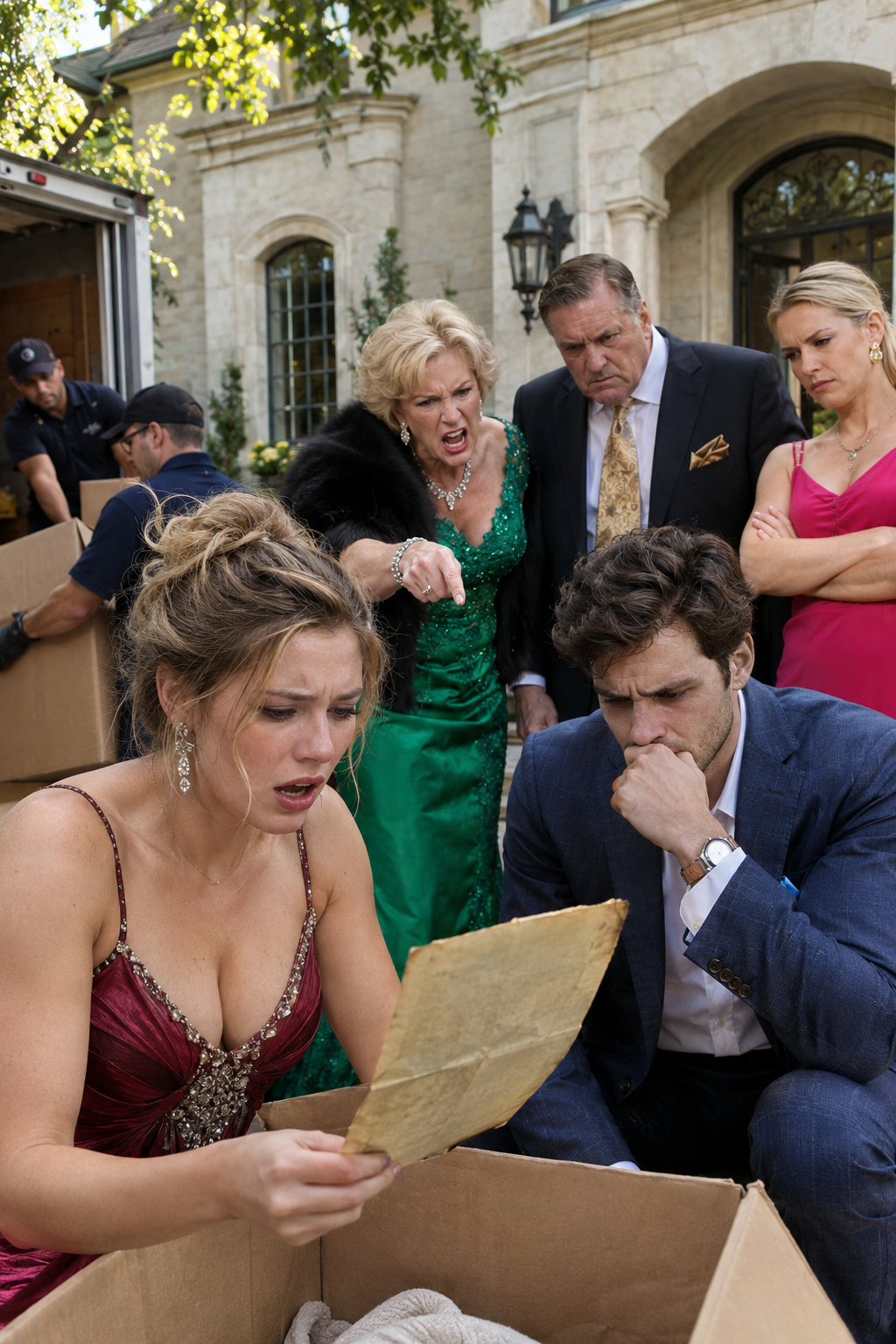
My Husband’s Family Took My $18 Million Home—Then the Movers Found the Inheritance Document He Hid Under Our Bed
The movers found the metal box under my bed three days after my husband’s mother told me the house was no longer mine.
Inside it was my dead father-in-law’s original estate codicil, two property deeds, and a letter addressed to me in handwriting I had watched slowly disappear during the final year of his life.
My husband’s family believed they had just inherited eighteen million dollars in land, a lakefront house, and the company I had spent twelve years helping save.
They did not know I was holding the only document that could prove none of it belonged to them.
And I said absolutely nothing.
The morning it began, my husband, Grant Whitmore, was supposedly in Dallas negotiating a distribution contract.
At a.m., I was standing barefoot in our kitchen outside Nashville, drinking coffee beside a window fogged by November rain, when his mother walked in without knocking.
Vivian Whitmore had never knocked in twelve years.
She considered knocking something people did at houses where they did not belong.
She wore cream wool, pearl earrings, and the expression of a woman arriving to collect something already purchased.
Behind her came Grant’s older brother, Preston, his wife Mallory, and a man carrying a leather portfolio.
I recognized him.
Thomas Keller.
The Whitmore family attorney.
I set down my mug.
“Interesting breakfast group.”
Vivian glanced around my kitchen.
Not our kitchen.
My kitchen.
I had selected the reclaimed oak cabinets. I had spent six months negotiating with the county over the historic addition. I had personally refinished the long walnut table after Grant called the scratches “character” and lost interest.
Vivian removed her gloves one finger at a time.
“You should sit down, Claire.”
“I’m comfortable standing.”
Preston smiled.
That smile mattered.
Preston never smiled unless someone else was about to lose something.
Thomas opened his portfolio.
“Claire, I’ve been instructed to deliver formal notice regarding the Whitmore estate properties.”
I looked at Vivian.
“Grant knows you’re here?”
“He knows everything,” she said.
That was the first lie.
The second came thirty seconds later.
Thomas slid a document across my kitchen island.
The top line read:
NOTICE TO VACATE.
I read the address.
My address.
I looked back at him.
“You have three days,” Vivian said.
Rain tapped softly against the glass.
No thunder.
No dramatic music.
Just the refrigerator compressor turning on behind me.
I picked up the paper.
“Three days for what?”
“To leave,” Mallory said.
She sounded almost cheerful.
Preston leaned against the counter and folded his arms.
“Dad’s estate has finally cleared probate.”
I looked at Thomas again.
He avoided my eyes.
That told me more than the notice did.
Vivian continued.
“Under the family trust, this residence returns to Whitmore Holdings. Grant’s controlling interest transfers through the bloodline. Since the company is restructuring, we’ve decided the property should remain available to family members with an actual stake in the estate.”
There it was.
Actual family.
After twelve years.
After two mortgages I had personally refinanced.
After sleeping beside Richard Whitmore’s hospital bed while his sons argued over golf reservations.
After saving their distribution company from default.
After missing my mother’s final Thanksgiving because Grant needed me in Memphis renegotiating warehouse debt.
Actual family.
I folded the notice once.
Mallory’s eyebrows moved.
She had expected yelling.
Vivian had expected tears.
Preston had probably wanted both.
Instead, I walked to the coffee pot.
“Would anyone like coffee?”
Vivian stared at me.
He cleared his throat.
“No, thank you.”
I poured another half cup for myself.
Then I said, “You mentioned Grant’s controlling interest. When exactly did it transfer?”
Thomas spoke too quickly.
“Upon final administration.”
Vivian’s mouth tightened.
Thomas looked at the papers.
Three days earlier.
Grant had flown to Dallas Tuesday morning.
“And nobody thought I should know before today.”
Preston laughed softly.
“You’re knowing now.”
I looked at him.
His smile faded first.
I had learned something about powerful families during twelve years inside one.
They do not become nervous when you scream.
They become nervous when you start remembering details.
I had remembered everything.
I remembered the first time Richard Whitmore asked me to stay late because payroll was short by $143,000.
I remembered selling the small investment property my mother left me so thirty-eight warehouse employees would not miss Christmas checks.
I remembered Grant promising we would replace that money within six months.
I remembered six months becoming twelve years.
I remembered Vivian telling everyone at Easter that Grant had “rescued” the company.
I remembered Richard watching me from the end of the dining table and saying nothing.
I remembered cleaning blood from his bathroom floor after his first fall.
I remembered driving him to radiation at every Wednesday morning because his sons were “buried at work.”
I remembered the afternoon he squeezed my wrist and whispered, “Keep copies, Claire. In this family, paper remembers what people pretend to forget.”
Five memories.
Five warnings.
And now, three days to leave.
Vivian picked up her purse.
“The movers will arrive Friday.”
I glanced at her.
“You hired movers?”
“For the furniture belonging to the estate.”
“Which furniture?”
She looked around.
“All of it.”
Not because it was funny.
Because that sentence answered a question I had not asked.
They thought the house was empty of resistance.
They thought the records were theirs.
They thought Grant had cleaned everything up.
Vivian walked toward the front door.
At the threshold, she turned.
“Claire, this doesn’t need to become ugly.”
“No,” I said. “It doesn’t.”
“You’ve benefited from this family for a very long time.”
I held her gaze.
“That’s one version.”
Her face hardened.
Then she left.
Preston followed.
Mallory paused beside the framed photograph hanging in the hallway.
Richard Whitmore stood in it beside me at the company’s fiftieth anniversary dinner.
His hand rested on my shoulder.
Mallory tapped the frame with one fingernail.
“You probably shouldn’t take that. It’s family history.”
I looked at her.
“You should definitely take it.”
She blinked.
“You’ll want it later.”
She stared at me for a second.
Then she gave a small laugh and followed the others out.
Thomas Keller stayed behind.
The door shut.
We stood in silence.
He lowered his voice.
His eyes flicked toward the windows.
Then the hallway.
“I advised them to slow this down.”
“That sounds like a sentence designed to protect you later.”
He flinched.
“You signed the notice,” I said.
“I represent the trust.”
“Which trust?”
His expression changed.
Just slightly.
“The Whitmore Family Trust.”
“Original or amended?”
He stared at me.
I took a sip of coffee.
“Have a good morning, Thomas.”
He left without answering.
At a.m., I texted Grant.
Your mother served me a three-day notice to vacate our home.
He called in under twenty seconds.
That was faster than any husband should call from a serious business negotiation.
I answered.
“What the hell happened?”
His voice carried airport noise.
Not office noise.
No conference room.
No muffled executives.
I heard a gate announcement.
Dallas/Fort Worth International.
He was traveling.
“Your family happened.”
“Claire, listen to me.”
“My father’s estate got finalized sooner than expected.”
“So you knew.”
Half a second.
But long enough.
“I knew there were conversations.”
“Your mother said you knew everything.”
“She’s exaggerating.”
“Preston said your controlling interest transferred Monday.”
Another silence.
I looked out at the rain.
“I was going to explain when I got back.”
“When will that be?”
“Saturday.”
“The eviction deadline is Friday.”
“Then just stay at the apartment downtown for a few days.”
I almost laughed.
The apartment downtown.
A furnished two-bedroom unit owned by Whitmore Holdings.
Even his temporary solution required me to remain on their property.
“Why would I do that?”
“Because I’m trying to fix this.”
“No, you’re trying to manage this.”
“Are you leaving me?”
His breathing changed.
Sometimes the answer arrives before the words.
“I don’t know what we are right now.”
I looked down at the wedding ring on my left hand.
Twelve years.
He had asked me to marry him beside Percy Priest Lake with a $900 ring we could barely afford.
I had liked that ring more than the four-carat replacement Vivian insisted on after the company became profitable.
“Who is she?” I asked.
“The woman.”
“There isn’t—”
Silence again.
Then, quietly:
“Her name is Elise.”
I closed my eyes for one second.
Not from weakness.
From concentration.
There are moments when your life splits into before and after.
People imagine those moments as loud.
Mine sounded like an airport boarding announcement and my husband breathing through a phone.
“How long?”
“Claire, this isn’t the time.”
“That means long enough.”
“It got complicated.”
“No. Complicated is a delayed flight. You’re married.”
“I never wanted to hurt you.”
“You wanted what you wanted and hoped the pain would be convenient.”
He said nothing.
I looked around the kitchen.
The oak cabinets.
The brass pendants.
Richard’s old coffee mug near the sink.
All the little evidence of a life everyone else had apparently decided could be reassigned.
“Is Elise in Dallas?”
Another pause.
There it was.
Business trip.
I almost admired the efficiency.
His family was removing me from the house while he took his girlfriend out of state.
“Did you know your father wrote me a letter before he died?”
The silence became absolute.
“What letter?”
“I’ll see you when you get home.”
I disconnected.
The movers came Friday at nine.
By then, I had packed only six boxes.
Vivian arrived at eight forty-five to make sure I had not stolen any silver.
She brought Preston.
Mallory brought coffee.
Their daughter, twenty-seven-year-old Savannah, came too, apparently because humiliation was now a family spectator sport.
Three vehicles lined my driveway.
Vivian stepped into the foyer and stopped.
Six cardboard boxes.
One suitcase.
One garment bag.
That was it.
She frowned.
“Where’s the rest?”
“I’m leaving the furniture.”
“Obviously.”
“I’m also leaving the china, paintings, electronics, rugs, and wine.”
Mallory looked almost disappointed.
Savannah whispered something to Preston.
He chuckled.
Vivian walked into the living room.
“The silver?”
“In the dining cabinet.”
“Richard’s watches?”
“Grant has them.”
“The antique desk?”
“Still upstairs.”
Her eyes narrowed.
“You’re being remarkably cooperative.”
“I prefer efficient exits.”
“Where are you going?”
“Somewhere I own.”
That bothered her.
I could see it.
She recovered quickly.
“Grant told me you may be emotional.”
I looked at her.
“Grant is sleeping with a woman named Elise.”
Mallory choked on her coffee.
Preston looked at the floor.
Savannah’s eyes widened.
Vivian did not move.
That told me she knew.
I nodded slowly.
“So we’re all caught up.”
Vivian’s jaw tightened.
“Marriages fail.”
“So do companies.”
Her eyes sharpened.
I turned away before she could answer.
The moving crew consisted of four men.
Their supervisor was a thickset man named Eddie who kept calling me “ma’am” until I asked him not to.
“Claire works,” I told him.
“Claire it is.”
The plan was simple.
They would move my six boxes and personal belongings to a storage unit I had rented under my name.
Everything else stayed.
At ten thirty, Eddie found me in the upstairs hallway.
He held a cordless drill.
“Your bed frame’s bolted to the floor.”
“The master bed. Back two legs. Somebody ran lag bolts into the hardwood.”
I stared at him.
I had never bolted a bed to the floor.
“No idea. We only noticed because one of the guys tried shifting it to get your suitcase.”
I walked into the bedroom.
The bed was enormous.
Grant’s choice.
Dark walnut frame. Upholstered headboard. Heavy enough that we had never moved it after installation.
Eddie’s employee had pulled the mattress sideways.
There were fresh scratches on the floor near the rear legs.
“What’s under it?” I asked.
“We don’t know.”
They removed the bolts.
Then four men lifted.
Under the frame, flush against the hardwood, was a rectangular steel plate approximately fourteen inches long.
A hidden floor compartment.
Eddie whistled.
I crouched.
The plate had no visible handle.
Only a small circular keyway.
My heart did not race.
That surprised me.
Instead, something Richard had said eight months before he died returned with perfect clarity.
If Grant ever starts talking about replacing the upstairs floors, tell him no.
At the time, I had thought it was dementia.
Richard had been weak then.
Sometimes confused about dates.
But never numbers.
Never buildings.
Never property.
“Everybody out for five minutes.”
Eddie looked at me.
“You okay?”
He herded the crew into the hallway.
I closed the bedroom door.
Then I walked into Grant’s closet.
His watches were gone.
So were three suits.
A pair of Italian shoes.
His passport.
I opened the top drawer of his dresser.
Second drawer.
At the back, beneath cuff links, was a small leather tray Richard had given him.
Inside was an old brass key.
I had seen it before.
Richard used to keep it on his own key ring.
I carried it to the floor compartment.
The lock clicked.
Inside was a gray metal document box.
No jewelry.
I lifted it out.
The box was heavier than it looked.
On top lay an envelope.
Richard’s handwriting.
Under it were two original deeds, a sealed packet from Keller & Bishop Law, and a leather folder stamped WHITMORE AGRICULTURAL CONSERVANCY.
I sat on the edge of the mattress.
Then I opened the letter.
If you are reading this, one of two things has happened.
Either Grant finally listened to me, or he did exactly what I feared.
Given the location of this letter, I suspect the second.
Outside the bedroom, someone laughed.
I kept reading.
I made many mistakes raising my sons.
The worst was teaching them that ownership and stewardship were the same thing.
They are not.
A man can inherit land and still be unworthy of it.
A woman can marry into a family and become the only person carrying its weight.
I thought of hospital mornings.
Warehouse nights.
Taxes paid at 11:58 p.m.
Richard continued.
You saved Whitmore Distribution when Preston wanted liquidation.
You paid employees when Grant froze.
You sat beside me when I was sick.
You protected families whose names my sons never learned.
They will tell themselves you were compensated.
They will tell themselves you married well.
They will forget what you sold.
My eyes moved faster.
The two original deeds enclosed transfer the Mill Creek acreage and Whitmore Lake House into the Whitmore Agricultural Conservancy, which I established separately from the family trust.
You are its sole lifetime steward.
The enclosed codicil confirms that my forty-one percent founder interest in Whitmore Distribution transfers to the conservancy upon my death, subject to one condition:
If Grant Whitmore or Preston Whitmore attempts to remove you from a residence controlled by the Whitmore estate, terminate your voting authority, conceal marital assets, or challenge your stewardship, their contingent voting rights are permanently extinguished.
My hand stopped.
I read the paragraph again.
Then again.
This was not eighteen million dollars.
Not really.
The Mill Creek acreage alone had recently been discussed as a possible logistics development site.
Six hundred and eighty acres outside Nashville.
The lake house sat on sixty-two acres.
The founder interest in the company carried voting control when combined with the employee stewardship shares Richard had created during his final year.
They thought they had inherited property.
Richard had built a trap.
And Grant had hidden it under our bed.
I read the final paragraph.
One more thing.
Thomas Keller has a duplicate filed under sealed instruction, but he may only release it upon proof that the original has been discovered by you or upon a formal challenge from my sons.
I chose this design because truth reveals character best when people believe no consequences remain.
Do not rush.
Let them show you who they are.
Then decide what this family deserves to keep.
I sat completely still.
Then someone knocked.
“Claire?” Eddie called.
“You good?”
I folded the letter.
“What do you want us to do with the box?”
I looked at the steel case.
“Move it first.”
“To storage?”
“To my attorney.”
By noon, Vivian believed I had left with six boxes.
In reality, Eddie’s crew had carried seven.
The seventh went into the locked trunk of a car belonging to my lawyer, Rebecca Sloan, who had arrived through the service entrance while Vivian supervised the removal of my winter coats.
Rebecca was fifty-four, sharp-eyed, and almost offensively calm.
My mother had trusted her.
She read Richard’s letter twice in her office that afternoon.
Then she leaned back.
“That’s what the mover said.”
Rebecca looked at me over her glasses.
“Does Grant know you found this?”
“He knows Richard wrote me a letter.”
“But not that you have it.”
“Does Vivian?”
Rebecca closed the folder.
“Keep it that way for twenty-four hours.”
“Because if Richard’s codicil is valid, somebody has been filing probate documents that materially misrepresent his estate.”
I looked at her.
“Possibly.”
“Possibly.”
“Almost certainly involved.”
Rebecca tapped the deeds.
“But before we accuse anyone, we verify everything.”
That was exactly what I wanted.
No confrontation.
No screaming.
No social-media revenge.
Paper first.
By Friday evening, I was staying in a small brick cottage thirty minutes south of Nashville.
Not Grant’s.
Not Whitmore Holdings’.
My mother had left it to me ten years earlier.
Grant hated it.
Only two bedrooms.
No wine cellar.
No heated driveway.
I had kept it anyway.
Richard once told me never to sell property that did not require permission to enter.
At p.m., Grant called.
I let it ring.
At , he called again.
At , Vivian texted.
Grant lands tonight. I expect everyone to behave like adults.
I stared at the message.
Then typed:
At , Grant knocked on the cottage door.
I knew it was him because he always knocked twice.
Two hard taps.
One softer.
I opened the door.
He looked tired.
Handsome still.
People like Grant are dangerous partly because betrayal does not make them ugly.
He wore a charcoal coat over a white shirt, no tie.
His wedding ring was still on.
That irritated me more than if he had removed it.
“Can I come in?”
He looked behind me into the cottage.
“You’re serious?”
“Claire, we need to talk.”
Cold air moved between us.
He rubbed one hand over his face.
“My family handled this badly.”
“Your family executed your plan while you took Elise to Dallas.”
“It wasn’t my plan.”
“Did you know I was being removed from the house?”
He hesitated.
“Did you stop it?”
“Then we’re done with that question.”
His jaw tightened.
“This is what you do.”
“You turn everything into an interrogation.”
“Only when people lie.”
He looked down.
Then back at me.
“I didn’t want it to happen this way.”
“How did you want it?”
“I thought you’d stay downtown until things settled.”
“Until what settled?”
“The estate.”
“No. Try again.”
He exhaled sharply.
There it was.
He had wanted me displaced.
Waiting in a company apartment while he decided whether Elise was permanent.
“You wanted time.”
“And control.”
“That’s not fair.”
I nearly smiled.
“Fair is a strange word to use from my porch.”
He stared at me.
Then his eyes shifted past my shoulder.
“You took Richard’s desk files?”
“Anything from the bedroom?”
“My clothes.”
“Anything under the bed?”
He asked it too casually.
I let three seconds pass.
His face changed during the third.
“What was under the bed, Grant?”
“You just asked me about it.”
“I meant storage.”
“You bolted our bed to the floor.”
His face went pale.
Not dramatically.
Just enough.
“Who moved it?”
“The movers.”
“What did they find?”
I studied him.
“Why don’t you tell me?”
His mouth tightened.
He stepped closer.
“Dad gave me documents before he died.”
“Documents you hid?”
“He was sick.”
“That’s not an answer.”
“He became paranoid.”
“About what?”
“About Preston. Mom. Me. Everybody.”
“Did he write a codicil?”
Grant’s eyes told me everything.
I felt something inside me become very quiet.
Because now I knew.
Grant had found it before I did.
He had known.
The affair hurt.
The eviction disgusted me.
This was the betrayal beneath the betrayal.
He had known his father intended to protect me.
And he had buried the proof under the bed where I slept beside him.
“Did you destroy anything?” I asked.
“Did you hide anything?”
He looked at me.
“Yes or no.”
His voice dropped.
“Thank you.”
He blinked.
“For what?”
“For finally telling the truth.”
I closed the door.
He knocked once.
I locked it.
He knocked again.
“Claire, please.”
I walked into the kitchen and turned off the porch light.
On Monday morning, Rebecca called me at .
“Richard’s codicil is real.”
I sat up in bed.
“How real?”
“Witnessed. Notarized. Recorded under sealed supplemental filing. The conservancy exists. The deeds are valid.”
I looked at the gray dawn outside.
“And the company shares?”
“Also real.”
“How much control?”
“With the employee stewardship pool?”
She paused.
“Fifty-two percent.”
I did not speak.
She continued.
“Claire, you effectively control Whitmore Distribution.”
I closed my eyes.
Not from joy.
From memory.
A warehouse at two in the morning.
Grant asleep in his office.
Me calling vendors one by one.
Asking for thirty-day extensions.
Promising money I did not yet know how to find.
Thirty-eight employees working the next morning without knowing how close their company had come to disappearing.
“There’s more,” Rebecca said.
“Of course there is.”
“Someone filed an affidavit stating Richard revoked the codicil.”
I opened my eyes.
“Eleven days after Richard died.”
That hurt more than I expected.
Eleven days.
At the funeral, Grant held my hand.
At the burial, he whispered, Dad loved you.
Eleven days after Richard died, he had signed a statement designed to erase the last thing his father did to protect me.
“Is the affidavit valid?”
“Not if we can prove Richard never revoked anything.”
“We have originals.”
“So why are you worried?”
“Because Keller produced a revocation memo.”
I sat straighter.
“Purportedly.”
“Purportedly?”
“The signature looks wrong.”
“How wrong?”
“Wrong enough that I called a forensic document examiner.”
By noon, Vivian invited me to dinner.
Not requested.
Family dinner. Seven. We should resolve this privately.
I showed Rebecca.
She laughed.
“You want me to?”
“People talk when they think they’ve won.”
The Whitmore lake house had belonged to Richard before he married Vivian.
I had spent years there.
Christmases.
Company retreats.
His last summer.
Now, according to the papers in Rebecca’s safe, I was the legal steward.
Vivian did not know that.
She opened the door wearing red.
Not bright red.
Expensive red.
The kind of dress chosen by someone who expects witnesses.
Inside sat Grant, Preston, Mallory, Savannah, Thomas Keller, and Elise.
That surprised me.
Not the woman.
Her presence.
She was younger than me by perhaps nine years.
She stood when I entered.
Grant did not.
Vivian gestured toward a chair.
I remained standing.
“You invited your son’s girlfriend to a family estate meeting?”
Elise looked at Grant.
He shifted.
Vivian answered.
“Elise will be part of Grant’s life moving forward.”
“Efficient.”
Mallory almost smiled.
Thomas shuffled papers.
“Claire, we’ve prepared a settlement proposal.”
I finally sat.
“Wonderful.”
Grant leaned toward me.
“This is generous.”
“Then you should be excited.”
Thomas pushed a folder across the table.
I did not open it.
He continued.
“You waive any challenge to the Whitmore estate administration. In exchange, you receive $600,000, the contents of your personal investment account, your vehicle, and temporary health insurance coverage through the end of the year.”
I looked at him.
“Temporary health insurance.”
Preston leaned back.
“That’s more than fair.”
“You value twelve years at six hundred thousand dollars?”
Vivian spoke.
“We value avoiding litigation.”
I looked at Grant.
“What do you value?”
He rubbed his thumb against the side of his glass.
“Claire, take it.”
Elise stared at the table.
Grant continued.
“You can start over clean.”
“Without the company.”
“Without the house.”
“Without any claim to Mill Creek.”
Preston’s head lifted.
He had not expected me to mention Mill Creek.
Vivian’s eyes narrowed.
“What do you know about Mill Creek?”
I shrugged.
“Richard talked.”
“Frequently.”
“About the land?”
“About many things.”
Thomas intervened.
“The Mill Creek acreage is held by the family trust.”
I looked directly at him.
“Are you certain?”
Thomas froze.
Vivian noticed.
So did Preston.
Grant’s hand tightened around his glass.
I leaned back.
Then I did what Richard told me to do.
I let them show me who they were.
Preston laughed first.
“Claire, this whole quiet act is getting old. Dad felt sorry for you. That’s all. You were useful because Grant didn’t want to deal with spreadsheets and hospital crap. Don’t turn that into some fantasy where you were secretly his daughter.”
I looked at him.
“Finished?”
“No. Actually.”
He leaned forward.
“You came into this family with a used Honda and a cottage worth maybe two hundred grand. You got vacations. Houses. Jewelry. Access. Stop pretending you sacrificed.”
I said nothing.
He continued.
“You sold one little rental property. Big deal.”
I looked at Grant.
He knew what came next.
He looked away.
“One little rental property,” I repeated.
Preston shrugged.
“It was what, three hundred thousand?”
“Four hundred eighty-two thousand.”
His smile weakened.
“I sold it because your company could not make payroll.”
Nobody moved.
Mallory looked at Preston.
Vivian’s lips tightened.
“I also borrowed against my mother’s cottage.”
Grant whispered, “Claire.”
I ignored him.
“I covered the company’s insurance premium twice.”
Preston looked at Grant.
“I negotiated the Memphis warehouse extension after your lender issued default notice.”
Vivian’s face changed.
“And I personally guaranteed the emergency line of credit Grant later told the board came from his relationship with First Tennessee.”
Elise slowly turned toward him.
That was satisfying.
Not because I wanted to humiliate her.
Because lies deserve witnesses.
Preston scoffed.
“You were married. That’s what spouses do.”
“No,” I said. “Spouses tell each other about girlfriends.”
Savannah looked down.
Grant stood.
“That’s enough.”
I looked up at him.
“No. It’s finally enough.”
He stared at me.
Then I slid Thomas’s settlement folder back across the table.
Vivian folded her arms.
“You’re making a mistake.”
“Possibly.”
“You have no legal claim.”
“Then why are seven people trying so hard to buy one?”
Nobody answered.
At the door, Vivian called after me.
“You walk out now, Claire, and the offer is gone.”
Her eyes narrowed.
“You’ll need the money.”
Tuesday morning, Rebecca filed for emergency declaratory relief.
By Tuesday afternoon, Whitmore Distribution’s board received notice that the founder shares were disputed.
At p.m., my phone began vibrating.
Then Grant.
Then Vivian.
Then Thomas.
I answered none.
At , Rebecca sent me a photograph.
Richard’s alleged revocation memo.
The signature was nearly perfect.
But Richard had lost strength in his right hand six months before the date printed on that memo.
His later signatures slanted downward because he had switched to signing with support from his left hand.
The revocation signature was straight.
Old Richard.
Not dying Richard.
Someone had copied it from an earlier document.
At five fifteen, the forensic examiner confirmed it.
Likely simulation or tracing.
That was the first major payoff.
The court hearing happened Thursday.
Vivian entered as though she owned the building.
Preston carried two phones.
Grant looked like he had not slept.
Elise did not attend.
Thomas sat at counsel table with another attorney.
Rebecca sat beside me.
The courtroom smelled faintly of old carpet and winter coats.
Judge Elaine Mercer entered at nine.
Everyone stood.
For ninety minutes, nobody raised their voice.
That was what shocked the Whitmores most.
They were used to family disputes.
Not procedure.
Rebecca introduced Richard’s codicil.
The conservancy records.
His letter.
The employee stewardship agreement.
The original company share certificates.
Then the forensic report.
Thomas objected twice.
The judge overruled him twice.
Grant looked smaller each time.
Finally, Rebecca introduced the eviction notice Vivian had served me.
That single sheet of paper triggered Richard’s condition.
Attempt to remove Claire Whitmore from estate-controlled residence.
Voting rights extinguished.
The trap closed exactly where Richard had placed it.
Judge Mercer removed her glasses.
“Mr. Whitmore, did you sign the affidavit claiming your father revoked this codicil?”
Grant swallowed.
“Did you personally witness such revocation?”
“Who told you it occurred?”
Grant looked toward Thomas.
Then Vivian.
The room went still.
“Mr. Whitmore?”
“My mother.”
Vivian’s face went white.
Rebecca did not look at me.
She did not need to.
The judge continued.
“Mrs. Vivian Whitmore, did Richard Whitmore tell you he revoked the codicil?”
Vivian’s attorney stood.
“Your Honor—”
“I am not taking testimony from her without proper procedure. I am establishing the basis for emergency relief.”
She looked back at Grant.
“Did you rely solely on your mother’s representation?”
Grant whispered, “Yes.”
The judge leaned back.
Then she issued the temporary order.
Whitmore Distribution’s disputed founder shares were frozen.
Grant and Preston’s contingent voting authority was suspended.
The Mill Creek property and lake house were restrained from sale, transfer, encumbrance, development, or lease.
I was recognized as interim steward of the Whitmore Agricultural Conservancy pending final adjudication.
Preston actually laughed.
One short, disbelieving sound.
The judge looked at him.
“Is something amusing?”
“No, Your Honor.”
“Then control yourself.”
Outside the courtroom, Vivian came toward me so quickly Rebecca stepped between us.
Vivian stopped three feet away.
“You knew.”
“You sat in my house and let us talk.”
I looked at her.
“It wasn’t your house.”
Her face twisted.
“Richard was sick.”
“He knew exactly what he was doing.”
“He was manipulated.”
Grant stood behind her.
He looked exhausted.
Preston paced near the elevators.
Vivian lowered her voice.
“You think he loved you more than his sons?”
That surprised her.
I continued.
“I think he trusted me more.”
That landed harder.
She stepped back.
The elevator doors opened.
I walked inside with Rebecca.
Grant entered before the doors closed.
Rebecca looked at him.
“This elevator is public.”
He ignored her.
I looked at him.
“I need five minutes.”
“You’ve had twelve years.”
Rebecca stepped out on the next floor.
“I’ll be downstairs.”
The doors closed.
Grant leaned against the wall.
“Mom lied to me.”
“I thought Dad changed his mind.”
“I didn’t forge anything.”
“I believe you.”
He looked startled.
“You think Thomas did?”
“I think someone did.”
Grant rubbed his face.
“I found the box after Dad died.”
“I panicked.”
“You hid it.”
“Under our bed.”
His eyes filled with something I once would have mistaken for regret.
Maybe it was regret.
But regret is not restoration.
“Because the second I read it,” he said, “I realized everything Dad built could end up under your control.”
“Our control.”
He shook his head.
There it was.
The real wound.
Not Vivian.
Not Preston.
Grant could tolerate my sacrifice.
He could tolerate my competence.
He could tolerate my saving him.
What he could not tolerate was evidence that someone respected me enough to give that competence authority.
“You thought I’d take it from you.”
“Would I have?”
He looked at me.
The answer came too quickly to be false.
“And that made it worse.”
His eyes dropped.
The elevator opened.
I stepped out.
He followed.
“Claire, wait.”
He looked at me like the man I married twelve years ago.
For one dangerous second.
“I ended things with Elise.”
“That’s between you and Elise.”
“I want to fix this.”
“You hid my legal rights under our bed while sleeping beside me.”
He closed his eyes.
“No, Grant. You know the sentence. You don’t know what it means yet.”
I walked away.
The next two weeks were brutal.
Auditors arrived.
Company accounts froze.
Board records surfaced.
Preston had authorized consulting payments to his brother-in-law.
Mallory’s interior design company had billed Whitmore Distribution for six “executive renovation projects,” including work on their private home.
Vivian had charged personal travel through a family management entity.
None of it was enough to destroy the company.
That mattered to me.
I did not want destruction.
Richard had not built the conservancy to burn everything down.
He had built it to separate stewardship from appetite.
So I did the same.
I met with warehouse managers before executives.
I called the employee representatives before lenders.
I told them one thing.
“No layoffs because of this family fight.”
That sentence traveled faster than any legal filing.
Men and women I had not seen in years began emailing me.
Some remembered the payroll crisis.
Some remembered Richard.
One message came from a forklift operator named Samuel Ortiz.
Mrs. Whitmore, you probably don’t remember me. Christmas 2015, payroll was late and you came to the Memphis warehouse yourself with envelopes. My wife had just had surgery. I never forgot.
I remembered him.
Gray hoodie.
Broken taillight.
Two daughters waiting in the truck.
That message mattered more than the value of Mill Creek.
Money measures ownership.
Memory measures impact.
Richard had understood the difference.
Three weeks after the emergency hearing, Judge Mercer upheld the codicil pending final accounting.
The board recognized the conservancy’s controlling block.
Preston lost his executive position.
Grant remained employed temporarily but without voting power.
Vivian was ordered to produce financial records.
Thomas Keller withdrew as estate counsel after Rebecca threatened referral regarding the revocation memo.
The lake house stayed protected.
Mill Creek stayed undeveloped.
And I moved back into the house where Vivian had evicted me.
Not because I needed it.
Because Richard’s condition had been triggered there.
Because people should sometimes be made to see the exact place where their certainty failed.
I did not replace the furniture.
I did not change the locks immediately.
I simply sat at the kitchen table one Friday morning, drinking coffee from Richard’s old mug.
At a.m., exactly four weeks after Vivian served me, she arrived.
This time she knocked.
I opened the door.
She stood on the porch alone.
No attorney.
No audience.
“I need to speak with you.”
“You’re speaking.”
Her mouth tightened.
“May I come in?”
I moved aside.
She entered slowly.
Her eyes traveled across the room.
Nothing had changed.
That was deliberate.
Same cabinets.
Same table.
Same framed photograph.
Only the power had moved.
Vivian sat.
I remained standing.
She looked older.
Not defeated.
People like Vivian do not become harmless because they lose one battle.
“What do you want?” I asked.
“To protect my sons.”
“They’re adults.”
“They’re still my sons.”
She looked at me.
“You don’t have children.”
There it was.
The old knife.
For years, Vivian had used my infertility like private leverage.
Never publicly.
Never enough to be accused.
Just little cuts.
You wouldn’t understand.
A mother worries differently.
Some legacies are biological.
Richard hated when she did it.
Grant usually changed the subject.
This time, I did not flinch.
“You’re right,” I said.
She looked surprised.
“I don’t know what I would do to protect a child.”
I sat across from her.
“But I know what you did to protect grown men from consequences.”
Her eyes hardened.
“I did not forge that memo.”
“I didn’t accuse you.”
“You were thinking it.”
“I was wondering why you came here.”
She looked toward the window.
Then she said something I did not expect.
“Richard was going to leave Preston nothing.”
“He changed after he got sick.”
“No. He became less willing to pretend.”
“He hated Preston.”
“I don’t believe that.”
“He hated what Preston became.”
“That I believe.”
She looked down at her hands.
“Richard found something.”
The room changed.
Not visibly.
But I felt it.
“I don’t know.”
“That’s not why you came.”
Vivian looked at me.
“I know what he called it.”
“The Black Ledger.”
I almost smiled.
It sounded theatrical.
She saw my expression.
“I thought it was one of his moods too.”
“Until he started locking his study.”
Richard never locked his study.
Not while I knew him.
“He told Thomas that if anything happened to him before he completed an audit, the ledger was to go to you.”
My skin went cold.
“Thomas never gave me anything.”
“Because I asked him.”
“Two days after Richard died.”
“Because Richard told me the ledger could put someone in federal prison.”
There it was.
The larger danger.
The payoff had come.
The company.
The codicil.
Justice for twelve years of sacrifice.
And beneath all of it, another door.
I leaned back.
“What was in it?”
Vivian’s voice became almost a whisper.
“Offshore payments. Shell vendors. Property transfers. Political donations. I don’t know all of it.”
She did not answer.
Her eyes lifted.
“For years, I assumed Preston was Richard’s problem.”
“I think Richard discovered Preston was covering for someone else.”
That answer came quickly.
Too quickly to be comforting.
She stared at me.
Then she said, “Thomas.”
I thought of Thomas in my kitchen.
His eyes avoiding mine.
His question about the trust.
His caution.
His signature.
His withdrawal.
“Why would the family attorney move money?”
“I don’t think he was moving it for himself.”
“For whom?”
Vivian looked terrified now.
Actually terrified.
“I don’t know.”
“You came here because you think Thomas has the ledger.”
“Then who?”
She looked toward the ceiling.
Toward the master bedroom above us.
“The last night Richard was conscious, he told Grant, ‘The first box protects Claire. The second protects everybody.’”
I did not move.
Second box.
Vivian saw recognition on my face.
“You found the first.”
I said nothing.
“There’s another one, isn’t there?”
“I don’t know.”
I walked to the kitchen window.
The November trees were nearly bare.
Richard’s old barn stood across the lower field.
Behind it ran a narrow stone wall built before the Civil War.
I had walked that property a hundred times with him.
Near the end, he had become obsessed with maintenance.
Roof flashing.
Drainage pipes.
Old foundations.
Things I dismissed as an aging man trying to keep control.
Keep copies.
Paper remembers.
Tell Grant not to replace the upstairs floors.
The first box protects Claire.
The second protects everybody.
I turned back.
“Why tell me this now?”
Vivian swallowed.
“Because Thomas disappeared yesterday.”
I stared at her.
“Disappeared?”
“His office is empty. His phone is disconnected. His wife says he left without telling her where he was going.”
“Did you call the police?”
“And you came here.”
“Because yesterday morning, before he disappeared, Thomas called Preston.”
“What did he say?”
Vivian’s voice shook.
“He asked whether the movers found anything else under your bed.”
I said nothing.
Then my phone rang.
I answered.
Her tone was different.
Controlled.
“What happened?”
“We received the final forensic imaging from Thomas Keller’s office computer.”
I looked at Vivian.
“He searched the county archive repeatedly in the week before Richard died.”
“For what?”
“Old Whitmore property surveys.”
“Which property?”
“The house you’re standing in.”
I looked down at the hardwood floor.
Rebecca continued.
“Specifically, the original 1948 construction plans.”
My eyes moved toward the hallway.
The staircase.
The bedroom above.
“Anything else?”
“One file had a handwritten note scanned into it.”
“What did it say?”
Rebecca hesitated.
“Second compartment not in bedroom. Claire will know.”
I closed my eyes.
Richard’s barn.
Drainage pipes.
Foundation walls.
Maintenance.
I remembered the last afternoon he walked the property.
He had leaned against his cane near the old stone smokehouse while I complained about Grant skipping another oncology appointment.
Richard pointed toward the building’s cracked foundation.
“You know why old houses survive?”
I had answered, “Because stubborn people keep repairing them.”
“No. Because somebody remembers where the first builders hid the important things.”
At the time, I thought he meant tools.
I opened my eyes.
Vivian was watching me.
“What?” she asked.
I ended the call.
Then I walked to the mudroom and put on my coat.
Vivian stood.
“Where are you going?”
“To where?”
I picked up Richard’s old brass key from the bowl beside the door.
The key I had taken from Grant’s dresser.
I had assumed it opened only one lock.
Maybe Richard had assumed I would make the same mistake.
Vivian followed me onto the porch.
Cold air swept across the field.
We crossed the lawn without speaking.
Past the oak tree.
Past the barn.
Toward the old stone smokehouse Richard refused to demolish even when Grant called it useless.
The door was warped.
The lock was rusted.
The brass key slid in.
Vivian inhaled sharply.
Inside smelled like dust and cedar.
Old shelves lined the walls.
Nothing dramatic.
No obvious safe.
No steel box.
Just stone.
I stepped inside.
Richard’s words came back.
Somebody remembers where the first builders hid the important things.
I ran my hand across the stone foundation.
One block near the rear wall was smoother than the others.
Newer mortar.
I crouched.
Pressed it.
Vivian stood behind me.
I looked at the floor.
A narrow iron ring sat almost flat beneath an old wooden shelf.
I moved the shelf.
The ring lifted a square stone hatch.
Under it was darkness.
And metal stairs.
Vivian whispered, “Oh my God.”
I turned on my phone flashlight.
We descended.
At the bottom was a shallow underground storage room.
Built into the hill.
On a steel shelf sat a black case.
Across the top, in Richard’s handwriting, was one word.
I stood in front of it.
Vivian stayed near the stairs.
I looked at the case.
Then at the second brass lock.
I inserted it.
The latch opened.
Inside sat three leather ledgers.
A flash drive.
Two sealed envelopes.
And a photograph.
I picked up the photograph first.
Thomas Keller.
And another man I recognized immediately.
A United States senator who had spent fifteen years presenting himself as a family-values businessman from Tennessee.
On the back, Richard had written a date.
And underneath:
Ask who actually owns Mill Creek.
My stomach tightened.
I opened the first ledger.
Vendor names.
Account numbers.
Property parcel IDs.
One name appeared repeatedly.
Keller Strategic Services.
P.W. Holdings.
Preston Whitmore.
But beside many payments was a second set of initials.
Grant Whitmore?
I stared at them.
The dates began before Grant joined the company.
Before he was old enough.
Someone else.
Vivian stepped closer.
“What is it?”
I flipped three pages.
Then found a full name.
Graham Whitmore.
Richard’s younger brother.
The man everyone said died in a boating accident twenty-three years earlier.
A man whose obituary hung in the lake house hallway.
A man Grant had been named after.
A man I had never heard anyone mention without saying dead.
I looked at Vivian.
Her face emptied of color.
“You know the name.”
“Of course I know the name.”
“Why is he receiving payments fifteen years after his funeral?”
Vivian gripped the edge of the steel shelf.
“That’s impossible.”
I turned another page.
Property transfer.
Mill Creek acreage.
Shell company.
Beneficiary designation.
Then a note in Richard’s handwriting:
Graham survived. Thomas helped conceal identity. Preston discovered truth 2018. Payments continued. Grant unaware.
My breath stopped.
Grant unaware.
Vivian whispered, “He survived?”
I opened the sealed envelope marked FOR CLAIRE ONLY.
Inside was one page.
If this file is open, then the first protections failed to end the problem.
My brother Graham did not die in 2003.
Thomas helped him disappear after Graham stole from the company and used Mill Creek parcels to secure debts connected to people who should never have been involved in our business.
I paid those debts to protect employees and families who had no part in his crimes.
I told Vivian he was dead because I believed silence would end it.
That was my greatest mistake.
Silence does not end corruption.
It teaches corruption where to hide.
Preston learned Graham was alive several years ago.
I believe Preston has been paying him.
I do not know whether Preston is being blackmailed or participating willingly.
Thomas knows more.
Do not assume the family is your greatest danger.
At the bottom was one final handwritten line.
If Graham returns, do not sign anything regarding Mill Creek until you confirm who owns Parcel 47.
I looked at the ledger.
I turned pages.
Forty-six acres.
Small compared with the full estate.
But the attached survey showed something extraordinary.
Parcel 47 contained the only legally recorded access road connecting the southern development acreage to the public highway.
Without it, hundreds of acres had no commercial access.
Whoever controlled Parcel 47 controlled whether Mill Creek could be developed at all.
The listed owner was not Whitmore Holdings.
Not the conservancy.
Not Richard.
The owner line read:
CLAIRE BENNETT SLOAN.
My maiden name.
I stared at it.
Vivian whispered, “What?”
I showed her.
She looked confused.
“You own that?”
“I didn’t know.”
“Richard gave it to you?”
The transfer date was seventeen years old.
Five years before I married Grant.
I looked again.
GRAHAM WHITMORE.
CLAIRE BENNETT.
That was impossible.
I had never met Graham Whitmore.
I was twenty-four at the time.
Working at a small accounting firm in Franklin.
I remembered almost every transaction from that year because I was paying my mother’s medical bills.
I never bought forty-six acres.
Then I saw the consideration.
One dollar.
A quitclaim deed.
Recorded quietly.
No mortgage.
No tax correspondence sent to me.
Mailing address listed as Richard Whitmore’s office.
A property placed in my name years before I entered the family.
My phone buzzed.
Unknown number.
I looked at Vivian.
Then answered.
A man’s voice.
Southern accent.
“Claire Bennett?”
Nobody had called me that in years.
“Who is this?”
“You found Richard’s second box.”
Vivian heard enough to cover her mouth.
I turned away from her.
“Who is this?”
“You already know.”
Cold moved through me.
The man laughed softly.
Not kindly.
“Richard always said you were quick.”
I looked at the ledgers.
“You’re supposed to be dead.”
“That was convenient for several people.”
“Where are you?”
“Close enough.”
“What do you want?”
“Something Richard stole from me.”
“Mill Creek?”
“Part of it.”
“You transferred Parcel 47 to me.”
That was the first time his confidence slipped.
“How did you know that?”
“I’m looking at the deed.”
Another pause.
“You should not trust Vivian.”
I looked at her.
She could not hear him.
I said, “I don’t.”
“You also shouldn’t assume I trust you.”
He laughed again.
“That’s why Richard liked you.”
“Richard’s dead.”
“And you’re calling the woman who controls his company, his conservancy, and the access parcel you apparently gave away seventeen years ago.”
“You don’t control what you think you control.”
“Then explain it.”
“Not over the phone.”
“You called me.”
“To see whether you found the box.”
“Then we need to meet.”
His voice hardened slightly.
“You don’t understand the danger.”
“I understand enough to recognize someone trying to rush me.”
Then he said, “Thomas Keller is missing.”
“You should ask Preston where he is.”
“I intend to.”
“And Grant?”
My grip tightened on the phone.
“What about Grant?”
“Ask him what Richard told him the night before he died.”
“I already know about the first box.”
“That isn’t what I mean.”
Graham continued.
“Richard told Grant one other thing.”
“You’ll have to ask him.”
“You’re not very good at negotiation.”
“I’m alive, aren’t I?”
Then he disconnected.
For several seconds, the underground room was silent.
Vivian stared at me.
“Was that him?”
Her knees weakened.
She sat on the bottom stair.
I closed the black case.
Then I looked at the photograph again.
Men bound together by a secret older than my marriage.
My phone rang again.
I almost ignored it.
Then Graham’s last sentence returned.
Ask him what Richard told him the night before he died.
I answered.
Grant spoke immediately.
“Where are you?”
“Mom’s gone.”
“She’s with me.”
His relief was real.
“Claire, listen. Preston just called me.”
I looked at Vivian.
“What did he say?”
“He’s driving to the lake house.”
“He thinks you found something Dad hid.”
“He’s right.”
Grant went silent.
“Don’t let Mom leave.”
“Because there’s something you don’t know.”
I almost laughed.
That sentence was becoming the Whitmore family motto.
Grant lowered his voice.
“The night before Dad died, he made me promise something.”
“He said if Graham ever came back, I was supposed to take you somewhere.”
“He wouldn’t tell me until I swore.”
“Where, Grant?”
“The old county records building in Columbia.”
“He rented a safe-deposit archive box there under your name.”
My pulse changed.
“What’s inside?”
“I don’t know.”
“Did you hide that too?”
“Do you have access?”
“Who does?”
I closed my eyes.
Richard had spent his last year scattering truth into places his sons could not easily reach.
The first box protected my legal rights.
The second exposed the old corruption.
And somewhere else was a third piece.
Maybe the one that explained why Graham had deeded land to me before we ever met.
I opened my eyes.
“When did Richard tell you this?”
“Eleven hours before he died.”
“And you waited until now.”
“I thought Graham was dead.”
“So did everyone.”
“Dad said something else.”
“He said Graham didn’t choose you randomly.”
The underground room seemed to shrink.
“What does that mean?”
“I don’t know.”
“You expect me to believe that?”
I heard tires outside.
Vivian stood.
“Someone’s here.”
I climbed the stairs.
Through the cracked smokehouse door, I saw a black SUV stop beside the barn.
Preston got out.
He looked toward the house.
Then toward the smokehouse.
His face changed.
Grant was still on the phone.
“Whatever Preston tells you, don’t give him the ledgers.”
I watched Preston begin walking toward me.
“Because I think Dad was wrong about one thing.”
“He thought Preston was paying Graham.”
Preston was fifty feet away now.
Grant whispered:
“I think Graham was paying Preston.”
Preston stopped ten feet from the door.
He looked at me.
Then at Vivian behind me.
Then at the black case in my hands.
His face became very still.
Not panicked.
Almost relieved.
“You found it,” he said.
He looked toward the phone in my hand.
“Put him on speaker.”
Grant’s voice came through.
“Preston, don’t.”
Preston gave a tired laugh.
“You still think I’m the problem?”
Vivian stepped forward.
“Where is Thomas?”
Preston looked at her.
“I don’t know.”
“Do not lie to me.”
“Graham called Claire.”
That shook him.
But enough.
“Minutes ago.”
Preston looked at me.
“What did he say?”
“That I should ask you where Thomas is.”
Preston cursed under his breath.
Grant spoke through the phone.
“Tell her.”
Preston looked down.
Then back at me.
“There’s one thing Dad never knew.”
“About Graham?”
“He didn’t disappear because he stole from the company.”
“Richard says he did.”
“He did steal.”
“That sounds contradictory.”
“It isn’t.”
Preston looked toward the fields.
“He stole because somebody was moving money through Whitmore Distribution using fake vendors.”
Preston looked at Vivian.
Her face changed before he spoke.
That told me she knew the answer.
Grant’s voice exploded through the phone.
Vivian went rigid.
Preston continued.
“Not all of it. But enough.”
“Preston,” she said.
His voice cracked.
“Don’t do that thing where you look at me like I’m twelve.”
I looked between them.
“What did Vivian do?”
Preston laughed without humor.
“She funded Graham’s side deals.”
Vivian whispered, “I was protecting the family.”
“From what?” I asked.
She looked at me.
That answer surprised everyone.
Even Preston.
Vivian’s hands trembled.
“Richard was going to expose Graham publicly. Graham had borrowed from dangerous people. Politicians. Developers. Men who would have dragged the company down with him.”
“So you moved money.”
“I paid debts.”
“Through fake vendors.”
“Thomas helped.”
“Richard found out.”
“Eventually.”
“And Graham disappeared.”
Vivian’s eyes filled, but her voice stayed sharp.
“I told Richard Graham died because Graham agreed to leave.”
Preston stared at her.
“You told Dad?”
She nodded.
Grant whispered through the phone, “Jesus Christ.”
Vivian continued.
“I thought it was over.”
“But Graham came back.”
“Years later.”
“And you started paying again?”
She looked at Preston.
Preston shook his head.
“Not for the reason you think.”
“What reason?”
“I was buying evidence.”
He reached slowly into his coat.
I stiffened.
He stopped.
He removed it.
Opened a file.
Then held it toward me.
A photograph.
Thomas Keller sitting in a restaurant booth across from Graham Whitmore.
Timestamped six weeks earlier.
Another photo.
Thomas carrying a black document pouch.
Graham entering a storage facility.
Preston said, “Thomas has been selling information to Graham for years.”
“Because Graham has something on him.”
“I don’t know.”
I looked at the black case.
Then at Preston.
Then at Vivian.
Then at Grant’s name glowing on my phone screen.
Everyone had lied.
Everyone had hidden something.
Richard included.
But Richard had done one thing the others had not.
He had left me evidence.
Not instructions to trust him blindly.
That mattered.
I lifted the black case.
“I’m taking this to Rebecca.”
Preston stepped forward.
“You can’t.”
“Watch me.”
“Claire, if Graham knows you have that case—”
“He already knows.”
“That’s not what I mean.”
“Then say what you mean.”
Preston looked at Vivian.
Then toward the road.
“Parcel 47 is not just an access road.”
“What is it?”
He swallowed.
“It’s where the original Whitmore records building used to stand before the fire.”
“What fire?”
“Why does that matter?”
“Because according to Graham, the fire wasn’t an accident.”
A car appeared at the far end of the property.
Dark sedan.
Preston saw it.
His face went pale.
“Inside,” he said.
I did not move.
“Claire. Inside.”
“Whose car?”
“I don’t know.”
The sedan stopped beyond the main gate.
Nobody exited.
Grant’s voice came through the phone.
“What’s happening?”
I stared at the car.
Then at the case.
Then at Richard’s old smokehouse.
For the first time since Vivian walked into my kitchen with an eviction notice, I understood the full shape of what Richard had done.
He had not merely left me wealth.
He had left me leverage.
Land nobody could develop without me.
Company control nobody could override.
Documents powerful people had spent decades trying to bury.
And perhaps most importantly, he had placed every major decision in the hands of the one person the family had spent twelve years dismissing as a useful outsider.
They had thrown me out because they believed I had no claim.
Grant had hidden the first box because he feared I had too much.
Vivian had tried to buy silence.
Preston had hidden evidence.
Thomas had disappeared.
A dead man was calling me.
And somewhere in an archive box under my maiden name was an answer Richard believed I alone should see.
The sedan still did not move.
I handed Vivian my phone.
“Tell Grant to call Rebecca.”
Then I looked at Preston.
“You’re coming with me.”
“Columbia.”
His face tightened.
“To the records building?”
“That’s a bad idea.”
“Probably.”
“Graham may be watching.”
“He probably is.”
“Thomas may be there.”
“You have no idea what’s in that box.”
“That’s why we’re opening it.”
Preston studied me.
Then the smallest trace of the old arrogance returned.
“You really think you’re in charge now.”
I looked at the black case in my hands.
At the house they took.
At the land they thought belonged to them.
At the company they nearly stripped clean.
Then at the sedan waiting beyond the gate.
“No,” I said.
“I think Richard finally made sure nobody else is.”
I started walking toward my car.
Preston followed after a moment.
Vivian called my name.
She stood in the doorway of the smokehouse, looking smaller than I had ever seen her.
Her voice shook.
“If that archive box contains what I think it does, you need to understand something.”
“Graham isn’t the person you should be most afraid of.”
I stared at her.
“Then who is?”
She opened her mouth.
Before she could answer, the dark sedan at the gate pulled away.
Deliberately.
My phone buzzed in Vivian’s hand.
Unknown number.
She looked at the screen.
Then at me.
Her face went white.
She walked the phone over.
The message contained a photograph.
Taken less than thirty seconds earlier.
Me standing outside the smokehouse.
Preston beside me.
The black case in my hands.
Under the photograph were seven words.
YOU STILL DON’T KNOW WHY HE CHOSE YOU.
I stared at them.
Then another message appeared.
ASK REBECCA ABOUT YOUR MOTHER.
For the first time all morning, I stopped moving.
My mother had died thirteen years ago.
Before Richard’s illness.
Before the codicil.
Before the conservancy.
Before I married into the Whitmore family.
Rebecca had been her attorney.
Richard had deeded property into my name five years before Grant ever proposed.
Graham had somehow known my name seventeen years ago.
And suddenly the story I thought began with my husband’s family throwing me out of a house no longer began there at all.
I looked at Vivian.
“Did Richard know my mother?”
She stared at me.
Preston stared at her.
Grant’s voice came faintly through the phone.
Nobody answered.
Not because I was calm anymore.
Because now I understood where the trap belonged.
I took the phone from Vivian, called Rebecca, and when she answered, I asked the softest question I had asked anyone since this began.
“Rebecca, before my mother died, did she ever tell you who my father really was?”
✓ Lynn R. Adams
My Husband’s Family Took My $18 Million Home—Then the Movers Found the Inheritance Document He Hid Under Our Bed The movers found the metal box under my bed three days after my husband’s mother told …